In my mind I’m gone to Carolina
Periodically, I use this space to pay homage to artists who I believe are worthy of focused attention — artists with an extraordinary, consistently excellent body of work and a compelling story to tell. In this essay, I explore the quintessential “singer-songwriter” of the Seventies and beyond — James Taylor.
************
One critic put it this way: “He can turn an arena into your living room.”
 At first almost unbearably shy in person, and almost painfully introspective in his music, James Taylor has evolved through a remarkable 50-year career into a wise, wry and wondrous entertainer. His “aw shucks” persona, his astonishing ability to compose music and lyrics with universal appeal, and his brave fight against numerous personal setbacks have made him a beloved giant of mainstream American popular music.
For me personally, Taylor has always been my sweet spot. Just as I was starting to learn to play music on acoustic guitar, along comes this guy with wonderful songs, many of which were relatively easy for me to play, and his vocal range and mine were in the same neighborhood. I think I’d rather sing and play Taylor’s tunes than anyone else’s.
He came of age just as the “sensitive singer-songwriter” genre took hold in 1970, and he rode it to the top of the charts and the cover of Time Magazine with a litany of pretty melodies, heartfelt lyrics, and infusions of funk, soul, blues and rock and roll. The fact that Taylor had a brooding dark side, and looked (at first) like some sort of modern-day Heathcliff, also made him a considerable heartthrob, whether he meant to or not.
 Let’s consider the statistics for a moment. Between 1968 and 2016, he has released 17 studio LPs, three live albums, five compilations and even a Christmas package or two. That’s 27 in total, and 19 of them have charted in the Top 20. His best years were in the 1970s, but he has had a Top Five record in every decade since. He has nine Top 20 singles, and he has sold more than 100 million albums worldwide, ranking among the Top 20 in that category as well.
And yet, Taylor has always maintained he is no superstar, and certainly not a rock star. “Bruce Springsteen, Elton John, those guys are rock stars. I’m just a folk musician, really. I’ve tried to look at my blessings and how amazingly well, against all odds, things have turned out for me.”
 True enough. He certainly had a blessed upbringing; his father was a respected physician, and his mother had deep musical roots as a music conservatory student of opera. His childhood and school years were split between the tranquil rural hills of North Carolina and the lazy island life on Martha’s Vineyard. He learned cello and guitar, and by age 14, he was playing and singing in coffeehouses. Life looked good.
But storm clouds were forming. At 17, Taylor developed depression and found himself unable to cope with scholastic pressures, which resulted in a nine-month, self-imposed stay in McLean Psychiatric Hospital. In retrospect, he now regards that chapter as “a lifesaver — like a pardon or reprieve or something.” It gave him the chance to collect himself and focus on what he really wanted to do — write songs, play guitar and sing.
A move to New York City proved both good and bad. “I learned a lot about the music business and too much about drugs,” he would say. He was part of a group called The Flying Machine that played several Taylor songs like “Night Owl” and “Knocking’ ‘Round the Zoo” (about his experience in McLean), but when that petered out, he headed for England to see whether that might open doors for him.
 As it turned out, the doors opened at Apple Records, The Beatles’ new label, where both Paul McCartney and George Harrison were impressed enough to give him the green light. But his debut album, which included impressive tunes like “Something in the Way She Moves” and “Carolina in My Mind,” suffered from amateurish production and an anemic marketing effort, and made only a minor dent in the charts in the UK or the US.
Still, Peter Asher, who had been his champion at Apple and became his manager, whisked him off to Los Angeles to regroup and sign with  Warner Brothers, and everything changed in a big hurry. With the help of the great Carole King on piano (her own performing career just about to blossom with “Tapestry”) and a sharp group of session musicians (Danny Kortchmar, Lee Sklar and Russ Kunkel), Taylor became the new sensation with his “Sweet Baby James” LP, a homespun collection of folk and blues which featured the timeless hits “Fire and Rain” and “Country Road.” Only a year later, he one-upped that accomplishment when he charted both the nation’s #1 single (King’s song “You’ve Got a Friend”) and its #2-ranked LP (“Mud Slide Slim and the Blue Horizon”).
 The Time cover story that year labeled him “the face of new rock,” which it described as “bittersweet and low.” Said the article writer, “Taylor’s use of elemental imagery — darkness and sunlight, references to roads traveled and untraveled, and to fears spoken and left unsaid — reaches a level both of intimacy and controlled emotion rarely achieved in purely pop music.” Taylor was matter-of-fact about it all, confessing, “I started being a songwriter pretending I could do it…and I was pretty pleased when it turned out I could.”
The songs he was writing belied an insecurity and an introverted nature (“Hey mister, that’s me up on the jukebox, I’m the one who’s singing this sad song, and I’ll cry every time that you slip in one more dime and let the boy sing the sad one, one more time…”). He found performing and touring to be emotionally difficult, which exacerbated his drug use, particularly heroin. “Basically, I was a functioning addict,” he said much later. “But I was in chemical jail.”
By the end of 1972, Taylor had built a house with a home studio on The Vineyard, recorded his fourth LP (the underrated “One Man Dog”) and married Carly Simon, whose  own career was simultaneously on the rise. They had two kids and recorded songs together (remakes of Inez and Charlie Foxx’s “Mockingbird” and Marvin Gaye’s “How Sweet It Is to Be Loved by You,” both huge hits) and things seemed to be moving along nicely throughout the ’70s. Five more Top Ten albums came in a six-year span: “Walking Man” (1974), “Gorilla” (1975), “In the Pocket” (1976), “JT” (1977) and “Flag” (1979).
Taylor’s songs during this period were quite exceptional, with melodies both effervescent and wistful: “Walking Man,” “Hello Old Friend,” “Mexico,” “Lighthouse,” “Shower the People,” “Don’t Be Sad ‘Cause Your Sun is Down,” “There We Are” and “Secret o’ Life,” to mention only a few. He is a bit humbled by the songwriting process, describing himself as a channel through which music flows. “It is the most delightful thing that ever happens to me, when I hear something coming out of my guitar and out of my mouth that wasn’t there before.”
 His lyrics, too, have offered a compelling balance of melancholy and sheer joy. Consider “Your Smiling Face” — “Whenever I see your smiling face, I have to smile myself, because I love you, when you give me that pretty little pout, it turns me inside out, there’s something about you, baby…” And then look at “You Make It Easy,” which paints a poignant picture of a vulnerable man in a troubled marriage trying to resist the temptations of the woman at the next barstool: “So baby, won’t you turn me down, and point me out the door, I’ll head home and sleep it off just like every time before, you keep looking good my way, I won’t hold out any more, you make it easy, you sure do make it easy, babe, for a man to fall…”
“Not every song I write is autobiographical, not by a long stretch,” he has said. “But I reckon I do often draw on my own life experiences, and what I’ve been through can’t help but have an impact on what comes out.”
By the time the ’80s rolled around, though, things started to slip. The Taylor-Simon marriage was in tatters (described in heartwrenching fashion on the 1981 hit “Her Town Too”), in large part because Simon could no longer abide Taylor’s dark side trips with heroin. His songwriting quality — and quantity — seemed to fall off the beam somewhat; he was no longer as prolific, and the work he recorded wasn’t quite up to snuff. Then, of  course, there was the fickle nature of pop music, and the way listener interest can turn on a dime as fans mature and younger ones fail to take their place.
True, there were still high points: “Hard Times” and “Summer’s Here” from 1981’s “Dad Loves His Work”; “Only a Dream in Rio” and “Only One” from 1985’s “That’s Why I’m Here”; and “Baby Boom Baby” and “Sweet Potato Pie” from 1988’s “Never Die Young.” And his 1976 “Greatest Hits” LP, then ten years old, was still selling well, passing 10 million units sold.
But his Eighties albums weren’t getting airplay or sales, and he disappeared for awhile, determined to shake his heroin habit, which he finally did through the help of a methadone clinic in 1984. “I had hit a low point, but it was music that eventually brought me back to life,” he said, referring to his participation in a “Rock in Rio” festival in 1985.
“New Moon Shine” in 1991 was something of a comeback, with the irresistible “Copperline” and “The Frozen Man,” and a Martin Luther King tribute called “Shed a Little Light,” which featured the impeccable harmonies of longtime colleagues David Lasley, Arnold McCuller and Kate Markowitz. But it took another six years for his real return to form, 1997’s “Hourglass,” which drew rave reviews, a Top Ten chart appearance, and a Grammy for Best Pop Album. About that award, Taylor noted: “I have a love-hate relationship with the Grammys. I just don’t see the music world as a competitive sport.”
 The new millennium saw Taylor’s songwriting slow to a snail’s pace, but he picked up the slack in other ways. He had recorded cover versions of classics throughout his repertoire, but now he released two albums comprised solely of covers (including tracks like “Wichita Lineman,” “On Broadway,” “Hound Dog,” “Suzanne” and “In the Midnight Hour”), and a pair of Christmas collections, and an excellent live LP called “One Man Band.” In 2010, following an exhilarating 2007 reunion of Taylor and his original band with Carole King at LA’s Troubadour, they all went on a hugely popular and well-reviewed world tour, playing exclusively the tracks from his “Sweet Baby James” and “Mud Slide Slim” albums and her “Tapestry” LP. A CD-DVD of their show went all the way to #4 in 2012.
 A side note: I’ve always found it interesting that Taylor’s career has followed a similar path to that of Joni Mitchell, also at the top of any list of brilliant singer-songwriters, then and now. She started around the the same time, had a mid-’70s commercial peak, fell out of favor in the ’80s, then finally won Grammy recognition in the late ’90s. They have sung on each others’ albums and were even early paramours for a spell. While Joni is the more gifted in her weaving of music and words, James has had more commercial success, largely because he learned to love performing, and has toured far more often (he completed a well-received tour with longtime pal Bonnie Raitt only two months ago).
 No one was more surprised than Taylor himself when his 2015 album, “Before This World,” his first collection of new material in 13 years, debuted at #1. To my ears, this collection is among his most consistent in decades — check out “You and I Again,” “Angels of Fenway,” “Stretch of the Highway,” “SnowTime” and “Far Afghanistan.” Even more impressive is the voice. It has lost nothing and is, in fact, far smoother than the more nasally tone you hear on those classic early albums.
As he approaches 70, James Taylor has a rather droll observation to make about his life and career. “Knowing when to quit is probably a very important thing, but I just am not ready,” he mused. “I think it surprises a lot of people that I’m still around, you know. I sometimes wonder how many of these lifetime achievement awards you can accept before you have to do the decent thing and die.”
 That blond-haired kid was Tom Petty. And Felder was certainly right — he had what it took to make it, in a very big way.
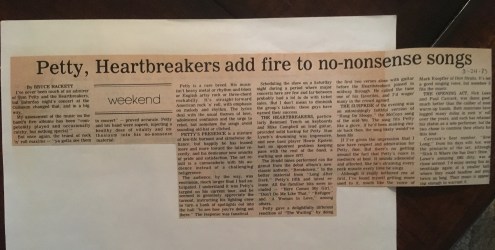 I used to review concerts for a Cleveland newspaper in the 1980s, and the other day I dug up a clipping of a piece I wrote about a Tom Petty concert in 1983. While I confessed to being largely ambivalent about his records at that point, I readily admitted he had won me over with his live show. “Petty and his band were superb, injecting a healthy dose of vitality and enthusiasm into his no-nonsense material.” I labeled his music thusly: “It isn’t heavy metal, or rhythm-and-blues, or English arty rock, or three-chord rockabilly. It’s straightforward American rock ‘n’ roll, with emphasis on melody and rhythm.”
 His music has offered “a more stripped down, passion-filled, elemental form of rock and roll,” as The LA Times‘ Randy Lewis put it. His songs borrowed from his ’60s influences — The Byrds, The Beatles and The Rolling Stones, as well as Bob Dylan and Johnny Cash — to produce his own unique style.
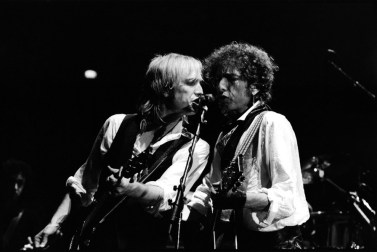 Other rock music icons reacted swiftly to the news of Petty’s passing. “It’s shocking, crushing news,” said Bob Dylan, with whom Petty teamed up in the late ’80s supergroup The Traveling Wilburys. “I thought the world of Tom. He was a great performer, full of the light, a friend, and I’ll never forget him.”
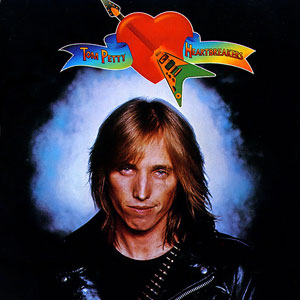 Petty had a solo contract, and he cut a few demos of original songs (“Breakdown,” “Anything That’s Rock ‘n Roll,” “American Girl” and others) with Campbell and Tench, adding Stan Lynch on drums and Ron Blair on bass.
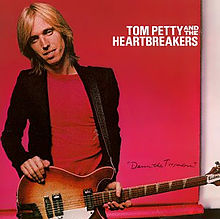 a star, reaching #2 and selling three million copies on the strength of time-honored tracks like “Refugee,” “Here Comes My Girl,” “Even the Losers,” “Don’t Do Me Like That” and “Louisiana Rain.”
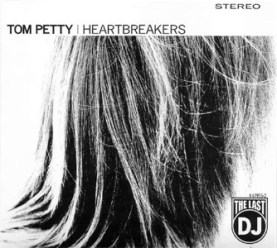 was dominating the record business more than ever, at the expense of artistic concerns. The lyrics to “Money Becomes King” yearn for the old days when average fans could afford concert tickets in great seats, before lip-synching, TV commercials, V.I.P. areas and other greed-driven developments changed the vibe: “As the crowd arrived, as far as I could see, the faces were all different, there was no one there like me, they sat in golden circles, and waiters served them wine, and talked through all the music and paid John little mind, and way up in the nosebleeds, we watched upon the screen they hung between the billboards so cheaper seats could see…”
 In the ’80s and ’90s, though, Petty and the Heartbreakers were riding high with one success after another. The “Hard Promises” sessions spawned not only “The Waiting” but also Petty’s superb duet with Stevie Nicks, “Stop Draggin’ My Heart Around,” which appeared on “Bella Donna,” Nicks’ huge solo debut.
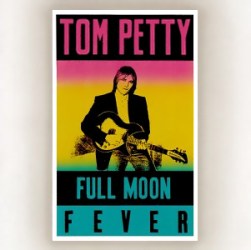 the Great Wide Open,” nearly equalled the impact of “Full Moon,” with solid tracks like “Learning to Fly,” “Out in the Cold,” “King’s Highway” and the title cut.
 So many of Petty’s songs, even those from later releases like the bluesy “Mojo” (2010) and the rocking “Hypnotic Eye” (2014), have hit resoundingly with his fan base, which, by the way, covers at least three generations of music lovers now. “I know the songs mean a lot to people, and that means a lot to me,” said Petty recently. “Rock ‘n’ roll is more than just something that you can manipulate into advertising, or whatever they do with them. It means way more than that to me, and apparently to others as well.”
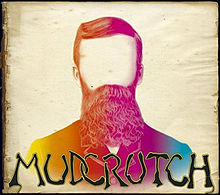 In 2007, Petty had reached a point in his career where he could indulge himself a bit, so he surprised fans and Heartbreakers colleagues alike by reuniting Mudcrutch for an album and a tour, and then a second LP in 2016. Mike Campbell, a member of both groups, said, “The beauty of this is Tom wanted to connect with his old friends, and with the pure joy of revisiting the energy we started with. It’s been very, very spiritual. It’s commendable that he’d do something so generous.”
 “I wanted to be taken seriously as far as writing songs and making music are concerned. As you’re coming up, you’re recognized song for song, or album for album. What’s changed these days is that the man who approaches me on the street is more or less thanking me for a body of work – the soundtrack to his life, as a lot of them say. And that’s a wonderful feeling. It’s all an artist can ask for.”
 Hack's Back Pages