I got a name, I got a name

They called it “The Name Game,” a silly, fun participation song that was all the rage in 1965, when R&B singer Shirley Ellis made it a #3 hit on the US charts.

You simply take anybody’s name, slip it into the basic format, and off you go.  Party on, Garth!  “Garth, Garth, bo-Barth, banana-fana-fo-Farth, fee-fi-mo-Marth, GARTH!”

So, as Shakespeare once asked, “What’s in a name?”  In the world of popular music, there are dozens of examples of performing artists who conjured up new names for themselves.  They did this on their own, if their ego was big enough…or an agent or record company insisted on a catchier stage name than the clunky or boring given name they’d been carrying around.

Some of the examples I’m offering up to you will be well known.  Others, you might be surprised about.  In either case, I’m here to expose these stars’ real names as part of my own Name Game.

********************


Farrokh Bulsara
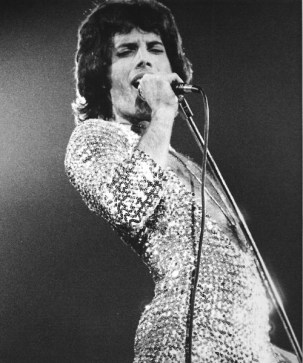
Freddie-freddie-mercury-32486955-500-600

Farrokh was born in 1946 to parents from the Gujarat region of British-owned India.  He was born in the African country of Zanzibar, then a British colony, and attended a boarding school in Bombay, India, where he learned piano and focused more on music than academics.  After returning to Zanzibar at age 17, he and his family had to flee the 1964 revolution there, settling in Middlesex, England.  He earned a degree in art and graphic design, but music was his passion, and he became a member of several bands between 1968 and 1970.  Then he met guitarist Brian May and drummer Roger Taylor from the band Smile.  In time, they changed their name to Queen, and Farrokh Bulsara became Freddie Mercury, whose astonishing four-octave vocal range and flamboyant stage presence were key to Queen’s international success.

Marvin Aday

35628EB400000578-3646164-image-a-41_1466160162823

Born and raised in Dallas, Texas, by a schoolteacher and policeman, Marvin showed an early interest in music and theater arts, appearing in several high school musicals.  He was very close to his mother (who sang in a gospel quartet) and, following her death, he dropped out of North Texas State College and relocated to Los Angeles in 1969 to pursue a career in the arts, as was his mother’s wish.  When Marvin formed a band (that had some notoriety warming up for the likes of Janis Joplin, the Grateful Dead and the Who), he named it after his mother’s favorite Saturday night dish, Meat Loaf Soul.  Tipping the scales at nearly 300 pounds, Marvin soon took on that name for himself, appearing in films and on stage as Meat Loaf.  By 1977, his “Bat Out of Hell” LP made him an international star.

Ellen Cohen

rs-180802-96987826-copy_cropped-1

Ellen was born during WWII in Baltimore to Jewish parents who were children of Russian immigrants, and the family struggled there and in Alexandria, Virginia.  Blessed with a versatile voice and a knack for stage performance, Ellen appeared in several musicals in New York before becoming part of a successful singing trio called The Big 3, appearing on “Ed Sullivan” and elsewhere.  They became The Mugwumps, and eventually she lobbied hard to join a group she admired called The New Journeymen, featuring John Phillips, Michele Phillips and Denny Doherty.  By then, Ellen had begun referring to herself as Cass (short for “Cassandra”), and her incredible pipes ended up winning her a spot in the group despite Phillips’ misgiving about her obesity.  The public didn’t care about that when The Mamas and The Papas exploded on the scene with huge hits like “California Dreamin’” and “Monday Monday,” among others, carried by Mama Cass Elliott‘s soaring alto.

Richard Starkey

star-606487

Little Ritchie had a rough childhood, spending most of his time in bed in hospitals.  He took to picking up pencils, pens, whatever was handy, and banging out rhythms on any horizontal surface he could find.  Eventually, his parents bought him a set of drums, and he became very proficient, at least in the circle of bands and clubs in and around Liverpool, England.  He took to wearing rings — many rings, big showy rings — on his fingers, and soon found himself with a nickname:  Ringo.  His last name could be shortened by a syllable, and Ringo would then be a Star…or, more precisely, Starr.  In any event, after a stint with Rory Storm and the Hurricanes, he was tapped by the younger lads who made up another local group, The Beatles, to replace their mate Pete Best on drums, and well, there you have it.  What a great gig for Ringo Starr.

Paul Hewson

59b07c42ec92260bffb9346d09f35be2

Paul was born and raised in a north suburb of Dublin, Ireland, and was a rather rebellious kid in school, becoming more so after his mother’s death when he was 14.  He didn’t get along with his father and instead hung out with his surrealist street gang, Lypton Village.  As is the case with many gangs, everyone was given nicknames, and Paul went through several:  First came the unwieldy Steinhegvanhuysenolegbangbangbang, which was shortened to Huyseman, then Houseman.  Next he was Bon Murray, then “Bonavox of O’Connell Street,” named for a neighborhood hearing-aid shop.  That was abbreviated to “Bono Vox,” which happened to be Latin for “good voice,” which Paul liked, so it stuck…after it was shortened to just Bono.  Within a couple years, he and his mates David Evans (“The Edge”), Adam Clayton and Larry Mullens Jr. formed a band called Feedback…then The Hype…and finally, U2, who became one of the most popular bands on the planet.

Stevland Judkins

Stevie@Piano_1964

Born in Saginaw, Michigan, in 1950 and raised in Detroit, Stevland suffered from premature retinopathy, which causes the retinas to detach from the corneal wall, resulting in blindness.  He made up for this deficiency by pouring himself into all the music he heard and felt all around him — gospel, rhythm and blues, country, rock ‘n roll.  He mastered harmonica, piano and drums by age 10, and was signed to a recording contract as a child prodigy.  Stevland made his debut on the Top Ten at age 12, and maintained an enviable chart track record throughout the 1960s with a dozen Top Ten hits, more than a dozen albums and many TV appearances.  By the 1970s, his talents mushroomed, and Stevie Wonder became producer, songwriter, instrumentalist and singer, and one of the leading musical artists of all time, winning multiple Grammys and multiple Number One albums and singles.

Reginald Dwight

elton-john

Raised by a free-spirited, music-loving mother, Reggie proved to be something of a child prodigy on piano, playing difficult classical pieces after hearing them only once.  Although his classical training continued, he was also drawn to the rock and roll of Jerry Lee Lewis, and soon landed a weekend gig as pianist in a neighborhood pub.  Reggie also played in a band called Bluesology, who opened for American soul bands like the Isley Brothers, and became the support group for Long John Baldry, one of the pioneers of the British blues movement.  Reg began writing songs for a music publisher, who teamed him up with a lyric writer named Bernie Taupin.  Around that time, he decided he needed a better stage name, so he combined the names of two musicians he admired — Bluesology sax player Elton Dean, and Long John Baldry — to create a new moniker: Elton John.  You may have heard of him.

Henry Deutschendorf

635525194537201243-AP850214091

Henry was the son of a decorated military man, John Deutschendorf, Sr., who earned a spot in the Air Force Hall of Fame, but the father had little time for his son.  It was his mother’s mother who instilled in him the love of music and bought him his first guitar.  He lived in Roswell, NM, and Montgomery, AL, and Tucson, AZ, and Fort Worth TX, never fitting in anywhere.  Henry’s uncle, Dave Deutschendorf, was a member of the New Christy Minstrels, who encourage him to write songs and work on his guitar techniques.  New Christy member Randy Sparks told Henry to lose his last name, so Henry (whose middle name was John), adopted the capital of his favorite state, Colorado.  By the time he was 22, Henry was John Denver, replacing Chad Mitchell in The Mitchell Trio, writing his own songs and dreaming of a solo career.  His song, “Babe I Hate to Go,” was picked up by Peter Paul and Mary, retitled “Leaving on a Jet Plane,” and became the #1 song in the country in late 1969, the first step in a hugely successful solo career.

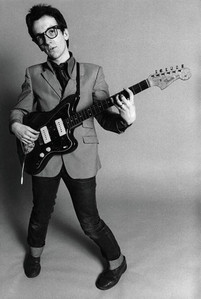
Declan McManus
1101080

Declan’s father, Ross MacManus, was a London-based jazz trumpeter and singer with The Joe Loss Orchestra, a popular British Big Band act from the 1940s through the ’60s.  He instilled a love of all types of music in his son, even after a divorce which sent Declan and his mother to live in Liverpool.  Declan formed a folk duo there when he was just 16, then returned to London in the mid-’70s and fronted a pub rock band called Flip City.  His father had performed under the name Day Costello and, in tribute to him, he adopted the name D.P. Costello around that time.  He continued writing songs and pursuing a solo recording career, and was eventually signed to the new upstart independent label, Stiff Records, who focused on punk and New Wave acts.  His manager, Jake Riviera, suggested Declan make the bold move of adopting Elvis Presley’s sacred first name, and Elvis Costello went on to become one of the most celebrated and respected musicians to emerge from the British New Wave movement.

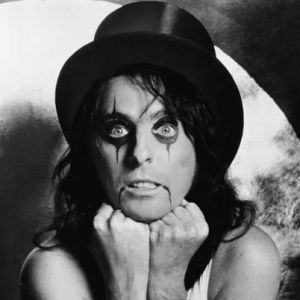
Vincent Furnier
MTE5NDg0MDU1MzgyNDkyNjg3

Vincent was born and raised in Detroit, Michigan, the Motown City, but the R&B bug didn’t really bite, and at age 14, Vincent and his family moved to Phoenix, Arizona.  He and his fellow cross-country teammates won the school talent contest miming Beatles songs, which inspired them to buy and learn how to play guitar, bass, drums and so on.  Vincent liked being the lead singer, but he recognized he and the band needed to find a way to stand out from all the other bands out there.  Hey, how about controversial, shocking, perverse?  It’ll attract lots of press coverage, even though it was just an act.  OK, cool, but what shall we call ourselves?  Something completely opposite of the outrageous image they envisioned…  Hmmm…  How about we pick a character from the wholesome family sitcom “Mayberry RFD,” a neighborly woman named Alice Cooper?  Perfect.  The band, formerly The Spiders, became Alice Cooper, and Vincent himself pretty much became the perverse persona soon known worldwide as Alice Cooper, with snakes, bats, guillotines and other gruesome props as part of his shtick.  In fact, once the band broke up in 1974, Furnier successfully sued to adopt the Alice Cooper name as his own.  Not sure what his IRS tax returns say…

* * * * * * * * *

There’s a rather long list of name-changing recording artists who make my “honorable mention” list, and some of their stories are interesting enough to inspire me to do another blog post someday.

Steven Georgiou evolved into Cat Stevens (and then Yusaf Islam);  Walden Cassotto was renamed Bobby “Mack the Knife” Darin;  The Police and solo star Sting was born Gordon Sumner;  Malcolm Rebbenack became known as Dr. John the Night Tripper;  Ernest Evans morphed into Chubby Checker;  country star Crystal Gayle started out as Brenda Webb;  even as a teenager, McKinley Morganfield was known as Muddy Waters;  a youngster named Perry Miller ended up better known as Jesse Colin Young;  we know a girl named Judith Cohen as Juice Newton;  British boy Paul Gadd was eventually Gary Glitter; and Ray Sawyer was “on the cover of Rolling Stone” as Dr. Hook.

Some stars changed only their last names:  Francis Castellucio (Frankie Valli);  Edward Mahoney (Eddie Money);  Dominic Ierace (Donnie Iris);  Carol Klein (Carole King);  LaDonna Gaines (Donna Summer);  Cherilyn Sarkisian (Cher);  Georgios Panayiotou (George Michael);  John Ramistella (Johnny Rivers);  Hugh Cregg III (Huey Lewis);  Richard Penniman (Little Richard);  Peter Blankfield (Peter Wolf);  David Jones (David Bowie);  Robert Zimmerman (Bob Dylan);  Ray Robinson (Ray Charles);  Patricia Holt (Patti LaBelle);  Martyn Buchwald (Marty Balin);  Patricia Andrzejewski (Pat Benatar);  Priscilla White (Cilla Black).

And this tradition goes on well past the ’60s, ’70s and ’80s.  Just about every hip-hop artist of the last 30 years has a made-up name…  And we really need look no further than Stefani Joanne Angelina Germanotta, the young lady born in 1986 in New York’s Upper East Side.  In 2006, when the aspiring singer arrived at the studio, her first producer used to greet her with a few lines from his favorite Queen song “Radio Ga Ga.”  In a text message he sent to her one day, “radio” auto-corrected to “lady,” and Lady Gaga was born.
We’re caught in a trap, I can’t walk out

The peculiar relationship between Elvis Presley and his manager, “Colonel” Tom Parker, has been a fascinating story waiting to be told in a feature film for many decades. Now, finally, that film has been made, and what an extraordinary work it is. In “Elvis,” Director Baz Luhrmann, Austin Butler as Elvis and Tom Hanks as Parker have captured the ups and downs of that complicated relationship and have done it in a dazzling, thoroughly entertaining fashion.

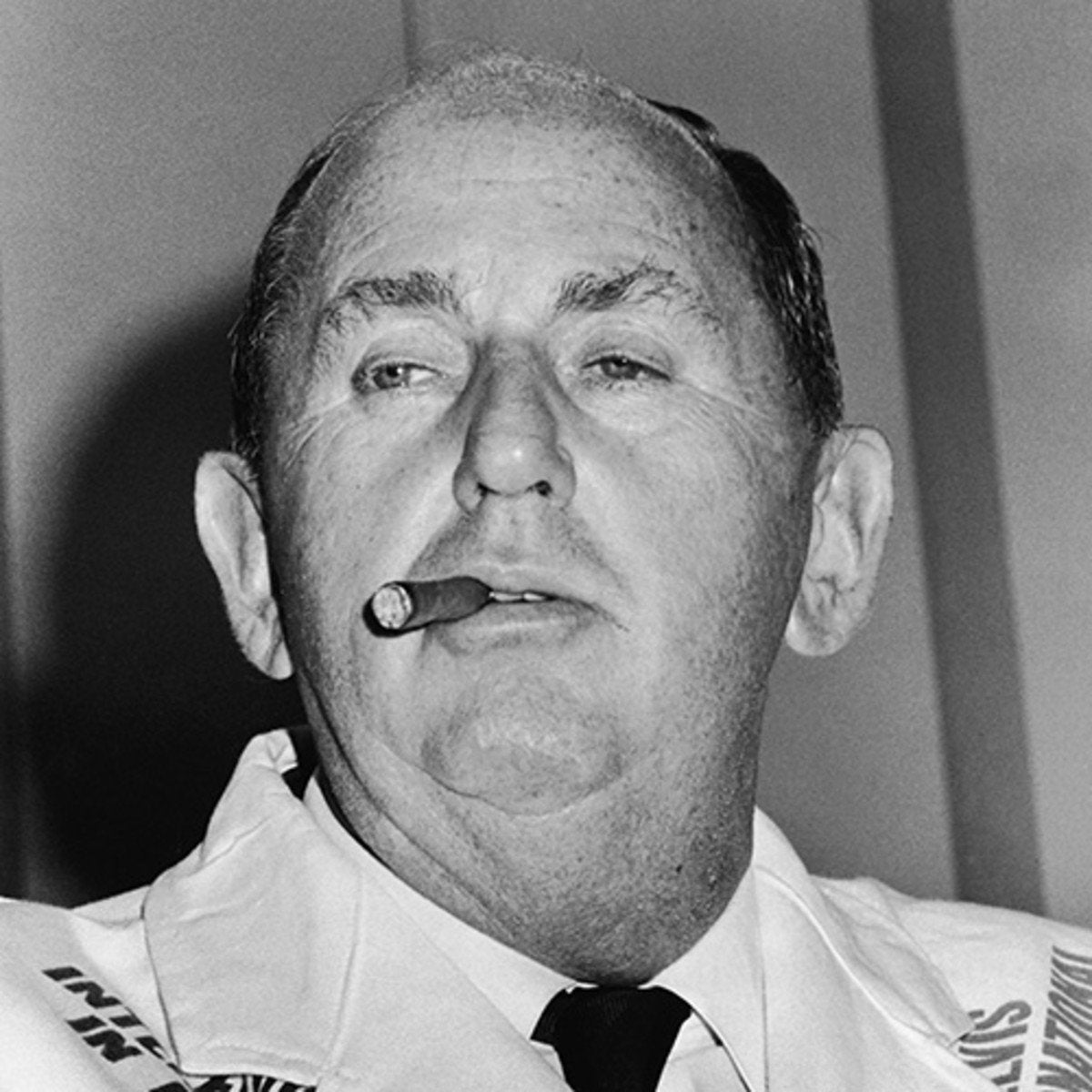
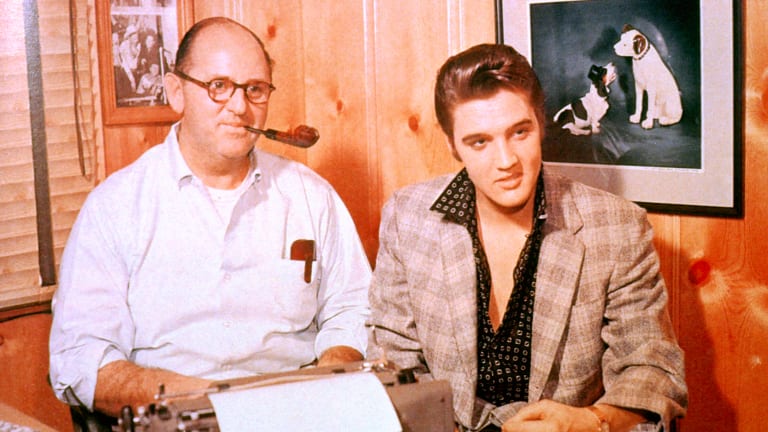
“Colonel” Tom Parker and Elvis Presley, 1956

I first wrote about the Presley/Parker association seven years ago after having read a number of articles and books about it. Upon re-reading it, I think it holds up well, so I’m publishing it again this week, followed by some commentary by the film principals that sheds new light on the alternately triumphant and tragic tale.

********************

When you mention Elvis Presley’s name, so many things may come to mind.  The extraordinary voice.  The iconic songs.  The hips and the curled lip.  The “Yes Ma’am” demeanor.  The lame-o movies.  The comeback TV special.  The Vegas years.  The downward drug spiral.  The premature death.

For me and those of my age, born in 1955, Elvis was before my time, so I didn’t learn to appreciate him until many years later.  As a passionate student of rock and roll, I have since read a great deal about Elvis and immersed myself in his music, particularly the amazing, groundbreaking, trailblazing singles and albums he recorded in his first four years in the business (1954-1957).

Presley’s debut LP on RCA

The sessions he did at Sam Phillips’ Sun Records in Memphis in 1954-55 are simply phenomenal, among the very best in rock music history.  Similarly, the body of work he recorded under his RCA Records contract in 1956 and 1957 still sends chills up the spine. (There’s a Spotify playlist at the end of this essay.)

Once you’ve heard and listened to what he was capable of doing, it’s absolutely heartbreaking to observe what happened to him over the next 20 years until his death in 1977.

Taken as a whole, Elvis’s career can be summed up in four words:  Gross mismanagement.  Failed potential.

And the blame for that, in my view, falls primarily on the shoulders of one man:  His manager, “Colonel” Tom Parker.  If you were to compile a ranking of rock and roll’s most notorious characters, Parker’s name would surely be right near the top.

The list of Parker’s transgressions that harmed Presley and his career is substantial:  Blatant greed.  Astoundingly poor business decisions.  Serious fraud.  Crass exploitation.  Unconscionable extortion.

Before we delve into these, we must pay the Devil his due, to be fair.

A)  It is beyond question that Parker was responsible for securing Presley’s recording contract with RCA, one of the major recording companies in the country at the time.  This took his fledgling career with the small, regional Sun Records in Memphis and catapulted him onto the national stage with the support of RCA’s broad distribution and promotion.  When that happened in March 1956, Elvis’s singles and albums were suddenly everywhere, airing on hundreds of radio stations and selling like proverbial hotcakes across the nation.

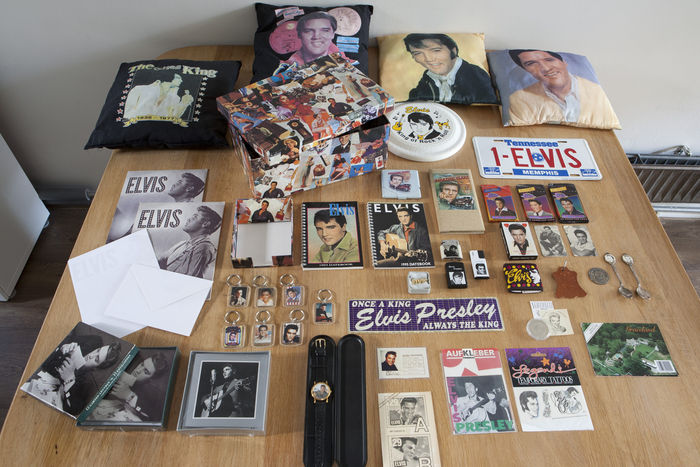
B)  As a former huckster and promoter in the circus and carny businesses, and as manager for country artists like Gene Austin and Hank Snow in the ’40s and early ’50s, Parker knew all about how to attract paying customers, and he brought those skills to bear on Presley’s behalf.  He built the Elvis brand into a money-making juggernaut through saturation marketing never before seen in the music business, not even for big stars like Frank Sinatra.  Merchandise of all kinds — charm bracelets, ornaments, record players, you name it — were plastered with Elvis’s image.  In 1956 alone, merchandise brought in $22 million, an unheard-of sum at the time.

C)  Parker pulled the right strings to get Presley invaluable exposure on popular national TV shows like The Milton Berle Show, The Steve Allen Show and particularly The Ed Sullivan Show.  These appearances, which included some of the famous “Elvis the Pelvis” hip gyrations that created such controversy (and priceless publicity), sent his celebrity status into the stratosphere.

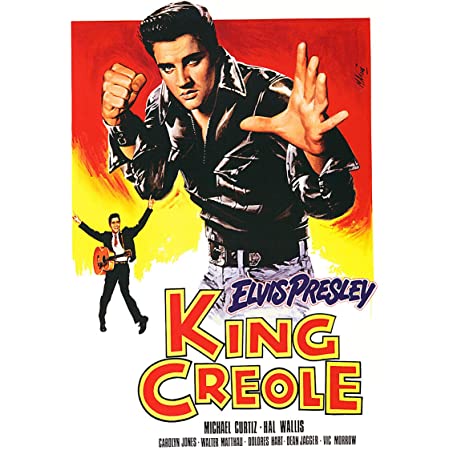
D)  Presley was very interested in making films, and Parker was instrumental in securing a screen test with Paramount Pictures.  He then negotiated a seven-movie deal for Presley that would bring in new revenue streams, both at the box office and from soundtrack albums.  His first several efforts, including “Love Me Tender,” “Jailhouse Rock” and especially “King Creole,” were big successes and even earned some decent reviews from conservative critics who mostly disapproved of him.

E)  When authorities threatened to jail Presley for “indecent” acts on stage, Parker arranged for Presley to volunteer for a two-year stint in the Army (1958-1960), serving as a regular soldier at boot camp and on Army bases in Germany. According to author Alanna Nash in her 2010 book bout Presley and Parker, “This would sand off the rough edges of his image and bring him back as the all American boy fit for family entertainment. It was all to make him a beloved pop idol. And it worked.” Parker arranged for Presley to record a backlog of songs (including huge hits like “Hard Headed Woman,” “One Night,” “A Fool Such as I” and “A Big Hunk o’ Love”), which would be released every few months to keep his name in the public eye during his absence.

So Parker made himself invaluable to Presley in those early years, as a manager, as a father figure, as a mentor and confidante.  This bond, while initially comforting and financially beneficial, would prove to be hugely detrimental to Elvis from 1960 on.

Consider the following ways Parker hindered, obstructed, and cheapened Elvis’s potential and reputation, and cheated him (knowingly and unknowingly) out of untold millions:

A)  Presley loved the contact with fans through live performing, and had toured incessantly during his pre-Army years.  That came to an end in 1961 when Parker pulled the plug on Elvis concerts for nearly all of the 1960s, convinced that his future instead lay in Hollywood.  This lack of live appearances during his prime hurt Elvis terribly, as the popular music scene changed in 1964 with the arrival of The Beatles and the “British invasion,” Motown groups, folk rock acts, psychedelic rock bands and more, all of whom thrived in the vibrant club/concert scene.  Presley was conspicuous in his absence, and it helped foment the perception of him as a has-been, a relic from a previous era.

The soundtrack LP to Presley’s 1967 bomb

B)  Parker signed Presley to a long-term movie deal that in hindsight can only be described as disastrous.  Elvis fancied himself a serious dramatic actor, but when his first few efforts in that vein fell flat, Parker pushed him to star in a total of 27 (!) lightweight, low-budget musical comedies which, although profitable, were universally panned.  Even the songs Parker arranged for Presley to sing in these inconsequential films were, at best, average and, at worst, cheesy and embarrassing.  The soundtrack albums sold well for a while, producing a couple of hits each, but by 1965, both the albums and the singles had trouble breaking into the Top 40.  His credibility with music fans plummeted.

C)  Presley was approached multiple times over the years to tour internationally to Europe, Japan, South America, Saudi Arabia and more.  Parker said no to all offers, regardless of how lucrative they were, and here’s why (and the new movie stresses this point):  Unbeknownst to virtually everyone, Tom Parker had a secret past.  He was, in fact, Andreas Cornelis van Kuijk, born in Holland, who worked on the docks at a young age and entered the United States illegally at age 18 by jumping ship in New York harbor, eventually enlisting in the Army, taking the name “Tom Parker” from the colonel who interviewed him, and later got in trouble and earned a dishonorable discharge.  Much later, as an illegal immigrant with no passport, he refused to travel abroad for fear he would ultimately be detected and deported, or refused re-entry.  So Presley’s many opportunities to earn more money and fame on the international stage was ultimately thwarted by Parker’s fear of deportation.

Priscilla and Elvis on their wedding day, 1967

D)  While stationed in Germany in 1959, Presley, then 23, met 14-year-old Priscilla Beaulieu, and they ended up conducting an on-again off-again courtship for nearly seven years, mostly hidden from public view at Parker’s insistence (to his credit, since the public would find it scandalous).  Elvis’s flings with his Sixties movie co-stars angered Priscilla, who by 1967 pressured him to marry her or risk exposure of their “sordid” relationship and the kind of negative publicity that sunk Jerry Lee Lewis’s career in the ’50s.  What did Parker do?  He sided with Priscilla, citing a “morals clause” in Presley’s contract with RCA, and joined those pushing for the wedding.  Elvis felt railroaded with no options, and reluctantly agreed.  Six years later, when the marriage ended, the financial consequences proved enormous (see next item).

E)  To satisfy the demands of the divorce settlement, Elvis needed quick cash, so Parker made a decision that now looks so ill-advised as to be insane:  He sold Elvis’s back catalog to RCA for $5.4 million — everything he recorded prior to 1973.  Some say neither Presley nor Parker could have known how valuable the back catalog would become, but others say that’s nonsense, and that a savvy business manager would have seen the folly in giving it up.  The Presley estate has estimated that the lost royalties from the catalog have been well over $2 billion.

F)  In the music business, a manager typically received a cut of between 10-20%, but incredibly, Parker engineered contracts with Elvis that eventually gave him up to 50% of everything — royalties, merchandise, record sales, concert appearances, the works.  Some of Presley’s inner circle (the “Memphis Mafia,” a group of friends who were with him from the beginning) urged him to stand up to Parker, but he rarely did, for a number of reasons:  naiveté, an inclination to be deferential, gratitude for making him famous, and a resignation exacerbated by the prescription drugs that made him lethargic and ambivalent.  In any case, Parker’s money grab reeks of greed and self-interest at Elvis’s expense. The fact that Parker was in the grips of a serious gambling addiction with huge debts only partly explains the man’s insatiable lust for more than his fair share of Presley’s wealth.

A mock-up of “what might have been”

G)  On more than one occasion, Presley received offers to appear in films or participate in recording sessions with other established artists.  Elvis was Barbra Streisand’s original choice to be her co-star in the huge 1976 film “A Star is Born,” but Parker turned it down because he didn’t want Elvis to be upstaged, nor to play the part of a star on his way down.  Presley was reportedly enraged when he learned of Parker’s decision.  Likewise, Robert Plant of Led Zeppelin, a huge Elvis fan from way back, wanted to record some material together with Presley in the mid-’70s, but again, Parker said no, fearing the comparisons between Presley and the much younger, fitter Plant.

The heartbreaking upshot of all this, of course, is that the world will never know how much more outstanding work Elvis Presley could have accomplished if given the chance.  Just think if he’d been out on the road, here and abroad, giving more concerts during his peak years.  Imagine him recording much better songs to compete with the higher caliber of material coming from emerging artists at the time.  Fantasize about him jamming with Zeppelin, or John Lennon, or Ray Charles, or who knows who else.   All of it might have been possible if Parker had not stood in his way.

It’s a mighty sad commentary on Parker’s myopic focus on his own self-aggrandizement that, at Parker’s funeral in 1997, where Priscilla Presley delivered the eulogy, she ended it this way:  “Elvis and the Colonel made history together, and the world is richer, better and far more interesting because of their collaboration.  And now I need to locate my wallet, because I noticed there was no ticket booth on the way in here, but I’m sure that the Colonel must have arranged for some toll on the way out.”

***********************

There’s a scene early in the film where Presley is performing at a country music venue, and his electric stage presence ignites something deep down in the young women in attendance. In the words of Parker, whose character narrates the story in retrospect, “If I could find an act that gave the audience feelings they weren’t sure they should enjoy, but did, I could create the greatest show on Earth.” That was Parker’s mission, and he largely achieved it, but not without dire consequences down the road.

At the time of the film’s release in June, Luhrmann had this to say: “If Elvis represented the soul and the ‘new’ in America — the possibility in America, the rags and riches in America, all those positive, very American things — the Colonel represents the sell. The promotion. The branding. The promises. But the more I learned about Parker, the more I saw that it was the sell overwhelming the other side.”

Tom Hanks as the devious “Colonel” Tom Parker

Hanks, who has played mostly admirable characters in his film career, was intrigued by Parker’s paradoxical nature. Said Hanks: “Baz said to me, ‘There would’ve been no Colonel Tom Parker without Elvis. And there certainly would’ve been no Elvis without Colonel Tom Parker.’ And when he said that, I said, ‘Oh, well, okay, now that’s a new take on the Elvis legend.’ Up to that point, my limited understanding of Parker is of this mercurial, puppeteer-like, quasi-evil, greedy manager who took advantage of Elvis from the get-go. The Parker-Presley partnership made some of the most brilliant moves in the history of show business, but because of his own personal problems, Parker felt forced to manipulate his star into doing things detrimental to his career.”

I would be remiss not to mention the eye-opening performance of Austin Butler as The King. Whether he’s performing as Elvis the energetic 20-year-old, or as the sluggish 40-year-old, or just interacting with his family or his posse, Butler has absolutely nailed Presley’s demeanor and mannerisms. He is a joy to watch.

Elvis clearly demonstrates the ways in which Parker was integral in crafting Presley into an icon, but it also doesn’t hold back in exposing the abuses and limitations of that relationship — a paradox and tragedy that Hanks says became the most intriguing driving force in his portrayal. For the devoted Elvis fan, and for the casual observer, Luhrmann’s new movie is an absorbing revelation.

***************************

This playlist includes #1 hits and personal favorites, most of which were featured in Baz Luhrmann’s “Elvis” film.