Oh Lord, please don’t let me be misunderstood

Our sense of hearing is, to say the least, imperfect.  Depending on how closely we’re listening, how clearly the speaker or singer is enunciating, and whether there’s extraneous music or other sounds, we fairly often mishear what’s being said or sung, and we conclude incorrectly what we think we heard.

The official term for this is a mondegreen, coined by American writer Sylvia Wright in 1954.  As a young girl, she enjoyed listening to her mother read aloud from a book of 17th Century Scottish poems, one of which included the line, “They had slain the Earl of Moray and laid him on the green.”  Wright incorrectly heard this as, “They had slain the Earl of Moray and Lady Mondegreen.”  Even after she learned of her error, she decided she preferred her version, and chose to call this phenomenon a mondegreen.

Probably the most famous example of misunderstood rock music lyrics is in Jimi Hendrix’s hit “Purple Haze.”  The correct words are: “‘Scuse me while I kiss the sky,” but many people insist they hear “‘Scuse me while I kiss this guy.”  A guy named Gavin Edwards even published a book of misunderstood lyrics in 1995 that uses the Hendrix mondegreen as its title.

Another amusing mondegreen that’s mentioned now and then is in Creedence Clearwater Revival’s 1969 song “Bad Moon Rising,” where “There’s a bad moon on the rise” is hilariously misinterpreted as “There’s a bathroom on the right.”

There are many more examples of misheard rock lyrics from not only the ’60s, ’70s and ’80s, but from the ’90s and up to the present day.  Some of these seem far-fetched; I doubt anyone really hears “She moves in mysterious ways” and thinks it’s “Shamu, the mysterious whale.” Ditto Billy Joel’s “You may be right, I may be crazy” being somehow interpreted as “You made the rice, I made the gravy…”

There are also purveyors of parodies — artists like Weird Al Yankovic and Bob Rivers who have come up with a whole song’s worth of whimsical lyrics to go with an original song’s melody. (Queen’s “Another One Bites the Dust” becomes “Another One Rides the Bus”). If some of these seem a bit forced or contrived, well, perhaps that’s the point.  It’s all in good fun.

Some mondegreens, of course, are lyrics that have been intentionally misread for comedic effect. Charles Grosvenor Jr. published a book in 2007 with the catchy title, “Hold Me Closer, Tony Danza,” a deliberate misreading of the 1971 Elton John-Bernie Taupin lyric, “Hold me closer, tiny dancer.”

I’ve seen dish towels and sweatshirts bearing clever words designed to satirize well-known songs. Here’s an example: The Eurythmics’ 1983 hit “Sweet Dreams Are Made of This” offers these lyrics: “Sweet dreams are made of this, who am I to disagree, I travel the world and the seven seas, everybody’s looking for something…“ But the dish towel reads: “Sweet dreams are made of cheese, who am I to dis a Brie, I cheddar the world, and a feta cheese, everybody’s looking for Stilton…

Let’s get back to mondegreens.  It has happened to everybody at one time or another — you think you know the words that are being sung, and then find out later (sometimes many many years later) that you have been mistaken.  For nearly four decades, I swear I thought the words to The Monkees’ smash hit “I’m a Believer” included the line, “When I needed sunshine on my brain.”  Turns out Micky Dolenz was singing, “When I needed sunshine, I got rain.”  Who knew?  Not me.

When Don Henley sings The Eagles’ classic ballad, “Desperado,” the first verse includes the line, “you’ve been out riding fences for so long now…”  But some listeners claim they thought the line was, “You’ve been outright offensive for so long now…

It’s pretty damn obvious that the opening line of the theme song to the 1984 film “Ghostbusters” is “If there’s something strange in your neighborhood, who you gonna call?  Ghostbusters!”  Still, some wise guys prefer to think he’s singing, “Who you gonna call?  Those bastards!

When Dylan first met The Beatles and offered some marijuana to share, they were wary because they’d never tried it.  Dylan replied, “But what about the line in your song — ‘I get high, I get high, I get high…’?”  They explained that the proper lyric from “I Want to Hold Your Hand” was “I can’t hide, I can’t hide, I can’t hide…”

Here’s a bizarre interpretation of the lyrics to the chorus of Michael Jackson’s iconic 1983 hit “Beat It,” which go: “Beat it, beat it, no wants to be defeated…”  Perhaps this will raise an eyebrow, but some claim they have always sung along this way:  “Heated, heated, no wants a beef fajita…

The Stevie Nicks song “Dreams” from Fleetwood Mac’s “Rumours” LP includes the line, “Thunder only happens when it’s raining,” but some say it sounds like “Thunder’s only half as wet as rain is.”

From the legendary “Stairway to Heaven,” when Robert Plant belts out the couplet “And as we wind on down the road, our shadows taller than our souls,” some listeners sing along incorrectly, “And there’s a wino down the road, I should have stolen what I sold…

In 1963, Bob Dylan sang, “The answer, my friend, is blowing in the wind”… or was it “The ants are my friend”?

When Crystal Gayle sang, in 1978, “Don’t it make my brown eyes blue,” some fans say they thought the words were “Donuts make my brown eyes blue.”

In The Beach Boys #1 hit “Good Vibrations,” the line is “She’s giving me excitations,” not “She’s given me eight citations.”

From The Eagles’ “Hotel California,” the lyric begins, “On a dark desert highway, cool wind in my hair,” NOT “Cool Whip in my hair.”

Smokey Robinson and The Miracles had a big single whose title was “I Second That Emotion,” and yet, someone thought she heard “I suck at that emotion.”

The Police’s early hit “Message in a Bottle” opens with the line, “A year has passed since I wrote my note”… or is it “A year has passed since I broke my nose”?

We all assume The Rolling Stones sang, “I’ll never be your beast of burden,” but maybe it was “I’ll never leave your pizza burnin’…”

We can safely conclude that Madonna was no virgin when she sang, “Like a virgin, touched for the very first time,” but I doubt she was saying, “touched for the 31st time.”

In Nirvana’s megahit “Smells Like Teen Spirit,” is Kurt Cobain singing “Here we are now, entertain us” or “Here we are now, in containers”?

Elvis Presley’s 1969 classic, “Suspicious Minds” begins, “We’re caught in a trap, I can’t walk out”… or is it “We call it a tramp, I can’t walk out”?

In the popular Phil Collins tune “In the Air Tonight,” a few people thought “I’ve been waiting for this moment for all my life” was instead “I’ve been waiting for this snowman for all my life.”

Dobie Gray’s 1973 song “Drift Away” says, “Give me the beat, boy, and free my soul,” not “Give me The Beach Boys, and free my soul…”

Does ’70s rocker Eddie Money have “two tickets to paradise” or “two chickens to paralyse”?

How about R.E.M.’s 1991 song “Losing My Religion”? Are the words “That’s me in the corner, that’s me in the spotlight” or “Let’s pee in the corner, let’s pee in the spotlight”?

In Bon Jovi’s classic “Livin’ On a Prayer,” does he sing “It doesn’t make a difference if we make it or not” or does he sing, “It doesn’t make a difference if we’re naked or not”?

The early Bruce Springsteen tune “Blinded by the Light” includes the line “revved up like a deuce, another runner in the night,” but Manfred Mann’s remake sounds like they’re singing, “Wrapped up like a douche, another loner in the night…”

In “Groovin’,” the Young Rascals song, are they singing about “you and me endlessly” or is it “you and me and Leslie”?

When Toto sings about blessing the rains in “Africa,” are they singing “There’s nothing that a hundred men or more could ever do” OR “There’s nothing that a hundred men on Mars could ever do”?

Pink Floyd’s “Another Brick in the Wall” sings about “no dark sarcasm in the classroom,” but perhaps it’s “no docks or chasms in the classroom…”

How about Abba’s big disco hit from 1977?  “See that girl, watch that scene, diggin’ the dancing queen” or “See that girl, watch her scream, kicking the dancing queen…”

Finally, here’s a mondegreen that just might make more sense than the actual lyric.  In 1968, Iron Butterfly was recording a song called “In the Garden of Eden” after having polished off a gallon of cheap red wine, and vocalist Doug Ingle slurred as he sang, “In-a-Gadda-Da-Vida, baby.”  Some listeners prefer their own interpretation:  “In a glob of Velveeta, baby…”

*****************************

There’s even a game out now where teams compete to be the first to identify the correct lyrics for each misunderstood lyric on the playing cards. Lots of fun!

*****************************

You make me laugh, you make me smile

Can rock music be funny?

Sure it can, in a number of different ways.  We might begin with a couple of jokes about rock bands:

Q:  What do you call a rock musician who doesn’t have a girlfriend?  A:  Homeless.

Or:  “Mom, when I grow up, I want to be a rock guitarist.”  “You can’t do both, son.”

Or how about:  Q:  Did you hear about Bono falling off the stage at a U2 concert?  A:  He was standing too close to The Edge.  (Cue the rim shot)

Ahem.

The primary way rock music can be funny is in the lyrics.  The rock and pop music pantheon has many dozens of artists from the ’60s, ’70s and ’80s who knew how to write words designed to make us laugh, whether it’s just one or two amusing lines or entire songs.  My readers will no doubt be able to come up with many other examples, but the ones I’ve cited below are the songwriters who have impressed me with their ability to write funny stuff.  (And there’s a Spotify playlist at the end that includes some of their best.)

1*YiXJ_jcj1SllwNhxYccVSA

Jimmy Buffett has released nearly three dozen albums over four-plus decades, each containing at least one whimsical track.  A quick look at a partial list of song titles alone should have you chuckling:  “The Weather is Here, Wish You Were Beautiful,” “It’s Five O’Clock Somewhere,” “Off to See the Lizard,” “Why Don’t We Get Drunk and Screw,” “It’s Midnight and I’m Not Famous Yet,” “We Are the People Our Parents Warned Us About,” “Trying to Reason with Hurricane Season.”  He’s even got a song called “Door Number Three” that tells the tongue-in-cheek story of a contestant on the game show “Let’s Make a Deal.”

Frank Zappa and his erstwhile band, The Mothers of Invention, made many dozens of albums featuring a unique blend of rock, jazz, classical and avant-garde, with titles like “Weasels Ripped My Flesh,” “We’re Only In It for the Money,” “Sheik Yerbouti” and “Shut Up and Play Yer Guitar.”  In his voluminous catalog are scores of outrageously funny, adult-rated tracks like “Dinah-Moe Humm,” “Stick It Out” and “Penguin in Bondage,” as well as more radio-friendly tunes like “Don’t Eat the Yellow Snow” and “Valley Girl.”

mqdefault

Randy Newman has used humor in his songs ever since his 1968 debut LP, which includes “Mama Told Me Not to Come,” the song (later made into a #1 hit by Three Dog Night) about the awkward boy at a party who wished he’d listened to his mother’s advice.  Ten years later, he had his own hit, “Short People,” which used dry humor to skewer those who discriminate against people who are different than they are.

Arlo Guthrie‘s repertoire includes several funny songs like “Comin’ Into Los Angeles” (a humorous look at smuggling weed), and the legendary “Alice’s Restaurant,” in which he takes 18 minutes to tell a mostly true story about protesting the Vietnam war that starts out with Guthrie being arrested for, of all things, littering.

The great Tom Waits has written numerous tracks that feature wry lyrics, none more than on his 1976 LP “Small Change,” with songs like “Step Right Up,” “Pasties and a G-String” and “The Piano Has Been Drinking (Not Me).”  I love this line from “Better Off Without a Wife”:  “She’s been married so many times, she’s got rice marks all over her face…”

0d8b472ac30ec904aa781f9e690cc19c--simon-garfunkel-paul-simon

Although known more for lyrics of poignancy and melancholy, Paul Simon has written some funny lyrics as well.  From 1970’s “Cecilia”:  “I got up to wash my face, when I come back to bed, someone’s taken my place…”  From 1973’s “Kodachrome”:  “When I think back on all the crap I learned in high school, it’s a wonder I can think at all…”  From 1986’s “You Can Call Me Al”:  “Why am I soft in the middle when the rest of my life is so hard?…”

Country music has its share of humorous lyrics, and two of the biggest hits by country rockers The Charlie Daniels Band — 1973’s “Uneasy Rider” and 1978’s “The Devil Went Down to Georgia” — both used humor to tell tales of a long-haired hippie avoiding a beating in a redneck bar, and an absurd fiddle-playing contest between Satan and a young Southern boy.

3fcd8210-2bd2-4edd-ad5a-2f8730942715

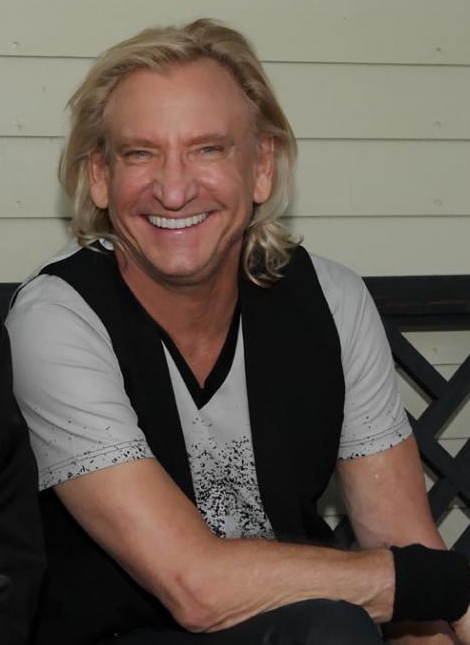
Joe Walsh employed self-deprecating humor to satirize his rock star lifestyle in the 1978 hit “Life’s Been Good”:  “My Maserati does 185, I lost my license, now I don’t drive… I got me an office, gold records on the wall, just leave a message, maybe I’ll call…” 

Aerosmith‘s 1975 tune “Big Ten-Inch Record” used a sexual double entendre to comic effect:  “She said, ‘Now, stop that jivin’, and whip out your big ten-inch….record of a band that plays the blues…'” 

J Geils Band‘s 1981 song “Centerfold” took an amusing look at a boy who is crushed when the girl he idolizes at school turns up in a nudie magazine pictorial: “My blood runs cold, my memory has just been sold, my angel’s in a centerfold, my angel’s in a centerfold…”

The 1950s song “Twisted,” recorded in 1973 by Joni Mitchell, took a droll approach to psychoanalysis:  “My analyst told me that I was right out of my head, but I said dear doctor, I think that it’s you instead… To prove it, I’ll have the last laugh on you, because instead of one head, I got two, and you know two heads are better than one…”

Johnny Cash had his biggest pop hit with the whimsical “A Boy Named Sue” in 1969, and Commander Cody enjoyed his only foray on to the pop charts in 1972 with his amusing country-pickin’ ode to fast cars,”Hot Rod Lincoln.”

Meat Loaf‘s “Paradise By the Dashboard Light” is a humorous mini rock opera about a couple going through the motions of whether or not to have sex:  “Will you love me forever?…What’s it gonna be, boy?  Yes or no?…Let me sleep on it…” 

8cd5e75d72045a2c079dabfac81b49f2

Even rock gods like The Beatles weren’t above knocking off a track that amounted to comedy.  On the flip side of the “Let It Be” single, released as the band was breaking up in 1970, there was a strangely funny piece called “You Know My Name (Look Up the Number),” which saw the Fab Four horsing around in a variety of voices and styles that put an emphatically comic exclamation point on their otherwise sterling career.

**************************

There was a strange British outfit called the Bonzo Dog Doodah Band that put out some seriously humorous parodies — check out “The Intro and the Outro” for a quickie introduction.

The “rockumentary” film by Rob Reiner known as “This is Spinal Tap” certainly qualifies as a presentation of very funny rock music.

500x500

There’s a whole category of (purportedly) funny music known as “novelty songs,” which are usually lame little ditties, often written expressly as a one-off to capitalize on some pop culture trend or figure.  The once-popular craze known as “streaking” — running naked through a public place — sparked country singer Ray Stevens’ big #1 hit “The Streak” in 1974, and the huge success of citizens band (CB) radios in the mid-’70s made C.W. McCall’s 1976 disgrace “Convoy” a #1 hit.  That same year, Rick Dees rode the tails of the disco craze with the excruciatingly idiotic “Disco Duck.”

Early one-hit wonders like The Rivingtons and Bobby “Boris” Pickett had cultural curiosities in 1962 with their funny camp classics, “Papa-Oom-Mow-Mow” and “Monster Mash,” respectively.  Brian Hyland, who also had a few typical early ’60s hits like “Sealed With a Kiss,” went to #1 with the amusing 1960 bossa nova novelty track, “Itsy Bitsy Teeny Weeny Yellow Polkadot Bikini.”

The popularity of the “Peanuts” comic strip in the ’60s gave a group called The Royal Guardsmen all the impetus they needed to reach #2 on the charts in 1966 with “Snoopy vs. the Red Baron,” a slight confection complete with sound effects of WWII airplane dogfights.

R-4647087-1452452539-4366.jpeg

Singer songwriter Harry Nilsson had a big hit in 1972 with “Coconut,” a silly tune about how a doctor prescribes a drink of coconut and lime to relieve a bellyache.  Rock and roll icon Chuck Berry even found his way to #1 on the charts a few months later with “My Ding-a-Ling,” a throwaway ode to his penis.

6-6-KING-TUT-Facebook-300x225

Comedy acts have had occasional success with musical bits that became popular enough to reach the Top 40.   The pot-smoking comic duo Cheech & Chong made fun of cheesy R&B songs — first came “Basketball Jones,” a sendoff of the 1973 single “Love Jones,” and later on in the Seventies, “Bloat On,” a parody of the Floater’s #2 hit “Float On.”  “Hello Muddah, Hello Faddah” was Allan Sherman’s funny 1963 song about the trials and tribulations of summer camp:  “All the counselors hate the waiters, and the lake has alligators, you remember Jeffrey Hardy, they’re about to organize a searching party…”  Seventies comic sensation Steve Martin made the hit parade in 1978 with his hilarious single, “King Tut,” a spoof of the Egyptian boy-king:  “Born in Arizona, moved to Babylonia, King Tut…”

WeirdAl-500x400

In a category pretty much by himself is “Weird Al” Yankovic, who writes pointed lyrical parodies of popular tunes.  His most famous was the #16 hit “Eat It,” his takeoff on Michael Jackson’s #1 smash “Beat It,” where he lambastes a kid’s fussy eating habits.  He had plenty more along these lines, poking fun at songs by Madonna (“Like a Surgeon”), The Knack (“My Bologna”), Queen (“Another One Rides the Bus”), Joan Jett (“I Love Rocky Road”), Huey Lewis (“I Want a New Duck”), James Brown (“Livin’ With a Hernia”) and Cyndi Lauper (“Girls Just Want to Have Lunch”), to name just a few from his first few albums in the mid-’80s.

***************************

Lastly, let’s not forget that some rock musicians have a pretty good sense of humor, saying some hilarious things in interviews with the press over the years.

As Keith Richards was facing drug-related charges in a Canadian courtroom, he said, “Let me be clear about this:  I don’t have a drug problem, I have a police problem.”

Frank Zappa, always quick with a caustic zinger, once described rock journalism as “people who can’t write interviewing people who can’t talk in order to provide articles for people who can’t read.”

54ae0542efaaf619106e71d9be745f1d--alice-cooper-classic-rock

Guitarist Angus Young of the heavy metal band AC/DC poked fun at the band’s critics this way:  “I’m sick to death of people saying we’ve made 11 albums that sound exactly the same. In fact, we’ve made 12 albums that sound exactly the same.”

Alice Cooper had a big hit in the fall of 1972 called “Elected,” and when he was asked who he supported in the upcoming presidential election, he said, “If you’re listening to a rock star to get your information on who to vote for, you’re a bigger moron than they are.”

George Harrison, commenting on the “new” single the remaining Beatles produced in 1995 from an old John Lennon cassette:“I think John would have liked ‘Free As A Bird.’  In fact, I hope somebody takes all my crap demos when I’m dead and makes them into hit songs too.”

Joe Walsh, when asked if he still like playing “Rocky Mountain Way” at every concert, replied, “If I knew I had to play that song the rest of my life, I probably would’ve written something better.”

Jimi Hendrix once noted how other guitarists were attempting to mimic his style of playing,saying, “I’ve been imitated so well, I’ve heard people copy my mistakes.”

898578_1323479502140_full

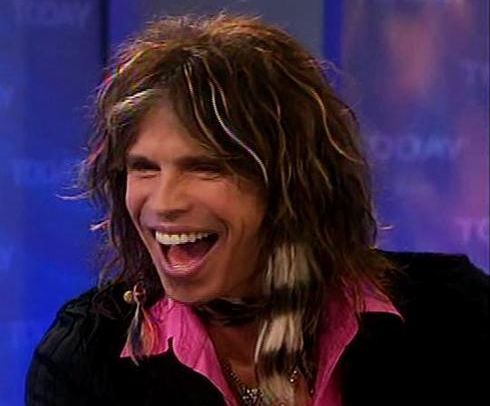
In defending his many years of excessive bad-boy behavior, Aerosmith’s Steven Tyler said, “We believed anything that was worth doing was worth overdoing.”

Paul McCartney, reflecting on the craft of songwriting, said, “There’s nothing like the thrilling moment of completing a song that didn’t exist before.  I won’t compare it to sex, but it sure lasts longer.”

The Eurythmics’ Annie Lennox, commenting on creeping commercialism among rock stars, said, “There are two kinds of artists left — those who endorse Pepsi and those who simply won’t.”

images-16

Guitar great Jeff Beck, saying he was overwhelmed upon first seeing Jimi Hendrix perform, said, “After I saw Jimi play, I just went home and wondered what the hell I was going to do with my life.”

When reporters asked Elvis Presley some technical questions about music, he responded, “I don’t know anything about music, but in my line of work, you don’t have to.”

***************************