Ain’t the afterlife grand?
I figure the best way to know if a songwriter is any good is by reading what others, particularly other songwriters, have to say about him.
If that’s true, then damn. John Prine must be one of the best there ever was.
 Asked in 2009 to list his favorite songwriters, Bob Dylan put Prine front and center. “Prine’s stuff is pure Proustian existentialism. Midwestern mind trips to the nth degree. And he writes beautiful songs.”
Kris Kristofferson, upon discovering Prine in a small club in Chicago in 1971: “No way somebody this young can be writing so heavy. John Prine is so good, we may have to break his thumbs.”
Close friend and frequent collaborator Bonnie Raitt: “He was a true folk singer in the best folk tradition, cutting right to the heart of things, as pure and simple as rain. For all of us whose hearts are breaking, we will keep singing his songs and holding him near.”
Jack Antonoff, songwriter/guitarist/singer in the indie rock ban “fun.”, said: “John Prine is as good as it gets. An honor to be alive in his time.”
Bruce Springsteen tweeted, “John was a true national treasure and a songwriter for the ages. He wrote music of towering compassion with an almost unheard-of precision and creativity when it came to observing the fine details of ordinary lives. He was a writer of great humor, funny, with wry sensitivity. It has marked him as a complete original.”
**********
Music critics can be a fickle bunch, but they have been nearly unanimous in their admiration for Prine over the years. A few quotes:
Alanna Nash of Entertainment Weekly: “John Prine’s best work has always been slightly cinematic and hallucinogenic, full of images that transport as well as provoke.”
Margaret Renkl, a New York Times contributing opinion writer, wrote in 2016: “The new John Prine — older now, scarred by cancer surgeries, his voice deeper and full of gravel — is most clearly still the old John Prine: mischievous, delighting in tomfoolery, but also worried about the world.”
Michael Branch of CNN: “John Prine was a gifted writer and vintage American troubadour who reminded us that life is as comical as it is heartbreaking, and that we should never fail to empathize with others.”
Greg Jaffe of the Washington Post: “Many journalists loved John Prine because he did what we try to do: document America.”
The late Roger Ebert, writing about a Prine concert in 1971: “He sings rather quietly, and his guitar work is good, but he doesn’t show off. He starts slow. But after a song or two, even the drunks in the room begin to listen to his lyrics. And then he has you.”
************
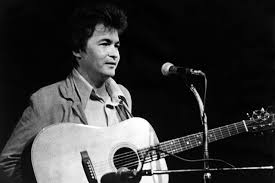 By all accounts, Prine was a kind, sweet guy, but he was also one tough cookie. Despite a lack of much commercial success during his five decades in the music business, he nevertheless persevered, started his own record company (Oh Boy Records) and recorded 18 studio LPs and two live albums. He was on the road a lot in the early days, and he continued performing well into his ’60s and ’70s as health permitted. He also survived two major cancer-related surgeries in 1998 and 2013. But on April 7, he fell victim to the coronavirus. He was 73.
You’ll all pardon me if I’m kicking myself these days. I somehow failed to pick up on Prine and his work when he was first starting out in the early ’70s when he wrote and recorded many of his best songs. I’m pretty sure a couple of my friends in college tried to turn me on to some of his tunes, but I too quickly dismissed him because his gruff voice wasn’t much to my liking.
Ah, but here’s the thing: Prine’s voice was perfect for the kind of songs he wrote. Like his inspirations, Dylan and Johnny Cash, he sang in a sometimes-wry, sometimes-bitter conversational style that was perfectly suited to his simple melodies and common-man lyrics.
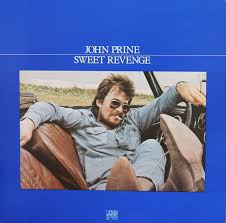
Prine’s 1973 LP
I’ve always put Dylan, Joni Mitchell, Paul Simon and Leonard Cohen at the forefront of my list of the greatest lyricists of my lifetime, but I have discovered (after the fact, I’m embarrassed to admit) that John Prine belongs in that exalted group. He offered such wonderfully keen observations on the human condition, often very concise:
“Just give me one extra season so I can figure out the other four.”
“I don’t care if the sun don’t shine, but it better, or people will wonder.”
“Broken hearts and dirty windows make life difficult to see.”
“We were trying to save our marriage and perhaps catch a few fish, whatever came first.”
“If it weren’t so expensive, I’d wish I were dead.”
In these and other examples, Prine often wrote in the first person, sharing his own experiences and fantasies, in turn poignant, angry and whimsical. But he just as often served as narrator for his fictional and true-to-life tales, putting potent words into the character’s mouths.
A mother speaking to her son about his absent father: “Your daddy never meant to hurt you ever, he just don’t live here, but you got his eyes.”
An elderly woman referring to her husband: “My old man is another child that’s grown old.”
An adolescent boy singing about his troubled father: “There’s a hole in Daddy’s arm where all the money goes.”
Most provocatively, speaking for Jesus: “I’m a human corkscrew and all my wine is blood. They’re gonna kill me, Mama. They don’t like me, bud.”

His 1991 comeback
Prine echoed the belief many songwriters share when he said, “I felt sometimes I was a conduit, a channel through which songs arrive from an unknown source, maybe God.”
He had periods when songwriting came almost effortlessly. “Sometimes, a song takes about as long to write it as it does to sing it. They come along like a dream or something, and you just got to hurry up and respond to it, because if you mess around too long, the song is liable to pass you by.”
When major or minor life events occurred, both good and bad, they became fodder for new material. “ After my second divorce,” he said with a chuckle in 1990, “about a month later, the song truck pulled up and dumped a bunch of great songs on my lawn.”
Prine had a singular approach to songwriting. “I think the more the listener can contribute to the song, the better. Rather than tell them everything, you save your details for things that exist. Like what color the ashtray is. How far away the doorway was. So when you’re talking about intangible things, like emotions, the listener can fill in the blanks. You just draw the foundation.”
In his 1973 song “Grandpa Was a Carpenter,” Prine painted a picture in such a way that listeners could easily insert memories of their own grandfathers: “”Well, he used to sing me ‘Blood on the Saddle’ and rock me on his knee, and let me listen to radio before we got TV, well, he’d drive to church on Sunday and take me with him too, stained glass in every window, hearing aids in every pew.”

Prine’s 1971 debut
Last year, Prine was inducted into the Songwriters Hall of Fame, where he summed up why he chose a life as a songwriter: “I gotta say, there’s no better feeling than having a killer song in your pocket, and you’re the only one in the world who’s heard it.”
There were two Prine tunes I discovered long ago as cover versions by other artists. One was “Angel From Montgomery,” recorded by Raitt on her 1974 LP “Streetlights.” She and Prine sang it together often, most recently at the 2020 Grammy Awards, where he won a long-overdue, well-deserved Lifetime Achievement Award.
The other one was the heartbreaking “Hello In There,” which Bette Midler recorded for her first album. In it, Prine described the pain and loneliness that aging brings, and he urged us all to pay attention: “Old trees just grow stronger, and old rivers just grow wilder every day, old people just grow lonesome, waiting for someone to say, ‘Hello in there, hello.'”
I’m sure as hell paying attention now, Mr. Prine.
He left behind an impressive legacy of nearly 200 songs, and you’d be hard pressed to find one you could label a clunker. His favored genres were country, folk, a little bluegrass and what is now popularly called Americana, and he did them all well. His songs are generally pretty basic, three- or four-chord construction, which makes them easy to learn on guitar, something I’ll be doing for the next few weeks. And they’re easy to sing too, so you can bet they’ll start showing up at occasional singalongs by the fire pit, especially the funny ones.
 Take “In Spite of Ourselves,” the title track from his 1999 album which features duets with some of country music’s best female vocalists. The song’s blunt lyrics offer a fairly hilarious yet poignant dialog between Prine and Iris DeMent as husband and wife who adore each other but view their marriage quite differently. Husband: “She thinks all my jokes are corny/ convict movies make her horny/ she likes ketchup on her scrambled eggs and swears like a sailor when shavin’ her legs/ she takes a lickin’ and keeps on tickin’,/ I’m never gonna let her go…” Wife: “He ain’t got laid in a month of Sundays/ I caught him once and he was sniffin’ my undies/ he ain’t too sharp but he gets things done/ drinks his beer like it’s oxygen/ he’s my baby and I’m his honey/ never gonna let him go…”
Or consider 1973’s “Please Don’t Bury Me,” a whimsical look at death that now takes on an entirely deeper meaning: “Please don’t bury me down in that cold cold ground, no, I’d druther have ’em cut me up and pass me all around, throw my brain in a hurricane, and the blind can have my eyes, and the deaf can have both of my ears if they don’t mind the size.”
I see that the new generation of country singers adores Prine with as much enthusiasm as their predecessors do. Check out this YouTube video of Prine sitting on stage with Kacey Musgraves as she plays a song she wrote called “Burn One With John Prine.” It’ll bring tears and chuckles in equal amounts.
Rest in Peace, John. Much obliged for your fine body of work.
*********************
A Spotify playlist of some of Prine’s finest tunes. Dial ’em up!
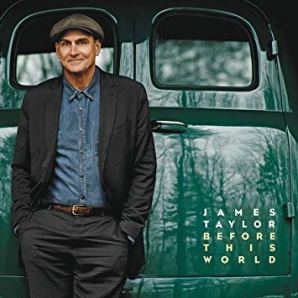 Taylor has had such a long, mostly successful career, from the over-the-top hits of his “Sweet Baby James” and “Mud Slide Slim” LPs in 1970-1971 through a mid-’80s slump to the Grammy-winning “New Moon Shine” and “Hourglass” in 1991 and 1997. He seemed to run out of steam with his ho-hum 2002 release, “October Road,” which hinted that his songwriting muse had abandoned him. Although he has maintained a presence on the road with his yearly tours, he released no new studio recordings for a dozen years.
 Ian Anderson, now 72, has been one of the most fascinating characters in rock. Articulate storyteller. Flute virtuoso. Supreme showman. And about as prolific a songwriter as you can name. Between the Jethro Tull catalog and his solo work, he has personally written more than 250 songs on two dozen albums over a 50-year career.
 The proud, prolific founder and chief songwriter of The Kinks is often regarded as a quintessentially British tunesmith, but he has also professed a keen interest in American music and culture, and has lived in the U.S. (New York and New Orleans) at various times. In 2015, he published his memoirs, entitled “Americana: The Kinks, The Road and The Perfect Riff,” which focused on his on-again, off-again relationship with the United States. Two years later, he released “Americana,” an extraordinary album that continues the story set to music.
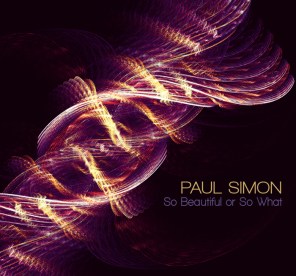 Although Paul Simon has been writing some of the most iconic songs of our time for more than 50 years, he is far from prolific. There were only five Simon & Garfunkel albums, and since going solo 45 years ago, he has released only 12 studio LPs of new material. Clearly, though, he has made up for in quality what he lacks in quantity. “Still Crazy After All These Years,” “There Goes Rhymin’ Simon” and especially “Graceland” are among the finest albums of the past several decades.
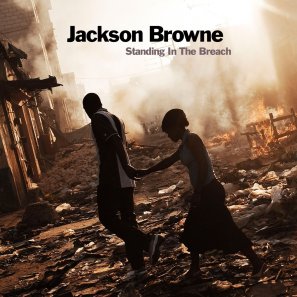 Browne at 71 is still very much a passionate man, a gifted songwriter and a pleasing singer and guitarist-pianist. From 1972 to 1986, he cranked out seven excellent LPs full of memorable tunes like “Fountain of Sorrow,” “Running on Empty,” “The Pretender,” “These Days,” “Of Missing Persons,” “For Everyman,” “Lives in the Balance” and “Rock Me On the Water.” He made his mark with deeply personal tunes about relationships but later evolved to comment on the perplexing human condition in the world arena.
 If you’re like me, you’ve had a love-hate relationship with Paul McCartney’s solo career. Thanks to consistently strong albums like “Ram,” “Band on the Run” and “Tug of War,” you’ve kept coming back to check out his latest release, only to be disappointed when there’s only two or three decent tracks to be found. That’s happened way more often than not, partly, I think, because he got lazy as he went along, turning dozens of half-finished ideas into unsatisfying recordings.
 Donald Fagen’s superb legacy as a co-founder of Steely Dan is well documented, but his solo LPs haven’t always received the same kind of attention. He and his late partner Walter Becker had been quite prolific, churning out amazing new albums every year for most of the ’70s, but then Becker had some personal problems, and Fagen went out on his own, opting to put out new music at a much more leisurely pace. ” The Night Fly” in 1982 (mistaken by many as a new Dan LP) and the disappointing “Kamikiriad” in 1993 were his only output in the Eighties and Nineties.
 Nearly 40 years after their powerful debut album, Tom Petty and The Heartbreakers still had the chops, the savvy and the songs that resulted in “Hypnotic Eye,” an album every bit as good as his brilliant LPs from the ’70s, ’80s and ’90s. In fact, the bulk of the tracks are a welcome return to the styles he exhibited on those first few records. “Red River” is reminiscent of the great anthem “Refugee,” and “Full Grown Boy” could be a sequel to “Breakdown.”
 Five years in gestation following 2009’s “No Line on the Horizon,” due to writer’s block and group dissension about the recordings, this compelling album was finally released in 2014 to rave reviews, despite an unfortunate backlash from their marketing move to automatically download it to every iPhone, whether consumers wanted it or not.
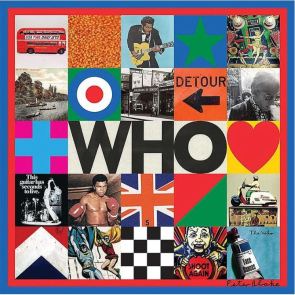 If you read Pete Townshend’s autobiography, “Who I Am,” you’ll learn that he struggled with self-esteem issues all his life, yet somehow managed to write hundreds of incredible songs, some of which dealt with the stuff that had troubled him — alcoholism, anger, fear, isolation. From “My Generation” to “Behind Blue Eyes,” from “However Much I Booze” to “How Many Friends,” Townshend amassed a spectacular body of work with The Who and on his solo records from the mid-’60s into the 2000s.
 Hack's Back Pages