Making great music after all these years
In Part 3 of 3 segments examining the music I enjoyed during the 2010-2019 decade, I take a look at a handful of albums written and recorded by vintage artists from the ’60s, ’70s and ’80s. You’ve got to give these folks credit that they can still produce quality work some 30, 40 or 50 years after first breaking into the music business.
****************
I’m going to let you in on a little secret.
Some of the biggest names in rock music history — those who came of age and put out their most iconic records in the ’60s, ’70s or ’80s — were still writing and releasing great new music in the 2010s.
Some of my readers are big fans of the great old stuff but very likely haven’t been paying attention to new album releases for many years. If you liked Steely Dan or The Kinks, for instance, you should be thrilled to discover recent solo albums by Donald Fagen (“Sunken Condos”) and Ray Davies (“Americana”). They’ve been out for six and three years, respectively, but few people know it.
Here at Hack’s Back Pages, we aim to correct that. I, for one, think we should celebrate the stamina and the willingness these artists have shown to continue sharing their marvelous talents with us long after they’ve got anything left to prove. I have the utmost respect for artists like Paul Simon or Paul McCartney who are still creating quality songs as they approach 80 years old!
There’s a Spotify list at the bottom. Enjoy!
***********************
“Before This World,” James Taylor, 2015
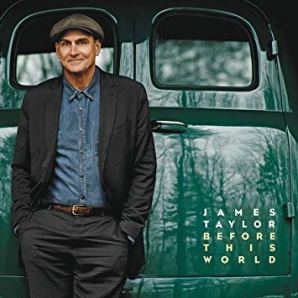 Taylor has had such a long, mostly successful career, from the over-the-top hits of his “Sweet Baby James” and “Mud Slide Slim” LPs in 1970-1971 through a mid-’80s slump to the Grammy-winning “New Moon Shine” and “Hourglass” in 1991 and 1997. He seemed to run out of steam with his ho-hum 2002 release, “October Road,” which hinted that his songwriting muse had abandoned him. Although he has maintained a presence on the road with his yearly tours, he released no new studio recordings for a dozen years.
Then, suddenly, “Before This World,” a welcome surprise in 2015. Turns out he did have a case of writer’s block, so he sequestered himself in a waterfront apartment in Rhode Island for months and, bless him, gave birth to SO many entertaining songs here! He can still come up with something whimsical like “Angels of Fenway,” a loving tribute to the favorite baseball team he and his grandmother once shared, and then turn on a dime and conjure up a harrowing piece such as “Far Afghanistan,” which examines the grim historical truths of that Godforsaken country: “They fought against the Russians, they fought against the Brits, they fought old Alexander, talking ‘bout him ever since, and after 9/11, here comes your Uncle Sam, another painful lesson in the far Afghanistan…”
Mostly, the LP is full of the warm melodies and friendly tempos for which he has always been known — “Wild Mountain Thyme,” “Before This World,” “Watching Over Me” and the refreshingly gorgeous “You and I Again,” which examines the rekindling of a relationship that suffered a rocky period: “You were tending your own fire, we were biding our time, both of us waiting for the moment when our backs would come together, you and I… And so although I know we are only small, in the time we have here, this time we have it all, you and I again, this time, this time…”
“Thick as a Brick 2,” Ian Anderson, 2012
 Ian Anderson, now 72, has been one of the most fascinating characters in rock. Articulate storyteller. Flute virtuoso. Supreme showman. And about as prolific a songwriter as you can name. Between the Jethro Tull catalog and his solo work, he has personally written more than 250 songs on two dozen albums over a 50-year career.
In 2011-12, Anderson got the creative idea of revisiting his classic LP “Thick as a Brick” to explore what might have become of the fictional child poet Gerald Bostock who had been jokingly credited as having written the words to “Brick.” In the lyrics to “Thick as a Brick 2,” Anderson suggests five possible roads the character might’ve traveled: a greedy banker, a troubled homeless man, a soldier in the Afghan War, an evangelist preacher, or an ordinary small-town shopkeeper. Anderson muses philosophically, “We all must wonder, now and then, if things had turned out – well – just plain different. Chance path taken, page unturned…”
Musically, he uses the same song structure you’ll recall from the 1972 original — seven or eight major sections that, when laced together, constitute one hour-long song. Some themes recur in different tempos and arrangements — the main rock theme heard in “Banker Bets, Banker Wins,” for instance, shows up again later in “Wooton Bassett Town.” Anderson and his musically proficient sidemen have successfully collaborated 40 years later to provide a worthy sequel to the iconic “Brick.”
By all means, don’t sit this one out.
“Americana,” Ray Davies, 2017
 The proud, prolific founder and chief songwriter of The Kinks is often regarded as a quintessentially British tunesmith, but he has also professed a keen interest in American music and culture, and has lived in the U.S. (New York and New Orleans) at various times. In 2015, he published his memoirs, entitled “Americana: The Kinks, The Road and The Perfect Riff,” which focused on his on-again, off-again relationship with the United States. Two years later, he released “Americana,” an extraordinary album that continues the story set to music.
It had been nearly 20 years since the final Kinks album and the band’s breakup (which everyone saw coming, thanks to the Davies brothers’ notoriously tempestuous relationship). Ray’s uncannily creative songwriting kept things afloat, and its quality didn’t waver much through a long career that enjoyed only occasional commercial success.
“Americana” bowled me over. Davies can still write a great melody, and it’s a treat that, at 72, he can write enough of them to fill a whole album. The instantly likable “Poetry” sounds like an outtake from the best Tom Petty album, while “The Great Highway” is more reminiscent of early ’80s Talking Heads. The songs take us on a journey through distinctly American scenes: “Rock ‘n Roll Cowboys,” “A Long Drive Home to Tarzana,” “Silent Movie,” “Wings of Fantasy.” The title track does a beautiful job of showing his awe at the breadth and beauty of this country, despite its troubles: “I wanna make my home where the buffalo roam, in that great panorama… In the steps of the great pioneers, over air, sea and land, still I can’t understand how I’m gonna get there from here, wherever it goes, it’s gonna take me somewhere…”
“So Beautiful or So What,” Paul Simon, 2011
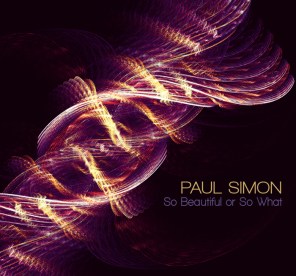 Although Paul Simon has been writing some of the most iconic songs of our time for more than 50 years, he is far from prolific. There were only five Simon & Garfunkel albums, and since going solo 45 years ago, he has released only 12 studio LPs of new material. Clearly, though, he has made up for in quality what he lacks in quantity. “Still Crazy After All These Years,” “There Goes Rhymin’ Simon” and especially “Graceland” are among the finest albums of the past several decades.
But even in his 60s, Simon continued to create fantastic songs. The inventive music and compelling lyrics found on his tantalizing 2011 release “So Beautiful or So What,” is a wonder to behold. Once you get caught up in the rolling, hypnotic rhythm that drives the excellent title song, you just don’t want it to end. I remember being knocked out by an amazing live performance of the song by Simon and his band on “Saturday Night Live” that year. He has said his songwriting process always begins with a rhythm, usually something new or unusual that catches his attention. Here’s solid proof of that.
Consider, also, the intriguing track “The Afterlife,” which ruminates on what actually happens when we reach the pearly gates. Leave it to Simon to suggest that we’ll have to cope with paperwork and crowds, as if we’re at the motor vehicle bureau: “After I died, and the make up had dried, I went back to my place, no moon that night, but a heavenly light shone on my face, still I thought it was odd there was no sign of God just to usher me in, then a voice from above, sugar coated with love, said, ‘Let us begin: You got to fill out a form first, and then you wait in the line…'”
“Standing in the Breach,” Jackson Browne, 2014
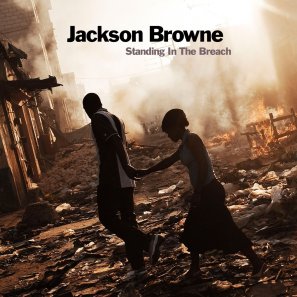 Browne at 71 is still very much a passionate man, a gifted songwriter and a pleasing singer and guitarist-pianist. From 1972 to 1986, he cranked out seven excellent LPs full of memorable tunes like “Fountain of Sorrow,” “Running on Empty,” “The Pretender,” “These Days,” “Of Missing Persons,” “For Everyman,” “Lives in the Balance” and “Rock Me On the Water.” He made his mark with deeply personal tunes about relationships but later evolved to comment on the perplexing human condition in the world arena.
He hasn’t stopped making albums in the years since his heyday — there were new ones in 1989, 1993, 1996, 2002 and 2008, some of them very good. So it’s a shame they didn’t reach the level of awareness and sales success just because his core audience had moved on or retired. Browne’s music has pretty much always been worth the time it takes to investigate it.
Six years ago, he came out with “Standing in the Breach,” a decidedly political record that forces us to look at some of the unpleasant truths in our world today (“they say nothing lasts forever, but all the plastic ever made is still here”), but it does so with a positivity that offers some degree of hope (“We’re a long way gone down this wild road we’re on, it’s going to take us where we’re bound, it’s just the long way around…”). Musically, it’s a really nice collection of melodies and some top-flight musicianship from the likes of Greg Leisz on guitar, Benmont Tench on keyboards and Bob Glaub on bass. Browne’s vocals, I’m pleased to report, remain an important strength in these proceedings as well.
“Egypt Station,” Paul McCartney, 2017
 If you’re like me, you’ve had a love-hate relationship with Paul McCartney’s solo career. Thanks to consistently strong albums like “Ram,” “Band on the Run” and “Tug of War,” you’ve kept coming back to check out his latest release, only to be disappointed when there’s only two or three decent tracks to be found. That’s happened way more often than not, partly, I think, because he got lazy as he went along, turning dozens of half-finished ideas into unsatisfying recordings.
Finally, though, in 2017, he took the time to assemble “Egypt Station,” a remarkably consistent collection of compelling songs. The album is bursting with McCartneyesque melodies, alternately playful and deadly serious — “I Don’t Know,” “Hand in Hand” “Dominoes.”
There’s also a fun oddity provocatively titled “Fuh You” which tries to slide the f-bomb by, and “Back In Brazil” is a surprisingly successful electro-samba excursion. “Do It Now” recalls 1982’s “Here Today,” his paean to former partner Lennon, only this time it’s an older-and-wiser Paul pontificating on the kind of emotional resolutions you seek when you realize how short life is. “Despite Repeated Warnings” shows McCartney at his most politically charged, worrying about the apocalypse.
He’s now 77, and you have to wonder if he’s got any more in him after this. In my opinion, someone needs to advise him that, regardless of the high quality of the songs here, his voice is a far cry from its earlier brilliance (see “Confidante” for clear evidence).
“Sunken Condos,” Donald Fagen, 2014
 Donald Fagen’s superb legacy as a co-founder of Steely Dan is well documented, but his solo LPs haven’t always received the same kind of attention. He and his late partner Walter Becker had been quite prolific, churning out amazing new albums every year for most of the ’70s, but then Becker had some personal problems, and Fagen went out on his own, opting to put out new music at a much more leisurely pace. ” The Night Fly” in 1982 (mistaken by many as a new Dan LP) and the disappointing “Kamikiriad” in 1993 were his only output in the Eighties and Nineties.
The twosome reconvened under the Steely Dan banner in 2000 on “Two Against Nature,” which won an Album of the Year Grammy on the strength of songs like “Cousin Dupree” and “Jack of Speed.” It was followed in 2003 by a lesser collection of tracks called “Everything Must Go,” which turned out to be the final entry in the Steely Dan repertoire. Fagen had another solo flop in 2006 with the comparatively weak “Morph the Cat,” but he and Becker continued to maintain the sterling nature of the Steely Dan brand with their regular touring commitments almost every year in the 2010-2015 period.
Curiously, when assembling concert set lists during this period, Fagen largely ignored his excellent fourth solo album, “Sunken Condos,” a strong set of originals that deserves a place of prominence in the ranking of Fagen’s total musical output. There are several of those trademark funky jazz tunes like “Miss Marlene,” “The New Breed” and “Slinky Thing,” with sexy guitar riffs and smart horn arrangements aplenty. He sounds like he’s channeling Stevie Wonder in his galloping cover of the old Isaac Hayes chestnut “Out of the Ghetto,” and best of all, there’s “Weather in My Head,” a mid-tempo blues with marvelous words that use extreme weather events — typhoons, sea-quakes, floods — to describe the emotional damage when a relationship crumbles: “They may fix the weather in the world…but what’s to be done, Lord, ’bout the weather in my head?…”
“Hypnotic Eye,” Tom Petty and The Heartbreakers, 2014
 Nearly 40 years after their powerful debut album, Tom Petty and The Heartbreakers still had the chops, the savvy and the songs that resulted in “Hypnotic Eye,” an album every bit as good as his brilliant LPs from the ’70s, ’80s and ’90s. In fact, the bulk of the tracks are a welcome return to the styles he exhibited on those first few records. “Red River” is reminiscent of the great anthem “Refugee,” and “Full Grown Boy” could be a sequel to “Breakdown.”
Other songs show a more mature Petty. The six-minute closer, “Shadow People,” builds nicely from a haunting beginning to a fuller sound with lyrics that eerily foreshadow his death: “Well I ain’t on the left, and I ain’t on the right, I ain’t even sure I got a dog in this fight, in my time of need, in my time of grief, I feel like a shadow’s falling over me…”
The album debuted at #1 upon its release, and while that achievement in the downloadable age doesn’t carry the same significance it once did, it nonetheless stands as proof that his music remained popular even as the business around him changed. Listening to this album again this week was a wistful experience, for it drove home the reality that we won’t be hearing any more new music from this fine band. Petty worked his ass off, giving his all, and the grueling pace and concurrent lifestyle took their toll. We lost him earlier than we should have…but we’ll always have the albums, including his excellent final one.
“Songs of Innocence,” U2, 2014
 Five years in gestation following 2009’s “No Line on the Horizon,” due to writer’s block and group dissension about the recordings, this compelling album was finally released in 2014 to rave reviews, despite an unfortunate backlash from their marketing move to automatically download it to every iPhone, whether consumers wanted it or not.
But this is U2, who have a formidable track record, so let’s listen to the music. “Songs of Innocence” is actually Part One of a two-part outpouring of new songs that concluded two years later with the lesser “Songs of Experience.” Lead singer Bono had been uncertain about the band’s ability to stay relevant in changing times, but he needn’t have worried. “Songs of Innocence” in particular is a fantastic LP, no doubt about that. The songs focus on themes of childhood memories and loves and losses, growing up in Dublin in the 1970s, using lush rock arrangements to tell their stories on what The Edge calls “the most personal album we’ve ever written.”
Critics praised the album as “more compact and direct, eschewing the global scale of U2’s previous material for intimate and personal perspectives.” The band pays tribute to early musical inspirations on some of the harder rocking tracks like “The Miracle of (Joey Ramone)” and “Volcano,” while other tunes like “California (There is No End to Love)” and “Sleep Like a Baby Tonight” present U2 at their most melodic. The best of the bunch is “Every Breaking Wave,” with its allusions to the need for intimacy and stability in a relentlessly challenging world: “If you go your way and I go mine, are we so helpless against the tide, every dog on the street knows we’re in love with defeat, are we ready to be swept off our feet and stop chasing every breaking wave?…”
“Who,” The Who, 2019
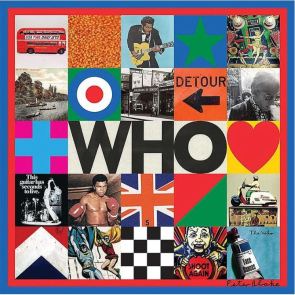 If you read Pete Townshend’s autobiography, “Who I Am,” you’ll learn that he struggled with self-esteem issues all his life, yet somehow managed to write hundreds of incredible songs, some of which dealt with the stuff that had troubled him — alcoholism, anger, fear, isolation. From “My Generation” to “Behind Blue Eyes,” from “However Much I Booze” to “How Many Friends,” Townshend amassed a spectacular body of work with The Who and on his solo records from the mid-’60s into the 2000s.
The Who lost drummer Keith Moon early (1978), and then bassist John Entwistle in 2003, and Townshend and singer Roger Daltrey, despite their differences, have soldiered on through endless “farewell” tours in the years since, performing mostly their greatest hits. Then, lo and behold, just a few months ago, we were treated to a new album simply titled “Who,” and holy smokes, what a huge treat to hear great new songs by Townshend at age 74! The raised-fist glory of “Street Song,” “Hero Ground Zero” and “Rockin’ in Rage” harken back to the days of “Who’s Next” and “Quadrophenia,” while the melodic strains of “I’ll Be Back” and “She Rocked My World” remind me of the gems heard on Townshend’s dives into his home vault on the “Scoop” solo collections.
Through the years, Townshend has been a rather articulate philosopher who tries not to take himself too seriously. He described the new album this way: “There’s dark ballads, heavy rock stuff, experimental electronica, sampled stuff and Who-ish tunes that begin with a guitar that goes yanga-dang.” You can hear his matter-of-fact belief system on “All This Music Will Fade,” the album’s marvelous leadoff track and single, with lyrics that underscore the throwaway nature of pop music: “I don’t care, I know you’re gonna hate this song, and that’s fair, we never really got along, it’s not new, not diverse, it won’t light up your parade, it’s just simple verse, all this music will fade…”
 Some of these musicians are new, meaning they arrived on the scene within the last 10 years. Others first showed up during the 1990s or 2000s, but I didn’t hear them (or they didn’t come up with their best work) until this decade. And still others are vintage artists from my years (1960s, 1970s and 1980s) who are somehow still cranking out some amazing new stuff.
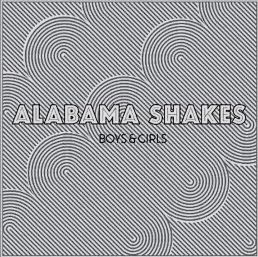 album debut on “Boys and Girls” (2012). Part of its appeal is its rough-around-the-edges production and down-home earthiness, which make the songs sound rawer and more vital. Check out “Rise to the Sun” and “Heartbreaker” for a hint of what I’m talking about.
 impression she could win me over singing the New Jersey phone book.
 Understanding” (2017) are truly a wonder to behold. Adam Granduciel is clearly the wunderkind in charge as chief songwriter, keyboardist and singer, and he joins the ranks of do-it-all musicians like Stevie Wonder, Jack White and Ian Anderson who, although there are other band members who provide color and shading, tend to run the show with an iron fist.
 downright thrilling as layer after layer builds into a shimmering production. There’s such marvelous attention to sonic details, and the push and pull of grittiness and studio polish is mesmerizing. It’s no wonder “A Deeper Understanding” won a 2018 Grammy for Best Rock Album.
 uncanny ability to sound as retro as Al Green or Bobby Womack, although with a more modern day production. On “How Do You Do” (2011), Hawthorne has Temptations send-ups like “Hooked,” falsetto-driven grooves (“A Long Time”), and perhaps the finest kiss-off to an ex-girlfriend I’ve ever heard (“The Walk”). Check out these lines: “I love the way you walk now, and your legs are so long/ well, your looks had me putty in your hand now/but I took just as much as I can stand now/ and you can walk your long legs, baby, out of my life…”
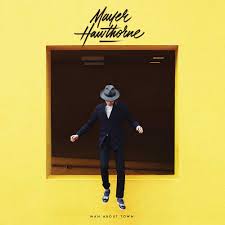 His more recent album “Man About Town” (2016) is also well worth your time. Fabulously sexy ’70s-era soul tunes abound, from “Breakfast in Bed” to “Cosmic Love,” seemingly designed to take us back to those summer nights when The Stylistics and Marvin Gaye were our radio companions to romantic adventures in back seats. There are plenty of dance-floor workouts here too, like “The Valley” and “Love Like That.” In short, Hawthorne and Company bring a broad smile to my face whenever I slide either of these CDs into the player.
 Emily’s songs have matured in both lyrical content and musical sophistication since her early EPs, “Fury, Fear and Heartbreak” (2013) and “The Raw EP” (2015). In 2018, she completed her first full album but chose to release it as two EPs instead — “By the Sun” (2018) and “By the Moon” (2019), which illustrate two different sides of Emily’s songwriting.
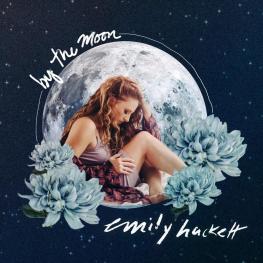 of her pop side and country influence, respectively. “‘By the Sun’ was open and honest, and that continued onto ‘By the Moon,’ but the songs on that one took me to a more vulnerable place,” she says. “It’s like, ‘Now that I’ve introduced myself to you, let’s get real, so I can tell you about the mistakes I’ve made and the lessons I’ve learned.’”
 what they offered that I picked up “Night Visions” (2012) and played it relentlessly for months. The adrenaline rush I would get from the percussion-heavy “Radioactive” and the marvelous light/dark contrast of songs like “Demons” and “Bleeding Out” made me conclude that I’d found a new favorite band, at least for a while (these things do change, though, don’t they?).
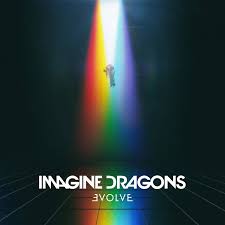 Wayne Sermon and bass/keyboard man Ben McKee. Just as important is how Imagine Dragons utilize drums and percussion in such a dynamic way, taking a simple guitar melody and turning it into something else entirely.
 that communicates passion, adventure and wisdom, and recalls the vocal virtuosity of early Elton John. Indeed, on his debut, “Hozier” (2014), he channeled Elton on the brilliant, self-penned “Take Me to Church,” with majestic highs and lows. There’s a virtual Irish stew of great music to be found here — a healthy dose of R&B, a dash of gospel, a hint of folk and a foundation of bass-driven rock.
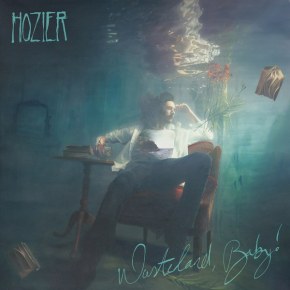 “Wasteland, Baby!” (2019), picks up right where he left off, and is arguably an improvement. Such great tunes, like “Almost (Sweet Music)” and the riveting opener “Nina Cried Power,” which name drops Nina Simone and others who used music to protest injustice, and he invites the great Mavis Staples to add her magnificent chops to the proceedings.
 promised, others take some time to absorb, just as the best progressive rock of the ’70s did (Yes, Genesis, et al).
 Fort Worth, Texas bars and clubs exploded on the musical scene with “Coming Home” (2015), and quickly gained national recognition for this strong batch of Neo-soul. I first heard him on “Saturday Night Live,” where he performed the effervescent “Smooth Sailin'” and the amazing gospel ode “River,” and I was struck by his amazing tenor and vocal control.
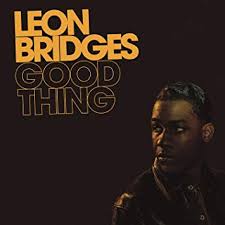 Smokey Robinson and the Holland-Dozier-Holland team at Motown is undeniable. I’m partial to tracks like “Better Man,” “Twistin’ & Groovin'” and “Brown Skin Girl,” which showcase Bridges’ butter-smooth voice and some luscious saxophone licks.
 And yet, I really like his songs and the way he sings them. Take “Supermarket Flowers,” a track from his most recent LP “÷ (Divide)” (2017). It’s a wispy ballad Sheeran wrote as a tribute to his late grandmother, a retelling of the aftermath of her funeral from the perspective of his mother. Though the poetic verses deal with how a loved one’s death can be numbing in its monotony, the chorus, with its angel imagery and “hallelujah”-ing, seems built for cathartic group sing-alongs. It sure worked for me when my mother passed away recently.
 about a lady he admired and then wishes well when she marries someone else. On the other hand, I can do without the big single “Shape of You,” which I find repetitive and boring.
 Nominated for Best New Artist at this year’s Grammy Awards is 25-year-old Maggie Rogers, a gifted singer-songwriter who has found an appealing way to merge her folk style with electronic production. The resulting debut LP, “Heard It in a Past Life” (2019), includes songs from earlier EPs and strong new tunes such as “Light On,” “Fallingwater” and “Past Life,” on which her voice recalls early Joni Mitchell. Several music publications and online sites picked Rogers’ LP as one of the Top 50 of 2019. I love her stuff, and I’m eager to see what happens next for her.
