You know the darkest hour is always just before the dawn

For a guy like me who has always held a special place in my heart for David Crosby and the marvelous music he has made, it has been most gratifying to see the abundance of heartfelt tributes paid to him in traditional and social media in the days and weeks since his death on January 18th at age 81.

Let’s face facts. “Croz,” as he was known to his closest associates, could be a prickly guy, full of challenging opinions and harsh words for friends and foes alike, so it’s not hard to imagine that some of them, when told of his passing, might have privately thought “good riddance.”

And there’s no denying that, thanks to a harrowing descent into full-blown drug addiction in the ’70s and ’80s that culminated in convictions and jail time, he became something of a poster boy for the risks of excessive behavior.

But I’m willing to overlook all of that, because David Crosby has written, sung and played on some of my very favorite songs of the past 60 years — songs that have comforted me, exhilarated me and generally accompanied me on life’s ups and downs, and I’m eternally grateful to him for it.

He was a study in contradiction. He wrote gentle, ethereal music, but he was cantankerous and blunt. He was an extraordinary singer and arranger of layered harmonies, but he was inexorably drawn to hard drugs that put him in prison and almost killed him in the 1980s. He was outspoken and defiant about social issues but also wrote serene, mystical lyrics about love and karma. He was a fun-loving guy with a twinkle in his eye, but he was notoriously difficult to work with. As his longtime musical compatriot Stephen Stills put it, “He was both a genius and an asshole.”

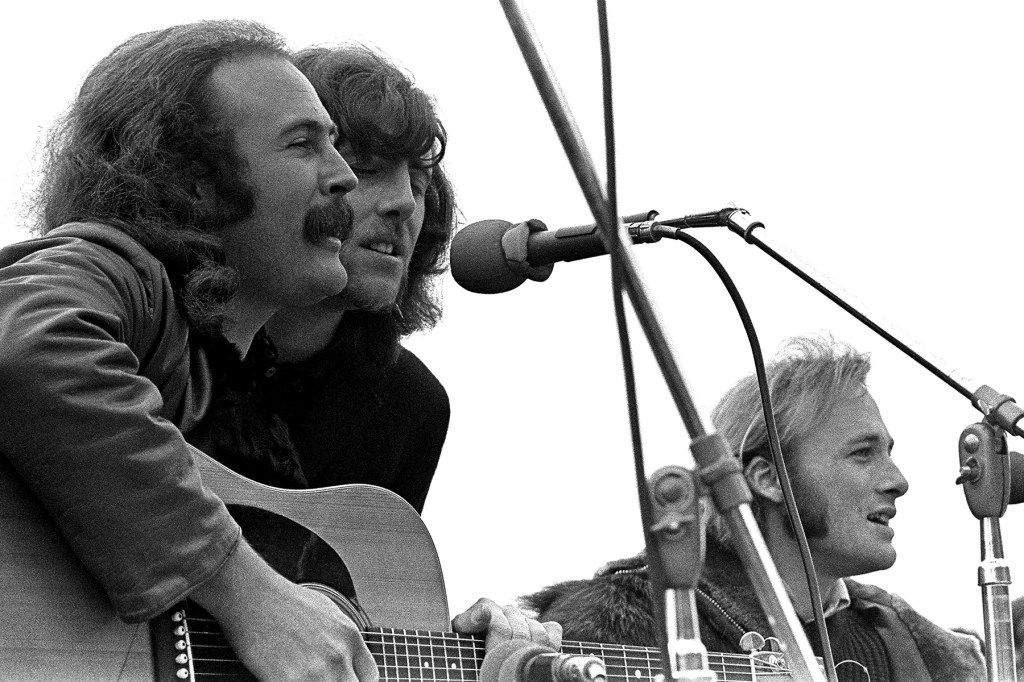
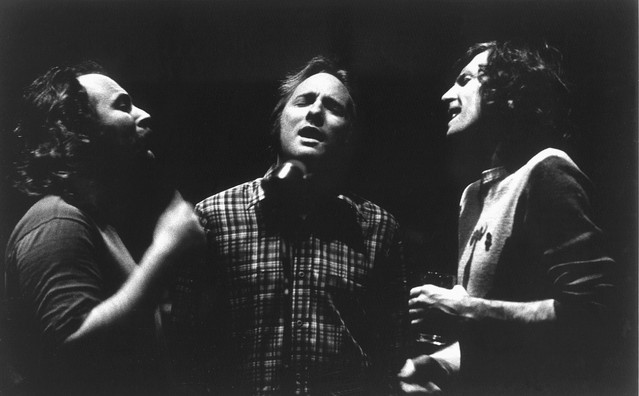
Crosby, Stills and Nash at Big Sur Festival, 1969

As far as I’m concerned, Crosby earned his place in the annals of rock music based on his contributions to two titanic albums: “Crosby, Stills and Nash” (1969) and CSNY’s “Deja Vu” (1970). The lovely “Guinnevere,” the haunting “Long Time Gone,” the apocalyptic “Wooden Ships,” the angry “Almost Cut My Hair” and the magical “Deja Vu” have been hugely influential and impactful in my own musical development, and I never tire of hearing them.

There are so many others — tracks he recorded as a member of The Byrds, on seven solo albums, on a handful of duo LPs with Graham Nash, and on reunion albums with CSN and CSNY. Taken as a whole, which I invite you to do with my Crosby playlist on Spotify at the end of this essay, Crosby’s recorded legacy ranks right up there with the best of the singer-songwriters who came of age in the ’60s and ’70s and beyond.

He has been rightfully praised as one of the very best harmony singers and vocal arrangers in rock music history. He had an uncanny ability to move between the harmonic lines of his various singing partners, crafting unusually creative vocal parts that added uncommon warmth and depth to the songs to which he contributed. As an amateur singer myself, I love to sing along to the harmony parts of great old songs, but if I try to find and stick to Crosby’s parts on the CSN numbers, I fail every time. They’re so densely layered and almost hidden in the mix.

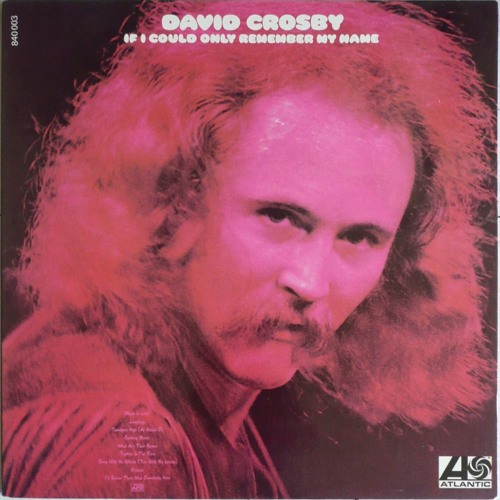
The back cover of Crosby’s 1971 solo debut

Crosby’s own compositions were typically not very commercial, and consequently, they weren’t heard on Top 40 radio. But on the FM stations, his dreamily eccentric melodies and chord changes were just what the doctor ordered. Take his fascinating debut solo LP, 1971’s “If I Could Only Remember My Name,” an eclectic batch of introspective tunes (“Traction in the Rain,” “Laughing,” “Song With No Words”) marked by start-and-stop rhythms, shimmering acoustic guitars and his crystal-clear voice.

British musician Robyn Hitchcock said, “Crosby let jazz, folk and rock’n’roll flow into each other, like a child playing with cups of water by a sink. There was a liquid quality to his songs and music.”

His lyrics could be dense or sharply defined. There’s an eight-minute track on the above LP called “Cowboy Movie” that told the tale of a group of Old West outlaws torn apart by a beautiful woman. In actuality, Crosby was singing about Crosby, Stills, Nash and Young, and how singer Rita Coolidge played a pivotal role in the quartet’s initial breakup because both Stills and Nash had strong feelings for her.

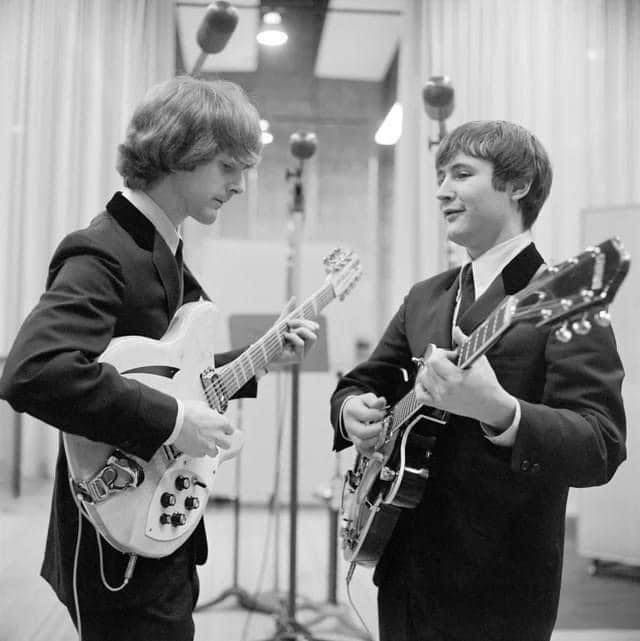
Roger McGuinn and Crosby backstage in 1965

Crosby was a rebel almost from the very beginning. Soon after partnering with Roger McGuinn and Gene Clark to form The Byrds in Los Angeles in 1964, Crosby made it known that he didn’t want to spend his career reimagining the songs of Bob Dylan and others, despite the fact that the group had spectacular success doing exactly that. While he enjoyed coming up with and providing the harmonies that made “Mr. Tambourine Man” and “My Back Pages” so popular, he kept pushing the group to record their own songs. Tentative at first, Crosby grew bolder with enigmatic material like “Everybody’s Been Burned,” “Eight Miles High” and, tellingly, a song about a ménage à trois called “Triad” that the band refused to record. His stubborn individualism ended up getting him fired from The Byrds, but it merely fed his need to further explore and experiment.

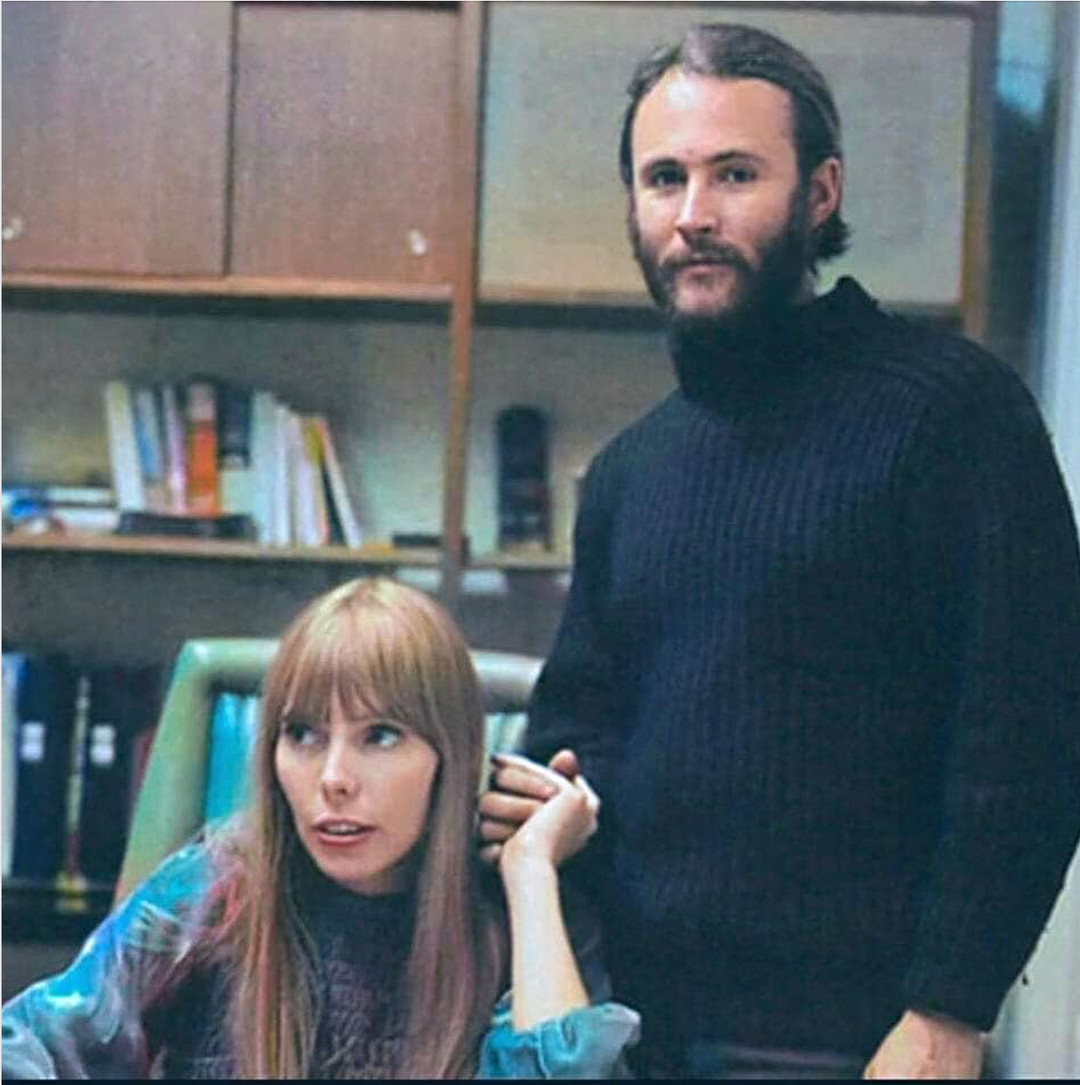
Joni Mitchell with Crosby, 1968

He happened upon a then-unknown Joni Mitchell in a Florida coffee bar, took her to L.A. and supervised production of her debut LP. Around the same time, he met Stills and developed a simpatico musical relationship with him, and when Mama Cass Elliott brought Nash into their sphere and they discovered the indelible three-part harmonies they were capable of producing, the trio found themselves in the vanguard of the “back to the garden” movement that served as a counterpoint to the psychedelic experimentation going on concurrently.

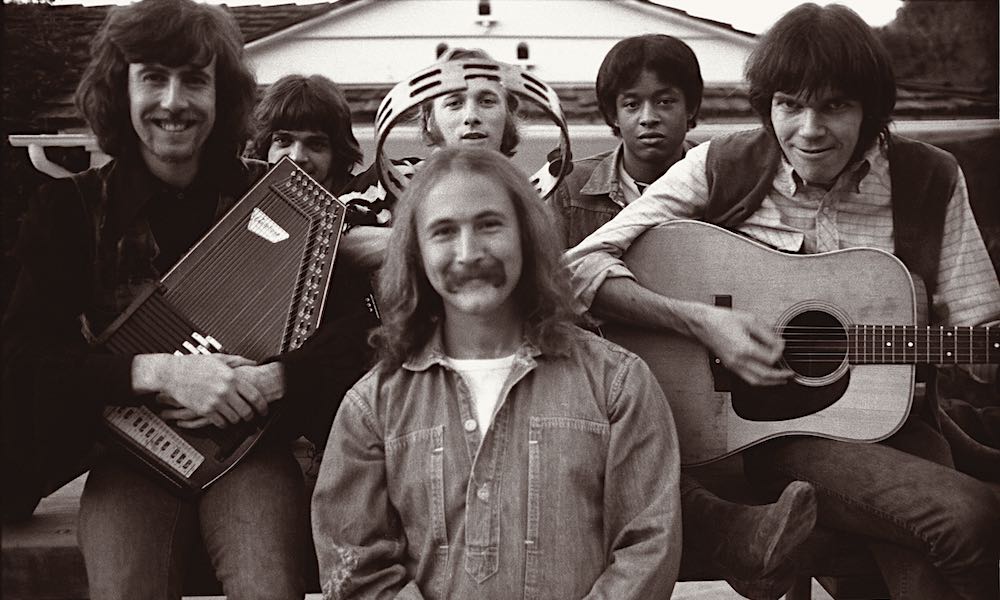
L-R: Graham Nash, drummer Dallas Taylor, Crosby in front with Stephen Stills behind, bassist Greg Reeves, Neil Young (1969)

The threesome beefed up their on-stage sound with the addition of Neil Young, but things almost immediately went south for Crosby when his girlfriend Christine Hinton was killed in a car accident just as sessions for “Deja Vu” were getting underway. “David went to identify her body, and he’s never been the same since,” Nash famously said. Crosby himself added years later, “When I started out doing drugs, it was marijuana and psychedelics, and it was a lot of fun. We believed we were expanding our consciousness. But then the drugs became more for blurring pain, and you don’t realize you’re getting as strung out as you are.”

And yet, Crosby was an avid performer throughout the ’70s, mostly with just Nash and a backing band, contributing fine original songs like “Carry Me,” “Page 43,” “Low Down Payment,” “Wind on the Water” and “Shadow Captain.” As Stills put it in the wake of “CSN,” their marvelous 1977 reunion album, “His voice was the glue that held us together. He was a giant of a musician, and I will miss him beyond measure.”

Crosby, Stills and Nash in 1977

By the early ’80s, his addiction to heroin and freebase cocaine proved stronger than his love for making music, and he withdrew deeper into his problems, ultimately bottoming out in a Texas prison in 1986. Miraculously, he rebounded from that difficult time with his singing voice intact, and he returned to the road and the studio with his musical companions as they resumed their place as a reliable concert draw, offering classics and new compositions alike into the ’90s and 2000s.

Robyn Hitchcock said he marveled at Crosby’s longevity. “Because David did such a great job pulling himself out of the narcotic vortex in the late 1980s, it seemed like he’d be around forever,” he said. “It’s disturbing that he’s gone, almost as much as it’s sad. People like Crosby were built to endure, the way their love of music does, so even 81 seems too soon for him to be called away.”

In documentaries and a couple of autobiographical books, Crosby was as candid as we’ve come to expect from him. When asked if he had any regrets, he said, “Sure I do. I regret all the time I wasted being smashed. More recently, I’ve alienated nearly everyone I know. All the guys I’ve made music with won’t talk to me now. I don’t quite know how to undo the things I’ve said and done.”

Despite his unfortunate tendency to say things he later regretted, he somehow managed to collaborate with many dozens of artists over the years, participating in recording sessions or special live performances with a virtual Who’s Who of rock-era musicians. In addition to Stills, Nash and Young, his voice can be heard on records with James Taylor, Paul Kantner, Jerry Garcia, Phil Collins, Lucinda Williams, Joni Mitchell, Jackson Browne, Dave Mason, Art Garfunkel, Dan Fogelberg, Bonnie Raitt, David Gilmour, John Mayer, Marc Cohn, Donald Fagen, Shawn Colvin, Michael McDonald, Joe Walsh, Elton John and Carole King.

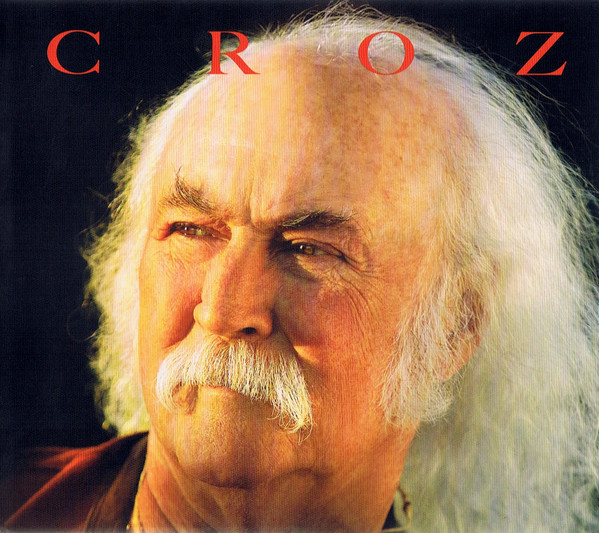
Crosby’s 2014 album “Croz”

Perhaps most remarkable of all, Crosby established a productive musical partnership with his long-lost son, James Raymond, and between 2014 and 2022, he released five albums of quality new material, and presented it in concert. I had the good fortune of seeing him perform at LA’s fabled Troubadour in 2014 as he was promoting “Croz,” the first of these recent releases, and found him to be in fine form indeed.

As he aged, Crosby wrote more often about his mortality and the need to make good use of the time he had left. He told Howard Stern in 2021, I’m at the end of my life, and it’s a very strange thing. Here’s what I’ve come to realize: It’s not how much time you’ve got, because we really don’t know. I could have two weeks, I could have ten years. It’s about what you do with the time that you do have. People get old and die, and that’s how it works. But in the meantime, I’m going to have myself a bunch of fun. I’m going to make some more music.”

Crosby in 2019

He added in a 2022 interview, “I’m too old to perform live anymore. I don’t have the stamina or the strength. But I’ve been making records at a startling rate lately. I’m trying really hard to crank out as much music as I possibly can.”

Consider these lyrics from “I Won’t Stay For Long,” from his final LP: “I’m facing a squall line of a thousand-year storm, /I don’t know if I’m dying or about to be born, /But I’d like to be with you today, /Yes, I’d like to be with you today, /And I won’t stay for long, /I’ve got a place of my own, a little slice, There’s a sliver of air between the water and the ice, /It’s where I live, where I breathe…”

Nash, who stood by Crosby far longer than most but had recently severed ties with him, had only gentlemanly things to say about him after his death. David was fearless in life and in music,” Nash said. “As one of his lyrics goes, ‘I’m not giving in an inch to fear.’ He leaves behind a tremendous void in terms of sheer personality and talent in this world. He spoke his mind, his heart, and his passion through his beautiful music and leaves an incredible legacy. These are the things that matter most.”

***********************

You can take me to the paradise

In 2017, my wife Judy was shopping for clothes with her friend Marie in a Malibu boutique store. When she came out of the dressing room in a fashionable blue jumpsuit, a woman standing nearby exclaimed, “Oh darling, you have to buy that. It looks great on you!” As Judy and Marie returned to the dressing room, Marie whispered, “Isn’t that Christine McVie?” Judy replied, “Sure is!”

We had all gone to see Fleetwood Mac the previous day at Dodger Stadium as part of “The Classic,” a two-day concert showcase of classic rock bands including Steely Dan, The Doobie Brothers, Earth Wind and Fire, Journey and The Eagles. McVie was staying in Malibu for a couple of days and, as luck would have it, had wandered into the store where Judy was shopping.

I tell this story to illustrate that, on that day, McVie was every bit the sort of warm, kind person she has been reputed to be throughout her life. As a member of one of the most successful bands in rock music history, she could have easily been one of the more self-absorbed rock stars who wouldn’t have paid any attention to a stranger trying on a new outfit. But she made a point of stopping and offering a friendly remark, making a lasting impression in the process.

Christine McVie in 1997

It was a sad day last week in our house when we heard that McVie had died at age 79. The cause of death was not reported, but she had been suffering from chronic scoliosis for some time, which affected her mobility and her ability to perform on stage.

In a Rolling Stone article six months ago, she responded to Mick Fleetwood’s hope that the band would reunite for one last farewell tour. “I don’t feel physically up for it,” she said. “I’m in quite bad health. I’ve got a chronic back problem which debilitates me. I stand up to play the piano, so I don’t know if I could actually physically do it. Touring is bloody hard work. What’s that saying? ‘The mind is willing, but the flesh is weak.'”

Said Fleetwood last week, “Part of my heart has flown away today. My dear sweet friend Christine McVie has taken to flight, and left us earthbound folks to listen to the sounds of that ‘songbird.’ I will miss everything about you, Chris.”

********************

Born in Lancashire, England, in 1943, Christine Anne Perfect was raised in a musical environment where her father and grandfather were accomplished performers (concert violinist and organist, respectively). She trained as a classical pianist until her older brother introduced her to rock and roll and the blues. “I couldn’t get enough of B.B. King, Little Walter, Sonny Boy Williamson, all those great Black American blues guys,” she recalled, falling in with other like-minded peers and singing in various struggling groups while attending art college, ultimately becoming keyboardist and singer with a London-based blues band called Chicken Shack.

“In 1966, we talked Christine into joining Chicken Shack,” Stan Webb, the band’s guitarist, said last week. “At that time there weren’t really any female band members on the British blues scene, so she was hesitant. I think she only joined to shut us up! Chicken Shack used the same studios as Fleetwood Mac in 1967-68, and it was there that Chris met Peter Green and his band. The rest is wonderful history. We sowed the seed, and from that seed grew this massive talent. I am grateful to have been a part of it. Rest In Peace, Chris. A legend never dies.”

Christine Perfect, 1969

In 1969, at the same time the original lineup of Fleetwood Mac had three Top Ten albums and four big hit singles on the UK charts, Chicken Shack, with Christine on lead vocals, charted at #14 with “I’d Rather Go Blind,” a smoldering cover of the Etta James blues track. By then, the bands became friendly, performing at the same clubs, often on the same bill. Christine took a fancy to Mac bassist John McVie — “He had a wonderful sense of humor, the most endearing person” — and the two married the same year.

Christine overlapped only briefly with Green, so you don’t see many photos of them together, but she was a huge fan of the original lineup and was keenly aware of Green’s contributions. “He was massively talented, and just a wonderful guy as well,” she recalled. When Green abruptly left the group he founded in 1970, Chris was invited to join on keyboards and occasional vocals. Thanks to guitarists/songwriters Danny Kirwan and, later, Bob Welch, Fleetwood Mac moved on from the blues to a more rock-based sound, sometimes hard-edged but usually with a sweeter, melodic groove. McVie’s original songs started showing up on the group’s LPs during this stage — thoughtful tunes like “Show Me a Smile” on 1971’s “Future Games,” “Spare Me a Little” on 1972’s “Bare Trees,” “Just Crazy Love” on 1973’s “Mystery to Me” and the rousing title track on 1974’s “Heroes Are Hard to Find.”

The band in 1974: John McVie, Mick Fleetwood, Bob Welch, Christine McVie

The media have typically given short shrift to this phase of Fleetwood Mac, overshadowed by the fertile blues period (in the UK) before it, and the stratospherically successful yet emotionally fraught era that followed. I think that’s a shame, because it was on these albums in the 1971-74 period when Christine McVie was showing significant growth as a songwriter and singer, taking on the role of the calm, steadfastly rational center of the lineup she would end up holding throughout her tenure in the band.

By the time Lindsey Buckingham and Stevie Nicks joined the group in 1975, giving Fleetwood Mac a compelling variety of strong material from three talented singer-songwriters, Christine had hit her stride with her sunny brand of melodic songs like “Over My Head” (the group’s first Top 20 single in the US), “Warm Ways” and the contagious “Say You Love Me.” This winning streak continued on the multiplatinum “Rumours” LP with “Don’t Stop” (#3) and “You Make Loving Fun” (#9), and what would become her signature tune, the gorgeous ballad “Songbird.”

Discussing the genesis of “Songbird,” McVie said, “I woke up in the middle of the night and the song just came into my head. I got out of bed, played it on the little piano I have in my room, and sang it with no tape recorder. I sang it from beginning to end: everything. I can’t tell you quite how I felt; it was as if I’d been visited. It was a very spiritual thing.”

Fleetwood Mac in 1975: Lindsey Buckingham, Christine McVie, Mick Fleetwood, Stevie Nicks, John McVie

Want more? There were plenty to come: “Think About Me” and “Brown Eyes” from 1979’s “Tusk”; “Hold Me” and “Only Over You” from 1982’s “Mirage”; and especially “Little Lies” (#4) and “Everywhere” (#14) from 1987’s “Tango in the Night.” McVie’s “Save Me” from 1990’s “Behind the Mask” was Fleetwood Mac’s final appearance on the US Top 40.

Nicks wrote and sang some killer songs in her early days, and Buckingham is a formidable songwriter in his own right, but for the most part, I’ve always found Christine McVie’s songs and vocals more to my liking. She could write a gorgeous, commercially appealing hook, integrate it into a three-minute pop symphony and deliver it with that authoritative yet sweet voice, and I, for one, just lapped it up. A songbird, indeed.

While Christine typically maintained a sense of normalcy as the other band members were caught in various melodramas and rock-star excess, she was not without her own issues. She and John McVie divorced in 1976; she had a public romance with one of the band’s crew members and also Beach Boy Dennis Wilson; and a 15-year marriage to musician Eddy Quintela that ended badly.

McVie in 1984

In the 1980s, when both Buckingham and Nicks pursued solo careers on the side, Christine stuck her toe in the water with a solo album that yielded a Top Ten single, “Got a Hold on Me.” She enlisted the help of Buckingham and Fleetwood on a few tracks, as well as British luminaries Eric Clapton and Steve Winwood, but the LP performed only modestly. Said McVie at the time, “Maybe it isn’t the most adventurous album in the world, but I wanted to be honest and please my own ears with it. I tend to like the traditional sound: three-part harmonies, guitar and piano.” (Check out my Spotify playlist below to acquaint yourself with some of the strong tracks from that album.)

The group’s lineup was full of change in the 1990-1997 period, with Christine McVie, Nicks and Buckingham each leaving for a spell, and temporary replacements Billy Burnette and Rick Vito (and later Dave Mason and Bekka Bramlett) gamely filling in. Somehow, the volatile original lineup mended seemingly unmendable fences and reunited in 1997 for “The Dance,” a live performance that was recorded as a live album that then sparked a year-long tour. It seemed the band was back in the saddle.

In 1998, though, McVie decided she’d had enough, and amicably quit the group and the music business in general. “I thought, ‘I want to be home in England and live a normal, domestic life with roots,'” she said in 2014. “I bought a house in Kent, and it had to be rebuilt brick by brick, and I did that quite lovingly. Then my marriage (to Quintela) fell apart, and I found myself in this huge place, alone in the middle of nowhere, and I got myself in a bit of trouble. I fell down the stairs, hurt my back and started taking pills for the pain. La-di-da, one thing led to the other, and I got a bit isolated. I sought help with a therapist, and discovered I had other issues. Eventually I had to figure out what the hell I was going to do with my life. The answer was clear: I couldn’t just sit there in the country anymore, rotting away. I needed to find my way back to Fleetwood Mac.”

She did record one solo album during that time, 2004’s “In the Meantime,” which again had typically great McVie melodies and vocal performances but was almost completely ignored, a fate for which she claims some responsibility. “I’d developed a fear of flying, which hindered my ability to promote the album or tour with my own band,” she noted. “I’ve never felt like I was a solo artist. I’ve always preferred to be part of a group. I’ve never really had the desire to be the center of attention. It just made me uneasy to headline a solo tour.” (Again, I think that’s a crying shame — I urge you to listen to the music from that album on the playlist below.)

Her final foray into the studio came in surprising fashion when she partnered with Buckingham in 2017 for “Lindsey Buckingham Christine McVie,” an enjoyable collection of tunes by the two songwriters, released after attempts fell through to record a new Fleetwood Mac album with songs from Nicks as well.

McVie and Nicks in 1997

McVie had said she and Nicks hit it off right away when Nicks joined the band in 1975, and they became close during their long months on the road during the band’s peak years, but they had significant differences. “Stevie really had her feet on the ground, along with a tremendous sense of humor, which she still has,” she said in 1984. “But she developed her own fantasy world somehow, which I’m not part of. We really haven’t socialized much.”

Todd Sharp, a veteran American guitarist who worked closely with Christine on her 1984 solo LP, had this to say in the wake of her passing: “She asked me to write songs with her, put a band together and make a record in England. Somebody pinch me! Chris, you left this place better than you found it, and your music and voice will live on forever. I will never forget the opportunity you offered me and the confidence you instilled in me. I will never forget your beautiful soul, your grace, friendship and generosity.”

Fleetwood Mac, with McVie still in the fold, did one last tour in 2019. Her final stage appearance, as it turned out, came in February 2020, just before the COVID pandemic hit, when she participated in a tribute concert at the London Palladium following the death of Peter Green.

McVie’s final LP (2022)

Even as her health was flagging earlier this year, McVie stayed busy by re-recording some of the overlooked tracks from her two solo albums, plus an orchestrated rendition of “Songbird,” and released it several months ago as “Songbird (A Solo Collection).”

Mike Campbell, former member of Tom Petty & The Heartbreakers who played guitar in Fleetwood Mac for that 2019 tour, said last week, “Dear, sweet Christine has left us…..that voice, those eyes, that smile. No one like her in the universe.  I remember in rehearsal once after playing ‘I’d Rather Go Blind,’ she looked at me and said, ‘I like playing the blues with you, Mike.’ I’ve never met anyone with such an angelic aura. Always so kind to everyone. We will all miss you so. No one could ever fill those shoes.”

Christine McVie reflected on her time in Fleetwood Mac by saying, “Even though I am quite a peaceful person, I did enjoy that storm. Although it’s said that we fought a lot, we actually did spend a lot of our time laughing.”

Rest in peace, Christine. Thanks for all the deeply satisfying music you added to my music collection.

***********************

Some readers might find this 80-song playlist rather daunting, but I wanted to provide a complete overview of her songs to help readers understand the breadth of her songwriting career. In addition to every song she wrote and sang for Fleetwood Mac, there are several tracks from her time with Chicken Shack, her three solo albums and her 2017 project with Lindsey Buckingham.