Live a little, be a gypsy, get around
From the very beginning, really, Paul McCartney has been a man of action.
He was an eager lad in his teens when he met John Lennon and formed a songwriting partnership that eventually transformed popular music.
He was the take-charge member of The Beatles when, in the wake of manager Brian Epstein’s death in 1967, he took the reins and worked to motivate the others to keep making music when they would’ve been happy to kick back and rest on their laurels for a while.
Upon the band’s breakup, he endured a bout of depression but quickly snapped out of it and kicked off a solo career marked by a relentless pursuit, year after year, of still more commercial success and artistic exploration.

And now, in 2022, Sir Paul has turned 80 years old…and where is he? He’s out on the road on yet another tour, performing three-hour extravaganzas with a full band before wildly appreciative audiences.
This shouldn’t come as a surprise. In 2012 when he was approaching 70 and embarking on an ambitious schedule of concerts, he was asked if it would be his final tour. “Why would I retire?” he replied. “What would I do then? Sit at home and watch TV? No thanks. I’d rather be out playing.”
I saw 81-year-old Bob Dylan in Hollywood last week, and although his performance was a far cry from the kind of show he was capable of in decades past, and his vocalizing can barely be called singing at this point, I was nonetheless thrilled to be in the same room with such a legend, sharing his songs with us as best he could.
Same goes for McCartney. His fans, some of whom have never seen him in concert before, are willing to pay upwards of $400 for a nosebleed seat just to be there to hear him perform the timeless, memorable songs he has written on his own and as part of The Beatles. They are evidently willing to concede that his once-versatile singing voice simply isn’t as strong these days. It’s often raspy, and he’s unable to hit the higher notes cleanly and sustain them. “So what?” they say in his defense, and they have a point. He’s still full of energy, leading his band through their paces and remaining the crowd-pleaser he has always been.
I could be a buzzkill and single out his cringeworthy vocal performance of “Maybe I’m Amazed” at one of the awards shows a few years back. I remember thinking, “That’s a challenging tune that requires serious vocal acrobatics. Why would he choose to perform that one, on live TV, at age 75 instead of something more safely within his range?”

In this essay, I come to praise Paul McCartney, not to bury him. How can you not admire his longevity as a songwriter, a musician, an arranger, a producer, a performer? The breadth of his achievements during his 60-plus years in the music business is astonishing, leaving virtually all his contemporaries in the proverbial dust. Even his detractors admit that he has had an uncanny knack for composing, arranging and recording many dozens of instantly likable songs, seemingly effortlessly.
What makes McCartney so special is how music comes to him so naturally. “I’m always writing songs, and I’ve got a bunch that I want to record,” he noted in 2018. “I think people who create and write, it actually does flow – just flows into their head from who knows where, into their hand, and they write it down. Nothing pleases me more than to go into a room and come out with a piece of music. It’s simple, really, and for me it’s cathartic. Music is like a psychiatrist. You can tell your guitar things that you can’t tell people, and it will answer you with things people can’t tell you.”
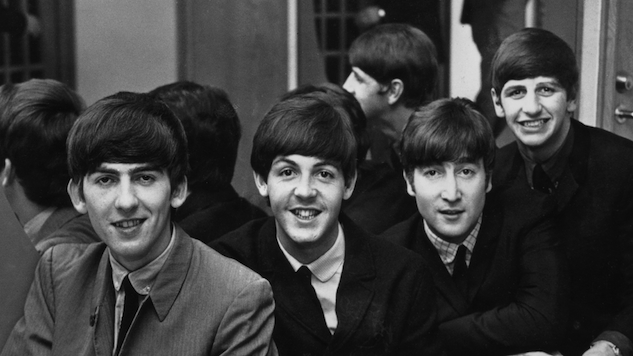
In the early years, though, as Beatlemania took flight in 1963-1964, it was Lennon who was the workhorse, churning out most of the singles and album tracks with McCartney playing more of a supporting role for the most part. It was Lennon’s band, and he was their leader. On their first three albums, Lennon sings lead vocals on more than 70 percent of their material.
But McCartney’s contributions were formidable: “I Saw Her Standing There,” “All My Loving,” “Can’t Buy Me Love,” “And I Love Her” and “Things We Said Today” are all mostly Paul’s songs, and his vocal range, shown in the contrast between the gentle “Till There Was You” and the raucous cover of Little Richard’s “Long Tall Sally,” was exceptional. Having such a keen musical ear, he was also the one who devised and sang the amazing harmonies on tracks like “This Boy,” “If I Fell” and “I’ll Be Back.”
Starting around 1966, three developments occurred more or less simultaneously: McCartney began showing a strong interest in, and an innate flair for, the recording studio process; his abilities on a range of musical instruments, most notably on bass guitar, leaped to the forefront on songs like “Paperback Writer” and “Good Day Sunshine”; and he successfully mastered a diversity of musical styles in the songs he was bringing to the sessions. Consider his songs from “Revolver”: the melancholy imagery and string arrangements for “Eleanor Rigby,” the Motown stomp of “Got to Get You Into My Life” and the exquisite balladry of “Here There and Everywhere” and “For No One.”

From “Sgt. Pepper” onward, McCartney became The Beatles’ de facto leader as Lennon withdrew more into drugs and his all-consuming relationship with Yoko Ono. Paul was firing on all cylinders at this point, shown so clearly in the recent “Get Back” film project when he was writing new songs almost every day as the cameras rolled. Some of his finest songs are from this 1967-1969 period — rockers like “Lovely Rita,” “Getting Better,” “Magical Mystery Tour,” “Back in the USSR,” “Birthday,” “Helter Skelter,” “Oh Darling,” “She Came in Through the Bathroom Window” and “Get Back,” and ballads like “She’s Leaving Home,” “Fool on the Hill,” “Blackbird,” “I Will,” “You Never Give Me Your Money,” “Golden Slumbers” and “The Long and Winding Road.”
An important thing to remember about The Beatles was that the whole was far better than the individual components. I’ve always felt that a McCartney song tends to sounds better when followed by a Lennon song or a George Harrison song rather than another McCartney tune, and vice versa. That, in a nutshell, is why their solo work has never really measured up to their Beatles output.
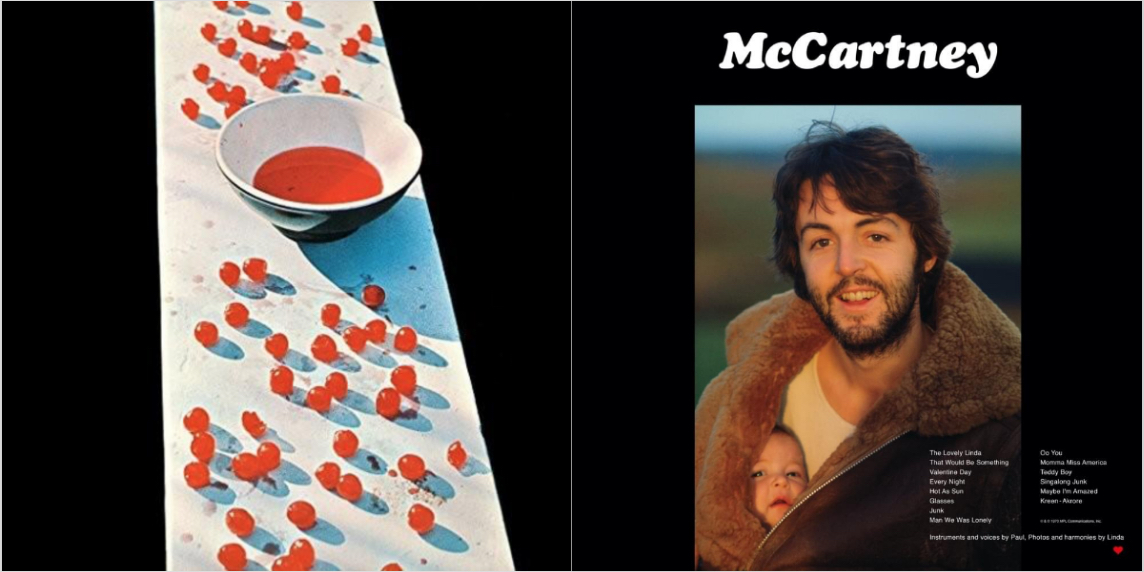
Without Lennon’s cynical input to rough up the edges of Paul’s sweetness, McCartney’s solo albums (with or without Wings) tended to suffer from cloying melodies and terminal sentimentality. Certainly not every track, mind you. My Spotify list below is full of wonderful McCartney solo tunes like “Every Night,” “Another Day,” “Heart of the Country,” “The Back Seat of My Car,” “Nineteen Hundred and Eighty-Five,” “Letting Go,” “Tug of War,” “Here Today,” “No More Lonely Nights,” “This One” and “The Songs We Were Singing.” But overall, I have found it challenging to listen to his solo LPs all the way through. (Even his 1971 classic album “Ram,” still my favorite of his solo work, has a few duds.) He seemed to always come up with at least one or two great songs on every album, but much of the remainder seemed unfinished, uninspiring, unworthy of someone with such talent.

In a 1974 interview, he defended his first two bland albums as Wings (“Wild Life” and “Red Rose Speedway”) by saying, “I kind of like the idea of doing something, and if it turns out in a few years to seem a bit sloppy, I’d say, ‘Oh well, sloppy. So what?’ I think most people dig it.” The thing is, people bought those albums because of his name (I did, anyway) but soon filed them away and rarely revisited them. He conceded, “I must say, you had to like me to like the record (‘Wild Life’). I mean, if it’s just taken cold, I think it wasn’t that brilliant as a recording. We did it quickly, like Dylan would sometimes do, just come in and do everything in one take.”
McCartney has shown without a doubt that he knows how to craft perfect pop songs that will thrill the masses and sell millions: “Uncle Albert/Admiral Halsey,” “My Love,” “Band on the Run,” “Listen to What the Man Said,” “Silly Love Songs,” “With a Little Luck,” “Coming Up,” “Ebony and Ivory,” “Say Say Say.” Most of these are not my cup of tea, partly, I suppose, because they were hugely overplayed, but also because they’re too sing-songy for my tastes.
Those who critique music are often vilified as frustrated musicians who don’t have the talent or stamina to sustain a career in the music business. So whenever I start dissing someone like McCartney (in this case, about his propensity for too-cutesy fare), I must stop and remember I’m never going to enjoy everything the guy writes because I’m not always a part of the target audience for whom he’s writing.
There’s a great quote by Theodore Roosevelt that captures my point: “It is not the critic who counts; the credit belongs to the man who is actually in the arena; who, at the best, knows in the end the triumph of high achievement, and who, at the worst, if he fails, at least fails while daring greatly.”
McCartney has certainly dared greatly in his career:
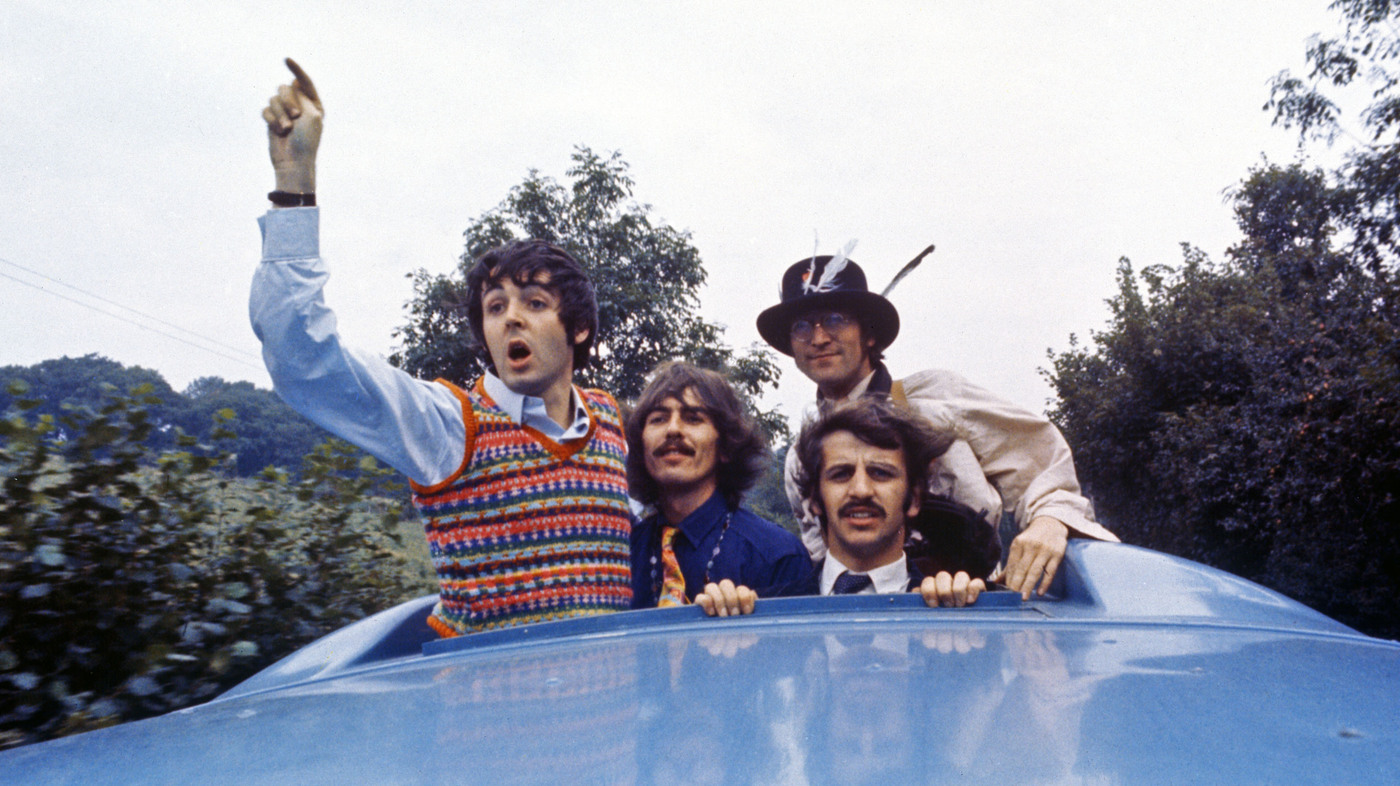
He dared to wing it with the slapdash, home-movie approach for The Beatles’ “Magical Mystery Tour” film that was roundly panned upon release.
He dared, in the aftermath of The Beatles’ breakup, to form a new group he called Wings and head out on a tour of colleges and small-town venues in England.
He dared to write a lyric that asks, “Some people want to fill the world with silly love songs, /And what’s wrong with that?…”, and had the last laugh when it was #1 in the US for five weeks.
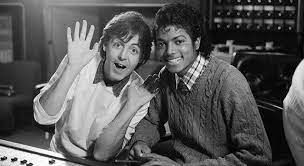
He dared to try co-writing songs with other important musicians, most notably Stevie Wonder, Carl Perkins, Michael Jackson, Elvis Costello, Steve Miller, Rihanna and Kanye West.
He dared to be among the first to participate in the “MTV Unplugged” series, where rock stars performed their rock hits with acoustic instruments for an intimate crowd, performing Beatles and solo tunes, and a handful of early rockers like “Be Bop-a-Lula,” “Hi-Heeled Sneakers” and “Good Rockin’ Tonight.”
He dared to go way outside his comfort zone five times between 1990 and 2010 to write classical and orchestral music that ended up well received among those who perform and enjoy these genres.
He dared to join the crowd of pop musicians (Linda Ronstadt, Rod Stewart, among countless others) who have mined the songbook of ’30s and ’40s pop and jazz standards his musical father used to play on piano. Paul’s album, 2012’s “Kisses on the Bottom,” reached #2 on US pop charts.

In the last decade, he has really branched out, experimenting with new styles and techniques in an attempt to remain relevant and attract a new generation of listeners. Indeed, his 2013 LP is actually entitled “New.” His collaboration with Rihanna and Kanye West in 2015 on the single “FourFiveSeconds” has amassed upwards of 850 million hits on Spotify. Cynics might say he partnered with them just because of their huge popularity, but I don’t think so. He’s truly interested in still learning, still trying.

His two most recent albums, 2018’s “Egypt Station” and 2020’s “McCartney III,” are full of fascinating departures from typical McCartney music (check out the audaciously titled “Fuh You”), juxtaposed next to the luscious melodies we’ve come to expect from this extraordinary tunesmith.
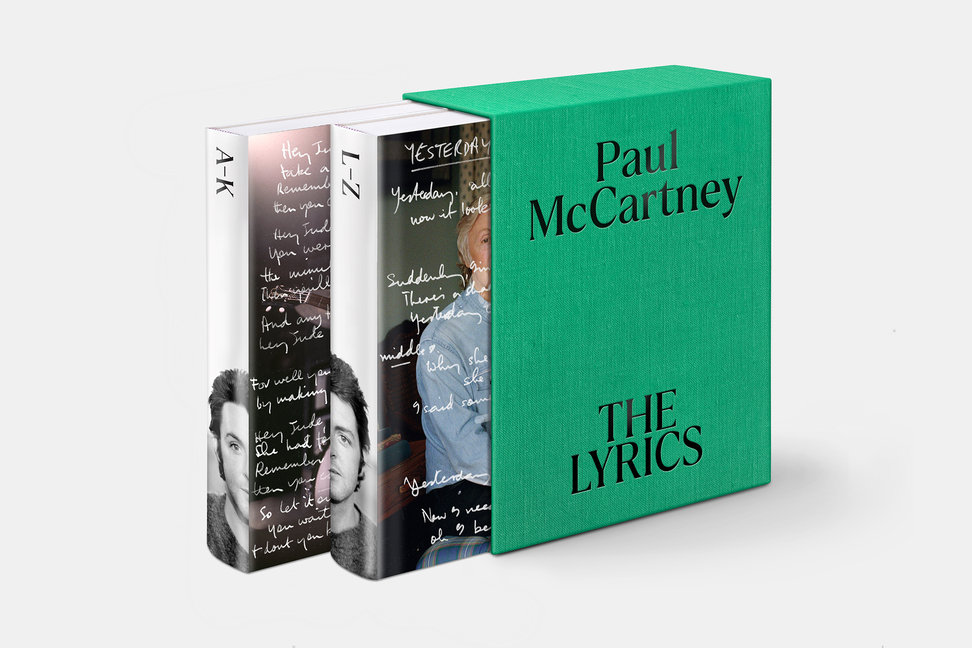
In addition to all this, he was deeply involved in “Paul McCartney, The Lyrics: 1956 to the Present,” a gargantuan, two-volume hardcover tome published last year that’s full of his thoughts and narratives regarding 150 of the more meaningful songs from his life’s work. Equally fascinating is the video project “McCartney 3,2,1,” in which producer Rick Rubin sits down with Paul at a mixing board to dissect Beatles and McCartney tracks and hear stories of the recording process. If you’re a fan, you should really explore both of these behind-the-scenes undertakings.
I had a thought the other day: Would Lennon have still been recording and performing into his 80s? Perhaps…but almost certainly not as prolifically as workaholic Paul. I’ll bet the two of them would’ve found a way to make some records together, if only because Paul would’ve persuaded John to do it.
When asked a few months ago about his reputation for being such a hard-working chap, he had this modest response: “I look a lot busier than I am, as I’m actually a rather sporadic, random person. I’ll play a few gigs and then disappear for a while.”
Paul McCartney, the man of action, remains bloody well active today, and I, for one, salute his efforts.
*************************
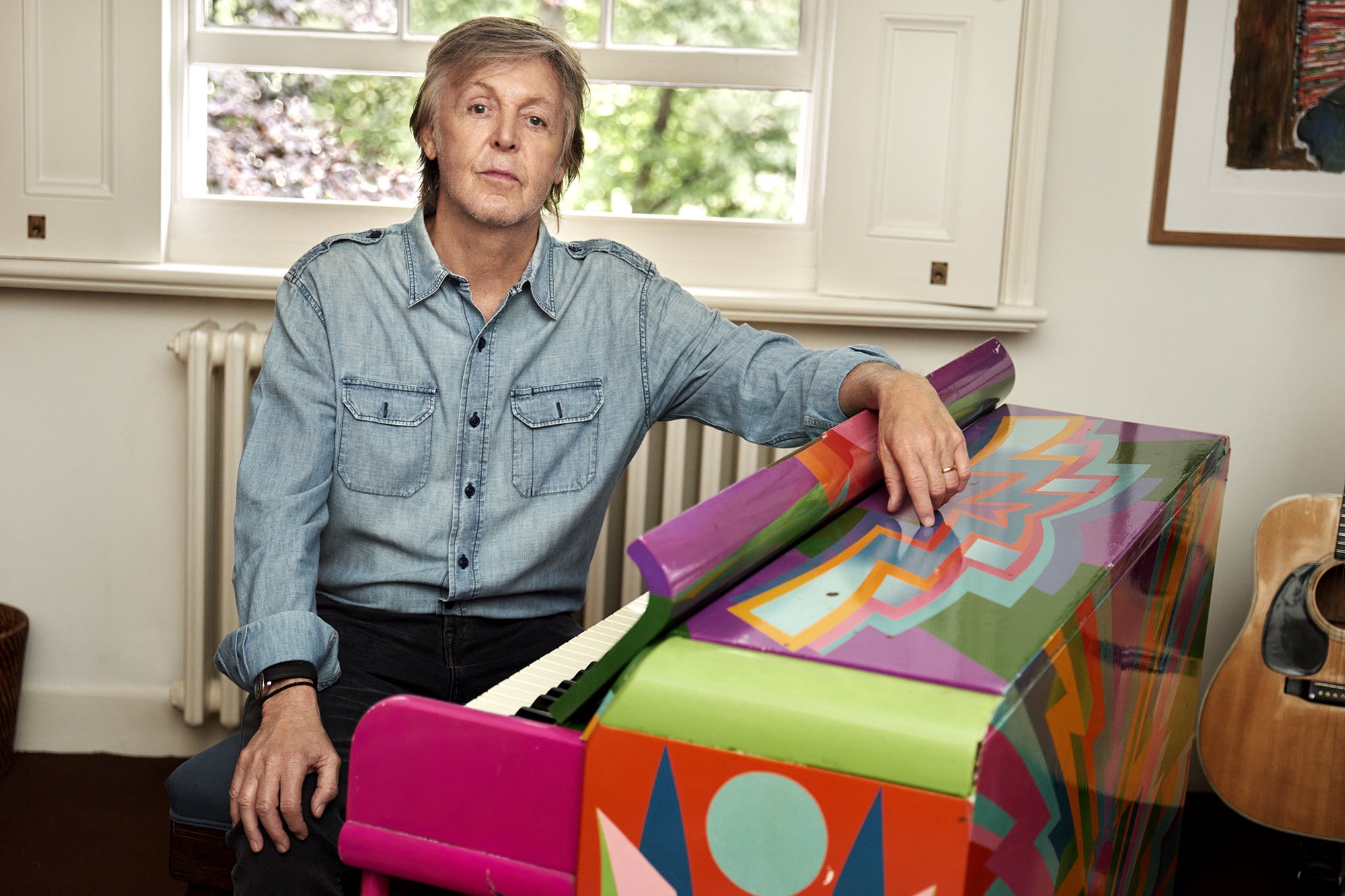
Because McCartney’s career catalog is so voluminous, I’ve decided to break it down into two Spotify playlists. The first one highlights his songs with The Beatles, while the second features my preferred selections from his repertoire on his own and with Wings.





 Hack's Back Pages