On bended knees, I beg you not to go
Richard Penniman, known worldwide as Little Richard, “The Architect of Rock and Roll,” died May 9 in his Tennessee home of bone cancer at the age of 87.
 He spent his whole life as a deeply conflicted man.
Gospel or rock and roll? Straight or gay? Clean living or addicted to drugs?
In each case, he went back and forth over the course of his life between the differing lifestyles, apparently drawn in opposite directions with equal fervor.
As a child, he was strongly influenced by gospel music and the charismatic worship services of the Pentacostal churches his family attended. Gospel recording artists like Sister Rosetta Tharpe and Mahalia Jackson inspired him to eagerly belt out the songs in a loud, strong voice in church. He developed a deep faith in God and even spent time as an evangelist preaching the gospel.
At the same time, he was inexorably drawn to the seductive rhythm and blues music of secular artists of the 1940s and 1950s, people like Louis Jordan, Cab Calloway and a young Fats Domino. He learned to play piano so he could imitate the intro to Ike Turner’s “Rocket 88,” often regarded as the first rock and roll song.
Penniman was also in conflict about his sexuality. He found both women and men sexually appealing but kept his feelings secret as best he could to avoid the wrath of his father at home and the bullies at school. Still, when his father kicked him out at 17, he  joined Doctor Nubillo’s Traveling Show, and took to wearing capes, turbans and makeup. He was married once for five years, but also came out as gay. He would denounce homosexuality, then turn around and embrace it, and eventually considered himself “omnisexual.”
Little Richard was also caught in the 1950s conflict between the races. He and fellow rock pioneer Chuck Berry were black men trying to appeal to white audiences at a time when much of the country was still segregated. White mothers and fathers felt threatened by “the devil’s music” and forbade their children from listening to it, but the kids responded enthusiastically to it anyway.
Consider his first hit single, “Tutti Frutti.” In its original form, it was a risqué blues tune with lyrics about gay sex, an absolutely taboo topic at the time. Here’s how it went: “Tutti Frutti, good booty, if it’s tight, it’s all right, Tutti Frutti, good booty, and if it’s greasy, it makes it easy, Tutti Frutti, good booty, a-wop-bop-a-loo-bop, a good goddamn!…” Little Richard sang it this way at a blacks-only lunch spot one day, and while his producer loved the song’s energy, he knew the lyrics had to be cleaned up if they had any hope of getting airplay on radio.
 The version everyone knows was recorded and released in late 1955, and sure enough, it became a big hit, reaching #21 on the Top 40 charts (and #2 on the R&B charts). It was popular with both white and black record buyers, which established its reputation as one of the landmark songs that launched rock and roll as a new musical phenomenon.
As a sign of the times, though, a sanitized rendition of “Tutti Frutti” released simultaneously by squeaky-clean Pat Boone eclipsed Little Richard’s original, peaking at #12 and selling well over a million copies. It was one of many instances when a white artist would steal the thunder from the black artist who first created the work.
Penniman had this to say about that: “When ‘Tutti Frutti’ came out, I was pushed into a rhythm and blues corner. They needed a white guy’s version to block me out of white  homes…but it didn’t really work. The white kids would have Pat Boone on the dresser and me in the drawer. They liked my version better but kept it hidden from their parents.”
He persevered, and enjoyed an impressive run of eight more Top 40 hits over the next 18 months: “Long Tall Sally,” “Slippin’ and Slidin’,” “Rip It Up,” “Ready Teddy,” “Lucille,” “Jenny Jenny,” “Keep A-Knockin'” and “Good Golly Miss Molly,” which firmly cemented Little Richard’s reputation as a force to be reckoned with.
In England, several future rock stars were going crazy over the tunes of Little Richard, Elvis Presley, Chuck Berry and others. “(Little Richard) was the biggest inspiration of my early teens,” said Mick Jagger last week. “His music still has the same raw electric energy when you play it now as it did when it first shot through the music scene in the mid ’50s. When we were on tour with him in 1962-63, I would watch his moves every night and learn from him how to entertain and involve the audience. He was always so generous with advice to me.”
 Paul McCartney, who belted out a superb cover of “Long Tally Sally” in 1964 for The Beatles’ second U.S. album, said, “Little Richard came screaming into my life when I was a teenager. I owe a lot of what I do to Little Richard and his style, and he knew it. He would say, ‘I taught Paul everything he knows.’ I had to admit he was right.”
I have my own admission to make. Growing up with The Beatles and Sixties music, I knew next to nothing about Little Richard and his fellow rock and roll pioneers. It wasn’t until the ’70s that I became interested in rock music’s roots and gained an appreciation for the trailblazing the practitioners had done that made The Beatles even possible. It’s frankly embarrassing for a rock music aficionado like me to admit such a dereliction, but it’s the truth.
Younger generations of musicians and music lovers seem far more willing to recognize the debt they owe to icons like Little Richard than my generation was. “Elvis may have popularized rock & roll, and Chuck Berry was its storyteller, but Little Richard was the archetype,” tweeted Steven Van Zandt, who chooses to call himself Little Steven in tribute to Penniman.
Dan Auerbach of The Black Keys wrote, “If you love anything about the flamboyance of rock & roll, you have Little Richard to thank. Where would rock & roll be without flamboyance? He was the first. To be able to be that uninhibited back then, you had to have a lot of not-give-a-fuck.”
After those first several years, the hits stopped because Penniman chose to call a halt to  his burgeoning career. After a harrowing plane ride and a couple of other incidents he took as omens, he claimed spiritual rebirth and went to college to study theology. He met and married Ernestine Harvin, began preaching, and recorded gospel music which found a small audience but made little impression on the charts.
He returned to secular music by the mid ’60s, both recording and performing, but the music world had moved on to other artists and other styles. For the next 25 years, neither his albums nor his singles made a dent in the charts, which is one reason why Little Richard was involved with more than a dozen different record companies as either he or the label severed the relationship. It was in the early ’70s when he became a heavy alcohol drinker and developed a debilitating addiction to cocaine that took him many years from which to break free.
His last moment in the sun came in 1986 when he contributed to the soundtrack of the hit comedy “Down and Out in Beverly Hills,” starring Nick Nolte and Bette Midler. His song “Great Gosh A’Mighty” was Little Richard’s deliberate attempt to at last make peace with his inner conflict by merging a secular song with spiritual lyrics: “I’ve been tryin’ to find peace of mind, tryin’ to search all the time, I’ve been looking, I’ve been wandering, have you heard the written Word, Great Gosh A’Mighty!…”
Penniman was shown the respect he deserved when he was inducted into the Rock and Roll Hall of Fame in 1986 as part of the very first group of inductees. Despite this honor and inductions into numerous other Halls of Fame over the years, he conceded that he harbored some resentments about how his career turned out.
 “I appreciated being picked one of the top fifty performers in rock,” he said, “but who is number one and who is number two? It doesn’t really matter anymore because it won’t be who I think it should be. It’s never going to be any of the entertainers from the beginning. The Rolling Stones learned from me, but they’re always going to be in front of me. The Beatles started with me — at the Star Club in Hamburg, Germany, before they ever made a record — but they’re always going to be in front of me. James Brown was in my band. So was Jimi Hendrix. These people started with me. I encouraged them, I talked to them, and off they went. Good for them. They’re going to always be in front of me.”
And by the way: Just what does “A-wop-bop-a-loo-bop, a-lop-bam-boom” mean? Nothing, really. It’s merely Little Richard’s vocal imitation of the drum part he thought would work there. But he ended up using the vocal part instead, and it became one of the first detonating blasts of the rock and roll explosion.
R.I.P., Little Richard. We rock and roll fans owe you so much.
***************
https://open.spotify.com/playlist/4i9rfWKTdbDTXc9dgB0wLU?si=kFONKtyBS8q8IVZ54QbMqw
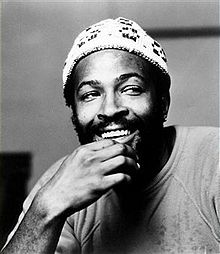 The lively world of popular music — rock, rhythm & blues, country, jazz, you name it — has been plagued by intermittent chapters of tragedy. Abuse of drugs and alcohol have caused the self-destruction of far too many talented musicians; plane crashes have prematurely taken a dozen or more giants from us; cancer and other diseases have claimed the lives of a few major artists as well.
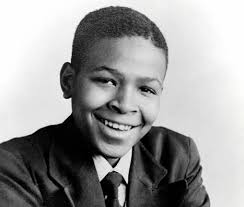 deep love of singing gospel music. He was encouraged to think about pursuing a career as a professional singer when, at age 11, he brought the house down at an elementary school play with a exhilarating performance of Mario Lanza’s “Be My Love.” He was a featured soloist of his junior high glee club and also sang in several doo-wop groups during his high school years.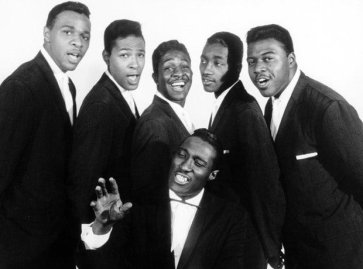
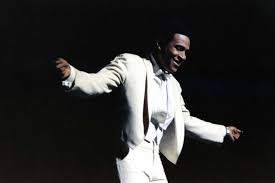 For the next seven years, Gaye enjoyed a nearly non-stop residence at or near the top of the R&B charts, scoring 25 singles in the Top Ten and earning the moniker “The Prince of Motown.” He was a major presence on the Motown performing circuit, sharing the stage with Smokey Robinson, The Supremes, The Temptations, Stevie Wonder and others. He did almost as well on the pop charts during this period, securing 13 Top Ten hits between 1964 and 1969.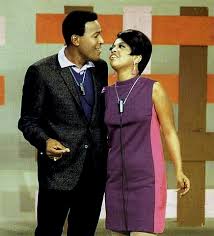
 Grapevine.” Holy smokes, what a performance. The record held a vise grip on the #1 slot for six weeks, and its followup, “Too Busy Thinking ‘Bout My Baby,” proved to be another classic.
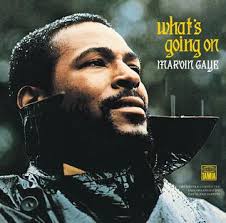 Gordy’s reaction to the finished track was blunt: “It’s the worst thing I ever heard in my life.” When he declined to release it, Gaye went on strike, refusing to record any other material until Gordy relented. Gaye enlisted the help of sympathetic sales guys, who forwarded copies of “What’s Going On” to key radio stations and record stores in defiance of Gordy, and the result was almost immediate. It vaulted to #1 and became Motown’s fastest selling single ever at that time. Convincingly persuaded, Gordy gave the green light to the album, and Gaye and company assembled eight more tracks written or co-written by Gaye, including the pointedly political hits “Mercy Mercy Me (The Ecology)” and “Inner City Blues (Makes Me Wanna Holler).”
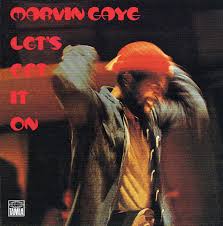 and one of the greatest albums ever attempted by a popular artist.”
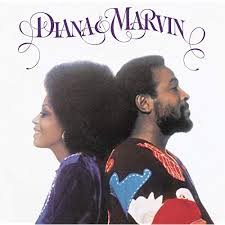 Marvin,” a more conventional collection of Ashford & Simpson songs on a duet LP with Diana Ross. By 1976, when disco began influencing just about every artist who put out a new record, Gaye countered with “I Want You,” which rivals anything Barry White ever released as a soundtrack for lovemaking. “Gaye seems determined to take over as soul’s master philosopher in the bedroom,” said Rolling Stone‘s Vince Aletti. “This is an adult album of private intimacy and sensuality.” Cliff White of New Musical Express called it “a voyeur’s delight… like peeking through the windows of the Gaye residence in the wee hours.”
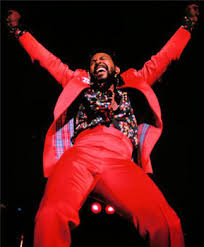 huge tax debt to the IRS also weighed heavily on him, eventually causing him to relocate to Europe for a spell. Although American listeners started to look elsewhere for new sounds, British audiences still clamored for Gaye, which resulted in a timeless performance and hugely popular concert LP, “Live at the London Palladium,” and yet another #1 hit, the influential “Got to Give It Up.”
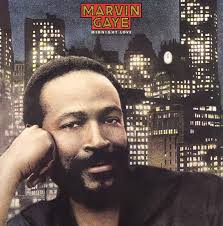 Now back in the States, he appeared in high-profile events like the “Motown 25: Yesterday, Today, Forever” TV special, and sang an iconic rendition of the National Anthem at the NBA All-Star Game in L.A. After one final U.S. tour, marred by illness and drug-fueled attacks of paranoia, Gaye moved into his parents’ L.A. home to care for his mother, who was recovering from kidney surgery.
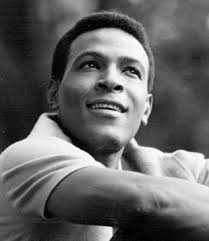 Despite his inner struggles, despite the hideous way his life ended, Gaye’s musical legacy remains intact. All those Motown classics, the brilliance of “What’s Going On,” the provocative music that followed and, most of all, That Voice are what we all want to remember about this man. His reputation as a maker of sensual bedroom songs earned new life when, in 2015, award-winning pop singer-songwriter Charlie Puth made his debut with the single “Marvin Gaye,” with these lyrics: “Let’s Marvin Gaye and get it on, you got the healing that I want, just like they say it in the song, until the dawn, let’s Marvin Gaye and get it on…”
 Hack's Back Pages