I know what I like, and I like what I know
Periodically, I use this space to pay homage to artists who I believe are worthy of focused attention — artists with an extraordinary, influential, consistently excellent body of work and/or a compelling story to tell. In this essay, I delve into the work of a group of superlative musicians who had two or maybe three chapters in their evolutionary arc, exploring genres as disparate as folk-based progressive rock and R&B-laced commercial pop: Genesis.
**************
I’m pretty sure that a 300-year-old prep school in the English countryside is not the environment you’d expect to find the roots of one of rock music’s most durable bands, even if it was a progressive rock band. But sure enough, it’s the place where four 13-year-old boys from well-heeled, monied families first met in the fall of 1963 and began nourishing their musical passions into what would become Genesis less than six years later.
Tony Banks was a gifted, classically trained pianist who loved hymns and Bach. Singer Peter Gabriel, who also dabbled in piano and drums, favored jazz and Otis Redding.

Genesis in 1968: Anthony Phillips, Mike Rutherford, Tony Banks and Peter Gabriel (and temp drummer John Silver)
Guitar and bass player Mike Rutherford enjoyed The Rolling Stones and R&B, as did fellow guitarist Anthony Phillips. These four ambitious dreamers worked at first in competing bands (Banks and Gabriel versus Rutherford and Phillips) before eventually joining forces, spending untold hours honing their songwriting skills, rehearsing and jamming, fine-tuning their original arrangements, and performing when given the chance, with various drummers coming and going.
Seeing as how Genesis became known as one of the most important and most respected bands in the progressive rock genre of the early 1970s, it’s interesting to note that “From Genesis to Revelation,” the group’s mostly overlooked debut LP, is comprised chiefly of accessible pop songs. The charming melodies that mark “She is Beautiful,” “That’s Me” and “Where the Sour Turns to Sweet” are a far cry from the dense, fantasy-driven material that dominated their albums over the next decade.
The group had the luxury of burrowing away in various countryside retreats for several months at a time to compose in bucolic surroundings. It was there that Rutherford and Phillips began playing 12-string guitars in tandem, which became a huge part of the Genesis sound going forward.
Gabriel and Banks had been writing together on piano, but when Banks switched to  organ, Gabriel found himself with less to do, and he consequently developed an obsession for exploring esoteric lyrical concepts and themes, often inspired by ornate poetry, eccentric fantasy characters and the bizarrely literate humor of Monty Python’s Flying Circus, the comedy trouped newly signed to their Charisma record label.
The results of this period can be found first on their inconsistent second album, “Trespass,” which included six long, rather complicated tracks (most notably the aggressive “The Knife”) composed primarily by Banks and Gabriel. This made Phillips uncomfortable with the band’s musical direction because he thought there were too many songwriters in the group, making it difficult to get his ideas across. He chose to quit, which came as a big shock to the other three. They seriously contemplating breaking up at that point.
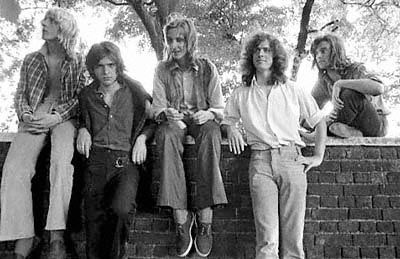
Genesis in 1970: Phillips (about to depart), Gabriel, Rutherford, Banks and (newly arrived) Phil Collins
Instead, they redoubled their resolve and forged ahead. They ran an ad in Melody Maker in search of both a full-time drummer and a guitarist. Enter Phil Collins, a scrappy Londoner who shared none of the privilege and baggage of prep school life but offered an obvious self-confidence and enthusiasm that Gabriel noticed immediately. “I was convinced from the first moment,” he recalled in the Gabriel biography “Without Frontiers,” written by Daryl Easlea. “I knew when Phil sat down at his drum kit that this was a guy who was fully in command of what he was doing, like a  jockey on a horse. I used to have a lot of fun telling the drummers how to do their drum parts. Once Phil came along, that finished.”
In his autobiography, “Not Dead Yet,” Collins remembered, “I didn’t know at the time how close they were to splitting up, and therefore how much was riding on the auditions. Nor was I aware that Genesis’s finely balanced creative symmetry had had the legs kicked from under it.” Collins was thrilled to land the job, even though he often found himself playing the role of the jovial outside mediator, keeping peace between the tightly wound schoolboy chums.
A few months later, Gabriel spied this ad: “Imaginative guitarist/writer seeks involvement with receptive musicians determined to strive beyond existing stagnant musical forms.” This was Steve Hackett, a quiet, self-taught player who was fond of 12-string guitars and was as influenced by the blues and beat as he was by Bach and baroque. After a promising audition, he was invited to join Genesis.
This five-man lineup was the one that collaborated on the four albums that would define

Genesis 1971-1974: Banks, Rutherford, Gabriel, Steve Hackett, and Collins
what became known as Early Genesis — 1971’s “Nursery Cryme,” 1972’s “Foxtrot,” 1973’s “Selling England By the Pound” and 1974’s double LP “The Lamb Lies Down on Broadway.” With this wonderfully original music they developed sizable fan bases in Holland, Italy, Canada and their native England (“Selling England By the Pound” reached #3 on the UK charts) and won the praise of many British critics.
Gabriel took to wearing increasingly eccentric masks and costumes to augment the stage delivery of the fanciful songs, and the press was clearly gobsmacked by his arresting stage presence. The New Musical Express reviewer wrote: “In the demonic, black-clad figure of Peter Gabriel, Genesis have a vocal performer who has the precocious magnetism of which contemporary pop heroes are hewn. A macabre 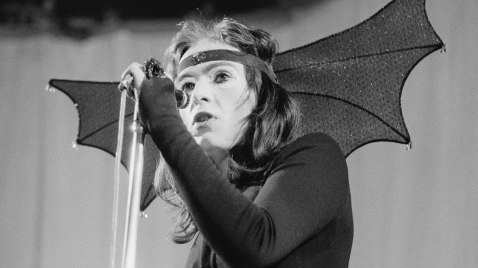 entertainer who wears a flower mask one minute and a weathered dwarf face the next, he introduces each selection with strange neo-fantasy monologs which border on insanity.”
The one-hour video clip below from 1973 does a pretty solid job of capturing what Genesis looked like and sounded like at this juncture:
Meanwhile, in the US, the albums weren’t selling much and the cult audiences who 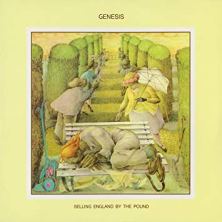 attended their small-venue shows here were loyal but few in number. Full confession: I was not among the Americans who comprised that cult following who were absorbing and worshipping these records upon their release. I loved certain British prog rock groups, especially Jethro Tull and Yes, but for some reason, I wasn’t exposed to the wonder of Genesis until about 1976, after Gabriel had already flown the coop. It took a while (and prodding by the girl I would eventually marry) to go back and learn to appreciate the marvelous complexities of lengthy tracks like “The Magical Box,” “Supper’s Ready,” “The Cinema Show,” “Dancing With the Moonlit Knight,” “The Carpet Crawlers” and a dozen others that featured Gabriel and company at their most inventive.
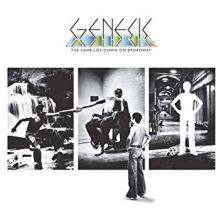 Meanwhile, in 1974, Gabriel, who had quite intentionally placed himself at the vortex of the group’s stage shows, had also come to dominate the songwriting process, much to the consternation of Banks, Rutherford and Hackett. The often impenetrable lyrics to “Lamb Lies Down” were exclusively Gabriel’s domain and, combined with the ever-tricky special effects and numerous costume changes he insisted on, life on tour with Genesis became wearisome, especially for Gabriel, as it turned out.
The self-imposed pressures, combined with an anxiety-filled home life (his wife was in the midst of a complicated pregnancy), caused Gabriel to back away once the “Lamb Lies Down” tour came to an end in May 1975.
Many assumed Genesis could not survive the departure of such a hugely integral component as Gabriel. But the remaining players were united and determined. As Collins put it, “Our defiant feeling was, ‘We’ll show them!’ All Peter, was it? He wrote everything, did he? We might have to find a singer, but the new material we’re working on is great. Rumors of our death are greatly exaggerated!”
They endured a lengthy, stressful audition process, putting dozens of would-be contenders through the paces. “We were asking a lot, but hey, we were a demanding 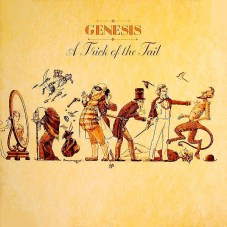 band, and Peter’s were big shoes to fill,” Collins said. They tried hard to find a guy who could convincingly sing challenging touchstones like “Supper’s Ready” or tricky new pieces like “Squonk” but the candidates kept coming up short.
With studio hours racking up, and options running low, one day Collins, who had sung one or two ballads on each of the previous Genesis LPs, says “How about I have a go?” The others shrugged, “Might as well.” Banks and Rutherford later said it was “like one of those cartoon lightbulb moments when they looked at each other in the control room and said, ‘By George, I think he’s got it!'”
The press and the public were mighty skeptical — “Wait, the new singer is the drummer?” Even Collins was unsure, but damned if his voice didn’t strongly resemble Gabriel’s, and when the new album, “A Trick of the Tail,” was released, the response was largely positive and encouraging, perhaps partly because expectations were so low. The album did well, reached #3 in the UK, matching the peak of “Selling England By the Pound.” But then came the acid test — how will the new Genesis come across on tour?
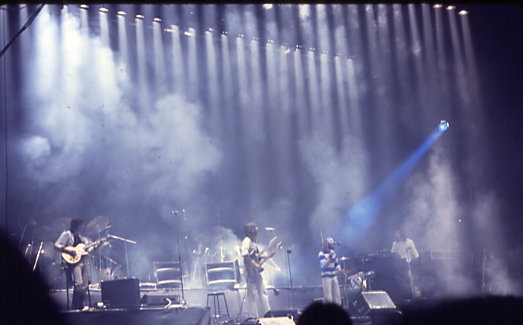
Genesis in concert 1976-1977 with Collins as lead singer
To everyone’s relief, things went surprisingly well. With ex-Yes member Bill Bruford (and, later, Chester Thompson) manning the drum kit, Collins stepped out front tentatively, not moving much at first but singing his heart out as the group played fan favorites and a handful of new songs. “Wow,” people told him backstage, “you were great. You sounded a lot like Peter.” Said Collins, “I didn’t know whether to take that as a compliment, but at that point, I’d take anything.”
“A Trick of the Tail” and its follow-up, “Wind and Wuthering,” both released in 1976, and also the spectacular 1977 double live album “Seconds Out,” showed that Genesis could and did make a successful transition and prevail, even after the departure of one of rock’s most charismatic front men. Their fan base grew considerably in Germany, Australia and elsewhere in Europe, and in the US, the cult audience steadily grew, with ever-better (but still modest) showings on the charts.
But yet again, there was dissension in the ranks. Hackett had released a solo LP on the
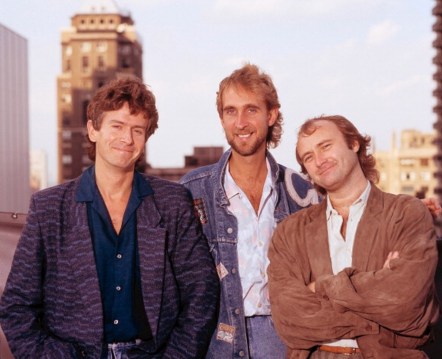
Genesis 1978 and on: Banks, Rutherford, Collins
side and was becoming frustrated (as had Phillips back in 1970) that his songs weren’t getting the attention he felt they deserved within the band structure, so he departed. Collins, Banks and Rutherford quickly concluded that if they could survive the loss of Gabriel, they could survive the loss of a guitarist, so with Rutherford handling both bass and guitar duties in the studio, they self-confidently entitled their next album “…And Then There Were Three.”
Here was truly the beginning of the latter-day Genesis. Banks and Rutherford, very adept at writing moody and aggressive instrumental passages, had long had aspirations 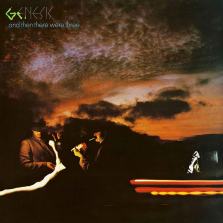 to write actual songs with lyrics, songs that could be hit singles that reached the pop charts. Sure enough, the group’s first entry in the US Top 40 came in the spring of 1978 with “Follow You Follow Me,” peaking at #22, which helped push the album to #14. By 1980’s “Duke,” Genesis had become a very hot commodity here, now filling arenas and making regular appearances on the singles chart with catchy ditties like “Turn It On Again” and “Misunderstanding.”
This commercial success was not without its drawbacks. Many early fans abandoned the new version of Genesis as something so completely different as to not warrant being called Genesis… and truth be told, they had a point. The kind of R&B and pop-based 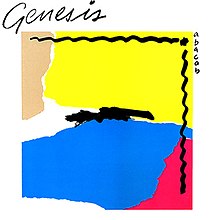 songs that won them the praise of newer, younger audiences had little to do with the mystery and complexity of Genesis’s earlier period.
And that’s the dichotomy Genesis had to deal with as they became international superstars. Beginning with 1982’s “Abacab” and its horns-driven single “No Reply at All,” they put on unparalleled light shows on tour and still performed a few Gabriel era tracks but also soon found themselves being played ad infinitum (some might say ad nauseum) on not just FM stations but Top 40 radio as well.
In actuality, it often wasn’t Genesis songs they were hearing. Collins had simultaneously begun a remarkably successful solo recording career that included film soundtrack work (“Against All Odds”), special duets (“Easy Lover” with Philip Bailey, “Separate Lives” with Marilyn Martin) in addition to a regular stream of often annoying hits from solo albums (“One 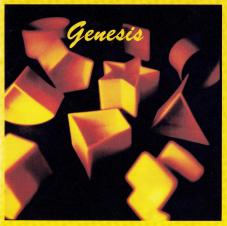 More Night,” “Sussudio,” “Don’t Lose My Number”). He even wrote all the music to the 1999 Disney animated movie “Tarzan,” and it was Collins alone, not Genesis, who made the memorable appearance(s) on both stages at the Live Aid concert event in 1985.
All of these things shared a common element with Genesis songs — Collins’ ever-present vocals — and eventually, even a big Genesis fan like me grew tired of the sameness of Collins’ pop material and sometimes had trouble differentiating it from concurrent Genesis tracks.
To be clear: Although I balked at some of the hit singles on the 1983 “Genesis” album (“Mama,” “That’s All”), 1986’s multiplatinum “Invisible Touch” LP (the title cut and “In Too Deep”) and 1991’s “We Can’t Dance” (“No Son of Mine” and “I Can’t Dance”), I really enjoyed and much preferred many of the deeper album tracks. Banks, Rutherford and even Collins never completely shook the art-rock leanings of their formative years, 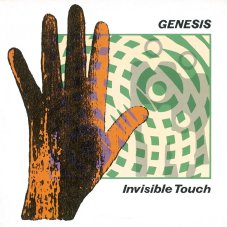 which showed up in tres cool tunes like “Home By the Sea/Second Home By the Sea,” the two-part “In the Glow of the Night”/”The Last Domino” and the 10-minute beauty “Driving the Last Spike.”
Collins finally left Genesis in 1996, and Banks and Rutherford made a valiant attempt to proceed with new singer Ray Wilson at the microphone. Their 1997 LP “Calling All Stations” did all right in England but stiffed in the US, and the subsequent tour of North America was cancelled due to poor response. Banks and Rutherford called it quits the following year.
But holy smokes, what a legacy. Genesis 1.0 is universally regarded as the prime exemplars of the art rock branch of the prog rock movement, while Genesis 2.0 sold a gajillion records of their radio-friendly pop music around the world.
Gabriel, meanwhile, put together a fascinating solo career as a pioneer of “world music” beginning in 1977 that both perplexed and thrilled his fans, who alternately shunned and embraced his occasional forays into strange new worlds (“The Last Temptation of Christ” soundtrack) and more commercial landing boards (1986’s “So” and the #1 hit “Sledgehammer”).
Despite the defections over the years and the bad feelings they may have caused, the
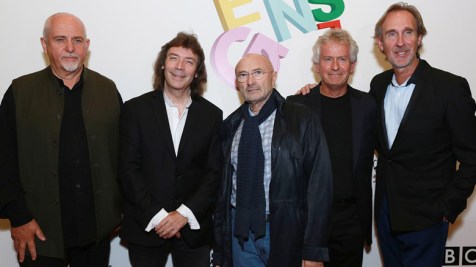
Genesis alums, circa 2010: Gabriel, Hackett, Collins, Banks, Rutherford
various members of Genesis have maintained amicable relations, for the most part. They have appeared beside one another at awards inductions and even staged one reunion show to help out Gabriel when he found himself in serious financial difficulties in 1982 due to a mismanaged charity festival.
The music created by these two very talented versions of Genesis over more than three decades always had something challenging and/or enjoyable to offer, even if some of it rubbed certain parts of their audiences the wrong way. That’s the fickle nature of the independently-minded music listening fans out there, of which I am one.
**************
These two Spotify playlists, which divide the Genesis repertoire into the Gabriel and post-Gabriel eras, include three or four selections from each studio album, sometimes including hits that I didn’t particularly like but can’t be omitted from any balanced collection. Enjoy!
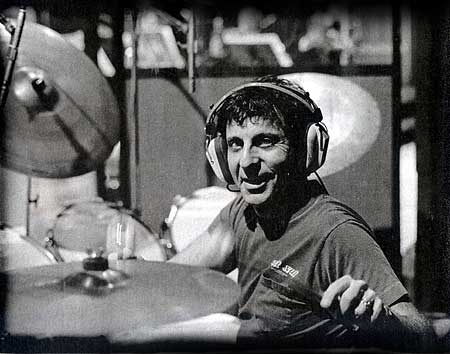 Since his death last week at age 90, you may have learned his name by reading any of the multiple articles, in print and online, that cataloged his extraordinary accomplishments. He has been recognized in his industry (and now, increasingly, by the public at large) as an unparalleled titan among that breed of musician that worked diligently behind the scenes, in the proverbial shadows. In the recording studios of Los Angeles, he played the drums in thousands of recording sessions between roughly 1960 and 1980, anonymously providing the backbeat for the hits of many hundreds of popular singers.
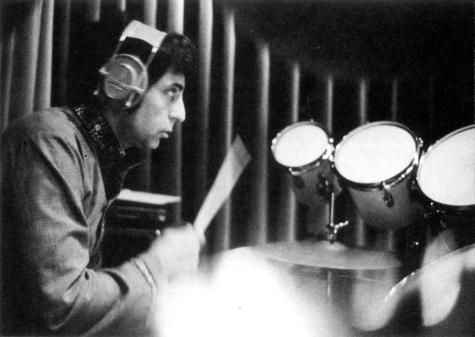 know exactly what was called for in a given song or recording.
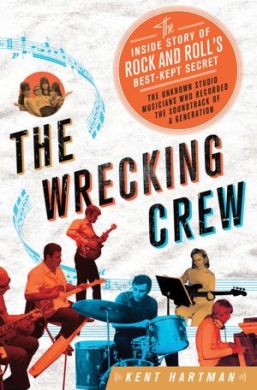 by-the-book, time-clock-punching men who had cut their teeth playing on Big Band records, movie soundtracks and early TV shows,” as writer Kent Hartman put it in “The Wrecking Crew,” his authoritative 2012 book. “They loathed everything about rock and roll. To them, this new music was appallingly primitive, and most refused to play it. In their minds, their careers had been built on decorum and sophistication, not on wearing T-shirts and blue jeans to work while bashing out what they felt were simplistic three-chord rhythm patterns over and over. ‘That kind of thing is surely going to wreck the business,’ they would say.”
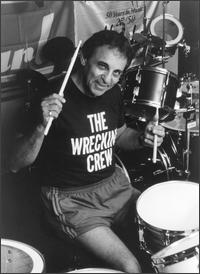 more sophisticated compositions like “California Girls,” “Good Vibrations,” “Sloop John B” and “Wouldn’t It Be Nice,” he brought in Blaine and his compatriots to substitute for his Beach Boys cohorts in the studio, and the listening public was none the wiser.
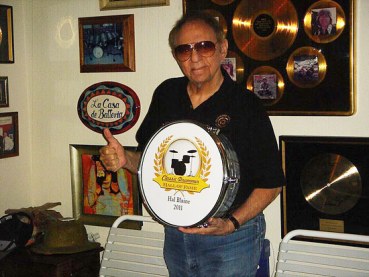 came about when he accidentally missed a beat while the song was being recorded and improvised by only playing the beat on the fourth note.
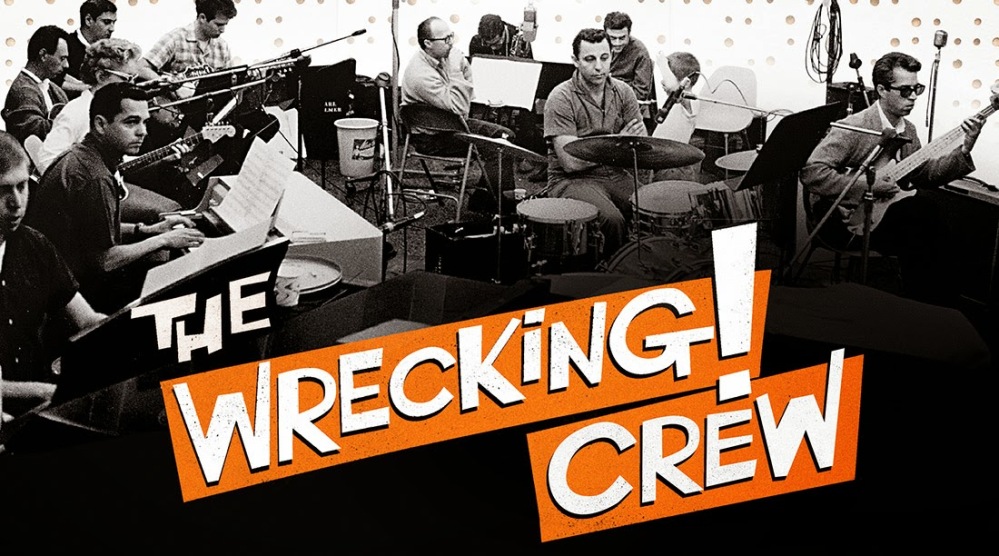 He continued to appear occasionally at symposiums and workshops, and on TV talk shows, well into his ’80s. He was inducted into the Rock and Roll Hall of Fame in 2000 with four other Wrecking Crew partners, and he was prominently featured in the 2008 documentary “The Wrecking Crew,” directed by Denny Tedesco (son of Tommy Tedesco), and in Hartman’s 2012 book.
 Hack's Back Pages