The lunatic is in my head
Periodically, I use this space to pay homage to artists I believe are worthy of focused attention — artists with an extraordinary body of work and a compelling story to tell. In this essay, I take a closer look at one of the pioneers of progressive rock who went on to become one of rock music’s most popular yet fractious bands ever: Pink Floyd.
***************
June 1975. The four members of Pink Floyd were hard at work in the Abbey Road studio putting finishing touches on the recording of “Wish You Were Here,” their eagerly awaited follow-up LP to “The Dark Side of the Moon,” which had made the band worldwide superstars.
The centerpiece of the new album was “Shine On You Crazy Diamond,” a 22-minute track broken into two 11-minute sections to open and close the album. It was conceived as a tribute to Syd Barrett, their long-lost leader, their founder, their songwriter, their inspiration, who had fallen deep, deep into “LSD-based mental disarray” shortly after the release of the group’s 1967 debu t LP, “The Piper at the Gates of Dawn,” and was dismissed from the band shortly thereafter.
As they worked that June night, Pink Floyd failed to notice when a strange-looking obese man wearing a white trenchcoat and shoes, clutching a white bag, wandered into the studio room. His bald, eyebrow-less face looked ghostlike, and as he puttered around the band’s equipment, guitarist David Gilmour looked up and thought, “Who the hell is that, and why is he here?”
Roger Waters, the band’s new guru, saw the interloper and stopped dead in his tracks. He turned to keyboard player Rick Wright and asked, “Do you know who that is?” Wright looked and studied him for a moment, and then said, “Oh my God. That’s Syd.”
It was an eerie coincidence, or creepy karma, that Barrett would suddenly appear after a seven-year absence. He stayed less than an hour, quietly listening and observing, and Waters said later he broke down in tears at the sight of his friend, not yet 30 but looking twice that old. When Barrett left, they never saw him again. He lived a strictly private life and died in 2006.
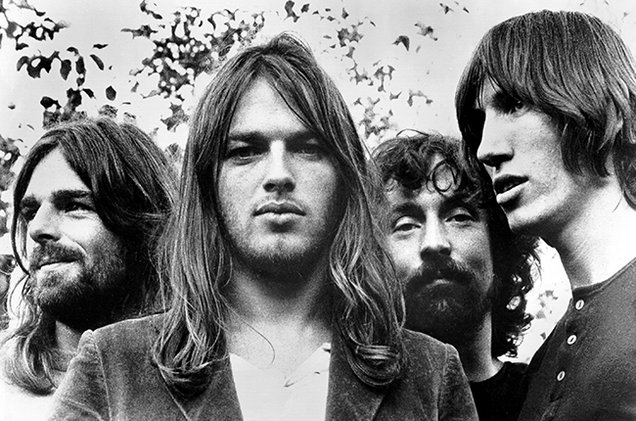 Pink Floyd, born from the ashes of a group called The Tea Set in 1965, has had one of the most tumultuous yet successful careers in rock history. Their story is fraught with epic internal tension, international #1 albums, clinical madness, floating pigs, bitter rifts between founding members, huge concert tours, and worldwide sales among the highest in the business.
Not bad for a bunch of wayward art students from Cambridge.
Let’s start with a caveat: Despite the massive sales numbers, Pink Floyd’s oeuvre is definitely not for everyone. There are broad swaths of music lovers who regard the band with disdain, sniffing, “It’s just boring stoner music. Give me something I can dance to, dammit!”
Indeed, even Pink Floyd was smart enough to recognize this. In 1981, they had the brash temerity to title their compilation CD “A Collection of Great Dance Songs.”
Floyd fans never got up and danced to their music. That was most definitely not the point. This was music that commanded you to sit down and listen.
Their stock in trade began as experimental psychedelic rock that soon evolved into what came to be known as progressive rock, which uses rich musical te xtures and enigmatic lyrics to challenge the limits of rock and roll. At its best, Pink Floyd’s music was almost overwhelming in its complexity and nuance, its mesmerizing grace and sublime brilliance, its experimentalism and radical departure.
The fact that they ended up as commercially successful as they are is, in many ways, puzzling. Let’s examine the stats: According to Business Insider, Pink Floyd ranks ninth in all-time sales, with 75 million units sold. The group’s signature LP, “Dark Side of the Moon,” spent an absurd 917 weeks (that’s more than 17 years!) in the US Billboard Top 200 album charts, an achievement unlikely to be surpassed (in second place is Bob Marley’s “Legends” collection, at 386). “Dark Side” has sold 40 million copies worldwide, and still sells about 200,000 a year. It has been estimated that one in every six households in the US has a copy of the album, and that someone, somewhere, is playing it right this minute.
Pink Floyd’s story is much like a three-act play. Act I covers its inception to the departure of Barrett. Act II would be the period from roughly 1968 through their heyday to the point where Waters acrimoniously splits. Act III takes us from 1984 to present day.
Act I:
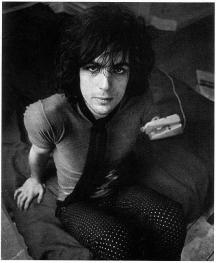 Syd Barrett had been a childhood friend of Roger Waters when they were growing up in Cambridge, and was asked to join the group Waters had started with Nick Mason and Richard Wright, who he had met in architecture school in London. Barrett quickly emerged as the main songwriter, singer, guitarist and front man, and nearly every song they recorded was composed by Barrett.
They were a huge success in England from the start, first in the clubs of the London Underground with their trippy performances, and then on the charts. Two hit singles (“Arnold Layne” and “See Emily Play”) and the astonishing “Piper at the Gates of Dawn” LP were all Top Five on the charts there. Even their prog rock peers like Jethro Tull’s Ian Anderson has said, “Pink Floyd was colorful, creative and meaningful. Syd Barrett’s so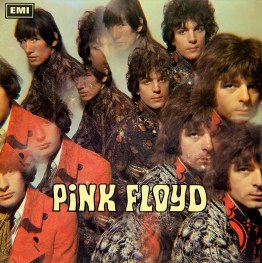 ngs were strange and funny, and they stretched my boundaries. It’s as if they presented paintings as words and sounds.”
But Barrett was quickly unraveling from his unfortunate penchant for taking LSD on nearly a daily basis in the summer and fall of 1967. It made him unproductive, disruptive and maddeningly frustrating to deal with, both on stage and in the studio. 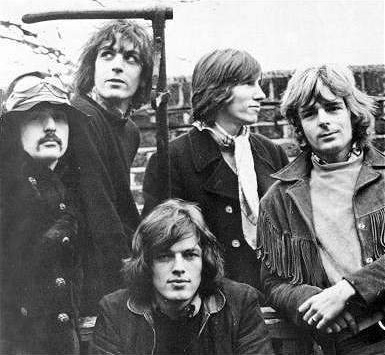 Within months, it became abundantly clear that he had gone beyond the pale, over the edge. The rest of the group, desperate to keep their momentum, recruited Barrett’s old school chum David Gilmour, at first just to fill in Barrett’s guitar parts in concert, but ultimately, to take his place in the band’s permanent lineup. It was a momentous change.
Waters in particular found it painful to cut Barrett loose, but he knew it was absolutely necessary. “Pink Floyd couldn’t have happened without (Syd),” Waters said, “but on the other hand, it couldn’t have gone on with him.”
Act II:
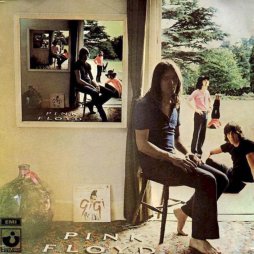 The new lineup forged ahead, with Waters taking over most of the songwriting, although several tracks on the next few albums were credited to all four members. The material they recorded on “A Saucerful of Secrets,” “Ummagumma” and “Atom Heart Mother” continued to explore new and strange sounds in the same spacey, psychedelic vein they had introduced, and the British audiences and record buyers continued to lap it up.
But all of these early records made barely a dent in the US, except among devotees listening to underground FM radio. It wasn’t until 1971’s  “Meddle,” which included the hypnotic, relentless, otherworldly “One Of These Days” and the 23-minute “Echoes” that American listeners started paying closer attention. Still, the album stalled at #70, and its followup, “Obscured By Clouds,” a soundtrack to the French film “La Vallee,” managed only #46 here.
But that all changed in March 1973 when “Dark Side of the Moon” was released. Now we were hearing heartbeats, ticking clocks, a cash register, a helicopter, maniacal laughter, mesmerizing synthesizer riffs, amazing guitar passages… and the voices. Waters taped technicians, friends, even the studio door security guy, saying various things, scripted and unscripted, and dropped them strategically into the mix.
“There is no dark side of the moon…Matter of fact, it’s all dark…”
Most important, the music and lyrics had been carefully crafted over many months in the studio to be less eccentric and more appealing to a broader audience. It hit a nerve among high school and college kids, who were spending untold hours in their bedrooms and dorm rooms under the headphones, spellbound by the lushly produced, technically proficient recordings. Waters was now clearly in charge of the songwriting, and he was obsessed with the subject of madness and the things that make people insane — money, time, modern life. Motivated partly by the sad fate of his old friend and partly by his own caustic view of societal injustices, Waters and the boys found a way, as Rolling Stone‘s Mikal Gilmore put it, “to make a thoughtful and imaginative statement about grim modern realities that somehow managed to soothe you with its nightmares.”
It must be mentioned that each Pink Floyd album cover broke new ground in artistic audacity. Hipgnosis, a London-based outfit, collaborated with the band to devise extraordinarily astounding images that contributed mightily to the excitement of every new Floyd release.
The band spent more than a year on the road worldwide doing sold-out shows in promotion of “Dark Side,” with increasingly arresting visuals augmenting the mind-bending music. But as often happens to bands who achieve such widespread success, they struggled mightily about what to do next. Waters and Gilmour were already at odds about the direction they should take, and Waters’ uncomfortable moodiness made life difficult in the creative laboratory of the recording studio. But Gilmour had come up with a mesmerizing four-note riff that Waters thought was a perfect foundation for a long piece he wanted to write about both the loneliness and brotherhood he felt for Barrett and his dissolution.
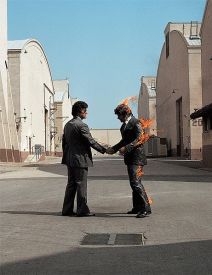 “Shine On You Crazy Diamond” — and the acoustic guitar-based “Wish You Were Here” — were the Barrett tributes that became the centerpieces for the “Wish You Were Here” LP, widely regarded as a thoroughly worthy follow-up to “Dark Side.” Just as important were the tracks that decried the submission of the human race (“Welcome to the Machine”) and the way the band was now treated by the profit-motivated record label (“Have a Cigar”). The group felt no need to sit for interviews, and in fact, they cherished their individual privacy, something most bands were happily willing to sacrifice in the name of fame. No matter: The album went straight to #1 in multiple countries.
As Wright put it, “I particularly like that record, the atmospherics. I think the best material from the Floyd was when two or three of us co-wrote something together. Afterwards, we lost that. There was no longer that interplay of ideas.”
 Indeed, Waters took control almost completely for “Animals” (1977) and the sprawling “The Wall” (1979), Pink Floyd’s next two LPs. He insisted on handling virtually all the music and lyrics, and even stage design, props (a gigantic inflatable pig?) and laser-show lighting. Their lyrics — paticularly for the bloated double album “The Wall” — continued Waters’ increasingly bleak worldview and his obsession with gloom, mental breakdowns and alienation, which, in turn, alienated the rest of the band. “Do we have to revisit all this yet again?” questioned Wright, who Waters fired during the album’s recording, yet rehired “as a sideman” for the subsequent tour.
 Both albums rocketed to #1, and made them the world’s top concert draw at the time. “The Wall” gave them their improbable #1 hit single, “Another Brick in the Wall (Part II).” But the internal dissension was growing exponentially — “None of us has ever been the best of friends,” noted Gilmour — and communication was nearly nonexistent, much like the relationship between the band and its audience once Waters executed his desire to build an actual wall on stage, taking the message of isolation to its extreme.
Somehow, the band managed to stay together until, in 1982, Waters presented the group with another concept and a batch of mostly-completed songs. This time Gilmour balked, saying he thought the material wasn’t up to snuff — and indeed, most of the tracks were rejects from “The Wall” sessions. Nevertheless, they recorded the underwhelming “The Final Cut,” which turned out to be the final Pink Floyd album in which Waters participated.
It reached #6 and sold two million copies in the US, but you rarely hear many cuts from it, on classic radio or anywhere else. It was a deflating end to a marvelous reign.
Act III:
Court b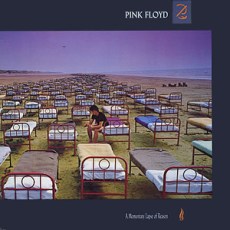 attles over the rights to use the Pink Floyd name (the “brand”) pitted Waters against his former mates in one of the deepest, ugliest splits in rock history, more public even than The Beatles’ infamous breakup. Waters lost, and Gilmour, Mason and Wright kept the Pink Floyd name in the news with 1987’s “A Momentary Lapse of Reason,” a solid album and tour that maintained the band’s momentum for the rest of the ’80s.
Gilmour’s immediately recognizable guitar and vocals carried the day (much to Waters’ consternation), as they did again in 1994 with the band’s penultimate effort, “The Division Bell,” which also hit the top  of the charts. One more Floyd LP, entitled “The Endless River,” was released in 2014, truly a “scraping the bottom of the barrel” collection of discarded snippets from previous sessions, barely worth mentioning.
Gilmour had been occasionally releasing solo albums since as far back as 1978, and his 2006 LP, “On an Island,” reached #6 in the US, a welcome rush of Floydian music for the band’s starved fans. A tour at that time, and another in support of 2015’s “Rattle That Lock,” met with praise and enthusiastic crowds.
Waters, in the meantime, produced a series of far less successful solo albums — “The Pros and Cons of Hitchhiking” (1982), “Radio K.A.O.S.” (1987) and “Amused to Death” (1992) — and a couple of well-received tours (including a star-studded tour promoting “The Wall”) featured new songs interspersed with the best of t he Pink Floyd repertoire. He’s still at it today, participating in the landmark Desert Tour shows on the Coachella grounds in October 2016 (some say he was the highlight), and he’s about to release another LP, “Is This the Life We Really Want?”, later this summer.
As is often the case when bands split up, the various entities did reasonably well, but certainly not as successful as they would have been together. An uneasy truce was reached for a couple of one-off appearances in 2005-2007, and the band members no longer publicly badmouth eac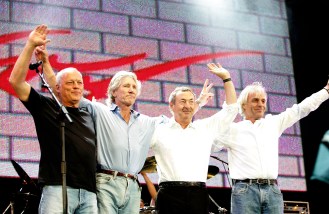 h other. But it’s clear they’ll never record together again, and the band’s catalog will not see any further entries (outside of endless re-packages).
But Pink Floyd’s legacy as one of rock’s true giants remains intact, and one of the music business’s most interesting tales, with a recorded output that rivals damn near any band in history.
 Readers who know me well are aware that, when it comes to books about rock music, I inhale them. Reference books about the Billboard charts, in-depth examinations of specific genres or regions, biographies (authorized and unauthorized) of famous artists and producers — I love ’em all, soaking up interesting factoids and arcane album information for use in some future party conversation (or this blog).
 “Born to Run,” Bruce Springsteen, 2016
 “Boys in the Trees,” Carly Simon, 2016
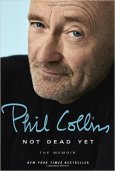 “Not Dead Yet,” Phil Collins, 2016
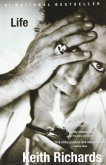 “Life,” Keith Richards, 2011
 up with long-time confidante/journalist Malka Marom on three occasions (1973, 1979, 2012) to do lengthy, detailed taped interviews, which have been transcribed in Q&A format, giving readers a great deal of insight into Mitchell’s creative songwriting process and her development as a consummate musician. If you love Joni, or songwriting, this one is a must.
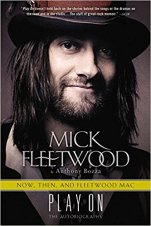 “Play On: Now, Then and Fleetwood Mac,” Mick Fleetwood, 2014
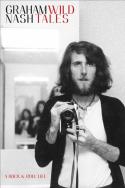 “Wild Tales,” Graham Nash, 2013
 “Rod: The Autobiography,” Rod Stewart, 2012
 “Reckless: My Life as a Pretender,” Chrissie Hynde, 2015
 “Delta Lady,” Rita Coolidge, 2016
 “Who I Am,” Pete Townshend, 2012
 “My Life With Earth Wind and Fire,” Maurice White, 2016
 “Clapton: The Autobiography,” Eric Clapton, 2007
 “Kicking and Screaming: A Story of Heart, Soul and Rock ‘n Roll,” Ann & Nancy Wilson, 2013
 “It’s a Long Story: My Life,” Willie Nelson, 2015
 “Sweet Judy Blue Eyes,” by Judy Collins, 2011
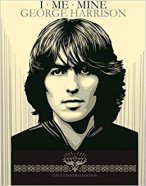 “I Me Mine,” George Harrison, 1979, 2017
 “Journals,” Kurt Cobain, 2002
 “Chronicles, Volume One,” Bob Dylan, 2004
  Hack's Back Pages