I’m takin’ the time to find

I’ve been spelunking again recently, and I have some wonderful finds to share!

Exploring caves for rare hieroglyphics isn’t unlike digging through old albums from the ’60s, ’70s and ’80s and discovering (or re-discovering) some really great tracks to enjoy. I marvel at the seemingly endless supply of appealing musical grooves to be found that were criminally ignored or neglected at the time. I really enjoy what I see as my mission: Weeding through the inconsequential and truly awful to identify the damn good stuff, and then shine a light on them here so we can all get off on them.
Naturally, you may not take to some of these selections. Maybe you won’t like any of them (but I doubt that). That’s the beauty of art — so subjective, open to interpretation, and there for the taking or leaving. I hope you like, even love, these tunes. If not, well, there’s always the next edition of “Lost Classics“…

*************************

“Woman’s Gotta Have It,” James Taylor, 1976

The great Bobby Womack co-wrote this smooth tune with his stepdaughter Linda and took it to #1 on the R&B charts in 1972 (though it stiffed at #60 on the pop charts). Taylor, who had a habit of reworking R&B songs like Marvin Gaye’s “How Sweet It Is,” did a really nice job with Womack’s song on his seventh album, “In the Pocket,” which peaked at #16 in 1976. Although “Woman’s Gotta Have It” wasn’t released as a single, I think it should have been. The lush strings and arrangement by co-producers Russ Titelman and Lenny Waronker made the track one of the highlights of this relatively overlooked Taylor album.

“Don’t Change,” Hall and Oates, 1977

Probably the most popular of the “blue-eyed soul” practitioners of the mid-’70s, Daryl Hall and John Oates emerged from Philadelphia in 1972 with a deep appreciation of soul music with rock and roll flavorings. Hall’s amazing multi-octave voice and Oates’ guitar playing were at the heart of their success, but their songwriting was impressive as well. From the early classics like “She’s Gone” and “Rich Girl” up through the early ’80s string of hits (“Kiss on My List,” “I Can’t Go For That,” “Maneater”), the twosome earned their status as rock’s most successful duo ever. Their 1977 LP “Beauty on a Back Street” was a failed experiment, eschewing the R&B grooves for harder rock, but the leadoff track, “Don’t Change,” deserves your attention.

“Trapped Again,” Southside Johnny and the Asbury Jukes, 1978

This rough-and-tumble bar band, led by the indefatigable Johnny Lyon, came from the same Jersey Shore dives where Bruce Springsteen cut his teeth. Indeed, Lyon and E Street Band guitarist Miami Steve Van Zandt were close associates, with Van Zandt producing and writing many of the songs for the Jukes’ first three LPs. Critics have labeled their third album, “Hearts of Stone,” as “the best Springsteen album never recorded” because The Boss and Van Zandt wrote most of it. It’s a fine LP that should’ve been their breakthrough, but it just wasn’t to be. One of the better tracks is “Trapped Again,” co-written by Springsteen, Van Zandt and Lyon, which features the band’s trademark powerful horn section and Lyon’s gruff pipes.
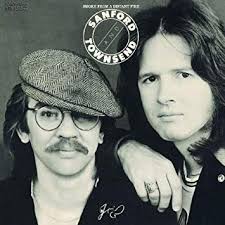
“Shake It to the Right,” Sanford and Townsend, 1977

Ed Sanford and John Townsend were talented songwriters and session musicians out of Alabama who relocated to Los Angeles in 1976 and won a publishing and recording deal at Warner Brothers. They wrote songs with and for Kenny Loggins, and their debut LP featured a likable Top Ten hit of their own with 1977’s “Smoke From a Distant Fire.” They toured behind Fleetwood Mac, Marshall Tucker Band and Heart, but they never duplicated the success of the first single, which earned them the dubious distinction of “One-Hit Wonders.” Too bad — that first album had some strong follow-up candidates, like “In For the Night” and the exuberant “Shake It to the Right.”
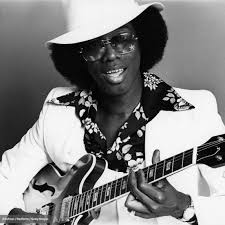
“Ain’t That a Bitch,” Johnny “Guitar” Watson, 1976

Watson was a cult favorite on the blues circuit in the ’50s and ’60s, both as a guitarist and a singer, mentioned in the same breath with other greats like Buddy Guy and B. B. King. In the ’70s, he chose to revamp his persona and pursue the urban-funk genre, complete with flashy attire and jewelry. Although he was denied success on pop charts, he enjoyed a half-dozen Top 40 R&B hits, most notably “A Real Mother For Ya,” “Superman Lover,” “I Don’t Want to Be a Loner Ranger” and my favorite, “Ain’t That a Bitch,” which showcases Watson’s half-spoken, half-sung delivery with wit and panache.
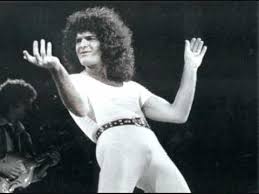
“Son of a New York Gun,” Gino Vannelli, 1974

Born and raised in an Italian family in Montreal, Canada, Vannelli and his brother Joe both had musical ambitions from an early age, singing and playing in high school bands. The brothers moved to Los Angeles and signed with Herb Alpert’s A&M Records when Gino was just 17. With Joe handling keyboards, arrangements and production and Gino writing songs and singing, they turned heads in the jazz-pop arena in 1974 with the “Powerful People” album and US #22 hit “People Gotta Move.” There’s a lot of fine stuff on this LP, including the jaw-dropping “Son of a New York Gun.” Vannelli went on to have bigger hits in 1978-1981 with “I Just Wanna Stop” and “Living Inside Myself.”

“Century’s End,” Donald Fagen, 1988

Fagen, of course, is one half of the brilliantly talented duo behind Steely Dan, who have one of the best album catalogs of the 1970s. Following the 1980 release of The Dan’s seventh LP, “Gaucho,” Fagen’s partner Walter Becker took several years off to re-examine his life and recover from drug addiction. Fagen proceeded on his own with his debut solo LP, “The Nightfly,” a natural extension of the Steely Dan sound that reached #11 on the charts. The rest of the ’80s found Fagen choosing a more relaxed pace as well, occasionally contributing to soundtracks. His compelling song “Century’s End,” which wouldn’t have been out of place on “The Nightfly,” wound up on the “Bright Lights, Big City” film soundtrack in 1988.
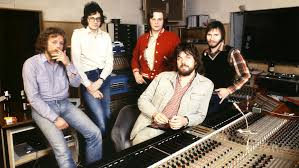
“The Gold Bug,” The Alan Parsons Project, 1980

Parsons made a name for himself as engineer/producer at Abbey Road Studio, where he was involved with The Beatles’ swan song album and Pink Floyd’s masterpiece, “Dark Side of the Moon.” He then teamed up with singer/songwriter Eric Woolfson in 1976 to form The Alan Parsons Project, which would bring together a broad array of instrumental and vocal talent to perform the songs Parsons and Woolfson co-wrote. Described as “progressive-art pop-rock,” APP enjoyed increasing popularity in the US in 1977-1984, with Top 40 singles like “Damned If I Do,” “Games People Play,” “Time” and “Eye in the Sky.” Each LP included one instrumental track, and I’ve always found “The Gold Bug” from 1980’s “Turn of a Friendly Card” to be tantalizing, with a sexy sax taking the melody line.

“Criminal World,” David Bowie, 1983

Although “Let’s Dance” is seen as a typically abrupt about-face for Bowie toward more commercial music following the darker “Berlin Trilogy” albums of the late ’70s, it was actually a natural progression from the balanced approach he achieved with 1980’s “Scary Monsters” LP. Still, Bowie brought in a different producer (the funky hitmaker Niles Rodgers) and an all-new group of studio musicians. The biggest surprise was the introduction of then-unknown guitar wunderkind Stevie Ray Vaughan to the proceedings. Bowie had seen Vaughan at a 1982 music festival and was drawn to his playing. “The solo he laid down on ‘Criminal World’ is the best I’ve heard in ages,” Bowie said at the time.
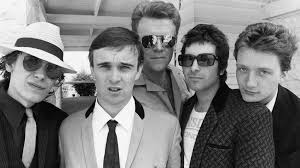
“Tongue Like a Knife,” Squeeze, 1982

In England, the songwriting team of Glenn Tilbrook and Chris Difford was hailed as “the heirs to Lennon and McCartney” when their band Squeeze pumped out album after album of wonderful, quirky pop songs in their initial phase (1978-1982). Lots of variety among their hits — traditionally melodic (“Labelled for Love,” “Up the Junction”), new-wavy (“Cool for Cats”), unnervingly compelling (“Another Nail in My Heart”) and their biggest single in the US, the undeniably tempting “Tempted,” featuring Paul Carrack on guest lead vocal. On the excellent 1982 LP “Sweets From a Stranger,” exotic tracks like “Tongue Like a Knife” show a more sophisticated edge to their songwriting.
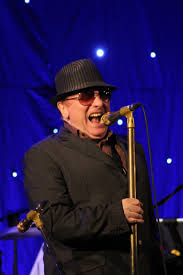
“Tore Down a la Rimbaud,” Van Morrison, 1985

Following his prolific 1969-1974 period, Morrison took a few years off to rejuvenate the creative juices. During that time, he became aware of French poet Arthur Rimbaud, a mid-1800s boy wonder who was first published at age 15 and quit for good at 25. “Ironically, that sorta got me writing again,” he recalls, and it did cure his writer’s block and allowed him to resume his swift pace of releasing new material, but it still took him another eight years to finally finish and record “Tore Down a la Rimbaud.” It’s one of Van the Man’s best efforts, a marvelous piece full of horns and gospel vocals.

“Club at the End of the Street,” Elton John, 1989

Personal life issues made The Eighties difficult for John, and it showed up in his recorded output. Nearly every album still had at least one big hit single, but there was way too much filler as well. His albums were no longer #1 on the US charts — more like #17, or #48, or even #91 (his worst-ever LP “Leather Jackets”). His outlook improved in 1988 when he resumed working with long-time lyrics partner Bernie Taupin, and the result was the surprisingly strong “Sleeping With the Past.” Not only did it feature the stunning #1 ballad “Sacrifice,” the song list included the glorious “Healing Hands,” the beautiful “Whispers” and the catchy “Club at the End of the Street,” which recalls early Sixties soul.

***********************

Well, we’re all in the mood for a melody

All rock music artists, every one of them, have had to deal with harsh criticism.

Even in light of huge commercial success, some bands get raked over the coals by critics who have decided they Just. Don’t. Like. Them. Led Zeppelin famously faced this. So have Justin Bieber, and Madonna, and Nirvana, and U2. God knows The Beatles certainly faced this, particularly when they first appeared and upended popular music.

And that’s okay.

The response to art of all kinds — music, painting, theater, sculpture, literature — is subjective. It’s created, and when it’s put out there for public consumption, it’s liked by some and disliked by others. More accurately, there are those who love it, or like it, or are ambivalent about it, or dislike it, or hate it. That’s just the way it is. It elicits an emotional response, or it doesn’t. There’s no accounting for different tastes.

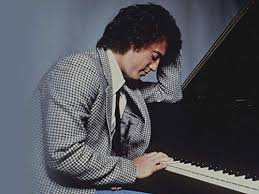
But let’s examine the rather unusual case of one Billy Joel.

Born in the Bronx and raised on Long Island, Joel has been a loyal New York guy all his life, a composer of some of the most recognizable melodies of the 1970s and 1980s, and a guy who has sold upwards of 150 million records and still sells out Madison Square Garden shows every month for the past six years (until the pandemic). He is beloved by many millions of fans across multiple generations. And yet, through the years, he has had to cope with some of the most scathing critical derision of any artist of his time.

Consider, for example, this withering summary of Joel’s music from a 2019 piece by Jonah Mendelson in The Michigan Daily: “It is the Applebee’s of pop music, a tepid, microwaved repackaging of actual musical expression, and it deserves little more than contempt.”

Even more difficult to swallow is this brutal 2009 assessment by Ron Rosenbaum in a Slate essay entitled “The Awfulness of Billy Joel, Explained”: “He thinks people can’t stand him because he dresses wrong or doesn’t look right. Billy Joel, they can’t stand you because of your music; because of your stupid, smug attitude; because of the way you ripped off your betters to produce music that rarely reaches the level even of mediocrity. You could dress completely au courant and people would still loathe your lame lyrics.  It’s not that they dislike anything exterior about you. They dislike you because of who you really are inside. They dislike you for being you. At a certain point, consistent, aggressive badness justifies profound hostility. They hate you just the way you are.”

Ouch.

This is the kind of “criticism” that is little more than what they call a “hatchet job,” a cruel vivisection of not so much the music but the man himself. It’s not constructive in any way, and says more about Rosenbaum’s shortcoming as a writer of critiques than about Joel or his oeuvre.

It gives credence to Joel’s propensity at various times in his career to cry foul. Despite being advised by contemporaries to let it go and not make a fuss, Joel has complained publicly throughout the decades about what he sees as unfair treatment. One time in concert, he read from a blistering review of the previous night’s show, then tore it up into little pieces. The adoring crowd went wild, of course, but it showed his thin skin in a business that requires a much tougher facade.

Me, I like Billy Joel. I truly love certain tracks, and while I agree he has more than a few duds in his catalog, he has shown a phenomenal musical talent for composing immaculate pop songs that deserve our admiration and respect. He released 12 studio albums of original material between 1971 and 1993, and every one has at least two and as many as a half-dozen songs that, to my ears, belong in the Songwriters Hall of Fame.

My friend Irwin, a professional musician and extraordinary keyboard player, sums up Joel’s skills this way: “I see him as one of the greatest songwriters of all time. There has been no greater melodist since the pre-rock songwriter. His chord changes and stylistic concepts are wonderful. He has the diversity of a chameleon, but with originality. He writes great hooks, a perfect combination of music and words. Take ‘Uptown Girl’ — the same note three times and an instantly evocative two words. That sort of simplicity is much harder than writing fancy shit.”

I’m inclined to agree with all of that. I often felt Joel would have done very well writing for Broadway shows. He has a very New York theatrical flair to his presentation, and his uptempo tunes in particular would have lent themselves well to stage plays and musicals. I hear an over-the-top showstopper like “Big Man on Mulberry Street” from his 1986 LP “The Bridge” and can visualize the choreography and staging for it. Same goes for his jazzy masterpiece “New York State of Mind” from 1976’s “Turnstiles” and the exuberant 1977 hit “Only the Good Die Young.”

The diversity shows up in his quieter numbers. “Just the Way You Are,” one of the best love songs of the past half-century, is a cocktail lounge standard, while his 1980 minor hit “Don’t Ask Me Why” has delightful Latino influences. “She’s Always a Woman” from “The Stranger” album and “And So It Goes” from his later “Storm Front” LP offer instantly pleasing melodies sung with tenderness and sincerity.

Even Joel is willing to concede that he’s not the best singer in the world. “I think, when I hear a bad reaction to my work, I chalk it up to my voice. Hey, sometimes I hear my voice and it annoys me!” My friend Irwin thinks Joel is a horrible singer. “He’s all affectation with no soul. He affects a different person in every song. Imitation is great in pop music but only when you assimilate and distill stuff into your own gumbo. Billy Joel doesn’t do that. He lacks his own vocal identity.”

I’ll concur that his voice at times can be a bit off-putting, with the over-enunciations (“It just may be a LOOOOONatic you’re looking for”) and collateral nonsense he sometimes insists on using, apparently just to be cute (“Working too hard may give you a heart attack-ack-ack-ack-ack”). But he’s capable of singing well when he wants to, so by and large, I’m willing to overlook it.

One of the themes critics have harped on the most is what they see as Joel’s inauthenticity. They claim he hasn’t experienced any of what he’s singing about and is therefore something of a fraud, a con man. It’s all just a show. He didn’t go to Vietnam, so how can he credibly write a piece like “Goodnight Saigon”?

To that, I say “Nonsense.” “Saigon,” in particular, is one of his finest bits of lyrics writing, precisely matching words to musical phrases like in a jigsaw puzzle, and the effect is harrowing and hugely memorable. So what if he didn’t serve? He knew plenty of people who did, and he can deftly tell their stories instead of his own.

His first success, the oft-played 1973 war horse “Piano Man,” is a fine example of Joel writing his own story of his days playing at an L.A. piano bar, while also offering thumbnail sketches of the people who frequented the place. Musically, it’s repetitive and has suffered hugely from radio overexposure and unmerciful mangling at karaoke bars everywhere. It’s the song that put him on the map, though, and kept him getting bookings as he evolved and experimented with different genres on ensuing albums.

His 1976 album “Turnstiles” was unjustly ignored, stalling at #122 on US album charts (although it later reached platinum sales status), despite the inclusion of quality tunes like “Angry Young Man,” “Miami 2017,” “Summer, Highland Falls” and “Say Goodbye to Hollywood.” Joel did leave L.A. and returned to New York, where he insisted on recording with his touring band rather than session musicians. The great engineer/producer Phil Ramone, fresh off successes with Paul Simon, saw eye to eye with Joel about his band and agreed to run his upcoming sessions.

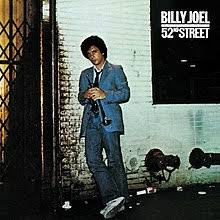
The result was the 1977 classic LP “The Stranger,” which featured not only a string of four Top 20 singles that turned him into a bonafide headliner but a couple of quintessential gems in “Scenes From an Italian Restaurant” and “Vienna,” which emerged as fan favorites as well. Just as winning to me was “52nd Street,” the 1978 follow-up also produced by Ramone that had three Top 20 hits (“Big Shot,” “My Life” and “Honesty”) and brought some more sophisticated material to the table in the form of “Zanzibar,” “Stiletto” and “Until the Night.”

It was around this point that punk and New Wave styles were making inroads, and Joel, smarting from rock critics who labeled his music as “too soft to rock,” went full out with “Glass Houses,” which sold well but showed (to me) that he wasn’t all that effective as a rock ‘n roll poseur. “You May Be Right” is okay, but “It’s Still Rock and Roll to Me” may be his most annoying hit ever.

The remainder of his studio albums throughout the ’80s reached #1 or came close, with still more smash hit singles, most of them enormously catchy and worthwhile (“Allentown,” “This is the Time,” “Modern Woman” and “A Matter of Trust”). Critics continued to deride his work for the most part, but they found they had to give grudging praise to his amazing 1983 LP “An Innocent Man,” a triumphant concept album paying homage to musical styles of Joel’s childhood, including doo-wop and soul music. In addition to the Four Seasons-ish “Uptown Girl,” there was a Motown send-up (“Tell Her About It”), an a cappella workout (“The Longest Time”) and a tribute to The Drifters (“An Innocent Man”), all of which were huge hits.

In 1993, after writing and recording his 12th album, “River of Dreams,” Joel assessed his work and his professional growth and decided he’d reached the end. “I couldn’t be as good as I wanted to be,” he said in a 2018 interview. “I was always trying to feel like there was a real progression in my work, and eventually I realized I was only going to be X good. I didn’t think the quality trajectory was going to continue to go up. So I stopped.

“I remember reading a quote from Neil Diamond where he said that he’d forgiven himself for not being Beethoven. I read that and went, ‘That’s my problem: I haven’t.’ But I did the best I could. I don’t think I coasted. There are artists who continued to record because they felt like that’s what kept them relevant, but I stopped feeling like that a long time ago.”

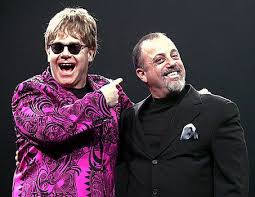
He’s no dummy, this guy. He may have been naive, getting fleeced for millions of dollars more than once by nefarious managers and business people, but in the 2000s and 2010s, when tour earnings supplanted record sales as the best gauge of an artist’s financial success, Joel focused on live performances instead of writing and recording. He did many dozens of crowd-pleasing shows with Elton John, where they played their own songs, each other’s songs and even a few duets. Since 2014, he has put on the regular monthly concerts in Manhattan, and occasionally schedules special shows elsewhere around the country. His fans eat it up.

In the late ’90s, he began writing classical music, even releasing an album of classical piano pieces, “Fantasies and Delusions,” in 2001, performed not by Joel but by classically-trained pianist Richard Joo. Since then, he has continued to write, but without any intent to release it.

“I have a lot of music that no one’s ever heard and no one may ever hear if I decide not to do something with it,” mused Joel. “It’s really the creative process that’s important to me now, not about having records on the charts or selling a lot of recordings. I just don’t feel compelled to share what I’m doing with the world. It’s for me. I’m learning all the time, and I don’t want to ever stop learning. That’s what’s good about the writing process. You always learn something new when you create.

“But I’m never going to say never. I may come up with an idea that could become a song. I may write a movie soundtrack. I may write a symphony. I don’t know. Anything’s possible.”

Joel said he chuckles as he notices there have been substantive essays written about him in major publications (and in small blogs!) that amount to critical reassessments of him and his contributions to the popular music canon. “I know good music. You can’t tell me everything I wrote was bad. That’s just absurd. So now I just shake my head and laugh when I read some critic say something like, ‘Well, his material is catchy, but then, so is the flu.'”

************************