I love the night life, I’ve got to boogie

I’ve mentioned it in passing. I’ve alluded to it. I’ve, um, danced all around it. Now the time has come to give it its due, to address it head on.
Disco.
From roughly 1974 to 1980, nothing was more polarizing on the popular music scene than disco. If dancing was your thing, disco was just about the greatest thing ever invented. If not, well, “Disco Sucks,” as the t-shirts and bumper stickers said.
(Full disclosure: I was and still am a rock ‘n roller and have little use for disco…except on those very rare occasions when I’m actually on a dance floor cutting a rug with a lovely lady. I concede that certain great disco tracks bring back great memories and are fun to hear, but as a genre, well, it just isn’t for me.)
Love it or hate it – and there seemed to be almost no middle ground – disco brought about a mini-revolution, however brief, that affected a broad swath: The Top 40 charts (both albums and singles), the dating scene, fashion, recreational drug use, the perception of gay life, films, even exercise and health.
In many ways, disco music wasn’t all that revolutionary. It naturally evolved from rhythm and blues, and Motown, and soul, and funk. It was music you could dance to. It was music you HAD to dance to. It was not music you sat around and listened to.
 Disco is actually an abbreviation for discotheque, a French term meaning “phonograph library.” In 1950s Paris, nightclubs began eliminating live bands and instead laid down dance floors, suspended colored lights, and replaced the jukebox with two turntables on which a deejay would continuously play pre-selected dance music with no breaks, keeping the clientele dancing all night long. During the ’60s in major US cities, this concept morphed into New York clubs like The Peppermint Lounge, where go-go dancing was the hot new thing, and Arthur’s, generally regarded as the first and foremost discotheque in town.
By the early 1970s, when a majority of the rock ‘n roll generation seemed to prefer less danceable forms of music (hard rock, psychedelic blues, country rock, singer-songwriter acoustic rock), a burgeoning underground movement was born on backstreets in converted warehouses and lofts, where oppressed groups like gays, Blacks and Latinos could push the boundaries of what was acceptable on and off the dance floor. Essentially, these discos were exciting escapes where fantasies, sexual and otherwise, could be explored away from public scrutiny.
 Most observers agree disco music entered the mainstream in 1973 or 1974, with songs like George MacRae’s “Rock Your Baby,” Barry White’s “Can’t Get Enough of Your Love Babe,” The Hues Corporation’s “Rock the Boat,” Gloria Gaynor’s version of the Jackson 5 hit “Never Can Say Goodbye” and especially Donna Summer’s “Love to Love You Baby,” a 16-minute, multi-part extravaganza that took dancers on an emotional groove ride. Also key were two instrumental tracks that reached #1 in 1974: “Love’s Theme” by Love Unlimited Orchestra and “TSOP (The Sound of Philadelphia)” by MFSB, which served as the theme song for the hugely popular TV dance show “Soul Train.”
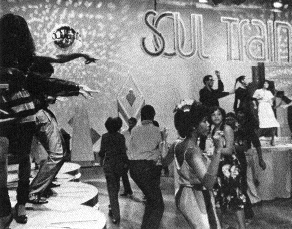
So what exactly differentiated disco music from the early ’70s soul and funk practiced by The O’Jays, Curtis Mayfield, The Staples Singers and others? The defining characteristic was over-the-top production with layers of lush strings and synthesizers, with heavy use of high-hat drums and a bass line so prominent it often served as the main melody. Lead guitar, which ruled the roost in almost all hard rock tracks, was almost non-existent, replaced by chunky rhythm guitars and a horn section. The final element was a soaring vocal with grand backing harmonies, singing repetitive lyrics usually focusing on dancing and romance. And sex.
 The promise of sex went hand in hand with disco. It always was either implied or blatantly stated, from KC and the Sunshine Band’s relentless chorus “Do a little dance, make a little love, get down tonight” to the sensual grooves reinforcing the message in Johnnie Taylor’s “Disco Lady”: “Move it in, move it out, shove it in, round about, disco lady…”
 Momentum continued to build in 1975 and 1976: Van McCoy’s “The Hustle,” Silver Convention’s “Fly Robin Fly,” Labelle’s “Lady Marmalade,” and Kool and the Gang’s “Hollywood Swinging,” and KC’s string of #1 hits (“Get Down Tonight,” “That’s the Way I Like It,” “Shake Your Booty”). It wasn’t long before half of the Top Ten songs in
  the nation each week were disco, written expressly for DJs to spin in the discos, which began sprouting up in more and more cities, giving city dwellers and suburbanites alike a compelling reason to dress up and go out on the town for an evening of nightlife.
The hits were endless: “Rose Royce’s “Car Wash,” Donna Summer’s “Bad Girls,” The Commodores’ “Brick House,” Thelma Houston’s “Don’t Leave  Me This Way,” A Taste of Honey’s “Boogie Oogie Oogie,” Glory Gaynor’s “I Will Survive” and Chic’s cringeworthy “Dance, Dance, Dance (Yowsa, Yowsa, Yowsa).” Even soul music divas like Diana Ross were successfully crossing over with tracks like “Love Hangover” and “Upside Down.”
There were weird amalgams like Walter Murphy’s “A Fifth of Beethoven,” which put a disco spin on the structure of Beethoven’s 5th Symphony. There were even novelty tracks like Rick Dees’ #1 hit “Disco Duck,” which crystallized the disco experience thusly: “Went to a party the other night, all the ladies were treating me right, moving my feet to the disco beat, how in  the world could I keep my seat…Everybody’s doing the disco duck…”
Almost all of the major disco artists were Black, but white artists got in on the action as well. We’ve already mentioned KC (Harry Kasey) and his band, and other monster hits like Leo Sayer’s “You Make Me Feel Like Dancing” and Abba’s “Dancing Queen” became major anthems as the multicolored disco balls spun above the crowded dance floors nationwide.
By 1977, there were 50,000 clubs in existence in the United States alone. Ladies wrapped 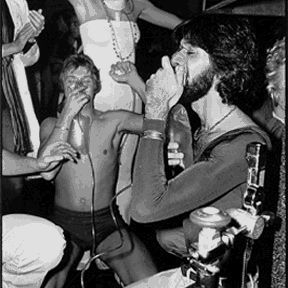 themselves in sexy flowing Halston dresses and high heels, and men donned wide-lapel leisure suits with open shirts revealing hairy chests and gold medallions…and coke spoons. In addition to the casual sex that went on in and around the clubs, recreational drug use was rampant there as well, particularly cocaine, amyl nitrite and other designer drugs intending to provide the blasts of energy needed to keep on dancing.
New York City’s Studio 54 was the epicenter of disco at its most fashionable, if not most decadent. Celebrities flocked the place and were ushered right in, while average folks lined up in their finest sexy threads in hopes of gaining entrance. The dance floor was packed from dusk literally ’til dawn. There were sex and drugs but no rock ‘n’ roll there — exclusively disco music, one song after the other.
The apex came in late 1977 with the release of the film “Saturday Night Fever.” Its  producers had read an article in New York Magazine about the disco scene occurring not only in Manhattan but Brooklyn and outlying areas as well. The ultimately tragic tale of a kid who hated his job but fancied himself the king of the dance floor each Saturday night was little more than a vehicle for the hugely successful soundtrack album, which sold 25 million copies and included the Bee Gees hits that have defined the disco era ever since (“Stayin’ Alive,” “Night Fever,” “More Than a Woman,” “You Should Be Dancing”). It’s interesting to note that the producers rush-released the movie because they had already spied “Disco Sucks” bumper stickers in LA and feared that disco’s peak had come and gone.
Indeed, even as disco continued its domination for another year or two, there was a simmering disenchantment in some circles with how thoroughly it seemed to have infiltrated popular radio and nudged aside mainstream rock. When even The Rolling Stones felt compelled to try their hand at disco with dance-friendly tracks like “Miss You” and “Emotional Rescue,” the 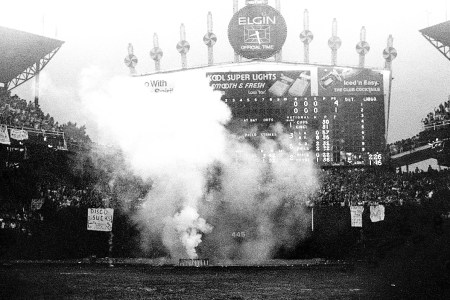 rockers grew desperate. Finally, in July 1979, when a Chicago rock radio DJ lost his job when his station switched to an all-disco format, he organized a “Disco Demolition” promotion at Comiskey Park, ostensibly to boost tickets sales to a White Sox doubleheader. Anyone with 98 cents and a disco record could gain admittance, and between games, the DJ detonated a huge pile of discarded disco LPs, sparking a near riot as 10,000 rock fans poured onto the field in celebration, resulting in a forfeit.
Although its proponents didn’t want to admit it, disco’s bubble had burst. The proliferation of disco dance classes at the mall and at senior community centers was certainly a bad omen. One of the final #1 hits of that period, ironically, was Donna Summer’s and Barbra Streisand’s duet, “Enough is Enough.” By the end of 1980, the very word “disco” seemed to have been banished and replaced with “dance music” and techno. Clubs were closing left and right, and popular music moved ahead with New Wave, ’80s pop, grunge and hip hop, and other genres, leaving disco to the time capsules and nostalgists.
Barry Gibb of The Bee Gees, who had been around for decades and offered a much broader repertoire than just disco, has said the trio grew tired of it and regretted being labeled as the genre’s poster boys. “Our secret desire was to create a video with us 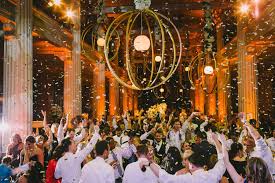 dressed like Rambo, using machine guns to mow down the guy in the white suit on the colored dance floor.”
But perhaps not so surprisingly, the best music of that era has survived to the present day. At just about every wedding reception or major gala event where dancing occurs, you’ll hear “YMCA” or “Celebration” or “Hot Stuff” or “Play That Funky Music White Boy.”
Disco has assumed its rightful place of honor among all the other dance-oriented music of the last century, from jitterbug and cha-cha to Big Band and swing, from roots rock to Motown, from funk to techno, from EDM to hip hop.
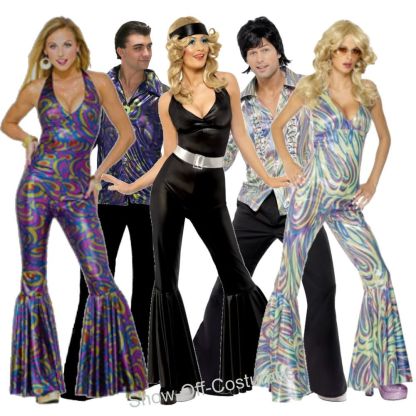 Many folks who were pre-teens, teens, or in college during the disco years have said they look back very fondly on that time. “It was fun, it was exciting, we dressed up,” said my friend Kathy. “It was kind of like a fantasy life for a few hours. For most people I knew, we weren’t doing much drugs or having sex in the clubs. We were drinking and dancing to the music all night long.”
When I asked her if she liked disco music outside of the clubs, she said, “Sure I did. If it came on the radio, I really didn’t want to just sit and listen to it, I had to get up and dance even if it was with just a couple of friends in my living room, or even by myself as I was getting dressed. I have to admit if it came on the car radio, I would sometimes switch the channel because I didn’t want to hear it unless I could dance!”
********************
The Spotify playlist you’ll find here is nearly three hours of some of the classic disco tracks from that late ’70s era, perfect for any disco theme party. You’ll never catch me playing it at my house (well, maybe a song or two), but for disco enthusiasts, have at it!
 jazz sax of Charlie Parker, vocal acts like The Inkspots, crooners like Nat King Cole, and the songs of Cole Porter as interpreted by the voice of Billie Holiday.
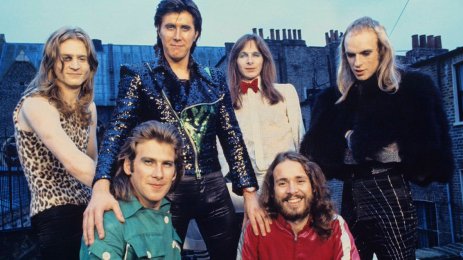 dominated the charts in England and America in the late 1970s, 1980s and beyond.
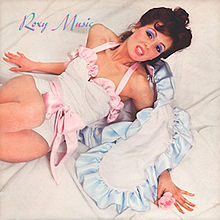 We were still dabbling in the various possibilities, and considering the futures we could have as a band. It’s interesting how it ended up being a very influential record for a lot of different bands who picked up on a lot of different aspects of the sound.”
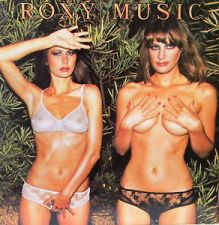 From my own point of view, I have to say it was Ferry’s weirdly affected voice that initially turned me off from Roxy Music. The fluttering, often atonal vocals were an acquired taste, to say the least, and I simply couldn’t get past them to discover the fascinating sounds coming from Mackay, Eno and Manzanera.
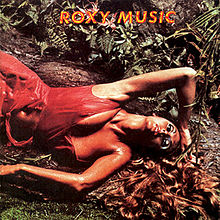 trusted his taste in music. Throughout the mid-1970s, he would air liberal helpings of great songs from Roxy’s first several albums — tracks like “Street Life,” “Editions of You,” “Out of the Blue,” “Both Ends Burning.” Slowly, by osmosis, I absorbed the creepy beauty and exhilarating energy that Roxy Music had to offer.
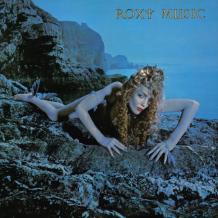 His replacement, if you can call it that, was Eddie Jobson, who did exemplary work on “Stranded,” “Country Life” and “Siren,” all solid LPs in the Roxy tradition. His warm, textural synthesizer and violin passages recalled the sounds Eno had come up with while moving the band forward into a more accessible, listenable oeuvre.
 album covers, and the stage look of the band in general.”
 Roxy had taken a brief sabbatical in 1977 while Ferry continued a concurrent solo recording career. When they resumed working together, beginning with the “Manifesto” LP and its two excellent singles, “Angel Eyes” and “Dance Away,” Roxy Music were making tracks that folks in the dance clubs found more engaging. As Rolling Stone put it, “It seems as if the rest did the regrouped Roxy a world of good: deftly blending fresh rhythms into its signature sound, shortening the musical passages and concentrating more on song craft.”
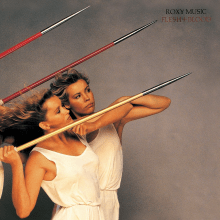 was faced with reviews like this one by the respected David Hepworth: “Original followers will likely find this album low on character and surprise, while those who love the mighty ‘Over You’ single will no doubt be suckers for the album’s mature, silky charms.” To which Ferry replied, “Older fans want us to stay stuck in time, but that’s not reasonable.”
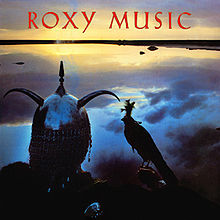 Ferry’s voice, songs and keyboard playing adopt a softer, dreamier approach. Critic Kurt Loder raved about it: “The album takes a long time to kick in, but when it finally does, it shows a band at its peak. Ferry’s familiar vocal mannerisms are subsumed in a rich, benevolent self-assurance, and reed man Andy Mackay shines in a series of impressive solos. Roxy Music may be less dramatic now, but the songs have seldom seemed stronger.”
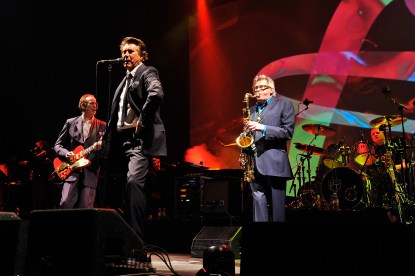 The band attempted a reunion in 2007 when Ferry, Mackay, Manzanera and even Eno reassembled in the studio to cut a few tracks, but they ultimately didn’t feel it was up to standards and shelved it. Some of that material was reworked and rearranged for Ferry’s 2010 “Olympia” LP.
 When asked to discuss his long-ago days with Roxy Music, he sighs and reflects matter-of-factly, “I really love what I do, and I’ve been fortunate. The only part I don’t like is all this overanalyzing. Art and music are here to be enjoyed and absorbed. I’m not sure they need to be talked about so much. I do sometimes envy the people who never have to describe what they’re doing.”
 Hack's Back Pages