I’d listen to the radio: A Lost Classics re-run

I’m going to be traveling internationally over the next few weeks, so I’ll be re-running a few posts of “lost classics” from the first few years of “Hack’s Back Pages” (2015-2018). I’m fairly certain many of my current readers weren’t seeing my blog at that point, so these entries may very well be new to you. In any case, I’m offering some great “diamonds in the rough” from albums in the ’60s, ’70s and ’80s, and I think you’ll find them well worth your attention.

************************
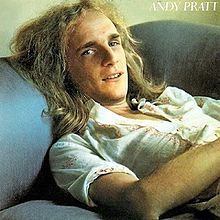
“Avenging Annie,” Andy Pratt, 1973

This guy is a perfect example of an artist who was highly praised by critics and others in the music industry but never embraced by the public.  From an upscale Boston family and ’60s Harvard education, Pratt chose to pursue both soft/folk rock and experimental musical genres.  His debut album in 1973 included the minor classic “Avenging Annie,” which features great piano and vocals wrapped around a tremendous melody and arrangement, but it somehow never managed better than #78.  The Who’s Roger Daltrey recorded a killer rendition on his 1977 solo LP “One of the Boys,” but otherwise, the song faded into the woodwork.  Pratt had one more flirtation with the charts with 1976’s “Resolutions” LP and the single “That’s When Miracles Occur,” but they too underperformed commercially.  After that, he became a Christian rock devotee and moved to The Netherlands, where he was happy with relative obscurity.
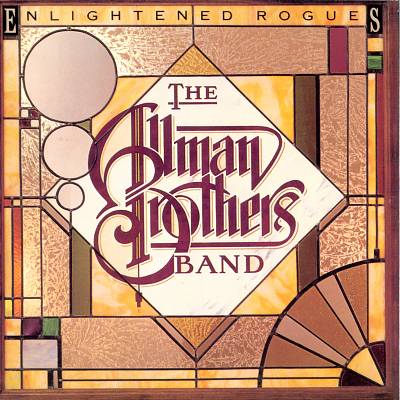
“Blind Love,” Allman Brothers, 1979

Such a cursed band, The Allman Brothers.  They struggled mightily in the 1969-1971 period, playing upwards of 300 gigs a year, becoming one of the finest bands America has ever produced, with phenomenal guitar interplay from Duane Allman and Dickey Betts, vocals and organ from younger brother Gregg Allman, and an expert rhythm section.  But then Duane died at age 24 just as the world was turning on to the band, followed by bassist Berry Oakley’s death a year later.  Nevertheless, the band enjoyed a few years of commercial success (“Ramblin’ Man”) before imploding in ugly quarrels and ego-driven rivalries.  Somehow, they found a way to bury hatchets and reconvene in 1979 for a surprisingly strong LP, “Enlightened Rogues,” which features a ferocious blues track called “Blind Love,” featuring Gregg’s angst-ridden vocals and outstanding guitar by Betts and his new compatriot Dan Toler.
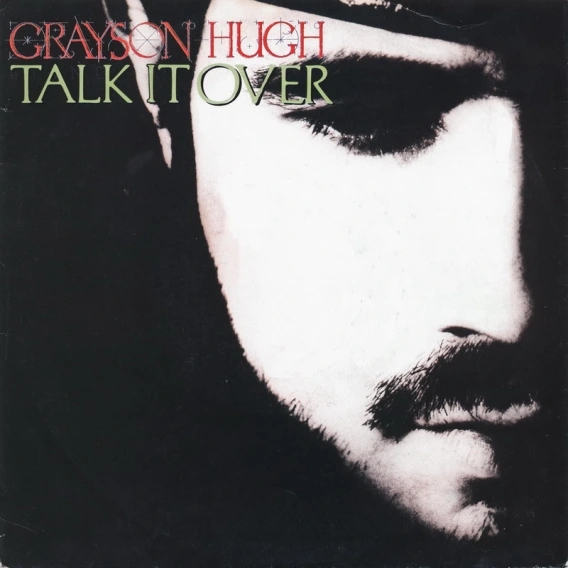
“Talk It Over,” Grayson Hugh, 1988

Why this guy didn’t become a bigger commercial success is one of life’s mysteries.  Hugh has an incredible voice, perfect for rhythm and blues songs (especially for a white boy!), and his debut LP “Blind to Reason” in 1988 is well worth another look.  His original songs “Romantic Heart,” “Tears of Love,” “Finally Found a Friend” and the title track show great promise.  But it was “Talk it Over,” co-written by Sandy Linzer (who co-wrote “Let’s Hang On” and “Working My Way Back to You” for The Four Seasons), that put Hugh into the Top 20 in 1989.  Hugh was widely praised for his follow-up LP, “Road to Freedom” (1992), and two songs from it appeared in the “Thelma and Louise” soundtrack.  But things didn’t work out and he struggled with alcoholism; he’s on the mend and still creating new music today.
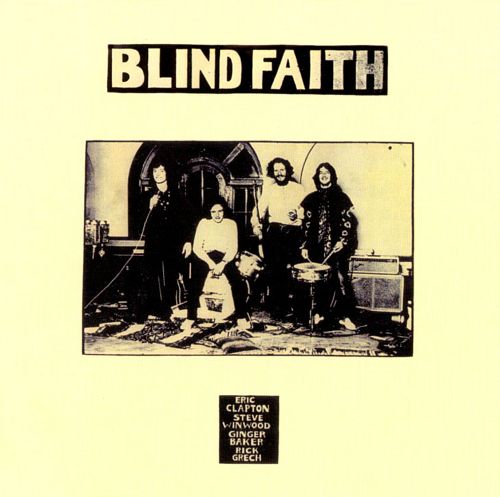
“Sea of Joy,” Blind Faith, 1969

Eric Clapton and Steve Winwood had admired each other since they first crossed paths in 1966 when Clapton was with John Mayall’s Bluesbreakers for a brief period before forming the legendary Cream, and Winwood was all of 18, singing for Spencer Davis Group before forming Traffic.  They vowed to work together some day.  In 1969, Cream had imploded, and Traffic was on hiatus, and the two musical giants decided to give it a go to see what might happen.  The result was Blind Faith, born of good intentions but conflated by record promoters beyond what anyone involved wanted.  They lasted all of five months…but fortunately for us, they produced a spectacular record that still resonates today.  Winwood’s delicate acoustic “Can’t Find My Way Home” and Clapton’s “Presence of the Lord” show up on classic rock radio periodically, but another track you need to know is “Sea of Joy,” which features Winwood singing at his best, Ric Grech’s electric violin, and Clapton’s understated but sturdy guitar playing.

“Dinah-Flo,” Boz Scaggs, 1972

William “Boz” Scaggs was a Texas product who moved to The Bay Area in the mid-’60s, where he helped found The Steve Miller Band, playing guitar and writing songs for their first two LPs.  His solo career began with a memorable debut LP that includes the FM radio classic “Loan Me a Dime,” with Duane Allman on lead guitar.  Scaggs had always had a fondness for R&B, and his albums from the early ’70s onward had a prominent “blue-eyed soul” bent.  His outstanding 1976 LP “Silk Degrees” — which includes the #3 hit “Lowdown” as well as “Lido Shuffle,” “It’s Over,” “What Can I Say,” “Georgia” and the Scaggs song Rita Coolidge made famous, “We’re All Alone” — still stands as one of the greatest R&B albums by a white artist.  Back in 1972, though, when he was still warming up, he came up with a jewel of a tune called “Dinah-Flo,” and the recording from his “My Time” album is simply irresistible.
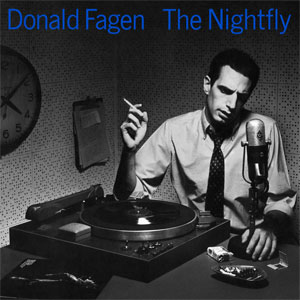
“I.G.Y.,” Donald Fagen, 1982

I was among those who mourned when I heard that Donald Fagen and Walter Becker had decided to end their Steely Dan collaboration in 1980 following the release of the brilliant but troubled “Gaucho” LP.  Becker had personal problems, and frankly, Steely Dan hadn’t been a band at all since maybe 1974.  For “Pretzel Logic,” “Katy Lied,” “The Royal Scam,” “Aja” and “Gaucho,” Fagen and Becker had assembled legions of session musicians to insert their solos and individual parts on a song-by-song basis.  So it wasn’t too surprising that, when Fagen went on his own in 1982 with “The Night Fly,” he continued the same formula to such an extent that it sounded pretty much like a new Steely Dan LP.  Fagen chose to compose a song cycle about growing up in the 1950s in suburban New Jersey, where he heard about such things as the International Geophysical Year (I.G.Y.), a worldwide renewal of scientific exchange and cooperation following the death of Russian leader Josef Stalin.  It was a time of hope and discovery, and Fagen recalled it all in “I.G.Y.,” which prays for the best:  “We’ll be clean when their work is done, we’ll be totally free, yes, and totally young, what a beautiful world this could be, what a glorious time to be free…”  
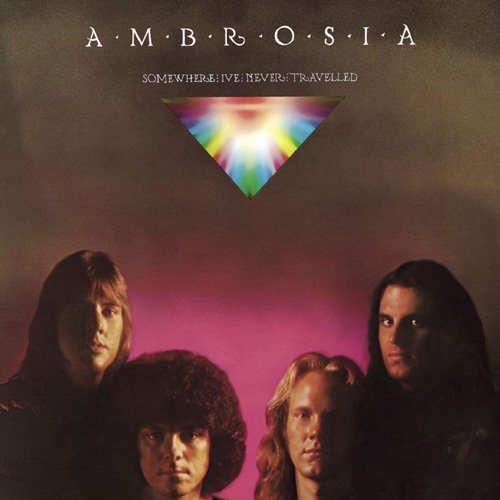
“Can’t Let a Woman,” Ambrosia, 1976

Singer-songwriter David Pack gets most of the laurels for the work of Ambrosia, the band he founded in 1971 in L.A.  Originally the group preferred the progressive rock genre, and its first two albums showed this prominently, including the first two singles, “Holding On to Yesterday” (#17 in 1975) and “Nice, Nice, Very Nice” (1976).  But their enduring reputation was as a soft-rock band because of their next three singles:  the #3 hit “How Much I Feel” (1978) and the back-to-back hits “Biggest Part of Me” (#3) and “You’re the Only Woman” (#13), both in 1980.  Savvy fans who know the group’s first two LPs will no doubt agree with me that deep tracks like “Time Waits For No One” and especially “Can’t Let a Woman” show off Ambrosia’s technically gorgeous sound from their earlier days.
“Last Plane Out,” Toy Matinee, 1990

This startling track came out of nowhere in early 1990 to get significant airplay on the FM mainstream rock stations but, sadly, went nowhere on the Billboard Top 40.  Its lyrics are somewhat apocalyptic, describing how awful life might be after the end game, and “hoping for passage on the last plane out” before things became unlivable.  The music, however, is upbeat and engaging, beautifully produced with great vocal harmonies.  The duo of Patrick Leonard and Kevin Gilbert wrote and played the songs for the group they called Toy Matinee, who released just the one album before fading.  Gilbert went on to be a prominent producer and a key behind-the-scenes player in Sheryl Crow’s career in the ’90s and beyond.
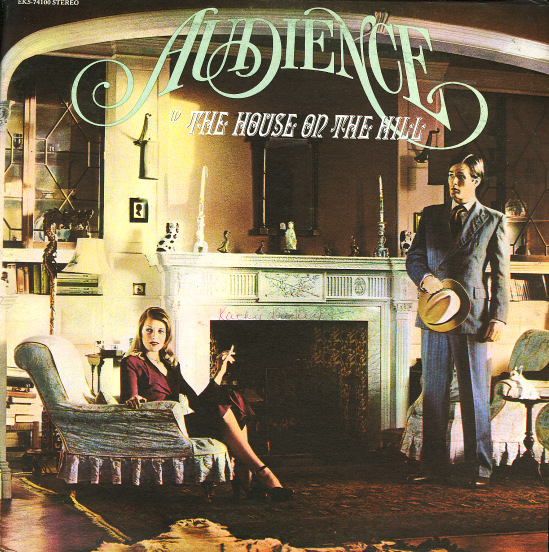
“Indian Summer,” Audience, 1972

The 1969-1975 period was quite fertile for singer-songwriters, especially those who chose introspective ballads (Joni Mitchell, James Taylor, Cat Stevens), but also many groups who offered unusual instrumental arrangements, quirky songs and “acquired taste” vocals.  One of these was Audience, a British outfit led by the creativity of Howard Werth and Keith Gemmell.  They struggled along at first, releasing two LPs in England to little reaction, before hooking up with Elton John’s first producer, Gus Dudgeon, who helped them hone their third album, “House on the Hill,” into a stronger package that gained US radio airplay.  The single, “Indian Summer,” stalled at #74, but the FM stations played this album often, and it’s full of great material I recommend, starting with “Indian Summer.”

“Talk to Me,” Southside Johnny & Asbury Jukes, 1978

Sadly, this explosive bar band from the Jersey Shore was never able to emerge from the shadows created by the great Bruce Springsteen and his E Street Band, but it wasn’t for lack of trying.  Indeed, Springsteen and his guitarist/arranger cohort Miami Steve Van Zandt did everything they could to support “Southside” Johnny Lyon and his sweaty, energetic band, offering original material and producing their first three LPs, but inexplicably, the public failed to embrace them.  What a shame — if you ever saw them in concert, you’d never forget it.  Any of their first three LPs is worth your time and attention; the third, the 1978 album “Hearts of Stone,” was written entirely by Van Zandt and/or Springsteen, including the Boss’s exuberant “Talk to Me,” propelled by vibrant horns and a frenetic rhythm section.  Springsteen didn’t release his own version until 2010, on the extra disc included with the anniversary package of “Darkness on the Edge of Town” (another 1978 release).

“Bullet the Blue Sky,” U2, 1987

After building a huge base in Ireland, England and elsewhere during the early ’80s, U2 started getting noticed in mainstream America with the single “Pride (In the Name of Love)” and their “Live Aid” appearance, both in 1985.  But it was the monumental “The Joshua Tree” LP in 1987 that made them worldwide superstars, a designation they still hold today, because they continue to write and release major, substantial works time after time.  “I Still Haven’t Found What I’m Looking For,” “With or Without You,” “Where the Streets Have No Name” — they all help define the U2 sound, led by Bono’s plaintive vocals and The Edge’s like-none-other guitar stylings.  Sometimes overlooked on this huge LP is the biting political diatribe “Bullet the Blue Sky,” which was the most incredible moment in their 2007 tour, which I saw twice in eight days.  It’s not commercial, by any means, but it’s more than memorable:  “Outside, it’s America… outside, it’s America…”

“Poem For the People,” Chicago, 1970

When Chicago (originally Chicago Transit Authority) was a bold new band, its albums broke frontiers, full of amazing amalgams of big band and rock, and hopeful utopian lyrics typical of the 1969-1970 period.  Their career grew on the strength of “Make Me Smile,” “Does Anybody Really Know What Time It Is?” and “Beginnings,” but there was so much more on those early LPs.  “Make Me Smile,” in fact, was part of a 13-minute suite called “Ballet For a Girl in Buchannon,” which included the prom favorite, “Colour My World.”  Do yourself a favor and listen to the first four songs on “Chicago” (now known as “Chicago II”) and you’ll find thoroughly engaging music like “Movin’ On” and “In the Country,” and the majestic “Poem For the People,” which is one of Robert Lamm’s finest songs and arrangements.

*************************

Hit singles as first imagined by their composers

Before the arrival of Bob Dylan, The Beach Boys and The Beatles, singing and songwriting were considered two distinctly separate talents.  Up until about 1960, you were one or the other, but not both.

Songwriters, by and large, accepted their place in the scheme of things, churning out catchy melodies and lyrics that someone else turned into hit singles.  In some cases, however, the songwriter nursed a dream of becoming a recording artist in his/her own right, even if that didn’t happen until years later.

Carole King and Gerry Goffin working on songs in a Brill Building studio in the early ’60s

Carole King is perhaps the best example of this.  Throughout the ’60s, she and husband Gerry Goffin wrote dozens of hits made famous by others — “Up on the Roof” by the Drifters, “I’m Into Something Good” by Herman’s Hermits, “The Locomotion” by Little Eva, “Will You Still Love Me Tomorrow” by The Shirrelles, “(You Make Me Feel Like a) Natural Woman” by Aretha Franklin, “Hi-De-Ho” by Blood Sweat and Tears, to name just a few.

Then in 1970, King took a stab at singing, and although her debut album went unnoticed, her second was “Tapestry,” one of the biggest-selling albums of all time, and the beginning of an accomplished career as a singer.

There are some intriguing examples in the ’60s and ’70s of hit songs written by songwriters who hadn’t yet made their name on the charts as singers.  In the process of creating the song, the composers often recorded their own versions, either as demos or as official recordings that received little attention.  Hearing these composers’ “rough drafts” of tunes that became huge hits by other artists makes for fascinating listening, as the Spotify song list at the end of this blog will demonstrate.

And here we go:

“I’m a Believer”

Written by Neil Diamond, made famous by The Monkees (#1 in 1967)

Diamond, who went on to write 37 Top 40 hits, developed a passion for songwriting at age 15 growing up in Brooklyn.  He had his eye on a recording career, but meanwhile, he was happy to have his songs picked up by others.  In 1966, TV producer Don Kirshner, in charge of finding material for the new created-for-TV pop rock band The Monkees, came to Diamond and selected one of his recent compositions called “I’m a Believer.” The Monkees’ version became the #1 song of 1967 on US pop charts. Diamond recorded his own version later the same year on his “Just for You” LP, which also included his first hits “Cherry, Cherry,” “Girl, You’ll Be a Woman Soon” and “Thank the Lord for the Night Time.”

“Red Rubber Ball”

Written by Paul Simon, made famous by The Cyrkle (#6 in 1966)

Simon had been writing his irresistible melodies and introspective lyrics since 1963, and had recorded one album with Art Garfunkel that went nowhere.  But when a producer added drums, bass and electric guitar to their acoustic recording of “The Sound of Silence,” it became a #1 hit in early 1966, and Simon and Garfunkel were off and running.  Meanwhile, he had written “Red Rubber Ball” with Bruce Woodley of The Seekers, and the short-lived band called The Cyrkle made it into a big hit.  S&G played it in concert occasionally, and their 1967 live recording of the song appears on the 1997 three-CD collection “Old Friends.”

“One Fine Day”

Written by Carole King and Gerry Goffin, made famous by The Chiffons (1963)

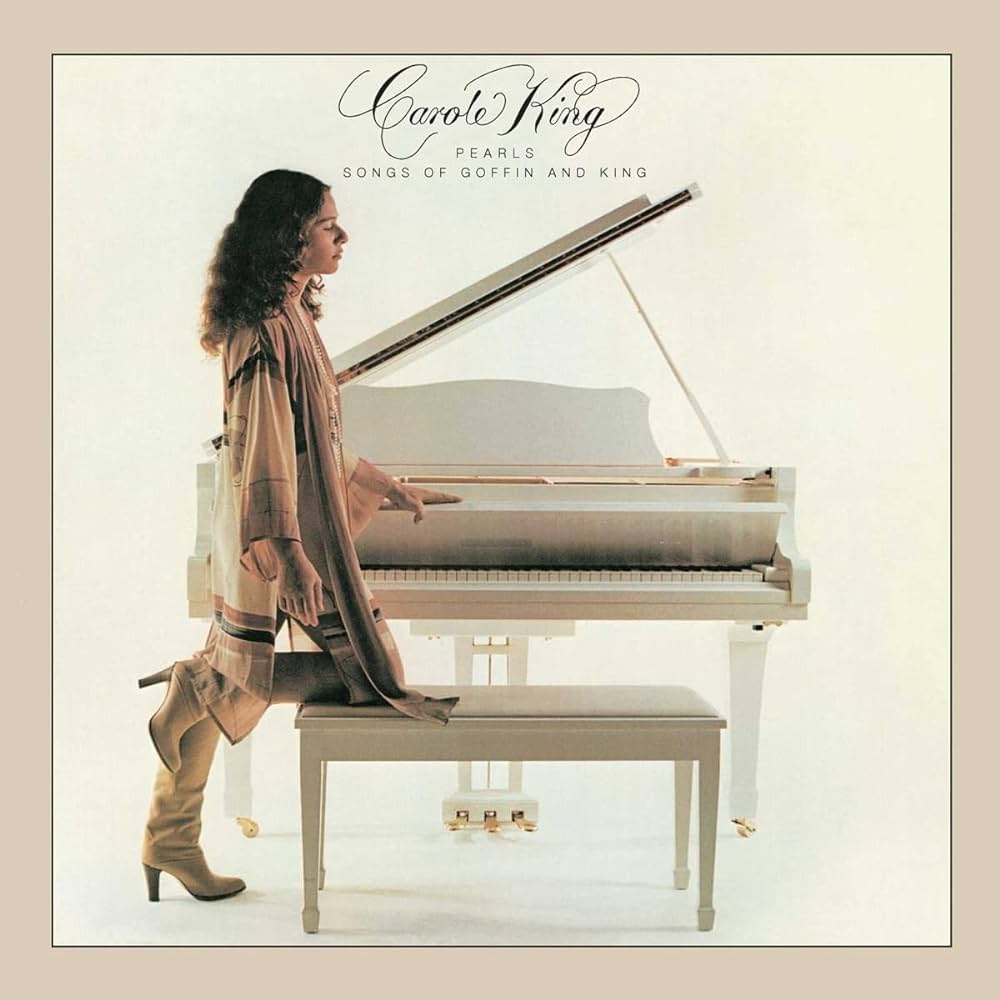
The Goffin-King partnership was steeped in musical tradition including big band and swing and even opera. The duo loved the Italian language title “Un Bel Dì” from Puccini’s “Madame Butterfly” and chose to write “One Fine Day” as a pop song of romantic longing. They intended it for Little Eva as a follow-up single for her #1 hit “The Locomotion,” but it ended up going to the girl group The Chiffons in a new arrangement by The Tokens, which reached #5 in 1963. King re-recorded it herself in 1980 for her collection “Pearls: Songs of Goffin and King.”

“One”

Written by Harry Nilsson, made famous by Three Dog Night (#5 in 1969)

In 1968, at a time when bands wanted to (or were expected to) write their own songs, Three Dog Night went the other way, covering songs written by others, mostly struggling young songwriters who had great material.  Singer Chuck Negron heard the unknown 1968 album “Aerial Ballet” by Nilsson, which included a track called “One,” a simple, mellow song about the loneliness felt following a romantic breakup.  The band recorded a more exuberant arrangement for their debut album, and “One” became a #5 hit in 1969, the first of 15 Top 20 singles for the trio.

“Wedding Bell Blues”

Written by Laura Nyro, made famous by The 5th Dimension (#1 in 1969)

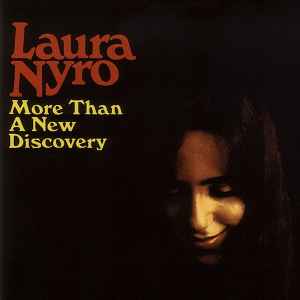
Nyro’s original vision for “Wedding Bell Blues” was as part of a mini-suite with dramatic rhythm changes to reflect the dual themes of adoring love and frustrated lament felt by the woman who “wonders if she’ll ever see her wedding day.”  That version was turned down by her producer, but instead she recorded a more soulful arrangement and released it in 1967 on her “More Than a New Discovery” debut album.  Two years later, The 5th Dimension enjoyed a pair of hits with Nyro’s songs “Stoned Soul Picnic” and “Sweet Blindness,” so they tried a third time with their rendition of “Wedding Bell Blues” (which was very similar to Nyro’s), and it went to #1.

“Leaving on a Jet Plane”

Written by John Denver, made famous by Peter, Paul & Mary (#1 in 1969)

Denver was a member of The Chad Mitchell Trio in the mid-’60s, writing and performing songs in folk clubs.  He put together a homemade demo of a batch of his songs, including one he was then calling “Babe, I Hate to Go,” and circulated it to music industry friends.  Peter, Paul & Mary were so impressed with it that they recorded it for their 1967 LP, “Album 1700,” under its new title, “Leaving on a Jet Plane.”  It sat ignored for two years until PP&M, in the throes of breaking up, decided to release it as a single, and it ended up the #1 song in the US during the final week of the 1960s.  Denver’s own version can be found on his 1969 album, “Rhymes & Reasons.”

“Mr. Tambourine Man”

Written by Bob Dylan, made famous by The Byrds (#1 in 1965)

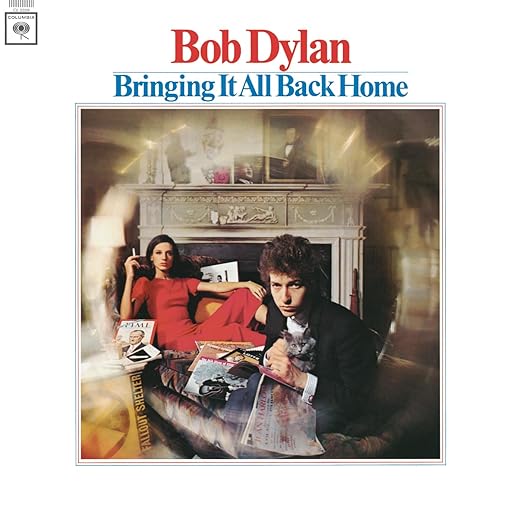
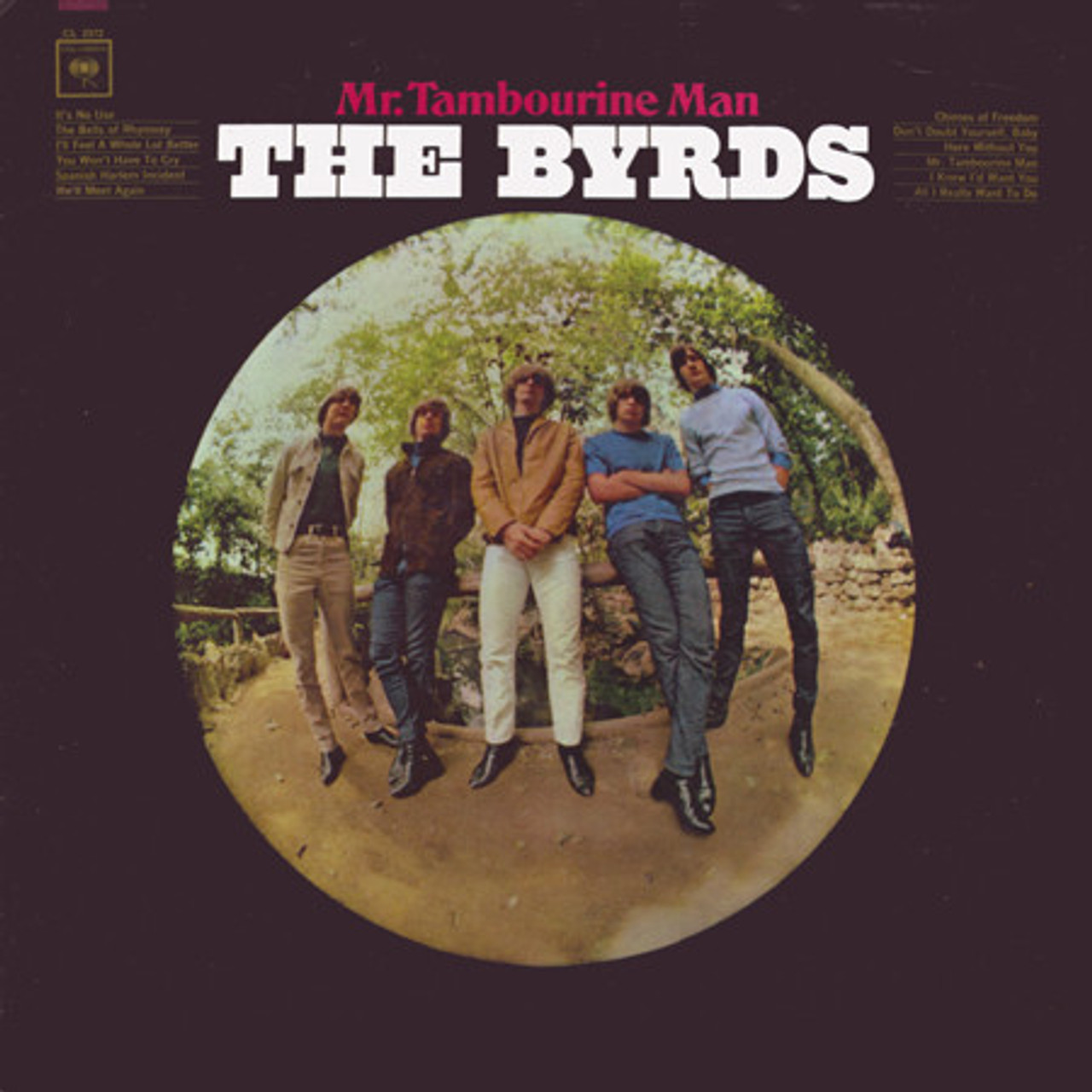
In the early ’60s, Dylan was already regarded as a songwriting genius/prophet in some circles, but he hadn’t yet made a dent on the singles charts.  That changed when the Southern California band The Byrds used their jangly electric 12-string guitar sound and lush harmonies on a folk-rock arrangement of Dylan’s acoustic “Mr. Tambourine Man,” and The Byrds’ cover rocketed to #1.  Dylan’s version, found on his “Bringing It All Back Home” LP, has a running time of 5:34 and includes four verses; The Byrds’ version is severely truncated to 2:29, using only the second of the four verses.

“Both Sides Now”

Written by Joni Mitchell, made famous by Judy Collins (#8 in 1968).  

Judy Collins gives credit to her friend and musician Al Kooper for introducing her to the genius of Joni Mitchell in 1967, still a relative unknown at the time.  “He knew I was in the midst of recording my ‘Wildflowers’ album, and he wanted me to hear Joni’s songs, particularly ‘Both Sides Now,'” Collins wrote in her autobiography.  “Joni’s writing was magnificent.  ‘Both Sides Now’ has everything — sweep and tenderness, specificity and breadth.  It’s a perfect jewel of a song, perhaps one of the greatest songs ever written.”  Mitchell’s own version appeared on her second album, “Clouds,” in 1969.  (I couldn’t include her original on the playlist below because Mitchell refuses to make her recordings available on Spotify, but instead I located a “Live at BBC 1970” recording of her performing the song.)

“Wichita Lineman”

Written by Jimmy Webb, made famous by Glen Campbell (#3 in 1968)

Webb remembers driving toward the late afternoon sun one day in Oklahoma, passing endless miles of telephone poles, until he saw the silhouette of a solitary lineman atop a pole.  “He looked like the absolute picture of loneliness,” said Webb, who put himself in the lineman’s place and wrote what has been described as “the first existential country song” and “the greatest pop song ever composed.”  Glen Campbell was the first of many artists to record “Wichita Lineman,” which charted at #3. Early demos of Webb doing his own stuff haven’t survived, but he finally got around to recording them for real on his 1996 album called “Ten Easy Pieces,” which also includes new arrangements of other hits he wrote like “By the Time I Get to Phoenix,” “The Worst That Can Happen,” “Galveston” and “MacArthur Park.”

“Mama Told Me Not to Come”

Written by Randy Newman, made famous by Three Dog Night (#1 in 1970)

After an early attempt as a recording artist flopped, Newman concentrated on songwriting throughout the ’60s, and his 1966 song “I Think It’s Going to Rain Today” was recorded by a dozen different singers.  That same year he wrote “Mama Told Me Not to Come” for Eric Burdon and The Animals, but it ended up an overlooked album track.  Four years later, Newman released his “12 Songs” LP, which included his piano-based rendition of the song.  Almost simultaneously, Three Dog Night’s rock/funk version raced up the charts to become one of the biggest singles of the year.

“Come and Get It”

Written by Paul McCartney, made famous by Badfinger (#7 in 1970)

McCartney (with and without John Lennon) wrote several songs during the Beatles years that he gave away to others, particularly Peter & Gordon (Peter Asher was the brother of his then-girlfriend Jane Asher).  In 1969, McCartney was commissioned to write songs for “The Magic Christian” soundtrack, and in the midst of the “Abbey Road” sessions, he arrived early one day and recorded a polished demo of “Come and Get It” by himself.  Badfinger was a new band signed to the Apple label, and to help jumpstart their career, he gave the song to them, also producing it exactly as he had recorded it on the demo, and it reached #7.  McCartney’s original was finally released 25 years later as a track on the “Beatles Anthology 3” CD.

“Red Red Wine”

Written by Neil Diamond, made famous by UB40 (#1 in 1988)

This one has this list’s longest gestation period from composing to hit-single status.  Originally written and recorded by Diamond in 1967 on his “Just for You” LP, “Red Red Wine” was resurrected 15 years later by British pop/reggae band UB40, who released an album in 1983 of cover versions of songs by their early rock idols.  Although their reggae version went to #1 in the UK, it stalled at #34 here, but five years later in 1988, it was re-released in the US and went to #1 here as well.

“Stoney End”

Written by Laura Nyro, made famous by Barbra Streisand (#6 in 1971)

Another Nyro composition that appeared on her underrated 1967 debut “More Than a New Discovery” was this upbeat number that eventually captured the attention of producer Richard Perry.  He suggested it as a featured song for Barbra Streisand’s first album of pop-rock songs, and although she initially balked at the line “I was raised on the good book Jesus” because of her Jewish faith, it ended up being the title song when released in 1971.  She took Nyro’s song to #6, her first Top Ten hit since “People” in 1964, and the beginning of an impressive run on the charts throughout the ’70s and into the ’80s.

“Pleasant Valley Sunday”

Written by Carole King and Gerry Goffin, made famous by The Monkees (#3 in 1967)

In 1967, the Goffin-King marriage was in trouble and nearing its end. Goffin had been overdoing the drug experimentation in vogue at the time, and their recent move from New York City to a suburban neighborhood in New Jersey had proven unsatisfying, inspiring the song “Pleasant Valley Sunday.” It’s a clever, sardonic take on the sameness of suburban life, but its bright, cheery tempo and melody made it s big hit when recorded by The Monkees that year. King’s demo, eventually released on a 2012 compilation LP, features some different lyrics and a simpler arrangement.

“Me and Bobby McGee”

Written by Kris Kristofferson, made famous by Janis Joplin (#1 in 1971)

Kris Kristofferson was an Army brat who became an accomplished pilot, an award-winning boxer and rugby player, and a Rhodes scholar at Oxford — and he left all that behind to pursue his dreams of writing music and acting.  He found his niche in Nashville, where his songs were recorded by country stars like Johnny Cash and Ray Price, but Kristofferson’s own recordings never achieved much commercial success.  He introduced one song from his 1970 debut album “Kristofferson” to his friend Janis Joplin, who decided to record a rollicking arrangement for what would become her final album, “Pearl.”  Four months after her death, Janis’s recording of “Me and Bobby McGee” was the #1 song in the country.

“All the Young Dudes”

Written by David Bowie, made famous by Mott the Hoople (#37 in 1972)

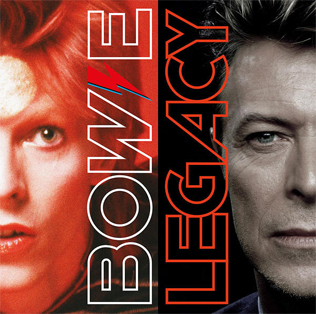
In 1972, Bowie’s career was just starting to take off in the US when he heard that his friends in Mott the Hoople were about to break up because of a lack of chart success.  He offered them his song “Suffragette City” from the “Ziggy Stardust” LP, but they turned him down, so instead, Bowie sat down in a London flat across from singer Ian Hunter and wrote “All the Young Dudes” specifically for them.  It went to #3 in the UK, saving the band’s career, and it became the unofficial anthem of the glam-rock era.  Bowie recorded it himself during the 1972-73 “Aladdin Sane” sessions but never released it until the double-album compilation “Bowie: Legacy” following his death in 2016..

***********************

images-69


I urge you to check out the composers’ versions of these other hits that made my honorable mention list:

Bruce Springsteen wrote “Blinded by the Light,” “Fire,” and “Because the Night” (popularized by Manfred Mann, The Pointer Sisters and Patti Smith, respectively);  Bob Marley wrote “I Shot the Sheriff,” a #1 hit for Eric Clapton; Neil Young wrote “Lotta Love,” which launched Nicolette Larson’s career; Leon Russell wrote “This Masquerade” (a hit for George Benson) and “A Song for You” (the title song of The Carpenters’ fourth album);  Tom Waits wrote “Ol ’55,” a popular track for The Eagles;  Prince wrote “Nothing Compares 2 U” (Sinead O’Connor’s big debut) and “Manic Monday” (a #1 smash for The Bangles);  and Bob Dylan wrote “Blowin’ in the Wind” and “Don’t Think Twice, It’s All Right” (both Top Five hits for Peter, Paul & Mary) and “All Along the Watchtower” (wildly reimagined by Jimi Hendrix).

****************************