Somebody tell me what it’s all about
I’ve received quite a lot of response to the posts I’ve made here where I reveal the back story and true meaning behind some well-known classic rock songs.
In two installments in 2021, I explained (or let the composers explain) what the less-than-clear lyrics were really driving at, and many readers said they were surprised to learn things about songs they thought they knew. I featured songs like Procol Harum’s “A Whiter Shade of Pale,” Roberta Flack’s “Killing Me Softly With His Song,” Elton John’s “Tiny Dancer,” Yes’s “Roundabout” and Joni Mitchell’s “Free Man in Paris,” which each have fascinating origin stories. You can read about them at these links: https://hackbackpages.com/2021/05/07/lord-do-you-know-what-i-mean/
https://hackbackpages.com/2021/07/30/were-gonna-find-out-what-its-all-about/

In the week’s post, I offer background information on eight more songs you thought you knew. This is the kind of stuff I love to research and write about, and I hope you continue to enjoy reading about them. As is customary, there is a Spotify playlist at the end so you can conveniently hear these tunes anew.
***************************
“Baba O’Riley,” The Who, 1971
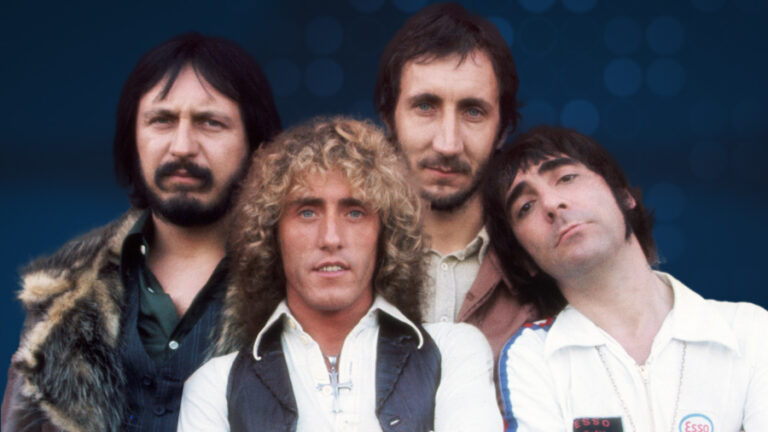
Many people think this epic track by The Who is titled “Teenage Wasteland,” from the oft-repeated line in the lyrics. But in fact, Pete Townshend came up with the title by merging the names of two people that inspired him the most at that time in his life: Meher Baba, an Indian spiritual master with hundreds of thousands of followers, and Terry Riley, an influential but obscure American composer who experimented with minimalist concepts. Both pursued the idea of oneness — the notion of one absolute deity, and music with modal repetition of one note. Townshend wrote the piece as his vision of what would happen if the spirit of Meher Baba was fed into a computer and transformed into music. The result would be Baba in the style of Riley, or “Baba O’Riley.” It was to be the leadoff track of “Lifehouse” (another rock opera to follow “Tommy”), about a Scottish family that would set out across the hinterland for London, where a divine concert was to be held. The project was aborted, but this and several other songs from it were collected for the “Who’s Next” LP in 1971. Following The Who’s performances at Woodstock and the Isle of Wight festivals in 1969, Townshend said he was disturbed to see the acres of trash and all the drug-addled teenagers which, together, comprised what he disparagingly called “teenage wasteland.”
“Fire and Rain,” James Taylor, 1970
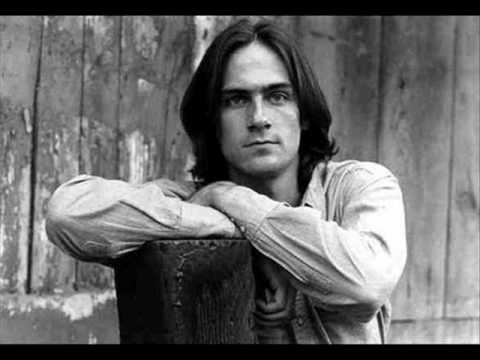
As the song that introduced Taylor to the mainstream, “Fire and Rain” is a remarkably personal work, much more so than any of his other hits. The chorus is straightforward enough, referring to life’s balance between the good times (“I’ve seen sunny days that I thought would never end”) and bad times (“I’ve seen lonely times when I could not find a friend”) he has experienced. The verses, though, are separate vignettes about different challenges he has had to face. First he agonizes over the news that his troubled friend Suzanne had committed suicide six months earlier (“Just yesterday morning, they let me know you were gone”). Then he shares how difficult it has been to recover from depression and addiction, calling out for help one day at a time: “Won’t you look down upon me, Jesus? You gotta help me make a stand, you’ve just got to see me through another day…” In verse three, he comes to grips with fame and fortune, and mentions the struggles he had in his first band, The Flying Machine, before his big break (“Sweet dreams and flying machines in pieces on the ground”). He concludes with a final reference to his friend (“Thought I’d see you one more time again”) and a nod to his imminent success (“There’s just a few things coming my way this time around now…”).
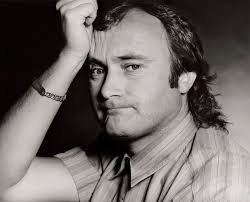
“In the Air Tonight,” Phil Collins, 1981
This powerful song, full of restless anticipation, was the leadoff track and first single from Collins’s first solo LP, “Face Value,” released in 1981. It reached #1 across Europe and #2 in the UK but managed only #19 in the US. I think it’s one of his very best songs ever — sonically, melodically and lyrically. Many listeners interpreted the song’s primary couplet (“I can feel it coming in the air tonight, oh Lord, /I’ve been waiting for this moment all my life, oh Lord”) as full of hope and excitement, but in fact, Collins wrote the song amid the grief he felt after divorcing his first wife in 1980. “I had a wife, two children, two dogs, and the next day I didn’t have anything,” he said in 1981. “So songs like ‘In the Air Tonight’ reflect the fact that I was going through these difficult emotional changes.” The mood is one of restrained anger, told in words that are seriously bitter and resentful: “Well, if you told me you were drowning, I would not lend a hand… You can wipe off that grin, I know where you’ve been, /It’s all been a pack of lies…” The music builds fairly ominously until the final chorus brings an explosive burst of drums to finally release the musical tension. Originally, Collins had offered it to his bandmates in Genesis as a track for their 1980 LP “Duke,” but they chose to turn him down, a decision they later regretted, said keyboardist Tony Banks. “It’s a hell of a song,” he conceded.
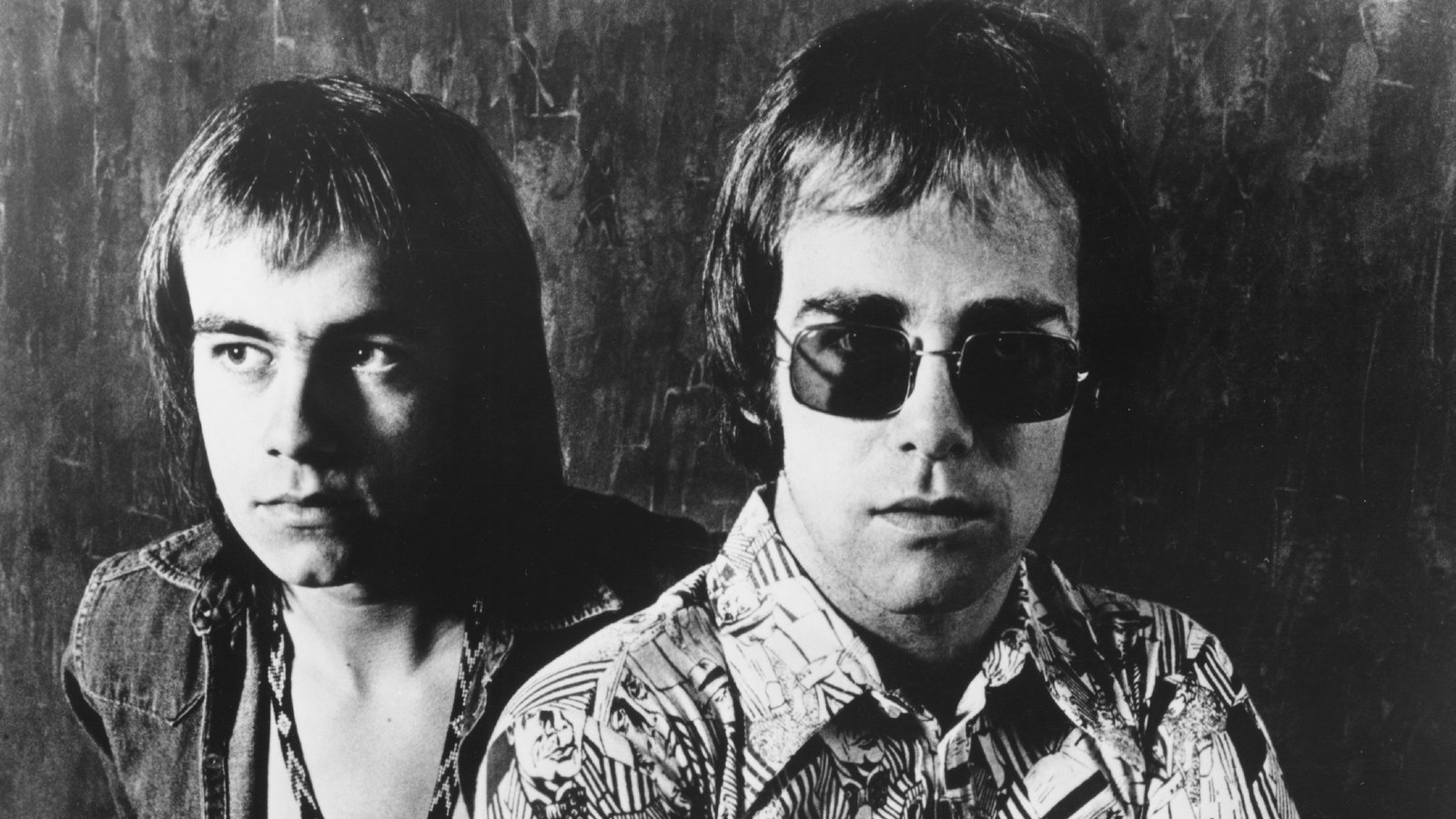
“Someone Saved My Life Tonight,” Elton John, 1975
In 1968, before Elton John became popular, and before he had acknowledged (even to himself) that he was gay, he became engaged to a female friend named Linda Woodrow. She had been a fan of the music he and collaborator Bernie Taupin were writing, and the three of them were sharing a place in London’s East End. Elton and Linda weren’t intimate, and he didn’t really love her, but she was putting on the hard-court press and, having just turned 21, he figured this was the next step people took at this time in their lives. Still, he felt uneasy about it, so much so that he even made a halfhearted attempt to kill himself with a gas oven in his home. Finally, it was John’s gay friend Long John Baldry who stepped in, publicly scolding him. “What are you doing living with a fucking woman? Wake up and smell the roses. You’re gay. Hell, you love Bernie more than you love her!” He broke it off with Linda the next morning and never saw her again. Six years later, for the 1975 LP “Captain Fantastic and the Brown Dirt Cowboy,” Taupin wrote the story of that evening as “Someone Saved My Life Tonight,” with these harsh words about Linda: “You almost had your hooks in me, didn’t you dear? You nearly had me roped and tied, altar-bound, hypnotized…” Despite its 6:45 length, it reached #4 on US charts as perhaps Elton John’s most personal single of all.

“Smoke on the Water,” Deep Purple, 1972
Ian Paice, drummer for Deep Purple throughout its lengthy career arc, had this to say about the band’s most well-known song: “The amazing thing with that song, and Ritchie (Blackmore)’s riff in particular, is that somebody hadn’t done it before, because it’s so gloriously simple and wonderfully satisfying.” Indeed. Total Guitar ranked “Smoke on the Water” #4 among the Top 20 Guitar Riffs of All Time, and it’s one of the first riffs every aspiring electric guitarist learns. The track was released on their “Machine Head” album in 1972, but the song didn’t become a Top Five hit single until more than a year later. As for the words, they’re not much of a mystery, but many folks may not realize that the lyrics tell a true story. In December 1971, Deep Purple had gone to Montreux, Switzerland, on the shores of Lake Geneva, where they had planned to record their next album at the Montreux Casino complex, using the then-new Rolling Stones Mobile Studio. Unfortunately, at the venue’s final concert before closing for the season, a reckless fan of Frank Zappa’s Mothers of Invention — “some stupid with a flare gun” — fired into the rattan-covered ceiling, which started a fire that burned the entire facility to ashes. From their hotel room across the lake, the band members could see only “smoke on the water, fire in the sky” as they watched “the biggest fire we’d ever seen.” The incident required the band to relocate to the abandoned Grand Hôtel de Territet nearby to quickly record their album in a makeshift manner. “No matter what we get out of this, I know we’ll never forget,” wrote singer/lyricist Ian Gillan.
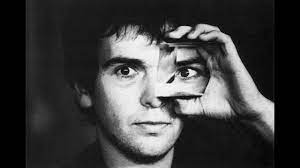
“Shock the Monkey,” Peter Gabriel, 1980
A cursory look through the early albums in the Genesis catalog, when Gabriel was the colorful frontman, show he has a flair for fantasy and mystery, with dense lyrics that often had fans scratching their heads. This continued to a lesser extent once he went solo in 1977 with curious songs like “Solsbury Hill” and “Games Without Frontiers.” Gabriel raised the eyebrows of animal rights groups when his 1980 LP “Security” featured the song “Shock the Monkey” as its single. They overreacted to the suspicion that he was advocating using primates in objectionable laboratory tests. Gabriel dismissed these fears by explaining that it was actually a love song that examines how feelings of jealousy and rage can release our basic primal instincts. Indeed, he added that the original inspiration for the song’s lyrical motif came from, of all things, the cheesy 1962 monster film “King Kong Vs. Godzilla,” in which the enormous ape experienced a revived jolt of energy after being struck by lightning. Gabriel’s narrator warns his lover not to toy with his jealous feelings: “There is one thing you must be sure of, I can’t take any more, /Darling, don’t you monkey with the monkey, /Don’t you know you’re going to shock the monkey…”
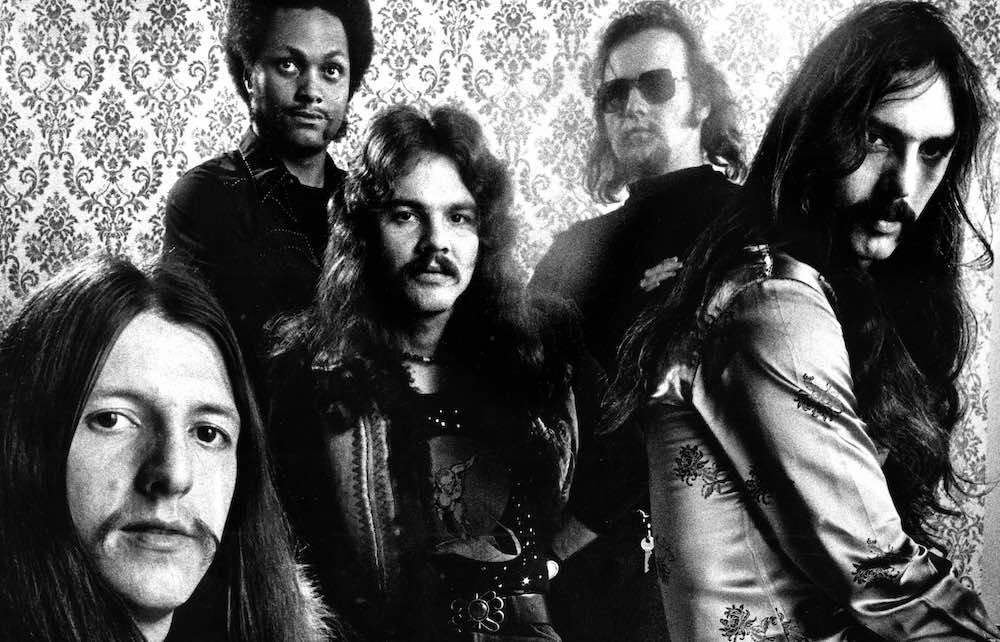
“China Grove,” The Doobie Brothers, 1973
Early on in The Doobie Brothers’ career, they were on an extended road trip through Texas when they passed through the “blink and you’ll miss it” small town of China Grove just east of San Antonio. Songwriter Tom Johnston tucked that town’s name into his subconscious and, six months later, he retrieved it in order to write some lyrics to go with a killer riff/chords combination he’d been working on. “Most of my songs begin with the musical structure, the rhythm, the melody line,” said Johnston, “and the lyrics come later. All that middle bit about the sheriff and the samurai swords was inspired by Billy Payne’s rollicking piano parts.” Johnston came up with a tale about a few fictitious characters who lived there (“the preacher and the teacher, Lord, they’re a caution, they are the talk of the town…”), and how the town is full of “people (who) don’t seem to care, they just keep looking to the East…” Despite the town’s name and Johnston’s lyrics, fewer than 1% of the tiny population is Asian. It turns out the town was named China Grove because of a small grove of chinaberry trees that once stood near the train depot.
“Locomotive Breath,” Jethro Tull, 1971
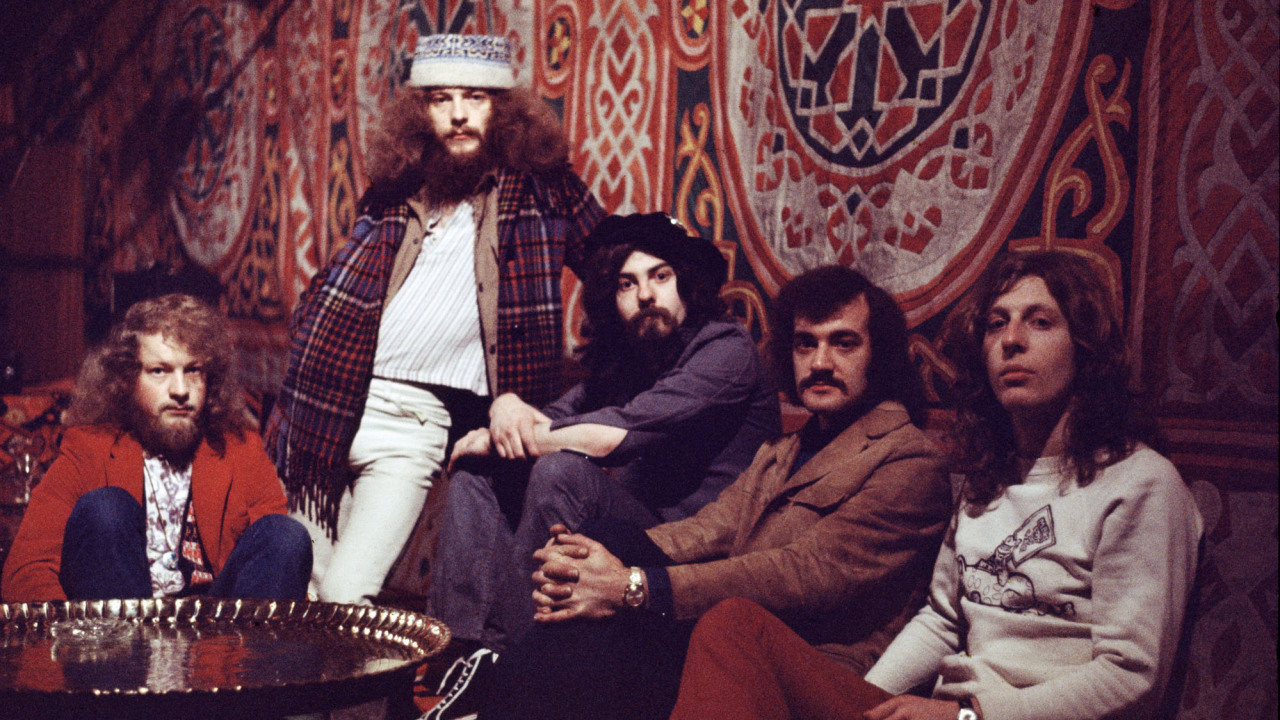
I’ve been a fanatical follower of the music of Jethro Tull and its leader, Ian Anderson, since I first heard the debut LP “This Was” in a Cleveland record store in 1969. Once “Aqualung” was released in 1971, I was really obsessed, listening to that album every day for probably six months. “Locomotive Breath” has been a huge favorite of mine, and it became one of the two most often performed songs in the Tull catalog over the decades since. As for the lyrics, I was always taken by the sense of desperation in the lines, “And the train, it won’t stop going, no way to slow down.” But I was surprised to learn only recently that Anderson was actually talking obliquely about the problem of overpopulation. As he put it in 2016: “‘Locomotive Breath’ was about the runaway train of population growth and capitalism, and on those sorts of unstoppable ideas. We’re on this crazy train, and we can’t get off of it. Where is it going? Will it ever slow down? When I was born in 1947, the population of the planet was slightly less than a third of what it is today, so it should be a sobering thought that in one man’s lifetime, our population has more than tripled. You’d think population growth would have brought prosperity, happiness, food and a reasonable spread of wealth, but quite the opposite has happened, and is happening even more to this day.”
***********************