Is that what it’s called?

When a pop songwriter finishes a song, he or she must decide on a title. Sometimes, it actually precedes the writing of the song; sometimes it’s an obvious choice, based on the phrase that’s repeated multiple times in the lyrics; other times it’s mentioned only once, but the composer thinks it sums up the song’s meaning.
On rare occasions, the song’s title is never mentioned at all in the lyrics. It might be alluded to, but the word or words themselves don’t appear in the verses nor the chorus. It certainly makes it more challenging for listeners to find the song on an album or on search platforms.

As an aside, I’ve always wondered how writers of instrumental pieces come up with titles for their work. They could almost pick any word or words from the dictionary and slap them on, since there are no lyrics which might inspire a title. It would be interesting to hear how jazz artists from Miles Davis to George Benson decide on titles like “So What” or “Breezin'” for their compositions…

Here, for your enjoyment and/or edification, are a dozen pop songs that, for various reasons, have titles that don’t appear as part of the lyrics. There’s a Spotify playlist at the end so you can finally match the song with its title.

******************
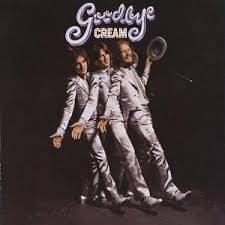
“Badge,” Cream, 1969

Before Cream disbanded, they elected to do one last album called “Goodbye,” which would have three live tracks and three new studio recordings, with each member writing a song. Eric Clapton had been hanging around a lot with George Harrison at the time, so they collaborated, and Harrison wrote down the lyrics as they worked. When they came to the middle section, also called the “bridge,” Harrison wrote “Bridge.” Sitting across from him, Clapton looked at it and misread it, saying, “What is ‘badge’?” The inside joke stuck. The word “badge,” of course, was never in the lyrics…nor was “bridge,” for that matter.

“Baba O’Riley,” The Who, 1971

The opening track from The Who’s spectacular “Who’s Next” LP is, in fact, one of several songs from the album meant to be part of Pete Townshend’s rock opera “Lifehouse,” which he chose to abort. Many fans have taken to mistakenly referring to the song as “Teenage Wasteland,” an oft-repeated refrain from the middle section. Its actual title refers to two of Townshend’s mentors at the time. Meher Baba was an Indian spiritual guru whose teachings made a big impression on him, and Terry Riley was an America avant-garde musician keen on minimalism and electronic experimentation. The synthesizer in the intro is an example of Riley’s inspiration.

“A Day in the Life,” The Beatles, 1967

The final track from the “Sgt. Pepper” album, considered by many to be The Beatles’ very best song, is a John Lennon idea come to life, in which he took snatches of newspaper stories from an average day in fall 1966 and used them as lyrics. The middle bit (“Woke up, fell out of bed…”) was contributed by Paul McCartney as a kind of dream sequence before the band returned to Lennon’s theme (“I read the news today, oh boy…”) for the dramatic orchestral ending. There had been some talk of it being titled “A Day in the Life Of…”, encouraging listeners to fill in the name based on their interpretation, but they ended up dropping the “Of” as unnecessary.
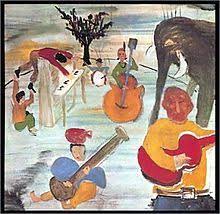
“The Weight,” The Band, 1968

Guitarist Robbie Robertson’s marvelous Biblical parable about a traveler who arrives, visits and departs a town called Nazareth has taken its rightful place as a classic in the universal songbook. As Robertson said, “It’s about a guy who’s going somewhere, and he’s asked to say ‘hello’ to someone, and when he gets there, he’s asked to do someone a favor, and then he’s asked a bigger favor, and he feels put upon just for being a good guy. He’s taken on a burden he hadn’t bargained for.” So, although the words “The Weight” are never sung, instead there are multiple references to “taking a load off” and “putting the load on me.”

Original British cover

“Space Oddity,” David Bowie, 1969

During a time of keen interest in space flight, Bowie wrote this fascinating track about the fictional astronaut Major Tom and his musings of what it was like to be “sitting a tin can far above the world.” The lyrics take a sympathetic rather than heroic view of an astronaut’s profession. The record’s release in July 1969, which coincided closely with the Apollo 11 launch and the moon landing five days later, made him appear to be a novelty act. Bowie gave the song a title that plays on the title of Stanley Kubrick’s film “2001: A Space Odyssey,” but the lyrics don’t include any reference to Tom’s mission being an “oddity,” nor do they specifically mention outer space.
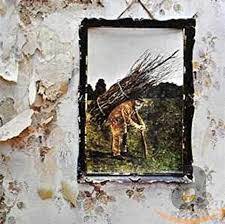
“Black Dog,” Led Zeppelin, 1971

More than any other rock band of the era, Led Zeppelin had a tendency to slap titles on their songs that not only weren’t mentioned in the lyrics but seemed to have no apparent connection to them. “Over The Hills and Far Away,” “The Battle of Evermore,” and “D’yer Mak’er” are just three of about a dozen Led Zep tracks with titles that don’t appear in the lyrics. “Black Dog,” a Top 20 hit in the US, has lyrics with overt sexual phrases about what the narrator would like to do with the woman to whom he’s singing. As it turns out, when the song was being written and recorded at an old stone building in Hampshire, a stray black dog would show up nearly every day, so they honored him by naming this song after him.

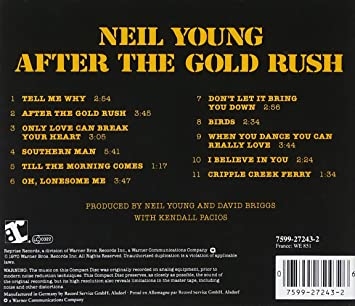
“After The Gold Rush,” Neil Young, 1970

Young’s previous album had been packed with hard-edged electric guitar and the full-band accompaniment of his erstwhile group Crazy Horse, so it was a surprise to critics and fans that his third solo release was largely acoustic and simply structured. One of the most intriguing tracks was “After the Gold Rush,” generally regarded as an environmental tune because of the line, “Look at Mother Nature on the run in the 1970s.” It’s actually a cryptic time-travel tune about past, present and future. The lyrics make no mention of a gold rush (neither before it or after it), and yet Young still liked the phrase enough to use it as the song title and the album title.

“Bohemian Rhapsody,” Queen, 1975

According to the late Freddie Mercury, who wrote the song, “Bohemian Rhapsody” means “artist’s fantasy.” That was about all Mercury would say about the song over the years. The lyrics tell the tale of a man who killed someone and has sold his soul to the devil to escape the consequences. The track was a #9 hit in the US upon initial release, then reached #2 in 1992 after it was used in the film “Wayne’s World,” and then had another round of success in 2018 after the release of the Queen biopic “Bohemian Rhapsody.” For a song that has received as much airplay as this one, it’s highly unusual for the title not to be mentioned somewhere in the lyrics.

“For What It’s Worth,” Buffalo Springfield, 1966

The reason this title wasn’t in the lyrics is an amusing one. As a witness to violent disturbances on the Sunset Strip in West Hollywood related to young people protesting a new curfew law, Stephen Stills wrote the song and his group, Buffalo Springfield, recorded it. When he presented it to the guys at their record label, he said, “We have this new song here, for what it’s worth, if you want it.” Stills hadn’t given the song a title yet, but the label thought he meant “For What It’s Worth” was the title. They later added “Stop! Hey What’s That Sound” as the subtitle on the 45 so it would be more easily recognized by record buyers.
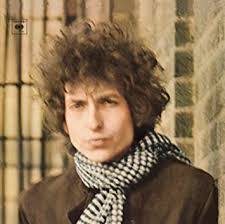
“Rainy Day Women #12 and 35,” Bob Dylan, 1966

Is this a drug song? Many people thought so at the time of its release as the lead single from Dylan’s 1966 double LP “Blonde on Blonde.” The oft-repeated line “Everybody must get stoned” seems straightforward, but the rest of the lyrics make it clear he was referring to the physical stoning from Biblical times. In his case, Dylan spoke of being criticized (metaphorically stoned) for doing new things people found offensive, like when he quit folk music and started playing rock. When the producer asked Dylan for the song’s title, he quipped, “A Long-Haired Mule and a Porcupine.” Nonsense, of course, but no more so than “Rainy Day Women #12 and 35.”

“Unchained Melody,” The Righteous Brothers, 1965

In 1955, the songwriting team of Alex North and Hy Zaret were asked to write a song for a little-known film called “Unchained,” about life in prison and the longing for freedom. The duo refused the moviemaker’s request to include the word “unchained” into the lyrics, instead focusing on a someone who is pining for a lover he hasn’t seen for “a long, lonely time.” By keeping the words more general, it could be interpreted as any couple separated by distance or breakup. It went on to become one of the most recorded songs of all time, over 1,500 versions in numerous languages, with the best known being the #1 hit by The Righteous Brothers in 1965.
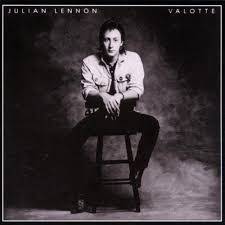
“Valotte,” Julian Lennon, 1984

I was one of probably millions who got a huge chill up my spine the first time I heard this song, the first single from Julian Lennon’s debut LP in 1984. “Oh my God, his voice sounds so much like his Dad, and the song sounds like one John might’ve written!” As for the song’s title, which doubled as the album title as well, it comes from the name of the French chateau (Chateau de Valotte) where young Lennon had been sent by Atlantic Records to hone his songwriting skills. The lyrics mourn the breakdown of a relationship, the drifting apart of two lovers, but the word “Valotte” is not part of the lyric.

********************

Another fine tune found deep in the vinyl

Here we go again. On this 24th edition of “Lost Classics,” let’s go exploring the deep tracks from the ’60s, ’70s and ’80s, looking for the hidden gems you never knew or forgot all about.

I love turning you on to great old songs. I hope you do too!

******************

“St. Judy’s Comet,” Paul Simon, 1973

Following his somewhat somber solo debut, Simon seemed to be amped up with joy and gratitude when he wrote the songs for “There Goes Rhymin’ Simon,” his 1973 masterpiece. There are ten songs that show his mastery of multiple genres, from gospel (“Loves Me Like a Rock,” “Tenderness”) to Dixieland (“Take Me to the Mardi Gras”), from reggae (“Was a Sunny Day”) to blues (“One Man’s Ceiling is Another Man’s Floor”). Tucked in near the end is “St. Judy’s Comet,” an exquisite lullaby he wrote for his son, who liked to stay up and watch the night sky. He pokes fun at himself in the lyrics: “Well I sang it once, Then I sang it twice, /I’m going to sing it three times more, /I’m going to stay ’til your resistance is overcome, /’Cause if I can’t sing my boy to sleep, /Well, it makes your famous daddy look so dumb…”

“Shelter From the Storm,” Bob Dylan, 1975

After the understated and overt songwriting brilliance he displayed throughout his first seven or eight albums in the 1960s, Dylan went through somewhat of a dry patch in the early ’70s, as both critics and fans had lukewarm reactions to the albums of that stretch. But in January 1975, Dylan made a triumphant return with “Blood on the Tracks,” a timeless collection of songs that are among the best he ever wrote. Interestingly, he recently released a deluxe version that featured very different alternate takes of these tracks, which is worth hearing, but I prefer the originals. “Simple Twist of Fate,” “You’re Gonna Make Me Lonesome When You Go” and especially the marvelous “Tangled Up in Blue” — they’re all still so enjoyable 45 years later. I’m also partial to the comforting “Shelter From the Storm,” a ten-verse story with just his voice and guitar and a bass.

“Approaching Lavender,” Gordon Lightfoot, 1970

Another outstanding songwriter who got his start in the ’60s, Lightfoot wrote wondrous folk tunes on his first four albums (“Early Morning Rain,” “Did She Mention My Name,” “Pussywillows, Cat-tails,” “Canadian Railroad Trilogy”) that were successfully covered by Peter, Paul and Mary and others. Once he was signed by Reprise in 1970, Lightfoot took a huge step forward as a recording artist with the beautifully produced “Sit Down Young Stranger” LP, which included his big hit “If You Could Read My Mind.” The whole album, with ace guitarist Red Shea and bassist Rick Haynes in support, is very satisfying, with splendid tracks like “Minstrel of the Dawn,” “Your Love’s Return” and one of the first covers of Kris Kristofferson’s “Me and Bobby McGee.” My favorite may be the captivating “Approaching Lavender,” with a string arrangement by Randy Newman.

“Leave It Like It Is,” David Wilcox, 1989

I’d wager that very few of my readers here are familiar with this talented, unassuming singer-songwriter from Ohio who eventually found his way to Nashville, where an appearance at the legendary Bluebird Cafe won him a contract with A&M Records. His warm, expressive voice on songs filled with keen insight and humor made his 1989 debut with them, “How Did You Find Me Here?”, a cult favorite at a time when singer-songwriters weren’t in vogue. Take a listen to how well-crafted these songs are: “Eye of the Hurricane,” “Saturday They’ll All Be Back Again,” and “The Kid” show how unjustly neglected Wilcox has been. Sure to elicit a chuckle or two are fun ditties like “Just a Vehicle” and the marvelous “Leave It As It Is,” which features great jazzy guitar and potent lyrics that explore how a paint can mishap can turn into a much-coveted work of art.

“That’s the Way,” Led Zeppelin, 1970

After two rocket-fueled years on the road evolving into the biggest blues rock band in the world, Robert Plant suggested that they chill for a month or two at a rural cottage in Wales he knew about, where they could see what musical inspirations might come. The “Led Zeppelin” and “Led Zeppelin II” albums had shown a hint of the group’s acoustic side on songs like “Babe I’m Gonna Leave You” and “Ramble On,” but those were both acoustic and electric. For the “Led Zeppelin III” album, they devoted nearly half the album’s running time to four acoustic-based tunes that had critics and fans scratching their heads a bit. It still sold a zillion copies, and tracks like “Tangerine,” “Born-Y-Aur Stomp,” “Friends” and the all-acoustic “That’s the Way” were eventually embraced by fans and took their rightful place in the Led Zep canon.

“Crazy Mama,” J.J. Cale, 1972

Cale has always preferred writing and recording his songs to performing them, so it’s not surprising that the songs from his catalog you’ll know best are the ones covered by better known artists, particularly Eric Clapton (“After Midnight,” “Cocaine”) and Lynyrd Skynyrd (“Call Me the Breeze”). Cale was a leader in what became known as the Tulsa Sound, and his laid-back groove came through both in his understated guitar playing and his soothing vocals. He began recording his own songs in 1972 with the album “Naturally,” which included his own take on “After Midnight” as well as the jazz-inflected “Crazy Mama,” which became his only appearance on the Top 40 charts (#22). Cale eschewed the limelight, but Clapton’s collaborative effort with him, the excellent “Road to Escondido,” won him a Grammy in 2008. He died of a heart attack in 2013 at age 74.

“Helpless,” Crosby, Stills, Nash and Young, 1970

Following the breakup of Buffalo Springfield in 1968, Young wasted no time putting together his first solo record by the end of the year, and the amazing “Everybody Knows This is Nowhere” album (with “Cinnamon Girl” and “Cowgirl in the Sand”) came along only eight months later. Springfield pal Stephen Stills, together with David Crosby and Graham Nash, had become the hottest act of the summer, thanks to their stunning debut album’s songs and performances, but to take it on the road, they needed another guitarist. They invited Young, who showed up with two tunes that ended up as deep-track anchors of the CSNY album “Deja Vu,” a #1 album in the spring of 1970. “Helpless” was a simple, three-chord song that Young had already recorded unsatisfactorily with his other band Crazy Horse, and Crosby convinced him to re-record it with them, and they nailed it.

“By Today,” Batdorf and Rodney, 1972

I’ve been spreading the word about this amazing duo since I first heard them in 1971. Their astounding debut LP “Off the Shelf” still ranks among my Top 25 albums of all time. “Can You See Him” got considerable airplay, and “Let Me Go,” “Oh My Surprise,” “You Are the One” and others ring true with dexterous guitar work and fine harmonies. Their second album, “Batdorf and Rodney,” shines as well, with tracks like “All I Need,” “Poor Man’s Dream,” “Home Again” and “By Today,” which I’ve singled out here. The duo lasted for one more album (“Life is You”) in 1975. I’ve been fortunate enough to meet and become friends with Batdorf over the past decade as he has continued writing and releasing great new music and performing at clubs and house parties.

“Bella Donna,” Stevie Nicks, 1981

From the moment she and Lindsey Buckingham joined Fleetwood Mac in 1975, Nicks turned heads with her distinctive voice, memorable songs and mesmerizing stage presence. “Rhiannon,” “Landslide,” “Gold Dust Woman” and the #1 hit “Dreams” established her as a formidable enough force that she felt justified in embarking on a concurrent solo career. Her 1981 debut LP, “Bella Donna,” was a smashing success both commercially and critically, registering three Top Ten hits from it (“Edge of Seventeen,” “Stop Draggin’ My Heart Around” with Tom Petty and the Heartbreakers and “Leather and Lace” with Don Henley). But there were other fine tracks as well — “Outside the Rain,” “How Still My Love” and especially the shimmering title track had all the elements of Nicks’ ouevre: mystery, gorgeous harmonies, poetic lyrics and studio dynamics, this time courtesy of produce Jimmy Iovine.

“Everybody’s Been Burned,” The Byrds, 1967

Roger McGuinn, Gene Clark, David Crosby, Chris Hillman and Alan Clarke became The Byrds in 1964, and in short order became cultural icons when they took Dylan’s acoustic “Mr. Tambourine Man” and turned into an electric “folk rock” prototype. It went to #1, as did their follow-up, “Turn! Turn! Turn!” Clark left the band, but the songwriting of Crosby and Hillman had them trying other genres, specifically psychedelic rock and country, respectively. On The Byrds’ fourth LP, “Younger Than Yesterday,” McGunn and Hillman’s tongue-in-cheek tune “So You Want to Be a Rock and Roll Star” became a big hit, while Hillman added four songs with an overt country influence. Crosby’s finest moment, to my ears, was the moody, jazz-influenced “Everybody’s Been Burned,” with a superb vocal performance that presaged his classic “Guinnevere” with Stills and Nash.

“No Other,” Gene Clark, 1974

As one of the integral founding members of the original Byrds, Clark provided rich harmonies as well as occasional lead vocals and contributed several of his own songs to the band’s celebrated first two albums, including “I’ll Feel a Whole Lot Better” and “Set You Free This Time.” Sadly, Clark suffered from a profound fear of flying that prevented him from touring, which ultimately caused his departure from the lineup. Clark attempted a solo career, working with multiple labels and musicians over the next decade or so, receiving critical praise but almost no commercial success. Still, he persevered, and in 1974 he released “No Other,” a wonderful amalgam of country, rock, soul and gospel, and one of the most unjustly neglected records of that period. The haunting title track has been a favorite lost classic for me ever since.

“Spanish Nights,” Michael Stanley Band, 1982

Stanley was a Cleveland-born singer-songwriter whose first two solo albums, augmented by the contributions of Joe Walsh and other L.A.-based luminaries, included stellar tracks like “Rosewood Bitters” and “Let’s Get the Show on the Road.” He formed The Michael Stanley Band in 1975 and went on to release ten of the greatest Midwest rock albums the world has never heard. MSB set attendance records at numerous Cleveland-area venues and enjoyed a modest following in various other U.S. cities, but they failed to break through nationally, which is a crying shame, in my book. So many strong rock songs and power ballads alike, from “Last Night” and “In Between the Lines” to “Why Should Love Be This Way” and “Lover.” Probably the best of Stanley’s songs is “Spanish Nights,” a superb track from their 1982 LP “MSB.”

***********************