The monster’s gone, your daddy’s here
Dear Old Dad. He just never seems to get the same respect that Mom does.
While Mother’s Day was established as a national holiday by Woodrow Wilson back in 1914, attempts to establish an official Father’s Day were repeatedly rebuked by Congress  and others for many decades. Why isn’t exactly clear. It took until 1966 when Lyndon Johnson finally issued a proclamation designating the third Sunday in June as Father’s Day, “honoring fathers and celebrating fatherhood, paternal bonds, and the influence of fathers in society.” Well, better late than never, I guess…
In the popular music arena, songwriters seemed to give mothers and fathers equal attention. From folk to blues, from R&B to Christian, from funk to ballads, from country to swing, every genre is represented with songs about fathers. I was chagrined to find, though, that a preponderance of Daddy tunes were about what a deadbeat he was, leaving home, fooling around, drinking too much. Still, there are plenty of songs that praise Pops… if you look hard enough…
Today, I have assembled 15 titles that I think will make a nice mix of songs for you to play if you’re hanging out with Dad (or you are Dad) this Sunday. I’m betting there are plenty of fathers who can sing along to most of these tunes from his era.
Happy Father’s Day to all you Dads!
********************
“Father and Son,” Cat Stevens, 1970
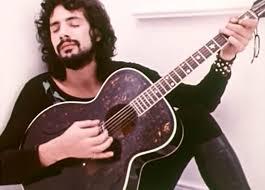 In “Father and Son,” the lovely yet powerful call-and-response piece from 1970’s “Tea for the Tillerman,” Stevens creates a somewhat tense dialog between a man and his son, who hold different opinions about life and love. The father admonishes the boy — “you’re still young, that’s your fault, there’s so much you have to know” — and the son retorts, “How can I try to explain, when I do he turns away again, it’s always been the same old story…” In the end, they agree the boy must leave home and find his own way: “Away, away, away, I know I have to make this decision alone…”
“Father and Daughter,” Paul Simon, 2006
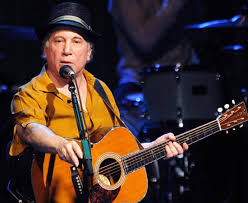 One of the most perceptive songwriters of his time, Simon has written lyrics exploring everything from loneliness to jubilation, from troubled water to little towns, from Graceland to Kodachrome. In the best song from his mostly ignored 2006 album “Surprise,” he serves up the kind of reassurance and affection only a parent can offer to a child: “I’m gonna watch you shine, gonna watch you grow, gonna paint a sign so you’ll always know, as long as one and one is two, there could never be a father who loved his daughter more than I love you…”
“Papa’s Got a Brand New Bag,” James Brown, 1965
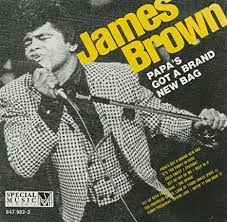 America had already shown its appreciation in the early ’60s for the Rhythm & Blues genre coming from the Motown groups (The Miracles, The Supremes), but with this infectious track, James Brown’s first Top Ten hit, the Godfather of Soul offered up a whole different, more passionate breed of soul music. Brown wrote the song –perhaps the first funk tune on US charts — about an older man who isn’t shy about strutting his stuff on the dance floor amongst much younger folks: “Come here sister, Papa’s in the swing, he ain’t too hip now, but I can dig that new breed, baby, he ain’t no drag, Papa’s got a brand new bag…”
“Daddy,” Nicolette Larson, 1980
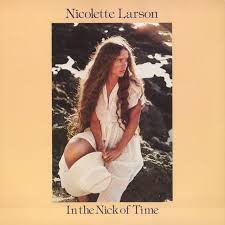 Larson’s fine vocal harmonies were first introduced by Neil Young on his “Comes a Time” LP, and her rendition of Young’s song “Lotta Love” was her breakout single, hitting #5 in the spring of ’79. On her excellent follow-up LP, “In the Nick of Time,” Larson chose to include the 1940s-era Bobby Troup song “Daddy,” made famous by The Andrews Sisters and various orchestras of the time. Troup, who also wrote “Get Your Kicks on Route 66,” wrote this one about a girl who loves to be pampered: “Hey Daddy, I want a diamond ring, and bracelets, and everything, hey Daddy, you ought to get the best for me…”
“My Father’s Eyes,” Eric Clapton, 1998
 Patricia Clapp was only 16 when she gave birth to her son Eric. His father, a 25-year-old soldier from Montreal, shipped out before Eric was born, and the two never met. This song’s lyrics, written by Clapton in 1992 but not released until his 1998 “Pilgrim” LP, speak of his longing for a chance to gaze into his father’s eyes, and also refer to the brief life of Clapton’s own son Conor, who died at age 4. In his 2007 autobiography, he wrote, “I tried to describe the parallel between looking in the eyes of my son, and the eyes of the father I never met, through the chain of our blood.” A sample: “Where do I find the words to say, how do I teach him, what do we play, bit by bit, I’ve realized, that’s when I need them, that’s when I need my father’s eyes…”
“Papa was a Rollin’ Stone,” The Temptations, 1972
 This tragic song by Norman Whitfield and Barrett Strong tells the tale of a young man talking about the deadbeat father he never knew, who neglected those who loved him most: “I never got the chance to see him, never heard nothin’ but bad things about him, ‘Mama, I’m depending on you to tell me the truth, Mama just hung her head and said, ‘Papa was a rollin’ stone, wherever he laid his hat was his home, and when he died, all he left us was alone’…” Originally written for The Undisputed Truth as its follow-up to “Smiling Faces Sometimes,” it was instead recorded by The Temptations in a magnificent 12-minute version full of instrumental passages. It was pared down to 6:45 for the single, which turned out to be the group’s final #1 hit.
“Oh Daddy,” Fleetwood Mac, 1977
 When Fleetwood Mac was recording the multiplatinum “Rumours” album, Lindsey Buckingham and Stevie Nicks were at each other’s throats, and John and Christine McVie were in the process of divorcing. Mick Fleetwood was having his own problems with his wife back home, but he appeared to Christine to be the “steady rock” holding the band together. With this song, Christine McVie was letting Fleetwood know, in her own way, that he was the father figure of the group at the time they needed one the most: “Why are you right when I’m so wrong, I’m so weak but you’re so strong… Oh Daddy, if I could make you see, if there’s been a fool around, it’s got to be me…”
“My Dad,” Paul Petersen, 1962
 The Donna Reed Show, an early ’60s sitcom starring the Oscar-winning actress as the pleasant, level-headed mom, featured two different episodes in which her fictional children, Mary and Jeff, sang songs at a school dance. Their real-life counterparts, Shelly Fabares and Paul Petersen, took those songs to Top Five success on the US singles chart. Fabares’ rendition of “Johnny Angel” went all the way to #1 in early ’62. Petersen,
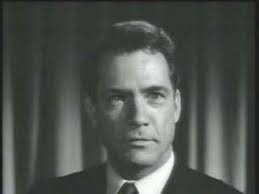
Carl Betz as Petersen’s Dad
only 17 at the time, followed with the #6 hit “My Dad,” a saccharine ballad written by Brill Building stalwarts Barry Mann and Cynthia Weill expressly for the show episode. Both the song and lyrics are admittedly pretty shmaltzy (“My Dad, now here is the man, to me he is everything strong, no, he can’t do wrong, my Dad, now he understands, when I bring him trouble to share, oh, he’s always there, my Dad…”) but hey, why not? It’s for Father’s Day…
“My Father’s Gun,” Elton John, 1970
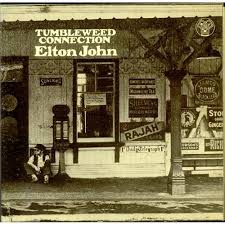 Elton John’s lyricist partner, Bernie Taupin, was fascinated by the old American West and its stories of the frontier, as evidenced by the almost country-western feel to the music and words of most of the tracks on their third album, “Tumbleweed Connection.” Taupin reaches back to the Civil War in “My Father’s Gun,” a slow-building, dramatic tale in which the son buries his soldier father and then vows to keep fighting in his father’s place: “I’ll not rest until I know the cause is fought and won, from this day on, until I die, I’ll wear my father’s gun…”
“Daddy’s Working Boots,” Dolly Parton, 1973
 For her 11th studio album, “My Tennessee Mountain Home,” Parton recorded a batch of songs she wrote about growing up in rural Tennessee before heading to Nashville for fame and fortune. The title track was a Top 20 hit on the country charts, but equally poignant was this song that paid tribute to her father and how hard he had to work to support her family during tough times: “As long as I remember, I remember Daddy workin’, workin’ on the job or either on the farm, trying to provide for the family that he loves, and Daddy’s working boots have taken many steps for us…”
 “Papa Don’t Preach,” Madonna, 1986
Never one to shy away from provocative topics, Madonna tackled teenage pregnancy and abortion in this #1 hit written by Brian Elliot. The narrator, who is pregnant and weighing her options, cautiously approaches her father in her hour of need, pleading for loving support and advice rather than lectures and scolding: “You always taught me right from wrong, I need your help, Daddy, please be strong, I may be young at heart, but I know what I’m saying… We’re in an awful mess, and I don’t mean maybe, please, Papa don’t preach, I’m in trouble deep, Papa don’t preach, I’ve been losing sleep, but I made up my mind, I’m keeping my baby…”
“Daddy’s All Gone,” James Taylor, 1976
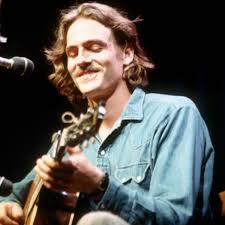 The homesickness for hearth and family that strikes touring musicians is the subject of this autobiographical song from Taylor’s seventh LP, “In the Pocket,” one of his best. The lyrics speak of him calling home from yet another night on the road, lamenting the fact that he has many more concerts ahead of him before he can return home where he wants to be: “Oh, I miss you, baby, I sure am on the road, I don’t need to say much more, just the same old well-known stranger that I was before, it seems like yesterday now, Daddy’s all gone, he’s only halfway home, he’s holding on to the telephone singing, please, don’t let the show go on…”
“My Father,” Judy Collins, 1968
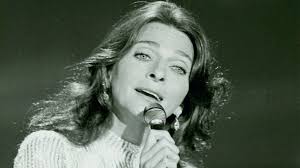 One of Collins’s first attempts at composing was this gorgeous piano ballad, written in October 1967 for her blind father, who died only three weeks after she recorded it. They both had suffered from depression and alcoholism, and had forged an uneasy bond over their afflictions. She wrote how he had dreamed of greater things for himself and his family, most of which never came to pass: “My father always promised us that we would live in France, we’d go boating on the Seine and I would learn to dance, I sail my memories of home like boats across the Seine, and watch the Paris sun set in my father’s eyes again…”
“Daddy Don’t Live in New York City No More,” Steely Dan, 1975
 Here’s a funky little blues-based track from Steely Dan’s underrated “Katy Lied” LP. Creative duo Donald Fagen and Walter Becker chose to use a different guitarist on each of the album’s 10 tracks; this one features the smooth stylings of jazz great Larry Carlton. The lyrics paint a picture of a typically dark Fagen-Becker character, this time an unreliable father figure who’s either drunk or absent most of the time: “Driving like a fool out to Hackensack, drinking his dinner from a paper sack… He can’t get tight every night, pass out on the barroom floor…”
“Forefathers,” Dan Fogelberg, 1990
 The sensitive singer-songwriter from Illinois was well past his commercial peak when he released the criminally overlooked LP “The Wild Places” in 1990. The album contains some of the best music and most perceptive lyrics of his career, including this bittersweet paean to his Scandinavian and Scottish ancestors and the sacrifices they made for the generations that followed: “And the sons become the fathers, and their daughters will be wives, as the torch is passed from hand to hand and we struggle through our lives, the generations wander but the lineage survives, and all of us, from dust to dust, we all become forefathers by and by…”
“Come to Poppa,” Bob Seger, 1976
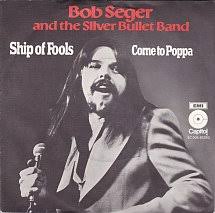 Seger had been a musical force in Detroit and the Midwest ever since his early band, The Bob Seger System, had a taste of success in 1968 with their #17 hit “Ramblin’ Gamblin’ Man.” It wouldn’t be until 1976 when Seger truly broke through nationally with the Silver Bullet Band on their excellent “Night Moves,” LP, the first of six consecutive Top Ten albums. The title song was a huge hit, peaking at #4, and two other tracks, “Mainstreet” and “Rock and Roll Never Forgets,” charted as well. Other notable songs include “The Fire Down Below,” “Ship of Fools” and the old Willie Mitchell tune, “Come to Poppa,” with lyrics that suggest whom you can turn to when things aren’t going your way: “If life gets hard to understand, and the whole thing is getting out of hand, come to Poppa…”
***********************
Honorable mentions:
“My Father’s House,” Bruce Springsteen, 1982; “Father of Night,” Bob Dylan, 1970; “The Ding Dong Daddy of the D-Car Line,” Cherry Poppin’ Daddies, 1992; “Daddy’s Tune,” Jackson Browne, 1976; “Dear Father,” Yes, 1970; “Father’s Eyes,” Amy Grant, 1979; “Father Figure,” George Michael, 1988; “Father of Day, Father of Night,” Manfred Mann’s Earth Band, 1973; “Son of Your Father,” Elton John, 1970; “Father to Son,” Queen, 1974; “Sugar Daddy,” Fleetwood Mac, 1975; “My Father’s House,” Kenny Loggins, 1991: “Hey Papa,” Terence Boylan, 1977; “Daddy, Don’t You Walk So Fast,” Wayne Newton, 1972; “Cat’s in the Cradle,” Harry Chapin, 1974.


The author and his daughters

 Of the new contenders who first emerged in 1980, the most pleasant surprise was The Pretenders, led by the indefatigable Chrissie Hynde, one of the most talented badass women rock music has ever seen. A product of the rough-and-tumble milieu of Akron, Ohio, Hynde moved to London in her early 20s and was profoundly influenced by not only the energy of the British punk scene but its defiance and “up yours” stance as well. The difference between The Pretenders and the lame “pretenders” who had similar ambitions, in my view, is Hynde’s ability to write great songs with pop hooks that made their stuff palatable to old-school skeptics like me. Their debut LP came out the first week of 1980 and went immediately to #1 in England, while in the US their popularity grew more slowly until the LP reached #9 mid-year. “Brass in Pocket” became their signature hit single, although just as interesting were “Kid,” “The Wait” and “Stop Your Sobbing,” among others from this fine record.
 When he was still just 15, Winwood wowed critics and fans with his amazing voice on Spencer Davis Group’s “Gimme Some Lovin'” and “I’m a Man.” At 18, he formed Traffic, the British band who came up with a dazzling mix of folk, jazz and rock. He took a break to join forces with Eric Clapton in Blind Faith for a short spell, and then reformed Traffic for another four-album run that included the exemplary “John Barleycorn Must Die” and “Low Spark of High-Heeled Boys.” A first attempt at a solo album in 1977 was surprisingly flat, although not without great moments. Late in 1980 came “Arc of a Diver,” a phenomenal LP which featured Winwood playing every instrument and singing in fine form on a great batch of songs. The album reached #3 on US pop charts, led by the #7 hit single “While You See a Chance.” Other strong tracks included “Spanish Dancer,” “Night Train” and the title song. He followed it with three more strong albums in the same vein — “Talking Back to the Night,” “Back in the High Life” and “Roll With It.”
 Since forming The Who with singer Roger Daltrey in 1964, Townshend had assumed the responsibility of writing nearly all of the band’s material, which took its toll on his physical and mental health. His never-easy relationship with Daltrey became strained, largely because Townshend would occasionally insist on handling lead vocals on certain tracks. When drummer Keith Moon died in 1978 after the release of their “Who Are You” album, the band wasn’t sure how to proceed. Townshend took the opportunity to gather some intensely personal songs about alcoholism, drug abuse, marital strife and the death of friends and release them as a solo album, “Empty Glass,” which reached #5 in the US. This further rankled Daltrey, who felt the songs were superior to the ones Townshend offered to the band for their lackluster concurrent album “Face Dances.” I think he’s right — “Rough Boys,” “And I Moved,” “Gonna Get Ya” and “Empty Glass” are superb tracks that might have been even better if The Who had recorded them. Still, Townshend’s solo effort is a fine piece of work on its own.
 I remember first hearing this Brit trio’s debut hit, “Roxanne,” and thinking it was an enticing blend of reggae and punk. “Message in a Bottle” from their second LP grabbed me as well, but I wasn’t motivated to buy either album. By the time “Don’t Stand So Close to Me” was released in September 1980, I was far more open to the New Wave styles that were beginning to reach the mainstream, so I bought “Zenyatta Mondatta,” The Police’s strong third album. It became a popular soundtrack at the crazy parties my roommates and I were throwing, where we danced up a storm to these songs, sometimes on the furniture! The mix of Andy Summers’ guitar stylings, Stewart Copeland’s jazzy drumming and Sting’s bass lines and vocals created an indelible sound that only grew more compelling with their subsequent albums — “Ghosts in the Machine” and the phenomenal “Synchronicity” — before they disbanded. On “Zenyatta,” tracks like “Man in a Suitcase,” “Canary in a Coal Mine” and the hypnotic “When the World is Running Down, You Make the Best of What’s Still Around” stay with me four decades later.
 Following the success of his 1975 LP “Still Crazy After All These Years,” which won a Grammy as Album of the Year, Simon took some time off. Never a prolific writer, he suffered through one of his bouts of writer’s block by turning his attentions to film. He had a small role as a music industry luminary in Woody Allen’s Oscar-winning “Annie Hall” and then began work on his own film project. He not only composed the songs for the soundtrack but also wrote the script and assumed the lead acting role. “One-Trick Pony” is the story of a once-popular folk musician who is struggling to record a new album in the face of pressure from record label execs and a wife who is pulling away from him. The poignant movie flopped at the box office, which affected sales of the accompanying album, which is a crying shame. “Late in the Evening” was a hit, but there are so many other fine tunes that flew under most people’s radar. “God Bless The Absentee,” “Ace in the Hole,” “Jonah” and the title song all deserve your attention.
 Over the course of six outstanding albums in six years, from “Can’t Buy a Thrill” to “Aja,” Donald Fagen and Walter Becker had taken Steely Dan from an actual band to a two-man project involving dozens of session musicians. Then 1978 and 1979 went by with no new album, and fans wondered if they’d heard the last of them. Turns out the period was full of personal and professional problems that affected recording sessions and relationships. When “Gaucho” finally appeared in the fall of 1980, it was cause for celebration. To me, the seven beautifully produced songs carried on logically from the sound heard on “Aja,” and lyrically, they continued the Steely Dan tradition of creating character studies about sketchy outliers and woeful ne’er-do-wells. Sadly, “Gaucho” would be the last Steely Dan album for 20 years, but with songs like “Babylon Sisters,” “Glamour Profession,” “Time Out of Mind” and the hit single “Hey Nineteen,” they surely went out with class.
 I found the first two LPs by this band mildly interesting, mostly because of the spare, delicious guitar playing of Mark Knopfler. His singing left me cold and some of his songs were kind of dull. But boy, did I sit up and take notice when Dire Straits’ third LP, “Making Movies,” arrived in late 1980. Knopfler had been writing more sophisticated, more personal songs, and with the stunning contributions from The E Street Band’s Roy Bittan on piano, the arrangements and production quality took quantum leaps forward. Even Knopfler’s singing had improved, to the point where I no longer wished they’d hired a different vocalist. Dire Straits would go on to become one of the biggest sellers of the decade, thanks to the 1985 blockbuster “Brothers in Arms” and its mega-hit single “Money for Nothing.” But I will always be partial to the outstanding tracks on this album, especially the gorgeous “Romeo and Juliet,” “Tunnel of Love,” “Skateaway” and the aggressive rocker “Solid Rock.”
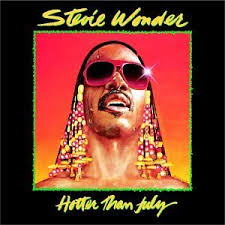 Following the unparalleled success of his 1970s albums (“Talking Book,” “Innervisions,” “Fulfillingness’ First Finale” and “Songs in the Key of Life,” three of which won Album of The Year Grammy awards), Wonder tried something new and wrote a soundtrack for a documentary called “The Secret Life of Plants.” That album had some fine tracks like “Send One Your Love” and “Black Orchid,” but overall, it didn’t click with most fans. So it was a welcome return to form when he came roaring back in September 1980 with “Hotter Than July.” Critic Stephen Holden accurately described Wonder as “our most gifted pop muralist because of his evocative, unique synthesis of pop and African musical elements.” He dedicated the album (and the song “Happy Birthday”) to his effort to have Martin Luther King’s birthday declared a national holiday, which came to pass only three years later. “Master Blaster (Jammin’)” was a fabulous dose of reggae in honor of Bob Marley, while “I Ain’t Gonna Stand for It,” “Rocket Love” and “All I Do” stand out as the best tracks.
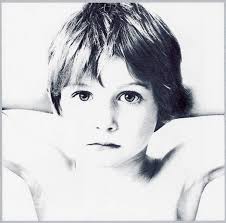 From 1980 onward, few bands have had the impact or the sales success of U2, Ireland’s most popular rock band. I wasn’t hip to their music from the get-go, but I joined the party around the time of 1984’s “The Unforgettable Fire.” The combination of innovative guitar work by The Edge and passionate vocals by Bono have served the band very well throughout their 14-album catalog. Just as important is the songwriting, which the band claims is credited to all four members, though it’s clear that Bono writes the lyrics and The Edge is responsible for most of their musical direction. U2 has evolved into international superstars, both in concert and on record, but you would be well advised to go back to their humble beginnings, where you’ll find “Boy,” a remarkably mature album for a bunch of 20-year-olds. The songs deal largely with childhood, adolescence and young adulthood, including “I Will Follow,” “Stories For Boys,” “Out of Control” and “Twilight.” It’s a damn good record — overshadowed by later works, perhaps — but well worth your time.
 I’m not much of a fan of live albums. In most instances, the crowd noise serves as an annoying distraction, and too often the band is encouraged to turn a five-minute song into a ten-minute excuse for endless soloing. There are exceptions, of course; The Allman Brothers Band’s “At Fillmore East” immediately comes to mind. In 1980, no less than nine major artists saw fit to release a live album (and they’re always double albums, by the way, increasing the risk of boring the listener). Nevertheless, I was thoroughly taken by Joni Mitchell’s “Shadows and Light,” which beautifully captured her creative genius as she performed with jazz greats like Pat Metheny on guitar, Jaco Pastorius on fretless bass and Don Alias on drums. (There’s a great concert video of this show available that you should definitely check out). Mitchell drew mostly from her more recent jazz-influenced tunes like “Amelia,” “Shadows and Light” and tracks from her 1979 collaboration with Charles Mingus, but she included favorites like “Free Man in Paris,” “Raised on Robbery” and “Coyote” as well.
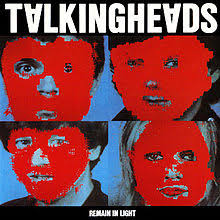 I have a difficult confession to make. David Byrne and his amazing band from New York City weren’t really my cup of tea when they were new. There, I said it. I loved “Take Me to the River,” but that was about it. It took me until sometime in the late ’80s when I saw the astounding live concert film “Stop Making Sense” to appreciate the great songs and excellent sonics of this band. In 1992, I bought “Sand in the Vaseline,” a 2-CD anthology of the best of Talking Heads, and finally brought myself up to speed on their catalog. Since then, I have delved back into the original albums, and decided that “Remain in Light,” released in the fall of 1980, is probably their best work. “Once in a Lifetime” is easily my favorite, but I was impressed with unfamiliar tracks like “Seen and Not Seen” and “Houses in Motion.” I’ve been jazzed by Byrne’s more recent solo stuff, which I’ve been listening to lately, but the Talking Heads tracks here are not to be missed.
 Back in the late ’70s and early ’80s, if you went shopping for new speakers for your home stereo, you made sure to have some albums by Alan Parsons Project to test their quality. Parsons, you may know, was engineer for The Beatles’ “Abbey Road” and producer for Pink Floyd’s sonically perfect “Dark Side of the Moon,” so he knows what he’s doing in the studio. Much like Steely Dan, Parsons and his musical partner Alan Woolfson wrote songs together and then brought in dozens of different players to turn the tracks into aural gold. “I Robot” from 1977 is many fans’ favorite APP album, but I have always been partial to the majestic tracks heard on “The Turn of a Friendly Card,” released in the waning days of 1980. Side two (remember album sides) was largely devoted to the titular five-song suite, of which I’ve included the final section on the playlist. Just as strong are the sax-dominated instrumental “The Gold Bug” and the two Top 20 hits, “Games People Play” and “Time.”
 Hack's Back Pages