Are you ready for the country?
 Since when does rock music include pedal steel guitar or banjo?
Since the very beginning, actually. Many of rock and roll’s 1950s trailblazers — Chuck Berry, Little Richard, Fats Domino — were raised on the Delta blues, gospel and boogie-woogie, and those genres were (and continue to be) the pervasive influences in the birth and evolution of rock. But a critical ingredient in rock’s recipe has always been country music. Rock pioneers like Jerry Lee Lewis, Elvis Presley, Buddy Holly and Gene Vincent came from eastern Louisiana, small-town Mississippi and the plains of West Texas, with a twang in their voices and lyrical tales of heartbreak and woe so typical of the country music genre.
By the 1960s, however, the British Invasion bands and their infatuation with the blues was dominating rock music on the charts, and only rarely did a song with strong country influence make much of a splash on the mainstream Top 40. But not unlike fashion, rock and roll is cyclical — what’s in style now eventually falls out of favor, only to come back around eventually. In 1965, as loud electric guitars and psychedelia took hold, there was at the same time a subtle countermovement toward “roots” music, or “wooden” music, as some called it. Simple, unvarnished, back-to-nature music.
Many observers point to Bob Dylan, always one of rock’s trendsetters, as the chief instigator of the move back toward country elements. After upsetting the folk music crowd by going electric in 1965, Dylan promptly turned around and chose to record his next batch of songs in Nashville, the epicenter of country music. He utilized some of that city’s best studio musicians available — Kenny Buttrey, Pete Drake, Charlie McCoy — to give his rock-oriented songs on the monumental double album “Blonde on Blonde” a noticeable country flavor. He found the experience so satisfying that he returned to Nashville in 1967 for his barebones “John Wesley Harding” LP, and again in 1969 for his most countryish album of all, “Nashville Skyline,” which included a duet with Johnny Cash on a remake of “Girl From the North Country” and an appearance by Charlie Daniels on a couple of tracks.
Dylan often recorded with a band known as The Hawks, a mostly Canadian assemblage that dominated the country-tinged music on 1967’s “The Basement Tapes,” although they weren’t released until eight years later, after The Hawks had become The Band. Robbie Robertson and his cohorts are generally regarded as the forefathers of what is now known as Americana, an authentic type of country/rock/folk hybrid genre on albums like “Music From Big Pink” and “The Band.”
The appeal of country among rock and rollers reached well beyond Dylan and his Nashville period. Roger McGuinn, leader of Southern California folk-rock pioneers The Byrds, had always enjoyed and appreciated country music. He mastered the five-string banjo long before he became a guitarist, and was heavily influenced by country-inflected artists like Carl Perkins and The Everly Brothers. So when rocker David Crosby left The Byrds in 1968, McGuinn replaced him by recruiting the late great Gram Parsons, a gifted country music aficionado who is credited with pretty much inventing the country rock genre (although he preferred to call it “cosmic American music”). Their watershed 1968 album “Sweetheart of the Rodeo” (recorded partly in Nashville) is widely regarded as the first country rock album, deftly using traditional country instruments like mandolin, fiddle, banjo and pedal steel on rock song arrangements.
The Nashville country music establishment did not take kindly to what they considered “long haired hippie interlopers from California,” and consequently, most of the albums that were responsible for the burgeoning country rock chart success would be recorded elsewhere, mostly in Los Angeles, sometimes with Nashville-bred sidemen who relocated there.
Interestingly, another country rock leader was former ’50s teen idol Ricky (now Rick) Nelson, whose Stone Canyon Band paved the way for many more Southern California artists that crafted country rock songs: The Stone Poneys with Linda Ronstadt, Mike Nesmith (formerly of The Monkees), The Nitty Gritty Dirt Band, New Riders of the Purple Sage, Loggins and Messina, Firefall.
Parsons, a restless soul who ultimately died young (age 26, in 1973) from too much fast living, moved to California to form another country rock pioneer band called The Flying Burrito Brothers, whose debut album, “The Gilded Palace of Sin,” is often listed as one of the unheralded classics of the era. Playing banjo and bass in that band was an amazing talent named Bernie Leadon, who became a founding member of The Eagles two years later.
The Eagles, of course, burst on the scene in 1972 with the country rock hits “Take It Easy” and “Peaceful Easy Feeling,” and the outlaw concept album “Desperado” in 1973, but with each successive album, they became more rock and less country as they added guitarists Don Felder and Joe Walsh to the lineup. The Eagles became the most successful band in the land by the mid-’70s, but were no longer a country rock outfit by then.
Many of the bands coming out of Southern California at the time — Buffalo Springfield, Poco, and Crosby, Stills, and Nash (and Young) — included country tunes amidst an eclectic mix of rock and folk. For example, CSNY’s “Deja Vu” featured the countryish Nash hit “Teach Your Children,” sparked by guest Jerry Garcia’s sweet pedal steel guitar, and then followed that with the Crosby counterculture rocker “Almost Cut My Hair,” followed by Young’s plaintive country number “Helpless,” and concluding the side with their hard rocking version of Joni Mitchell’s “Woodstock.”
Young has dabbled in every genre imaginable, but his most commercially successful album, 1971’s “Harvest,” was loaded with countryesque material (there’s even a song called “Are You Ready for the Country?”) and was recorded in Nashville with a loose assemblage known as the Stray Gators, including Kenny Buttrey.
Some of the major albums of the period included one or two country-inflected songs but wouldn’t exactly be labeled country rock LPs. For example, James Taylor’s “Sweet Baby James” had tracks like “Anywhere Like Heaven” and “Country Road,” while Carole King’s “Tapestry” included “Smackwater Jack,” but those records offered far more folk and blues than country.
The same goes for the “Southern rock” sub-genre — rock bands from Florida, Georgia and the Carolinas who had strong blues leanings but loved to dabble in country themes and structures. The Marshall Tucker Band, The Outlaws, Charlie Daniels Band, Lynyrd Skynyrd and especially The Allman Brothers Band were almost schizophrenic in their output of blues and country tracks. The Allmans were legendary for their blues numbers that used improvisational jazz techniques, particularly in concert, but their biggest chart success was the #1 single “Ramblin’ Man,” perhaps the quintessential country rock song of the era. Dickey Betts’ sweet country voice, and lyrics that could have been written by George Jones, complemented soaring electric guitars rocking furiously in unison.
Country rock music came from other cities as well. In San Francisco, psychedelic veterans The Grateful Dead took a two-album diversion into country rock with what many consider their finest, most accessible records, “Workingman’s Dead” and “American Beauty,” both in 1970.
Coming out of Southern Ohio was perhaps the most underappreciated of the country rock groups, Pure Prairie League, led by Craig Fuller. Their two 1972 LPs, “Pure Prairie League” and “Bustin’ Out,” were critics’ darlings but didn’t sell well, and their main claim to fame, the hit single “Amie,” didn’t make the charts until 1974 after Fuller had left.
By the late ’70s and throughout the ’80s, country rock all but disappeared, overshadowed by disco and hard rock and then New Wave and R&B/funk. But what goes around comes around, and the 1990s and 2000s saw a new trend. Instead of rockers injecting country elements into their music, we saw country artists injecting rock riffs, rock beats, rock showmanship into their material. Whereas the old guard in Nashville weren’t interested, the new generation saw the market appeal of the crossover concept, and began scoring huge chart successes. Garth Brooks, Billy Ray Cyrus, Steve Earle, Brooks and Dunn, Toby Keith, Eric Church, Jason Aldean, Keith Urban and many others have transformed the Nashville sound in recent years by writing and singing songs that have much more of a rock flavor.
Although purists will always turn up their noses at the blending of musical styles, the upshot of this has been more diversity than ever, more options for music lovers of all stripes. There will always be pure country artists, and pure rock bands, but there’s not a damn thing wrong with fresh new music (and great stuff from decades ago) that melds elements of both genres. Country rock isn’t for everyone, but it’s a thoroughly legitimate and often innovative blending of instruments, arrangements, vocals and production values in the recorded output from Nashville and Los Angeles and elsewhere.
 One of the most frustrating things to music lovers like me is when a truly outstanding song is ignored — or, more accurately, it maintains a place well under the radar of the listening public. It might be by a band that never made the charts — God knows there are hundreds of artists whose work never got the exposure it should have. Or, just as likely, it might be a “deep album track” by an award-winning artist on a best-selling album. Either way, it got virtually no attention on the radio and therefore went unnoticed except by the most ardent of fans.
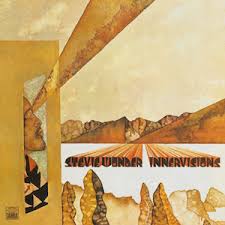 “Golden Lady,” Stevie Wonder, 1973
 “Sweetheart Like You,” Bob Dylan, 1983
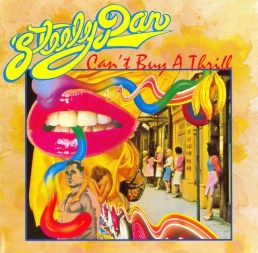 “Kings,” Steely Dan, 1972
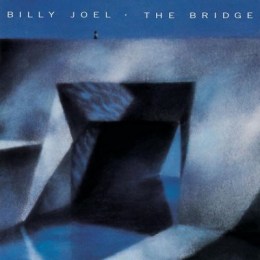 “Big Man on Mulberry Street,” Billy Joel, 1986
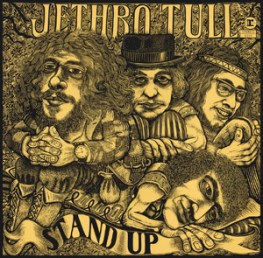 “We Used to Know,” Jethro Tull, 1969
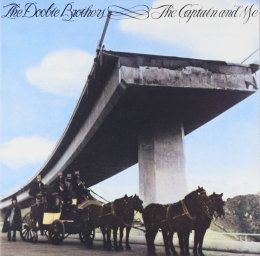 “Clear as the Driven Snow,” The Doobie Brothers, 1973
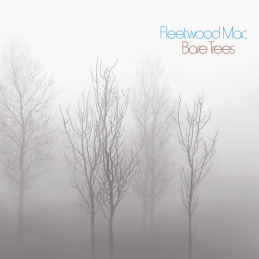 “Bare Trees,” Fleetwood Mac, 1972
 “Monkey Man,” The Rolling Stones, 1969
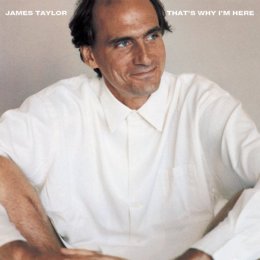 “Only a Dream in Rio,” James Taylor, 1985
 “Another Tricky Day,” The Who, 1981
 Hack's Back Pages