I write the songs that make the whole world sing
“I would write five songs to get one song. I’d have a big junkyard of stuff written as the year went by. If something wasn’t complete, I just pulled out the parts I liked, like taking 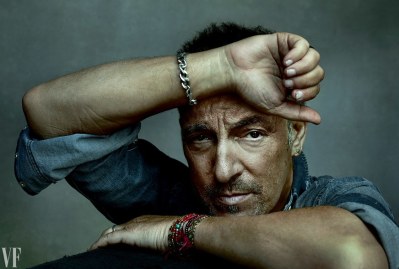 the parts you need from several cars, and you put them in the other car so that car runs.” — Bruce Springsteen, on the songwriting process
To the layman, the art of writing a song seems magical, almost otherworldly.
Many people find it hard enough just to write a coherent sentence or a paragraph, let alone an essay, a speech or, God forbid, a book. The idea of conjuring up song lyrics and then putting them to music is… well, a Herculean task, and pretty much impossible.
So how do the songwriters do it? How do they do it even once, never mind dozens of times? How do icons like Bob Dylan or Paul McCartney write memorable song after memorable song every year from their teens until well into their 70s?
 Clearly, it’s a very rare, God-given talent. And it is baffling. Even the songwriters themselves are hard-pressed to explain exactly how it works or where the songs come from.
“Songwriting is a very mysterious process. It feels like creating something from nothing. It’s something I don’t feel like I really  control.” — Tracy Chapman
“If I knew where the good songs came from, I’d go there more often. It’s a mysterious condition.” — Leonard Cohen
Those fortunate few who have the ability to craft a song concede that they often struggle to produce something they’re satisfied with. The late Leon Russell, an exceptional pianist, arranger and recording artist, admitted that songwriting never came naturally to  him. “Songwriting was very tough for me. I would go in and sit, and hope for inspiration to come, but it was rarely forthcoming.”
Most classical music composers studied the intricacies of music for many years before attempting to write an aria, sonata or symphony. By contrast, many pop songwriters confess that they had little or no musical education. McCartney, the most  successful songwriter of the past half-century, says he can’t read nor notate music. It just comes to him by playing around with notes and chords as he plays guitar or piano.
“If I was to write a song right now,” McCartney said, “I’d use my usual method: I’d either sit down with a guitar or at the piano and just look for melodies, chord shapes, musical phrases, some words, a thought just to get started with. And then I’d just sit with it to work it out, like I’m writing an essay or doing a crossword puzzle. That’s the system I’ve always used.”
Brian Wilson says the songs he wrote in The Beach Boys catalog were often begun on bass guitar. “Knowing how to play bass affects how you write. If you start with the bass line, you can be sure of having a firm structure. Then you write the melody and the changes, and it flows from there.”
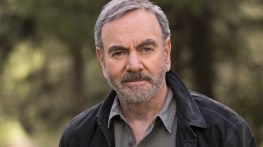 Neil Diamond may have put his finger on it when he explained what he saw as a major deficiency in his songwriting toolbox. “I don’t deny now that it would have been nice to have had more background in music theory. But because I never had any of that, songwriting is easily the hardest part of what I do.”
 Paul Simon admits that it takes him a long time to write songs. “For me, the music — or more accurately, the rhythm — usually comes first, and then a melody will suggest itself. This may take weeks, even months. Then I struggle a long time to settle on the lyric. It’s very helpful to start with something that’s true. If you start with something that’s false, you’re always covering your tracks.”
 Some artists have had considerable success by regarding songwriting as a process. Here’s Don Henley‘s take on it: “My process hasn’t changed much at all. I still use legal pads. I do a lot of writing in my head when I’m engaged in other activities, like driving, or loading the dishwasher. I find that when I’m doing menial tasks, my mind lets go of all the clutter, and then the creative stuff can bubble up from the subconscious.”
The late great David Bowie, whose lengthy career underwent numerous stylistic 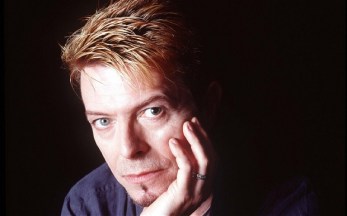 changes, said he found it helpful to have rules and a structural process, but he never minded breaking those rules now and then. “I think process is quite important. To allow the accidental to take place is often very good. So I trick myself into things like that. Maybe I’ll write out five or six chords, then discipline myself to write something only with those five or six chords involved. Of course, I’ll cheat as well. If I’ve got the basis of something really quite good coming out of those five or six chords, then I’ll allow myself to restructure it a bit, if I think, well, that could be so much better if instead it went to F-sharp, or something like that.”
Artists of all types talk about having a muse — an intangible inspiration, stimulus or creative influence. In Greek mythology, the Muses were the nine goddesses (daughters of Zeus) who presided over the arts and sciences, and the Muses could be very unpredictable.
 Songwriters point out that their muse ebbs and flows, and can sometimes seem to disappear for long stretches (the so-called “writer’s block”). Carly Simon offers this recollection: “My songwriting artistry has gone through many phases, including one time where it has been very quiet and abandoned me completely for a few years. That was really frightening. I didn’t know if I’d ever get it back.”
 Songwriting is a curious art form that, like most art forms, cannot be rushed. It is for this reason that artists and their corporate benefactors are often at odds about how much time is necessary to produce quality work. As rocker Nick Cave puts it: “My relationship with my muse is a delicate one at the best of times, and I feel it is my duty to protect her from influences that may offend her fragile nature. My muse is not a horse, and I am not in a horse race.”
Springsteen, a notoriously prolific songwriter for most of his 50-year career, concedes even he has had times when he couldn’t come up with anything: “I wish I could write every day, but I’ve sometimes gone for long periods of time without writing because I didn’t have any good ideas, or whatever is in there is just sort of gestating. Sometimes, I’ve had to force myself to write. I think what happens is you move in and out of different veins. You’re mining, and you hit a vein, and then you go with that, and then it dries up.”
 Patience and perseverance are crucial for songwriters, they say. Many failures come before they hit on a song they really like. Gerry Goffin, the lyricist and ex-husband of songwriter Carole King, was part of the famous Brill Building stable of songwriting teams who reported for work each day and were expected to crank out hit songs like some sort of factory assembly line. Goffin was pragmatic about that kind of creative environment: “You’ve got to realize it’s a hit or miss process. But my advice would be, Don’t be afraid to write a bad song, because the next one may be great.”
 My daughter Emily Hackett is a Nashville-based singer-songwriter who writes on her own or in collaboration with others. Either way, she says, it’s a process of exploration. “There’s a lot of discovery in songwriting. If you’re doing it right, you’re constantly discovering new avenues. You could take a certain road for five or ten minutes and not get anywhere, but that’s okay. Try a different road. Eventually you’ll land on the right path, and the song will unfold.”
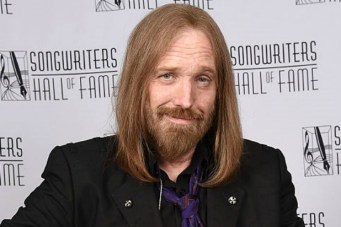 The late Tom Petty drew an analogy between writing a song and catching a fish: “Songwriting is pretty lonely work. I think a lot of people don’t have the patience for it. You’re not necessarily going to get one every time you try. In fact, most times you try, you’re not going to get one. It’s like fishing. You’re fishing, and you either caught a fish, or you didn’t. If you did, there’s one in the boat; if you didn’t, there’s not. But you’ve got to go back and keep your pole in the water. That’s the only way you’re going to get a bite.”
We music lovers should be grateful that songwriters are often almost addicted to their art. They 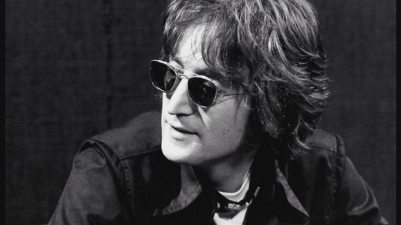 enjoy writing songs, certainly, but sometimes it becomes an obsession that haunts them, and doesn’t let go until the piece is finished. John Lennon had this to say about that: “It’s like being possessed. It won’t let you sleep, so you have to get up, make it into something, and then you’re allowed to sleep. That’s always in the middle of the bloody night, when you’re half awake and your critical facilities are switched off.”
 Country songwriter Dolly Parton has said she looks forward to those times when she isn’t touring or leading a busy life so she has the opportunity to focus on writing new songs. “I always long for that block of time and space when I can go on a writing binge, because I’m really addicted to songwriting.”
 Some songwriters are amazed when they come up with a great song and wonder why no one had beaten them to the punch. Says Keith Richards: “With most of the songs I’ve written, I’ve felt there’s this gap waiting to be filled, and I think, man, this song should have been written hundreds of years ago. How did nobody else pick up on that little space before?”
 Other tunesmiths are such perfectionists that, once they’ve recorded and released a song, they find themselves forever unhappy with the result. Here’s Joni Mitchell talking: “When I listen back to my early music, it’s always, ‘Why didn’t I put a guitar fill there? Why did I sing the line like that? And why am I whining?'”
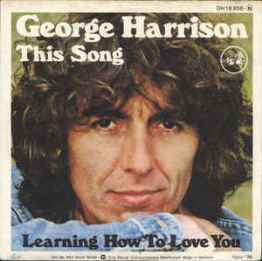 Some pop songwriters have found themselves facing lawsuits because their song sounds like another song that’s already been written. In 1976, a court found George Harrison had “subconsciously plagiarized” The Chiffons’ song “He’s So Fine” when he wrote “My Sweet Lord,” and awarded millions in royalties, which later spurred Harrison to write “This Song,” with these lyrics: “This song has nothing tricky about it, this song ain’t black or white, and as far as I know don’t infringe on anyone’s copyright, so this song we’ll let be…”
Lennon once said: “You know, there are only so many notes.” Springsteen maintains, “Everyone steals from everyone else.” Folk singer Pete Seeger famously wrote, “So sing, change, add to, subtract. But beware multiplying. If you record and start making hundreds of copies, watch out. Write a letter first. Get permission.”

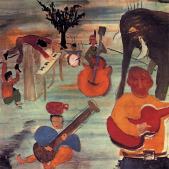 Comprised of four Canadians and one Yank, The Band helped bring the counterculture back from psychedelia to more simple, homespun music with a prototype “Americana” style. Never a chart success, The Band still came up with iconic material, particularly “The Weight,” since covered by more than 50 other major artists. Everyone loves to sing along on the chorus, “Take a load off, Fanny, take a load for free…”
 John Denver wrote this ode to love and recorded it on one of his early albums, and Travers, branching out on her own after the breakup of Peter, Paul and Mary, did a marvelous cover on her 1971 debut. I sang and played it to my fiancée at our wedding rehearsal dinner, so it’s clearly a special song in my family: “You see, I’d like to share my life with you and show you things I’ve seen, places where I’m going to, places where I’ve been…”
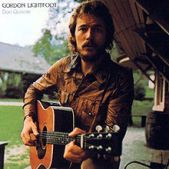 Canada’s musical icon got his start in the early ’60s, and saw cover versions of his songs become hits in the US. He finally broke through here himself with “If You Could Read My Mind” in 1970. He went on to enjoy multiple hits throughout the ’70s, and is still performing today despite health issues that sidelined him for a while. I always love to go back to “Beautiful,” a gorgeous track from his 1972 LP, “Don Quixote.”
 Greek-British hybrid Steven Georgiou began his recording career slowly in 1967, then exploded in the US and UK with the back-to-back “Tea for the Tillerman” and “Teaser and the Firecat” albums in 1970 and 1971. More great albums followed, then Cat’s conversion to Yusef and a lengthy commitment to the Muslim faith before returning to pop music in 2010. From Cat’s “Tillerman” LP is the wonderful singalong track “Longer Boats.”
 As it turned out, I lost interest in America and their songs, but the debut LP is incredible, and I listened to it incessantly. I think “A Horse With No Name” is boring and overrrated and has rather ridiculous lyrics, but there’s a hypnotic track on the album called “Sandman” that became a sort of signature song for the “Hackett and Beard” duo I played in during my high school years. It’s always fun to play in group settings.
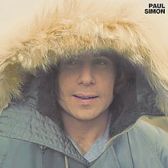 Simon’s first foray into a solo career was met with some skepticism, seeing as how his final work with Art Garfunkel had been one of the biggest successes of 1970. But the new songs were well received, from “Mother and Child Reunion” to “Me and Julio Down By the Schoolyard.” For me, the sleeper track “Duncan” has always been one of my go-to songs. Great story-song about a guy leaving home and searching for love and a new life.
 John Sebastian wrote all the classic hit tunes for his East Coast band The Lovin’ Spoonful, which dominated the airwaves in the 1965-1967-period. Everyone knows “Do You Believe in Magic,” “Daydream” and “Summer in the City,” but not everyone is as familiar with the minor hit single “Younger Girl,” a wonderfully dreamy song that always gets an “awww” reaction whenever I play it.
 The poet laureate of the Laurel Canyon scene (other than Joni Mitchell, of course) was Browne, who wrote some astonishingly candid tunes that made us all examine our own paths and dreams a bit more deeply. From “Rock Me on the Water” to “These Days” and “The Pretender,” Browne wrote some of the best introspective pieces of the ’70s, and most near and dear to me has always been “Fountain of Sorrow,” from his iconic 1974 “Late For the Sky” LP.
 Brother James became such a star that his talented younger brother couldn’t possibly match up. Consequently, his delightful albums therefore slipped under the radar of most fans of the singer-songwriter genre, which was a shame. He has continued to perform at small clubs and venues, mostly in the East and Midwest. From Livingston’s debut LP is this effervescent track that’s bound to bring a smile to your face.
 Morrison, a titan of songwriting since his late ’60s debut, has released three “Best of Van” collections over the years, and it has never ceased to amaze me that he has neglected to ever include this lovely tune on any of those collections. From his 1971 album of the same name, “Tupelo Honey” — melody, lyrics, arrangement, all of it — are simply sublime, and I always get a warm response when I include it in my set.
 Like so many singer-songwriters, Fogelberg arrived slowly, offering gorgeous, introspective songs on his 1972 debut “Home Free,” which stiffed on the charts. Then he recruited Joe Walsh as producer and guitarist, with guest appearances by Graham Nash, Don Henley and others to produce the 1974 gem “Souvenirs,” featuring his first hit single “Part of the Plan.” Also on that LP was the stunning closer, “There’s a Place in the World For a Gambler,” which is so much fun to play on guitar.
 Tull was a progressive rock giant, known for aggressive flute-driven anthems like “Aqualung,” “Minstrel in the Gallery,” “Thick as a Brick” and “Locomotive Breath.” Still, singer-songwriter Ian Anderson loved to sprinkle every album with a few delightful acoustic numbers to keep everyone guessing. On the “Aqualung” LP, “Wondering Aloud” was always the one that grabbed me.
 I learned virtually the entire Simon & Garfunkel catalog, and sang their stuff with my guitar compatriot Ben Beard in my formative years. Beyond the obvious hits (“The Boxer,” “Mrs. Robinson,” “Homeward Bound”), there were so many other hidden treasures. From the duo’s third LP, 1966’s “Parsley, Sage Rosemary & Thyme,” I’m very partial to “Cloudy,” a special favorite of my dear departed friend Chris Moore, who loved to harmonize on it with me.
 Lennon was a rocker from the very beginning, and although his Beatles songs were mostly inspired by Elvis and Chuck Berry rock ‘n roll knockoffs, he was plenty capable of more introspective acoustic numbers like “Norwegian Wood,” “In My Life,” “Julia,” and “Across the Universe.” Upon the band’s breakup, Lennon chose to release a debut solo LP full of raw, emotional tracks that many found tough to absorb, but I was entranced by the haunting “Working Class Hero.”
 Elton and lyricist Bernie Taupin wrote and released many songs on various labels when they first started out, and fans were therefore astonished to find not one, not two, not three, but four albums of Elton John songs available in the spring of 1971, one of which was an obscure soundtrack LP from a slight but charming French film called “Friends.” The title track has always been a huge favorite of mine.
 Because so many songs in The Beatles’ catalog were acoustically based — “And I Love Her,” “Yesterday,” “You’ve Got to Hide Your Love Away,” “Norwegian Wood,” “I’ve Just Seen a Face,” “Julia,” “I Will,” “Here Comes the Sun” — I learned many of them on guitar. One of the best of the bunch is “Blackbird,” the McCartney-penned gem from “The White Album” that has been covered by dozens of great artists through the years (Crosby, Stills and Nash, Sarah MacLachlan).
 Mason was one two great songwriters that comprised the British folk/rock/jazz band Traffic, but after two albums (1967-68), he felt pushed aside by Steve Winwood and chose to head out on his own. His 1970 debut, “Alone Together,” is full of great songs and performances, but I found his 1973 LP, “It’s Like You Never Left,” just as enjoyable. Mason wrote and recorded “Every Woman” in a brief 1:50 arrangement, then re-recorded it in 1974 with pedal steel and other instruments in a superior recording.
 Young’s songs are simply structured and are ideal for new, aspiring guitarists to master — “After the Gold Rush,” “Helpless,” “Cowgirl in the Sand, “Heart of Gold,” “Old Man” — and I could’ve included any of a dozen songs from Young’s catalog here that I enjoy playing, but this spare, haunting track from 1972’s “Harvest” is still among his best. It’s brief, but harrowing, an ode to his friend Danny Whitten, who died of a heroin overdose in 1971.
 Sebastian’s 1970 solo debut is, in my opinion, one of the most sadly neglected albums of its time. After all his delightful work leading the Lovin’ Spoonful, and his widely admired appearance at Woodstock the year before, his subsequent solo LP curiously never got the attention it deserved. One of the prettiest tracks was the gentle folk ballad, “She’s a Lady,” which I take so much pleasure in playing.
 Because his vocal range and mine are so similar, I can comfortably play almost anything in James’s catalog, from “Country Road” and “You’ve Got a Friend” to “Carolina on My Mind” and “Lighthouse.” One of the prettiest songs he ever wrote is the lover’s lullaby “You Can Close Your Eyes” from the wonderful “Mud Slide Slim” LP in 1971. I’m so thrilled that he still usually plays it in concert all these years later.
 Hack's Back Pages