When I started this blog in early 2015, one of my goals was to periodically shine a bright light on fantastic classic rock songs that are rarely, if ever, heard anymore. When I looked through my own vinyl and CD collections and at the greater rock music archives in general, it was almost overwhelming to realize the sheer volume of records that needed to be dusted off and glorified.
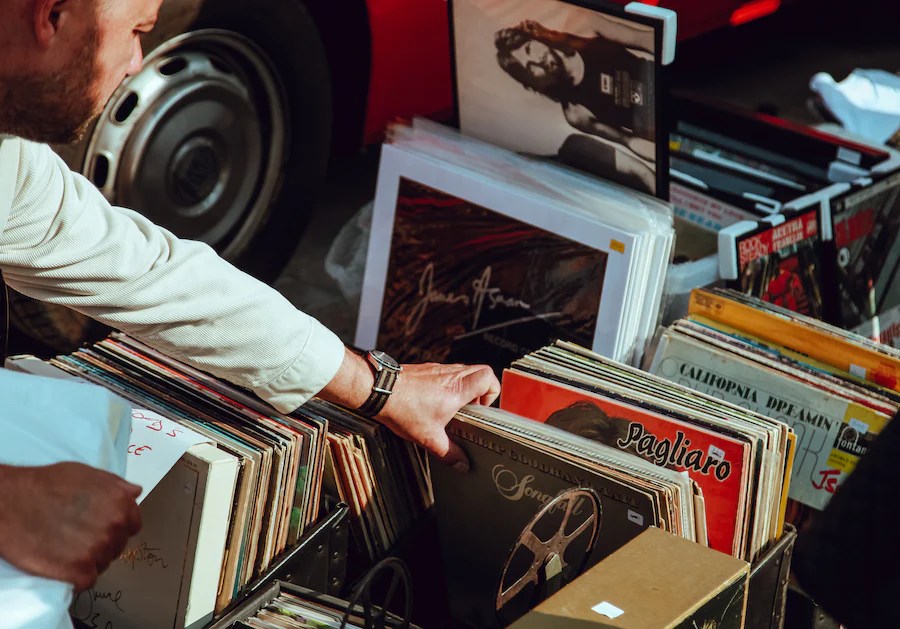
A dozen at a time in a few installments each year, I have shared nearly 450 “lost classics” in the hopes of reminding you, or enlightening you, how much great music was recorded and released in the ’50s, ’60s, ’70s and ’80s. Rock ‘n’ roll, country rock, folk rock, blues, soul, psychedelia, new wave, funk, garage rock, disco, bubblegum, progressive rock, heavy metal… Each of these genres has been represented here as I sift through many hundreds of albums and artists in search of the nuggets to be found and reinvigorated.
In this, the 38th group of lost classics here at Hack’s Back Pages, I return to the basic aggressive rock that was so prevalent in the late ’60s and early ’70s: relentless beat, crunchy guitar riffs, wailing vocals and plenty of swagger. Naturally, the tracks are compiled on a Spotify playlist at the bottom.
Crank it up, people!
**************************

“Slip Kid,” The Who, 1975
Pete Townshend wrote several dozen songs in 1970-71 that were intended to be part of The Who’s aborted “Lifehouse” project. Nine of them became the tracks found on the magnificent “Who’s Next” LP that year, while others were shelved, showing up on later Who albums and compilations. One of the best ones is “Slip Kid,” a fiery rocker that surfaced in 1975 as the leadoff track on their “The Who By Numbers” LP, which, like “Who’s Next,” was immaculately produced by Glyn Johns. “Slip Kid” was released as a single but it inexplicably failed to chart. Said Townshend of the lyrics: “It’s a warning to young kids getting into music that it could hurt them. It was almost parental in its assumed wisdom.” Decades later, he added, “You could put it into the voice of some young Islamic student who decides to go fight in Syria and ends up in ISIS being forced to chop people’s heads off, and it would fit.”
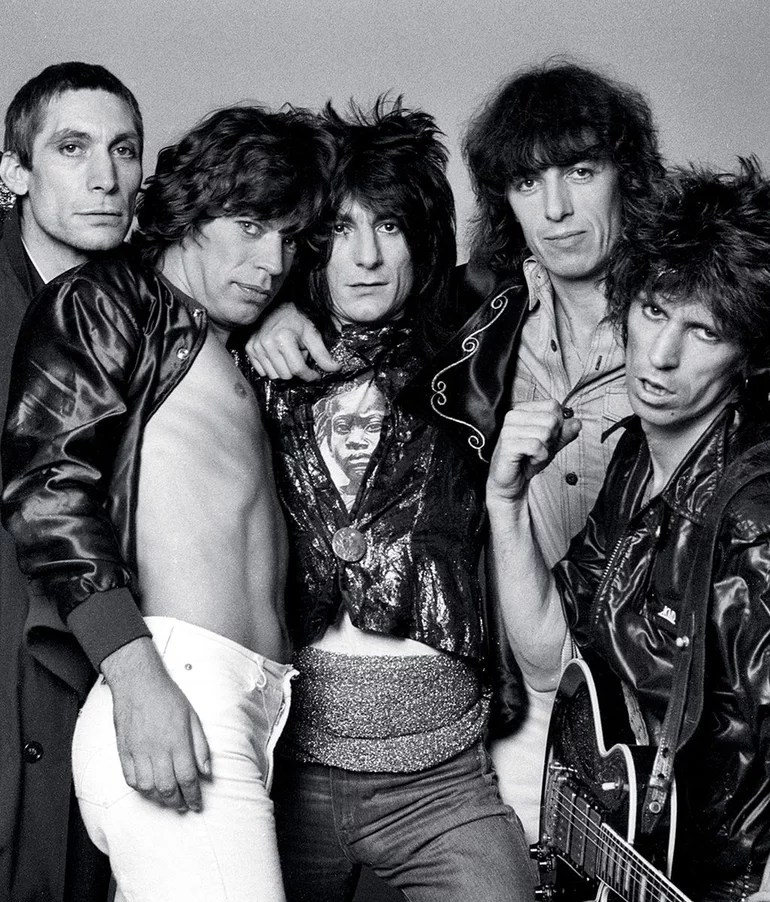
“Respectable,” The Rolling Stones, 1978
While the massive #1 hit “Miss You” was a dance track, almost disco in form, many of the songs on their “Some Girls” album were, in Mick Jagger’s view, “somewhat influenced by the more aggressive punk thing that was going on.” Originally written by Jagger to be a slower song, “Respectable” turned into something else once Keith Richards saw the advantages of speeding up the tempo. “It became a ‘punk-meets-Chuck-Berry’ number,” he said, “and it was a gas to play in concert.” The biting lyrics, which talk of a woman rising into high society and the narrator’s attempts to remind her of her humble roots, were actually about the band’s evolving from brats to rock elders. “‘Respectable’ really started off as a song in my head about how respectable we as a band were supposed to have become,” Jagger noted with a grin, “but the record ended up sounding anything but respectable.”
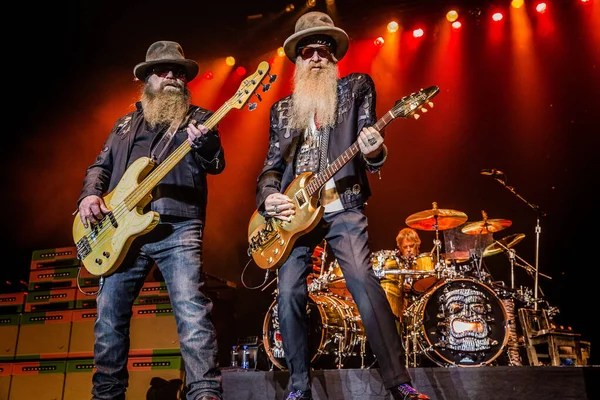
“Bar-B-Q,” ZZ Top, 1972
Before they had their first minor hit “La Grange” in 1973 from their breakthrough “Tres Hombres” album, ZZ Top were still finding their way as songwriters. Guitarist/vocalist Billy Gibbons said of that period, “We started documenting events as they happened to us on the road. All of these elements went into the songwriting notebook. As we went along, we were keeping track of skeleton ideas as they popped up. The craft was certainly developing.” One of their great early Texas boogie songs, “Bar-B-Q,” is lyrically slight, vaguely equating barbecue food with sex (“Oh, now, baby, tell me why don’t you make me some of your fine famous Bar-B-Q?”), but the music chugs along relentlessly, giving a strong indication of what the band would be offering on their catalog in the coming years.
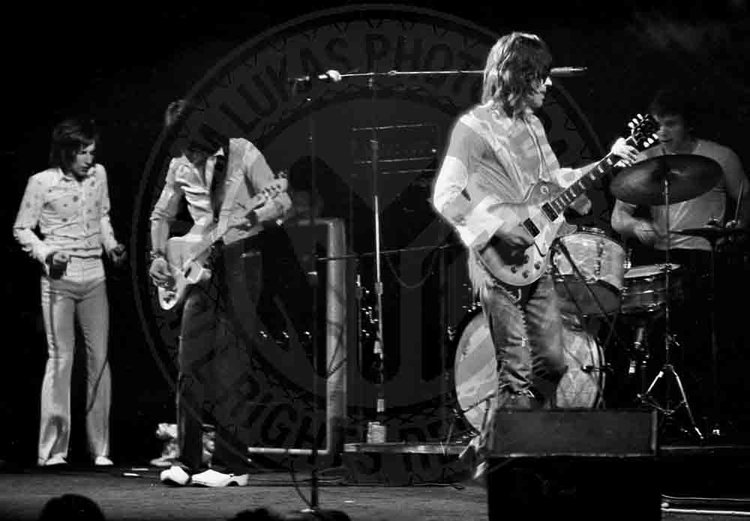
“Plynth (Water Down the Drain),” Jeff Beck and Rod Stewart, 1969
Beck and his former Yardbirds mate Jimmy Page were both developing new groups in 1968, and Beck emerged first with a landmark solo LP, “Truth,” that featured future superstars Rod Stewart on vocals, Ronnie Wood on bass and Nicky Hopkins on piano. While Page went off to form Led Zeppelin, Beck doubled down on what was now being called The Jeff Beck Group, releasing “Beck-Ola” (a wordplay on the Rock-Ola jukebox) in the summer of ’69, which included this busy rocker. The band toured the US and was slated to appear at Woodstock, but that plan fell through due to internal tensions, and Stewart and Wood splintered off to form Faces. Still, Beck’s distinctive guitar work, and the blues-based rock found on these first two albums (which both reached #15 on the US album chart) helped pioneer a genre that became hugely popular in the US over the coming decade and beyond.
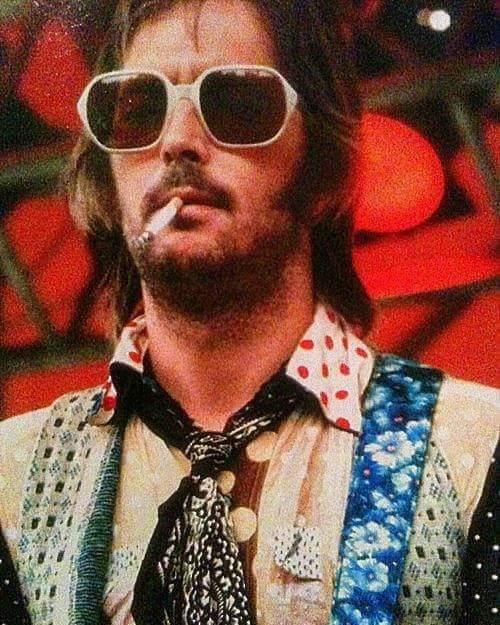
“Mainline Florida,” Eric Clapton, 1974
George Terry, a respected session guitarist who also worked with Joe Cocker, Stephen Stills and The Bee Gees, joined forces with Clapton in 1974 as he was recording his comeback LP “461 Ocean Boulevard.” It was Terry who exposed Clapton to the music of Bob Marley, specifically “I Shot the Sheriff,” which became the LP’s huge hit for Clapton that year. Terry wrote the album’s closer, a churning rocker called “Mainline Florida,” which departs somewhat from the understated acoustic arrangements on most of the tracks. Clapton uses a talk box on the electric guitar solo (a relatively new device heard on hits by Joe Walsh and Peter Frampton around that time). Despite what you might think, “Mainline Florida” has nothing to do with drugs. Clapton had emerged from a three-year heroin addiction, and the song merely refers to “Hotel Row” in a community on the ocean just north of Miami.

“I’ve Had Enough,” Paul McCartney and Wings, 1978
McCartney’s erstwhile band Wings, after several consecutive successes in the studio and on tour, had splintered in late 1977 during sessions for the group’s “London Town” LP. A few basic musical tracks had been recorded in the Virgin Islands prior to the departure of guitarist Jimmy McCulloch and drummer Joe English, which left just stalwart Denny Laine with Paul and wife Linda to carry on. One of those tracks was a raucous guitar-based rocker to which McCartney later added minimal lyrics, titling it “I’ve Had Enough,” sung in a snarling vocal that underscored the pent-up frustrations he was feeling at that point. As the follow-up single to Wings’ #1 hit “With a Little Luck,” the song reached #25 on the US pop charts and stood in stark contrast, sounding more like The Beatles’ cover of “Long Tally Sally.”

“Swing to the Right,” Todd Rundgren and Utopia, 1982
From 1974 through 1985, Rundgren maintained a blistering pace of new releases that included solo albums as well as separate projects with his progressive rock band Utopia. In 1980, Rundgren hit a creative peak with Utopia’s “Deface the Music,” which paid tribute to the many phases of music The Beatles recorded during their career. He followed that with “Swing to the Right,” Utopia’s hard-edged commentary on “corporate raiders, warmongers, political villains, and despicable music industry types,” as Rundgren put it. His record label didn’t care for the lyrical themes and were reluctant to release or promote the LP, resulting in it stalling at a disappointing #102 on US album charts. I’ve always liked the strident yet catchy title track that shows disdain for the country’s political “swing to the right” in 1981.
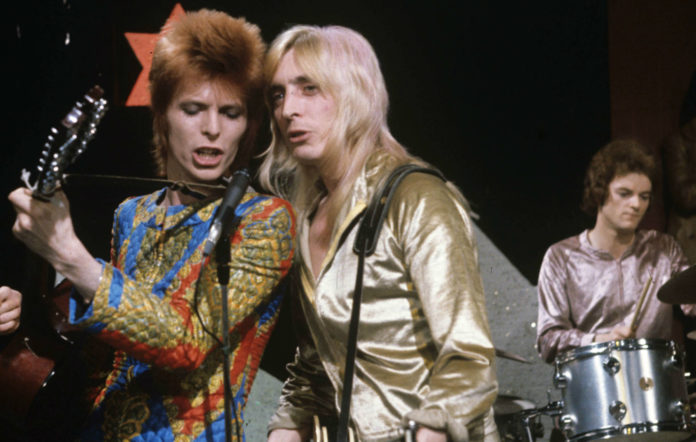
“Hang On to Yourself,” David Bowie, 1972
As a pioneer in the quickly-developing genre known as glam rock, Bowie had toyed with androgynous looks and multiple musical styles on his 1971 critical success “Hunky Dory.” As he and his band, christened The Spiders From Mars, began recording tracks for the next LP, a loose concept about a futuristic, decadent rock star called Ziggy Stardust took shape, and the resulting album stands today as one of the most influential rock albums of all time. “Suffragette City,” “Starman,” “Moonage Daydream” and the title track got most of the airplay, but the one that instantly grabbed me was the proto-punk rocker, “Hang On to Yourself,” which offers bold sexual images: “We can’t dance, we don’t talk much, we just ball and play, but then we move like tigers on Vaseline…”
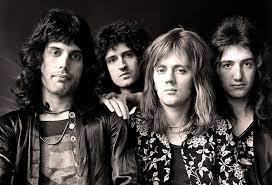
“Keep Yourself Alive,” Queen, 1973
Originally conceived in 1971 as an acoustic guitar-based track when Queen was still playing London clubs without a record contract, “Keep Yourself Alive” was later retooled into an electric guitar workout that became the opening track on the band’s 1973 debut LP. When released as a single, it didn’t chart in the UK nor the US, but it became a regular part of their concert setlist throughout the 1970s. In 2008, Rolling Stone described the track as “guitarist Brian May’s statement of purpose: a phalanx of overdubbed guitars crying out in unison, with rhythm and texture from over-the-top effects…an entire album’s worth of riffs crammed into a single song.” Vocalist Freddie Mercury said it was one of his favorite songs to sing of Queen’s entire catalog.
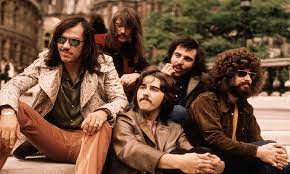
“Straight Shootin’ Woman,” Steppenwolf, 1974
Between 1968 and 1970, this hard-driving psychedelic rock band with both Canadian and American roots released five Top 20 albums, scoring three iconic singles (“Born To Be Wild,” “Magic Carpet Ride” and “Rock Me”), carried by prominent organ and guitar riffs and John Kay’s forceful vocals. Steppenwolf broke up in 1971 but reformed in 1974 for a moderately successful second phase, most notably 1974’s “Slow Flux” album and its hard-driving single “Straight Shootin’ Woman,” which peaked at #29 on US charts. The song, written by drummer Jerry Edmonton, introduced a horn section to the band’s sound, which, unlike other horn-laden groups like Chicago, was more earthy and gritty than tightly commercial. The lyrics endorse the idea of being — and finding — a loyal, faithful partner in life and love.
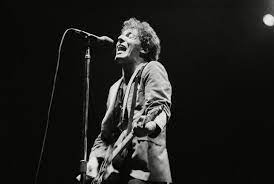
“Raise Your Hand,” Bruce Springsteen and The E Street Band, 1978/1986
As a student of R&B-infused Sixties rock, Springsteen made much of his early reputation performing blistering versions of famous and lesser-known songs of that era like Mitch Ryder’s “Devil With the Blue Dress” and Gary U.S. Bonds’ “Quarter to Three.” Another one was “Raise Your Hand,” a modest 1967 R&B hit for Eddie Floyd of “Knock on Wood” fame, which Springsteen and his E Street Band turned into a sweaty barnburner during their 1978 “Darkness on the Edge of Town” tour. He included a scorching 1978 performance from L.A.’s The Roxy on his mind-blowing, 40-track box set “Live/1975-85” that served to introduce the song to a new generation of rock and soul music fans upon that package’s release in 1986.

“Room to Move,” John Mayall, 1969
Mayall, an influential harmonica player and a capable vocalist, has been known as The Godfather of British blues for his trailblazing music as bandleader of John Mayall’s Bluesbreakers in the 1960s. He is probably best known for attracting some of England’s finest blues guitarists (Eric Clapton, Peter Green, Mick Taylor in succession) to join his lineup for brief stints, but he also was a prolific blues songwriter as well. He notched five solo albums that reached the mid-40s on the US album charts between 1968 and 1971, perhaps none better than his scintillating live album, “The Turning Point,” in 1969. “Room to Move,” a mouth harp tour-de-force that got loads of FM radio airplay, is one of the great moments in blues records to come out of England.
*****************************
 Hack's Back Pages