It’s time once again to delve deep into some of the classic albums of the ’60s, ’70s and ’80s and find those superb “deep tracks” that the radio stations never play. So many of the albums that topped the charts back then have three, maybe four songs that get all the airplay even though there are some jewels just sitting there, waiting to be rediscovered and savored.

This week’s blog is dedicated to shining a bright light on a dozen neglected tracks from famous, commercially successful albums. Lost classics come to us in a variety of ways, but I get a charge out of reminding readers how many great songs appeared on those iconic records. There’s a Spotify playlist at the end so you can listen again to these wonderful “diamonds in the rough” among the big albums of the glorious decades of 40, 50, 60 years ago.
*****************************

“Listen,” Chicago, 1969
When the band that would be known as Chicago released their debut, the extraordinary “Chicago Transit Authority” in April 1969, they felt they had so much good material that it should be a double album, which takes chutzpah for a new band to claim. But they were right — not only were there enough worthy tracks to warrant a double LP, their sound was a revelation, a shrewd merger of rock and big band, with fiery guitar solos, exuberant trumpet/trombone/sax passages, and three vocalists each capable of leading the way through instantly likable hit songs like “Does Anybody Really Know What Time It Is,” “Questions 67 and 68” and “Beginnings.” But like most albums chock full of hits, there are excellent tracks that never got the attention they deserved. On “CTA,” I nominate “Listen,” the shortest song on the album, led by Robert Lamm’s great vocals, a strong bass line from Peter Cetera and the ever-present horn section.

“Kings,” Steely Dan, 1972
If you look back over the debut albums of the major artists of the ’60s and ’70s, most were erratic at best; rare indeed was the group that hit a home run in its first at-bat. “Can’t Buy a Thrill,” the first LP from the wickedly musical minds of Steely Dan founders Donald Fagen and Walter Becker, is definitely one of them. It was hard not to notice the relentless salsa of “Do It Again” (#6) and the solid rocker “Reelin’ in the Years” (#11) in the winter and spring of 1973, but those who bought the album were treated to eight more songs just as good as those two. My personal favorite is “Kings,” with its vibrant harmonies, frenetic guitar break by visiting virtuoso Elliot Randall and lyrics that may be referring to the imminent departure of Richard Nixon (“We’ve seen the last of good king Richard, raise up your glass, his name lives on and on…”)
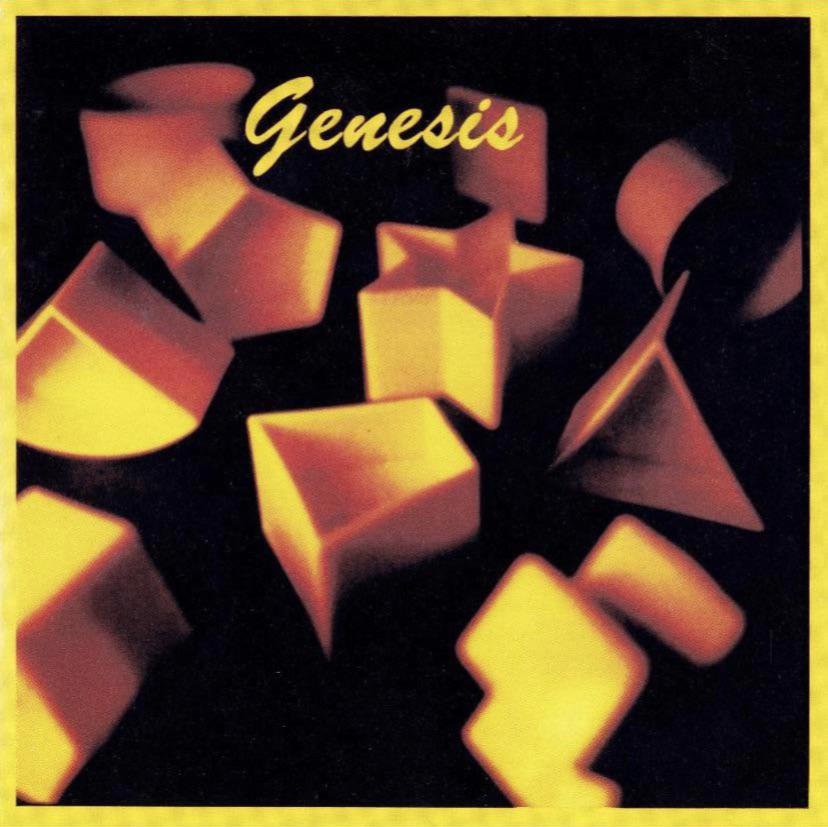
“Just a Job to Do,” Genesis, 1983
Genesis was rock’s premier theatrical attraction in 1969-1975 for those favoring British progressive rock thanks in large part to the amazing Peter Gabriel as their vocalist/showman. After Gabriel went solo, the remaining members of Genesis — drummer/vocalist Phil Collins, keyboardist Tony Banks, guitarist Mike Rutherford — soldiered on, ultimately became a hugely successful commercial act, with multiple hit singles in the ’80s. Their 1983 album “Genesis” had hits like “Mama” and “That’s All,” but the highlight for me from this LP was this in-your-face track about the reluctant hit man, “Just a Job to Do” (“…and bang! bang! bang! and down you go…”), which has a relentless beat and an irresistible arrangement that just won’t quit. Genesis was certainly two different bands, with and without Gabriel, but the second version surely had its moments.
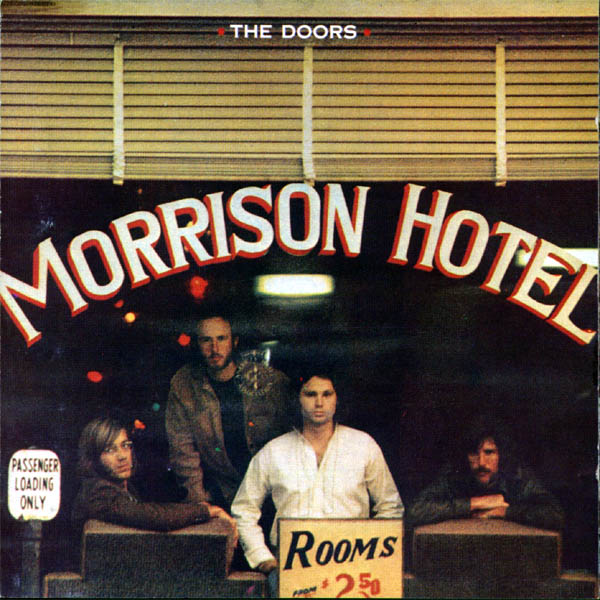
“Peace Frog,” The Doors, 1970
I love the Doors, and inhaled their first two albums especially, and their swan song, “LA Woman,” but somehow never caught on to the “Soft Parade”/”Morrison Hotel” period, except for the singles (“Touch Me” and “Roadhouse Blues,” respectively). Buried deep on the 1970 “Morrison Hotel” album is a great little track called “Peace Frog,” which I stumbled across fairly recently. It’s got a funky, Stax-style hypnotic hook over which Jim Morrison forcefully sings about the violence in the streets at the 1968 Democratic Convention. Coincidentally, I’ve heard the song used in TV show soundtracks a couple times in the past year, which proves how classic tracks have staying power and can resurface when and where you least expect them.
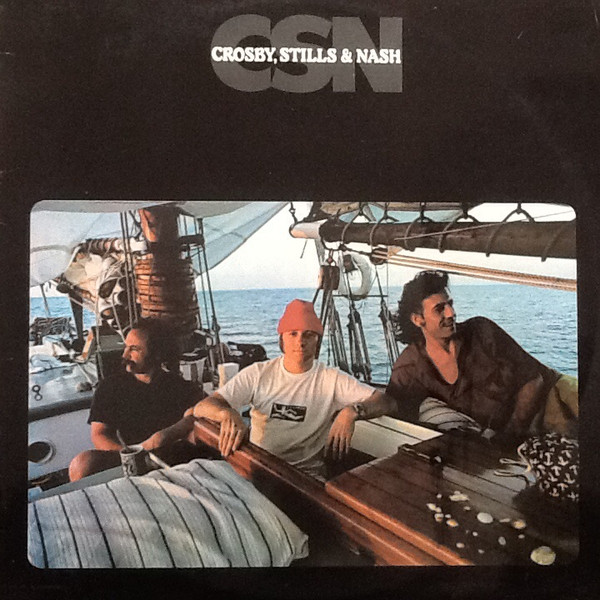
“I Give You Give Blind,” Crosby Stills and Nash, 1977
CSNY had always been a volatile mix. David Crosby, Steve Stills, and Graham Nash had already brought an excess of talent and ego to the party when they first formed in 1969, so when they added the moody and enigmatic Neil Young to the mix, the result was a predictable implosion, and they soon went their own ways. So, what a delight when, in 1977, the original trio reconvened with the superb “CSN,” which included Nash’s hit “Just a Song Before I Go” and the haunting “Cathedral,” and Crosby’s “Shadow Captain” and “In My Dreams,” and Stills’ “Fair Game” and “Dark Star.” All great songs — in fact, there’s not a dud on the album — but the one I find most spellbinding is the Stills closer, “I Give You Give Blind,” which includes not only the trademark CSN three-part harmonies but a fiery, full-band attack not often heard on a CSN recording, a sound sparked by Stills’ guitar work. Fantastic.

“Been Too Long on the Road,” Bread, 1970
In my view, Bread has always gotten an unfair rap as a purveyor of saccharine soft rock ballads. Granted, most of their hit singles fit that mold (“Make It With You,” “It Don’t Matter to Me,” “If,” “Baby I’m-a Want You, “Diary”), but every Bread album included album tracks with tasty guitar licks and a rock backbeat. Witness the minor hits “Mother Freedom” and “The Guitar Man.” Hidden deep on their 1970 album “On the Waters” was a delicious little song called “Been Too Long on the Road,” which had a catchy melody and mature lyrics about how touring can kill a relationship. Dismiss Bread at your own peril — tunes like this one show the band is worthy of your attention. This one’s a keeper.

“Telegraph Road,” Dire Straits, 1982
Mark Knopfler, one of the great guitar players of my lifetime, is known mostly for his Dire Straits debut single “Sultans of Swing” and the 1985 MTV hit “Money for Nothing,” but his output is so much broader and deeper than those two monster hits. Since the group’s breakup in 1994, he has released a dozen amazing records full of tasty guitar passages and Celtic folk material I could recommend, but let’s just examine the superb stuff from the Dire Straits studio albums: “Down to the Waterline,” “Lady Writer,” “Romeo and Juliet,” “Skateaway,” “Your Latest Trick,” “Brothers in Arms,” “Calling Elvis,” “Planet of New Orleans,” to name only a few. The one that stands out most for me is “Telegraph Road,” a 15-minute masterpiece from their 1982 album, “Love Over Gold.” It starts quietly, builds for a while, gets quiet again, and then hits a point just past halfway through where it goes into a relentless crescendo that leaves your jaw scraping the floor once it finally fades out.

“Do What You Want, Be What You Are,” Hall and Oates, 1976
For my money, Daryl Hall and John Oates never topped the incredible blue-eyed soul classic “She’s Gone,” released in 1973 on the duo’s overlooked second album, “Abandoned Luncheonette.” Of course, they went on to become the most successful pop duo of all time in the late ’70s/early ’80s with “Sara Smile,” “Rich Girl,” “Private Eyes,” “I Can’t Go For That,” “Maneater” and many more. Buried on their 1976 LP “Bigger Than Most of Us” is a super sexy slow song called “Do What You Want, Be What You Are,” with thought-provoking lyrics: “It ain’t a sign of weakness, girl, to give yourself away, because the strong give up and move on while the weak, the weak give up and stay, /So do what you want to do, but be what you are…” Hall hits a couple of high notes no man should be able to reach. This beautifully produced track is music to undress to.

“Let It Roll,” George Harrison, 1970
The triple album “All Things Must Pass” got a lot of attention, largely because the quiet ex-Beatle had substantially eclipsed his compatriots’ first solo albums, and because his hit single, “My Sweet Lord,” was simply effervescent. Clearly, he’d been sitting on a stockpile of great songs while waiting for the chance to come out from underneath the shadow of the Lennon-McCartney songwriting axis to shine in his own way. The album was chock full of great songs, including hits like “What Is Life” and “Awaiting On You All,” but to me, the unsung hero on the album is “Let It Roll (The Ballad of Sir Frankie Crisp”), which would have fit quite nicely among the tracks on the celebrated Beatles’ “White Album” two years earlier, when it was written.
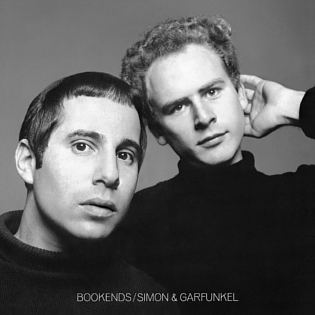
“Punky’s Dilemma,” Simon and Garfunkel, 1968
Director Mike Nichols was enamored with the work of Simon and Garfunkel and wanted Simon to write songs for his coming-of-age film “The Graduate” in 1967. Simon obliged with 3-4 songs, but Nichols rejected them, instead preferring to use “The Sounds of Silence,” “Scarborough Fair” and other existing songs from the S&G catalog in the background of his film. Left on the side of the road were understated songs like “Overs” (about a marriage that had reached its end) and the winsome track “Punky’s Dilemma,” about a young man who wants to be anything (even a Kellogg’s corn flake or an English muffin) instead of a draftable college graduate in the late ’60s. Both would have fit nicely in the film’s themes of angst and soul searching. The songs ended up on the duo’s 1968 album “Bookends,” hidden alongside “Mrs. Robinson,” “America,” “Hazy Shade of Winter” and “Fakin’ It.”

“Murder By Numbers,” The Police, 1983
During their five-album run from 1978 to 1983, The Police just kept getting better and better, starting with “Roxanne” and “Message in a Bottle” and improving with “Don’t Stand So Close to Me” and “Every Little Things She Does is Magic.” The trio of drummer Stewart Copeland, guitarist Andy Summers and bassist/singer/songwriter Sting were at their best, I think, with their #1 album (and swan song) “Synchronicity” in 1983. In addition to the international smash “Every Breath You Take” and additional hits like “King of Pain,” “Wrapped Around Your Finger” and “Synchronicity II,” the album includes several other gems. Left off the vinyl version but included as a bonus track on the CD was the sleeper classic “Murder By Numbers,” a creepy but compelling track about a serial killer.
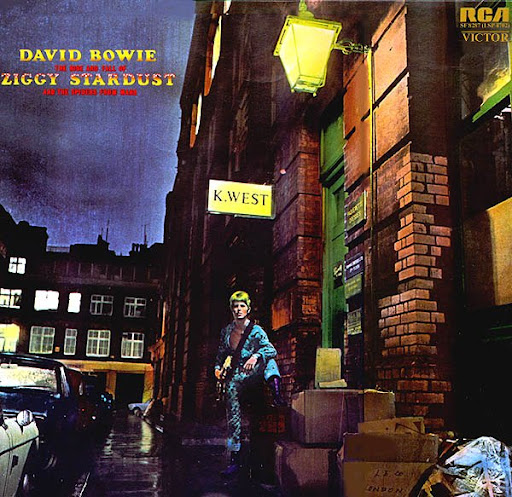
“Rock and Roll Suicide,” David Bowie, 1972
The enigmatic “chameleon of rock” was still relatively unknown in the US in 1972 when he made an indelible impression as the androgynous stage persona called Ziggy Stardust, an orange-haired rocker from another planet who came to save the world. Bowie went on to adopt other personas over the decades, some commercially successful, others defiantly not, but he will always be known most for “The Rise and Fall of Ziggy Stardust and the Spiders From Mars,” one of the most astounding records in rock history. “Suffragette City,” “Moonage Daydream” and “Starman” got most of the airplay, but the incredible finale, “Rock and Roll Suicide” (“YOU’RE NOT ALONE! GIMME YOUR HANDS!”), leaves the listener gasping for breath when it ends with emphatic violins.
******************************
 Hack's Back Pages
There is a road race in the Buffalo area each year on Telegraph Road. Runners are encouraged to put on headphones and listen to the Dire Straits song. Everyone runs for 14 minutes and 18 seconds, the length of the song. Winner is the one who goes the farthest in that time.
LikeLike