Yesterday, a child came out to wonder
“The apple doesn’t fall far from the tree.” “A chip off the old block.” “Like father, like son.”
They say that children are often like their parents in many ways. Depending on the parent, that may or may not be a good thing. And if you’re the child of a celebrity, you’re typically scrutinized more than the average kid, and often held to a higher standard just because of who your father or mother is.
This is especially true in the entertainment industry when Mom or Dad is a national or international star, and truer still if the son or daughter chooses a career in the same profession.
“Children of rock music celebrities are often given special attention not for who they are, but for who their parents are,” said John Altman, an L.A.-based psychiatrist who has treated many stars’ children. “They may feel they’ll never be able to measure up to this hyper-idealized version of the famous parent.” Added psychiatrist Carole Lieberman, “The child becomes interesting to us simply due to their genes, and the media feed this interest. Some offspring develop problems over this, but many lead normal, well-adjusted lives, even when they become celebrities themselves.”
In the popular music arena, there are many compelling stories of children of rock stars who also pursued careers in music, with varying degrees of fame or success.

Let’s take a look first at Jakob Dylan, the 46-year-old son of the legendary Bob Dylan. Although he grew up mostly with his mother, he saw his father often, and grew up absorbing the music and watching Dad’s concerts, tagging along at 17 on the 1986 summer tour when Dylan played with Tom Petty & the Heartbreakers. At age 20, Jakob tried his hand at writing songs and formed The Wallflowers, who released their debut album in 1992 to dismal sales and modest critical acclaim. He learned immediately he wasn’t about to get a free pass to the top of the charts just because of his famous father.
But he and The Wallflowers persevered, toured as an opening act, endured a few personnel changes and a switch of record labels, all the while writing more songs. By 1996, their second album, “Bringing Down the Horse,” went multi-platinum, outselling any of his father’s individual albums, and the single “One Headlight” went to #2 and won a Grammy for Best Rock Song in 1998. He has continued to write and record new music ever since, both with the band and as a solo artist. The band warmed up for Eric Clapton’s tour a couple years ago and is currently touring small halls and festivals.
“I’m aware of the inevitable comparisons, but I would also say my dad doesn’t own acoustic music,” said Jakob in 2008. “Music is in my soul, and I never really considered doing anything else. It’s a thrill, and nothing that I can stop anyhow.” Greg Richling, his longtime bass player who left in 2013, takes issue with those who compare Jakob’s songs to his father’s iconic work. “You see things, people saying, ‘He’s not his dad.’ My reaction is, ‘You’re not either, man. Who the hell are you to say that? You’re holding him to a standard that nobody can live up to.'”

James McCartney, age 38, only recently summoned the nerve to make a go of it in the music business. “Growing up, I guess I put a lot of pressure on myself, but I didn’t want to be a cliche, a Beatle son being a musician.” He was very close to his mother Linda, and when she died in 1998 when James was 21, he spiraled down into a decade of drug abuse, and became estranged from his father and new wife Heather Mills, who James disliked.
By 2008, he and Paul reconciled, and he began recording his own songs, with Dad producing. James has released several EPs (check out 2010’s “Available Light” in particular) and two albums, including this year’s “The Blackberry Train,” and is also currently wrapping up a tour of US cities, which he has found “simultaneously thrilling and nerve-wracking.” He understands why the public’s interest in him is laced with skepticism. “Let’s face it, it’s very hard to live up to The Beatles. Even Dad found it hard to live up to The Beatles when he first went out with Wings.”
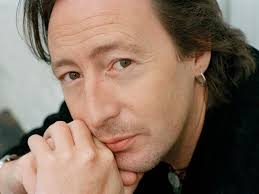
Facing a similar dilemma was Julian Lennon, John’s son with his first wife Cynthia. Born in 1963 in the midst of Beatlemania and essentially ignored and abandoned by his dad after he left with Yoko Ono, Julian built up a resentment made worse after John showered attention on his second son, Sean. “Dad could talk about peace and love out loud to the world, but he could never show it to the people who should mean the most to him, like me and my mom,” Julian said. “Frankly, I was always closer to Paul than I ever was to my dad.”
Lennon’s murder in 1980 compounded Julian’s issues, requiring years of therapy. But he found the strength to pursue his own musical career in 1984 with the release of “Valotte,” a strong debut that found a receptive audience (#15 on the album charts) and two Top Ten singles (“Valotte” at #9 and “Too Late for Goodbyes” at #5). Many listeners were unnerved by how much Julian’s vocals echoed those of his late father. His songs were great, but coming so soon after John’s death, it was, to my ears, a little creepy. He released four more albums but never matched the success of his debut, and soon left the music business for the most part, instead pursuing interests in film and photography.
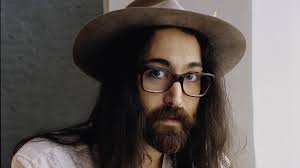
Sean Lennon, meanwhile, has a different perspective; he was only five at the time of his dad’s assassination. He hung on tight to his mother for love and guidance, and developed a passion for music and art of all kinds. “The main reason I’m into music and art is because of my parents,” he said. “My respect for them defines everything I do.” At 23 and again at 31, he released albums of original material, but he has discovered he prefers behind-the-scenes roles like film scoring and producing other bands instead of singing or writing — possibly, he concedes, because his last name brings him more attention than he really wants.
“No matter what I do,” he said, “some people will always see me as the spoiled slacker son of John and Yoko. There’s always going to be that element, and I kind of have to accept it and do my own thing anyway. Some people suggested I do things under a pseudonym to see what people’s true reaction would be, but I always thought that would be disrespectful to my dad and my family, and not honest with myself. I thought, ‘Wait, I can’t be proud of who I am?'”
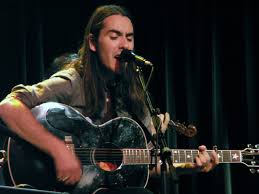
Dhani Harrison, three years younger than Sean, grew up in a loving household on a lush estate in Esher with his father George and mother Olivia. “Dad’s studio was directly below my bedroom, so my floor was always rattling from the music,” he recalled. “I remember the Traveling Wilburys were there recording when I was about 10, and that was pretty amazing. I’d come down for tea and there’s Bob Dylan and Jeff Lynne. I kind of grew up in the studio learning how to produce and play, and I felt very comfortable there. Dad and I were best friends, so spending a lot of time with him in the studio was natural.”
At 23, Dhani helped finish “Brainwashed,” the album George was working on when he died of cancer in 2001. Dhani has dabbled in the music business only occasionally, appearing on guitar in high-profile events like “Concert for George” in 2002 and the 2007 Rock and Roll Hall of Fame induction ceremony when Harrison was voted in as a solo artist. Dhani had mixed feelings about the Martin Scorsese documentary on George released in 2011. “It’s a hard thing to understand unless you’ve had a parent who’s passed away who was in the public eye. Sometimes you don’t want to share him.”

Wendy and Carnie Wilson had an especially challenging row to hoe. Their famous father Brian, the tortured genius songwriter/arranger/producer for The Beach Boys, was unable or unwilling to communicate with them, or anyone, for decades as he struggled with mental illness and a power-mad therapist. The sisters were 21 and 23 in 1990 when they teamed up with Chynna Phillips, daughter of Mama Michelle Phillips and Papa John Phillips, to form Wilson Phillips. The trio sold six million copies of their international #1 single “Hold On,” which was nominated for a Song of the Year Grammy.
On their deeply personal second album, the ladies wrote songs about their estranged fathers. Chynna’s song “All the Way From New York” mourns the nonexistent relationship she had with her drug-abusing father, while Wendy’s and Carnie’s tearjerker, “Flesh and Blood,” is more hopeful of a reconciliation: “I want to make you laugh, I want a chance to know you better, I want to hear you sing beside me now, flesh and blood…”

Offspring of country music artists have their own tales to tell. Roseanne Cash, the talented 65-year-old eldest daughter of the late great Johnny Cash, showed interest in the music world from a young age, and started at 18 by helping out backstage on her dad’s tours. Before long, she was singing background vocals and occasionally soloing in shows, and Cash recorded one of her songs in 1976 when she was just 20. By the time she was 26, Roseanne was queen of the country music airwaves with her LP and single “Seven Year Ache,” which topped the country charts and even reached #22 on the pop charts. She scored numerous Top Five country hits throughout the ’80s, and has continued recording albums and duets up to the present day. When sidelined by injuries and surgeries, or mourning her father’s death in 2003, she kept busy writing books and poetry.
Still, she said, she had issues with being Johnny’s daughter. “People think you have it easy, and they resent you,” she said. “I was thinking about using my grandmother’s name to hide the connection. But you know, I was too stupid, too proud to go to my dad for guidance. That’s one regret I have — that I didn’t go to him more.”
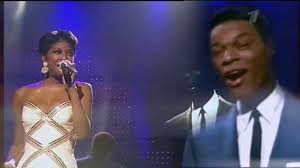
Natalie Cole idolized her father, the smooth crooner Nat “King” Cole, whose recordings were ever-present on the pop charts in the ’50s and early ’60s. She sang on a few of his albums and was devastated when her dad died in 1965 when she was only 15. She had a difficult relationship with her mother and started experimenting with drugs, but with her powerful jazz-and-gospel-inflected voice, she was determined to make it in show business. She was eager to emerge from her father’s shadow in the ’70s by staking out her own territory with R&B tunes, and was met with resistance. Natalie recalled, “People said when I started, ‘Why don’t you just copy your father’s style?’, but I had to be myself, singing my own songs in my own way.”
She wasn’t wrong. Her phenomenal 1975 debut LP “Inseparable” and its #6 hit single “This Will Be” made an indelible impression, and she went on to top the R&B charts for the rest of the decade. But the ’80s were less kind to her, and then in 1991, she scored her biggest success singing the standards her father used to sing. Thanks to studio wizardry, her vocal was grafted onto her dad’s recording of “Unforgettable” to produce a duet that won multiple Grammys and sold millions. Natalie died in 2016 at age 65.
So many other parent/child stories in popular music…and not enough space:

There’s Jason Bonham, son of the late Led Zeppelin drummer John Bonham, who has drummed for Paul Rodgers, Ted Nugent, Joe Bonamassa, Foreigner, Heart, and at the momentous reunion with Jimmy Page, Robert Plant and John Paul Jones for Led Zeppelin’s 2007 performance captured on the 2012 “Celebration Day” CD/DVD.
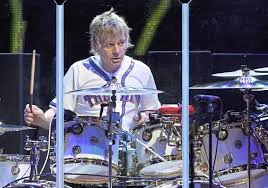
There’s Zak Starkey, son of Beatle Ringo Starr, who has toured with his dad’s All-Starr Band and served as drummer for The Who and Oasis.
There’s Arlo Guthrie, son of the legendary folkie Woody Guthrie; there’s the late great Elvis’s daughter, Lisa Marie Presley, who had two popular albums in the 2000s; and there’s Ben Taylor, whose voice is a dead ringer for his father, James Taylor.
There’s the late Jeff Buckley, introspective singer-songwriter son of introspective singer-songwriter Tim Buckley (1947-1975); there’s the multi-talented Ziggy Marley, son of reggae guru Bob Marley; there’s singer Louise Goffin, daughter of ’60s and ’70s songwriting titan Carole King (and late ex-husband Gerry Goffin); there’s Rufus Wainwright, son of ’70s singer-songwriter Loudon Wainwright; there’s singers Gunnar and Matthew Nelson, twin sons of ’50s teen idol Rick Nelson; there’s guitarist Dweezil Zappa, son of progressive trailblazer Frank Zappa; and there’s ’60s “Boots” girl Nancy Sinatra, daughter of the one and only Frank Sinatra.
There’s no way I can ignore the three-generation hat trick of Hank Williams, Hank Williams Jr. and Hank Williams III, but their lengthy story needs its own column, I think. Here’s a sample lyric from Hank Jr.’s 1979 hit, “Family Tradition,” that explains why: “I am very proud of my daddy’s name, although his kind of music and mine ain’t exactly the same, stop and think it over, put yourself in my position, if I get stoned and sing all night long, it’s a family tradition…”

Then there’s the story of Miley Cyrus, daughter of Billy “Achy Breaky Heart” Cyrus who has commanded non-stop attention (both positive and negative) since her 2007 musical debut, eclipsing her father’s fame with an uninterrupted string of enormously popular albums and singles in multiple genres.

And I’ll bet you didn’t know this one: The wonderfully sensuous song stylist Norah Jones, who won multiple Grammys in 2007 and continues to impress us with new work, is the daughter of Indian raga/sitar master Ravi Shankar!
***************************