Ain’t the afterlife grand?
I figure the best way to know if a songwriter is any good is by reading what others, particularly other songwriters, have to say about him.
If that’s true, then damn. John Prine must be one of the best there ever was.
 Asked in 2009 to list his favorite songwriters, Bob Dylan put Prine front and center. “Prine’s stuff is pure Proustian existentialism. Midwestern mind trips to the nth degree. And he writes beautiful songs.”
Kris Kristofferson, upon discovering Prine in a small club in Chicago in 1971: “No way somebody this young can be writing so heavy. John Prine is so good, we may have to break his thumbs.”
Close friend and frequent collaborator Bonnie Raitt: “He was a true folk singer in the best folk tradition, cutting right to the heart of things, as pure and simple as rain. For all of us whose hearts are breaking, we will keep singing his songs and holding him near.”
Jack Antonoff, songwriter/guitarist/singer in the indie rock ban “fun.”, said: “John Prine is as good as it gets. An honor to be alive in his time.”
Bruce Springsteen tweeted, “John was a true national treasure and a songwriter for the ages. He wrote music of towering compassion with an almost unheard-of precision and creativity when it came to observing the fine details of ordinary lives. He was a writer of great humor, funny, with wry sensitivity. It has marked him as a complete original.”
**********
Music critics can be a fickle bunch, but they have been nearly unanimous in their admiration for Prine over the years. A few quotes:
Alanna Nash of Entertainment Weekly: “John Prine’s best work has always been slightly cinematic and hallucinogenic, full of images that transport as well as provoke.”
Margaret Renkl, a New York Times contributing opinion writer, wrote in 2016: “The new John Prine — older now, scarred by cancer surgeries, his voice deeper and full of gravel — is most clearly still the old John Prine: mischievous, delighting in tomfoolery, but also worried about the world.”
Michael Branch of CNN: “John Prine was a gifted writer and vintage American troubadour who reminded us that life is as comical as it is heartbreaking, and that we should never fail to empathize with others.”
Greg Jaffe of the Washington Post: “Many journalists loved John Prine because he did what we try to do: document America.”
The late Roger Ebert, writing about a Prine concert in 1971: “He sings rather quietly, and his guitar work is good, but he doesn’t show off. He starts slow. But after a song or two, even the drunks in the room begin to listen to his lyrics. And then he has you.”
************
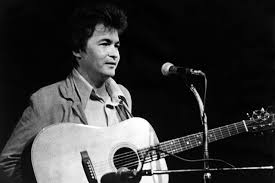 By all accounts, Prine was a kind, sweet guy, but he was also one tough cookie. Despite a lack of much commercial success during his five decades in the music business, he nevertheless persevered, started his own record company (Oh Boy Records) and recorded 18 studio LPs and two live albums. He was on the road a lot in the early days, and he continued performing well into his ’60s and ’70s as health permitted. He also survived two major cancer-related surgeries in 1998 and 2013. But on April 7, he fell victim to the coronavirus. He was 73.
You’ll all pardon me if I’m kicking myself these days. I somehow failed to pick up on Prine and his work when he was first starting out in the early ’70s when he wrote and recorded many of his best songs. I’m pretty sure a couple of my friends in college tried to turn me on to some of his tunes, but I too quickly dismissed him because his gruff voice wasn’t much to my liking.
Ah, but here’s the thing: Prine’s voice was perfect for the kind of songs he wrote. Like his inspirations, Dylan and Johnny Cash, he sang in a sometimes-wry, sometimes-bitter conversational style that was perfectly suited to his simple melodies and common-man lyrics.
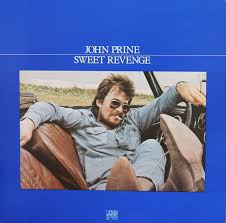
Prine’s 1973 LP
I’ve always put Dylan, Joni Mitchell, Paul Simon and Leonard Cohen at the forefront of my list of the greatest lyricists of my lifetime, but I have discovered (after the fact, I’m embarrassed to admit) that John Prine belongs in that exalted group. He offered such wonderfully keen observations on the human condition, often very concise:
“Just give me one extra season so I can figure out the other four.”
“I don’t care if the sun don’t shine, but it better, or people will wonder.”
“Broken hearts and dirty windows make life difficult to see.”
“We were trying to save our marriage and perhaps catch a few fish, whatever came first.”
“If it weren’t so expensive, I’d wish I were dead.”
In these and other examples, Prine often wrote in the first person, sharing his own experiences and fantasies, in turn poignant, angry and whimsical. But he just as often served as narrator for his fictional and true-to-life tales, putting potent words into the character’s mouths.
A mother speaking to her son about his absent father: “Your daddy never meant to hurt you ever, he just don’t live here, but you got his eyes.”
An elderly woman referring to her husband: “My old man is another child that’s grown old.”
An adolescent boy singing about his troubled father: “There’s a hole in Daddy’s arm where all the money goes.”
Most provocatively, speaking for Jesus: “I’m a human corkscrew and all my wine is blood. They’re gonna kill me, Mama. They don’t like me, bud.”

His 1991 comeback
Prine echoed the belief many songwriters share when he said, “I felt sometimes I was a conduit, a channel through which songs arrive from an unknown source, maybe God.”
He had periods when songwriting came almost effortlessly. “Sometimes, a song takes about as long to write it as it does to sing it. They come along like a dream or something, and you just got to hurry up and respond to it, because if you mess around too long, the song is liable to pass you by.”
When major or minor life events occurred, both good and bad, they became fodder for new material. “ After my second divorce,” he said with a chuckle in 1990, “about a month later, the song truck pulled up and dumped a bunch of great songs on my lawn.”
Prine had a singular approach to songwriting. “I think the more the listener can contribute to the song, the better. Rather than tell them everything, you save your details for things that exist. Like what color the ashtray is. How far away the doorway was. So when you’re talking about intangible things, like emotions, the listener can fill in the blanks. You just draw the foundation.”
In his 1973 song “Grandpa Was a Carpenter,” Prine painted a picture in such a way that listeners could easily insert memories of their own grandfathers: “”Well, he used to sing me ‘Blood on the Saddle’ and rock me on his knee, and let me listen to radio before we got TV, well, he’d drive to church on Sunday and take me with him too, stained glass in every window, hearing aids in every pew.”

Prine’s 1971 debut
Last year, Prine was inducted into the Songwriters Hall of Fame, where he summed up why he chose a life as a songwriter: “I gotta say, there’s no better feeling than having a killer song in your pocket, and you’re the only one in the world who’s heard it.”
There were two Prine tunes I discovered long ago as cover versions by other artists. One was “Angel From Montgomery,” recorded by Raitt on her 1974 LP “Streetlights.” She and Prine sang it together often, most recently at the 2020 Grammy Awards, where he won a long-overdue, well-deserved Lifetime Achievement Award.
The other one was the heartbreaking “Hello In There,” which Bette Midler recorded for her first album. In it, Prine described the pain and loneliness that aging brings, and he urged us all to pay attention: “Old trees just grow stronger, and old rivers just grow wilder every day, old people just grow lonesome, waiting for someone to say, ‘Hello in there, hello.'”
I’m sure as hell paying attention now, Mr. Prine.
He left behind an impressive legacy of nearly 200 songs, and you’d be hard pressed to find one you could label a clunker. His favored genres were country, folk, a little bluegrass and what is now popularly called Americana, and he did them all well. His songs are generally pretty basic, three- or four-chord construction, which makes them easy to learn on guitar, something I’ll be doing for the next few weeks. And they’re easy to sing too, so you can bet they’ll start showing up at occasional singalongs by the fire pit, especially the funny ones.
 Take “In Spite of Ourselves,” the title track from his 1999 album which features duets with some of country music’s best female vocalists. The song’s blunt lyrics offer a fairly hilarious yet poignant dialog between Prine and Iris DeMent as husband and wife who adore each other but view their marriage quite differently. Husband: “She thinks all my jokes are corny/ convict movies make her horny/ she likes ketchup on her scrambled eggs and swears like a sailor when shavin’ her legs/ she takes a lickin’ and keeps on tickin’,/ I’m never gonna let her go…” Wife: “He ain’t got laid in a month of Sundays/ I caught him once and he was sniffin’ my undies/ he ain’t too sharp but he gets things done/ drinks his beer like it’s oxygen/ he’s my baby and I’m his honey/ never gonna let him go…”
Or consider 1973’s “Please Don’t Bury Me,” a whimsical look at death that now takes on an entirely deeper meaning: “Please don’t bury me down in that cold cold ground, no, I’d druther have ’em cut me up and pass me all around, throw my brain in a hurricane, and the blind can have my eyes, and the deaf can have both of my ears if they don’t mind the size.”
I see that the new generation of country singers adores Prine with as much enthusiasm as their predecessors do. Check out this YouTube video of Prine sitting on stage with Kacey Musgraves as she plays a song she wrote called “Burn One With John Prine.” It’ll bring tears and chuckles in equal amounts.
Rest in Peace, John. Much obliged for your fine body of work.

*********************
A Spotify playlist of some of Prine’s finest tunes. Dial ’em up!
 1970 was the year I learned an important truth about rock music. Instead of staying in the same lineups year after year, many rock musicians enjoyed playing with different combinations of people. Guitarists, keyboard players, singers and rhythm sections eagerly sought out opportunities to record with friends and strangers alike. It was a benign free-for-all, and we all were the beneficiaries of the musical experimentation. Everyone showed up as guests on each other’s records, a practice that became the norm still in vogue today.
 At the tender age of 13, my friend Ben and I had dreams of becoming the next Simon and Garfunkel, playing guitars and harmonizing our way through a repertoire of folk and acoustic rock. We learned virtually the entire S&G catalog, from early rudimentary works like “April Come She Will” through more sophisticated tracks like “America.” When “Bridge Over Troubled Water” came out in the first weeks of 1970, it was almost overwhelming to us how awesome the songs were, especially the iconic title tune, carried, for the first time on an S&G track, by piano. Unable to do it justice on guitars, we focused instead on “The Boxer,” released nine months earlier as a hit single. Just as special to me was “The Only Living Boy in New York,” followed by “Song for the Asking” and “So Long Frank Lloyd Wright.” It was obvious that Simon was blossoming as a songwriter, toying with rock beats (“Baby Driver,” “Keep the Customer Satisfied”), South American rhythms (“El Condor Pasa”) and even impromptu drumming on a piano bench (“Cecilia”). The album won multiple Grammys and sold more than 25 million copies.
 Full confession: For much of the ’70s, my knowledge and appreciation of Van the Man’s music was limited to his ubiquitous 1967 single “Brown-Eyed Girl.” I wasn’t hip to this excellent LP until many years after its release. My loss. He was as important a part of the singer-songwriter movement as others whose work was far more successful commercially. Morrison largely abandoned the folk-jazz explorations of 1968’s “Astral Weeks” for the R&B/folk rock he would prefer for most of his career from then on. “Two horns and a rhythm section — that’s the kind of backing I like best,” he said in 1972. Side One of “Moondance” in particular (the first five songs) ranks right up there as one of the best album sides of the year — “And It Stoned Me,” “Moondance,” “Crazy Love,” “Caravan” and “Into the Mystic” all ended up as FM radio staples for years to come, carried by Morrison’s delicious growl.
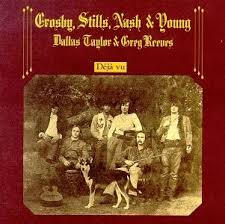 If ever an album deserved to be fleshed out into a double album, this is it. The “Crosby, Stills and Nash” album had demonstrated the songwriting prowess of all three musicians, and now they’re going to add Neil Young to the mix? Two songs apiece from these four gents was simply not enough, not when their egos were always working overtime, and that in large part was why they broke up only three months after “Deja Vu”‘s release. Too bad some of the songs that ended up on each of their solo debuts (“Southern Man,” “Love the One You’re With,” “I Used to be a King,” “Cowboy Movie”) didn’t show up here instead. But what a collection of 10 classic folk rock songs, covering so many moods and emotions: contentment (“Our House”), anger (“Almost Cut My Hair”), pathos (“Helpless”), searching (“Carry On”), mystery (“Deja Vu”), despair (“4+20”), unconditional love (“Teach Your Children”). And to top it off, the foursome concocted a brilliantly ferocious rendition of Joni Mitchell’s spooky “Woodstock.”
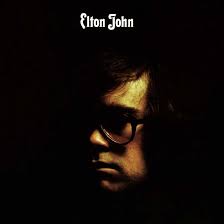 This gorgeous album was released in April 1970 but I didn’t acquire it until I received it at Christmas. It was the beginning of a three year love affair, when I embraced every album he released up through “Goodbye Yellow Brick Road” in September 1973. But this American debut (he’d released an earlier one, “Empty Sky,” in the UK only) is still my favorite of all his work. “Your Song,” of course, was what first drew me in, but there’s so much more here. Bernie Taupin’s thought-provoking lyrical imagery on “First Episode at Hienton” and “The King Must Die,” Paul Buckmaster’s string arrangements on “Sixty Years On” and “The Greatest Discovery,” the full band arrangements on “Take Me to the Pilot” and “The Cage,” the gospel vocals on “Border Song,” even the jaunty country beat of “No Shoestrings on Louise.” Most of all, I was captivated by Elton’s vocal acrobatics throughout the album.
 Thanks to “Big Yellow Taxi,” Mitchell’s perky protest against paving paradise, I gambled my hard-earned $3.99 and bought “Ladies of the Canyon” upon its release, hoping there might be a couple more tunes to my liking. What sheer delight to find a dozen brilliant songs, comprising a truly breakthrough album for the Canadian songstress. I went on to buy every LP Joni ever released, and I place her at the very top of my list of favorite songwriters and artists. “Morning Morgantown” remains one of the prettiest songs in her catalog, and “For Free” is pure lyrical genius, describing her feelings as a professional musician hearing a talented street performer playing for spare change. “Willy” is a tribute to her then-lover Graham William Nash, and “Rainy Night House” describes a night with her dear friend Leonard Cohen. “The Circle Game,” written when she was just 23, is a coming-of-age tale that had been covered by Tom Rush. Finally, there’s her original arrangement of “Woodstock,” which still brings chills.
 This nearly perfect album arrived as I was learning to play guitar, and it became my close companion for many months, and for the rest of my life as well. Taylor’s voice and mine shared the same range, and his songs were relatively easy to learn (even if I couldn’t match his often intricate guitar work). And what compelling songs they were, full of heart-on-his-sleeve confessional lyrics and irresistible melodies. “Fire and Rain” got all the airplay, reaching #3 on the charts, and “Country Road” turned into my signature song. “Blossom,” “Sunny Skies,” “Anywhere Like Heaven” and the title tune (which Taylor refers to as “a cowboy lullaby”) established him as one of the emotional centers of the laid-back music scene. But he had muscle, too — the kick-ass blues track “Steamroller” and the full-band closer “Suite for 20G” presaged the kind of records he would make a few years later.
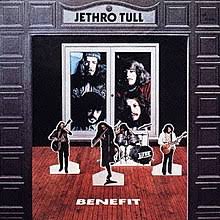 In June 1970, I wasn’t yet the Tull fanatic I would become once “Aqualung” and “Thick as a Brick” came out, but I’d been sufficiently intrigued with the group once I heard a local band offer their rendition of “Teacher.” I took the plunge on “Benefit,” and was flabbergasted at the ingenious combination of excellent hard rock and delicate acoustic guitar, woven together by Ian Anderson’s distinctive vocals and haunting flute. Electric guitarist Martin Barre fully established himself on this LP, particularly on “To Cry You a Song,” “Son” and the raucous “Play in Time.” Anderson now dismisses many of his lyrics on this album as “immature and embarrassing,” but I beg to differ. “For Michael Collins, Jeffrey and Me” tells what it must have been like to be the Apollo astronaut who remained in the space capsule while his pals were walking on the Moon; and “Inside” and “With You There to Help Me” emphasize the importance of companionship. “Benefit” captures Jethro Tull on the rise. If you missed it, check it out.
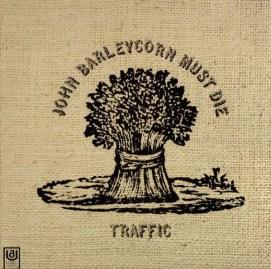 I must confess again that I was late to the party when it comes to Traffic, the creative British folk-jazz-rock group steered by the great Steve Winwood. Their first two records went under my radar, so my introduction to Winwood came on “Can’t Find My Way Home,” the acoustic gem he contributed to the “Blind Faith” LP in 1969 during a lull in Traffic’s career arc. In fact, Winwood’s next move was intended to be his first solo album, but he found himself missing the accompanying musicians he’d grown accustomed to, so he invited Traffic compadres Jim Capaldi and Chris Wood to the studio, and it became “John Barleycorn Must Die,” Traffic’s splendid third album. The infectious piano riff on the opening instrumental track “Glad,” the undeniable baritone sax lick on “Freedom Rider,” Winwood’s plaintive vocals on the line “Staring at the empty pages” — all these elements and more combine to make a delicious stew of jazz and rock and traditional English folk I feasted on throughout the summer and fall that year.
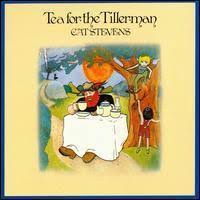 Born in London to parents of Greek and Swedish extraction, Steven Demetre Georgiou showed great promise as both a painter and musician at a young age. At 21, he contracted a case of tuberculosis that almost killed him, but his convalescence in the hospital surrounded by people dying gave him a new perspective on life and spirituality. Cat wrote more than 40 songs, most of which became the material that appeared on “Tea for the Tillerman” and its 1971 follow-up, “Teaser and the Firecat.” Both LPs are terrific, but I prefer “Tillerman” because the songs resonate with me more. “Father and Son” is musical perfection as a dialog hampered by disagreement, and in “Wild World,” which reached #11 on the US singles chart, Stevens tenderly warns his departing lady about the pitfalls and challenges ahead. “On the Road to Find Out” covers similar territory, and “Where Do the Children Play” bemoans the industrialization of the environment. Stevens sings these wonderful tunes in a distinctive voice that alternates effectively between ethereal and forceful.
 I’m betting very few of my readers are hip to this compelling album. I wasn’t introduced to it until four years later in a college dorm, with the aid of cannabis, as the artist no doubt intended. As one of the three principal players in Jefferson Airplane, Kantner brought earnest vocals and rhythm guitar, but mostly he brought songs of fantasy and rebellion. When the Airplane took a break in early 1970, Kantner gathered his many California kindred spirits and put together an extraordinary sci-fi concept album about hijacking an interstellar starship to abandon Earth and head in search of new life in distant galaxies. A bit far-fetched, perhaps, but there are some stunning songs and performances here. “Let’s Go Together” is a joyous tune of shared community and purpose, with Grace Slick’s soaring vocals in full control; “A Child is Coming” celebrates new life, featuring a duet between David Crosby and Kantner ; “Have You Seen the Stars Tonite” again feature Crosby on vocals and 12-string guitar; and “Starship” is the glorious finale. Don’t miss Jerry Garcia’s contributions on banjo and pedal steel guitar.
 It’s hard to imagine now, but this titanic double album of quintessential blues rock was neither a critical nor a commercial success upon release in November 1970. Since the breakup of Cream in late 1968, Eric Clapton had wanted to shun the limelight, working with Delaney & Bonnie and company as just a session guy. He used these same musicians on his debut solo LP in spring 1970, then continued with them throughout the summer, eventually convening in Miami to record the songs he’d been writing with keyboardist Bobby Whitlock. As they recorded in Miami that summer, the great Duane Allman happened to be in town for a gig, so Clapton attended the show and then invited Allman to sit in on the sessions. The resulting chemistry between the two guitar virtuosos made for some of the finest recordings in Clapton’s storied career, notably “Why Does Love Got to Be So Sad,” “Have You Ever Loved a Woman,” “Key to the Highway,” and of course the iconic title song. It’s interesting to note that “Layla” the single wasn’t a chart success until August 1972 when it reached #10 upon re-release.
 1970 brought us five new albums from the Fab Four: The final Beatles album (the underwhelming “Let It Be”); two bare-bones solo debuts from the two halves of rock’s greatest songwriting team (“McCartney” and “John Lennon/Plastic Ono Band”); Ringo’s mostly forgettable collection of standards (“Sentimental Journey”); and by far the best of the bunch, George’s sprawling triple album “All Things Must Pass.” Released just in time for Christmas and announced via the stunning international #1 hit “My Sweet Lord,” this album offered a cornucopia of marvelous songs, from “What Is Life” to “Isn’t It a Pity,” from “Let It Roll” to “Awaiting on You All,” from “I’d Have You Anytime” to “Wah-Wah.” It was recorded by “Wall of Sound” producer Phil Spector with the help of a dozen musical pals like Ringo, Eric Clapton, Gary Wright, Billy Preston, Dave Mason and members of Badfinger and Derek and the Dominos. Clearly, George had been stockpiling great tunes during the final Beatles years, and they all came spilling out to us here.