The old songs never end
I just love doing these occasional posts about lost classics.
Radio has always failed us. When it comes to keeping alive so many of the truly great songs of the ’60s, ’70s and ’80s that appeared on albums but never got the appropriate amount of appreciation, it was always up to us.
Some of these spectacular tracks appeared on well-known albums, and they were merely underexposed against their more popular brothers. But so many great tunes showed up on otherwise forgettable albums, and they were therefore in danger of being lost to the proverbial dustbin of history.
Until now.
One of my jobs here at Hack’s Back Pages is to shine a light on some of these amazing songs that escaped the attention of even the most ardent music fans of that period.
This week, I offer another dozen really strong recordings you should (and can) check out, via the Spotify list at the bottom of this entry.
****************
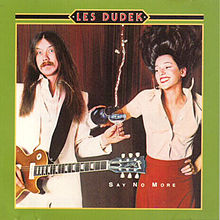 “Old Judge Jones,” Les Dudek, 1977
Dudek is unknown to all but the most dedicated rock enthusiasts. Neither the singles nor the albums released under his name have made a ripple in the Top 40 waters, but he has been present for some of the great tracks of the 1970s with The Allman Brothers Band, Steve Miller Band, Boz Scaggs, Maria Muldaur and more. Most notably, he’s the guy playing the harmonic lead guitar behind Dickey Betts on the 1973 huge hit “Ramblin’ Man.” Although his solo career went nowhere, his underrated 1977 LP “Say No More” included the infectious “Old Judge Jones,” which got some FM airplay at the time but deserves far wider exposure.
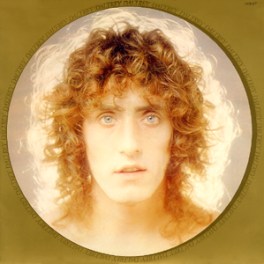 “Giving It All Away,” Roger Daltrey, 1973
The Who’s titanic lead vocalist could very possibly have had a strong solo career outside The Who, but he seemed to prefer working with Pete Townshend and his enigmatic rock operas and street anthems. Still, he dabbled in solo recordings through the years, beginning with “Daltrey,” recorded in early 1973 during a lull in The Who’s touring schedule, prior to the release of “Quadrophenia.” Daltrey had met struggling singer-songwriter Leo Sayer, who provided a batch of songs co-written with David Courtney, the best of which was the dramatic “Giving It All Away.” Daltrey’s powerful voice helped push the song to #5 in England, although it stiffed at #83 in the US. Still, if you were to put this tune on a playlist of Who tracks, it would fit in beautifully.
 “Midnight Wind,” John Stewart, 1979
Stewart was a California-born singer-songwriter who joined the folk group The Kingston Trio in 1961, then wrote the well-known “Daydream Believer,” a huge hit for The Monkees (#1) in 1967 and Anne Murray (#12) in 1979. Meanwhile, Stewart pursued a solo career bouncing around between multiple labels until he scored a hit in 1979 with the LP “Bombs Away Dream Babies.” The single “Gold” (“People out there turning music into gold”) went to #5, which utilized the vocals and guitar of Fleetwood Mac’s Stevie Nicks and Lindsey Buckingham, but even more impressive was his song “Midnight Wind,” which also featured Buckingham and Nicks and reached a respectable #28 here.
 “Roll Away the Stone,” Leon Russell, 1970
Leon Russell was a huge figure in ’60s rock, having played keyboards and handled arrangements on dozens of Top 40 hits as a member of the famed “Wrecking Crew” gang of L.A. session musicians. When he went out on his own, the masses didn’t exactly embrace him, but his work was widely admired by others, including Joe Cocker (“Delta Lady”), Rita Coolidge (“Superstar”), The Carpenters (“A Song for You”), George Benson (“This Masquerade”) and others, who turned his songs into mainstream hits. Elton John so worshipped Russell that he teamed up with him in 2010 on the #3 collaborative LP “The Union,” which demonstrates Russell’s considerable skills. His unmistakable vocal delivery on tracks like his early classic “Roll Away the Stone” made him an FM favorite.
 “Eyes of the World,” Grateful Dead, 1973
The Dead had their legendary “Deadheads” following, who guaranteed packed venues wherever they played in the 1970s and 1980s. Their albums, though full of great material, were never big sellers (except the #6 hit LP “In the Dark” with its #9 hit “Shades of Gray” in 1987). Back in 1973, the group’s otherwise unremarkable LP “Wake of the Flood” included the bonafide gem “Eyes of the World,” which The Dead continued to play in concert for many years afterwards. Jerry “Captain Trips” Garcia’s vocals and guitar are at their best on this marvelous song.
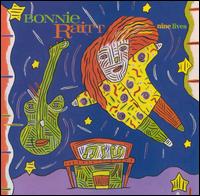 “Who But a Fool (Thief Into Paradise),” Bonnie Raitt, 1986
In the mid-1980s, Columbia Records chose to “clean house” of older artists whose work wasn’t selling as it once had, and Raitt, a reliable blues talent for a decade, was caught up in that purge. She had just completed an album, but it sat on the shelves for nearly three years before Columbia belatedly released it, retitled “Nine Lives.” It didn’t sell either, and she ended up changing to Capitol, where she won multiple Grammys for her “Nick of Time” LP in 1989. On “Nine Lives,” though, there’s a hidden beauty called “Who But a Fool (Thief into Paradise)” that mustn’t be allowed to escape attention any longer.
 “She Has Funny Cars,” Jefferson Airplane, 1967
In 1965, singer-songwriters Marty Balin and Paul Kantner worked their way through a few preliminary lineups for their band, The Jefferson Airplane, before settling on guitarist Jorma Kaukonen, bassist Jack Casady, drummer Spencer Dryden and singer Signe Anderson. They cut one record before Anderson left to raise a family, and her replacement was the fiery Grace Slick, who brought two killer songs with her — “Somebody to Love” and “White Rabbit.” While those two tracks still get major airplay on classic rock radio, the rest of the “Surrealistic Pillow” album is overlooked these days, which is a shame. In particular, “She Has Funny Cars,” the leadoff song, has the crucial elements of the Airplane’s trademark sound: Kaukonen’s guitar work and the Balin-Slick vocal interplay.
 “With My Face on the Floor,” Emitt Rhodes, 1970
This multi-talented instrumentalist got screwed by the record industry, plain and simple. He’d been part of a failed ’60s band called Merry-Go-Round, but he was still tied to A&M Records when he took matters into his own hands and recorded a batch of songs at home on his own equipment (way before that kind of thing was common). The demos were so good that ABC/Dunhill leaped on them, and the debut LP ended up at #29. But still, most people remained unfamiliar with his work, which is tragic. Check out the opening track, “With My Face on the Floor,” plus others like “Live Till You Die,” “Somebody Made for Me,” “Lullaby” and “Fresh as a Daisy.” They sound like a cross between Paul McCartney and Eric Carmen.
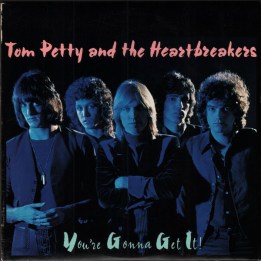 “Hurt,” Tom Petty and The Heartbreakers, 1978
The late great Tom Petty and his band were still struggling early in their career, trying to move beyond the minor success of “Breakdown” on their debut LP the year before. It wouldn’t be until the “Damn the Torpedos” album and its hit single “Refugee” that they would break into the big time in 1979. But meanwhile, their second album, the criminally underrated “You’re Gonna Get It!”, slipped by in 1978, despite being chock full of great songs like “I Need to Know'” and “Listen to Her Heart.” In my opinion, the most underrated track was “Hurt,” which deserves a place on any Petty setlist that’s being composed in the wake of his death in 2017.
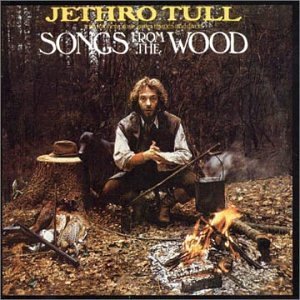 “Velvet Green,” Jethro Tull, 1977
Although Tull was known as a band with progressive rock complexities and hard rock leanings, they always had an acoustic side as well, thanks to leader Ian Anderson’s fondness for delicate melodies. The 1977 LP “Songs From the Wood” signaled a definitive left turn in that direction, with songs full of Elizabethan motifs and keyboard arrangements. “The Whistler” and the title song featured prominent flute passages, as did perhaps the album’s best track, “Velvet Green,” which offered erotic and pastoral lyrical phrases to complement the gentler music.
 “Living on a Thin Line,” The Kinks, 1984
Singer/frontman Ray Davies wrote virtually all of the songs in The Kinks’ lengthy catalog (1964-1995), from the early raucous “You Really Got Me” to the prissy Brit number “Sunny Afternoon” to the transgender huge hit “Lola.” But brother/guitarist Dave Davies wrote a handful, and “Living on a Thin Line,” his contribution to their 1984 LP “Word of Mouth,” is not only his best, but one of The Kinks’ best tracks as well. It has a wonderful groove, which saw a resurgence in 2001 when it was used to great effect in the celebrated “University” episode of “The Sopranos.”
“Skateaway,” Dire Straits, 1980 
The huge impact of Dire Straits’ 1978 classic “Sultans of Spring” seemed to color everything they did afterwards, at least for a while. But guitarist/songwriter Mark Knopfler had grander plans, and when he came up with the outstanding material that comprised 1980’s “Making Movies,” he was off and running, mostly due to the gorgeous “Romeo and Juliet” and the cinematic “Tunnel of Love.” Often forgotten is “Skateaway,” a fabulous pastiche about an alluring rollerblading girl who clearly mesmerizes the songwriter, to a point where we’re all a bit entranced by her.
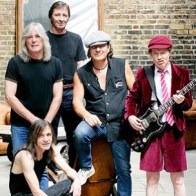
 One: Malcolm Young — co-founder, rhythm guitarist and chief songwriter of hard rock titans AC/DC — died at age 64 after a three-year battle with early-onset dementia. He was a dedicated professional, a commanding instrumentalist and a tireless performer whose name appears on 90 percent of AC/DC’s formidable catalog, which happens to rank among the best selling in rock music history.
 Two: Teen idol David Cassidy — lead singer and nationwide heartthrob of the 1970s TV show “The Partridge Family” and a recording/touring sensation in his own right — died at age 67, following complications from liver and kidney failure as well as dementia.
 AC/DC, in fact, have sold more than 150 million albums, ranking them in the top three most commercially successful acts of all time. This astounds me, simply because, while hard rock has a fiercely loyal following around the globe, a greater majority of the public are decidedly not enamored with AC/DC or other bands of their ilk.
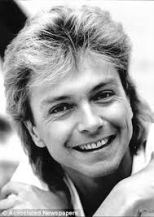 David Cassidy, meanwhile, had a shorter period of peak popularity (at least in the U.S.), but in 1971, his fan club had a bigger membership than The Beatles and Elvis Presley combined! In the pantheon of teen idols, from Fabian and Donny Osmond to Leif Garrett and Bobby Sherman, Cassidy arguable tops them all.
 When you look at it retrospectively, readers shouldn’t find this surprising. In both cases, I wasn’t part of their target market demographic. In 1970, when “The Partridge Family” debuted on TV and on the Top 40, I was 15, and already past the point where I might have been willing to listen to bubblegum teen-idol stuff. In 1979, when AC/DC exploded on American rock fans’ collective consciousness, I was 24, and pretty much past the period when I was receptive to the monolithic, ear-splitting sound of two-chord hard rock with shrieking vocals.
 Cassidy was the son of Hollywood actor Jack Cassidy, who helped pave the way for his son to pursue an interest in acting. He debuted in a forgettable Broadway play called “The Fig Leaves are Falling,” which was by all accounts a flop, but producers took note of the 17-year-old Cassidy and invited him to Los Angeles for some screen tests. Those led to parts on such late ’60s TV dramas as “Bonanza,” “Adam-12” and “Ironside,” and those, in turn, caught the attention of the producers of a new program based on the real-life family musical group The Cowsills. Noted actress Shirley Jones, who happened to be David’s stepmother, had been cast as the matriarch Shirley Partridge, and eventually Cassidy won the part of Keith Partridge.
 Naturally, he soon went solo, reaching the Top Ten in six countries with his cover of the ’60s pop anthem “Cherish” and the same-named LP. His concert appearances with a backup band of seasoned pros were packed with tweens and teens, and he quickly matured into a polished performer and crowd pleaser.
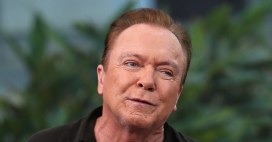 But he soon tired of his teen idol status and hoped to be taken more seriously by the hip rock culture, even granting an in-depth, revealing and controversial (for its time) interview that put him and his naked body on the cover of Rolling Stone. But it didn’t work. The fact that he simply couldn’t shake his original image frustrated him greatly, and it helped exacerbate an ever-increasing abuse of booze and drugs, which haunted him for most of the rest of his life. He resurfaced periodically to ravenous crowds in various comebacks and nostalgia tours in the ’80s and ’90s, but by 2010 things spiraled out of control for him as he was charged with multiple DUIs and his health deteriorated.
 Conversely, AC/DC, Australia’s most popular export, had no such immediate adulation here in the U.S. They were at first shunned by their American label, even as they built enthusiastic support at home and in Europe. It wasn’t until the band’s fifth LP, 1979’s “Highway to Hell,” that they caught on in the U.S., and their fame exploded like a California wildfire. With Bon Scott caterwauling away on vocals, Angus Young contributing fiery lead guitar solos and brother Malcolm providing the steady rhythm guitar, AC/DC vaulted into the Top 20 album charts.
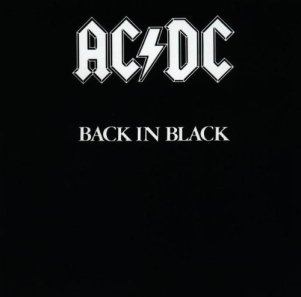 juggernaut hard-rock manifesto that went on to sell an incredible 50 million copies worldwide (22 million copies in the U.S.), making it the second-highest-selling album of all time (after Michael Jackson’s “Thriller”). Two more Top Five LPs quickly followed — “Dirty Deeds Done Dirt Cheap” (a reissue of the Australian 1976 album with Scott) and 1981’s “For Those About to Rock” — and AC/DC found themselves among the hottest concert draws in the world, including the U.S.
 himself into a rehab program and cleaned up his act, returning to the band’s lineup after just an eight-week absence. To his credit, Young maintained sobriety for the rest of his life, and he remained the reliable linchpin on stage for several tours in the 1990s and 2000s, and as the band’s most consistent songwriter.
