The blues had a baby and they named it rock and roll
“If you don’t know the blues, there’s no point in picking up the guitar and playing rock and roll, or any other music, for that matter.” — Keith Richards
When people are feeling down and out, they get depressed. They get sad. It happens to everyone. They get what has often been known as The Blues.
How do we deal with these negative feelings? As is often the case, we turn to music to put salve on our psychic wounds. We just sing. We just play the guitar, or fiddle, or harmonica, and let the music take us to a better place.
 And yet, at its purest sense, blues music has been largely ignored by the mainstream public at large. For instance, there aren’t more than a handful of truly blues songs that have found their way on to the Top 40 pop charts. Back in 1958, Eddie Cochran’s smoldering cover of “Summertime Blues” reached #8 on the pop charts, and The Who’s live version ended up at #27 in 1970. But those are exceptions to the rule.
Still, blues has played a pivotal role in the evolution of rock music, and most major rock bands have included pure blues tunes in their repertoire. Witness “I Want You (She’s So Heavy)” or “For You Blue” by The Beatles, or “Roadhouse Blues” by The Doors, or “One Way Out” by The Allman Brothers, or “Black Limousine” by The Rolling Stones, even “Steamroller” by James Taylor.
Blues music is soulful. It’s full of deep emotion. It attempts to address the pain of those who suffer, yet it gives hope and support as well. And it’s important to acknowledge the fact that the blues emerged from the Southern U.S. cotton fields, where slaves and indentured blacks toiled, looking for a break in their bleak existence. They found solace in song, and put melody, rhythm and words to their misery.
The first appearance of the blues is usually dated after the end of the Civil War, between 1870 and 1900, a period that also saw the rise of so-called “juke joints” where blacks went to listen to music and dance after a hard day’s work.
 As blues guitar legend B.B. King put it:
“Blues was started by the slaves, and I think everyone thinks it should all be sad. But even the slaves had fun with it. Blues began out of feeling misused, mistreated, feeling like they had nobody to turn to. But blues don’t have to be sung by people from Mississippi, like me. There are people having problems all over the world.”
Icons like Robert Johnson, Ma Rainey and Bessie Smith were the first to record early blues songs in the 1920s in the Delta, at the same time country legends were doing the same thing in Memphis and elsewhere. The two genres have had a lot in common, and have merged many times in their mutual evolution. In fact, in the first half of the 20th Century, blues was known as “country blues,” played on acoustic guitars, harmonicas and pianos. Later, after blacks migrated to St. Louis, Chicago and other Northern cities, “urban blues” developed, which featured electric guitars, basses, organs and brass instruments.
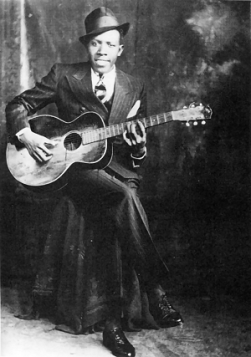
Robert Johnson
But let’s really look at The Blues. Let’s look at Sonny Boy Williamson (“Bring It on Home,” “Don’t Start Me to Talkin’,” “Good Morning Little Schoolgirl,” “One Way Out”), and Lightnin’ Hopkins (“Baby Please Don’t Go”), and Big Bill Broonzy (“Key to the Highway”), and Willie Dixon (“Spoonful,” “Hoochie Coochie Man,” “Little Red Rooster”), and so many other legends who wrote and played heartfelt songs that were popular not only in blues circles at the time but were later interpreted to greater success by others like Cream, Sam Cooke, Johnny Winter, Derek and the Dominos, Steppenwolf, Dave Mason and The Doobie Brothers.
We ought to thank the sailors on the postwar merchant ships who brought early blues records with them on their long voyages to England, where youngsters like John Lennon, Mick Jagger and Eric Clapton got their hands on them and had a spiritual awakening. They formed bands, and cranked out electric versions of these same blues — records like The Stones’ “Not Fade Away” and The Beatles’ “Dizzy Miss Lizzie” and “Bad Boy.”

Ma Rainey
“When we started playing in London in 1962,” notes Keith Richards, “we started off with Chicago blues. If you wanted stardom and fame, clearly that was not the way to go.”
By the late ’60s, American musicians had also become reacquainted with the blues, and they joined the blues revival: Canned Heat, Janis Joplin, Paul Butterfield, Taj Mahal, and so on. Still, it was the Brits who continued to be the main source of blues music interpretations, thanks to artists like Cream, Led Zeppelin and Jeff Beck.
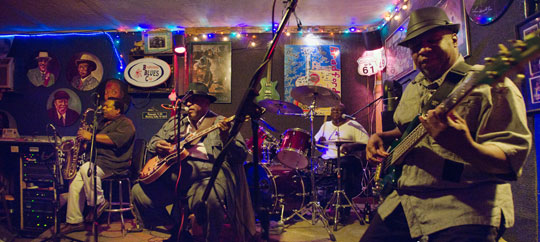
Here’s the thing about The Blues: The best blues you’ve heard, or will ever hear, is not in some domed stadium, arena or large venue. It will come instead in some dive joint down a dark street in some sketchy neighborhood, where seasoned veterans will play blues music all night long.

Muddy Waters
Perhaps that’s why many music lovers I know have only a small window of appreciation for the blues. “I’ll enjoy two or three songs, but then I want something else,” says my wife. Me, I’d be happy to sit in that blues club and groove along until four in the morning.
Blues artists have always seemed to be satisfied cruising along just under the radar, gaining just enough attention for people to keep packing the clubs and buying an album or two, but not necessarily seeking top-of-the-charts fame.
I’d like to call out the blues music artists, and their albums, that I believe are the ones you should explore. These are blues legends, or more recent artists who have embraced blues music and are worthy of your consideration.
 Eric Clapton has probably done more to promote the blues than anyone in the music industry. His work with Cream (1966-1969) revitalized names like Willie Dixon (“Spoonful”), Albert King (“Born Under a Bad Sign”), Chester Burnett (“Sitting on Top of the World”), and Robert Johnson (“Crossroads”). And the “Layla” album, where he played in tandem with Duane Allman, is one of the best blues albums of all time (“Key to the Highway,” “Have You Ever Loved a Woman”). In his solo career, he explored many non-blues forms, but he always returned to the blues, his true love. His bluesiest albums to check out: John Mayall’s Bluesbreakers “Bluesbreakers with Eric Clapton” (1965), Cream’s “Disraeli Gears” (1967) and “Wheels of Fire” (1968), Derek & the Dominos’ “Layla” (1970). Solo albums: “Just One Night” (1980), “Money and Cigarettes” (1983), “Unplugged,” (1992), “From the Cradle” (1994), “Riding With the King” (2000), “Me and Mr. Johnson” (2004).
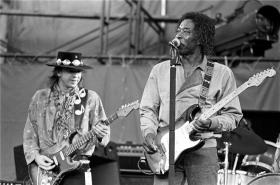
Stevie Ray Vaughan (left) with Buddy Guy
Stevie Ray Vaughan was the heir apparent to the blues guitar throne in the late 1980s. He emerged from an Austin, Texas, scene with smoldering tracks like “Texas Flood” and “Pride and Joy,” and even had the audacity to cover Jimi Hendrix’s “Voodoo Child (Slight Return)”. His work made him an attraction to stars like David Bowie, who featured him on his monumental “Let’s Dance” LP in 1983. Vaughan died in a freak helicopter crash in 1990, just as his career was gaining momentum. Albums to check out: “Texas Flood” (1983), “Soul to Soul” (1985), “In Step” (1989).
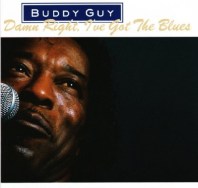 Buddy Guy is a true legend, and a man Clapton describes as “the best blues guitar player ever, bar none.” Now 81, Guy has been an explosive force in concert for more than 60 years, and has influenced most of the better known guitarists in the business. Check out “Damn Right I’ve Got the Blues” (1991).
Jimmy Page, first with The Yardbirds and then Led Zeppelin, has been at the top of everyone’s list of great blues guitarists, and Zeppelin’s debut “Led Zeppelin” (1969) is the best place to hear it.
John Lee Hooker was a towering blues guitarist and songwriter from his teens in the early ’30s until his death in 2001. He was a multiple Grammy winner and a major influence on blues music for seven decades. Try “The Healer” (1989) and “Mr. Lucky” (1991).
Jimi Hendrix recorded only two pure blues songs on his official releases — “Voodoo Chile” and “Red House” — but he did more to reinvent the blues than any guitarist in history. “Are You Experienced?” (1967) and “Electric Ladyland” (1968) showcase Hendrix’s unique style of blues-based originals.
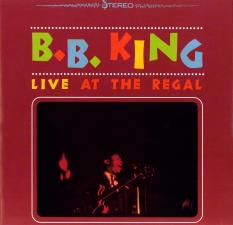 BB King, rightly dubbed “King of the Blues” in most music polls, lived to the ripe age of 89, and continued performing upwards of 250 shows a year right up until the end in 2015. His string-bending guitar style influenced dozens of electric blues guitarists who followed. I recommend “Live at The Regal” (1965) and “Completely Well” (1969), and his collaboration with Clapton, “Riding With the King” (2000).
Peter Green, founder of the venerable Fleetwood Mac, was in charge of the group for its first three years, when they were known as Britain’s best blues band. It was Green’s outstanding blues guitar and songwriting that put them at the top of the charts there. Check out “Peter Green’s Fleetwood Mac” (1968) and “Mr. Wonderful” (1968).
 Duane & Gregg Allman are among the top two or three blues guitarists and singers, respectively, in the business. Duane died at only 24 but laid down some of the best blues recordings ever in his short life. Gregg just died this year, and contributed great vocals, organ and songwriting throughout his lengthy career. Check out “Live at Fillmore East” (1971), “Eat a Peach” (1972) and “Laid Back” (1973).
Joe Bonamassa was a guitar prodigy, playing electric guitar before he entered kindergarten! Now 40, Bonamassa puts on a virtual guitar clinic with every performance. He has such a passion for the blues that he devotes time and treasure to a non-profit called Keeping the Blues Alive Foundation, which funds music scholarships and music education all over the country. I would recommend “Beacon Theater: Live From New York” (2012) and “Blues of Desperation” (2016).
Janis Joplin had perhaps the most dynamic blues voice of all, but we only got to hear it for a few years. Fortunately, records like “Cheap Thrills” (1968) and “I Got Dem Ol’ Kozmic Blues Again Mama!” (1969) captured her spine-tingling vocals at their best.
John Mayall was and still is a sort of “father figure” to blues musicians from 1960 on. Consider that Clapton, Green, and The Stones’ Mick Taylor all spent time as guitarists for Mayall’s band The Bluesbreakers. “John Mayall’s Bluesbreakers With Eric Clapton” (1965) is an absolute must, as are “The Turning Point” (1969) and “Chicago Line” (1988).
 Jeff Beck is still blowing people’s minds today at age 73 with his innovative guitar playing. While he also delved into jazz fusion and progressive rock, he cut his teeth on the blues, as evidenced by his work with The Yardbirds on “Roger the Engineer” (1966) and his stunning solo debut, “Truth” (1968).
John Mayer writes beautiful melodies and sings them with a sweet voice, but until you see him live, you may not realize what a phenomenal blues guitarist he is. The best album to illustrate this is “Where the Light Is: Live in Los Angeles” (2008).
Paul Rodgers, former lead singer of Free and Bad Company, was nominated for a Grammy for his superlative album “Muddy Water Blues: A Tribute to Muddy Waters” (1993), which features some of the top guitarists guesting on Waters’ best songs.
Robert Cray, starting in the mid-’80s and continuing to this day, has released new blues albums every couple of years, highlighting his smooth blues guitar work and vocals. “Strong Persuader” (1986) and “Don’t Be Afraid of the Dark” (1988) are excellent LPs from his strong catalog.
 Jonny Lang was only 15 when he astounded blues music lovers with his debut LP “Lie to Me” (1997). He continues to amaze concertgoers with his talents on blues guitar.
The Rolling Stones, for more than 50 years, have wanted to make a blues album, playing the music they did when they were just starting out. They finally did, and it’s a revelation: “Blue and Lonesome” (2016).
While blues music only occasionally shows up at the top of the pop charts, and its popularity waxes and wanes over the years, it’s durable. There’s always a place for the blues. In a 1968 interview, Willie Dixon was philosophical about the role that the blues play in the larger musical picture: “The blues are the roots, and the other musics are the fruits. It’s better keeping the roots alive, because it means better fruits from now on. The blues are the roots of all American music — country, jazz, rock. As long as American music survives, so will the blues.”
 as my friend Paul cranked it up on his stereo that fine summer day. My first impression was, wow, there was SO much going on! New instruments, intriguing sound effects, and an insanely broad variety of musical genres, including rock, big band, vaudeville, jazz, blues, chamber music, circus, music hall, avant-garde, Indian…
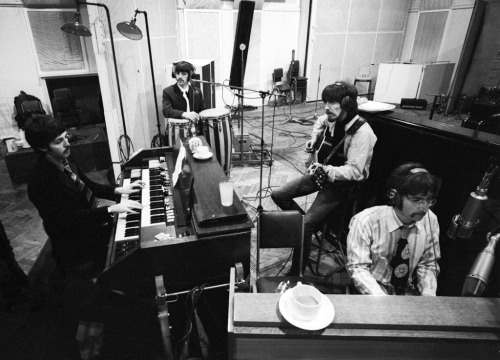 intended to, and couldn’t, be performed live. Producer George Martin explained, “These songs were designed to be studio productions, using new recording techniques and electronic possibilities that gave them the ability to paint sound rather than photograph it. And that was the difference.”
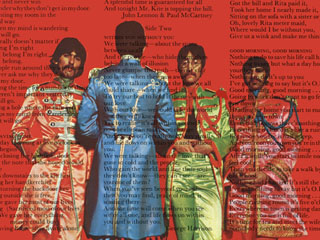 album seemed to change everything: It made the album the pre-eminent musical format instead of the single; it made the inclusion of printed lyrics a commonplace feature; it made it okay to create music in the studio that wasn’t likely to be recreated live on stage. Said Martin in 2007: “‘Sgt. Pepper’ was a musical fragmentation grenade, exploding with a force that is still being felt. It grabbed the world of pop music by the scruff of the neck, shook it hard, and left it to wander off, dizzy but still wagging its tail.”
 made an enormous impact on cover design from then onward. No longer would album covers be designed by lame record-company hacks. It would now be a new canvas on which the younger generation’s artistic upstarts would share their visions.
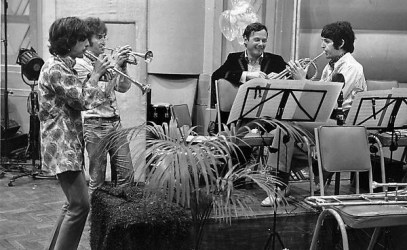 It must be mentioned that “Sgt. Pepper” would have been significantly better had it included the first two tracks recorded for it, “Strawberry Fields Forever” and “Penny Lane.” These beauties were the first two songs recorded in November 1966, but EMI Records insisted on releasing them as a double A-side single several months in advance of the LP. Because The Beatles had a tradition of never putting their singles on the subsequent album (at least in Britain), “Strawberry Fields” and “Penny Lane” were omitted. Personally speaking, I’d like to imagine the album with these two extraordinary songs in place of lesser tracks like “When I’m Sixty-Four” and “Good Morning Good Morning.”
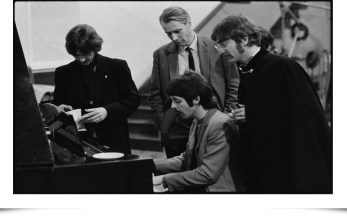 “Getting Better”
 “Being for the Benefit of Mr Kite”
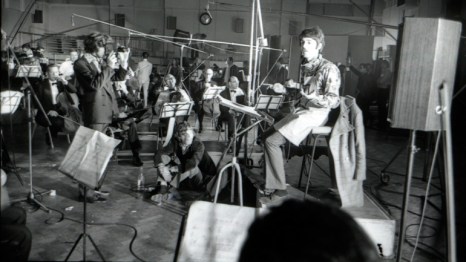 morning routine every school day (“Woke up, fell out of bed”), and they found a crafty way of merging the two into one amazing piece.
 Hack's Back Pages