Gonna sit down in the kitchen, fix me something good to eat
Everybody needs love, so it’s not surprising it’s probably the number one topic for popular song lyrics. Everybody needs food too, so it stands to reason there would be tons  of songs about food as well, but that’s just not the case.
Rock bands, by and large, have rarely written any songs that mention food in the title, let alone as the focal point of the lyrics. It seems that most times you encounter song lyrics about food, it’s a whimsical country tune, and it’s more likely to be about a Southern guy or gal who refers to the other by a food-oriented nickname!
Consequently, the songs about food I’ve compiled here reflect those tendencies. The first few are examples of songs that mention food in a euphemistic way, while the rest actually celebrate the foods themselves.
Eat up!
***************
“Apples Peaches Pumpkin Pie,” Jay & The Techniques, 1967
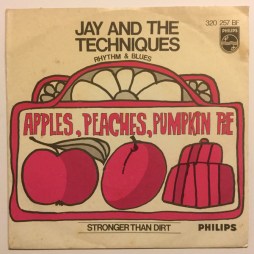 Songwriter Maurice Irby Jr. came up with this catchy tune in which the title really has nothing to do with the food items mentioned. “I was working on lyrics while sitting in a diner, and I saw ‘Apple, peach, pumpkin pie’ listed as dessert choices on the menu,” he recalled. “I thought the phrase rolled off the tongue so nice. I just made ’em plural and used it as the title.” The recording of it by Jay and The Techniques zoomed to #6 in the summer of 1967: “Apples peaches pumpkin pie, you were young and so was I, now that we’ve grown up, it seems you just keep ignoring me, I’ll find you anywhere you go, I’ll follow you high and low, you can’t escape this love of mine anytime…”
“Lollipop,” The Chordettes, 1958
 The Wisconsin-based female choral quartet known as The Chordettes got their start singing traditional folk music, but by the mid-’50s, they chose to focus on close-harmony tunes sung a cappella. They had eight Top 20 chart entries between 1954-1961, but their two biggest claims to fame were the #1 smash “Mr. Sandman” in 1954 and the #2 hit “Lollipop” in 1958, which uses the popular candy as a nickname for a boyfriend: “Call my baby lollipop, tell you why, his kiss is sweeter than an apple pie, and when he does his shaky rockin’ dance, man, I haven’t got a chance, I call him, lollipop, lollipop…”
“Ice Cream Man,” Tom Waits, 1973
 Waits’ brilliant debut LP “Closing Time” is full of ballads and mournful melodies, but one exception is the upbeat ditty “Ice Cream Man,” in which he plays the role of a street vendor offering literal and/or figurative ice cream treats to the young lady he’s wooing: “I’ll be clickin’ by your house about two forty-five, sidewalk sundae, strawberry surprise, I got a cherry popsicle right on time, a big stick, mama, that’ll blow your mind, ’cause I’m the ice cream man, I’m a one-man band, yeah, I’m the ice cream man, honey, I’ll be good to you…”
“Gravy (For My Mashed Potatoes),” Dee Dee Sharp, 1962
 In 1962, R&B singer Sharp was a sensation with five Top Ten singles, two of which capitalized on the popular Twist-like dance move known as the Mashed Potato, where dancers would grind their feet into the dance floor as if mashing potatoes. In the lyrics to “Gravy,” Sharp says she needs more than just dancing, she needs romancing as well: “I dig this twistin’ but I want some more, there’s somethin’ missin’ while we’re on the floor, come on baby, I want some gravy, a little kissing’s what I’m waiting for, gimme gravy on my mashed potatoes…”
“Pulling Mussels (From a Shell),” Squeeze, 1980
 Chris Difford, Squeeze’s lyricist partner with songwriter Glenn Tilbrook, said he wrote the words to this tune almost as a journal entry, telling about his vacation day by the shore as a teenager in his native England. “It’s not about food, not really. It’s about being horny with someone at summer camp, which, let’s be honest, was beautiful and true the first time we encountered it. It’s a sweet memory about finding something beautiful and pure in the middle of a sea of banality”: “Behind the chalet, my holiday’s complete, and I feel like William Tell, Maid Marian on her tiptoed feet pulling mussels from a shell…”
“Beans and Corn Bread,” Louis Jordan, 1949
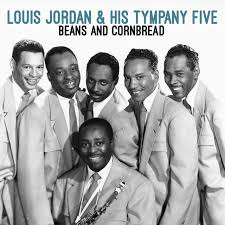 Jordan and his jump-blues band The Tympany Five were hugely popular in the juke joints as well as some of the tonier clubs in bigger cities when they could get gigs there. Many of the early rock and roll pioneers credit Jordan for writing songs that inspired them to compose their own brand of irresistible dance music. This one used food pairings to emphasize the need for couples to stick together: “Beans and corn bread, hand-in-hand, that’s what beans said to corn bread, ‘We should stick together, hand in hand, we should hang out together like wieners and sauerkraut, we should stick together like hot dogs and mustard…'”
“Sweet Potato Pie,” James Taylor, 1988
 North Carolina-born Taylor no doubt ate his share of sweet potato pie in his youth. For his high-spirited song by that name from his 1988 album “Never Die Young,” Taylor sings about a girl the narrator knew years earlier who ends up as his delicious ladyfriend decades later: “I’m glad I had to wait awhile, a little bit too juvenile, I needed to refine my style, a silk suit and a crocodile smile, so let the whole damn world go by ’cause I just want to testify, from now on, it’s me and my sweet potato pie…”
“Cheeseburger in Paradise,” Jimmy Buffett, 1978
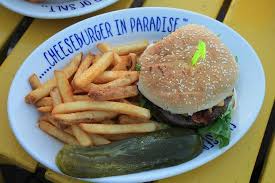 Buffett’s famous tune, which became the name of his lucrative restaurant chain as well, speaks of how it’s no fun dieting and eating healthy foods all the time, not when what he really wants is a good old-fashioned American favorite, which he describes in delirious detail: “I like mine with lettuce and tomato, Heinz 57 and French fried potatoes, big kosher pickle and a cold draft beer, well, good god almighty, which way do I steer for my cheeseburger in paradise?…”
“Jambalaya (On the Bayou),” Hank Williams, 1952
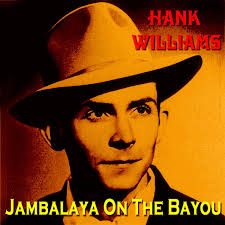 Jambalaya is a spicy, Louisiana-based dish of sausage, crawfish vegetable and rice, and Williams’ song honoring its savory flavor was written to be delivered as a Cajun two-step tune. He chose to dilute it somewhat to make it more palatable to a mass market, which was the right move — it held the #1 spot on the country charts for 13 weeks in 1952, and crooner Jo Stafford’s cover peaked at #3 on the pop charts that same year. Other major artists covering the song in the years since include Fats Domino, Elvis Presley, Jerry Lee Lewis, John Fogerty, The Carpenters, Emmylou Harris and Van Morrison: “Jambalaya, crawfish pie and fillet gumbo, for tonight I’m gonna see my cher ami-o, pick guitar, fill fruit jar and be gay-o, son of a gun, we’ll have big fun on the bayou…”
“Savoy Truffle,” The Beatles, 1968
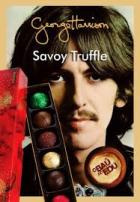 George Harrison wrote this track from “The White Album” about his pal Eric Clapton, who had such an addiction to sweets that it caused him plenty of trips to the dentist to have teeth pulled. Harrison mentions several yummy European candy specialties that ultimately made his friend’s life miserable: “Creme tangerine and montelimar, a ginger sling with a pineapple heart, a coffee dessert, yes, you know it’s good news, but you’ll have to have them all pulled out after the Savoy truffle…”
“Coconut,” Harry Nilsson, 1972
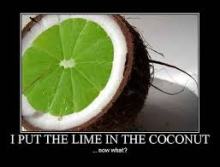 This was essentially a novelty tune that made it all the way to #6 in the summer/fall of 1972. Nilsson wrote it as a doctor’s whimsical remedy for a hangover, combining coconut and lime in a big glass: “You put the lime in the coconut, you drink ’em both together, put the lime in the coconut, then you feel better, put the lime in the coconut, drink ’em both up, put the lime in the coconut, and call me in the morning…”
“Banana Pancakes,” Jack Johnson, 2005
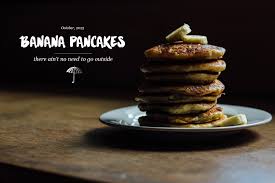 The hedonistic life of surfer Jack Johnson comes through in much of his music, which encourages enjoying life’s pleasures, laying around in a hammock, on the beach, or in bed. Johnson urges his girlfriend to remain in the sack on a cool cloudy weekday while he makes her a plate of her favorite breakfast: “Baby, you hardly even notice when I try to show you this song is meant to keep ya from doing what you’re supposed to, waking up too early, maybe we can sleep in, make you banana pancakes, pretend like it’s the weekend now…”
“Polk Salad Annie,” Tony Joe White, 1969
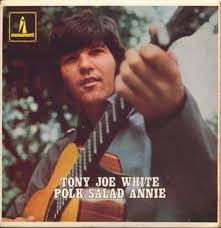 Pokeweed grows in the wild in the woods down South, and White recalled often eating cooked dishes made of it “when there wasn’t much else in the fridge.” Sallet is an old English word that means “cooked greens,” not to be mistaken for “salad,” but in fact, White’s record company did just that when they changed his song from “Poke Sallet Annie” to “Polk Salad Annie.” It reached #8 in 1969: “Down there we have a plant that grows out in the woods and in the fields, looks somethin’ like a turnip green, and everybody calls it poke sallet, poke sallet, used to know a girl lived down there, and she’d go out in the evenings and pick her a mess of it, carry it home and cook it for supper..”
“Butterbean,” The B-52s, 1983
 Hailing from the college town of Athens, Georgia, was the quirky punk/New Wave band known as The B-52s, known especially for their dance club classics, “Love Shack” and “Good Stuff.” Early on, songs like “Rock Lobster” and “Butterbean” were more the order of the day, and the latter celebrated the traditional Southern snack favorite: “Gramps and grannies, kids in their teens, junkyard dogs and campus queens, yeah, everybody likes butterbeans… Pass me a plate-full, I’ll be grateful, 1-2-3-4, pick ’em, hull ’em, put on the steam, that’s how we fix butterbeans…”
“RC Cola and a Moon Pie,” NRBQ, 1972
 NRBQ (New Rhythm & Blues Quartet) was a Kentucky-based band founded in 1966 that merged rock, pop, jazz, blues and Tin Pan Alley styles, playing mostly small clubs but occasionally opening for bigger bands like Poco or R.E.M. A concert favorite was “RC Cola and a Moon Pie,” an old Bill Lister tune from the Fifties about Royal Crown Cola (a regional competitor of Coke and Pepsi) and a Moon Pie (essentially a s’more — two graham crackers with marshmallow in between, covered in chocolate). It was known as “a working man’s lunch” throughout the South: “I don’t want no cornbread, and I can do without peas and rice, I don’t want no carrots or no real hot pizza slice, but everything’s gonna be all right with an RC Cola and a moon pie…”
*************
Honorable mention: “One Bad Apple,” The Osmonds, 1971; “Tangerine,” Led Zeppelin, 1970; “Strawberry Fields Forever,” The Beatles, 1967; “Tupelo Honey,” Van Morrison, 1971; “Sugar Sugar,” The Archies, 1969; “Blueberry Hill,” Fats Domino, 1957; “30,000 Pounds of Bananas,” Harry Chapin, 1974; “Dixie Chicken,” Little Feat, 1973; “Buttered Popcorn,” The Supremes, 1961.
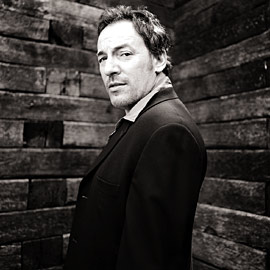 ommercial dud. He and the E Street Band had parted ways in the late ’80s, and The Boss and his wife had turned their attentions to raising a family.
 much-needed shot in the arm for his legions of fans, many of whom were still grieving huge personal loss.
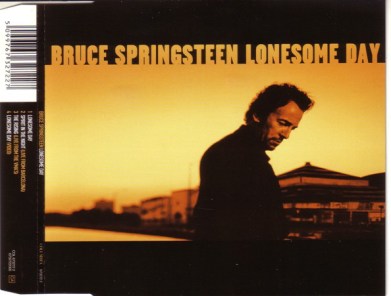 you someplace higher, somewhere up the stairs into the fire…”
 Young chose to focus on the amazing, harrowing story of the brave souls on United Flight 93 who stormed their hijacked cockpit and prevented the plane from reaching its intended target in Washington, D.C.: “I know I said I love you, I know you know it’s true, I’ve got to put the phone down and do what we got to do, one’s standing in the aisle way, two more at the door, we’ve got to get inside there, before they kill some more, time is runnin’ out, let’s roll…”
 Etheridge also addressed those on United Flight 93, with an added edge. One of the heroes on board was a gay man who had faced injustices that prevented his ability to marry or be a school teacher. Etheridge defiantly asked us to consider the freedoms and rights that are still denied to some of our citizens: “He stood up on a Tuesday morning, in the terror, he was brave, and he made his choice and without a doubt, a hundred lives he must have saved, and the things you might take for granted, your inalienable rights, some might choose to deny him, even though he gave his life, stand up, America, wake up, America…”
 This Chicago-based heavy metal band found controversy when they filmed a riveting video for this song that appeared to be a re-creation of the Ground Zero area (view it on YouTube at your own risk). The lyrics take Evil’s point of view: “Another nightmare about to come true will manifest tomorrow, another love that I’ve taken from you, lost in time, on the edge of suffering, another taste of the evil I breed will level you completely, bring to life everything that you fear, live in the dark, and the world is threatening, let me enlighten you, this is the way I pray…”
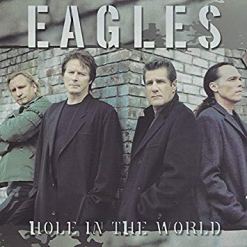 As part of the 2003 release of the 2-CD package “The Very Best of The Eagles,” Don Henley and Glenn Frey wrote this new track to weigh in with their thoughts on 9/11: “They say that anger is just love disappointed, they say that love is just a state of mind, but all this fighting over who will be anointed, oh, how can people be so blind?, there’s a hole in the world tonight, there’s a cloud of fear and sorrow, there’s a hole in the world tonight, don’t let there be a hole in the world tomorrow…”
 Influenced by British prog rock bands like Yes and Pink Floyd, the Boston-based Neo-progressive group Dream Theater turned a few heads with its 2005 release “Octavarium.” Of particular interest was the 10-minute opus “Sacrificed Sons,” with lyrics by vocalist James LaBrie that recalled the 9/11 attacks: “Heads all turning towards the sky, towers crumble, heroes die, who would wish this on our people and proclaim that His will be done, scriptures they heed have misled them, all praise their sacrificed sons…”
 Stevie Nicks wrote this poignant piece less than two weeks after 9/11, but it didn’t see the light of day until Fleetwood Mac reconvened to record the 2003 LP “Say You Will.” Nicks reflected on how difficult it can be to overcome deep heartbreak: “What I saw on this journey, I saw history go down, I cannot pretend that the heartache falls away, it’s just like a river, ooh, it’s never ending, I cannot pretend that the heartache falls away, because it’s just like a river, it’s never ending…”
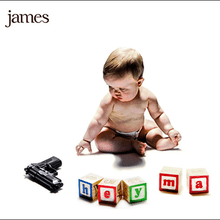 The British band James offered another perspective, looking at 9/11 as a fork in the road where unfortunate choices with long-lasting global consequences were made: “Now, the towers have fallen, so much dust in the air, it affected your vision, couldn’t see yourself clear, from the fall came such choices even worse than the fall, there’s this chain of consequences, within, without, action, cause and reaction never follows to plan… Please don’t preach me forgiveness, you’re hardwired for revenge, war is just about business, within, without…”
 Veteran songwriter Hiatt came up with this tearjerker on his 2011 LP “Dirty Jeans and Mudslide Hymns,” on which he ruefully recalled the mood of New Yorkers when their city became the focal point of the 9/11 attacks: “And the daylight fell dark, F-16s over Central Park, when New York had her heart broke, we were dazed in the streets, from the blood and dust and heat, when New York had her heart broke…”
 Jackson found it hard to write a song about how he felt in the wake of 9/11, but he forged ahead and came up with this moving track. After debuting it at the Country Music Awards less than eight weeks after 9/11, it was released as a single, topping the country charts for five weeks and reaching #28 on the pop charts. The lyrics present a series of thought-provoking questions: “Did you stand there in shock at the sight of that black smoke risin’ against that blue sky? Did you shout out in anger, in fear for your neighbor, or did you just sit down and cry? Did you weep for the children who lost their dear loved ones, and pray for the ones who don’t know? Did you rejoice for the people who walked from the rubble, and sob for the ones left below?…”
 Always a political conservative, Keith came up with this inflamed diatribe that stoked the rage amongst his audience and soared to #1 on the country charts upon its release in May 2002. He has said it was written in support of the U.S. soldiers in Afghanistan, but it was interpreted to reflect his generally hawkish views: “Now this nation that I love has fallen under attack, a mighty sucker punch came flyin’ in from somewhere in the back, soon as we could see it clearly through our big black eye, man, we lit up your world like the 4th of July… Oh, justice will be served and the battle will rage, this big dog will fight when you rattle his cage, and you’ll be sorry that you messed with the U.S. of A, ’cause we’ll put a boot in your ass, it’s the American way…”
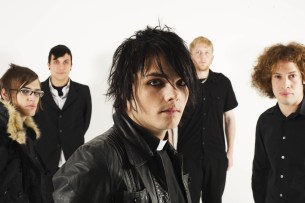 Gerard Way was so saddened and outraged by the events of 9/11 that he was inspired to form the emo/post-hardcore punk group My Chemical Romance. The debut LP “I Brought You My Bullets, You Brought Me Your Love” includes “Skylines and Turnstiles” with its brutally graphic lyrics: “Steel corpses stretch out towards an ending sun, scorched and black, it reaches in and tears your flesh apart as ice cold hands rip into your heart, that’s if you’ve still got one that’s left inside that cave you call a chest, after seeing what we saw, can we still reclaim our innocence?…”
 Indie rock singer/songwriter Vanderslice produced ten albums out of his San Francisco-based studio/record company. His 2005 album “Pixel Revolts” had a decidedly political bent, with several tracks about 9/11 and the Iraq War, especially “Exodus Damage” with its highly provocative lyrics: “So the second plane hit at 9:02, I saw it live on a hotel TV, talking on my cell with you, you said this would happen, and just like that, it did, wrong about the feeling, wrong about the sound, but right to say we would stand down, an hour went by without a fighter in the sky, you said there’s a reason why, so tell me now, I must confess, I’m not sick enough to guess…”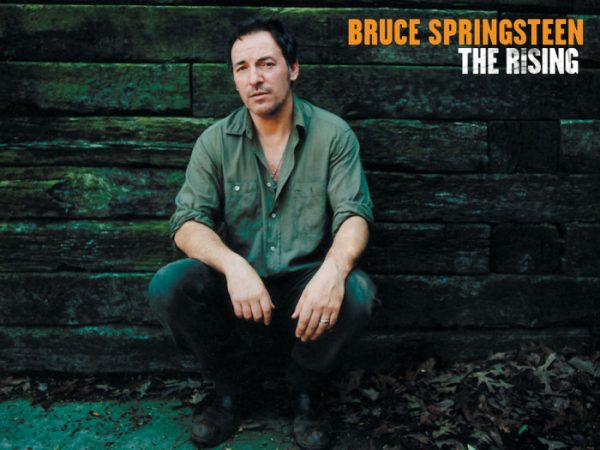
 Hack's Back Pages