Time time time, see what’s become of me
“The only reason for time is so that everything doesn’t happen at once.” Albert Einstein
Last weekend, just as the clock was about to strike 2:00 a.m. Sunday morning, instead it went magically to 3:00 a.m. WTF. Who knows where the time goes? Does anybody really know what time it is? Does anybody really care?
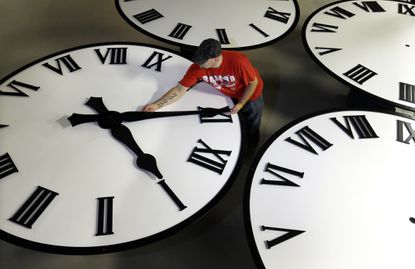
Daylight savings time (DST), this curious semi-annual ritual of moving our clocks forward one hour each spring, then backward one hour each fall, has outlived its usefulness, if indeed it ever had any.
First officially adopted by Germany and Austria in 1916 during World War I, DST arguably made sense then because more daylight meant less use of artificial light, thereby purportedly saving energy.
But modern American society, with its ubiquitous computers, TV screens and air conditioning, pays no mind to whether the sun is up or not. The amount of energy saved in this country from converting to DST is negligible at best.
Moreover, changing the time, even if it is only by one hour, disrupts our body clocks, our circadian rhythm, and it can take up to two weeks to re-establish our sleep patterns. For most people, the resulting fatigue is simply an inconvenience, but for others, the time change can result in more serious consequences, including an increase in auto accidents and workplaces injuries, as well as depression and suicide.
There are proposals being discussed in state legislatures to end this nonsense by adopting a permanent daylight savings time. Sounds like a great idea to me.
Popular music of the ’60s, ’70s and ’80s reminds us that we take time, give time, make time, waste time. It’s the right time, the wrong time, the first time, the last time. Buddha said, “The trouble is, we think we have time.”
A quick review reveals hundreds of song titles referring to time. I’ve whittled the list down to 15 for closer inspection, followed by a lengthy list of honorable mentions. As is customary at Hack’s Back Pages, there’s an accompanying playlist for your listening pleasure.
The time has come! Crank it up!
*****************
“Time Passages,” Al Stewart, 1978
 Many of singer-songwriter Al Stewart’s songs told stories with fictional characters from olden days, while other tunes focused on present-day concerns. Taking trips down memory lane can be enjoyable, he says, but he prefers to stay in the present and not get caught up reminiscing about things from the past you can’t change: “Well I’m not the kind to live in the past, the years run too short and the days too fast, the things you lean on are the things that don’t last, well it’s just now and then my line gets cast into these time passages…”
“The Last Time,” The Rolling Stones, 1965
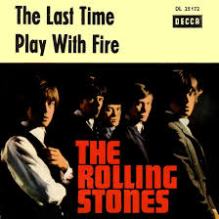 Even in their earliest days of songwriting, Mick Jagger and Keith Richards showed the ability to address weighty subjects that had universal relevance. On “The Last Time,” which cracked the Top Ten in the U.S., the lyrics reminded us how we can let opportunities slip away from us if we take too long too act on them: “Well, I told you once and I told you twice, that someone will have to pay the price, but here’s a chance to change your mind ’cause I’ll be gone a long, long time, well, this could be the last time, this could be the last time, maybe the last time, I don’t know, oh no…”
“This is the Time,” Billy Joel, 1986
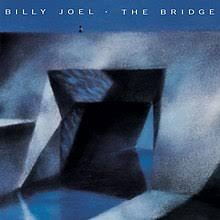 On his Top 10 album “The Bridge,” Joel scored three Top 20 singles, including “This is the Time,” a poignant reflection on how we love to cling to great times in our past despite the fact that time and circumstances inevitably change: “This is the time to remember, ’cause it will not last forever, these are the days to hold on to, ’cause we won’t, although we’ll want to, this is the time, but time is gonna change, you’ve given me the best of you, and now I need the rest of you…”
“Long Time Gone,” Crosby, Stills and Nash, 1969
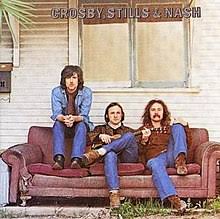 As David Crosby and Stephen Stills were first teaming up in 1968 and then recruiting Graham Nash to join them, the world outside seemed to be coming apart at the seams. The assassinations of Martin Luther King and Robert Kennedy inspired Crosby to write this disturbing treatise on how dark times can seem endless, even though better times arrive eventually: “Don’t you know the darkest hour is always just before the dawn, and it appears to be a long, appears to be a long, appears to be a long time, such a long, long, long, long time before the dawn…”
“Time,” Pink Floyd, 1973
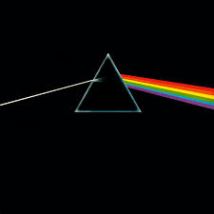 “Dark Side of the Moon,” one of the most successful rock albums in history, focuses lyrically on insanity, greed, death and the passage of time. In the song “Time,” songwriter Roger Waters examines how its passage can control one’s life, and offers a stark warning to those who remain focused on mundane aspects: “Ticking away the moments that make up a dull day, fritter and waste the hours in an off-hand way, kicking around on a piece of ground in your home town, waiting for someone or something to show you the way…”
“Time Will Crawl,” David Bowie, 1987
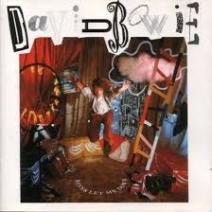 Bowie was always one of rock’s more serious-minded lyricists, from “Space Oddity” on his first album through “Heroes” and “Ashes to Ashes” in his Berlin trilogy. As he points out in the rather dystopian “Time Will Crawl” from his mid-’80s LP “Never Let Me Down,” time has a way of moving painfully slowly when things aren’t going well: “Time will crawl ’til our mouths run dry, time will crawl ’til our feet grow small, time will crawl ’til our tails fall off, time will crawl ’til the 21st century lose…”
“Get it Right Next Time,” Gerry Rafferty, 1979
 Perseverance is the theme of Rafferty’s irresistible 1979 hit single “Get It Right Next Time,” in which the narrator encourages us to maintain a positive outlook and keep trying after previous attempts have failed: “Life is a liar, yeah, life is a cheat, it’ll lead you on and pull the ground from underneath your feet, no use complainin’, don’t you worry, don’t you whine, ’cause if you get it wrong, you’ll get it right next time, next time…”
“Time After Time,” Cyndi Lauper, 1983
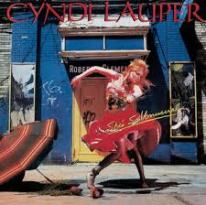 It’s always very comforting to know that you can count on another person to always be there for you when you need them. In “Time After Time,” Lauper’s pretty melody goes nicely with lyrics that underscore the importance of undying reliability: “You said, ‘Go slow,’ I fall behind, the second hand unwinds, if you’re lost, you can look and you will find me time after time, if you fall, I will catch you, I’ll be waiting time after time…”
“Time Has Come Today,” The Chambers Brothers, 1968
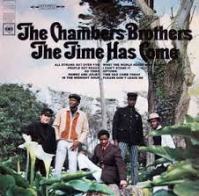 One of my favorite songs from the heady days of 1968 psychedelia was this strident track by The Chambers Brothers. The arrangement uses dramatic tempo changes as the vocalists repeatedly shout “Time!” Its lyrics speak about the need to avoid procrastination and act now before it’s too late: “Now the time has come, there’s no place to run, now the time has come, there are things to realize, time has come today…”
“Take the Time,” Michael Stanley Band, 1982
 Cleveland’s Michael Stanley not only wrote great rock songs that should have received far more airplay nationally than they did, he penned some solid lyrics that are certainly worthy of your attention. “Take the Time” is immediately relevant today, instructing us to remember the important things as we cope with life’s struggles: “Now is the hour, tomorrow might be too late, you gotta grab the moment, you just can’t hesitate… Take the time to love someone, take the time to make amends, take the time to make a stand, tase the time for your friends…”
“Give Me Some Time,” Dan Fogelberg, 1977
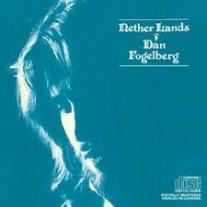 When heartbreak takes longer to heal than expected, any chance of a new relationship needs to be put on hold until we’re ready for it. Dan Fogelberg did a marvelous job of covering this topic in “Give Me Some Time,” a beautiful tune from his 1977 LP “Nether Lands”: “Give me some time now, I’ve just got to find how I’m going to forget her, and talk myself into believing that she and I are through, then maybe I’ll fall for you…”
“I Don’t Have the Time,” The James Gang, 1969
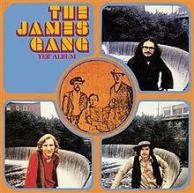 Joe Walsh’s earliest songwriting attempts came when he was honing his chops with his old group, The James Gang. Among the issues he tackled on the group’s debut LP “Yer Album” was the need to make productive use of one’s time: “I don’t have the time to play your silly games, walk to work each morning, live within a frame, now you’re trying to tell me I should be like you, watch your time, work nine to five, what good does it do?…”
“Time Is,” It’s a Beautiful Day, 1969
 David LaFlamme served as chief songwriter, vocalist, violinist and flautist in this underrated San Francisco-based group. His ten-minute song “Time Is,” which concludes the band’s debut LP, offers a cornucopia of lyrical ideas about time: “Time is too slow for those who wait, time is too swift for those who fear, time is too long for those who grieve, and time is too short for those who laugh, but for those who love, really love, time, sweet time, precious time, is eternity…”
“Isn’t It Time,” The Babys, 1977
 Philosophers have been trying for centuries to figure out the meaning of life and how the passage of time plays a role in that quest. The rest of us sometimes just want to figure out whether this is the right time to begin a romantic relationship. John Waites’ band The Babys took a look at this in their hit single “Isn’t It Time” in the fall of 1977: “I just can’t find the answers to the questions that keep going through my mind, hey, babe! Isn’t it time?…”
“Time in a Bottle,” Jim Croce, 1973
 Before his premature death in a 1973 plane crash, songwriter Croce came up with a tune that’s, well, timeless in its profound simplicity. We think we have plenty of time in our lives to do what we want, but not if we struggle too long in determining what it is we want to accomplish: “If I could save time in a bottle, the first thing that I’d like to do is to save every day ’til eternity passes away, just to spend them with you, but there never seems to be enough time to do the things you want to do, once you find them…”
****************
 Honorable mention:
“Wasted Time,” The Eagles, 1976; “Sign o’ the Times,” Prince, 1986; “Time Won’t Let Me,” The Outsiders, 1966; “Time,” The Alan Parsons Project, 1981; “Who Knows Where the Time Goes,” Judy Collins, 1968; “Your Time is Gonna Come,” Led Zeppelin, 1969; “Only Time Will Tell,” Asia, 1982; “Right Place Wrong Time,” Dr John, 1973; “Time Out of Mind,” Steely Dan, 1980; “Feels Like the First Time,” Foreigner, 1977; “No Time,” The Guess Who, 1969; “Comes a Time,” Neil Young, 1978; “Time is Running Out,” Steve Winwood, 1977; “Another Time, Another Place,” U2; “Time of the Season,” The Zombies, 1969; “Does Anybody Really Know What Time It Is,” Chicago, 1969; “My Time,” Boz Scaggs, 1972; “Time Out,” Joe Walsh, 1974; “The Nighttime is the Right Time,” Creedence, 1969; “Sands of Time,” Fleetwood Mac, 1971; “River of Time,” Van Morrison, 1983; “Most of the Time,” Bob Dylan, 1989; “High Time We Went,” Joe Cocker, 1971.
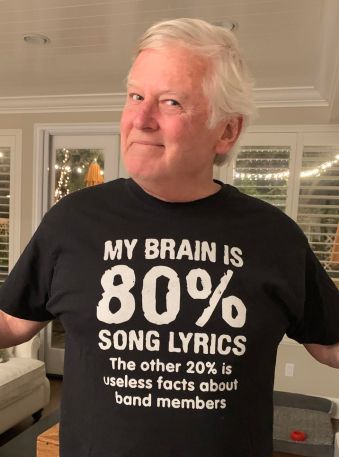 we choose to pretty much forget the rest. As a music fanatic and music collector, I have enjoyed learning all I can about the artists, their albums and songs, while most people I know don’t choose to retain that kind of stuff (mostly because they prefer to devote their memory space to, oh, I don’t know, maybe information that will make them money!).
 Producer/songwriter Keith Forsey wrote this hypnotic tune while doing the film score for the classic John Hughes comedy “The Breakfast Club.” Forsey, a big fan of Simple Minds, sought out the band and urged them to record it, but they at first refused, saying they preferred to record their own songs. Bryan Ferry, Billy Idol and Corey Hart also turned down Forsey’s overtures before he returned to Simple Minds, who finally relented, assuming it would be just a forgettable tune in an inconsequential movie. Instead, it became one of the least forgettable songs of 1985 and, indeed, the 1980s, and the movie turned into an iconic bit of filmmaking as well. The song vaulted to #1 in multiple countries and stayed there for weeks on end, propelling Simple Minds to arena-rock popularity.
 Jay Proctor and his six bandmates emerged from Allentown, PA, in the mid-’60s and found their way onto the pop charts with two big hits, both in 1967 — “Apples, Peaches, Pumpkin Pie” and “Keep the Ball Rollin’.” Their music had a decidedly R&B focus to it, as evidenced by their #8 charting on the R&B charts for “Apples, Peaches” and by the feel of songs like the underrated “Don’t Ask Me to Forget” from 1969, just before the group’s dissolution. The lyrics cover the often-discussed idea that a transgression can be forgiven but not forgotten: “We shared the good and the bad for so long, but I never thought you’d be the one who’d go wrong, I can forgive, but don’t ask me, don’t ask me to forget…”
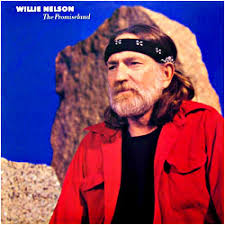 Nelson is almost the definition of an iconic artist. His debut LP came out in 1962 and he has released nearly 70 more studio albums since then. He’s mostly known in the country music arena, but he has sung albums of children’s songs and Gershwin classics, and has flirted with the pop charts occasionally (“On the Road Again,” #20 in 1980, and “Always On My Mind,” #5 in 1982). On his 34th album, “The Promiseland” in 1986, he recorded this poignant song he wrote about a woman he broke up with and had put out of his mind, but he later reconsidered and rekindled fond memories of her: “I’m not trying to forget you anymore/I’ve got back into remembering all the love we had before/and I’d been trying to forget someone that my heart still adores/so I’m not trying to forget you anymore…”
 Originally a punk band from the Los Angeles punk music scene, The Go-Go’s evolved into a polished New Wave act that took the country by storm with their #1 debut LP “Beauty and the Beat” and their huge hit singles, “Our Lips Are Sealed” and We Got the Beat.” On their 1984 LP “Talk Show,” which included the #11 hit “Head Over Heels,” there’s a really nice album track called “Forget That Day” with lyrics that describe a girl who wishes she could block the memory of the fateful day her ex first told her he loved her: “Why’d you say you loved me that day, that day, when you knew you wouldn’t have me on this day, this day, now you’re fine, I’m not okay, and I can only stay away, I can only kneel and pray, try and try to forget that day…”
 Christine McVie wrote this gentle tune that closes out the Fleetwood Mac double album “Tusk.” Ever since Stevie Nicks and Lindsey Buckingham joined the band in 1975, they seemed to get most of the attention, particularly on stage, but I think McVie’s songs and voice are just as good, if not better. Indeed, her songs were often the ones picked to be released as singles (“Say You Love Me,” “You Make Loving Fun,” “Don’t Stop,” “Little Lies”). This one is so deceptively simple and soothing, all about a magical evening she once spent with someone she cared for, an evening she hopes to always remember: “Could we ever forget tonight?/Oh, it’ll be all right/We’ll never forget tonight…”
 For six years, McDonald was the smoky-voiced front man of The Doobie Brothers, responsible for writing and singing several of the band’s bigger hits, including “Takin’ It to the Streets,” “Minute By Minute” and “What a Fool Believes.” He chose to go solo in 1982, and scored high with “I Keep Forgettin’,” which reached #4 on the pop charts that year. The song so resembled an earlier song with the same name by the famed songwriting team Jerry Lieber and Mike Stoller that they ended up winning co-writing credits. In the lyrics, the narrator has to be reminded that his romantic relationship is over: “I keep forgettin’ we’re not in love anymore, I keep forgettin’ things will never be the same again, I keep forgettin’ how you made that so clear, I keep forgettin’, darlin’…”
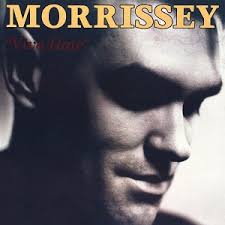 Morrissey’s music, both with the British alt-rock band The Smiths (1982-1987) and as a successful solo artist ever since, has been noted for his distinctive lyrics with recurring themes of emotional isolation, sexual longing, self-deprecating and black humor, and anti-establishment stances. The self-deprecation is in full display on this snappy little track from his debut solo LP, “Viva Hate.” The narrator is bitter about having been dumped, and hopes she’ll move on without any further contact: “I don’t mind if you forget me, rejection is one thing, but rejection from a fool is cruel, so I don’t mind if you forget me…”
  This star-crossed Southern rock band from the ’70s was known foremost for their FM radio staple “Freebird” and their impossible-to-forget anthem “Sweet Home Alabama.” Despite losing several key members in a 1977 plane crash, the group has soldiered on, touring and recording well into the new millennium. Johnny Van Zant, brother of the late original singer Ronny, came up with this tune that appears on the 1997 LP “Twenty,” with reflective lyrics that remind us of what’s important to remember: “How soon we forget/to count every blessing/if you think you got it bad/take a look around/how soon we forget/that life is one big lesson/still we make the same mistakes/time and time again/how soon we forget…”
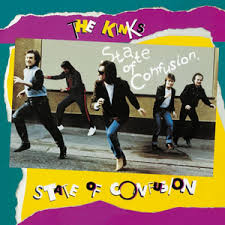 Ray Davies has written so many
  Dylan’s “Street-Legal” album came along at a complicated time for him. It followed on the heels of his mid-’70s masterpiece LP “Blood on the Tracks” and the almost equally strong “Desire,” but it was written as his divorce and child custody proceedings were distracting him from his creative work. The songs were generally well regarded, but their production was not, as he chose to use a makeshift rehearsal space in Santa Monica instead of a bonafide studio. The single “Baby Don’t Cry” did well in the UK but failed to chart here. I’ve always liked “True Love Tends to Forget,” an album track that seems to be not autobiographical but fictional: “Still, I’m getting weary looking in my baby’s eyes, when she’s near me she’s so hard to recognize, but I finally realize there’s no room for regret, true love, true love, true love tends to forget…”
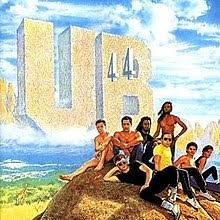 Britain’s most successful reggae band reached the Top 10 in England with each of their first dozen albums and scored nearly two dozen Top 20 singles as well. UB40 were nowhere near as popular in the US; nevertheless, they scored two #1 singles with reggae cover versions of Neil Diamond’s “Red Red Wine” and the Elvis hit “I Can’t Help Falling in Love With You” in 1983 and 1993, respectively. “Forget the Cost,” a deep album track on their fourth LP, “UB44,” bemoans how the nations of the Earth spend huge sums on defense while worrying about spending too much on planet-saving programs: “Forget the cost, we’ve got to choose, we’re running in a race that we can only lose…”
 Writer/producer Stan Kesler wrote two great whimsically titled songs for Elvis Presley early in his career. First came “I’m Left, You’re Right, She’s Gone,” followed by “I Forgot to Remember to Forget,” both recorded at Sun Records in 1955. While the latter reached #1 on the country charts, it failed to reach the pop charts, but that all changed once Presley was signed to RCA and exploded into our consciousness with “Heartbreak Hotel” in early 1956. “I Forgot to Remember to Forget” was later covered by Jerry Lee Lewis (1957) and Johnny Cash (1959), and was among the songs The Beatles performed during their BBC Radio sessions in early 1964. The lyrics: “Well the day she went away, I made myself a promise that I’d soon forget we’d ever met, but something sure is wrong, ’cause I’m so blue and lonely, I forgot to remember to forget…”
 close with the lyrics to this recent tune by that old folkie Tom Rush called “Remember Song“:
