Old dogs doing some new tricks
A number of celebrated rock musicians from the ’60s, ’70s and ’80s have released substantial new albums in the 2010s — thirty, forty, even fifty years after their first albums debuted. But radio rarely (never, really) plays great recent songs by vintage rock artists, even if there are strong tracks that many people would seriously enjoy. That’s where Hack’s Back Pages comes in.
 I spent many pleasurable hours in the past week or two reviewing the music found on albums released by legendary artists since 2010. From that research, I have selected a dozen tracks to highlight here this week because I think they’re worthy of your attention.
There are those (particularly those over, say, 40 or so) that sniff derisively, “Today’s music sucks,” and they may have a point if you review only the Top 40 charts. But I’m here to tell you there is plenty of great music being recorded and released today, not only by promising new bands but by a few of the artists from decades ago. I think, in another day and age, these songs by icons would’ve (or could’ve) been pretty big radio hits — certainly on FM stations but maybe even the Top 40 in some instances.
Please follow along via the Spotify playlist below.
And here we go:
 “Weather in My Head,” Donald Fagen, from “Sunken Condos” (2012)
Fagen’s superb work as a co-founder of Steely Dan is well documented, but his solo LPs haven’t received the same kind of attention (except perhaps 1982’s “The Night Fly”). In 2012, when Fagen put together the material for “Sunken Condos,” his fourth solo outing, it was no surprise he chose guitarist Jon Herington to play a key role, as he has in Steely Dan/Fagen recordings and tours since 2000. His biting yet tasteful solo on “Weather in My Head” helped make it the highlight of the LP. Rolling Stone ranked the album, and this song, among the year’s best. A nice funky blues, with marvelous words that use extreme weather events — typhoons, sea-quakes, floods — to describe the emotional damage when a relationship crumbles: “They may fix the weather in the world…but what’s to be done, Lord, ’bout the weather in my head?…”
 “If It Wasn’t for You,” Joe Jackson, from “Fast Forward” (2015)
Jackson was a firebrand of the British punk/New Wave movement of the late 1970s, but he was always much more than that. Classically trained and wildly eclectic in the kinds of music that interest him, he has recorded music of so many genres and styles that he is virtually impossible to categorize. His commercial peak in the early/mid-’80s (“Steppin’ Out,” “Breaking Us in Two,” “You Can’t Get What You Want”) came and went, as he preferred to go down less popular roads. He has returned to accessible pop several times, but radio ignored him and sales were unimpressive. In 2015, for his “Fast Forward” LP, Jackson recorded 16 songs, four in each of four cities (New York, Berlin, Amsterdam and New Orleans), with tracks reflecting the culture and production techniques of the location. “If It Wasn’t for You” from the New York batch is an immediately catchy tune that fits nicely alongside his earlier hits.
 “House of Love,” Robert Plant, from “Lullaby and the Ceaseless Roar” (2014)
Far more than his Led Zeppelin cohort Jimmy Page, Plant has maintained a relatively constant flow of new music in the 37 years since the band’s breakup. His tenth LP, released in 2014 was the first to feature a named backup band, The Sensational Shape Shifters, led by multi-instrumentalists/songwriters Justin Adams and John Baggott. The material they came up with shows a mutual fondness for English and Moroccan folk as well as American blues and psychedelia. The standout track, I think is “House of Love,” which builds nicely from humble beginnings into a full production. Plant and his band just returned last month with a new release, “Carry Fire,” much of it in the same vein.
 “Americana,” Ray Davies, from “Americana” (2016)
The proud, prolific founder and chief songwriter of The Kinks is often regarded as a quintessentially British tunesmith, but he has also professed a keen interest in American music and culture, and has lived in the U.S. (New York and New Orleans) at various times. Three years ago, his memoirs, entitled “Americana,” focused on his love-hate relationship with the United States; two years later, he released an album by the same name, whose title track does a beautiful job of showing his awe at the breadth and beauty of this country, despite its troubles: “I wanna make my home where the buffalo roam, in that great panorama… In the steps of the great pioneers, over air, sea and land, still I can’t understand how I’m gonna get there from here, wherever it goes, it’s gonna take me somewhere…”
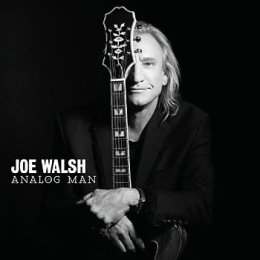 “Analog Man,” Joe Walsh, from “Analog Man” (2012)
One of the great guitarists of rock’s glory years, Walsh has also been a creative, witty songwriter, dating back to his years with The James Gang. He went through a rough patch in the late ’80s/early ’90s but emerged healthy when The Eagles reunited, and he remains a solid performer with the group and on his own. “Analog Man,” his first new album in 20 years, is chock full of great tracks, but I love the title song, which whimsically captures the plight of old-schoolers who struggle to keep up with technological advances. “I’m an analog man in a digital world” is a line that describes a lot of people in my generation, I would imagine…
 “Banker Bets, Banker Wins,” Ian Anderson, from “Thick As a Brick 2” (2012)
After a run of 40+ years, Jethro Tull leader Ian Anderson chose to end the band and officially go solo, using a new group of supporting musicians to tackle a formidable but intriguing project: a follow-up to the group’s #1 album from 1972, “Thick as a Brick.” Anderson fancifully wonders whatever happened to the fictional eight-year-old boy who “wrote” the original. What path might his life have taken? Simple shopkeeper or greedy banker? Charlatan evangelist or shellshocked soldier? This rock track (which, on Spotify, includes a 1:15 intro tune called “Upper Sixth Loan Shark”) sounds most like the Tull of old, with lyrics that deftly describe the self-absorbed world of the investment class.
 “So Beautiful or So What,” Paul Simon, from “So Beautiful or So What” (2011)
Although Simon has been writing iconic songs for more than 50 years, he is far from prolific. There were only five albums as Simon & Garfunkel, and since going solo 45 years ago, he has released only 12 studio LPs of new material. Clearly, he makes up for in quality what he lacks in quantity, as evidenced by “So Beautiful or So What,” his 2011 effort. Once you get caught up in the rolling, hypnotic rhythm that drives the excellent title song, you just don’t want it to end. I remember being knocked out by an amazing live performance of the song by Simon and his band on “SNL” that year. He has said his songwriting process always begins with a rhythm, something new or unusual that catches his attention. Here’s proof of that.
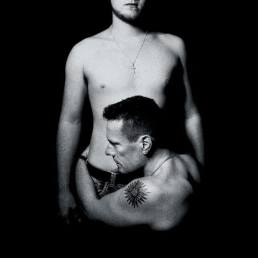 “Every Breaking Wave,” U2, from “Songs of Innocence” (2014)
Five years in gestation due to writer’s block and group dissension about the recordings, this compelling album was finally released in 2014 to rave reviews, despite an unfortunate backlash from their marketing move to automatically download it to every iPhone, whether consumers wanted it or not. But this is U2, who have a formidable track record, so let’s listen to the music. It’s a fantastic LP, no doubt about that, focusing on themes of childhood, growing up in Dublin in the 1970s, using lush rock arrangements to tell their stories. Best of the bunch is “Every Breaking Wave,” with its allusions to the need for intimacy and stability in a relentlessly challenging world: “If you go your way and I go mine, are we so helpless against the tide, every dog on the street knows we’re in love with defeat, are we ready to be swept off our feet and stop chasing every breaking wave?…”
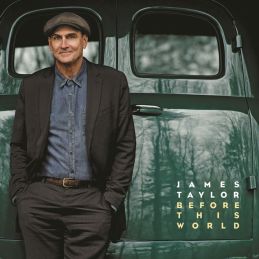 “You and I Again,” James Taylor, from “Before This World” (2015)
Taylor seemed to run out of steam with his ho-hum 2002 release, “October Road,” which hinted that his songwriting muse had abandoned him. Although he has maintained a presence on the road with his yearly tours, he released no new studio recordings for a dozen years…until, suddenly, “Before This World,” a welcome surprise in 2015. SO many entertaining songs here, from the whimsy of “Angels of Fenway” to the harrowing piece “Far Afghanistan,” with Taylor’s voice never in better shape. The refreshingly gorgeous “You and I Again” examines the rekindling of a relationship that suffered a rocky period: “You were tending your own fire, we were biding our time, both of us waiting for the moment when our backs would come together, you and I… And so although I know we are only small, in the time we have here, this time we have it all, you and I again, this time, this time…”
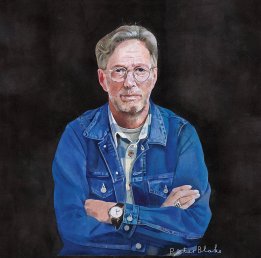 “Spiral,” Eric Clapton, from “I Still Do” (2016)
Clapton, arguably blues music’s most successful practitioner and biggest cheerleader, continues to amaze us, even in his sixth decade of making records. “I Still Do,” his 23rd studio LP, gathers frequent collaborators Simon Climie and Andy Fairweather Low and brings back celebrated producer Glyn Johns, with whom Clapton worked on the best-selling “Slowhand” and “Backless” albums in the ’70s. The song list is all over the map, including two numbers by his late friend and collaborator J.J. Cale, classic songs like Dylan’s “I Dreamed I Saw St. Augustine” and other contemporary material. I found the best track to be an original piece called “Spiral,” a spooky, slow blues that highlights Clapton’s gruff vocals as well.
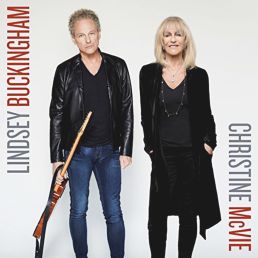 “Carnival Begin,” Christine McVie & Lindsey Buckingham, from “Buckingham/McVie” (2017)
Most of the songs on this duet LP were supposed to be on a new Fleetwood Mac LP, but when Stevie Nicks chose to withdraw her songs from the group album to focus on her solo career, Lindsey Buckingham and Christine McVie figured they would put out these engaging tracks as a duo in a one-off project. These two superlative songwriters assembled a very fine record of F-Mac-like songs, each contributing their signature sounds (Buckingham’s biting guitar and angular melodies, McVie’s dulcet vocals and catchy hooks). Most intriguing, to me, is McVie’s rather mystical “Carnival Begin,” an exploration of relationships ending and beginning anew: “I always wondered if you ever miss me, I always thought I heard you call, I always wanted to hear your voice, summer into fall… I’ll take it all, I may lose or win, a new merry-go-round, carnival begin…”
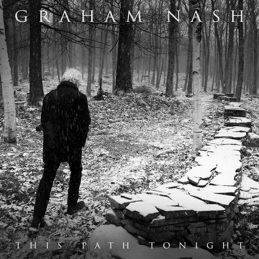 “Encore,” Graham Nash, from “This Path Tonight” (2016)
Nash was never a prolific writer, but he made his moments count. Nearly every charting single of Crosby, Stills and Nash was written by Nash (“Marrakesh Express,” “Our House,” “Teach Your Children,” “Just a Song Before I Go,” “Wasted on the Way”), and his periodic solo albums have included at least four or five tracks with irresistible hooks and thought-provoking lyrics. His 2016 LP, “This Path Tonight,” comes to grips with the recent dissolution of his 30-year marriage, but the album closer, the delicate ballad “Encore,” takes aim at estranged colleague David Crosby, whose prickly narcissism has alienated him from many old friends: “What you gonna do when the last show is over? Who you gonna be when the lights are fading? Adulation is pleasing, encore, encore…”
**************
Honorable mention: “Sins of My Youth,” Tom Petty and The Heartbreakers, from “Hypnotic Eye” (2014); “Dark Sunglasses,” Chrissie Hyde, from “Stockholm” (2014); “Keep Me Singing,” Van Morrison, from “Keep Me Singing” (2016); “No, Thank You,” Don Henley, from “Cass County” (2015); “Rocky Ground,” Bruce Springsteen, from “Wrecking Ball” (2012); “The Open Chord,” Elton John, from “Wonderful Crazy Night” (2016); “Ain’t It a Drag,” Jeff Lynne’s ELO, from “Alone in the Universe” (2015); “It Happened Today,” R.E.M., from “Collapse Into Now” (2011).
 So many films…so many TV shows… So much of New York City — Manhattan, Broadway, Brooklyn — is ingrained in our popular culture, particularly for those who have never been there.
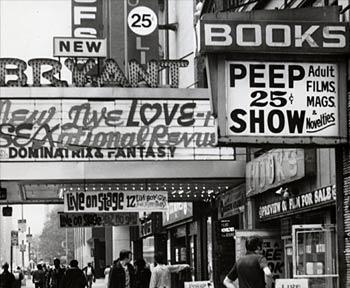 It’s interesting to note that New York City may be the only city that has had entire albums focusing on its life, people and culture. The Rolling Stones’ “Some Girls” LP (1978), for example, makes many references to New York:
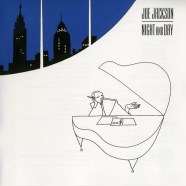 Even British New Wave artist Joe Jackson recorded two LPs — the Top Ten success “Night and Day” (1982) and the uncharting sequel “Night and Day II” (2000) — that were entire song cycles focusing on New York City:
 out of my goddamn way, I’m walking here, I’m talking here…”
 “New York State of Mind,” Billy Joel, 1975
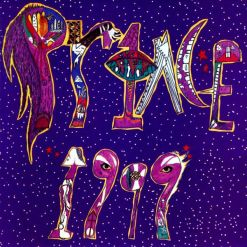 “All the Critics Love U in New York,” Prince, 1982
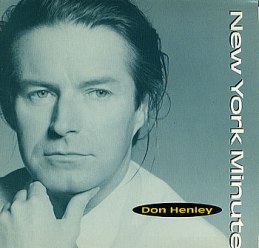 “New York Minute,” Don Henley, 1989
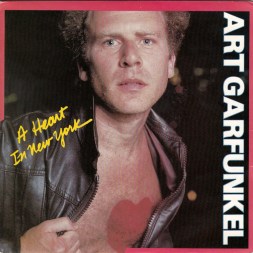 “A Heart in New York,” Art Garfunkel, 1981
 “The Boy From New York City” — The Ad Libs, 1964
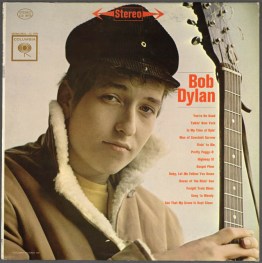 “Talkin’ New York,” Bob Dylan, 1962
 “New York Groove,” Ace Frehley, 1978
 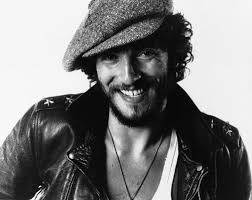 “New York City Serenade,” Bruce Springsteen, 1973
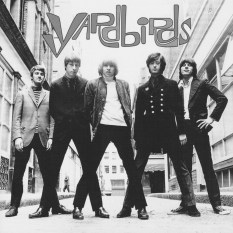 “New York City Blues,” The Yardbirds, 1967
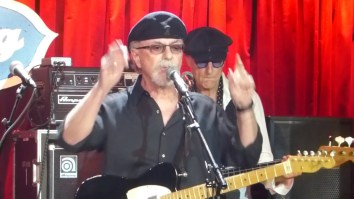 “King of the New York Streets,” Dion, 1989
  “New York City,” John Lennon, 1972
 “Daddy Don’t Live in New York City No More,” Steely Dan, 1975
 “An Englishman in New York,” Sting, 1987
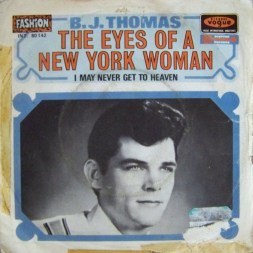 “The Eyes of a New York Woman,” B.J. Thomas, 1968
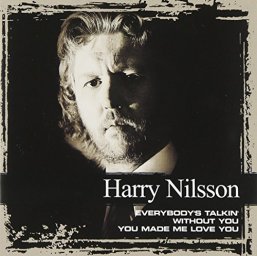 “I Guess the Lord Must Be in New York City,” Nilsson, 1969
 “Nights on Broadway,” Bee Gees, 1975
 “The Only Living Boy in New York,” Simon and Garfunkel, 1970
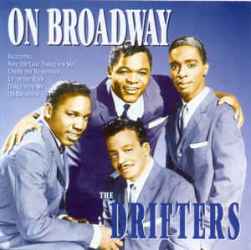 “On Broadway,” The Drifters, 1963
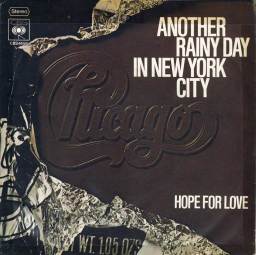 “Another Rainy Day in New York City,” Chicago, 1976
 Arthur’s Theme (The Best That You Can Do),” Christopher Cross, 1981
 Hack's Back Pages