Can’t get much worse
Two years ago, “Hack’s Back Pages” addressed the volatile subject of “cringeworthy songs” — records that make you lunge to change the channel, or run screaming from the store, when they come on the radio.
 It’s a provocative topic, because people can disagree completely on whether a song is trash or treasure. For instance, I happen to like the music of the ’70s soft-rock band Bread. It’s what some call a “guilty pleasure.” Even the gooey ones like “If” and “Diary.” Others want to throw up at the mere mention of Bread. Personal preference is a peculiar thing…
Everyone can name at least a half-dozen songs that are like fingernails on a blackboard to them…even though others might enjoy these very same songs because they bring back fond memories of innocent times, or old romances.
In that November 2015 blog entry, entitled “I can’t stand it no more,” I singled out ten songs — all of which somehow reached #1 on the US charts — that I regard as truly cringeworthy:
 “Billy Don’t Be a Hero,” Bo Donaldson & The Heywoods, 1974; “My Ding-a-Ling,” Chuck Berry, 1972; “Something Stupid,” Frank & Nancy Sinatra, 1966; “Afternoon Delight,” Starland Vocal Band, 1976; “The Candy Man,” Sammy Davis Jr., 1972; “The Night Chicago Died,” Paper Lace, 1974; “Seasons in the Sun,” Terry Jacks, 1974; “Winchester Cathedral,” 1966; The New Vaudeville Band; “Convoy,” C.W. McCall, 1976; “Honey,” Bobby Goldsboro, 1968.
This week — because, let’s face it, there are so many wretched songs in Billboard’s Top 40 history — I am revisiting this topic. I have broadened my search to the 1960-1990 period that I typically write about, and didn’t limit myself to songs that reached #1. I solicited opinions from friends and acquaintances, but ultimately, these 15 selections are my own, so if you have a beef (and you very well might), take it up with me.
A Spotify list appears at the end, but I strongly recommend you listen to no more than ten seconds of any song if you want to retain your sanity…
**************
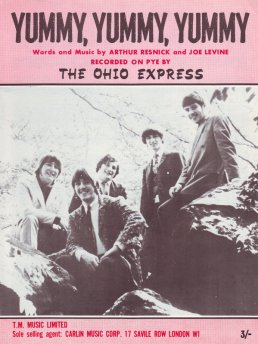 “Yummy Yummy Yummy,” Ohio Express, 1968
Ranked high on the list of just about every “bad songs” lists ever assembled is this incredibly annoying piece of confetti, written by a guy named Joey Levine, who wrote far more commercial jingles than bonafide songs in his career. Ohio Express, in fact, isn’t really a working band at all but a studio concoction, and a brand name Levine used to market the works of several different groups. In other words, it’s all a hoax, pretty much. Still, the US buying public sent this shlock to #4 in June 1968, making it the highest charting entry in the embarrassing (but thankfully short-lived) “bubblegum rock” genre.
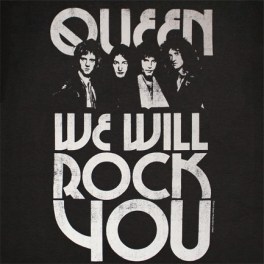 “We Will Rock You,” Queen, 1978
Not so much a song as a shrill shout-fest, this quasi-rap abomination (before rap was a thing) evolved quickly into a sports arena anthem that drunken fans would scream at the top of their lungs whenever their team scored points. You could easily make the case that the ridiculously simple “stomp-stomp-clap” beat with a cappella vocals and no instrumentation does not constitute an actual musical composition. But Queen was smart enough to link “We Will Rock You” to the solid rock tune “We Are the Champions,” which shared the notion of sports fever for a winning team, and that made it a #4 hit in the US in the autumn of 1977 (and, apparently, ever since). As for me, I refuse to listen to it when the radio plays it today.
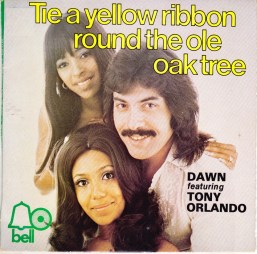 “Tie a Yellow Ribbon,” Tony Orlando and Dawn, 1973
According to legend, soldiers in Civil War times (and in more recent military conflicts) would send letters to their girlfriends, asking them to tie yellow ribbons around trees in their yards if their soldier boys would be welcomed home upon their return. Tony Orlando and Dawn, in an impossibly fruity arrangement, took a song with that lyrical theme and somehow turned it into one of the biggest selling singles of the 1970s. How did this happen?? Lord, have mercy…
 “Physical,” Olivia Newton-John, 1981
Every exercise, jazzercise, “dancersize” and aerobics class of the early 1980s was apparently required to play this relentless “pump you up” track, which made Newton-John the Jane Fonda of the celebrity workout scene before Jane herself took over the following year. In that setting, “Physical” probably served its purpose, but on the radio, it was insufferable and inescapable, perched as it was in the #1 spot for an interminable 10 weeks in 1981. The video, with its sexual overtones and blatant body language, represented a real departure from Newton-John’s nice-clean-girl image up to that point…but musically, I’d just as soon never hear it again.
 “Babe,” Styx, 1979, and “Lady,” Styx, 1973
Somehow, Styx gained an image as a progressive rock group, but to put them even remotely in the same category as Genesis, Yes and Pink Floyd is laughable. Styx clearly preferred a more commercialized sound, carried (and permanently marred) by 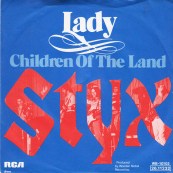 Dennis DeYoung’s truly excruciating vocals. You needn’t look past two of Styx’s biggest hits, 1973’s “Lady” and 1979’s “Babe,” which demonstrate, without question, that this Chicago-based group is light years away from anything “progressive.” I couldn’t decide which of these grated on more nerves more, so you get them both.
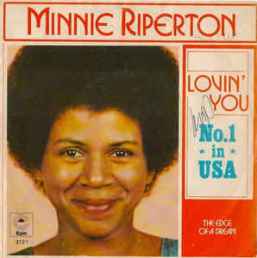 “Lovin’ You,” Minnie Riperton, 1975
Please, just turn it off. Right now. I don’t care if the ridiculously high vocal notes set new records for a hit single. In fact, those notes — and the infuriating chirping songbirds heard throughout — are why I find this song unlistenable. Riperton has said she wrote “Lovin’ You” with her husband, Robert Rudolph, as a way to distract their baby daughter when they wanted to be alone for a while. Yeah, that sounds about right. The fact that the baby girl in question grew up to be Maya Rudolph must be a source of endless embarrassment to her.
 “Sing,” The Carpenters, 1973
Joe Raposo was a songwriter who found his niche writing songs for children’s programs, including “Shining Time Station,” “Electric Company” and, most notably, the theme song to “Sesame Street” and Kermit the Frog’s “Not Easy Bein’ Green.” And he wrote “Sing” in 1971, which was well received among the “Sesame Street” audience. Okay, fine. But that did NOT give Karen and Richard Carpenter the right to turn this piece of vapid fluff into a mainstream pop song. The LA-based duo was already well known for puerile, smarmy-sweet songs like “We’ve Only Just Begun,” and although Karen had one of the most pitch-perfect voices in the history of pop music, their recording of “Sing” removed any hint of hip from their reputation. Still, the American buying public sent the song to #4 in the spring of 1973. Gag me.
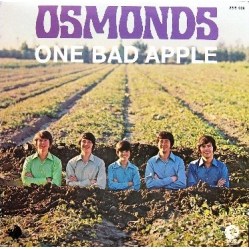 “One Bad Apple,” Osmonds, 1970
In 1970, five brothers from Gary, Indiana thrilled audiences and listeners with their effervescent brand of pop soul, reaching #1 with four consecutive hits. I’m talking about The Jackson 5, of course. Out in Utah, someone thought they could duplicate the Jacksons’ accomplishments with a white-bread version of the five-brothers act. If you consider the Saturday morning cartoon TV show “The Osmonds” as a sign of success, it worked. But if you consider the quality of the songs they released, holy smokes, the difference is stark indeed. Their debut hit, the irksome “One Bad Apple,” offers all the proof you need that The Osmonds were a very pale imitation at best.
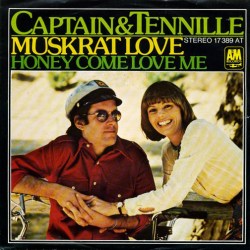 “Muskrat Love,” The Captain & Tennille, 1976
Written as a lark (and originally titled “Muskrat Candlelight”) by Texas songwriter Willis Alan Ramsey for his 1972 debut album, it was inexplicably re-recorded by the acoustic rock trio America the following year and, against their record company’s wishes, released as a single. It not only stiffed at #67, it irreparably harmed their reputation as a quasi-hip CSN copycat group. Cementing the song’s place on many “worst songs” lists is the godawful remake in 1976 by the cheesy duo The Captain and Tennille, which somehow reached #4 on the charts. The track actually uses synthesizers to approximate the sound of muskrats mating. Yikes, does it get any worse than this??
 “MacArthur Park,” Richard Harris, 1968
Jimmy Webb is widely regarded as one of the great underrated songwriters of the ’60s and ’70s. For the most part, his work is commercial (“Up, Up and Away,” “Wichita Lineman,” ) catchy and lyrically satisfying. But even the best songwriters drive off into the ditch on occasion, and for Webb, that came early with the maudlin, operatic, sickly sentimental “MacArthur Park,” which became a huge hit for (wait for it) the “Camelot” actor Richard Harris! Astonishingly, it went all the way to #2 in 1968, despite being bathed in syrupy strings and falsetto vocals, with insipid lyrics about leaving a cake out in the rain (“I don’t think that I can take it, ’cause it took so long to bake it”…). Equally astounding is its second life as a lengthy disco hit in Donna Summer’s 1979 rendition. Either way (but mostly the original), this is one of the worst songs ever, by far.
 “Torn Between Two Lovers,” Maureen MacGregor, 1977
The free love era spawned some strange practices, including couples swapping partners and open three-way relationships. Of all people, Peter Yarrow (of Peter, Paul & Mary) co-wrote this smarmy love-triangle ditty that laments “loving you both is breaking all the rules,” and US listeners sent Maureen MacGregor’s recording of it to #1 in 1977. Ironically, MacGregor has said the huge success of “Torn Between Two Lovers” caused strains in her own marriage because it kept her on the road, away from her family and tempted by other relationships. It’s not a good song, not even close, despite the royalties Yarrow no doubt appreciates.
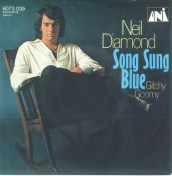 “Song Sung Blue,” Neil Diamond, 1972
My apologies to all the Diamond fans out there, for the guy certainly had some decent songs in his catalog (“Cracklin’ Rosie,” “Stones” and “Sweet Caroline” come to mind), but this borrrring ditty is not one of them. “Song Sung Blue” sounds like he wrote it in about five minutes, lyrics and all. It would fit very nicely on a setlist of the squarest tunes of the ’70s (some of which are listed here). Diamond’s early promise as a Brill Building songwriter (“I’m a Believer,” “Solitary Man,” “Kentucky Woman”) eventually gave way to schmaltz like “Forever in Blue Jeans” and “Love on the Rocks.” Such a pity.
 “In the Year 2525,” Zager & Evans, 1969
The abundance of brilliant classic rock music released in 1969 — “The Beatles’ “Abbey Road,” The Stones’ “Let It Bleed,” The Who’s “Tommy,” Creedence’s “Green River,” the Crosby Stills & Nash debut — makes it all the more difficult to fathom the songs that spent multiple weeks at #1 on the singles chart that same year. Most surprising, perhaps, is “In the Year 2525,” a lyrically bleak, musically melodramatic groaner that dominated the airwaves for six weeks, making it the #1 song of the year. Seriously?? Denny Zager and Rick Evans took the subject of “technology over mankind” very seriously, as did many music listeners at the time, evidently. But the words are so pathetically sophomoric, it’s mind boggling to think they were considered “deep.” Spare me, please.
 “Don’t Give Up on Us,” David Soul, 1977
Okay, wait a minute. David Soul? Where do I know that name? Oh yeah, he was one half of the tongue-in-cheek TV cop drama “Starsky and Hutch” in the ’70s. So you’re telling me he recorded an album? Yeah yeah, well, so did William Shatner, and even Telly Savalas, but they never made a dent in the charts. Soul, meanwhile, inexplicably reached #1 in April 1977 with this piece of dreck, then faded as the “one-hit wonder” he deserved to be. British fans, with questionable judgment, gave him four more Top 20 chart successes after that, but US listeners apparently conceded their mistake and mercifully moved on.
 “The Girl is Mine,” Michael Jackson & Paul McCartney, 1982
He may have written some of the best music of the 20th Century when paired with John Lennon, but Paul McCartney’s solo career is littered with inconsequential crap — “My Love,” “Silly Love Songs,” “Let ‘Em In,” “Ebony and Ivory,” etc — amongst the handful of really strong songs. In 1982, he teamed up with Michael Jackson on a couple high-profile pop songs — “Say Say Say,” which appeared on his “Pipes of Peace” LP, and the cloying, irritating “The Girl is Mine,” the sole blemish on Jackson’s otherwise outstanding “Thriller” album. Hard to believe maestro producer Quincy Jones had anything to do with this terminally cutesy duet.
************
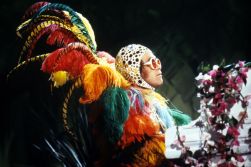 I found I needed to create a special category for Elton John, responsible for some of the most beloved and high-quality songs of his era (“Tiny Dancer,” “Your Song,” “Rocket Man,” “Burn Down the Mission,” “Levon,” “Friends,” “Candle in the Wind”). However, he evolved into a writer of some of the most obnoxious songs of the mid-’70s, too. “Crocodile Rock,” “Bennie and the Jets,” “Island Girl” and “Don’t Go Breaking My Heart” (with Kiki Dee) may have been popular on the charts, but they drove some listeners (like me) to the brink of madness.
**************
Honorable mention (and there are SO MANY!):
“Having My Baby,” Paul Anka, 1974; “You Light Up My Life,” Debbie Boone, 1978; “Cat Scratch Fever,” Ted Nugent, 1977; “Rock Me Amadeus,” Falco, 1986; “I Love a Rainy Night,” Eddie Rabbit, 1981; “I’ll Tumble 4 Ya,” Culture Club, 1983; “Sussudio,” Phil Collins, 1985; “Boogie Oogie Oogie,” A Taste of Honey, 1978; “YMCA,” The Village People, 1976; “You Make My Dreams,” Hall & Oates, 1981; “All Out of Love,” Air Supply, 1980; “Truly,” Lionel Richie, 1982; “I’m Not Lisa,” Jessi Colter, 1975; “Crimson and Clover,” Tommy James & Shondells, 1969; “Can’t Smile Without You,” Barry Manilow, 1978; “Love is Thicker Than Water,” Andy Gibb, 1977; “Mr. Blue Sky,” ELO, 1978.
I’m sure I’ve missed a few of your “worst favorites.” Please bring them to my attention, and perhaps I’ll include them in “Cringeworthy Songs #3” sometime!
 And yet, many folks are overcome with sadness as another summer passes, with the knowledge that Old Man Winter isn’t far off. Very understandable; the days grow shorter, animals prepare for winter’s hibernation, our bones get chilled more easily.
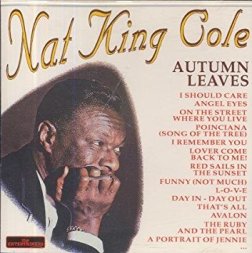 “Autumn Leaves,” Nat King Cole, 1956, and Eric Clapton, 2010
 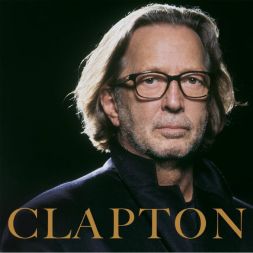 — the song is THAT good). Humorous footnote: There’s a 1956 film, originally titled “The Way We Are,” that actually was changed to “Autumn Leaves” just to capitalize on the Cole version, high on the charts at the time, that was played over the opening credits! It’s a quintessentially melancholy song about lost love and how autumn can bring back painful memories: “The falling leaves drift by my window, the autumn leaves of red and gold… Since you went away, the days grow long, and soon I’ll hear old winter’s song, but I miss you most of all, my darling, when autumn leaves start to fall…”
 “Harvest Moon,” Neil Young, 1992
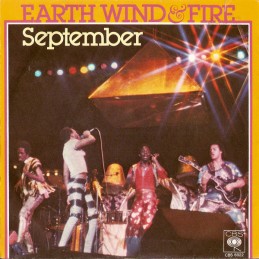 “September,” Earth, Wind & Fire, 1978
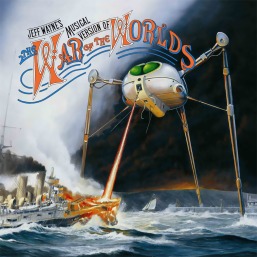 “Forever Autumn,” Justin Hayward, 1978
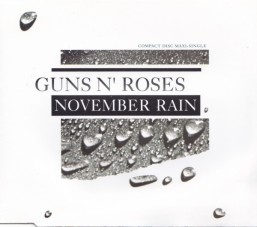 “November Rain,” Guns ‘n Roses, 1991
  “Indian Summer,” Poco, 1977
 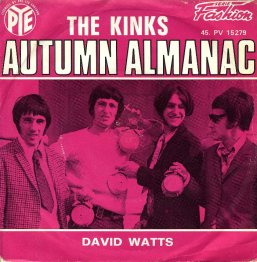 “Autumn Almanac,” The Kinks, 1967
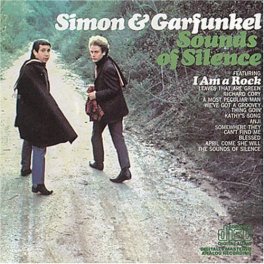 “Leaves That Are Green,” Simon and Garfunkel, 1966
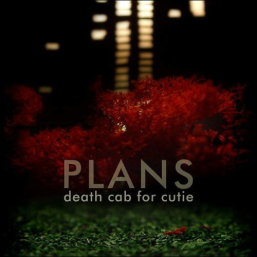 “Summer Skin,” Death Cab For Cutie, 2005
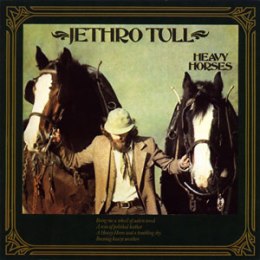 “Heavy Horses,” Jethro Tull, 1978
 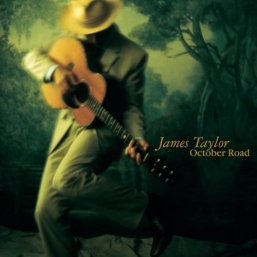 “September Grass,” James Taylor, 2002
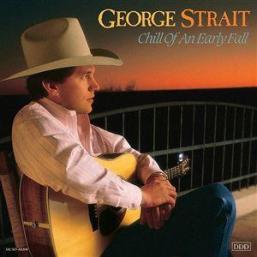 “The Chill of an Early Fall,” George Strait, 1991
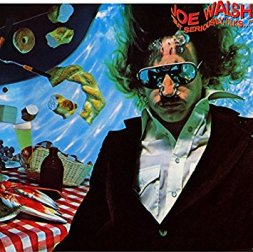 “Indian Summer,” Joe Walsh, 1978
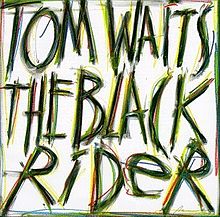 “November,” Tom Waits, 1993
 “Autumn Leaves,” Ed Sheeran, 2017
 Hack's Back Pages