And I feel like a number
I’ve written quite a few blog entries that explore various lyrical themes in rock music: Songs about breaking up, songs of gratitude, songs about states, songs about summer, songs about healing and renewal, songs about cars and driving…
This time, let’s look at the numbers. That is, songs with numbers in the title.
 There are probably several thousand songs that include a number in the title, from “One” by Three Dog Night to “Wait a Million Years” by The Grass Roots, and most of the numbers in between. To help pare down the list of candidates I’d be exploring, I decided to limit the list to songs that use numerals, rather than the word for a number. Granted, that means great songs like “I’m Eighteen” by Alice Cooper, “Three Roses” by America, “At Seventeen” by Janis Ian and “Ten Years Gone” by Led Zeppelin were out of the running. Maybe they’ll show up in another list on another blog entry…
Numerals are used in song titles in a variety of ways: as flight numbers, as auto models, as times of day, as phone numbers, as dollar amounts, as years, as highway route numbers.
As is customary at “Hack’s Back Pages,” I’m focusing on songs from the 1955-1990 period, just because that’s the era I know best. And, as always, there’s a Spotify playlist at the end so you can listen along as you read!
And here we go with a dozen songs worth checking out:
************
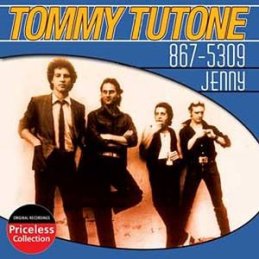 “867-5309/Jenny,” Tommy Tutone, 1981
Woe to those folks in area codes all over the country who happened to have this phone number in early 1982. Songwriter Alex Call came up with this power-pop ear worm, which centers on a teenaged boy who finds a girl’s name and phone number on a wall and is hoping to work up the nerve to call her. It was implied not only that the wall was a men’s bathroom wall but that Jenny was eager to please, which led thousands of teens, and adult drunks, to call and leave dirty messages. A one-hit wonder group called Tommy Tutone took the song to #4 in March 1982, and the number remains perhaps the most ingrained phone number in pop music history (along with The Marvalettes’ 1962 hit “Beechwood 4-5789”). Apparently, 867-5309, which Call says “came to me out of thin air,” is still an available phone number in some parts of the country, but discontinued in others.
 “4 + 20,” Crosby, Stills, Nash and Young, 1970
This foursome of talented songwriters was never able to stay together for long because they each had too many songs they wanted to record and not enough room on group albums, and their egos were pretty huge, so they often went off on numerous solo and duo projects instead. In late 1969, as they were assembling the legendary “Deja Vu” LP, CSN&Y divvied up the available slots between the four. Stephen Stills was eager to contribute “4 + 20,” a solemn look at his life at the tender age of 24. (Coincidentally, Neil Young’s “Old Man” also reflected on his life at that age — “24 and there’s so much more…”). This rather bleak Stills track really should’ve been held back for a solo LP because it features him all alone on vocals and guitar, instead of the trademark 3- and 4-part harmonies that were the group’s signature sound.
 “10538 Overture,” Electric Light Orchestra, 1972
Roy Wood, Jeff Lynne and Bev Bevan had been the prime players in the British rock band The Move in the late ’60s, and in 1971, they started a new project that would feature orchestral instruments in a rock setting. In particular, they used “sawing” cello riffs in place of guitar parts on tracks like “10538 Overture,” an early single from the group’s debut LP. “The critics called it ‘baroque and roll,’ which is actually pretty accurate,” said Lynne, who soon became the leader of the band known as Electric Light Orchestra. This track is about an escaped prisoner, and Lynne chose to give him a number (10538) instead of a name, just like in prison. The song reached #9 in England but stiffed in the US, where their success didn’t begin until 1974’s “Can’t Get It Out of My Head.”
 “Suite for 20G,” James Taylor, 1970
As Taylor and producer Peter Asher were putting the finishing touches on the classic “Sweet Baby James” album in early 1970, the guys in charge at Warner Brothers told them they were still one song shy of the number required. To light a fire under the reluctant artist, the record company told him, “Write one more song and record it, and you’ll be all done, and we’ll give you a $20,000 advance.” So James holed up in his hotel room and cranked out a song specifically to meet that demand, and he called it, slyly, “Suite for 20G.” (I always thought 20G was a hotel room or apartment number…) He turned three song fragments into a suite that closes the album in festive fashion.
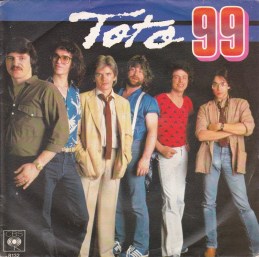 “99,” Toto, 1979
Composer David Paich, keyboard player for the LA band Toto, said this song was inspired by George Lucas’s early science-fiction film “THX-1138,” about life in a 25th Century totalitarian state where numbers replace names and love is forbidden. It was only a minor hit, peaking at #26 in 1980, but the track became something of a pop culture favorite among TV fans who saw the lyrics as a loving tribute to the sexy Agent 99 on the ’60s TV show “Get Smart”!
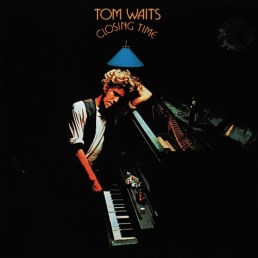 “Ol’ ’55,” Tom Waits, 1973
It’s a damn shame that a huge swath of the rock/pop music audience is pretty much unfamiliar with Waits, perhaps the most interesting of many under-the-radar songwriting artists of the ’70s/’80s and beyond. His gruff vocals and loose jazz-folk arrangements may not be everyone’s cup of tea, but boy, some of his songs are magnificent. Witness “Ol’ ’55,” which was the leadoff track on his excellent 1973 debut LP, “Closing Time.” It paints a poignant picture of a man driving all night in his old 1955 vehicle, and pulling into town at sunrise, feeling like good fortune might be coming his way. He has said he never much cared for The Eagles’ version (from their 1974 LP, “On the Border”) because it was “too sweet, too antiseptic.” Other covers worth hearing include those by Sarah McLachlan, Ian Matthews and Richie Havens.
 “19th Nervous Breakdown,” The Rolling Stones, 1966
Once The Stones became a sensation with the release of their #1 smash hit “(I Can’t Get No) Satisfaction” in the summer of 1965, the band was sent out on a relentless five-month tour of the US and other countries, their first foray outside England. Mick Jagger recalls saying wearily to the band after one show, “I don’t know about you blokes, but I’m about to have my nineteenth nervous breakdown.” They immediately seized on the phrase as a great song title, and wrote a tune around it that lambasted spoiled teenagers who receive many riches but are still unhappy. “Most of the songs of that time, other than maybe what Bob Dylan was writing, were simple love songs,” said Jagger years later. “So a song like this one was considered jarring, even shocking, to a lot of people. Who writes pop songs about nervous breakdowns?”
 “25 or 6 to 4,” Chicago, 1970
Upon its release, I recall wondering just what this strange title was supposed to mean. I decided it meant “25 minutes before 4:00, or 6 minutes before 4:00.” Turns out I was pretty close. Many years later, composer Robert Lamm, Chicago’s keyboardist/vocalist, said the song describes a time he was in the Hollywood Hills struggling to write a song in the wee hours of the morning. “The lyrics are pretty clear — ‘Waiting for the break of day, searching for something to say.’ I looked at the clock and saw that it was 3:35 am, or maybe 3:34 am. So when the line came out, it was 25, or 26, minutes ’til 4 o’clock.” Regardless, it was one of Chicago’s biggest hits, merging a powerful horn section, Terry Kath’s fiery guitar solo and Peter Cetera’s vocals into one strong song that was performed at virtually every concert they’ve ever done.
 “Farenheit 451,” Todd Rundgren and Utopia, 1981
When Ronald Reagan won the 1980 election, Rundgren and other progressive- minded people feared there would be a conservative backlash against the social issues of the day. He was right, and Utopia’s 1981 LP “Swing to the Right” included songs that reflected Rundgren’s thoughts on that political turn. One of them was “Fahrenheit 451,” a crystal-clear reference to the 1953 Ray Bradbury book about a dystopian society where all books are burned. The title refers to the temperature at which book paper catches fire.
 “Funk #49,” The James Gang, 1970
Joe Walsh explains how he and his early Cleveland-based group came up with their songs: “We used to play covers like The Yardbirds’ ‘Lost Woman’ and Buffalo Springfield’s ‘Bluebird.’ Then we’d go off into a four- or five-minute jam in the middle. We took those jams and wrote words to them, and those were really the bulk of the first and second James Gang albums.” So why is the eventual single called “Funk #49”? “Well, we had a funky little jam on the first album we called ‘Funk 48.’ I don’t know why. Then we said, ‘Hey, this is that other funk jam we have.’ And it seemed like we were counting the number of times we’d ever played it. We figured it was right around 50. Our producer Bill Szymczyk said ‘It couldn’t have been 50.’ We said, ‘Okay, well, 49 then!’ We continued the sequence.” The group also wrote a track called “Funk 50” but never released it…until 2012, more than 40 years later, when Walsh revived it for his “Analog Man” album. It completes a nice trilogy for any Walsh/James Gang playlist you might want to create.
 “Johnny 99,” Bruce Springsteen, 1982
Following the release in 1980 of his double LP “The River” — which included his first Top Ten hit, “Hungry Heart” — Springsteen surprised and/or disappointed his growing fan base, pulling way back from the exuberance of The E Street Band to release “Nebraska,” a collection of stripped-down tunes of despair recorded alone at home in 1982 on a 4-track cassette machine. Many critics hailed it as a brilliant departure that gave him gravitas to balance the party guy who led a vivacious live band. One of the tracks he has often performed live in the years since then is “Johnny 99,” which tells the tale of a desperate, drunk, unemployed man who shot a night motel clerk and was ultimately sentenced to 99 years in prison. Springsteen has said he was honored and thrilled that country music legend Johnny Cash recorded it as the title song of a 1983 LP.
 “One After 909,” The Beatles, 1970
It’s a pretty bittersweet truth that, as The Beatles were breaking up, they were able to show signs of closure in their recordings. The “Abbey Road” LP famously concludes with “The End” and its philosophical line, “and in the end, the love you take is equal to the love you make.” Similarly, on the band’s final LP release, “Let It Be,” they included a rousing live recording, from the Apple Records rooftop “concert,” of “One After 909,” a song John Lennon and Paul McCartney had written more than a decade earlier, not long after they first met as teenagers. Said Lennon in 1980: “That was something I wrote when I was about 17. I lived at 9 Newcastle Road, and I was born on October 9. The number nine seemed to follow me around all my life.” McCartney added, “That one has great memories for me of us trying to write a train song. The lyrics are simple — she didn’t make the 9:09 train, she took the next one.”
*************
Honorable mention:
“3/5 of a Mile in 10 Seconds,” Jefferson Airplane, 1967; “Highway 61 Revisited,” Bob Dylan, 1965; “Love Potion No. 9,” The Searchers, 1964; “5:15,” The Who, 1973; “409,” The Beach Boys, 1963; “30 Days in the Hole,” Humble Pie, 1972; “96 Tears,” ? and The Mysterians, 1966; “Driver 8,” R.E.M., 1985; “50 Ways to Leave Your Lover,” Paul Simon, 1975; “9 to 5,” Dolly Parton, 1980; “’39,” Queen, 1975; “1-2-3,” Len Barry, 1965; “Revolution 9,” The Beatles, 1968; “Hymn 43,” Jethro Tull, 1971; “Miami 2017,” Billy Joel, 1976; “Route 66,” Nat King Cole, 1956; “Flight 602,” Chicago, 1971

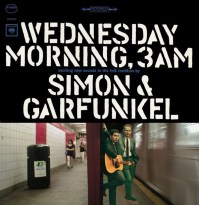 For poor Wednesday, I could come up with only two — Simon and Garfunkel’s obscure 1964 ballad “Wednesday Morning 3AM” (which doesn’t even mention Wednesday in the lyrics), and a silly track sung by Seal called “Ashley Wednesday” from 2016’s tongue-in-cheek parody film “Popstar: Never Stop Never Stopping.”
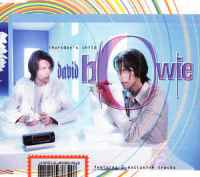 weekend, it’s Thursday night, let’s get it right…” David Bowie came up with a great tune on his 2003 LP “Hours…” called “Thursday’s Child,” and on Donovan’s second album “Fairytale” (1965) is a strange little ditty called “Jersey Thursday.”
 Gone,” the seven-minute opus from Lynyrd Skynyrd’s 1973 debut; “Tuesday Heartbreak,” a catchy funk tune on Stevie Wonder’s 1972 LP “Talking Book”; “Everything’s Tuesday,” Chairmen of the Board (1970); “Sweet Tuesday Morning,” an obscure album track from Badfinger’s “Straight Up” (1971); and The Rolling Stones’ third #1 single, “Ruby Tuesday,” from their “Between the Buttons” album in early 1967.
 celebrating the arrival of the weekend each Friday: “Monday morning feels so bad, everybody seems to nag me, comin’ Tuesday, I feel better, even my old man looks good, Wednesday just don’t go, Thursday goes too slow, I got Friday on my mind…” Also worth noting are “Black Friday,” the leadoff track from Steely Dan’s excellent 1975 album “Katy Lied,” which touches on the day the stock market crashed in 1929; “Friday,” an energetic Joe Jackson song from his influential “I’m the Man” LP (1978); and a spooky progressive rock track by Peter Gabriel-era Genesis called “Get ‘Em Out by Friday,” from their “Foxtrot” album (1972). Lastly, “Friday I’m in Love,” one of two songs by The Cure to make it to the Top 20 on the US singles chart, celebrates the day when everything goes right: “Monday you can fall apart, Tuesday, Wednesday, break my heart, oh, Thursday doesn’t even start, it’s Friday I’m in love, Saturday wait, and Sunday always comes too late, but Friday never hesitate…”
 Papa John Phillips of The Mamas and The Papas came up with the “Monday, Monday” lyrics that permanently cursed Monday in pop culture: “Every other day of the week is fine, fine, but whenever Monday comes, you’ll find me crying all of the time…”
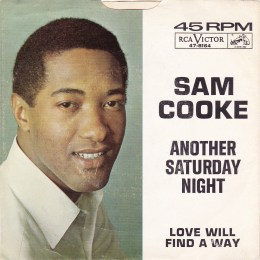 “Another Saturday Night,” a hit for Sam Cooke in 1963 and later Cat Stevens in 1974, finds the narrator alone: “How I wish I had someone to talk to, I’m in an awful way”; The Eagles’ lament “Saturday Night” from their “Desperado” album asks, “Whatever happened to Saturday night, finding a sweetheart and holding her tight, she said ‘Tell me, oh tell me, was I all right?’ Whatever happened to Saturday night?”
 people laughing, a man selling ice cream, singing Italian songs… and I’ve been waiting such a long time for Saturday…”
 Bono and U2, always fiercely Irish, made an emphatic statement in 1983’s “Sunday Bloody Sunday” about the January 1972 Sunday afternoon killing of unarmed protesters by British soldiers in the early ’70s. But it’s really a cry out against violence and unrest everywhere: “Mothers, children, brothers, sisters, torn apart, Sunday, bloody Sunday, how long? How long must we sing this song?…”
 team were falling apart, and The Monkees made it a big #4 hit in 1967: “Another pleasant valley Sunday, charcoal burning everywhere, rows of houses that are all the same, and no one seems to care…”
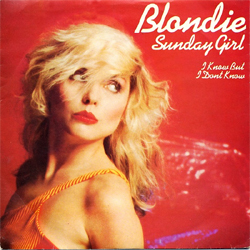 Blondie’s song “Sunday Girl,” from their 1978 hit album “Parallel Lines,” describes an elusive girl who wants to join the fun but has doubts and reservations: “I know a girl from a lonely street, cold as ice cream but still as sweet, dry your eyes, Sunday girl, hey, I saw your guy with a different girl, looks like he’s in another world, run and hide, Sunday girl…”
 Hack's Back Pages