I’ve been all around this great big world
Rock and roll is, without question, an inherently American musical genre, born in the mid-1950s as a hybrid of blues, country, jazz and R&B. But it very quickly developed a global reach.
 Britain and Canada eagerly accepted it almost right away, and other European countries and Australia soon followed suit. People in other regions of the world — Central and South America, the Far East, Africa — had very strong allegiances to their own vibrant, indigenous music, so they took a little longer to join the party. Communist governments refused to allow their people to be exposed to free-thinking pop music until well into the 1980s, despite several overt attempts to infiltrate (The Beatles’ 1968 album-opener “Back in the USSR,” for instance).
It’s a different ball game these days. “Best World Music Album” is a Grammy category. Certain artists have enthusiastically embraced and pushed rhythms and instruments (reggae, ska, sitars, wooden flutes, etc) that have expanded American pop music like never before. Paul Simon’s “Graceland,” with its infusion of South African vocal and percussive elements, won Album of the Year in 1987. Peter Gabriel has shown a deep interest and appreciation for the music of other cultures — African, Asian — evidenced by numerous tracks on his solo LPs, most notably 1980’s “Biko.” Many dozens of artists in the ’90s and beyond have given credit to musicians like Simon and Gabriel for leading the way, and influencing their music and their interests.
One of these days, I’ll assemble a set list of pop songs from the ’60s, ’70s and ’80s that show the obvious and subtle influence on American pop music of musical genres from around the world, but today, my focus is simpler. In this blog post, I offer a set list of songs that pay tribute to various major world cities and their cultures.
Rock and roll is all around the world.
************
 “Leningrad,” Billy Joel, 1989
When Billy Joel appeared in concert in Russia in 1987 as the first major Western artist to shoot an in-concert video there, he befriended a performing clown named Viktor, and they shared common experiences growing up in the USA and the USSR. The lyrics compared the wildly disparate lives of Russian and American kids growing up in opposing cultures, and how they became friends despite these differences: “And Cold War kids were hard to kill, under their desks in an air raid drill, haven’t they heard we won the war, what do they keep on fighting for?… Viktor was sent to some Red Army town, served out his time, became a circus clown, the greatest happiness he ever had was making Russian children glad… We never knew what friends we had until we came to Leningrad…”
 “Free Man in Paris,” Joni Mitchell, 1974
You might think Joni is singing about a boyfriend, or some fictional guy, but in fact, the “free man in Paris” is manager/mogul David Geffen, who guided her mid-’70s career and those of many others. She thought he worked too hard and enjoyed seeing him relax in the carefree “City of Lights” environs, and wrote about Paris from his point of view: “If I had my way, I’d just walk through those doors and wander down the Champs d’Elysees, going cafe to cabaret… I felt unfettered and alive, there was nobody calling me up for favors, no one’s future to decide, you know, I’d go back there tomorrow but for the work I’ve taken on, stokin’ the star-maker machinery behind the popular song…”
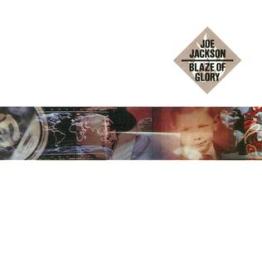 “Down to London,” Joe Jackson, 1989
Jackson was a significant presence on the British New Wave scene in the late ’70s with his “I’m the Man” and “Look Sharp!” LPs and the singles “Is She Really Going Out With Him” and “It’s Different For Girls,” although he didn’t really get US attention until 1982’s “Steppin’ Out” and “Breaking Us in Two” and 1984’s “You Can’t Get What You Want.” In 1989, Jackson released a sophisticated set of songs called “Blaze of Glory” which included “Down to London,” a catchy, piano-driven tune that told the story of a dead-end rocker from a northern British burg who came to the capital city to try his best at a musical career: “Playing guitars in the Underground, gone down to London, trying to chase the sound, gone down to London to be the king…”
 “Only a Dream in Rio,” James Taylor, 1985
Soft-rock balladeer Taylor was a hugely successful artist on records and in concert throughout the 1970s and into the 1980s, but underneath, he struggled with drug addiction. When he performed at the inaugural 10-day “Rock in Rio” festival in early 1985, he was overwhelmed by the ecstatic adulation of the million-plus crowd, and had an epiphany that motivated him to quit substances for good. He wrote about the experience in this stunning song from his underrated LP “That’s Why I’m Here”: “Well they tell me, it’s only a dream in Rio, nothing could be as sweet as it seems on this very first day down, they remind me, ‘Son, have you so soon forgotten?’, often as not, it’s rotten inside, and the mask soon slips away…”
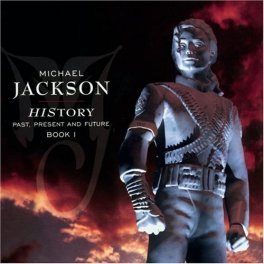 “Stranger in Moscow,” Michael Jackson, 1997
This haunting ballad, written as a poem during his performance stop in the Russian capital in 1993, explores Jackson’s devastating feelings of isolation and loneliness at the height of his ignominious child abuse accusations. He said he took some solace at being a stranger in a strange land at that difficult time in his life: “I was wandering in the rain, mask of life, feeling insane, swift and sudden fall from grace, sunny days seem far away, Kremlin’s shadow belittling me, Stalin’s tomb won’t let me be, on and on and on it came…”
 “Marrakesh Express,” Crosby Stills and Nash, 1969
David Crosby of the Byrds, Stephen Stills of Buffalo Springfield, and Graham Nash of The Hollies knocked the rock music audience on its collective ear with their spectacular “Crosby Stills and Nash” LP in the spring of 1969, with the single “Marrakesh Express” modestly leading the way before conceding chart time to Stills’ masterpiece “Suite: Judy Blue Eyes.” Nash’s song tells the story of his 1966 train ride from Casablanca to Marrakesh, noting that he enjoyed the friendly commoners in the steerage section (“with their ducks and pigs and chickens”) much better than the stuffy patrons in the first-class compartment to which he’d been assigned.
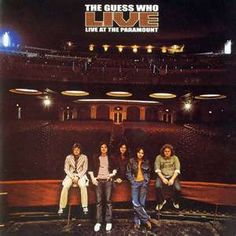 “Runnin’ Back to Saskatoon,” The Guess Who, 1972
One of Canada’s most successful pop acts, The Guess Who, did very well on the charts in the US for several years (1969-1974) with guitarist Randy Bachman’s songs (“Undun,” “These Eyes,” “No Time,” “Laughing”) as well as vocalist/keyboardist Burton Cumming’s tunes (“Share the Land,” “Albert Flasher,” “Rain Dance,” “Star Baby”). Cummings wrote the minor hit “Runnin’ Back to Saskatoon,” with lyrics that made mention of several of the smaller outposts in Canada’s western provinces (Moosejaw, Moosomin, Red Deer, Medicine Hat).
 “Still in Saigon,” Charlie Daniels Band, 1981
The veteran Nashville picker/fiddler has always been a very vocal patriot, particularly when it came to supporting military veterans. In “Still in Saigon,” Daniels spoke movingly of how heartbreaking it is to observe Vietnam-era vets coping with PTSD and other nightmarish flashbacks from their experiences in that war-torn Southeast Asian country. Compared to the unpredictability to be found in the jungles and rice paddies, Saigon (long since renamed Ho Chi Minh City) served as the only thing remotely close to the civilization of home the US soldiers longed for.
 “Loco in Acapulco,” The Four Tops, 1988
In 1988, Genesis drummer Phil Collins, by then well into a very successful solo career, tried his hand at acting when he starred in the British comedy-crime drama “Buster,” which met with only mixed reviews, but the soundtrack did very big business. Collins and Motown songwriting/producing titan Lamont Dozier teamed up to write Collins’s #1 hit “Two Hearts” as well as The Four Tops’ alluring comeback, “Loco in Acapulco,” which was a big success in the UK and elsewhere but not here, despite its tempting words: “You can hear voices bleeding through those warm Latin nights, memories are lost and found, leaving broken hearts all over town, ’cause you’ll be going loco down in Acapulco if you stay too long…”
 “Woman From Tokyo,” Deep Purple, 1973
This groundbreaking British band, credited with helping create the heavy-metal genre, worked their butts off for five long years, touring relentlessly and recording whenever they could. By 1972, they added Japan to their itinerary and came up with their big single “Woman From Tokyo,” and even recorded their Top Five live album there. The group had reached the burnout phase of their career, but they soldiered on, enjoying the success of the even bigger hit “Smoke On the Water” a year later.
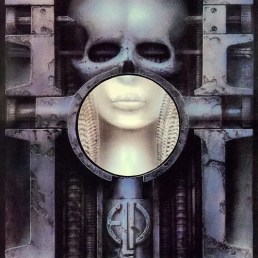 “Jerusalem,” Emerson, Lake and Palmer, 1973
This dramatic piece from ELP’s 1973 top-seller “Brain Salad Surgery” is, to the surprise of most progressive rock stoners who made up the band’s audience, a remarkably effective amalgamation of William Blake’s 1808 poem set to music by Hubert Perry in 1915. It’s not about Israel’s Jerusalem at all, but it hints at the idea that Jesus revisited Earth in 19th Century England: “I will not cease from mental fight nor shall my sword sleep in my hand, ’til we have built Jerusalem in England’s green and pleasant land…”
 “Funky Nassau,” Beginning of the End, 1971
The Bahamas have never been known as an exporter of music like, say, Jamaica and Bob Marley’s reggae, but Caribbean strains can prove irresistible, as “Funky Nassau” proved in the spring of 1971, when indigenous group Beginning of The End took it to #15 in the US. The remake/sequel film “Blues Brothers 2000” made use of the song in its popular soundtrack LP. The lyrics are a bit cheesy, but great fun when juxtaposed against the contagious funky beat: “Miniskirts, maxi-skirts and Afro hairdo, people doing their own thing, don’t care about me or you, Nassau’s gone funky now, Nassau’s gone soul…”
 “Fast Boat to Sydney,” Johnny Cash & June Carter, 1967
Country music titan Cash had been a Nashville superstar since 1955 when he first recorded for Sun Records. By the mid-’60s, he and his wife Vivian split up and Cash fell in love with June Carter, a country music star in her own right. A few months before they married, they recorded their collaborative effort “Carryin’ On With Johnny Cash and June Carter,” which included this ditty about a man who must leave his woman and flee to some distant land. The song actually has little to do with Australia’s biggest city other than that it’s very far away from the singer’s Appalachian homeland…
 “Berlin,” Lou Reed, 1973
Reed was known for dark, even suicidal songs when he was with The Velvet Underground (1966-1971) and in his solo career, and his 1973 LP “Berlin” may have been his most depressing of all. The title track was written after an early 1971 visit to Germany, when he was hounded by nightmarish thoughts of failed relationships and family deaths. Reed was a troubled kid, with plenty of justifiable anxiety and difficult challenges that he transformed into startling musical statements like the album’s title song: “You’re right, oh and I’m wrong, you know I’m gonna miss you now that you’re gone, one sweet day, baby baby, one sweet day…”
 “Budapest,” Jethro Tull, 1987
In addition to his skills as rock’s premier flautist, Tull’s Ian Anderson has always been a superlative lyricist, telling stories of British folklore as well as personal reflections of life experiences. During a European tour in 1986, he and his band were mesmerized by a statuesque beauty working backstage at a concert in Budapest, Hungary, and Anderson wrote this song about the unrequited lust and longing he felt for her: “She was helping out at the backstage, stopping hearts and chilling beers, yes, and her legs went on forever, like staring up at infinity, through a wisp of cotton panty, along a skin of satin sea, it was a hot night in Budapest…”
 “Amsterdam,” Guster, 2003
From the 1990s musical hotbed of Boston came Guster, a wonderful acoustic-based band who at first struggled but then made their mark with 2003’s “Keep It Together,” a strong album of creative songs like “Amsterdam,” released as its single. This is a really great band that should’ve received far more attention than it did, for this LP and its follow-up, “Ganging Up on the Sun” (2006), chock full of smart songs with plenty of potential. This song explored the milieu of drug use and abuse, and the free-spirited atmosphere found in Amsterdam that allowed such experimentation.
 Stockbridge, Massachusetts. It involves Guthrie and some friends, especially Alice, who cooked “a Thanksgiving dinner that couldn’t be beat,” a ton of garbage, and a cop named Officer Obie. Frankly, the rambling piece is only marginally about this holiday, but the hip FM radio stations in most cities would always play it on Thanksgiving morning, and ever since, I make a point of cranking up the volume at my house and singing along when Arlo instructs us to do so.
 “My Thanksgiving,” Don Henley, 2000
 “Gratitude,” Earth, Wind & Fire, 1976
 “I Thank You,” Sam and Dave, 1967, and ZZ Top, 1980
 “Thank You Pretty Baby,” Brook Benton, 1959, and Nat King Cole, 1964
 “Thank You,” Led Zeppelin, 1969
 “Thank You (Falettinme Be Mice Elf Agin),” Sly and The Family Stone, 1970
 “Thank You For Being a Friend,” Andrew Gold, 1978
 “Thank You,” Dido, 2000
 “Thanks,” James Gang, 1970
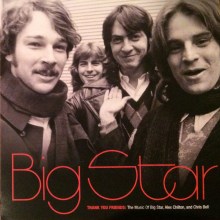 “Thank You Friends,” Big Star, 1974
 “Thank You Girl,” The Beatles, 1963
 “Thank U,” Alanis Morissette, 1998
 “Thank the Lord for the Night Time,” Neil Diamond, 1967
 “Grateful,” Anthony Hamilton, 2016
 “Danke Schoen,” Wayne Newton, 1963
