I will follow you, will you follow me?
This year’s eight inductees into the Rock and Roll Hall of Fame have been announced. There’s Oasis, the ’90s Britpop band dominated by Noel and Liam Gallagher, and I invited my British son-in-law to write about them in a blog entry two weeks ago. There’s Sade, the British soul/jazz group fronted by Nigerian-born singer-songwriter Sade Adu, who I’ll be featuring next week.
And then there’s the multitalented British drummer/singer/songwriter Phil Collins, who has sold a gazillion records as a member of Genesis, as a solo artist and a featured collaborator with other artists, who I’m writing about this week.
The rest — Billy Idol, Iron Maiden, New Order, Luther Vandross and Wu-Tang Clan — barely register in my wheelhouse, or not at all. Still, they’ve all sold a boatload of records and concert tickets over the years, and if they’re worthy enough for the Hall Of Fame committee to select them for induction, I reckon they each deserve at least a few paragraphs in a round-up blog post I’ll be writing two weeks from now.
*****************************
Over the past 70-plus years, there have been quite a few popular music artists who were what you might call “overly prolific.” They released two or even three albums a year and five or six hit singles annually, and seemed to be playing on the radio in a continuous tape loop. I could mention Elvis in the ’50s, The Beatles in the ’60s, Elton John in the ’70s, Michael Jackson in the ’80s, and those are just the ones that come immediately to mind. We were oversaturated in their music, to the point where even if we loved their stuff, we sometimes grew tired of it through overexposure.
Phil Collins is another example. There was a period of about eight years in the 1980s when, no matter how hard we might try, we couldn’t avoid him. In his case, we found ourselves hearing him doing double- and triple-duty — solo tunes, songs with Genesis and duets with other artists, and film soundtracks on top of that.
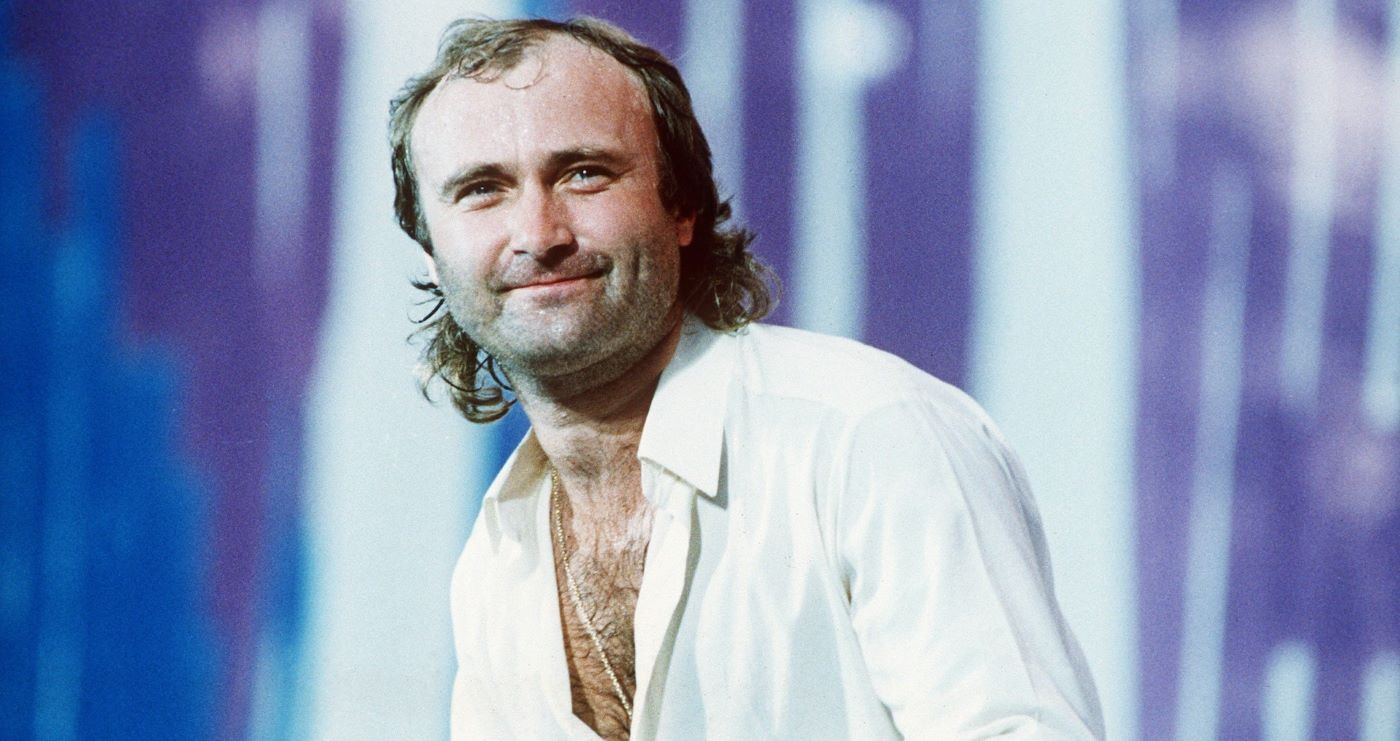
But I can’t recall any artists who have found themselves on the receiving end of so much vitriol and ridicule as Collins has. In my view, it went way overboard, and was not at all fair, especially considering the quality of his musical output was (again, in my view) way above average.
Some of the harsh criticism of Collins came from the diehard fans who worshipped Genesis back in the 1970-1974 era when Peter Gabriel was their charismatic frontman. When Collins became the group’s lead vocalist in 1976 following Gabriel’s departure, those fans never accepted him in that role, and in fact grew to hate him very publicly, taking great offense as the band evolved from a progressive/art-rock band into commercial pop superstars in the 1980s, largely because of Collins’s influence.
Those fans who were biased in favor of Gabriel were never going to give Collins a fair shake…but what about everyone else? Why the “We hate Phil Collins” websites? Why did he take so much shit in the court of public opinion?
I’m not sure there’s a definitive answer for that. To some extent, he was lambasted the same way other hugely popular artists have been condemned. Critics have been notorious for seeming eager to knock stars off the pedestal once they’ve reached the pinnacle of success. (Just ask The Eagles.) Consider these comments by journalist Frank DiGiacomo in a 1999 piece entitled “The Collins Menace” in which he said, “Even when I sought to escape the sounds of Collins in my head by turning on the TV, there he would be, mugging for the cameras, intent on showing the world just how hard he would work to sell millions of records to millions of stupid people.”
Ouch.
But every pendulum eventually swings back, and eventually Collins found himself at the top of magazine lists like “Ten Much-Mocked Artists It’s Time We Forgave.” Said J.D. Considine of Rolling Stone in 2004: “For a time, Phil Collins was nearly inescapable on the radio, but we mustn’t deny the fact that he is an incisive songwriter and resourceful musician.” Dave Simpson in The Guardian in 2013: “It’s about time we recognized Collins’s vast influence as one of the godfathers of popular culture.”
So in this essay, I come to praise Collins. The period when he was being annoyingly overplayed is long behind us, and I’ve never much cared about what artists may do or not do outside of their musical contributions. I think his body of work is largely quite good indeed, not only as a singer and songwriter but also, let’s not forget, as an innovative drummer, which is how he got involved in the music business in the first place.
************************
Collins was born in 1951 in London and began drumming on toy kits at age five. He became an active child actor, appearing in several West End stage productions, including as the Artful Dodger in “Oliver!” But his interest in music and drumming was far greater, and by age 15, he abandoned acting and devoted all his time to playing in bands, emulating his drummer heroes like jazz great Buddy Rich and rocker Ringo Starr.
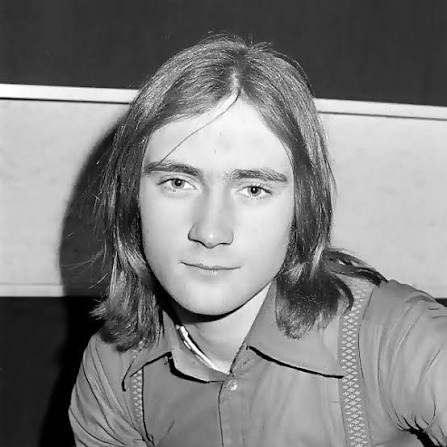
In 1970, he was only 19 when he applied for the job as drummer for Genesis, a talented progressive rock band that hadn’t yet found much commercial success. Singer-songwriter Peter Gabriel, keyboardist Tony Banks and bassist-guitarist Mike Rutherford were all musical prodigies who had attended prep school together, but they lacked a decent drummer, having burned through two already. Gabriel, who had some experience on drums, knew immediately upon hearing Collins that he was going to work out very well for them.
“I was convinced from the first moment,” he recalled in the Gabriel biography “Without Frontiers.” “I knew when Phil sat down at his drum kit that this was a guy who was fully in command of what he was doing, like a jockey on a horse. He was enthusiastic and very self-confident. I used to have a lot of fun telling the drummers how to do their drum parts. Once Phil came along, those days were over.”
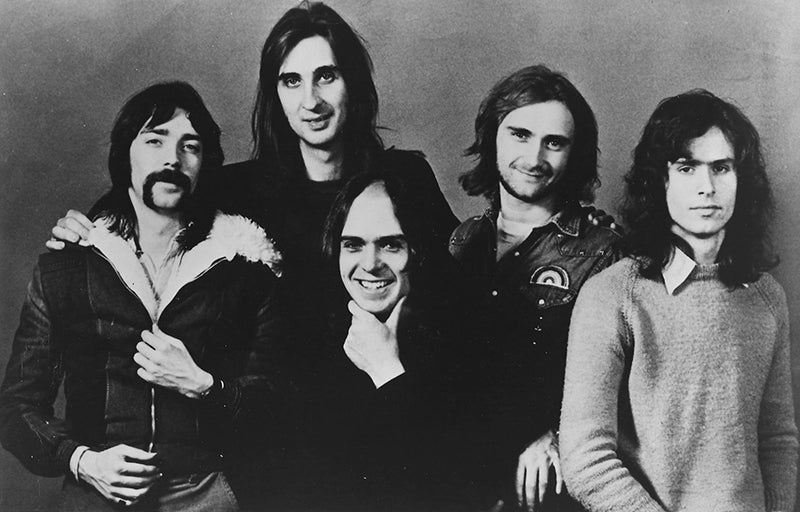
In his 2016 autobiography, “Not Dead Yet,” Collins remembered, “I didn’t know at the time how close they were to splitting up. (They’d lost their guitarist Anthony Phillips, who had health issues and suffered from stage fright, and they’d let drummer John Mayhew go.) I had no idea how much was riding on the auditions. Nor was I aware that Genesis’s finely balanced creative symmetry had had the legs kicked from under it.” Collins was thrilled to land the job, even though he often found himself playing the role of the jovial outside mediator, keeping peace between the tightly wound schoolboy chums.
Beginning with the 1971 Genesis LP “Nursery Cryme,” Collins proved to be a most welcome addition, showing extraordinary dexterity and inventiveness in his drum fills and rhythmic flourishes, which turned out to be crucial as Gabriel, Banks, Rutherford and new guitarist Steve Hackett combined their instrumental talents on extended, intricate pieces like “The Musical Box.” The band’s reputation as a pioneer in progressive, classically trained rock gained momentum over the next three years and four albums: 1972’s “Foxtrot,” 1973’s brilliant “Selling England By the Pound” and “Genesis Live,” and the 1974 double LP “The Lamb Lies Down on Broadway.” Each LP charted higher on UK charts than the previous one, and they began building a modest but devoted audience in the US as well.
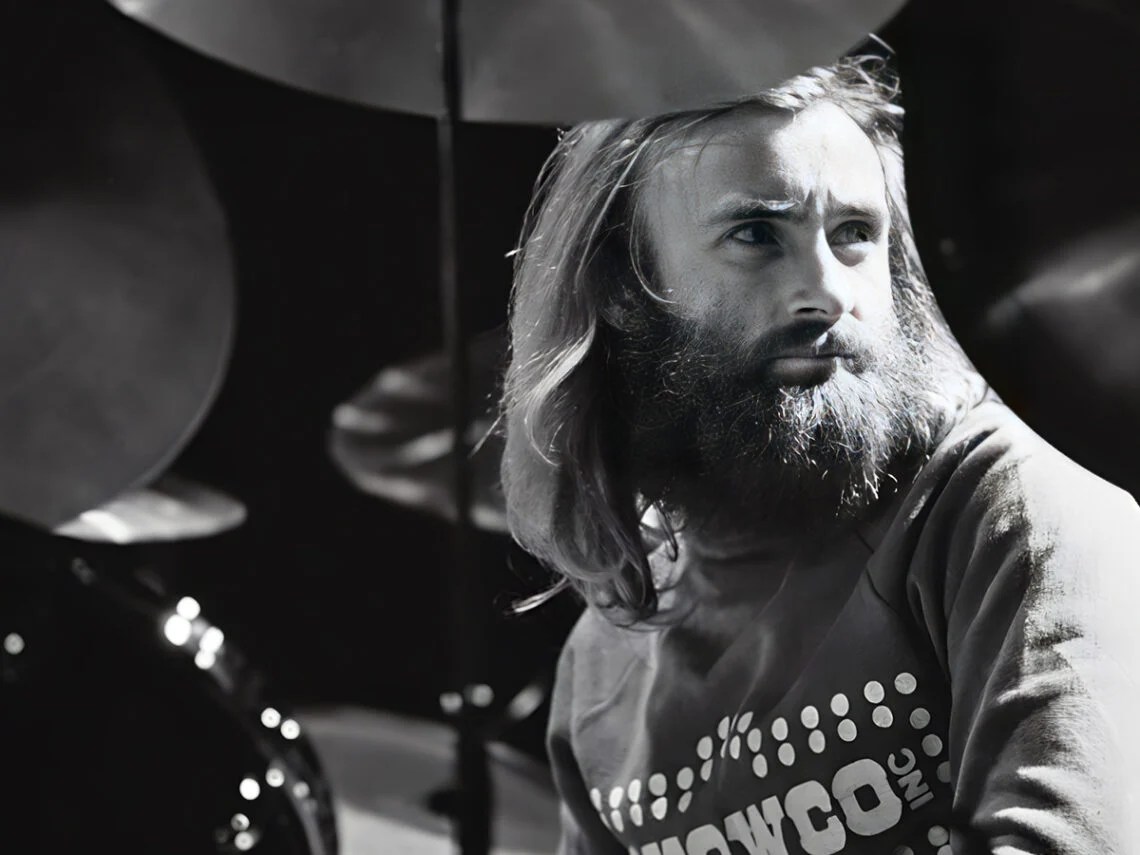
Drumming teacher/scholar Rich Lackowski wrote: “Phil Collins’s grooves in early Genesis recordings paved the way for many talented drummers to come. His ability to make the drums bark with musicality and to communicate so convincingly in odd time signatures left many a drummer tossing on the headphones and playing along to Phil’s lead.”
The experience and training Collins had received in musical theater also made him the obvious choice to regularly sing backing harmonies behind Gabriel on many Genesis tracks. He even made his debut as lead singer on two short, nondescript tunes, “For Absent Friends” and “More Fool Me,” which were sometimes performed in concert. But Collins had no notion, no plan, to increase his role. “I didn’t want to not be the drummer,” he said. “This is what I did. That was my territory.”
But the band was thrown for a loop when Gabriel, one of rock’s most flamboyant, dynamic showmen, privately told the group of his intention to step down. He was about to become a father and his wife’s pregnancy was problematic, so he resigned from Genesis following its 1975 tour. The remaining band members were unsure of how to proceed. Said Collins, “My feeling was, ‘Forget the vocals, let’s carry on as an instrumental four-piece.'” Banks and Rutherford had begun writing some new material and laid down some backing tracks, but eventually they all concluded they needed a frontman vocalist.
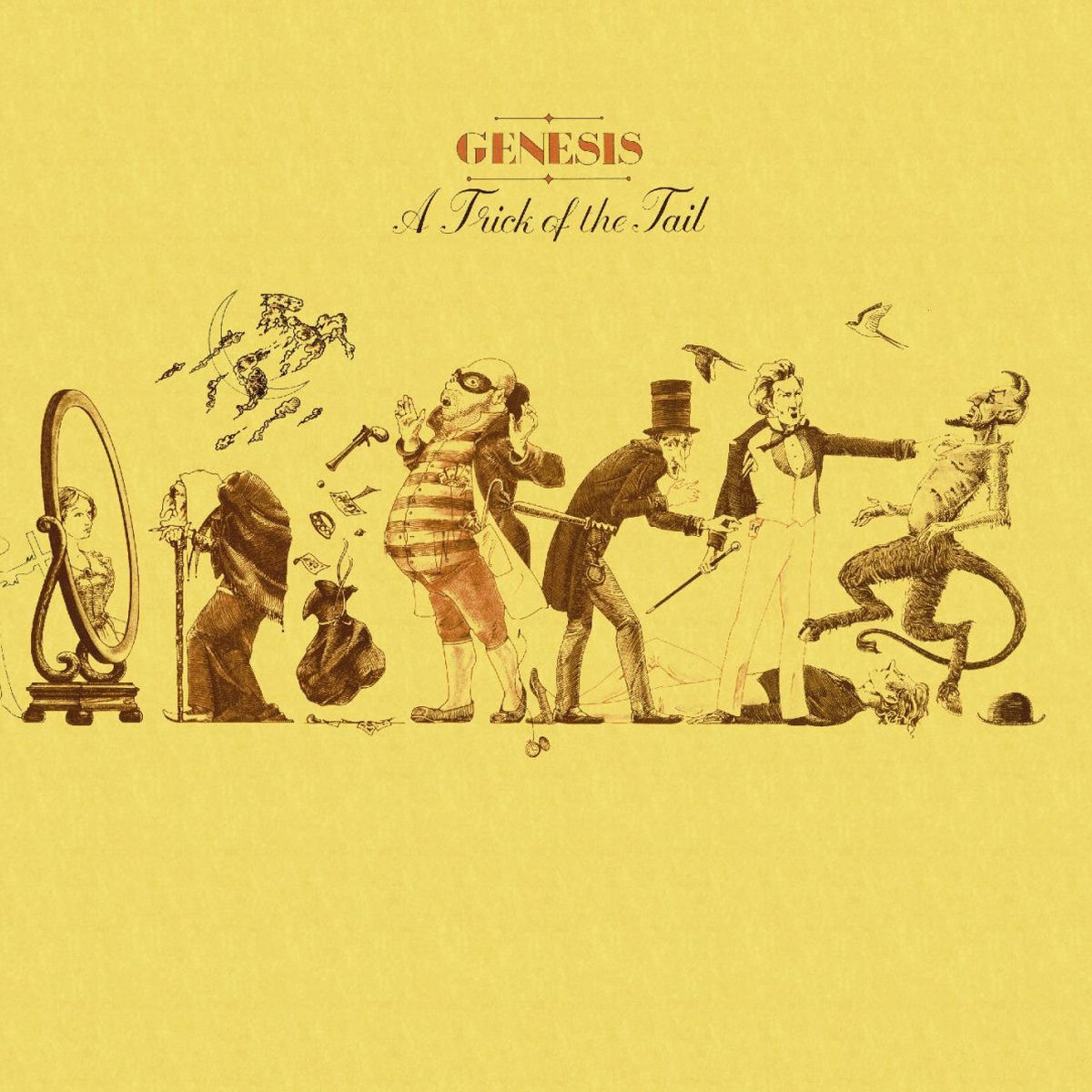
They held auditions for Gabriel’s replacement, which lasted nearly two months and involved more than 50 candidates. Only one seemed promising enough to bring into the studio to try his hand at singing the new lyrics and vocal parts they’d written, but it turned out he wasn’t up to the task. With tour dates looming, and studio hours piling up, Genesis was getting desperate. Finally, Collins surprised his mates when he suggested, “How about I have a go?” They sighed and said, “Might as well.” So he took a shot at singing “Squonk,” a challenging track from their album-in-progress, “A Trick of the Tail.” The others looked at each other in the control room, and their eyebrows said it all: Damn, this just might work!
In his autobiography, Collins recalled that day. “Looking back, it was a defining moment for me. And yet we were still dazed and confused. The one guy we thought might manage the vocals has proved a bust, and now the drummer’s had a pop and doesn’t sound bad. But over the whole album? Is that wise? We’re caught between a rock and a soft place. Having explored every other angle, it seems like the drummer is the last-ditch, last-resort-only option. None of us can take this entirely seriously. Surely some mistake? I’m just as conflicted, because I really enjoy playing the drums. That’s where I live. Yet there’s no denying the truth: I can sing the songs.
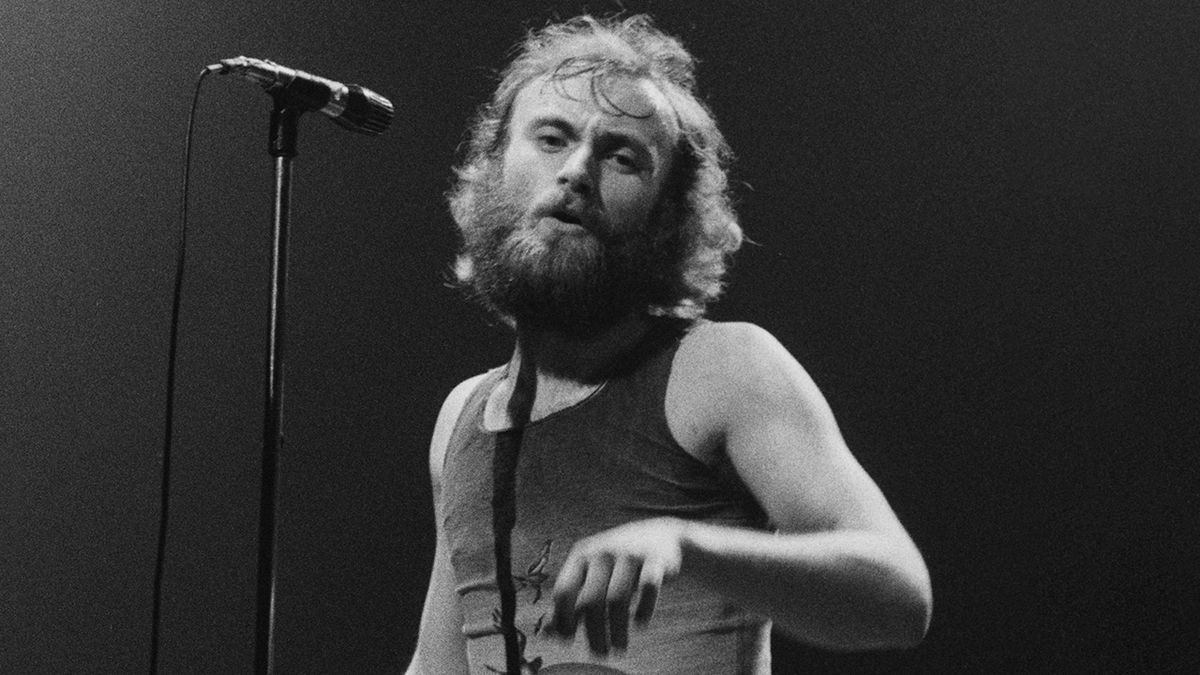
“Finally, a compromise: I might consider this if we can find another drummer I like, because I’m not up for double duty. It just doesn’t work. The lead singer singing from behind a drum kit is alienating for an audience. There’s all these cymbals and stuff getting in the way of any connection between vocalist and crowd.”
The press, who were already convinced Genesis could never survive the loss of Gabriel, were mighty skeptical when Collins was announced as the replacement, and the group’s fan base was equally unsure. “Wait, the new singer is the drummer?” Even Collins was hesitant, but when “A Trick of the Tail” was released in early 1976, the response was largely positive and encouraging, perhaps partly because expectations were low. To many people’s ears, Collins’s vocals sometimes sounded uncannily like Gabriel’s in pitch and tone, and since the music retained much of the intricate fantasy quality of their earlier stuff, the album did well, reaching #3 in the UK, matching the peak of “Selling England By the Pound.”
Then came the acid test — how will the new Genesis come across on tour? To everyone’s relief, things went surprisingly well. With ex-Yes member Bill Bruford manning the drums on stage, Collins stepped out front tentatively, not moving much at first but singing his heart out as the group played fan favorites and a handful of new songs. “I had to learn a new set of skills,” he recalled. “I was insecure as hell about being a frontman. The thing I most had to overcome was my fear of performing with just a microphone stand. I was used to having a row of cymbals between me and the audience. It was nerve-wracking. In particular, what was I supposed to do when there’s no singing?”
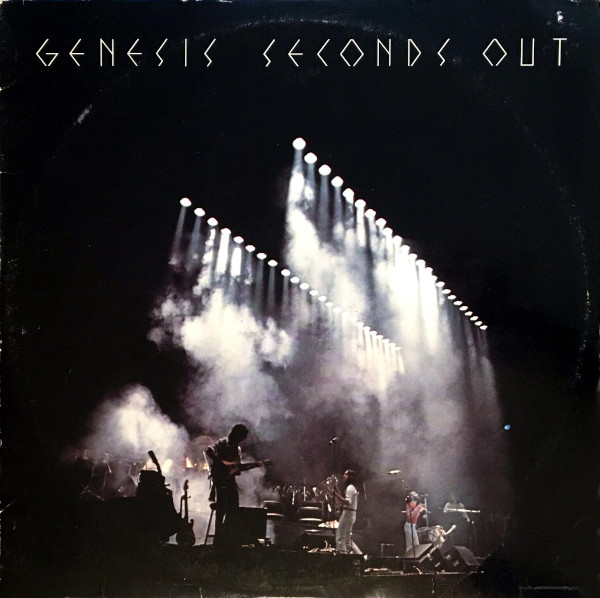
Exhilarated by the acceptance of the Gabriel-less Genesis (except by the diehard “never Collins” faction), the band regrouped and worked on the follow-up, another dense, heavily prog-rock LP called “Wind and Wuthering,” which included their most popular radio-friendly tune yet, “Your Own Special Way.” On stage, Genesis was now playing major venues for the first time, and they began employing laser light shows and huge sound systems, earning a stellar reputation for big-hall sound quality, which was captured on the brilliant double live LP “Seconds Out” in 1977. Collins had recruited Chester Thompson, a jazz drummer who had played with Frank Zappa and Weather Report, who remained their touring drummer for decades to come.
Meanwhile, guitarist Steve Hackett had grown frustrated by 1978 with what he felt was a declining role and decided to leave for a solo career. This turned Genesis into a trio, underscored by the next album’s title, “And Then There Were Three.” Faced with the loss of one of their songwriters, Banks and Rutherford deliberately shifted away from the sprawling, epic structures that defined their previous work, opting instead for shorter, tighter, more direct song formats. It was a transitional album I happened to like, especially tracks like “Deep in the Motherlode,” “Snowbound,” “Scenes From a Night’s Dream” and “Say It’s Alright Joe.” “Follow You, Follow Me” became the group’s first Top 40 hit, peaking at #23 in the US and #7 in the UK. When they returned to the road, it was with hired gun Daryl Stuermer on guitar, along with Thompson on drums, to beef up the core trio as they made a concerted effort to crack the US market. Collins got increasingly more comfortably as the frontman/vocalist, but he also returned to his drum kit each night for an exhilarating “drum duel” with Thompson.
The tour was a big success, but it came at a price. Collins learned that his wife, who had reached her limit with a husband who was constantly away from home, had taken their two children and moved to Canada to live with her mother. Collins was devastated and tried to save the marriage, but she’d made up her mind. He returned alone to England to nurse his wounds and discovered an effective way to work through the emotional pain: He began writing songs.
Most of the material he wrote focused on the loss of his wife and children and the overall themes of rejection, betrayal and a breakdown in communication. When the band reconvened to begin their next album, Banks and Rutherford were surprised and pleased that Collins would now be contributing songs to the sessions, and two of them — “Please Don’t Ask” and “Misunderstanding” — were included on “Duke” (1980), with “Misunderstanding” becoming the group’s first US Top Ten hit.
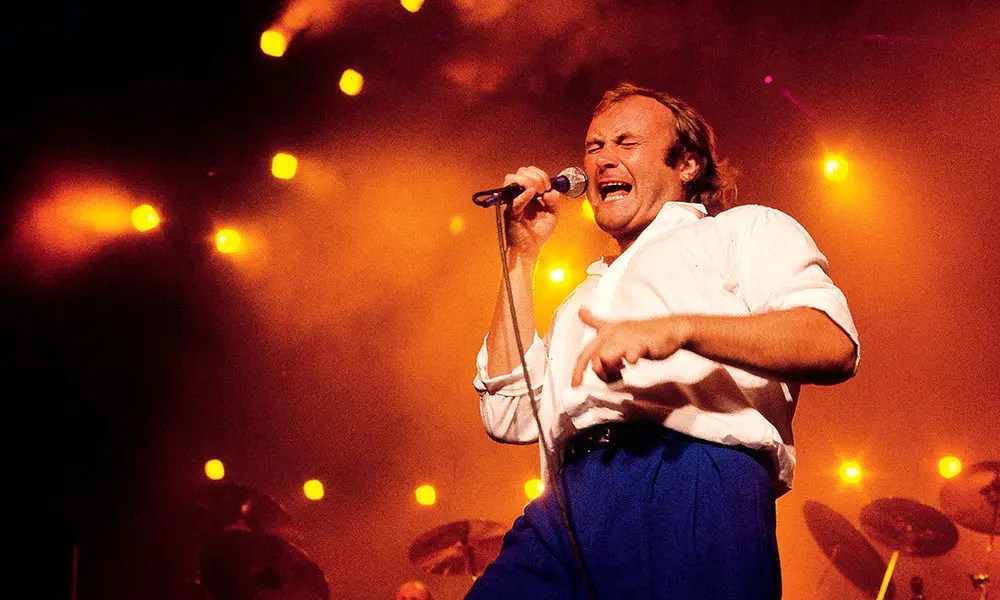
Hackett, Banks and Rutherford had all recorded solo albums in the late ’70s, but Collins hadn’t done so yet, instead preferring to contribute to other artists’ records as a drummer, including LPs by Brian Eno and the British jazz fusion band Brand X. But now that he had found he had a knack for writing his own songs, he made demos and started working up R&B-flavored music (something he’d enjoyed as a kid), enlisting the help of Earth, Wind & Fire’s horn section, dubbed the Phenix Horns. He also bought a then-new Roland CR-78 drum machine and became fascinated by the possibilities of electronic drums.
These influences resulted in a rather astonishing solo debut LP, “Face Value,” released in 1981. While the solo albums of his bandmates had made little impact on the charts, Collins’s LP became a commercial juggernaut, with “In the Air Tonight” and “I Missed Again” both reaching the US Top 20 as the album peaked at #7 and went triple-platinum. Suddenly, Collins on his own had become an undeniable pop sensation, even as he concurrently continued with Genesis.
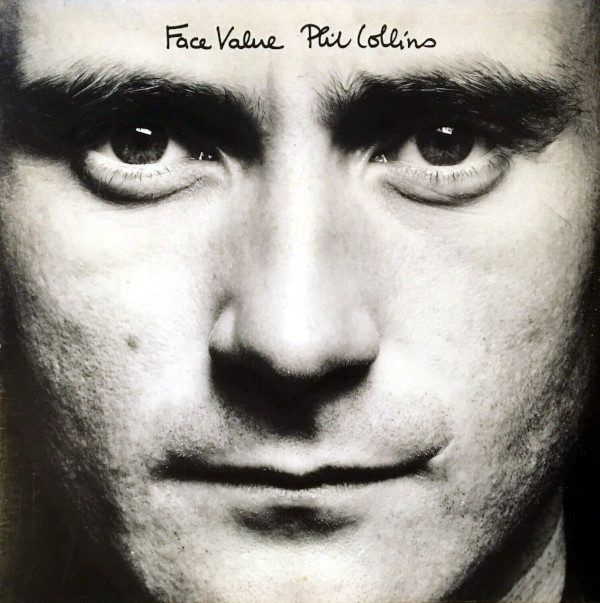
I found “Face Value” to be thoroughly entertaining as a side project, with tracks like “Thunder and Lightning” and a reworking of the Genesis song “Behind the Lines” benefitting from the vibrant horn arrangements. “In the Air Tonight,” with its era-defining drum sound, took on a life of its own, and a compelling cover of The Beatles’ spacey “Tomorrow Never Knows” turned a lot of heads. I’d always been a fan of Collins’s voice, and on “Face Value” it was on full display, handling tender ballads with soft grace and charm, and just as brilliantly, belting out the upbeat tunes with impressive force and enthusiasm.
The Collins haters were ambivalent about the solo work, but when he brought this new R&B/pop sensibility to Genesis with their “Abacab” album later in 1981, many of them abandoned the group for good. It didn’t much matter, though, as a new generation of listeners embraced the new sound, which had New Wave elements that sounded more like The Police. “No Reply at All,” sounding like an outtake from “Face Value,” got tons of airplay in the US, reaching #2 on the new “Mainstream Rock” chart, as did “Paperlate,” an extra track from the “Abacab” sessions that showed up on “Three Sides Live” in 1982.
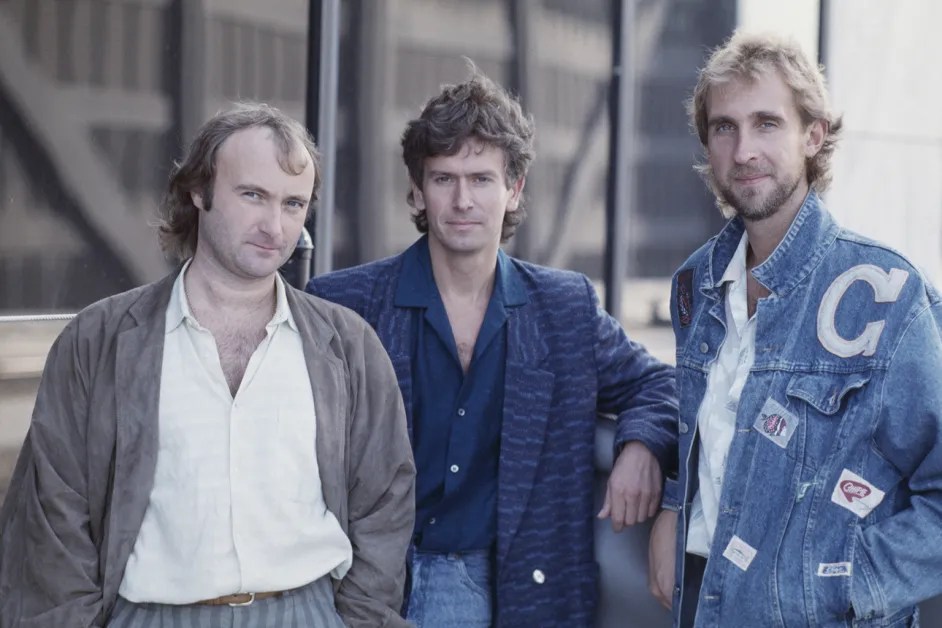
How did Collins’s heavy-handed influence go over with Banks and Rutherford? Collins thought that using the horns was a good move to “suddenly jar people and take them off automatic pilot” from the preconceived notions they had about Genesis. He said he had the idea of writing a song that someone like The Jackson 5 would have wanted to record, and directed the band in a direction that they had never gone before. This development created some initial reservations from Banks, but he said he grew to enjoy the track by the time it was complete. Moreover, “it brought us the commercial success we’d been dreaming of since the very beginning,” Banks said.
Many critics praised the new incarnation of Genesis found on “Abacab,” 1983’s “Genesis” LP and 1986’s mega-successful “Invisible Touch.” Said one. critic, “The band was right to shed the ivory-tower artistry of their early days and embrace the rich pop hooks and accessibility that have made Genesis truly modern art rock. They have traded technical complexity and ingenuity for an altogether more stunning simplicity, making great music for people who never cared for Genesis in its original version.” Rutherford agreed, saying, “We had gone as far as we could with the progressive stuff, and we were eager to write and record in a more direct, relaxed approach.”
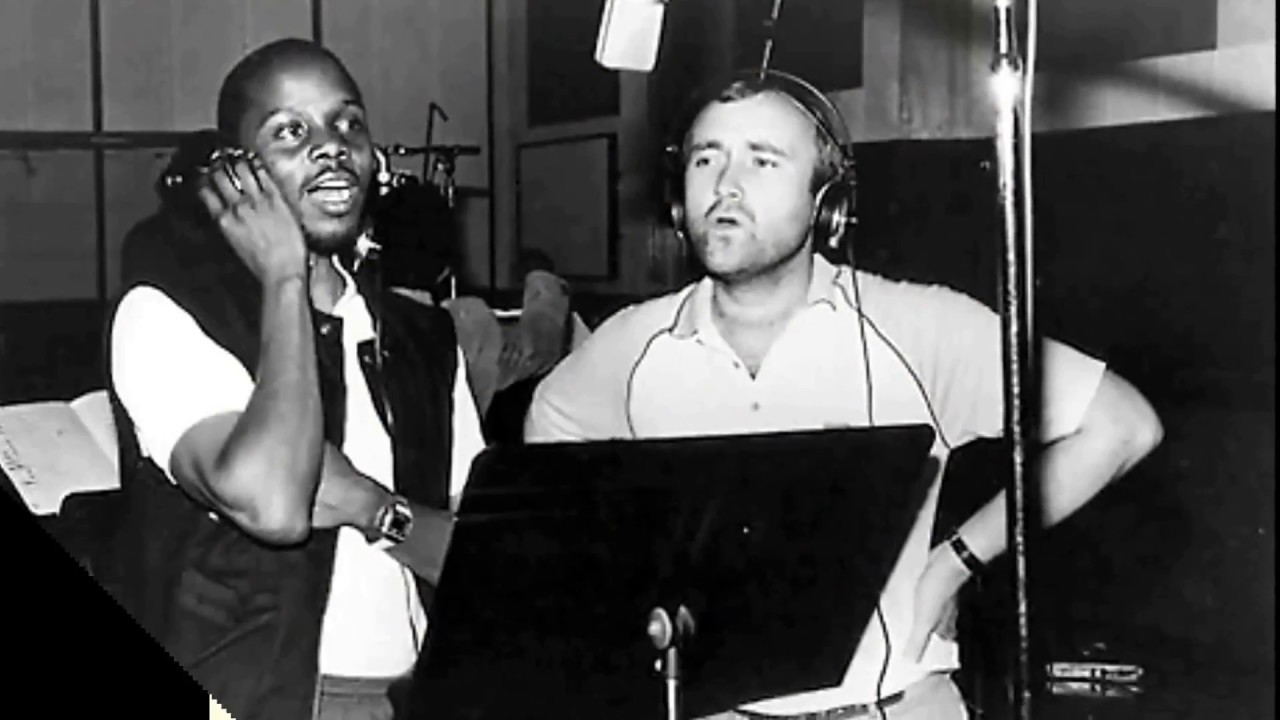
There’s no question that the inexorable rise of Collins’s solo career affected the freedom of Genesis to record and tour at will. As Gabriel would put it, “Phil was a workaholic’s workaholic.” He released five LPs between 1981 and 1993 compared to Genesis’s four, and toured as a solo artist supporting each release. His “No Jacket Required” solo album spawned four Top Ten hits in 1985 alone. Moreover, he had three #1 hits with the winning theme song to the 1984 film “Against All Odds,” a popular duet with EW&F’s Philip Bailey on the irresistible “Easy Lover” the same year, and a 1985 duet with Marilyn Martin on “Separate Lives” from the “White Knight” film soundtrack. When you follow that run with five Top Ten singles with Genesis in 1986-87, and then six more Top Five singles on his own in 1988-1990, you can see how “Phil Fatigue” became a big problem at that juncture.
Collins acknowledged in 2010 that he had been “omnipresent” for a while, conceding that his status as a figure of contempt was a consequence of his music being overplayed. “I’m at fault, I guess, for putting out too many songs in too short a period, but the fact that people got so sick of me wasn’t really my doing. I’m not going to say I’m sorry for being so successful. I honestly didn’t mean for it all to happen the way it did.”
Still, he had plenty of cheerleaders in the business; artists like Robert Plant and David Crosby, who collaborated with Collins on various projects in the ’80s and ’90s, called him “a most positive, encouraging force” and “an enormously helpful friend,” respectively. Taylor Hawkins, the late drummer for Foo Fighters, called Collins “an incredible drummer. Anyone who wants to be good on the drums should check him out – the man is a master.”
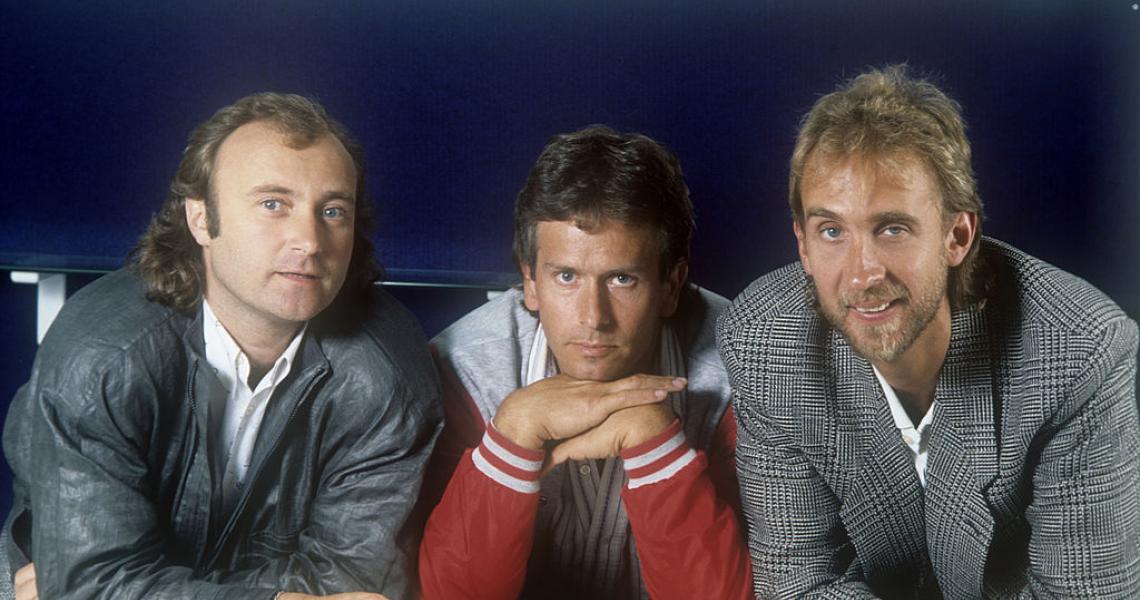
By 1990, Banks and Rutherford fully expected Collins would be leaving the band, but he stuck around for one more album and tour. Entitled “We Can’t Dance” to whimsically address the dominance of dance music on the charts at that time, the album featured seven tracks by Collins, more than any previous Genesis LP by far. This lent credence to the theory that most were outtakes from Collins solo albums; certainly the singles “No Son of Mine” and “Jesus He Knows Me” sounded like it, as did the appealing album tracks “Living Forever” and “Way of the World.” Some pieces, though, came from studio jams like the trio had done ten years earlier (“Driving the Last Spike”). When they toured behind the album, Collins sang with an in-ear monitoring system, which he said allowed him to sing more effortlessly and not “fight” with the band’s sound. It also reduced his worry about the condition of his voice on tour, the first sign that aging was beginning to take its toll on him.
He went full solo in 1993, with a punishing work schedule that cost him his second marriage as well. His “Both Sides” LP, recorded by himself with no collaborators, was a very personal collection of songs, again focusing on lost love and failed relationships (“Everyday” and “Both Sides of the Story”). In 1996, he tried something new — The Phil Collins Big Band, an 18-piece jazz instrumental group born as a tribute to his early idol Buddy Rich. They played jazz festivals in Europe and elsewhere and released one live LP, “A Hot Night in Paris,” in 1998.
His final commercial success came with the music he wrote for the film soundtrack to the Disney animated film “Tarzan,” which included “Two Worlds,” “Strangers Like Me” and the award-winning “You’ll Be in My Heart,” which grabbed an Oscar and a Golden Globe for Best Original Song in 2000.
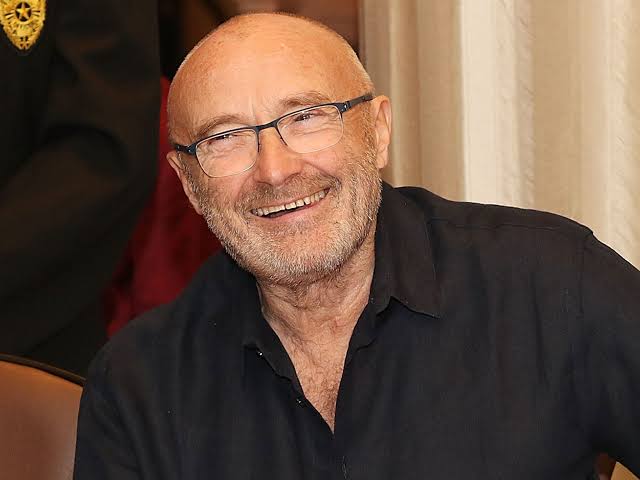
By 2000, a litany of health issues plagued his ability to perform, either on drums or on vocals. First it was a sudden hearing loss that lasted nearly three years; then he underwent upper neck surgery to relieve pain developed while drumming on tour in 2007. That led to chronic arthritis, which caused severe depression and, later, alcoholism. An infected foot caused a fall that resulted in nerve damage and required back surgery. On the rare occasions he took to the stage, he needed a cane or a chair, and looked mighty frail for a rock star. In 2021-2022, he reunited with Banks, Rutherford, Thompson and Stuermer for “The Last Domino?Tour,” which included Collins’s son Nic helping out on drums as Genesis bid farewell to live performances.
Collins was inducted into the Rock Hall as a member of Genesis in 2010, and now he’ll be inducted again on his own this year, one of only a handful of artists to be honored two or more times.
I saw Genesis in concert only once, in 1981, and it was an incredible evening of sound and light. I never did catch a Collins solo show — part of the Phil burnout syndrome, I suppose. But I definitely count myself a fan of most of his music, and I had fun compiling two playlists (see below) to separately highlight his work with Genesis as well as his solo stuff, both arranged chronologically.
Last week I came across a 2014 quote from Diane Birch, a talented but little known 43-year-old soul singer, who summarized Collins’s career in a way I find myself mostly agreeing with: “Collins walks a really fine line between being really cheesy and being really sophisticated. He can seem appalling, but at the same time, he has awesome production values and there’s a particular richness to the sound. It’s very proficient in the instrumentation and savvy about melodies. And he’s an insanely talented drummer.”
****************************

