I beg of you, don’t say goodbye

While this piece is offered as a respectful tribute, I must be completely honest. For the most part, I find the music of Neil Sedaka to be lightweight, cloying and not at all my cup of tea.

Sedaka, who died last week at age 86, was part of that “teen idol era” that took up space between the disappearance of the pioneers of rock and roll and the arrival of The Beatles — roughly 1959-1963. If you hunt hard, you can find a few great classic songs during those years in the wilderness, but too much of it, to my ears, was inconsequential fluff, puerile bubblegum, and cringeworthy ditties. Still, there was clearly a big audience for it. Much of it topped the charts and still evokes fond memories for those whose innocent pre-teen and teenage years came during those years.

Three of Sedaka’s biggest hits perfectly exemplify what I’m talking about. “Calendar Girl” (“I love, I love, I love my calendar girl”), “Happy Birthday Sweet Sixteen” and “Breaking Up is Hard to Do” each offer earworm melodies that stay in your head (not necessarily in a good way) long after the song is over. In its obituary this past week, The New York Times graciously described Sedaka this way: “He combined a genius for melody, the commercial instincts of a pop savant, a boyish high tenor and an unabashed enthusiasm for performing onstage.” Perhaps this is all true — or at least it’s an opinion shared by many pop music fans of that period — but I’m just not on board Sedaka’s train.
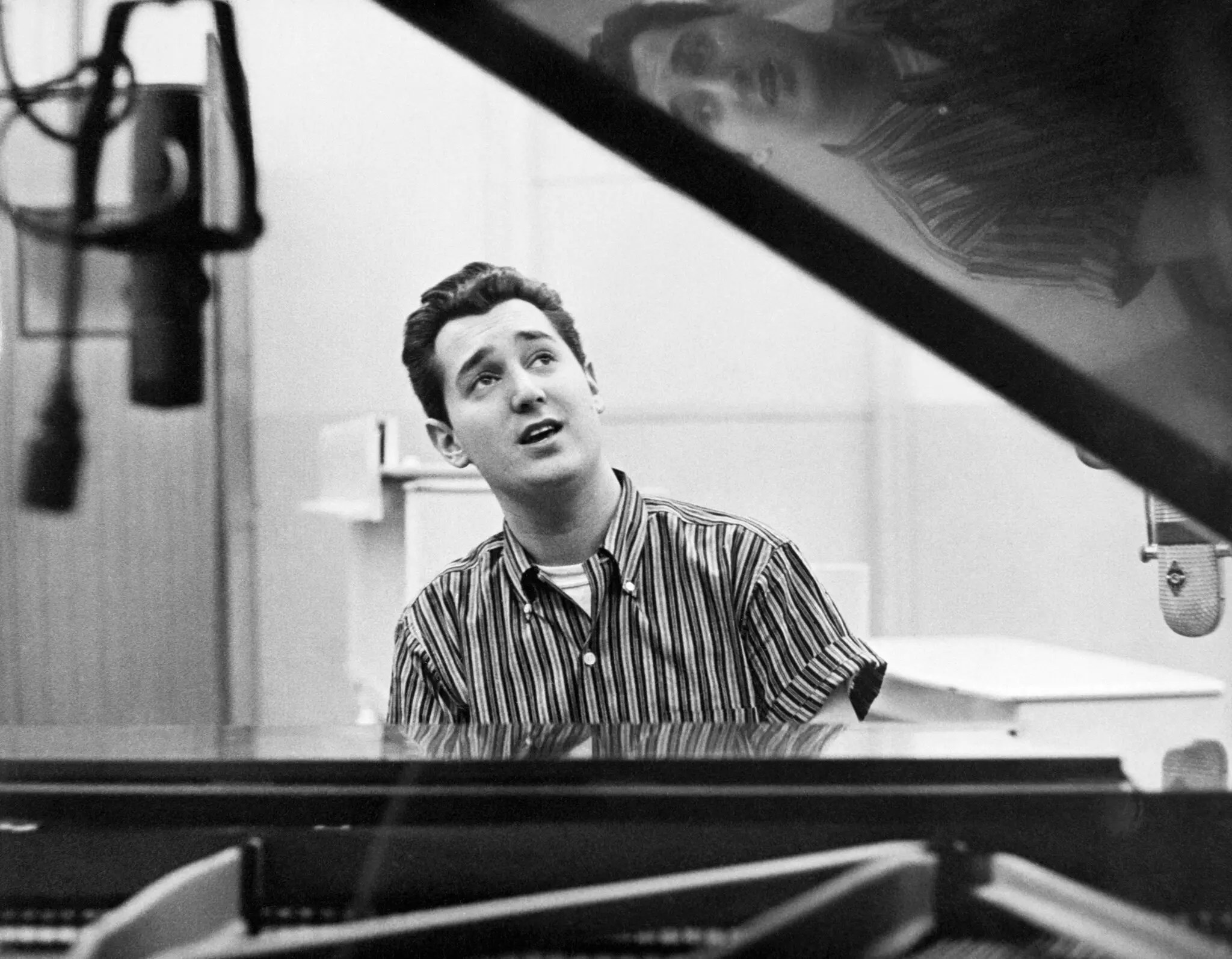
So why devote a blog post to him? There’s no denying he was an integral part of the New York community of songwriters employed at the famous Brill Building in Manhattan, where composers and lyricists plied their trade working for music publishing companies, churning out tunes for recording artists to turn into commercial hits. He and his lyricist partner, Howard Greenfield, once estimated they wrote a song a day for nearly five years, most of them never getting public exposure, but they came up with enough hits to keep their jobs.

Sedaka’s career truly started in 1958 at age 19 when he was tasked with creating a hit for singer Connie Francis, whose first couple of releases had flopped. He and Greenfield wrote “Stupid Cupid,” a song he felt was so silly that Francis (“a classy lady”) would be insulted by it. Instead, she allegedly jumped up and down with excitement when she heard it, and her vocal performance turned that silliness into pop perfection, reaching #14 on US charts.

The duo continued to write for other artists, but Sedaka had his heart set on being a performing artist himself, and he soon got the chance to show off his baby face and high tenor. His first effort, “The Diary,” came from Sedaka’s attempts to persuade Francis to show him her diary as inspiration for teen heartache anecdotes. It’s mostly forgotten now, but it made the charts and, more important, it paved the way for his first Top Ten hit “Oh! Carol,” the song written about his former girlfriend Carol Klein, who had since married Gerry Goffin, changed her professional name to Carole King and became an amiable rival in the Brill Building sweepstakes.

Led Zeppelin fans might find it amusing to learn that Neil Sedaka had a #6 hit in 1960 called “Stairway to Heaven,” which includes these lyrics: “I’ll build a stairway to heaven, I’ll climb to the highest star, I’ll build a stairway to heaven, ‘Cause heaven is where you are.” To say it bears no resemblance to the 1971 classic rocker is a blinding glimpse of the obvious.
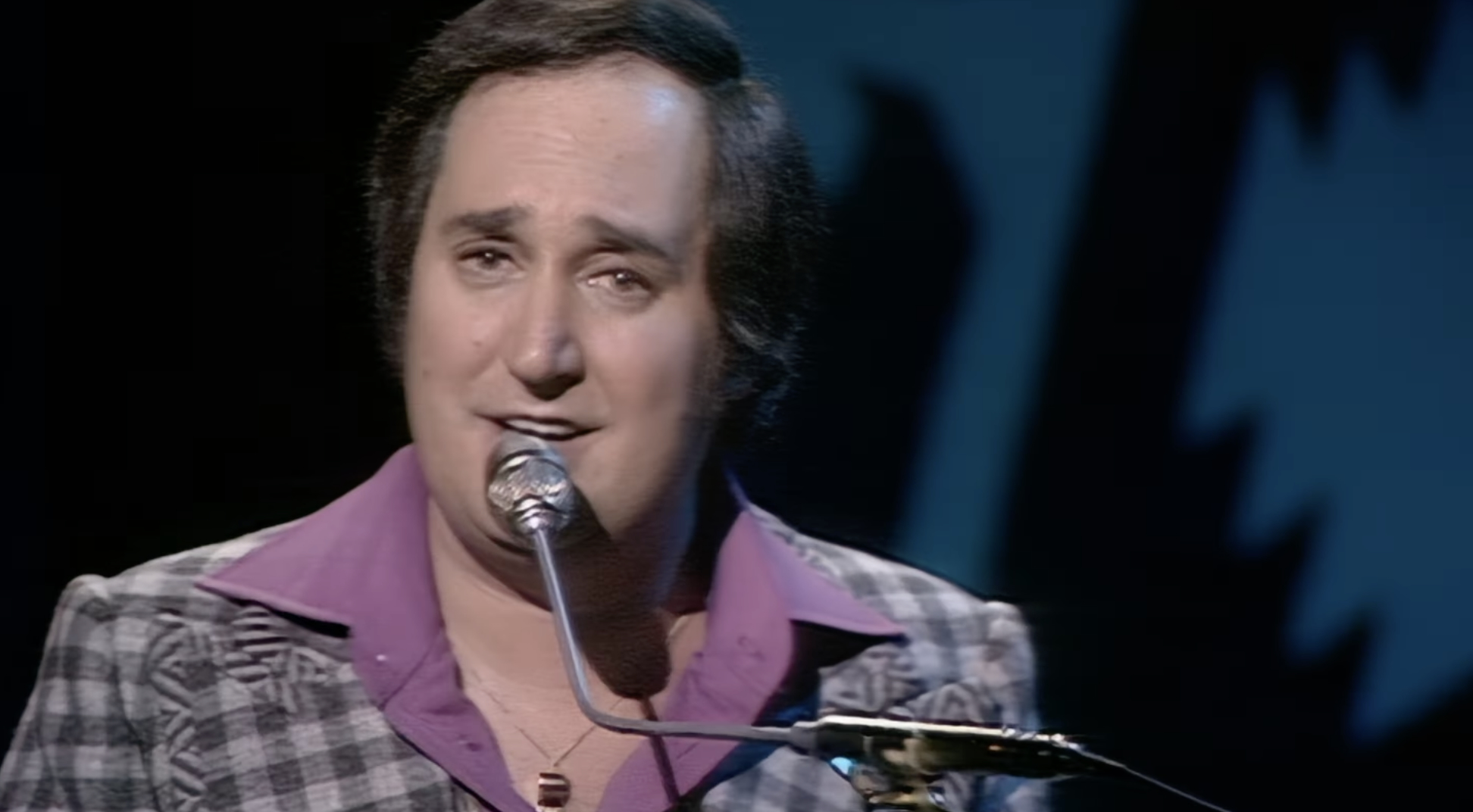
Sedaka had grown up in the same Brooklyn neighborhood as King, Neil Diamond and Barry Manilow, among others. Sedaka’s teachers recognized his musical talent as early as second grade and urged his parents to get him piano lessons, and he took to them enthusiastically. His mother’s goal was for him to become a classical music pianist like their family friend Arthur Rubenstein, but the pop music bug had bitten, and Sedaka pursued that path instead.

He wrote Francis’s signature hit “Where the Boys Are” in 1961, the same year he scored with “Happy Birthday, Sweet Sixteen.” His first #1 hit, “Breaking Up is Hard to Do,” came in 1962, with its insipid “Down dooby doo down down, comma comma” lyrical hook.

Sedaka sold 25 million records during those peak years, touring nationally and internationally. But then, almost overnight, he was gone from the charts, replaced by “I Want to Hold Your Hand” and dozens of other “British Invasion” hits. He was devastated by the apparent betrayal of the fickle American pop music market, where the songs he wrote and released barely eked into the charts for the next ten years, and as a performer, he was consigned to oldies revues while he was still only in his 20s.

Curiously, though, Sedaka remained a popular concert draw in England, where he moved in the 1970s and tried to rejuvenate his career. None other than Elton John, a fan of his early work, signed him to his Rocket Records label in 1974, and suddenly, Sedaka was back at #1 on US charts with “Laughter in the Rain,” followed by another #1, “Bad Blood,” which featured John on harmonies. Perhaps most surprising was a reimagining of “Breaking Up is Hard to Do” as a jazz-influenced piano ballad, featuring what I think is Sedaka’s best recorded vocal.
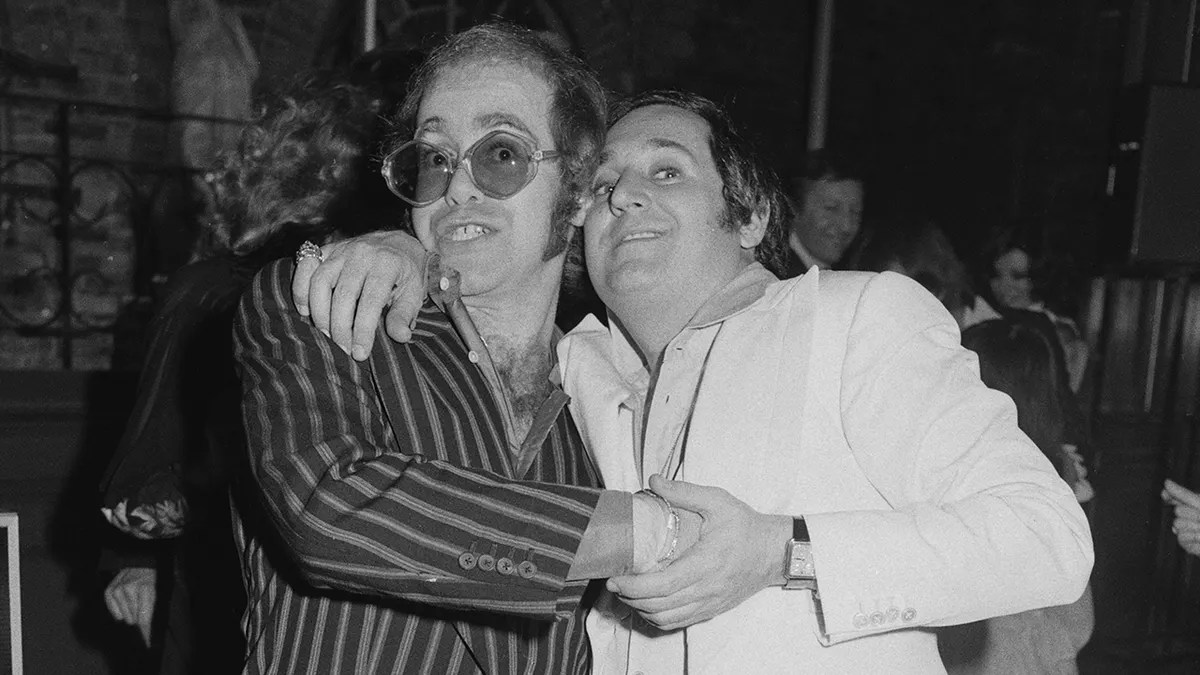
Throughout this period, several of his songs became hits for other big stars. “Working on a Groovy Thing” reached #20 for The 5th Dimension in 1969, and “(Is This the Way to) Amarillo?” was a minor hit on country music charts here but reached #1 in Germany in 1971 as recorded by England’s Tony Christie.

I’ll bet you don’t know (I didn’t until this week) that the massive international #1 hit “Love Will Keep Us Together” by The Captain and Tennille was written by Sedaka. So was “Solitaire,” written and recorded to no fanfare by Sedaka in 1973 but turned into a Top 20 hit in 1975 with a poised, heartbreaking vocal by Karen Carpenter.
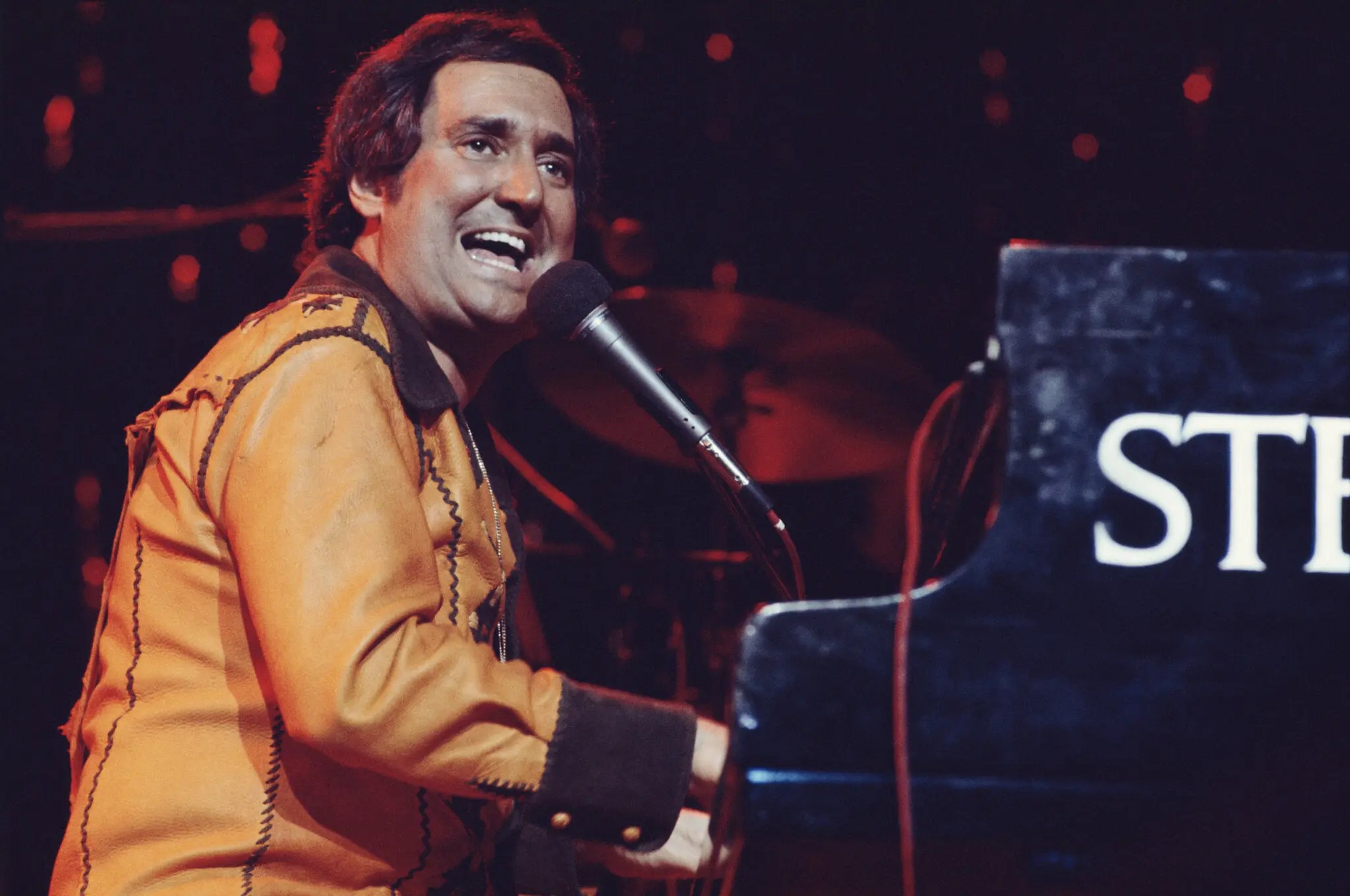
Sedaka managed two more Top 20 chart appearances, in 1976 with his song “Love in the Shadows,” and in 1980 in a duet with his daughter Dara on “Should’ve Never Let You Go.” Throughout the 1990s and 2000s, he released foreign-language singles, live recordings, children’s albums and holiday collections that, while not big sellers, kept his name out there, especially in Europe.

As I was perusing his catalog, a couple of quasi-parody songs caught my eye: Kids evidently responded well to “Waking Up is Hard to Do” and “Lunch Will Keep Us Together” (Weird Al Yankovic, how did you miss out on these?). I added them to the end of the Spotify playlist, just for fun.

I was intrigued when I came across “The Immigrant,” a deep track from his 1974 “Sedaka’s Back” comeback album. Inspired by John Lennon’s struggles with US immigration at the time, he and lyricist Phil Cody wrote this ode as a tribute to their ancestors’ migration from Russia, Poland and Italy, and as encouragement to those from foreign lands seeking a better life here. Fifty years later, it’s still a difficult journey.

Sedaka continued performing well into his 80s and even returned to his classical roots, composing a symphonic piece and a piano concerto, both of which were recorded with the Philharmonia Orchestra of London in 2021.

Rest in peace, good sir.

********************
I’m a high night flier and a rainbow rider

In 1970, Hoyt Axton, a folk guitarist/singer/songwriter and actor, had a new song he wanted to record but hadn’t yet written any words for it. His producer told him to “just sing any words to it, nonsense words if you want.”

The first line he thought of was “Jeremiah was a prophet,” but he decided he wanted to make it “a fun, silly song for kids and families to sing.” So the first line became, “Jeremiah was a bullfrog, was a good friend of mine.”

Axton pitched the song to Three Dog Night, the Los Angeles-based pop group then riding high on seven consecutive Top Ten hits. Two of the band’s three singers — Cory Wells and Danny Hutton — rejected the song as wrong for them, but the third singer, Chuck Negron, thought it was just what the group needed and persuaded them to record it.

You know the rest. “Joy to the World” went on to become the top-selling single of 1971 and one of the most played songs on pop radio in the past 50 years. Me? I liked it fine for maybe the first five times I heard it but quickly soured on it because it seemed so slight, so silly, so repetitive and annoying, and frankly, it ended up tarnishing my enthusiasm for the band going forward. But Three Dog Night did quite well indeed without me among their loyal fan base.

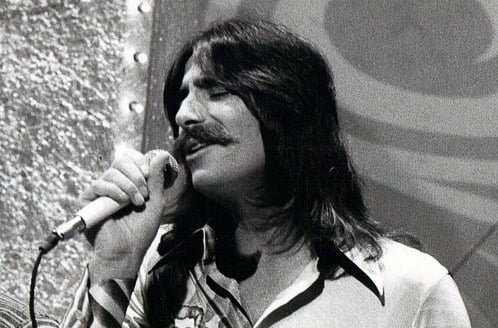
Chuck Negron in 1971

Negron, who sang lead on the track and was perhaps the group’s most identifiable face on camera, died this week at age 83. Wells died in 2015, which leaves Hutton as the last surviving member of the trio of singers.

In 2009, Negron defended “Joy to the World,” which he was still singing in concert so many decades later. “I liked it immediately because I thought we could have some fun with it. That opening line had to be screamed. No one seemed to care what it was supposed to mean. It ended up outselling all other singles in 1971, which was a really great year for Top 40 radio.”

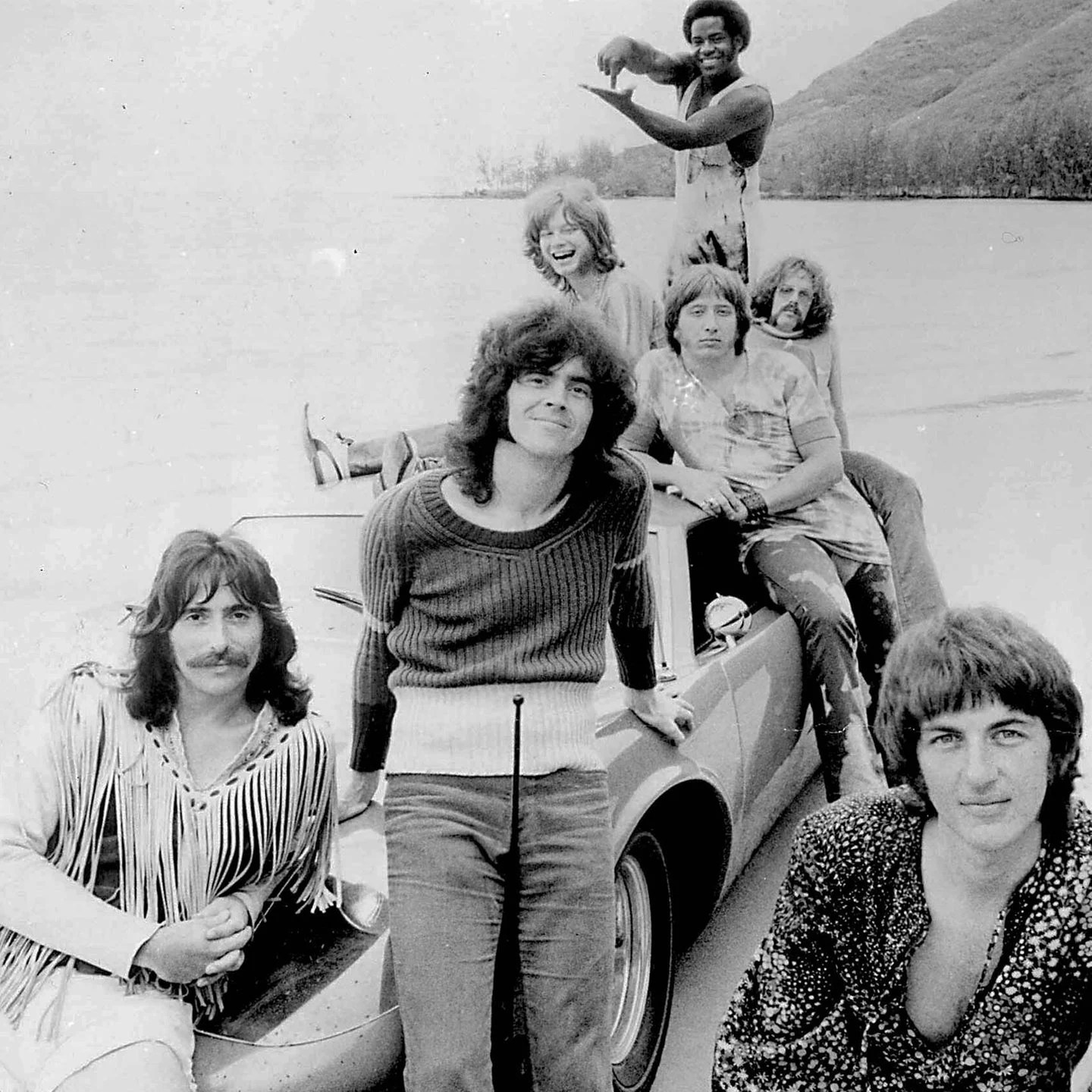
In the beginning, Three Dog Night was something different. They formed in 1968 as a three-man vocal group when Wells and Hutton joined forces with Negron, calling themselves Redwood, They first worked with Wells’s good friend Brian Wilson, who had grown disenchanted with his fellow Beach Boys and began producing and championing the new group instead, but that relationship didn’t last. The trio of singers decided to recruit their own backing band, comprised of keyboardist Jimmy Greenspoon, bassist Joe Schermie, drummer Floyd Sneed and guitarist Mike Allsup. A strong showing by the group at Whiskey A Go Go and The Troubadour in Hollywood resulted in them winning a record deal, and they decided to change their name to Three Dog Night.

(I remember thinking, as a then-14-year-old, “Three Dog Night? What a stupid name.” Only much later did I learn the intriguing phrase comes from indigenous Australians in the outback, where it often gets chilly enough at night to snuggle with a dingo to stay warm. Sometimes it was cold enough to need two dogs in your bed, and on rare occasions, frosty conditions made it a “three-dog night.”)

With producer Gabriel Mekler (who had also worked with Steppenwolf) at the helm, they chose to focus mostly on songs written by highly regarded but little-known songwriters, some of whom would benefit from mainstream exposure, beginning with Harry Nilsson and his ode to loneliness, “One,” which featured the opening line, “One is the loneliest number that you’ll ever do.” Negron sang lead vocals on that as well, and it vaulted to #5 and put them on the map in the summer of 1969.

That debut LP featured songs by Randy Newman, Neil Young, The Band’s Robbie Robertson and Traffic’s Steve Winwood, and even “It’s For You,” an obscure Lennon-McCartney song written for Cilla Black in 1964. The group’s second album, “Suitable for Framing,” continued that format, with songs by the as-yet undiscovered songwriting duo of Elton John and Bernie Taupin, as well as Laura Nyro, Dave Mason and the trio who wrote the music for the bold Broadway show “Hair.”

The seven members of Three Dog Night: Three singers and four musicians

By the summer of 1970, Three Dog Night boasted a remarkable run of quality hit songs — “One,” “Easy to Be Hard,” “Eli’s Coming,” “Celebrate,” “Mama Told Me Not to Come” and “Out in the Country” — all in less than 18 months. They’d also had a surprise success with their “Captured Live at the Forum” in-concert LP, which peaked at #6 in 1969, and included a high-voltage, show-closing interpretation of the Otis Redding classic, “Try a Little Tenderness.”

As The New York Times obituary on Negron stated the other day, “Flouting the standard practice of top acts in that singer-songwriter-dominated era, Three Dog Night did not compose the bulk of its material. The lack of original pieces brought critical barbs, even unwelcome comparisons to the Monkees, the 1960s group that had been manufactured for TV. Robert Christgau of The Village Voice called Three Dog Night ‘as slick as Wesson Oil’ and ‘the kings of oversing.'”

Indeed, there were (and still are) two views on what Three Dog Night offered to the music scene. Robert Hilburn of The Los Angeles Times referred to the group as “a fairly pedestrian hit machine,” acknowledging their commercial clout but dismissing their artistry. A reviewer from The New York Times was much warmer, writing in 1975 that the band “has succeeded in recreating the days when rock and roll was fun music, before relevance and heaviness descended on it all.”

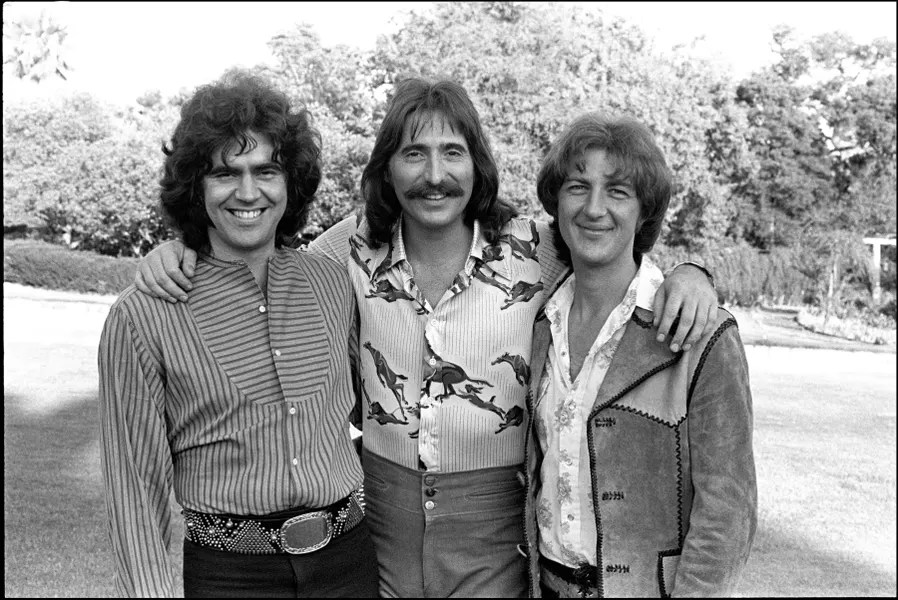
Three Dog Night’s triumvirate of vocal power: Danny Hutton, Chuck Negron and Cory Wells

Negron, Wells and Hutton took turns as lead vocalist on their growing repertoire of songs, and also offered passionate three-part harmonies bolstered by solid rock arrangements by the talented backup band. In my view, Negron’s voice was the best and most emotive of the three. His tenor had great range and impressive control, taking songs like “Easy to Be Hard” and “One” to heights not found when either Wells or Hutton were the featured voice.

Thanks to Mekler and his successor Richard Podolor, the songs shimmered with punchy production values, and not just the singles, like the fiery #7 hit “Liar” and the lovely Dave Loggins tune “Pieces of April,” but the deeper album tracks as well. Witness their convincing covers of Jesse Colin Young’s “Sunlight” and Free’s “I’ll Be Creeping” from the “Naturally” LP.

On the surface, Three Dog Night seemed to be firing on all cylinders. In December 1972, Three Dog Night was the featured act on the inaugural edition of Dick Clark’s “New Year’s Rockin’ Eve.” Behind the scenes, though, there was tension, exacerbated by excessive drug use and egos. They continued to chart some big hits — “Never Been to Spain,” “An Old-Fashioned Love Song,” “Black and White,” “Shambala,” “The Show Must Go On” — but to my ears, these were inferior choices that didn’t have the same enduring likability of their earlier work. By 1974, they’d changed producers again, going for The Raspberries’ guy Jimmy Ienner, who pushed them in a more disco-ish direction. The hits stopped, the albums stiffed, and the band dissolved.

Three Dog Night mounted their first of several reunion tours in 1981, and I happened to catch one of those shows. I was delighted that they exceeded my expectations, churning out 90 minutes of almost exclusively familiar hits, and the crowd certainly ate it up. The drug issues that at first sidelined Hutton in the mid-’70s became a much bigger problem for Negron, whose inconsistency and unreliability ended up getting him drummed out of the group in 1985, and he remained estranged from his former bandmates for decades.

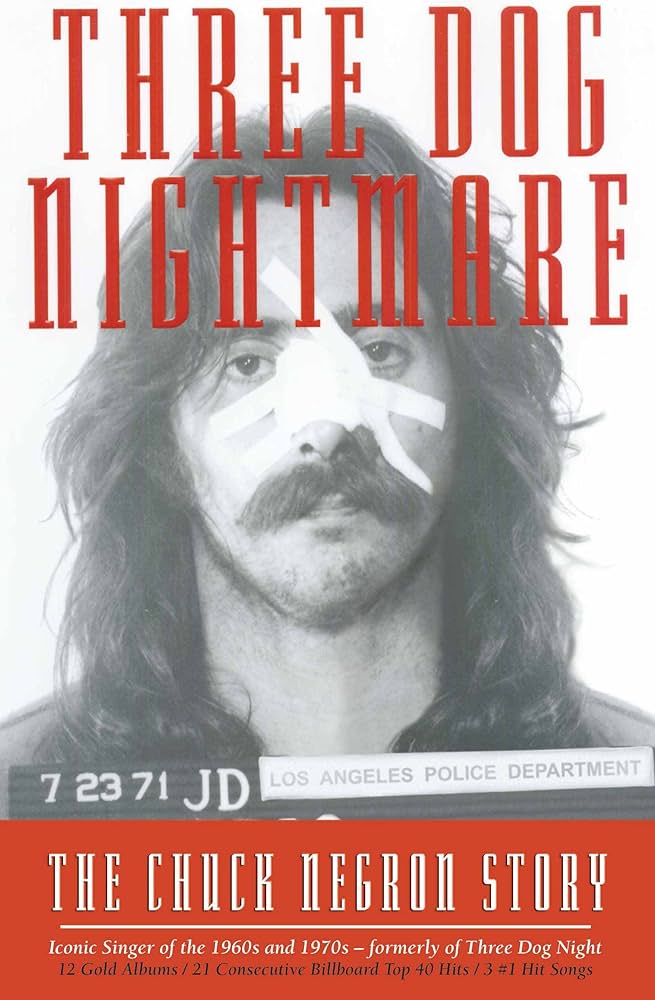
Negron, who had been a promising basketball player in high school and college before turning to rock singing, tried and failed multiple times to shake his heroin habit in the ’80s until he finally found the strength in 1992, eventually becoming a strong advocate for those with alcohol and substance abuse issues. In 1999, Negron, published “Three Dog Nightmare,” a harrowing autobiography that provided a frank, sometimes brutal look at the dual life he led for much of the time he sang in the group and afterwards. He told his tale of going from the pinnacle of the rock’n’roll universe to a Skid Row junkie — “lying, cheating, and stealing my way through life, leaving nothing but sorrow and devastation in my wake, hurting everyone who loved me just to get my next fix.” As he put it in a 2015 interview, “The point is not if you think drugs help you create. The point is, they’ll kill you.”

He toured with his own band in the mid-1990s in support of his solo LP “Am I Still in Your Heart,” and he also released the pretty decent live 2-CD package “Chuck Negron — Live in Concert” in 2001, which included most of the Three Dog Night hits.

Negron in 2001

My friend Chris has been a diehard fan of Three Dog Night since he was a young boy, and that devotion has earned him a fair amount of teasing from those of us who don’t share his level of enthusiasm. In the wake of Negron’s death, I asked him to point out some of the deeper tracks in their catalog that he particularly admired (“You,” “Midnight Runaway”) and to explain why he finds their music so appealing. Here’s what he said: “The more I think about it, I realize the true joy I got, and still do, from harmonizing along with them. They were singable in a vocal range I could reach…and the lyrics were so easy! Songs like ‘Celebrate’ and ‘Joy to the World’ are songs I can sing and be absolutely happy, and it never gets old. That’s certainly something I loved about this band.”

Fair enough, Chris. Hard to argue with music that makes you happy.

It was a life of exhilarating peaks and despairing valleys for you, Chuck. May you rest in peace knowing that the songs you sang brought joy to so many, and evidently still do.

**********************

On the Spotify playlist below, I’ve tried to present a healthy cross-section of the hits (whether or not I personally liked them) and some hidden album tracks that are worthy of attention, plus a couple from Negron’s solo releases at the end.