At the lonely end of the rink
I have an ever-growing list of topics I’ve been wanting to write about at Hack’s Back Pages, one of which is Canadian Rock. Our neighbors to the north have produced some very fine musical artists over the years, some of whom are near 


and dear to me. Joni Mitchell is by far my favorite, followed by The Guess Who, Neil Young, Gordon Lightfoot and Leonard Cohen. There are others who have also broken into the U.S. market (Rush, The Band, Bryan Adams, among others), but there are also many dozens that are very popular in Canada but unknown here.
An event happened there last week that has moved me to address the subject this week, and I’ve decided to essentially turn over the column to a Canadian friend who has a much keener insight into the matter.
Paul Vayda, who I’ve known since we were seven, is a drummer and rock music enthusiast who has lived in Canada since 1970. He may have been born in the States, but he has dual citizenship, and knows a great deal about the Canadian  rock music scene from coast to coast, from British Columbia to the Maritimes. He wrote me the other day in the wake of the death of a national Canadian hero named Gord Downie, the singer of a wildly popular band there called The Tragically Hip, and the issue Paul brings up is both timely and fascinating. I hope you enjoy it.
*****************
Hi Bruce:
I have been thinking about this phenomenon lately: Why is it that sometimes a nation’s border seems to stop music from penetrating?
I can understand why music is more popular in one place or another, like country music in a more rural setting, or glam rock in a big city. And of course, a different language and culture might understandably be an impediment to another country’s music being absorbed by American audiences.
However, Canadians and Americans speak the same language, watch the same TV, the same movies, essentially the same sports. For the most part, we share the same rock music roots as well. Maybe Canadian audiences are less spiritual and Motown, and more Celtic and maritime, but we love the blues and folk music as much as Americans do, and we have all listened to the same great supergroups from across the pond — The Beatles, The Stones, Elton John, U2, Pink Floyd, and so on.
So why is it that only a relative few Canadian rock artists have found success with American audiences and radio listeners?
Everyone in the States knows Neil Young, and Rush, and Joni Mitchell, and The Guess Who, and Leonard Cohen, and The Band, and Gordon Lightfoot, and Bachman-Turner Overdrive.
Many US listeners have heard of Bryan Adams, and Loverboy, and Alanis Morrisette, and Bare Naked Ladies, and Arcade Fire.
And some Yanks may be in the know about Saga, and Jann Arden, and Crash Test Dummies, and Kate & Anne McGarrigle, and Men Without Hats, and Cowboy Junkies.
But I’m at a loss to explain why Americans don’t know anything about the many bands that are huge in Canada but can’t seem to make a dent in the US. Why don’t they know and love The Tragically Hip?? Chilliwack? Triumph? Our Lady Peace? I Mother Earth? Lighthouse? The Nylons? Crowbar? April Wine? Big Sugar? The Stampeders? Matthew Good Band? Sam Roberts? Metric?
Maybe it’s just luck that some Canadian artists got airplay south of the border. Maybe they had a savvy, hard-working manager. I really don’t know. (By the way, the same holds true for rock music artists in general — since the birth of rock and roll, it’s often a mystery why one band makes it big while another more worthy one doesn’t. But I digress…)
 By far the most glaring example of a Canadian group that should have been accepted in the US long ago is The Tragically Hip. This band from Kingston, Ontario, spent a few years in there mid-’80s honing their chops at small venues around Ontario, then emerged on MCA Records in 1989 with “Up to Here,” an album full of terrific blues-based
  sounds led by lead singer and songwriter Gord Downie. They played no-nonsense rock, sometimes loud, pounding music, but changing to melodic ballads in a heartbeat.
The Hip, as we called them, evolved into Canada’s unofficial house band. They were like our secret handshake. They were polite, but sang deeply political songs — songs about Canada, its history, its struggles. Songs like “At the Hundredth Meridian,” or “Wheat Kings,” or “Ahead By a Century,” or “Courage,” or “Bobcaygeon” (go look it up). The BBC called them “the most Canadian band in the world,” and they were correct.
The Hip is our most celebrated group. They won 12 Junos (Canada’s version of the Grammys). Between 1989 and 2016, they racked up 12 Top Five albums on the Canadian  charts, nine of which reached #1. They charted 34 singles, 14 of which made our Top 20, including two #1s. They earned the unconditional love of a nation. They were our Bruce Springsteen — a garage band that started in high school with a few fans, and grew to be truly legendary.
Gord Downie was a showman like The Boss. As a friend of the Native people, he was christened Wicapi Omani, which means “man who walks among the stars.” He was modest. He rode his bike to concerts; no limos for him. He would bring coffee for his interviewers.
In 2015, he was diagnosed with inoperable brain cancer. In 2016, The Tragically Hip did a farewell tour, culminating in a final show in Kingston that was simulcast live across the country. Twenty million Canadians, including Prime Minister Justin Trudeau, watched and cried as Gord sang favorites from The Hip’s repertoire one last time.
On October 17, Downie died, and the country reeled with grief. People even suggested there should be a state funeral for him.
Here is the best testimonial I have read, written by widely revered Canadian radio broadcaster Alan Cross:
Dear Rest of the World:
You’re probably looking at Canada (if you look at us at all) and wondering how an entire nation can be consumed by grief over the death of a singer. A rock singer, no less.
 “Seriously, Canada? And even your Prime Minister was crying? And now some people are talking about a state funeral for this guy? What’s up with that?
It’s … hard to explain. But let me try.
First, we’re not ashamed about any of this. You see, The Hip was Canada’s house band and their front man was our de facto poet laureate. To put it another way, if there was a World Cup of Rock, Canada would send The Tragically Hip.
Second, The Hop taught us about ourselves. Good and the band were unabashedly Canadian without being jingoistic or wrapping themselves in the flag. How many people leaned of Hugh MacLennan or David Milgaard through Hip lyrics? How many people across the country were sent to atlases to locate Bobcaygeon or Algonquin Park? And then there were all the hockey stories: Bill Barilko, references to the 1972 Canada-Russia series.
 If there in’t already an undergraduate course that teaches Canadian history, politics, geography and sociology using the lyrics of The Tragically Hip, it’s just a matter of time.
Third, we learned to appreciate Gord’s often obtuse and opaque lyrics. They stood up to repeated listening, often revealing new layers each time. His writings (including his sundry non-music poetry) are worthy of study the same way we look at the works of Leonard Cohen, Michael Ondaatje and Al Purdy, one of Gord’s heroes.
But hey, Rest of the World, you did have a chance — multiple chances! — to get in on this action. But for some reason, you chose not to. (You people in U.S. border towns, and some folks in Western Europe and Australia, are exempt. You know who you are.)
After a couple of failed attempts to break into the American market that were thwarted by records company politics, bad luck and other things beyond the band’s control, The Hip retrenched and super-served their domestic fan base, who responded with even more devotion.
 In fact, it was perhaps because they couldn’t break it big in America that we embraced them even more. You didn’t want ’em, so we hung on even tighter. They were ours.
They sold millions of albums and hundreds of thousands of concert tickets from coast to coast. We travelled from gig to gig, often outnumbering the locals when The Hip played U.S. cities and were stunned more of you didn’t attend. Couldn’t you see what you were missing?
But unless you’re Canadian, you probably wouldn’t understand.
***********
The Hip actually did try to reach an American audience by playing gigs in border cities like Detroit and Buffalo. But as it turned out, most of the attendees at those shows were Canadians who had been shut out of sold-out concerts at Canadian venues. And The Hip  did show up on U.S. charts, but no one noticed; eight of their albums made the Top 200, but the best they could manage was an anemic #129 for 2012’s “Now for Plan A.” None of their singles ever made the US Top 40, although 1993’s “Courage” made it to #16 on the lesser “Mainstream Rock” chart.
In any event, there has been some great music played by Canadians not named Celine Dion. Maybe your understanding of rock music and Canada will suggest an explanation of this “border wall phenomenon.” Maybe Gord Downie’s death can be a catalyst to introduce one of our greatest rock groups to the American audience, and to whet their appetite to check out more. Listen to their music, and if you do figure out why Americans never got hip to The Hip, by all means, let me know.
As you would say, “Rock on!”
Paul
 That blond-haired kid was Tom Petty. And Felder was certainly right — he had what it took to make it, in a very big way.
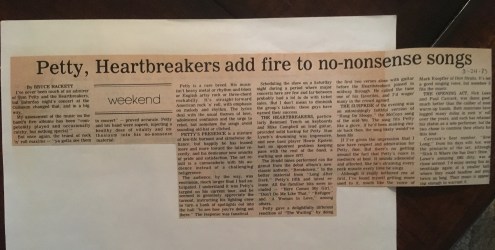 I used to review concerts for a Cleveland newspaper in the 1980s, and the other day I dug up a clipping of a piece I wrote about a Tom Petty concert in 1983. While I confessed to being largely ambivalent about his records at that point, I readily admitted he had won me over with his live show. “Petty and his band were superb, injecting a healthy dose of vitality and enthusiasm into his no-nonsense material.” I labeled his music thusly: “It isn’t heavy metal, or rhythm-and-blues, or English arty rock, or three-chord rockabilly. It’s straightforward American rock ‘n’ roll, with emphasis on melody and rhythm.”
 His music has offered “a more stripped down, passion-filled, elemental form of rock and roll,” as The LA Times‘ Randy Lewis put it. His songs borrowed from his ’60s influences — The Byrds, The Beatles and The Rolling Stones, as well as Bob Dylan and Johnny Cash — to produce his own unique style.
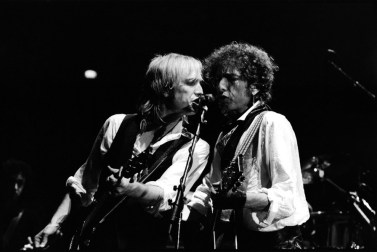 Other rock music icons reacted swiftly to the news of Petty’s passing. “It’s shocking, crushing news,” said Bob Dylan, with whom Petty teamed up in the late ’80s supergroup The Traveling Wilburys. “I thought the world of Tom. He was a great performer, full of the light, a friend, and I’ll never forget him.”
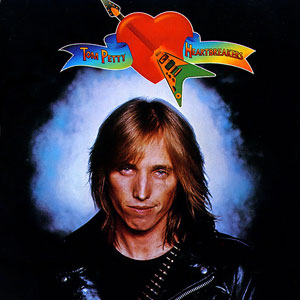 Petty had a solo contract, and he cut a few demos of original songs (“Breakdown,” “Anything That’s Rock ‘n Roll,” “American Girl” and others) with Campbell and Tench, adding Stan Lynch on drums and Ron Blair on bass.
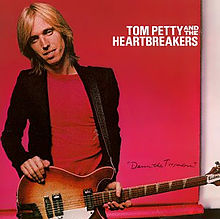 a star, reaching #2 and selling three million copies on the strength of time-honored tracks like “Refugee,” “Here Comes My Girl,” “Even the Losers,” “Don’t Do Me Like That” and “Louisiana Rain.”
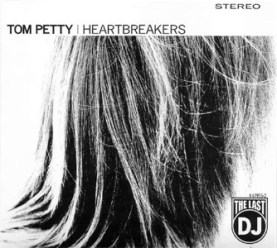 was dominating the record business more than ever, at the expense of artistic concerns. The lyrics to “Money Becomes King” yearn for the old days when average fans could afford concert tickets in great seats, before lip-synching, TV commercials, V.I.P. areas and other greed-driven developments changed the vibe: “As the crowd arrived, as far as I could see, the faces were all different, there was no one there like me, they sat in golden circles, and waiters served them wine, and talked through all the music and paid John little mind, and way up in the nosebleeds, we watched upon the screen they hung between the billboards so cheaper seats could see…”
 In the ’80s and ’90s, though, Petty and the Heartbreakers were riding high with one success after another. The “Hard Promises” sessions spawned not only “The Waiting” but also Petty’s superb duet with Stevie Nicks, “Stop Draggin’ My Heart Around,” which appeared on “Bella Donna,” Nicks’ huge solo debut.
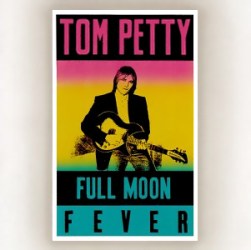 the Great Wide Open,” nearly equalled the impact of “Full Moon,” with solid tracks like “Learning to Fly,” “Out in the Cold,” “King’s Highway” and the title cut.
 So many of Petty’s songs, even those from later releases like the bluesy “Mojo” (2010) and the rocking “Hypnotic Eye” (2014), have hit resoundingly with his fan base, which, by the way, covers at least three generations of music lovers now. “I know the songs mean a lot to people, and that means a lot to me,” said Petty recently. “Rock ‘n’ roll is more than just something that you can manipulate into advertising, or whatever they do with them. It means way more than that to me, and apparently to others as well.”
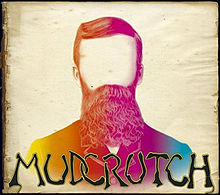 In 2007, Petty had reached a point in his career where he could indulge himself a bit, so he surprised fans and Heartbreakers colleagues alike by reuniting Mudcrutch for an album and a tour, and then a second LP in 2016. Mike Campbell, a member of both groups, said, “The beauty of this is Tom wanted to connect with his old friends, and with the pure joy of revisiting the energy we started with. It’s been very, very spiritual. It’s commendable that he’d do something so generous.”
 “I wanted to be taken seriously as far as writing songs and making music are concerned. As you’re coming up, you’re recognized song for song, or album for album. What’s changed these days is that the man who approaches me on the street is more or less thanking me for a body of work – the soundtrack to his life, as a lot of them say. And that’s a wonderful feeling. It’s all an artist can ask for.”
 Hack's Back Pages