Are you gathering up the tears?
Consider, if you will, the misfits and ne’er-do-wells who populate many of the songs in the Steely Dan catalog:
Charlie Freak. Kid Charlemagne. Showbiz kids. Deacon Blues. Babylon sisters. Mister LaPage. Cousin Dupree. Doctor Wu. Felonious the midnight cruiser. The bookkeeper’s son with a case of dynamite.
These are fringe people, generally unpleasant outcast types: drug dealers, embezzlers, deadbeat dads, trust-fund brats, fugitives, prostitutes, pedophiles, mass murderers, gentlemen losers.
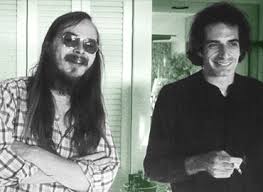
What kind of songwriter comes up with characters like these, and then tells their stories to catchy, irresistible beats and quasi-jazzy rhythms? I’ll tell you who — musical geniuses who always considered themselves loners, marginal sorts, people who didn’t seem to fit in. People like Walter Becker and Donald Fagen.

Donald Fagen (left) and Walter Becker
“You can infer certain things about the lives of people who would write these songs,” said Becker cryptically in a 2000 interview. “This we cannot and do not deny.”
Although Steely Dan’s music was smart, sophisticated, likable and accessible, the lyrics were subversive, mordant and sketchy. As Becker put it in 2008, “That’s what we wanted to do, conquer from the margins. Donald and I were creatures of the margin and of alienation, and the characters in our lyrics were eccentric, alienated types as well, and so was much of our audience, at least initially.”
 And now Becker is gone, dead at 67 from as-yet-unannounced causes. He had been ill most of the summer and had recently undergone a surgical procedure, but that’s about all we know. It doesn’t really matter — what matters to us is the fact that he’s no longer here to record and perform the songs we love so well.
“Walter was my friend, my writing partner and my bandmate since we met at Bard College in 1967,” said Fagen the day after Becker’s passing. “He was smart as a whip, an excellent guitarist and a great songwriter. He was cynical about human nature, including his own, and hysterically funny.”
At the recent Classic West and East concerts in July, Fagen soldiered on without him, excusing Becker’s absence by saying, “Walter’s recovering from a procedure and we hope he’ll be fine very soon.”
The Steely Dan “band” has been the perennial revolving door of almost interchangeable players — different guitarists, drummers, bassists, sax players, backing singers — so frankly, it wasn’t all that difficult to mask the fact that Becker’s guitar or bass wasn’t on stage. With that in mind, I venture to say Fagen and company will continue to tour as they have every year or so since Steely Dan was reborn in 1993 after a 13-year absence.
 Becker and Fagen were the eccentric wizards behind the compelling music found on the seven brilliant Steely Dan albums of their initial 1972-1980 run, and two lesser LPs in 2000 and 2003. Almost universally praised for their imaginative creativity and sonically perfect recordings, Becker and Fagen disliked touring because of the weary grind of it all, and the fact that the performances were so erratic.
As Becker put it in 2008, “It wasn’t so much fun back then. It’s like anything else. Some nights, it’s fun. Some nights, it’s not fun. Back in the ’70s, I’m not sure I cared if it was fun or not. There were good performances, but it was much harder to guarantee a certain level of quality.”
In 1975, the duo decided to quit touring and concentrate on writing and recording. The rest of the original band — guitarists Jeff “Skunk” Baxter and Denny Dias, and drummer Jim Hodder — wanted (and needed) to tour. Becker conceded in 1977, “It was unfair of us to spend eight months writing and recording, when Baxter and others wanted to be out touring a lot, making money. We didn’t want to tour, so that was that.”
From then on, their albums featured the work of dozens of veteran session musicians, seasoned pros who were among the industry’s finest on their respective instruments. On “Katy Lied,” for instance, guitarists Larry Carlton, Rick Derringer, Elliott Randall, Dean Parks and Hugh McCracken all appear. On 1977’s best seller “Aja,” Fagen and Becker recruited six different drummers, four additional keyboard players, five sax players (including the legendary Wayne Shorter), and the backing voices of Michael McDonald, Timothy B. Schmidt, Clydie King, Venetta Fields and Sherlie Matthews. Other greats featured on other albums include Mark Knopfler, Steve Gadd, Victor Feldman, Tom Scott, Joe Sample and Don Grolnick.
“Actually, we’ve had outside musicians on our songs from the first album on,” said Becker in 1977. “That’s Elliott Randall doing the guitar solo on ‘Reelin’ in the Years.’ You know, The Beatles used Eric Clapton on The White Album, so it wasn’t a new idea to have what we came to call our ‘expanded band concept.'”
 Becker grew up in Queens, NY, and graduated from a prestigious high school there in 1967. He moved on to Bard College in Annandale-on-Hudson, where he met Fagen and almost immediately formed a bond. “We liked the same kind of music,” said Fagen, “and when we started writing songs, we found that I could start one and Walter could finish it, and vice versa. We thought along the same lines.”
They also both disliked Bard (referenced in the lyric, “That’ll be the day I go back to Annandale” in 1973’s “My Old School”), so they left and moved to California, where they secured a contract with ABC Records as staff songwriters. They did the soundtrack for the early Richard Pryor film “You Gotta Walk It Like You Talk It” and even got Barbra Streisand to record one of their songs (“I Mean to Shine”).
They met producer Gary Katz at ABC, who loved their music and urged them to form a band. “Your stuff is so unique and personal, no one else can sing it,” Fagen said Katz told 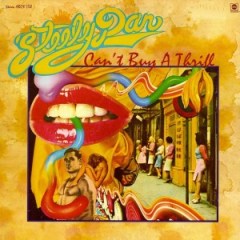 them. They indeed formed a band, with Katz at the helm manning the boards, and, in their first rebellious act, named the group Steely Dan, which was the brand name of a sex toy in William S. Burroughs classic novel “Naked Lunch.”
When their debut LP, “Can’t Buy a Thrill,” was released in the autumn of 1972, it was an instant Top Ten hit, thanks to the hit single “Do It Again,” and its follow-up, “Reelin’ in the Years.” It was hailed as “literate college rock,” infused with salsa, soul, blues, jazz and straight rock, and it proved influential for dozens of groups throughout the ’70s and beyond.
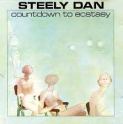 The band followed with 1973’s underrated “Countdown to Ecstasy,” which featured longer tracks like “Bodhisattva,” “King of the World,” “Show Biz Kids” and “Pearl of the Quarter” where the players could stretch out a bit. “Pretzel Logic” followed in 1974, with more 3-minute gems like “Parker’s Band,” “Barrytown,” “Night by Night” and their highest-charting single, “Rikki Don’t Lose That Number” (#4).
 Becker disagreed with critics who described their music as an amalgam of rock and jazz. “We’re not interested in rock/jazz fusion,” he said at the time. “That has only resulted in ponderous results so far. We play rock and roll, but we swing when we play. We want that ongoing flow, that lightness, that forward rush of jazz.”
 “Katy Lied” and “The Royal Scam” (1975 and 1976) began the new approach, in which they remained holed up in the studio doing take after laborious take, earning a reputation as relentless perfectionists. And it showed. On tracks like “Rose Darling,” “Chain Lightning,” “Bad Sneakers,” “Don’t Take Me Alive,” “The Fez” and “Haitian Divorce,” the sound quality on those albums was the envy of rock and jazz
  musicians everywhere.
 “Aja” in 1977 was perhaps their finest moment, and certainly their commercial peak. It reached #3 in the US and #5 in England, and sold six million copies. “Josie,” “Peg,” “Black Cow,” “Deacon Blues” and the title track still get loads of airplay today.
But Becker had developed a heroin habit, lost a girlfriend to a drug overdose, and broke his leg when he was hit by a car. All this conspired to cause tension and delays during the making of “Gaucho,” which didn’t come out until 1980 (the hit “Hey Nineteen,” along with “Time Out of Mind” and “Babylon Sisters,” 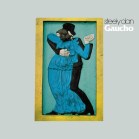 remain in heavy rotation). By then, the duo chose to quietly disband. As Fagen explained, “Walter’s habits got the better of him, and we lost touch for a while.” Fagen stayed active with an engaging solo LP, “The Nightfly,” and the occasional song for movie soundtracks. Becker moved to Maui, away from the music business, and went through detox while dabbling at avocado farming.
 Becker returned in the late ’80s, producing other artists’ albums and eventually sitting in with Fagen’s new project, the New York Rock ‘n Soul Revue, a veritable cornucopia of musical names including Boz Scaggs, Michael McDonald, Phoebe Snow and the Brigati brothers from The Young Rascals. In 1993, Becker and Fagen ended up producing each other’s solo albums (Fagen’s “Kamakiriad” and Becker’s “11 Tracks of Whack”). That went well enough for them to decide the time was right to re-boot Steely Dan and tour for the first time in nearly 20 years.
Technology had improved significantly, Becker noted, “and we had more control. We felt confident that the concerts sounded pretty great just about every night.”
 Fagen and Becker wrote and recorded a couple dozen songs and released them as “Two Against Nature” in 2000 and “Everything Must Go” in 2003. They sounded superb, as expected, but overall, they somehow lacked the appeal of their earlier work. Still, improbably, the Grammys voters chose “Two Against Nature” as Album of the Year, and Steely Dan has remained a regular touring act throughout the new millennium.
Older fans who cherished the band’s original seven albums have been thrilled to finally have the opportunity to hear Steely Dan songs performed live in recent years. On some tours, the band played classic albums in their entirety. When asked in 2013 if there were any older songs he didn’t want to play, Becker said wryly, “As a guitar player, I’m not opposed to anything. If I were singing them, that would be different. I might be opposed.”

Becker had been very matter-of-fact about the financial side of things. When probing Becker’s thoughts on the state of the music industry in 2014, an interviewer pointed out, “Kids are stealing your songs from the Internet left and right.” Becker responded, “They’re just kids. They really don’t know what’s right or wrong. I mean, what can I say? I’m just glad they like our music and listen to it.”
Fagen, who is perhaps more practical about it, was quoted this week as saying, “I have to tour to make a living. I get maybe 8% of the royalty money I used to make. With the amount of free downloading, the business is no longer a business, really. Also, you have to understand, our songs aren’t covered very often by other artists because they’re very personal. Generally speaking, Walter and I came from an ironic standpoint, so pop singers really don’t do them much.”
But Becker leaves us with his legacy intact. Bohemian singer-songwriter Rickie Lee Jones, for whom Becker produced her “Flying Cowboys” LP in the late ’80s, made this poignant observation the other day: “Walter knew what he was doing. He planted music. It grows all around us now.”
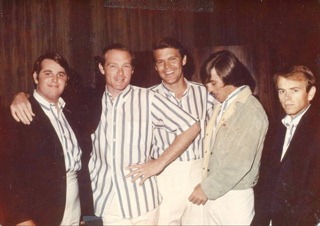
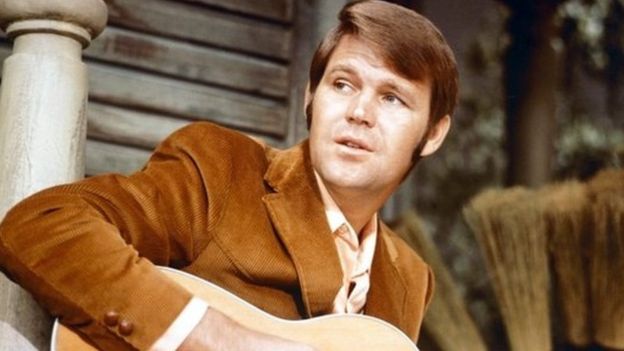 As a member of the loose group of L.A. session musicians who came to be known as The Wrecking Crew, Campbell had been the guy playing guitar in the recording sessions for “I Get Around,” “Dance, Dance, Dance” and other Beach Boys’ classic records, so he knew the material inside out. He also had a clean-cut look similar to the rest of the group, so he would fit in well on stage. He jumped at the offer and found himself a bonafide Beach Boy for a successful three-month stint.
 After an extraordinarily public six-year battle with Alzheimer’s disease, Campbell died August 9th at age 81. He was widely admired as a dexterous guitarist, a delightful singer, and a hell of a nice guy, and although his star shone brightest in the country music community, his many appearances on the pop charts with iconic songs and on important rock music records certainly qualifies him to be lauded here on Hack’s Back Pages.
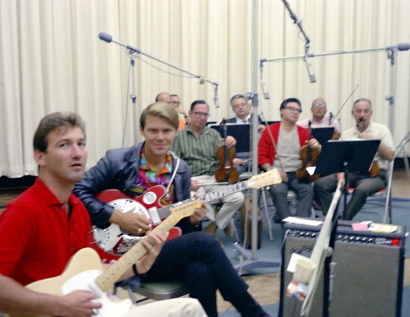 By 1960, he set his sights on California, settling in Los Angeles just as the recording scene there was catching fire as the new hotbed of rock and roll. He landed a job cutting demos and trying his hand at songwriting for a publishing firm, and his fine guitar work on those demos caught the ear of producers looking for session musicians.
 Not bad, not bad at all. Then, in 1965, Capitol Records heard him sing on a few demos, and signed him as a solo artist. Campbell had grown up on country music and was seen as a potential star in that market. After a couple false starts (anybody heard of “Turn Around, Look at Me” or “”Too Late to Worry”?), they paired him with producer Al DeLory in 1967, who encouraged him to record John Hartford’s song “Gentle On My Mind.”
 that followed it on CBS’s Sunday night schedule, “The Smothers Brothers Comedy Hour.” Response to his appearances there was so good that CBS offered him a slot as the Smothers Brothers’ summer replacement with “The Glen Campbell Goodtime Hour,” which stuck around on the full prime-time schedule for three more seasons.
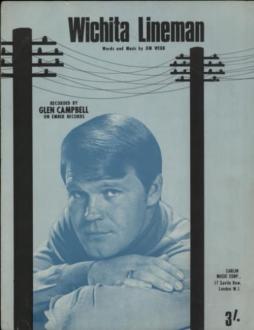 previous afternoon, Webb had driven across Kansas and seen a lone telephone lineman working atop a pole in the middle of nowhere, and the image stuck with him. He came up with two verses and the chorus but ran out of time before he could finish it. Nevertheless, Campbell recorded it, using a six-string bass to play the melody line as a solo in place of the missing third verse. It turned out to be one of the song’s most distinctive moments.
 Over the years, Campbell has done a stellar job doing polished covers of great songs of the period, even if they weren’t recognized on the charts: “After the Glitter Fades” (Stevie Nicks), “Reason to Believe” (Tim Hardin, Rod Stewart and others), and “The Moon’s a Harsh Mistress” (Jimmy Webb, Judy Collins). Also, other artists were eager to record duets with Campbell over the years as well, from Bobbie Gentry in the ’60s to Tanya Tucker in the ’80s, as well as Cher, Anne Murray, Stevie Wonder, Mel Tillis, Johnny Cash, Lee Greenwood, Juice Newton and Emmylou Harris.
 The 1980s weren’t so kind to Campbell. The albums and singles he released were met mostly with indifference, even among his base of country fans, and he found himself struggling with alcohol and drug problems for a while. Once he shook that, he re-emerged in the 1990s and 2000s with an array of gospel and Christmas LPs that did modestly well. But clearly, his best days were behind him.
 Even as Campbell was nearing the end, he collaborated with friend/producer Julian Raymond in 2014 to write and record an extraordinary song, “I’m Not Gonna Miss You,” which was duly noted in the Grammy nominations that year. Its lyrics speak tragically of how, in most cases, the afflicted will ultimately not remember anything or anybody, even cherished loved ones:
 Hack's Back Pages