Good Lord, I feel like I’m dyin’
In early 1969, electric guitar virtuoso Duane Allman — then only 21 but already revered by the likes of Eric Clapton and Muscle Shoals studio head Rick Hall — had finally assembled the powerhouse group he had been looking for.
He had a rock-solid bass player, Berry Oakley. He had not one but two drummers, Butch Trucks and Jai Johanny “Jaimoe” Johanson, who found a way to complement each other rather than compete for attention. And he had a second lead guitarist, Dickey Betts, with whom he could jam and build inventive harmonies and melodies on blues classics and originals alike.
But he was missing a singer, and he knew exactly who he wanted. “There’s only one guy who can sing in this band, and that’s my baby brother,” Duane said defiantly.
 Gregg Allman, keyboard player/singer/songwriter, was still under the thumb of a record company in L.A., where the brothers had been pushed into recording two unsatisfying albums as The Hour Glass. Duane had bailed on the contract in favor of session work back in Alabama, leaving Gregg to appease the label.
But Duane eventually pleaded with his brother to return and join his hot new band, so Gregg hitchhiked home to Georgia and walked into a rehearsal one March afternoon. The group dove in to a Muddy Waters song they’d been working on called “Trouble No More,” and Gregg was floored. Duane told Gregg to sing, and he confided, “I don’t know if I can cut this. I don’t know if I’m good enough.” The older brother retorted, “You little punk, I told these people all about you, and you’re not gonna come in here and let me down.” They counted it off and Gregg gave it all he had. “Afterward, there was a long silence,” he said, “and we all knew.”
***************
Once again, rock music fans are mourning the passing of one of the musical giants of the ’60s/’70s/’80s, another in a depressingly long line of greats from that era who have died in the past 18 months or so.
Gregg Allman, one of the two fraternal founders of The Allman Brothers Band, died of liver cancer May 27th at age 69. His death leaves only Betts and Jaimoe still living of the six original members.
He may have been the last of the six to join, but Gregg made perhaps the most lasting impression, thanks to his deft Hammond B3 keyboard passages, his iconic blues-based songs, and most notably, an indelible vocal style that borrowed from Ray Charles, Muddy Waters and James Brown to create a distinctive growl perfectly suited for the repertoire the Brothers chose to play.
 The Allmans, whose father was killed when the boys were very young, grew up in Nashville and Daytona Beach, attending military school while their mother worked to achieve a CPA degree. Both boys were exposed first to surf music and then rhythm and blues, and they fought over the one guitar the family owned until their mother bought them new ones for Christmas. As they started playing in local Florida bands in the mid-’60s, focusing on Top 40 and and R&B, Duane would sing, unsuccessfully, which led to Gregg cultivating his own vocal talents.
By late 1969, The Allman Brothers Band was honed into a precision-like blues outfit, thanks to relentless rehearsing and live gigs. Their debut LP, “The Allman Brothers Band,” failed to catch fire, dying on the charts at #188, despite Gregg’s top-shelf original material like “Ain’t My Cross to Bear,” “Dreams” and especially the incendiary “Whipping Post,” which became the highlight of virtually every Allman Brothers concert for 40 years.
 Gregg’s contributions to the band’s overall style couldn’t be overestimated, said Jaimoe last week. “His voice and his lyrics were like two more instruments in the group mix, which had a huge impact on how we played and what we sounded like. And he came in with all these great, great songs. My wife would ask me, ‘How does someone so young write songs so mature?’ His music was based on rhythm and blues, but his songwriting was influenced by people like Jackson Browne and Bob Dylan, who wrote poems. For years I didn’t pay that much attention to the lyrics, but then they hit me! So powerful.”
Allman’s influence continued with the group’s second effort, “Idlewild South,” which included his classic “Midnight Rider,” and the debut of Betts as a great songwriter in his own right with tracks like “Revival” and “In Memory of Elizabeth Reed.” While the LP managed to reach #38, it soon dropped from the charts, prompting Gregg to think, “Damn, maybe we were wrong about this group…”
Duane, however, was driven and positive, convinced the group would make it big if they kept plugging away. Betts said, “We knew were good, but we didn’t think we could get everyone else to see that. I used to say, ‘This band is never going to make it because we’re too f–king good.'”
The most distinctive thing the Allman Brothers brought to the party, said Gregg, was the interlocked connectedness of the twin lead guitars. “From the very beginning, Duane started picking up on melodies Dickey was playing and offering a harmony, and we’d build whole jams off of that. They got those ideas from jazz horn players like Miles Davis and John Coltrane, I think.”

Betts agreed. “We also borrowed fiddle lines from the western swing music I’d grown up with. You know, it’s a tricky thing to go freestyle with two guitars. Most bands with two guitarists either have everything worked out or they stay out of each other’s way, because it’s easy to sound like two cats fighting if you’re not careful.”
Those who followed the group closely knew there was much more going on in their live shows than on their albums. When they warmed up for Blood, Sweat and Tears at the Fillmore East in late 1969 and Buddy Guy and B.B. King at the Fillmore West in early 1970, they were exposed to a wider, more sympathetic audience, and something clicked in their heads.
“We realized that we had a much better sound on stage than in a studio,” Allman recalled. “Keeping each song down to three or four minutes just didn’t work for us. We were at our best when we went off and experimented with exploratory jams. Having the audience there was a big part of what we did. So we knew we needed to make a live album.”
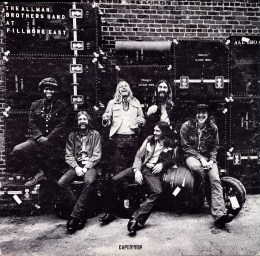 “The Allman Brothers Band At Fillmore East,” a double album culled from shows in March 1971, changed everything. It reached #13 that summer, and set the new gold standard for live recordings, both in terms of production quality and the sheer brilliance of the group’s performances. Blind Willie McTell’s “Statesboro Blues” became a signature tune; “Whipping Post” evolved into a 23-minute tour de force; the instrumental “Liz Reed” (as it is affectionately known) is regarded by many as one of the greatest live tracks ever recorded. Nearly a half-century after its release, the album still sounds fresh and original. The band quickly outgrew the regional Southern club circuit and became a top draw nationally. Duane’s vision was finally coming true.
But then, tragedy struck, the first of several that haunted the band’s career over the years. Duane Allman, leader, spark plug, guitar wunderkind, was killed in a motorcycle accident on October 29, 1971, in Macon, Georgia. The band reeled from the loss, and  Gregg, who regarded Duane as a father figure, was devastated. Many observers predicted the group wouldn’t survive without their fallen leader. Indeed, even though the band regrouped only three weeks later and soldiered on (“The only way to deal with it was to play,” Gregg said), and Gregg rebounded by writing “Ain’t Wasting Time No More” in tribute, some still feel the band was never as good after Duane’s passing.
Certainly, they were a different band without that remarkable dual-guitar interplay. Betts’ emergence as the group’s de facto leader with his more country-influenced songs like “Blue Sky” and the enormous hit “Ramblin’ Man” irrevocably changed the dynamic. And there’s no denying the deteriorating effect that serious drug use had on the band’s drive, internal relationships and general health. In an eerie coincidence, Berry Oakley died in a motorcycle wreck almost exactly a year later, only three blocks from the site of Duane’s death. Again, they put their noses to the grindstone and kept going, with new member Lamar Williams on bass and additional keyboard player Chuck Leavell contributing great piano parts to the overall mix.

Commercially, The Allman Brothers Band was unstoppable. The half-studio, half-live “Eat a Peach” reached #4 in 1972, and “Brothers and Sisters” was the #2 LP in the nation in the fall of 1973. Allman turned in some of his finest singing on tracks like “Wasted Words,” “Come and Go Blues,” the lovely acoustic piece “Melissa” and the extraordinary slow blues “Jelly Jelly.” The group performed before hundreds of thousands of fans, earning huge sums of money. “We’d been through hell, but somehow we were rolling bigger than ever,” Allman said.
But storm clouds were forming. Gregg had brought songs to the band that they chose to  reject, which he resented, causing him to record his impressive solo debut, “Laid Back,” that same year. It did well, peaking at #13, with outstanding tracks like “Queen of Hearts,” “Multi-Colored Lady,” a reworking of “Midnight Rider” and a remarkable cover of Jackson Browne’s “These Days.” During a break in the Allman Brothers’ tour, Gregg assembled his own touring band, complete with orchestral section, and even put out a live album afterwards to help recoup some of the touring costs.
All this solo activity, marked by widespread drug and alcohol abuse, created tensions within the group, made worse when Allman began a relationship with mega pop star  Cher in 1975, which turned him into a paparazzi target and subject of ridicule by the rock press. The marriage proved short-lived, although it spawned a son, Elijah Blue, and a forgettable LP.
The last straw came when Allman chose to accept a deal to avoid prosecution by testifying against a former roadie who had been his drug supplier. The band split into factions and didn’t communicate for years.
A 1979 reunion with a modified lineup produced one great LP, “Enlightened Rogues,” followed by two duds and another breakup, this one lasting throughout the 1980s, when  the Allman Brothers’ brand of music had fallen out of favor (although Gregg enjoyed a surprise solo hit in 1987 with “I’m No Angel,” carried by his distinctive vocals).
The band’s 20th anniversary and the success of a multi-CD boxed set, “Dreams,” gave the band good cause to reunite in 1989, and they began touring again with a vengeance, attracting a new generation of fans to go with the older fans who were delighted their heroes were performing together again. Three fine albums –“Seven Turns” (1990), “Shades of Different Worlds” (1991) and “Where It ll Begins” (1994) — did moderately well, with a balanced mix of tunes by both Allman and Betts.
Induction into the Rock and Roll Hall of Fame in 1995 was marred by an embarrassing appearance by Allman, who was too drunk to deliver his remarks at the podium. Seeing the video afterwards mortified him, and he finally committed, after numerous failed attempts, to getting clean. He maintained sobriety for the rest of his 22 years, although he suffered numerous ailments and hospitalizations in his final ten years, and it was liver troubles that claimed his life.
 Although the band called it quits in 2009 after a 40-year run, Allman continued to record and tour. His 2011 effort, “Low Country Blues,” performed better than any of the latter day Allman Brothers LPs, and his “Live: Back to Macon, GA” double CD featured a full horn section that offered surprisingly unusual takes on new blues and old classics.
Any analysis of Allman’s legacy would be dishonest if it ignored one other glaring character defect, which he readily admitted: His inability to nurture or maintain personal relationships in his life, particularly with women. Although he loved and respected his mother, he was routinely unfaithful to each of his eight wives, and mostly neglected his five children.
But as the lyrics to his song “Wasted Words” indicate, Allman recognized his flaws and was generally matter-of-fact about them: “Well, I ain’t no saint, and you sure as hell ain’t no savior, every other Christmas I would practice good behavior, that was then, this is now, don’t ask me to be Mister Clean, ’cause baby, I don’t know how…”

When it came to music, however, he was focused and dedicated. Even when he was in the depths of heroin addiction in the ’70s and ’80s, he managed to pull his act together for stage shows, offering not only spot-on vocals but precise organ solos. “Gregory was a hell of a keyboard player,” said Jaimoe, “and his great singing overshadowed his organ playing. ‘Less is more’ is supposed to be a big thing now. Well, he was  doing that a long time ago. He could play a solo that was just eight bars, but it was perfect. He played exactly what needed to be played, every time.”
Jaimoe takes issue with those who label Allman as “one of the best white blues singers ever.”
“That’s bullshit,” he says. “He’s one of the best blues singers, period.”
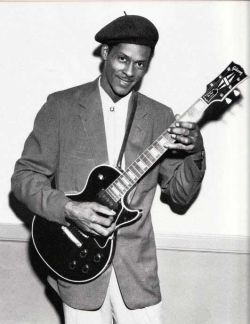 ependent companies were making their mark with lesser known niche artists who enjoyed some success on a regional basis with narrower audiences. One of these was Chess Records in Chicago, which specialized in blues and R&B music with artists like Muddy Waters, Howlin’ Wolf, Etta James, The Moonglows and Ike Turner.
 Elvis Presley, a country boy from Memphis who loved R&B, was by far the greater commercial success, but he was an interpretive singer, not a songwriter. The emergence of Berry, an R&B singer/songwriter/guitarist from St. Louis who appreciated country as well, was arguably the more symbolic game-changer.
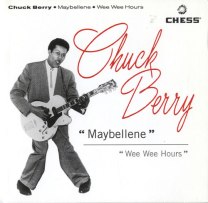 Chess thought it best to give the song a different name, and, spying a bottle of Maybelline mascara left on a nearby table, concluded, “Let’s change her name from Ida Mae to Maybelline. But let’s spell it ‘Maybellene’ so the lawyers don’t come calling.”
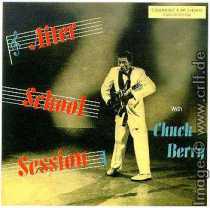 the Top 20 as well. But Berry cut a singular path as the most prominent black artist in the new genre.
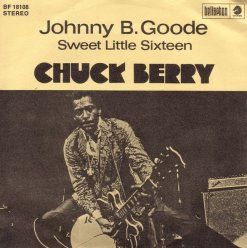 st important, “Johnny B. Goode.”
 ver cross the tracks so she can hear my man a-wailin’ sax… It’s got a back beat, you can’t lose it, any old way you use it, gotta be rock and roll music if you wanna dance with me…”
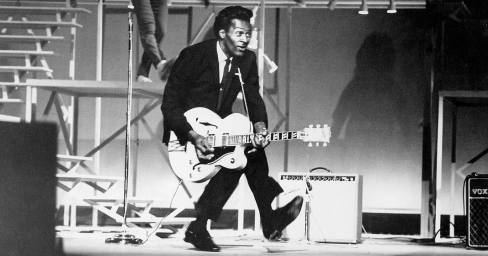 Berry wasn’t universally loved. Far from it. Mainstream newspaper critics turned their noses up at him as they did all the early rockers, and he had to face hostile audiences as part of touring revues in many segregated Southern cities. Adding to his woes was the heat he took from some black audiences, who preferred pure blues and felt he had sold out with his leanings toward “hillbilly music.”
 .” Even the homegrown Beach Boys loved Berry’s tunes; they brazenly ripped off “Sweet Little Sixteen” and its mention of multiple US cities when they hit #1 with their similarly geographic “Surfin’ USA.”
 was in fact just a note-for-note reworking of “School Day,” this time with inventive lyrics about the frustrations of cars, teen romance and uncooperative seat belts. Last was “You Never Can Tell” (which had a second life 30 years later in a key scene from Quentin Tarantino’s classic “Pulp Fiction”).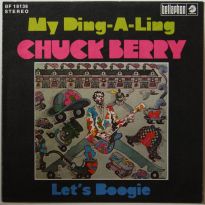
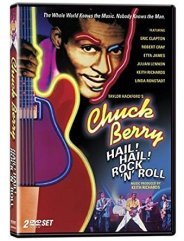
 But he will always be regarded as a rock and roll legend in most circles. A copy of “Johnny B. Goode” was the only record chosen to represent humanity among the cultural artifacts installed on the Voyager space probes launched in 1977. Berry received a lifetime achievement Grammy in 1984 and was one of the inaugural class to be inducted into the Rock and Roll Hall of Fame in 1986. He was the subject of a documentary film, “Hail! Hail! Rock and Roll” in 1987, and he was named to the Kennedy Center Honors in 2000.
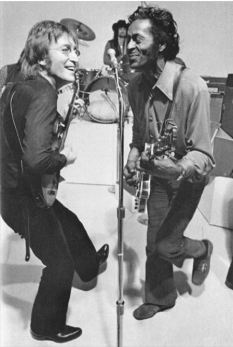 guitarist for Tom Petty and the Heartbreakers, said, “My heart is broken. Chuck was my first and greatest inspiration.”
 Hack's Back Pages