Strummin’ my six-string, on my front-porch swing
When I turned 12 in 1967, I was, like many American boys with even an inkling of musical ability, eager to learn guitar and become a rock and roll star. Or so I thought.
I persuaded my parents to buy me an electric guitar for Christmas…but I would have to save up to buy an amplifier. (I think they hoped I would lose interest before I could
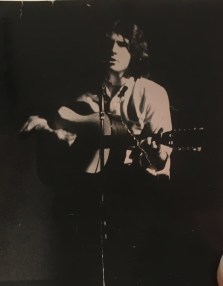
1973
amplify my lame caterwaulings throughout the neighborhood.)
I took lessons in the hope of learning how to be the next John Lennon, or Eric Clapton, or whomever. But I quickly saw my limitations as a lead guitarist, and soon decided to alter my goals. Perhaps, instead, I could become an acoustic strummer like Paul Simon.
So I sold the electric, and instead chose an economy-line 12-string acoustic guitar, slowly learning the songs of Simon and Garfunkel, Peter Paul & Mary, the acoustic Beatles material, and more.
By 1971, my parents felt I was serious enough about playing guitar that they agreed we should invest in a D-12-28 Martin 12-string, one of the better instruments available. Over the next few years, I expanded my repertoire to include songs by James Taylor, Neil

1982
Young, Cat Stevens, Jackson Browne and other singer-songwriters of that musically fertile period.
In college, I joined forces with a talented pianist named Irwin Fisch, and we played at coffeehouses around the Syracuse University campus. With piano now in the mix, I learned even more songs, adding The Eagles, Dan Fogelberg, Jonathan Edwards. What a blast we had.
I thought it might be fun to assemble a playlist of 20 songs I love to play on guitar. Of course, I know plenty of the well-known hits by the artists mentioned here, but I decided it might be more interesting to dig into their catalogs and feature some acoustic lost classic deep tracks instead.
Maybe someday, if we cross paths, you can feel free to twist my arm to play one of these long-lost songs that bring back fond memories from your distant past. Enjoy!
****************
“The Weight,” The Band, 1968
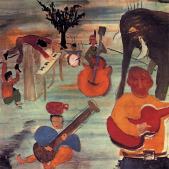 Comprised of four Canadians and one Yank, The Band helped bring the counterculture back from psychedelia to more simple, homespun music with a prototype “Americana” style. Never a chart success, The Band still came up with iconic material, particularly “The Weight,” since covered by more than 50 other major artists. Everyone loves to sing along on the chorus, “Take a load off, Fanny, take a load for free…”
“Follow Me,” Mary Travers, 1971
 John Denver wrote this ode to love and recorded it on one of his early albums, and Travers, branching out on her own after the breakup of Peter, Paul and Mary, did a marvelous cover on her 1971 debut. I sang and played it to my fiancée at our wedding rehearsal dinner, so it’s clearly a special song in my family: “You see, I’d like to share my life with you and show you things I’ve seen, places where I’m going to, places where I’ve been…”
“Beautiful,” Gordon Lightfoot, 1972
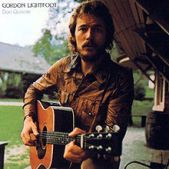 Canada’s musical icon got his start in the early ’60s, and saw cover versions of his songs become hits in the US. He finally broke through here himself with “If You Could Read My Mind” in 1970. He went on to enjoy multiple hits throughout the ’70s, and is still performing today despite health issues that sidelined him for a while. I always love to go back to “Beautiful,” a gorgeous track from his 1972 LP, “Don Quixote.”
“Longer Boats,” Cat Stevens, 1970
 Greek-British hybrid Steven Georgiou began his recording career slowly in 1967, then exploded in the US and UK with the back-to-back “Tea for the Tillerman” and “Teaser and the Firecat” albums in 1970 and 1971. More great albums followed, then Cat’s conversion to Yusef and a lengthy commitment to the Muslim faith before returning to pop music in 2010. From Cat’s “Tillerman” LP is the wonderful singalong track “Longer Boats.”
“Sandman,” America, 1971
 As it turned out, I lost interest in America and their songs, but the debut LP is incredible, and I listened to it incessantly. I think “A Horse With No Name” is boring and overrrated and has rather ridiculous lyrics, but there’s a hypnotic track on the album called “Sandman” that became a sort of signature song for the “Hackett and Beard” duo I played in during my high school years. It’s always fun to play in group settings.
“Duncan,” Paul Simon, 1972
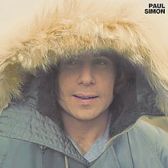 Simon’s first foray into a solo career was met with some skepticism, seeing as how his final work with Art Garfunkel had been one of the biggest successes of 1970. But the new songs were well received, from “Mother and Child Reunion” to “Me and Julio Down By the Schoolyard.” For me, the sleeper track “Duncan” has always been one of my go-to songs. Great story-song about a guy leaving home and searching for love and a new life.
“Younger Girl,” The Lovin’ Spooful, 1966
 John Sebastian wrote all the classic hit tunes for his East Coast band The Lovin’ Spoonful, which dominated the airwaves in the 1965-1967-period. Everyone knows “Do You Believe in Magic,” “Daydream” and “Summer in the City,” but not everyone is as familiar with the minor hit single “Younger Girl,” a wonderfully dreamy song that always gets an “awww” reaction whenever I play it.
“Fountain of Sorrow,” Jackson Browne, 1974
 The poet laureate of the Laurel Canyon scene (other than Joni Mitchell, of course) was Browne, who wrote some astonishingly candid tunes that made us all examine our own paths and dreams a bit more deeply. From “Rock Me on the Water” to “These Days” and “The Pretender,” Browne wrote some of the best introspective pieces of the ’70s, and most near and dear to me has always been “Fountain of Sorrow,” from his iconic 1974 “Late For the Sky” LP.
“Sit On Back,” Livingston Taylor, 1970
 Brother James became such a star that his talented younger brother couldn’t possibly match up. Consequently, his delightful albums therefore slipped under the radar of most fans of the singer-songwriter genre, which was a shame. He has continued to perform at small clubs and venues, mostly in the East and Midwest. From Livingston’s debut LP is this effervescent track that’s bound to bring a smile to your face.
“Tupelo Honey,” Van Morrison, 1971
 Morrison, a titan of songwriting since his late ’60s debut, has released three “Best of Van” collections over the years, and it has never ceased to amaze me that he has neglected to ever include this lovely tune on any of those collections. From his 1971 album of the same name, “Tupelo Honey” — melody, lyrics, arrangement, all of it — are simply sublime, and I always get a warm response when I include it in my set.
“There’s a Place in the World For a Gambler,” Dan Fogelberg, 1974
 Like so many singer-songwriters, Fogelberg arrived slowly, offering gorgeous, introspective songs on his 1972 debut “Home Free,” which stiffed on the charts. Then he recruited Joe Walsh as producer and guitarist, with guest appearances by Graham Nash, Don Henley and others to produce the 1974 gem “Souvenirs,” featuring his first hit single “Part of the Plan.” Also on that LP was the stunning closer, “There’s a Place in the World For a Gambler,” which is so much fun to play on guitar.
“Wondering Aloud,” Jethro Tull, 1971
 Tull was a progressive rock giant, known for aggressive flute-driven anthems like “Aqualung,” “Minstrel in the Gallery,” “Thick as a Brick” and “Locomotive Breath.” Still, singer-songwriter Ian Anderson loved to sprinkle every album with a few delightful acoustic numbers to keep everyone guessing. On the “Aqualung” LP, “Wondering Aloud” was always the one that grabbed me.
“Cloudy,” Simon and Garfunkel, 1966
 I learned virtually the entire Simon & Garfunkel catalog, and sang their stuff with my guitar compatriot Ben Beard in my formative years. Beyond the obvious hits (“The Boxer,” “Mrs. Robinson,” “Homeward Bound”), there were so many other hidden treasures. From the duo’s third LP, 1966’s “Parsley, Sage Rosemary & Thyme,” I’m very partial to “Cloudy,” a special favorite of my dear departed friend Chris Moore, who loved to harmonize on it with me.
“Working Class Hero,” John Lennon, 1970
 Lennon was a rocker from the very beginning, and although his Beatles songs were mostly inspired by Elvis and Chuck Berry rock ‘n roll knockoffs, he was plenty capable of more introspective acoustic numbers like “Norwegian Wood,” “In My Life,” “Julia,” and “Across the Universe.” Upon the band’s breakup, Lennon chose to release a debut solo LP full of raw, emotional tracks that many found tough to absorb, but I was entranced by the haunting “Working Class Hero.”
“Friends,” Elton John, 1971
 Elton and lyricist Bernie Taupin wrote and released many songs on various labels when they first started out, and fans were therefore astonished to find not one, not two, not three, but four albums of Elton John songs available in the spring of 1971, one of which was an obscure soundtrack LP from a slight but charming French film called “Friends.” The title track has always been a huge favorite of mine.
“Blackbird,” The Beatles, 1968
 Because so many songs in The Beatles’ catalog were acoustically based — “And I Love Her,” “Yesterday,” “You’ve Got to Hide Your Love Away,” “Norwegian Wood,” “I’ve Just Seen a Face,” “Julia,” “I Will,” “Here Comes the Sun” — I learned many of them on guitar. One of the best of the bunch is “Blackbird,” the McCartney-penned gem from “The White Album” that has been covered by dozens of great artists through the years (Crosby, Stills and Nash, Sarah MacLachlan).
“Every Woman,” Dave Mason, 1973
 Mason was one two great songwriters that comprised the British folk/rock/jazz band Traffic, but after two albums (1967-68), he felt pushed aside by Steve Winwood and chose to head out on his own. His 1970 debut, “Alone Together,” is full of great songs and performances, but I found his 1973 LP, “It’s Like You Never Left,” just as enjoyable. Mason wrote and recorded “Every Woman” in a brief 1:50 arrangement, then re-recorded it in 1974 with pedal steel and other instruments in a superior recording.
“The Needle and the Damage Done,” Neil Young, 1972
 Young’s songs are simply structured and are ideal for new, aspiring guitarists to master — “After the Gold Rush,” “Helpless,” “Cowgirl in the Sand, “Heart of Gold,” “Old Man” — and I could’ve included any of a dozen songs from Young’s catalog here that I enjoy playing, but this spare, haunting track from 1972’s “Harvest” is still among his best. It’s brief, but harrowing, an ode to his friend Danny Whitten, who died of a heroin overdose in 1971.
“She’s a Lady,” John Sebastian, 1970
 Sebastian’s 1970 solo debut is, in my opinion, one of the most sadly neglected albums of its time. After all his delightful work leading the Lovin’ Spoonful, and his widely admired appearance at Woodstock the year before, his subsequent solo LP curiously never got the attention it deserved. One of the prettiest tracks was the gentle folk ballad, “She’s a Lady,” which I take so much pleasure in playing.
“You Can Close Your Eyes,” James Taylor, 1971
 Because his vocal range and mine are so similar, I can comfortably play almost anything in James’s catalog, from “Country Road” and “You’ve Got a Friend” to “Carolina on My Mind” and “Lighthouse.” One of the prettiest songs he ever wrote is the lover’s lullaby “You Can Close Your Eyes” from the wonderful “Mud Slide Slim” LP in 1971. I’m so thrilled that he still usually plays it in concert all these years later.
**************
And now, today, at age 63, I still really enjoy strumming and singing these old songs at

2015
living-room gatherings, back-yard parties, bonfires, and even the occasional stage when I’m lucky enough to be invited (or if the scheduled artist is a no-show!). Indeed, this weekend, I’ve been asked to bring the guitar to two patio get-togethers, where some of us will take turns providing the foundation for group singalongs.
I also do music therapy at a seniors day care center a couple mornings a week, sometimes bringing a smile of recognition to the face of an Alzheimer’s sufferer. And I regularly encourage, and sometimes give lessons to, aspiring young guitarists, perpetuating a time-honored tradition present in nearly every culture on Earth: Playing and singing music is a universal language that brings joy and happiness to damn near everybody.
 down, shot her down to the ground… Yes, I did, I shot her, you know I caught my old lady messing ’round town, and I gave her the gun, I shot her!…”
 written that feature outlaws, thieves and serial killers and the broad array of awful things they do. Some are based on true stories; some offer disturbing images of unspeakable acts; some are sad tales of accidental shootings resulting in prison terms.
 regrets his act, if only because he knows it will mean separation from the woman he loves.
 track of his top-selling 1978 LP. That song whimsically describes the boy’s escalation from rubbing pot roast on his chest to biting the theater usherette’s leg, to eventually raping and murdering a girl and then digging up her grave to build a cage with her bones. Charming little ditty…
 “I Fought the Law,” Bobby Fuller Four, 1966, The Clash, 1977
 “Smuggler’s Blues,” Glenn Frey, 1984
 Country musicians haven’t been the least bit shy about writing songs about outlaws, thievery and love gone horribly wrong. From Merle Haggard’s “Mama Tried” and George Jones’ “Still Doin’ Time” up through the Dixie Chicks’ “Goodbye Earl” and Kacey Musgraves’ “Five Finger Discount,” country music fans have always cherished the songs that canonized gun-toting folks who felt the need to settle scores “because he needed killin’.” Johnny Cash’s “Folsom Prison Blues,” which combined the metaphors of trains and prisons in one memorable track about a cold-blooded killer who “shot a man in Reno just to watch him die,” reached #1 on the country charts in 1968.
 Phil Collins, Tony Banks, Mike Rutherford and Steve Hackett had their hands full as they prepared material for the first Genesis album without their former front man Peter Gabriel. One tune Collins wrote, “Robbery, Assault and Battery,” recalled his days as a young actor playing the Artful Dodger in a London stage production of “Oliver Twist.” But the song took the crimes much further, from picking pockets to murder, still gleefully escaping the reach of the law, at least for now: “I’ve got clean away, but I’ll be back someday… Some day they’ll catch me, to a chain they’ll attach me, until that day, I’ll ride the old crime wave…”
 In the ’60s, The Stones encouraged the perpetuation of their bad boy image with references to Satan (“Sympathy for the Devil”) and violent crime (“Gimme Shelter”). One of their more notorious efforts is “Midnight Rambler,” which uses the example of the so-called “Boston Strangler” of 1966 to paint a harrowing picture of a madman on the loose, possibly in your neighborhood. The studio version on 1969’s “Let It Bleed” is pretty great, but the live version on 1970’s “Get Yer Ya-Ya’s Out” is superior.
 “I Shot the Sheriff,” Bob Marley and The Wailers, 1973
 “Don’t Take Me Alive,” Steely Dan, 1976
 The legendary Canadian troubadour did wondrous things with this melodic piece of Spanish guitar folk music that tells the tragic story about Miguel, a Mexican who sneaks across the border to see his true love and avenge his mother’s broken heart at the hands of a deserting father. Miguel also shoots the lawman who came to capture him, and Miguel ultimately dies as well. In this tale, revenge is definitely not sweet.
  Cross burst on the scene in 1980 with this #2 hit, another murderer-on-the-lam vignette. The first-person narrator laments that he was “born the son of a lawless man who always spoke my mind with a gun in my hand.” He was accused, tried and sentenced to death… but he “never was the kind to do as I was told, gonna ride like the wind before I get old…” The galloping musical arrangement underscored the sense of urgency in the man’s race to reach Mexico before being captured.
 “Jailbreak,” Thin Lizzy, 1976
 “Nebraska,” Bruce Springsteen, 1982
 Leave it to that unpredictable psycho Ozzy to write a lurid hard rock song blatantly depicting the infamous crimes of Charles Manson and his “family” 20 years after they took place in the Hollywood Hills. Manson may be dead now, but thanks to tracks like this one, the gut-wrenching murders live on. In case you’d forgotten, here’s a snippet to turn your stomach: “There’s blood on the walls when Charlie and the family make house calls, if you’re alone, then watch what you do, ’cause Charlie and the family might get you, can you hear them in the darkness, helter skelter, spiral madness, bloodbath in paradise…”
 The most chilling thing about this compelling song (found as a bonus track on The Police’s final LP “Synchronicity”) is how it offers a virtual manifesto for how easy it is to turn murder into an art form “if you’ve made a stone of your heart and your hands are willing.” The lyrics explain that there’s no need for bloodshed if you merely slip a tablet into someone’s coffee. It goes on to suggest, “If you have a taste for this experience… then you must try a twosome or a threesome… it’s a habit-forming need for more and more…” Hmmm. Makes me wonder whether some of these shooters today grew up listening to this track over and over…
 “Psycho Killer,” Talking Heads, 1976
 “Ticking,” Elton John, 1974
 “Family Snapshot,” Peter Gabriel, 1980
 “Killer’s Eyes,” The Kinks, 1981
 “Sniper,” Harry Chapin, 1972
 Hack's Back Pages