Damn, that 8-track, it takes me way back
When I was 17, in 1972, my best friend had an 8-track tape player installed in his Ford Maverick. Like me, he was a music lover and album buyer, but he had grown tired of having to listen to commercial radio in the car, with its incessant commercials and DJ banter.
Now he had the option of enjoying 8-track tape versions of some of his favorite albums  while he drove around town. True, he had to buy the tapes even though he already owned the albums…but it was worth it to him to be able to control the music he could listen to on road trips.
As the guy riding shotgun, I enjoyed this too. But it didn’t take long for me to see several significant, annoying drawbacks of the 8-track format which prevented me from ever considering investing in it. To this day, for the reasons I’ll explain, I contend the 8-track tape was an ill-conceived and poorly executed idea.
Perhaps you shared my distaste for 8-tracks and didn’t succumb to the temptations of portability and convenience. Or maybe you joined the millions of other Americans who embraced 8-tracks in the 1970s, only to rue the day several years later when the entire format went the way of the dodo bird (and rightly so).
Here are the six most obvious defective characteristics of the 8-track tape that, in my view, doomed the format to an early obsolescence:
No rewind or fast-forward options.
At home, when you listened to albums, you could change songs easily. Simply pick up the needle on your turntable and move effortlessly to another specific song, or put on another album.
If you were one of those rare folks who had a reel-to-reel tape deck, you could hit “FF” or “REW” to get to the desired place on the tape.
 With 8-track tapes, you didn’t have that flexibility. Eight-track tapes were configured as four “programs” sharing four parallel portions of the tape bandwidth. If you were listening to a song and decided you wanted to skip to the next song, or maybe go back and listen to the same song again, you were out of luck. All you could do was jump to one of the next programs and listen to whatever song was playing on that program. To listen to the song you really wanted to hear, you had to listen to other songs first before the one you wanted came back around on the program. Man, was this irritating!
Messing with the way the artist sequenced the music.
Because 8-track tapes are set up as four programs lasting about 10 or 11 minutes each, the order of songs often had to be changed in order to maximize efficient use of the available tape. For example, if an album’s first three songs lasted more than 10 minutes, one song might be replaced on Program 1 by a different, shorter song from later on the album just so the music would fit the 8-track’s limited format. This might happen on all four programs, completely altering the flow of the music as intended by the artist. A particularly egregious example was “Abbey Road” (see tracking below).
 Even worse, sometimes there was no mathematical way to make the various album tracks fit in four 10-minute sets, so one or more tracks would actually have to be interrupted midway through. The tape would then fade out, and several seconds (even as much as a minute or more) would pass before it would automatically switch to the next program, and the song would then fade back in at the point of interruption and proceed to its conclusion.
Needless to say, this was an abominable way to listen to a song, and certainly not the artist’s intent.
Physical limitations of the tape.
The movement of the head at the point where it switched between programs could sometimes pull the tape up or down, causing the tape to fold over and start playing the back side of the tape. The tape would continue to play, buy very muffled and barely audible. Continued playing would flip the entire tape over, so the tape would be wound on the reel inside with the backside showing. The program switch point is often the place where the tapes would sometimes be ingested into the player (“eaten”), most often when the tape head moved from program 4 to program 1, its furthest track change movement. At that point, the tape was ruined, and the player could no longer play that tape, or any tape.
Head alignment: Misalignment results in reduced high frequencies and allows sounds from adjacent tracks to bleed over, an effect sometimes known as “double-tracking.” Among audio service technicians, there used to be a joke that “the 8-track is the only audio device which knocks itself out of alignment four times during each album.”
The sensing foil that allows the tape to switch programs would sometimes dry up, fall off, and the tape would separate, and disappear inside the sealed cartridge. This was especially prevalent on bootleg tapes that typically used cheaper sensing foils. In  general, the 8-track market was flooded with cheaper bootleg tapes, found at truck stops and service stations.
Had the tape been reinforced on both sides at this point, the tapes would have been much more reliable. Many modern collectors replace the old sensing foil with a more robust, properly reinforced foil.
Capstan wear and buildup was also a chronic problem with 8-tracks. As tape residue, dirt and lubricant built up on the capstan, the tape speed would increase and, since the buildup was uneven, the tape speed would become correspondingly uneven. Similarly, some units were subject to the capstan wear, causing a decrease in tape speed.
**************
I had a couple of other friends at that time who invested in reel-to-reel tape decks as an additional component in their home stereo system. These devices, introduced in the 1950s, became more popular by the 1970s. They offered high-quality sound but were relatively expensive and a little tricky to operate for most casual music fans. But they  gave consumers the ability to assemble customized mixed tapes that collected choice tracks from their album collections.
I loved this concept. It was like being your own DJ, without the commercials and talk. You could put together mixes for every occasion — holiday parties, pool bashes, romantic encounters and more.
But reel-to-reel tapes were not portable. You could take them to a friend’s house only if he/she also had the necessary reel-to-reel player. Most important, you couldn’t play them in a car. So I chose not to invest in this format either.
Enter the cassette tape. When first introduced in the early ’60s, their sound quality was  pathetic, marred by a prominent hiss and muffled sound. Their use was adequate for use in voice dictation and playback of children’s nursery rhymes and such. So music lovers shunned the format…until the Dolby Noise Reduction technology arrived in the early ’70s to substantially improve cassette tape sound quality. This development, combined with newer chromium-dioxide tapes, made cassettes a much more attractive format.
Cassettes therefore became ubiquitous around 1975, and the 8-track began its inevitable slide toward extinction.
So what was the thinking behind the 8-track, anyway?
The “Stereo 8 track” cartridge was designed by Richard Kraus while working under Bill Lear for his Lear Jet Corporation in 1963. The major change from the reel-to-reel tape players then available was to incorporate a neoprene rubber and nylon pinch roller into the cartridge itself, rather than to make the pinch roller a part of the tape player, 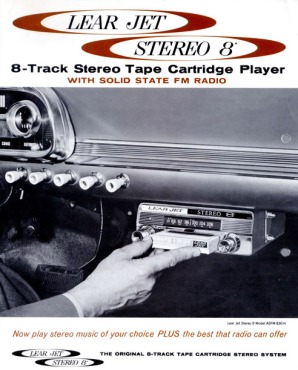 reducing mechanical complexity.

“If the heads became misaligned even slightly (a VERY common occurrence), one track would bleed through into another track. Worst case scenario: two songs at equal pitch would play at the same time. Best case: a faint background of an altogether different track. Either way, it was a thoroughly miserable listening experience.”
So there you have it. The 8-track format, while perhaps not all that bad a concept, was shoddily merchandised and manufactured, and nothing was done to combat the onslaught of pirate/bootleg tapes on the market, which helped kill its credibility.
Cassettes, on the other hand, lasted well into the ’90s until the digital compact disc format completely overwhelmed analog tape in all its forms.
Now, even the CD is considered a dinosaur, as consumers turn to mp3 files and online services to purchase their music.
But if you want to get a chuckle out of anyone who lived through the ’70s, pull out an 8-track tape and ask them to slip it into their player!
 In pop culture, the same upheaval was underway. Pop art, op art, nudity on Broadway, “Rowan & Martin’s Laugh-In” on TV, and films like “Rosemary’s Baby” and “2001: A Space Odyssey” were rocking our world.
 “Wheels of Fire,” Cream
 “Music From Big Pink,” The Band
 “In Search of the Lost Chord,” The Moody Blues
 “Aretha Now,” Aretha Franklin
 “Bookends,” Simon & Garfunkel
 “Super Session,” Al Kooper, Mike Bloomfield, Stephen Stills
 “Beggar’s Banquet,” The Rolling Stones
 refused by the US record label and replaced by a formal wedding invitation design. More important was the music, particularly the rocking “Sympathy for the Devil,” “Street Fighting Man” and “Salt of the Earth,” all offset by acoustic gems like “No Expectations,” “Parachute Woman” and “Factory Girl.” Mick Jagger and Keith Richards really stepped up here, with co-founder Brian Jones sliding further into the shadows, and the rhythm section of Charlie Watts and Bill Wyman had developed at that point into one of the very best in rock.
 “Cheap Thrills,” Big Brother & The Holding Company
 “Truth,” Jeff Beck
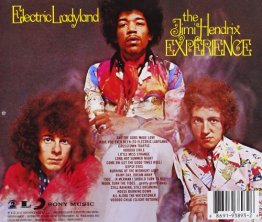 “Electric Ladyland,” Jimi Hendrix Experience
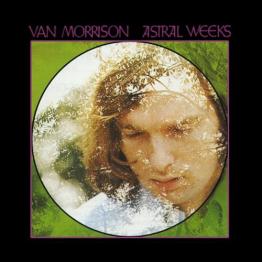 “Astral Weeks,” Van Morrison
 “The Beatles (The White Album),” The Beatles
 cover. This expansive collection had something for everybody. Harrison offered his best track yet, “While My Guitar Gently Weeps,” featuring an uncredited guitar solo by pal Eric Clapton. McCartney kicked ass with rockers like “Back in the U.S.S.R.,” “Birthday,” and “Helter Skelter,” and also offered some fine acoustic stuff like “Blackbird,” “I Will,” “Mother Nature’s Son” and “Martha My Dear.” Even Ringo wrote a song, the country ditty “Don’t Pass Me By.” Lennon, meanwhile, stepped up with nearly a dozen of his best songs — “Happiness is a Warm Gun,” “I’m So Tired,” “Dear Prudence,” “Sexy Sadie” and a slow-burn version of “Revolution.” He insisted the album include his nightmarish sound collage, entitled “Revolution 9,” as well as his saccharine lullaby, “Good Night,” sung by Ringo. Because the recordings were so good, no one was aware the group was continually at odds and headed for a breakup. For now, this was an outstanding Christmas present.
 “James Taylor,” James Taylor; “Living the Blues,” Canned Heat; “Eli and the Thirteenth Confession,” Laura Nyro; “Traffic,” Traffic; “Song to a Seagull,” Joni Mitchell; “One,” Three Dog Night; “Diana Ross and The Supremes Join The Temptations“; “In a Gadda Da
  Vida,” Iron Butterfly; “Tell Mama,” Etta James; “Last Time Around,” Buffalo Springfield; “Creedence Clearwater Revival,” Creedence Clearwater Revival; “This Was,” Jethro Tull; “Sweetheart of the Rodeo,” The Byrds; “Odessey and Oracle,” The Zombies; “Ogdens’ Nut Gone Flake,” The Small Faces.
 Hack's Back Pages