Turn back, turn back the pages
I just never get tired of raiding the vaults of the thousands of albums from the ’60s, ’70s and ’80s, searching for those great “diamonds in the rough” that have been neglected and nearly forgotten as the years have passed.
 The older we get, the more it gets challenging to remember the bands, musicians, albums and songs from our youth (other than the big hits that are played ad nauseam on classic rock radio). As Stephen Stills wrote in his 1975 solo track “Turn Back the Pages,” “Who remembers names, who remembers faces?…”
Bringing great old songs — some known to you, some newly revealed here — into the limelight is a periodic service I like to provide at Hack’s Back Pages.
Let’s say you were/are a big fan of Steely Dan. Let’s look at their best-selling album, 1977’s “Aja.” You can hear “Josie,” “Peg,” “Deacon Blues” and “Black Cow” several times a week if you’re listening to mainstream classic rock stations. But hey, what about “Home at Last” or “I Got the News”? These are really great songs, but they’re in danger of disappearing into the ether.
Some LPs have even more “deep tracks” you never hear anymore. God help you if you ever hope to hear anything besides “Rocky Mountain Way” from Joe Walsh’s superb 1973 album “The Smoker You Drink, the Player You Get,” even though there are probably five or six other fine songs worthy of your attention.
So here, once again, I offer a dozen “lost classics” from decades ago. There is a Spotify playlist at the end so you can become reacquainted or familiar with these songs that have otherwise been missing in action.
***************
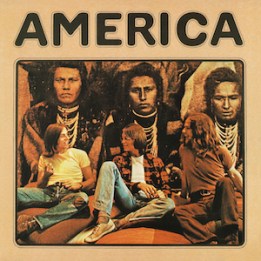 “Sandman,” America (1972)
Three young men, all sons of military dads stationed in England, formed a trio and named themselves America, to make sure everyone knew they were Yanks. They exploded on the scene in early 1972 with the lame but popular “A Horse With No Name,” a song that sounded eerily like Neil Young (who was concurrently at the top of the charts with “Heart of Gold”). The debut album was way better than the single, with wonderful acoustic guitar-driven songs like “Three Roses,” “Never Found the Time” and “Rainy Day.” The best of the bunch, in my opinion, was “Sandman,” a driving, acoustic/electric mix with an infectious chorus. The lyrics, I later learned, are about soldiers trying to stay awake and stay warm while on duty on a cold night: “Ain’t the fire inside? Let’s all go stand around it… Did you hear of my enlistment?… I understand you’ve been running from the man that goes by the name of the Sandman…”
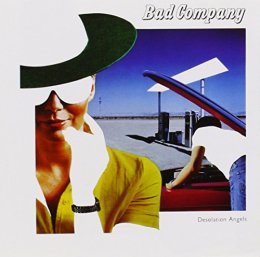 “Gone, Gone, Gone,” Bad Company (1979)
Led by the vocals of ex-Free singer Paul Rodgers and the guitar of ex-Mott the Hoople axeman Mick Ralphs, Bad Company became a staple of FM mainstream rock throughout the ’70s. Songs like “Can’t Get Enough,” “Bad Company,” “Feel Like Makin’ Love,” “Shooting Star,” “Live For the Music,” “Good Lovin’ Gone Bad” and “Running With the Pack” are still getting airplay on classic rock stations across the country. Before things petered out in the face of stiff competition from New Wave ’80s music, the quartet released a solid LP in 1979 called “Desolation Angels,” a #3 album featuring their final Top 20 hit “Rock and Roll Fantasy.” Far better, though, was the contagious album track called “Gone, Gone, Gone,” mentioned by many as one of Bad Company’s finer moments.
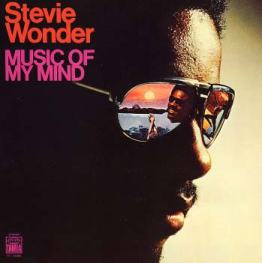 “Superwoman,” Stevie Wonder, 1971
A child prodigy who had his first #1 hit at age 12 (“Fingertips” in 1963), Stevie Wonder spent the first decade of his career operating under the thumb of Motown mogul Barry Gordy. When he turned 21, Wonder renegotiated his contract and assumed total control of his recorded work, writing his own material and playing virtually all the instruments. His first attempts under this new arrangement were somewhat of a mixed bag; it wasn’t until “Talking Book” in 1972 (and the subsequent Grammy-winning “Innervisions,” “Fulfillingness’ First Finale” and “Songs in the Key of Life”) that he became the maestro who dominated the ’70s music business. On the 1971 LP “Music of My Mind,” though, there’s an excellent two-part gem called “Superwoman” that tells the story of the singer’s relationship with a woman who wants to be a movie star despite his desire for her to come back to him. It’s a soulful romp and a heartbreaking romantic piece all rolled into one 8-minute track that ranks among his best work.
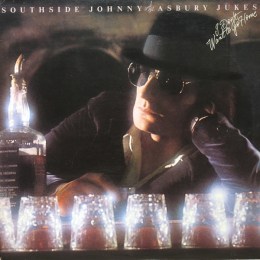 “I Don’t Want to Go Home,” Southside Johnny and The Asbury Jukes (1976)
Right alongside Bruce Springsteen in the early ’70s Asbury Park, New Jersey music scene was “Southside” Johnny Lyon, a fantastic vocal interpreter of soul/blues/rock standards and originals, often penned by The Boss and/or E Street member Steve Van Zandt. Southside Johnny and the Asbury Jukes put together a valiant effort on record and in concert for 15 years (1976-1991), but inexplicably, they never broke through with the commercial success they deserved. In particular, their first three LPs were jam-packed with irresistible bar-band dance music that always got partygoers up and moving. The group’s signature song, if they had one, was the first album’s title track, “I Don’t Want to Go Home,” which features their trademark horn section and Lyon’s strong vocals. If you aren’t hip to this group, by all means, check out their excellent catalog.
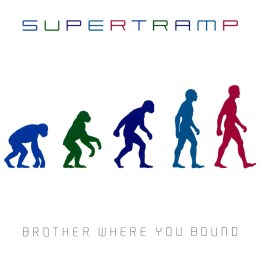 “Cannonball,” Supertramp (1985)
Featuring two talented singer-songwriters and a musically sophisticated approach, Supertramp produced five competent albums over ten years, faring better in their native England than in the US, until their big commercial breakthrough with 1979’s “Breakfast in America,” which peaked at #1 and included the two Top Ten hits, “Goodbye Stranger” and “The Logical Song.” By 1984, guitarist/songwriter Roger Hodgson felt the need to move on, so Supertramp carried on with keyboardist Rick Davies handling all the songwriting and singing duties. Their 1985 LP “Brother Where You Bound” was modestly successful, but long forgotten since then has been the mesmerizing 7-minute single “Cannonball,” which chugs along relentlessly like a runaway train.
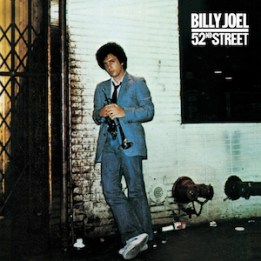 “Zanzibar,” Billy Joel (1978)
Producer Phil Ramone recalls that, during the sessions for the 1978 LP “52nd Street,” Joel wanted to call his new song “Zanzibar” without knowing what he wanted to say. He eventually decided it would not be about the African country but instead a fictional New York sports bar, and consequently, the lyrics included multiple sports references (Muhammad Ali, Pete Rose, The Yankees). Musically, it shifts from a shuffle rhythm to a more dreamlike keyboard section before breaking out into jazz trumpet solos handled by the late great Freddie Hubbard. “52nd Street” was the second of five #1 albums for Joel, carried by hits like “Big Shot,” “My Life” and “Honesty,” but “Zanzibar” has always been the track that grabbed me.
 “No Opportunity Necessary, No Experience Needed,” Yes (1970)
Before “Roundabout,” before Yes became a commercial success, this British prog rock group struggled, releasing two early albums (“Yes” and “Time and a Word”) that barely made the charts in England and were completely ignored here. But after “The Yes Album” and “Fragile” established Yes as a formidable force among the burgeoning audience of progressive rock fans in the US, their initial work was discovered, particularly the “Time and a Word” LP. One song that made people sit up and take notice was Yes’s radical reworking of a Richie Havens song (!) called “No Opportunity Necessary, No Experience Needed,” dominated by keyboards, Jon Anderson’s ever-present vocals and a startling middle break with strings that sounds like a segment from a western movie soundtrack. LOVE this one.

“The Fuse,” Jackson Browne (1976)
Browne was just a 17-year-old Southern California boy when he started writing amazing confessional songs (“These Days,” “Rock Me on the Water”) even before Joni Mitchell and James Taylor made it a thing in 1970-71. His first two albums were critically acclaimed but only mildly successful, but by 1976 and the release of the #5 LP “The Pretender,” Browne had earned the commercial success to go with the accolades. Sadly, the album’s somber tone was the result of his first wife’s suicide, and the songs reflected that “what is life all about” soul searching. “The Fuse,” which opens the record, starts slowly and then breaks into a lively celebration, urging us to make the best of our brief time here: “Through every dead and living thing, time runs like a fuse, and the fuse is burning, and the earth is turning…”
 “Blue Collar,” Bachman-Turner Overdrive (1973)
Randy Bachman had left The Guess Who in 1970 during their commercial peak, eager to dial it back and avoid the limelight for a while. He hooked up with Winnipeg singer/songwriter Fred Turner, a bassist with jazz leanings who shared leadership duties in a band called Brave Belt, who were happy playing small venues all over Canada. Fame eventually caught up with them after they changed their name to Bachman-Turner Overdrive and rode the charts with a half-dozen huge international pop rock hits (“Takin’ Care of Business,” “Ain’t Seen Nothin’ Yet,” “Roll Down the Highway”). Buried on BTO’s first album, sounding nothing like the BTO hits, was a gorgeous jazzy jam by Turner called “Blue Collar” that mustn’t be ignored.
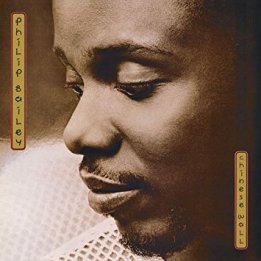 “Walking on a Chinese Wall,” Philip Bailey (1984)
Earth, Wind and Fire was the most dominant R&B/soul band on the charts in the 1970s, but once they fell out of favor in the ’80s, lead singer Philip Bailey went off on his own for a while. On his first project, he collaborated with Genesis drummer/singer/producer Phil Collins, who had been using EW&F horn sections on his own solo records and even some Genesis tracks, so the pairing seemed natural. It reached fruition on the international #1 hit “Easy Lover” in 1984, an effervescent Bailey/Collins duet. But I’m partial to the marvelous “Walking on a Chinese Wall,” the de facto title track of Bailey’s “Chinese Wall” LP. The song was written by Billie Hughes, former leader of a little known acoustic trio called Lazarus, who was fascinated by the ancient I-Ching teachings and the Far East’s contribution to the “new” Seven Wonders of the World. “Walking on a Chinese wall, waiting for the coins to fall, butterfly, spread your painted wings, from an answer from the Ching…”
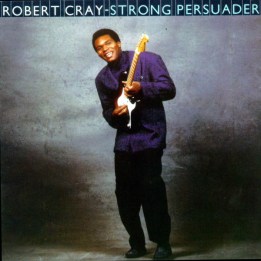 “Smoking Gun,” Robert Cray (1986)
Here’s some great trivia for you: When Robert Cray was 25 and just starting out, he was tapped to be the (uncredited) bass player in Otis Day and The Knights in the 1978 comedy classic “Animal House”! Four years later, Cray got his first record deal, and four years after that, he did what most blues artists are usually unable to do — he broke through with a mainstream hit album, “Strong Persuader,” which reached #13 on the pop charts, thanks to the blues/pop single, “Smoking Gun,” which peaked at #22 and went all the way to #2 on the mainstream rock charts. Cray, who often toured with Buddy Guy, Eric Clapton and other guitar greats, went on to chart a dozen albums in the Top Five on the blues charts in the 1990s and 2000s. One retrospective review in 2008, said “it was [Cray’s] innovative expansion of the genre itself that makes this album a genuine 1980s classic.”
 “Broken Arrow,” Buffalo Springfield (1967)
With Stephen Stills, Richie Furay and Neil Young all contributing songs, vocals and guitars to the Buffalo Springfield mix, this was a band destined for superstardom, if only egos hadn’t gotten in the way. Even though they lasted less than three years and three albums, the band wielded considerable influence on many country rock groups and artists who followed in their wake, and the band members themselves continued for decades in other configurations. Young in particular has gone on to an extraordinarily eclectic career of folk, rock and just about every other genre. An early indication of his experimental eccentricity was the compelling Springfield track “Broken Arrow,” a six-minute pastiche of various time signatures, styles, vocals, sound effects and vague lyrics that still puzzles listeners to this day. It seems to be about fame, teenage pregnancy, acid trips and the Kennedy assassination, but don’t hold me to it: “They stood at the stage door and begged for a scream…” “His mother had told him a trip was a fall, and don’t mention babies at all…” “The black-covered caisson protected her king… They married for peace and were gone…”
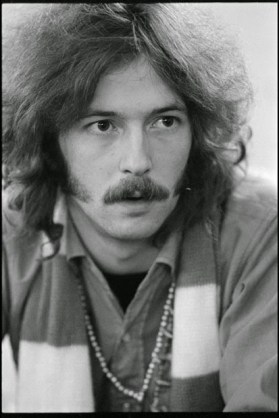 When I heard him play those amazing electric guitar passages on the great songs by Cream, I knew I wanted to learn guitar. I persuaded my parents to buy me a hollow body electric, and I took lessons in the hope that I could someday play like him. Alas, it didn’t take me long to realize that I didn’t have the dexterity to be a lead guitarist, so I revised my dreams and started strumming a 12-string acoustic instead, and that suited me fine.
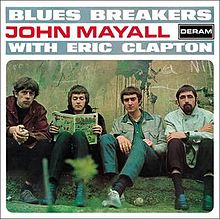 It was Clapton’s early recordings that got me hooked on the blues. His performance on Freddy King’s “Hideaway” on “John Mayall’s Bluesbreakers With Eric Clapton” (1966) still floors me to this day. And that’s only one of probably a hundred tracks on which he shows unparalleled chops on smokin’ fast blues and smoldering slow blues alike.
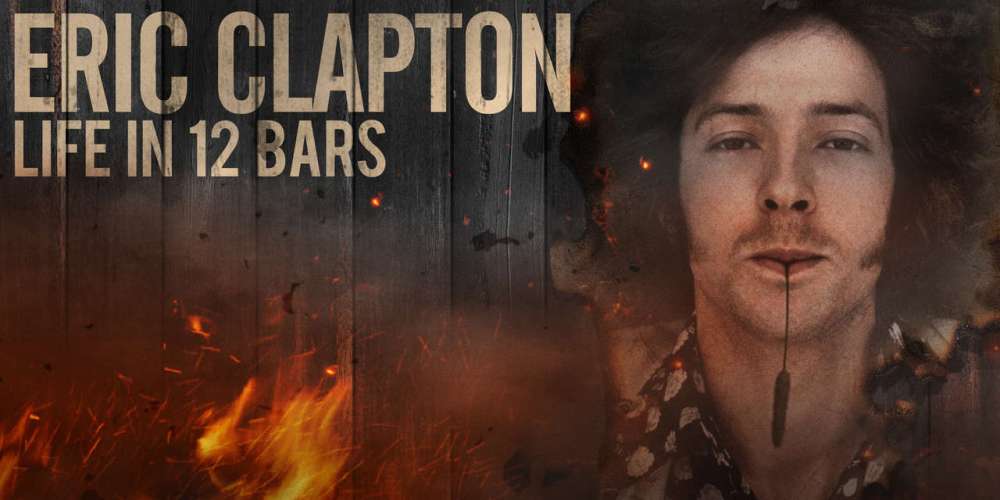 previously unreleased archival footage and new interviews of key people in his life, much of it narrated by Clapton himself. Even for casual fans, this is fascinating and moving, and I strongly recommend you check it out.
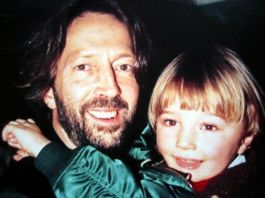 four-year-old son Conor accidentally fell 50 stories to his death from his Manhattan apartment building. Incredibly, Clapton found a way to turn this anguish into the Grammy award-winning song, “Tears in Heaven,” with its tender melody and heartbreaking lyrics: “Would you know my name if I saw you in heaven? Would it be the same if I saw you in heaven? I must be strong, and carry on…”
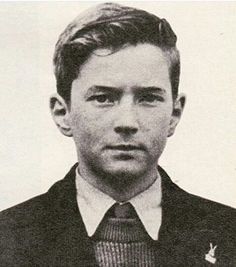 disturbing enough for Eric to discover, he then had to endure, at age nine, the return of his mother to England for a lengthy visit, during which she cruelly withheld her affection and dismissed his pleas. “Can I call you Mummy now?” he asked, to which she replied, “I think it’s best, after all they’ve done for you, that you go on calling your grandparents Mum and Dad.”
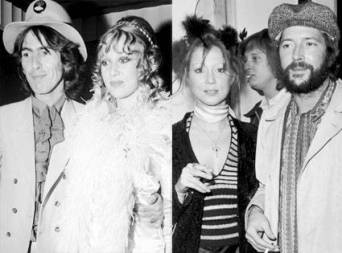 madly in love with Pattie Boyd, who happened to be the wife of his friend George Harrison. This unrequited love for an unavailable woman agonized and tortured him, spurring him to write what became his signature song, “Layla,” with its poignant lyrics of frustration and longing: “I tried to give you consolation when your old man had let you down, like a fool, I fell in love with you, turned my whole world upside down, Layla, you’ve got me on my knees, Layla, I’m begging, darling please, Layla, darling won’t you ease my worried mind…”
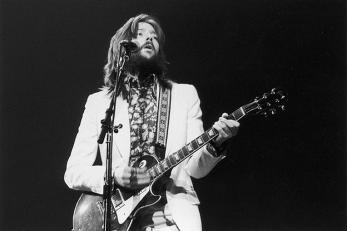 There’s no denying that the music Clapton made in the ’70s and early ’80s, both in the studio and in concert, was often sloppy and uninspired, due to his raging alcohol abuse at that time. He freely admits this in the Showtime documentary: “I used to do crazy things that people would bail me out of, and I’m just grateful that I survived. But the music got very lost. I didn’t know where I was going, and I didn’t really care. I was more into just having a good time, and I think it showed… I would say I also deliberately sold out a couple of times by agreeing to record songs that the record label thought would do well, even though I didn’t like them very much.”
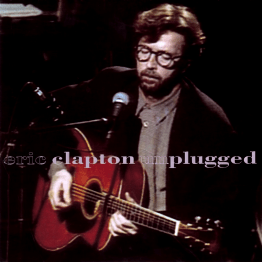 His multi-platinum, Grammy-winning “Unplugged” album in 1992 is dominated by acoustic versions of blues tunes like “Before You Accuse Me,” “Old Love,” “Hey Hey” and “Rollin’ and Tumblin’.” In 1994, he released “From the Cradle,” an album of nothing but electric covers of hard-core blues numbers. In the 2000s, Clapton offered “Me and Mr. Johnson,” a collection of covers of Delta blues giant Robert Johnson’s repertoire, and “Riding With the King,” a Grammy-winning traditional blues collaboration with the late great B.B. King. Indeed, every album he has released in the last 20 years has included at least a handful of blues tunes.
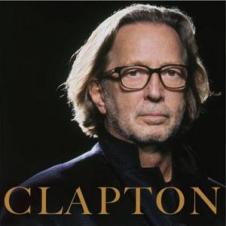 acoustic guitar-based songs like “Change the World” (from the 1996 film soundtrack for “Phenomenon”), “My Father’s Eyes” (from 1998’s “Pilgrim”), R&B-flavored tunes like “One Track Mind” (from 2005’s “Back Home”) and gospel tracks such as “Diamonds From the Rain” (from 2010’s “Clapton”). Even as far back as his popular “461 Ocean Boulevard” LP in 1974 (which included his only #1 single, a cover of Bob Marley’s reggae hit “I Shot the Sheriff”), Clapton began dialing back the incendiary guitar solos in favor of a more nuanced technique. Although this sometimes alienated his longtime fans, it gained him a new audience that embraced the lighter touch and the forays into non-blues genres.
 The older I get, I too find myself preferring calmer, more melodious music, so I enjoy his more recent recordings perhaps more than most Clapton fans. I’ve been playing his solo records continually over the past couple of weeks, and I’ve discovered some great tracks I guess I overlooked the first time around which are worthy of your attention: “Spiral” from “I Still Do” (2016); “Angel” from “Old Sock” (2013); “Everything Will Be Alright” from “Clapton” (2010); “Danger” from “The Road to Escondido,” his 2006 collaboration with J. J. Cale; and the title track to “Back Home” (2005).
 But I must confess I still return again and again to Clapton’s brilliant ’60s catalog. There’s simply nothing like the mind-blowing, improvisational live performances of “Crossroads” and “Spoonful” or the studio recordings of “White Room” and “Born Under a Bad Sign” from Cream’s #1 “Wheels of Fire” LP. I’m also a sucker for the amazing 2005 Cream reunion package “Live at Royal Albert Hall,” where the famed trio offer impressive remakes of their anthems, and 2009’s “Live at Madison Square Garden,” which captures Clapton and Winwood’s reworking of classic rock material on their successful 2009 tour.
 Hack's Back Pages