Delving selectively into the 1990s
Ever since I launched this blog about three years ago, I have chosen to focus my attentions on the rock music of the 1960s, 1970s and 1980s. I write “Ruminations of Musical Milestones, 1955-1990” because those are the years I feel most qualified to write about, for I was in my childhood, my teens, my 20s and my 30s for roughly that period. I have been not only an ardent music lover and consumer but also a researcher and devourer of factoids, anecdotes, lyrics and fond memories about the bands, concerts and recordings from those 35 years.
 By the 1990s, I was married, approaching 40, with children arriving, and both my time and my financial resources were being diverted (necessarily and/or enthusiastically) to other priorities. I wasn’t attending as many shows, buying as many albums (CDs at that point), nor reading as many books and magazines about the world of pop music, and I became less knowledgeable about new trends, new artists, even new technologies and music delivery systems. That detachment became even more pronounced in the 2000s, and still more here in the 2010s.
I firmly believe I’m not alone in this phenomenon. Most of us, I think, relate most closely to the music we were exposed to in our youth — from, say, age 10 to about 30. These are the years when we are the most impressionable, and the most infatuated with specific musicians, albums and songs, and, not incidentally, we have the most spare time to nurture and satisfy our interest in leisure pursuits.
Many of my peers, once they reached their 30s, pretty much threw in the towel when it came to keeping up with new music. (Some of them never paid much attention even in their teens and 20s.). But I like to think I was an exception to the rule. I still bought the new CDs released by my favorite artists; I still took in a live show every now and then; and I maintained my Rolling Stone subscription. But I found it increasingly difficult to relate to some of the newer genres, bands and cultural developments that marked the music of the 1990s and beyond.
Fortunately, I have had some help. I have two daughters, now 27 and 24, who seem as closely in touch with their generation’s music as I was to mine. They know my likes and dislikes, and they have been good about steering me toward newer stuff they think might appeal to me. I also have a handful of friends my age who have continued to keep their ears peeled for intriguing new artists whose music shows the influence of past masters and is both compelling and worthy of recommendation.
 With all this in mind, I gingerly stick my literary toe in the water to write a piece this week that delves into the rock music of the 1990s. I realize my credentials to pontificate about this period are significantly shakier. My understanding, appreciation and experience with ’90s music is considerably more limited…but I believe my love of music in general, and my entitlement to an unvarnished opinion about any of it, allows me some leeway to offer my thoughts and preferences in this area.
When you review the lists of all new popular music releases between 1990-1999 — the top sellers as well as the ignored — you’ll quickly conclude that the Nineties was perhaps the most diverse decade ever. Every decade had a wide range, but the sheer volume of options available to ’90s music listeners seemed to explode.
There was Grunge Rock, exemplified by Nirvana, Pearl Jam and Soundgarden. There 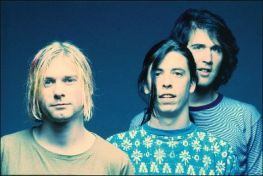 were the big-voiced, melodramatic divas like Whitney Houston, Mariah Carey, Toni Braxton and Celine Dion. There was still Hard Rock/Heavy Metal (Metallica, Def Leppard, Guns N’ Roses, Limp Bizkit) and an offshoot, Alternate Metal (Nine Inch Nails and Rage Against the Machine).
There were the newest versions of Bubblegum for the kids and Tweens (Spice Girls, Backstreet Boys, Britney Spears, Ace of Base). And there were R&B vocal virtuosos like Boyz II Men and Seal.
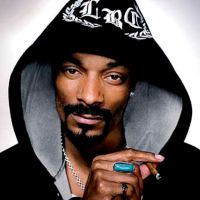 There were the trailblazers, pretenders and new superstars of Hip Hop (Dr. Dre, M.C. Hammer, Snoop Doggy Dog, The Notorious B.I.G., Vanilla Ice, The Beastie Boys, Eminem, Puff Daddy). There were the newly “rocked up” country artists like Garth Brooks, Billy Ray Cyrus, Tim McGraw and The Dixie Chicks. There was, as always, dance music, from the likes of C+C Music Factory, Paula Abdul and ’80s phenoms Janet Jackson and Madonna.
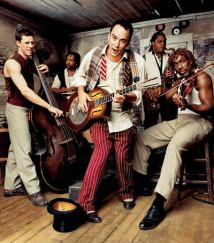 There were dozens of hungry “alt rock” (independent label alternative rock) bands with refreshingly quirky styles and approaches that tended to defy categorization: Dave Matthews Band, Oasis, Hootie and The Blowfish, Stone Temple Pilots, Indigo Girls, Gin Blossoms, Radiohead, Alanis Morissette, Goo Goo Dolls, The Cranberries, Counting Crows, The Smashing Pumpkins and Red Hot Chili Peppers.
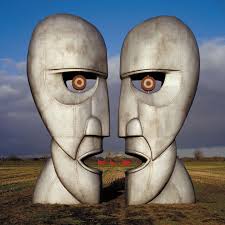 Of course, a few of the ’80s rock bands of substance were churning out great stuff a decade or more after their debuts: U2, R.E.M., Tom Petty and The Heartbreakers. And there were a handful of vintage rockers from the ’60s/’70s who could still top the charts in the ’90s (Pink Floyd‘s “The Division Bell” in 1994, Santana‘s “Supernatural” in 1999, Eric Clapton‘s “Unplugged” in 1992, Fleetwood Mac‘s “The Dance” in 1997, and The Beatles‘ “Anthology 1, 2 and 3” in 1995-96).
In this column, I’d like to single out a dozen musical acts from the 1990s whose music I find lasting and compelling. Perhaps not surprisingly, my list reflects my partiality toward artists that favor melody and harmony, imaginative arrangements, memorable riffs and chord changes, and thought-provoking lyrics. These names have largely escaped the public’s attention but are, in my opinion, nonetheless fully deserving of it. They are, therefore, “1990s Rock Artists You May Not Know But Should.”
The Spotify playlist below provides a few examples of each artist’s best work.
**************
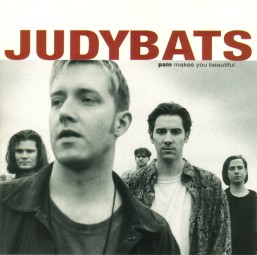 The Judybats
My old buddy Fiji gets the credit for turning me onto this wonderfully creative alternative rock band from Knoxville, Tennessee, led by singer/songwriter Jeff Heiskell, whose penchant for writing punchy, engagingly melodic songs resulted in four strong albums between 1991 and 1994. None managed to crack the Billboard 200, but the debut “Native Son,” including the irresistible “Daylight” and playful “In Like With You,” got airplay on college radio and adult alt rock stations, while their 1993 LP “Pain Makes You Beautiful” had the minor hits “Being Simple” and “Ugly on the Outside.” Excellent stuff!
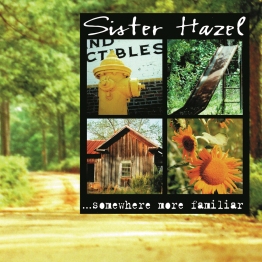 Sister Hazel
This quintet from Gainesville, Florida has avoided the edginess sometimes associated with alt rock and instead specializes in a good-vibe hybrid of Southern rock, pop and folk, with dominant harmonies and lyrics full of optimism. Debuting in 1994, Sister Hazel established a beachhead in 1997 with the #11 hit “All For You” from “…Somewhere More Familiar” but, inexplicably, never approached that commercial height again. Artistically, though, the band went on to release seven consistently solid albums in the new millennium, most notably[‘ the enjoyable “Fortress” (2000) with the effervescent minor hits “Change Your Mind” and “Beautiful Thing.” Saw them a couple times in clubs and outdoor venues in Atlanta. Always a great time.
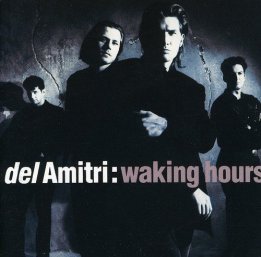 Del Amitri
Thanks to MTV, I came across a video one day in 1990 of this great Scottish alt rock group performing the catchy “Kiss This Thing Goodbye,” from their breakthrough LP “Waking Hours.” Led by singer/songwriter Justin Currie and guitarist Ian Harvie, Del Amitri debuted in 1985 warming up for The Smiths, and by late ’89 they had a #11 single, “Nothing Ever Happens,” in the UK. They went on to score four consecutive Top Ten LPs in England in the ’90s, but knowledge of the group among American audiences remained confined to a minor hit in 1992 (“Always the Last to Know,” #30) and the Top Ten bauble from 1995, “Roll to Me.” Enchanting songwriting and proficient musicianship keep bringing me back to Del Amitri’s music, and it’s good to know the group has reconvened in recent months and is planning new recordings and club dates.
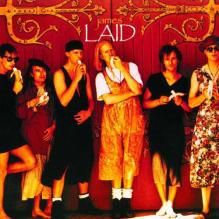 James
James
It’s mostly the arresting vocals from frontman Tim Booth that have captivated me about this British alt rock group. My pal Bob stumbled on their 1993 album “Laid” in his local library and shared it with me, and I couldn’t stop listening to it. In England, James was a very hot item (six 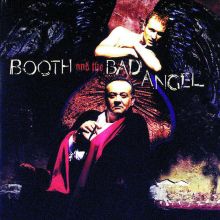 Top Ten LPs in the ’90s) and apparently still is — their latest album, “Girl at the End of the World,” almost beat out Adele’s “25” as the #1 LP in England in March 2016. Such great material to discover throughout the James catalog, and also on “Booth and the Bad Angel,” a 1996 collaborative project between Booth and “Twin Peaks” composer Angelo Badalamenti.
Keb’ Mo’
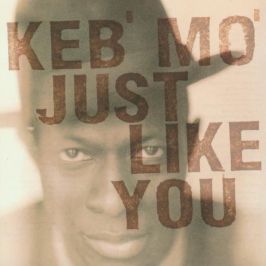 My wife Judy was knocked out by her first exposure to this engaging blues artist at a House of Blues performance in New Orleans in 1996. (His name is Kevin Moore, but he goes by the street-talk abbreviation Keb’ Mo’ “just for fun.”) I ran out and bought his strong 1994 self-titled debut, an album that turned heads among Delta blues guitarists and songwriters. His 1996 LP “Just Like You,” which featured contributions from Bonnie Raitt and Jackson Browne, won a Grammy, as did its successor, “Slow Down” (1999). Now in his 60s, Keb’ Mo’ is a mainstay at the annual Crossroads Blues Festival and stays active in charity events, film projects and human rights initiatives.
 Beth Chapman
Of the dozens of strong female singer-songwriters who have emerged in the 1990s and beyond (Shawn Colvin, Sarah McLachlan, Mary Chapin-Carpenter, Jonatha Brooke), I have always been partial to Beth Nielsen Chapman, whose gorgeous voice and heartfelt music captured me from the first moment I heard her in 1991. Her three album releases in the ’90s never made dents in the mainstream, but other artists sure noticed, asking her to write songs for them (Willie Nelson, Trisha Yearwood, Waylon Jennings), or lining up to make guest appearances on her records (Michael McDonald, Vince Gill, Bonnie Raitt). You might have heard “I Keep Coming Back to You” or “Walk My Way” sneak through your radio on occasion, or her 1994 duet with Paul Carrack, “In the Time It Takes.”
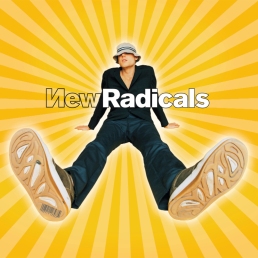 New Radicals
The most head-scratching entry on my list is New Radicals, the brainchild of Michigan-born prodigy Gregg Alexander, a multi-instrumentalist/songwriter. A couple of failed solo releases in the early ’90s led to the formation of New Radicals and a contract with MCA Records. Their one and only album, the pop-rock 1998 beauty “Maybe You’ve Been Brainwashed Too,” showed remarkably diverse influences, from Todd Rundgren and Hall & Oates to Prince and Mick Jagger. It stalled at #41 in the US, but its subsequent single, “You Get What You Give,” was an international smash (#1 in Canada, #5 in England, yet only #36 here). As his sometimes caustic lyrics indicated, he had little patience for the trappings of fame or touring, so he dissolved the “band” (it was pretty much just him anyway), and withdrew to write songs for other artists instead, including 2003’s “The Game of Love” by Santana with Michelle Branch.
Toad the Wet Sprocket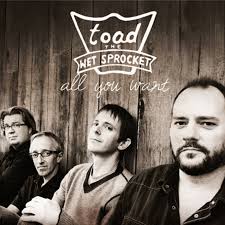
Possibly the most unlikely band name ever was dreamed up by Monty Python co-founder Eric Idle, who used it in a sketch about rock musicians. “I tried to think of a name so silly that no one would ever use it,” he recalled years later. “Imagine my surprise the day I heard a radio DJ announce, ‘Here’s a song by Toad the Wet Sprocket.’ I almost drove off the road.” Singer/guitarist Glen Phillips was a 16-year-old student in Santa Barbara, California when he formed the band, and adopted the name “because I thought it would be hilarious, but I think it was a joke that went on too long.” Still, it’s plenty memorable, and it didn’t prevent the group from having three moderately popular albums in the 1990s, and two hit singles (“All I Want” and “Walk on the Ocean”). Their music leans toward acoustic guitar-based styles with harmonious vocals.
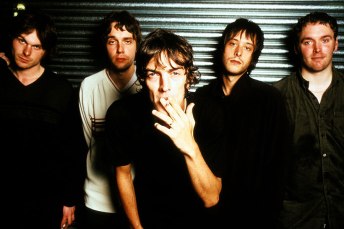 The Verve
Described as a purveyor of “dream pop and psychedelic alt rock,” The Verve was a British band whose three albums of the 1990s offered increasingly interesting musical textures and avant-garde sensibilities. By 1997, their third LP, “Urban Hymns,” was #1 in England, thanks to the monumental success of the hit single, “Bitter Sweet Symphony,” which also eventually reached #12 in the US. (The track takes its basic chord structure from an orchestral rendition of The Rolling Stones’ 1965 song “The Last Time,” and although it uses new lyrics and a slower tempo, the record became the subject of a plagiarism claim at the time.) Ashcroft went on to release three fine solo records in the 2000s, and “Forth,” a reunion LP by The Verve, but most US listeners know nothing but “Bitter Sweet Symphony.” It’s never too late to change that.
Marc Cohn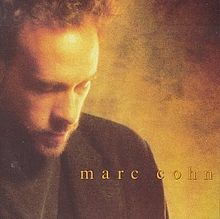
Cohn is widely known for his marvelous song “Walking in Memphis,” a Song of the Year Grammy nominee in 1991 that earned him the Best New Artist Grammy that same year. But it’s a crime that so much more of his music hasn’t enjoyed that kind of attention. His debut LP and 1993 follow-up, “The Rainy Season,” are overflowing with one great song after another, featuring mature-beyond-his-years lyrics and immaculate arrangements and performances. An unfortunate head injury has curtailed his musical career, but he gamely ventures out on the road periodically, and he enjoyed a modest success (#23 on US charts) in 2010 with a batch of covers of hit songs from 1970. If you’re unfamiliar or have forgotten his work, by all means, check it out.
 We can, as always, use music to help us sort through all these feelings. The popular music of the ’60s, ’70s, ’80s and beyond offer various viewpoints on “the end” and what that may mean in diverse situations and circumstances.
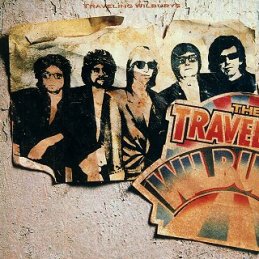 End of the Line,” The Traveling Wilburys, 1988
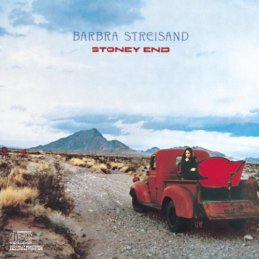 “Stoney End,” Barbra Streisand, 1970
 “From the End of the World,” Electric Light Orchestra, 1981
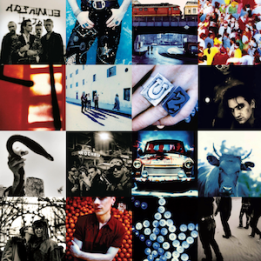 “Until the End of the World,” U2, 1991
 “The End of the World,” Skeeter Davis, 1962
 “End of the Season,” The Kinks, 1968
 “The End,” The Doors, 1967
 “The End of the Innocence,” Don Henley, 1989
 “The End,” The Beatles, 1969
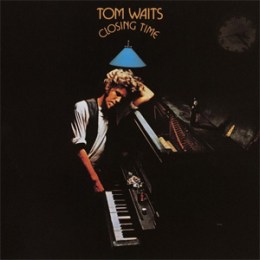 “Closing Time,” Tom Waits, 1973
 Hack's Back Pages