Hiding in plain sight
 One of the most frustrating things to music lovers like me is when a truly outstanding song is ignored — or, more accurately, it maintains a place well under the radar of the listening public. It might be by a band that never made the charts — God knows there are hundreds of artists whose work never got the exposure it should have. Or, just as likely, it might be a “deep album track” by an award-winning artist on a best-selling album. Either way, it got virtually no attention on the radio and therefore went unnoticed except by the most ardent of fans.
A few months ago in one of my essays here, I featured a dozen “diamonds in the rough” — superlative songs that I felt have been criminally overlooked. It’s time to offer Round Two of these underappreciated jewels from commercially successful albums by major artists. I implore you to seek them out and bask in their gloriousness.
*****************
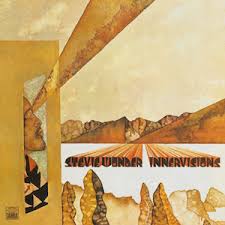 “Golden Lady,” Stevie Wonder, 1973
Beginning with 1972’s phenomenal “Talking Book,” Mr. Wonder pumped out four consecutive albums that were either nominees or winners of Album of the Year Grammy awards. He had been a boy Wonder with multiple hits as a teenage member of the Motown stable of artists, and now he was a one-man tour de force, writing, playing, singing, arranging and producing an extraordinary repertoire of material that not only dominated the charts (“Superstitition,” “Higher Ground,” “You Haven’t Done Nothin’,” “Sir Duke”) but influenced dozens of R&B and funk artists in the ensuing years. Buried on his exceptional 1973 LP “Innervisions” is the joyously melodic “Golden Lady,” which, to my ears, is one of the top four or five songs in his entire catalog.
 “Sweetheart Like You,” Bob Dylan, 1983
Dylan’s 50-year career has been marked by unparalleled highs and embarassing lows. For every brilliant “Highway 61 Revisited” (1965), there’s a pitiful “Self Portrait” (1970). He returned with a vengeance in 1975 and 1976 with “Blood on the Tracks” and “Desire,” then fell off the pedestal with “Saved” (1980) and “Shot of Love” (1981). In 1983, he chose to solicit the help of the wondrous Mark Knopfler from Dire Straits to produce and also play lead guitar on the excellent “Infidels” LP, carried by the leadoff song “Jokerman.” The album’s second track, though, is the one that gets under my skin: “Sweetheart Like You” has a simple, guitar-driven melody and multiple verses brimming with wonderful wordplay and imagery as only Dylan can write (“In order to deal in this game, got to make the queen disappear, it’s done with a flick of the wrist, what’s a sweetheart like you doing in a dump like this?…”).
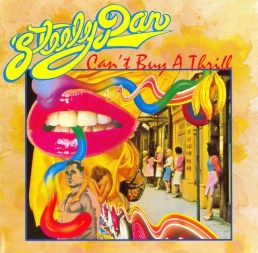 “Kings,” Steely Dan, 1972
If you look back over the debut albums of the major artists of the ’60s and ’70s, most were erratic at best; rare indeed was the group that hit a home run in its first at-bat. “Can’t Buy a Thrill,” the first LP from the wickedly musical minds of Donald Fagen and Walter Becker and company, is definitely one of them. It was hard not to notice the hypnotic “Do It Again” (#6) and the solid rocker “Reelin’ in the Years” (#11) in the winter and spring of 1973, but those who bought the album were treated to eight more songs just as good as those two. My personal favorite is “Kings,” with its vibrant harmonies, frenetic guitar break by visiting virtuoso Elliot Randall and lyrics that may be referring to the imminent departure of Richard Nixon (“We’ve seen the last of good king Richard, raise up your glass, his name lives on and on…”)
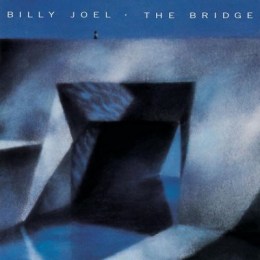 “Big Man on Mulberry Street,” Billy Joel, 1986
From roughly 1977 to 1987, the tunesmith from Long Island, New York, had two or three songs in the Top 40 every single year, and seven Top Ten albums. He was prolific with irresistibly catchy songs, from the schmaltz of “Just the Way You Are” to the pop punk of “It’s Still Rock and Roll to Me,” from the Frankie Valli knockoff “Uptown Girl” to the populist drama of “Allentown.” In 1986, Joel’s #7 album “The Bridge” included three hits: “Modern Woman,” “A Matter of Trust” and “This is the Time.” But for me, the LP’s best track was “Big Man on Mulberry Street,” a phenomenal slab of big band/swing with sensational horns dominating the mix. It proved to be the perfect soundtrack for a memorable dream sequence in an episode of the mid-’80s TV series “Moonlighting,” when Cybill Shepherd’s Maddie Hayes envisioned Bruce Willis’s David Addison meeting up with his ex-wife in an after hours Manhattan dive. You might want to visit YouTube and hear this song in tandem with that video.
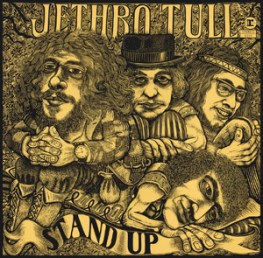 “We Used to Know,” Jethro Tull, 1969
A couple of years before “Aqualung” and “Thick as a Brick” made Tull an arena-filling concert draw, the 1969 album “Stand Up” was earning widespread praise for its eclectic mix of blues, English folk and hard rock, led as always by the pied piper of rock, flautist/composer/singer Ian Anderson. Tracks like “Nothing is Easy” and the flute-driven instrumental cover of Bach’s “Bouree” got most of the attention, but the track you need to check out is “We Used to Know,” a vintage dose of early hard-rocking Tull carried by Martin Barre’s incredible electric guitar work. I recently discovered that the song’s chord progression is identical to the one from the monumental Eagles anthem “Hotel California,” but Anderson chuckled when asked about it. “I’ve probably lifted a few songs in my day as well. There’s room for everyone.”
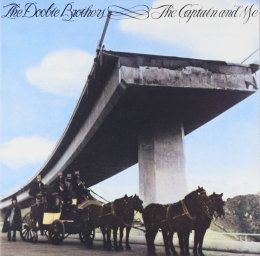 “Clear as the Driven Snow,” The Doobie Brothers, 1973
In their early years before Michael McDonald joined and gave them a smoky cocktail lounge sound, The Doobies were a kickass boogie band out of San Jose, with contagious rock riffs on songs like “Rockin’ Down the Highway,” “China Grove” and “Long Train Runnin’.” Their albums also included some quieter, melodic tunes like “Toulouse Street” and “South City Midnight Lady” that featured Pat Simmons’ sweet voice, but they were known mostly for the mainstream rock tunes with Tom Johnston handling the vocals. Perhaps because it combines both of these styles into one magnificent track, “Clear as the Driven Snow” (from the 1973 LP “The Captain and Me”) always stands out to me as one of The Doobies’ finest moments. What a delight that they included it in the set list at their recent concert appearance at the Greek Theater in LA!
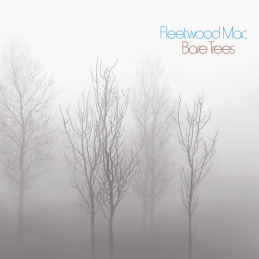 “Bare Trees,” Fleetwood Mac, 1972
Three years before Stevie Nicks and Lindsey Buckingham joined the band, Fleetwood Mac was struggling along, having evolved from a deep British blues group under Peter Green into a solid pop rock band with quality vocals, songs and hooks from Christine McVie, Bob Welch, and a fragile little guy named Danny Kirwan. His signature vibrato guitar stylings added rich textures to the Mac’s music of this period, although their albums typically failed to crack the Top 40 in the US or the UK. Their strong 1972 album “Bare Trees” topped out at only #70 but included the Welch gem “Sentimental Lady” (which he took into the top 10 five years later as a solo artist) and McVie’s winsome “Spare Me a Little of Your Love.” The standout track, though, was Kirwan’s complex yet catchy title track, which featured the amazingly inventive Mick Fleetwood-John McVie rhythm section underneath Kirwan’s succinct guitar work and singing.
 “Monkey Man,” The Rolling Stones, 1969
It was a strange time for the Stones in 1969. Founder Brian Jones had virtually withdrawn from group activities, barely contributing to recording sessions, and was ultimately replaced by new guitar hotshot Mick Taylor. The fact that Jones was found dead in early July in his swimming pool weighed on the band emotionally, but it served to inspire the Jagger-Richards songwriting axis to come up with some of their most memorable tracks. “You Can’t Always Get What You Want,” “Midnight Rambler,” “Let It Bleed,” the single “Honky Tonk Women” and especially the harrowing “Gimme Shelter” all emerged in the summer and fall, and appeared on the year-end “Let It Bleed” album. Buried on side 2 (remember side 2?) was a haunting piece called “Monkey Man,” featuring the great Nicky Hopkins on piano, some crunching guitar work from Richards, and an astonishing lead vocal by Jagger.
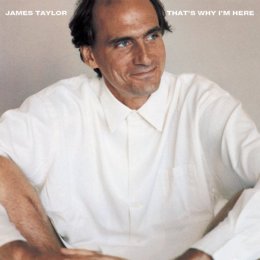 “Only a Dream in Rio,” James Taylor, 1985
After an impressive run of nine Top 10 albums and as many memorable hit singles, Taylor seemed to fall out of favor with the buying public in the early ’80s. The albums he released during this period — 1985’s “That’s Why I’m Here,” 1988’s “Never Die Young” and 1991’s “New Moon Shine” — were packed with excellent, vintage JT tunes, but the chart success didn’t come. In fact, he hasn’t had a hit single since “Her Town Too” in 1981. But no matter — Taylor’s loyal fan base is well aware of the exceptional songs found on these three LPs. Most notable to me (and to Taylor himself) is “Only a Dream in Rio,” which he says “sprang from me fully formed one day after performing to 100,000 people in Brazil.” It offers one of his most joyous melodies and arrangements, with lyrics (some in Portuguese) that speak humbly of the thrill of performing to grateful audiences.
 “Another Tricky Day,” The Who, 1981
When drummer Keith Moon died in the fall of 1978, only three weeks after the release of “Who Are You,” there was great uncertainty about whether the band would — or should — continue. They chose to enlist former Faces drummer Kenny Jones and return to the road, but it took nearly three years before they would release another album, the rather erratic “Face Dances,” in April 1981. Still it reached an impressive #4 on the US charts, with a #18 hit single, the lightweight “You Better You Bet.” By far the album’s best track was its closer, “Another Tricky Day,” with Roger Daltrey in superb form on vocals, and some perceptively philosophical lyrics from Pete Townshend: “Just gotta get used to it…we all get it in the end, we go down and we come up again…This is no social crisis, just another tricky day for you…”
***********
I plan to select 10-12 of these “deep album tracks” every so often to write about in an attempt to increase awareness that there are indeed many many hundreds of songs just waiting to be discovered on successful and not-so-successful albums from the glory years of rock. Do you have any candidates for me to consider? By all means, let me know!
 break-up songs, heartfelt tributes and bittersweet odes.
 It took a while, but in 2014, Stevie Nicks indeed confirmed what had been rumored for quite some time — that this 1979 song from Mac’s “Tusk” LP is about an aborted child she and lover Don Henley chose not to have. “Had we gotten married and had that baby, and if it had been a girl, her name would have been Sara,” Nicks said. “It’s a very special name to me. One of my very best lifelong friends is named Sara.” The recording reached #7 as a single in early 1980, and Nicks still performs the song, both with the band and as a solo act.
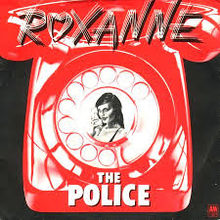 In 1977, when The Police were performing in dive clubs around Europe, Sting was inspired by the prostitutes who worked outside the seedy hotel in Paris where the band was staying. He wrote this sympathetic tune, urging the girl to give up the hard life she had chosen. He decided to call her Roxanne after seeing a movie poster in the hotel lobby featuring the old film “Cyrano de Bergerac,” whose female lead is named Roxanne. The song peaked at only #32 in the US in 1978, but it remains one of The Police’s signature songs.
 Van Morrison said that he wrote “Gloria” in the summer of 1963 as he was turning 18. The song is as simple as it gets, only three chords, and he would ad-lib lyrics as he performed, sometimes stretching the song to 15 or 20 minutes. Gloria was a real person, a girl he was infatuated with, and his desire to seduce her made it harder for conservative ’60s radio programmers to include the song in Top 40 formats. Indeed, when an obscure group called The Shadows of Knight had a Top 10 hit with their cover of “Gloria” in 1966, it eliminated the reference to “coming up to my room.”
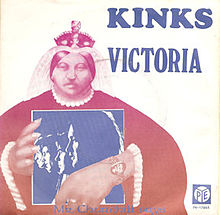 In the leadoff song on The Kinks’ criminally underrated 1969 LP “Arthur,” Ray Davies’ satirical lyrics juxtapose the grim realities of life in Britain during the 19th century (“Sex was bad, and obscene, and the rich were so mean”) with the empathetic hopes of the British Empire in the Victorian age (“From the West to the East, from the rich to the poor, Victoria loved them all”). Through it all, Queen Victoria was beloved even by the downtrodden working class (“Though I am poor, I am free, when I grow, I shall fight, for this land I shall die”).
 How peculiar that one of the loudest and most bombastic of all Seventies heavy metal bands would have their biggest commercial success (#7 on the charts) with a ballad, sung by the drummer with limited instrumental accompaniment. “Beth” was actually born in 1971 as “Beck” (short for Becky) in reference to the girlfriend of a former band member who would nag him to leave rehearsal and come home. Drummer Peter Criss later changed it to “Beth” at the suggestion of Kiss’s producer, and even though the rest of the group didn’t want to record it, it helped boost sales for their “Destroyer” LP that year.
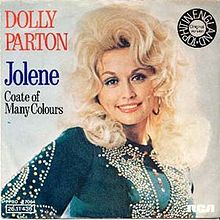 Parton’s solo career was just gathering momentum when she penned this evocative song about a simple gal who pleads with a stunningly beautiful woman named Jolene to leave her man alone: “Pretty girl, please don’t take my man just because you can.” So many country music fans could relate to that woman’s desperate feeling that the song soared to #1 on the country charts (although only #60 on there pop charts). It became one of Parton’s most loved tunes, and many cover versions have been recorded since, as well as a 2017 tune (“Diane”) that was a heartfelt apology from the beautiful woman.
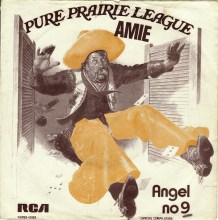 Craig Fuller was the chief singer-songwriter in the original lineup of the country rock group Pure Prairie League, and he wrote song great down-home songs on those classic but largely overlooked first two albums in 1971 and 1972. One song, “Amie,” didn’t do much at first but eventually earned listeners through FM and college radio stations, and by 1975, it was a #27 hit nationwide. The narrator and Amie have one of those on-again, off-again relationships, and it’s never clear whether they end up together. As Fuller said later, “The protagonist of the song is just laying it out and then it’s up to her.”
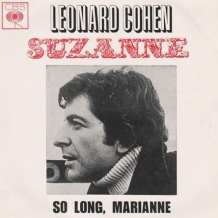 Cohen said “Suzanne” was inspired by his platonic relationship with a woman named Suzanne Verdal, who had been the girlfriend of his contemporary, famed sculptor Armand Vaillancourt. The lyrics poignantly describe the rituals they enjoyed in Montreal, where they lived near each other. Contrary to some interpretations, Cohen insisted he and Suzanne were only friends, not lovers. “I admit I imagined having sex with her, but there was neither the opportunity nor the inclination to actually go through with it,” he admitted.
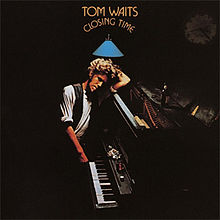 From the 1970s to the current day, Waits has been known for his distinctive deep, gravelly singing voice and song lyrics that focus on the underside of U.S. society. Many of the characters who populate his music are unpleasant ne’er-do-wells and unsympathetic outliers, but a few reek of pathos, such as Tom Frost, the elderly guy who places a phone call to “Martha,” an old flame with whom he is meekly hoping to rekindle something. It becomes clear that that’s not going to happen, but we listeners feel supportive of Tom’s wistful trip down memory lane to speak with her once again.
 Berry wrote and recorded this prototype rock and roll song as an adaptation of the Western swing fiddle tune “Ida Red,” recorded in 1938 by Bob Wills and his Texas Playboys. Leonard Chess, owner of the legendary Chess Records label, loved Berry’s sprightly lyrics about a hot rod race and a broken romance, but told him he felt the woman’s name needed to be something less rural than Ida Red. He spied a bottle of Maybelline mascara in the studio and said, “Well, hell, let’s name her Maybellene,” altering the spelling to avoid a potential suit by the cosmetic company.
 This #4 hit single, among Simon and Garfunkel’s last, began life as a cacophony of rhythms pounded out on coffee tables and kitchen counters in Simon’s apartment. He later wrote the lyrics as a lament about anguish and jubilation regarding an untrustworthy lover. “Cecilia,” Simon has noted, refers to St. Cecilia, patron saint of music in the Catholic tradition, and he conceded that the song also refers to the frustrations and joy he has experienced in the songwriting process, as musical inspiration comes and goes quickly.
 Almost everyone can recall the difficulties one encounters during the early teenage years, when friendships and early encounters with the opposite sex seem fraught with uncertainty and insecurity. My daughter Emily’s song “Josie,” based loosely on the challenges her cousin was facing at the time, offers tender words of encouragement on how best to navigate the rocky waters of young love and be true to yourself. “It’s about slowing down, enjoying your youth, and knowing that, in time, the person meant to be in your life will find their way to you.”
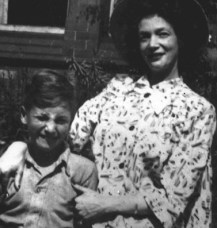 During the sessions for The Beatles “White Album,” John Lennon was burning with a desire to write a song about his mother, Julia Baird. “I lost her twice,” he said, “once as a five-year-old when I was moved in with my auntie, and then again when she physically died when I was 17.” He borrowed phrasings from Kahlil Gibran’s “Sand and Foam” in which the original verse reads, “Half of what I say is meaningless, but I say it so that the other half may reach you.” Lennon performed the song alone on acoustic guitar with no other Beatles present.
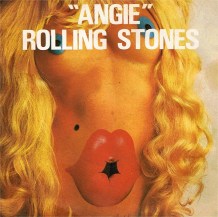 When the Stones reached #1 on the charts yet again with the ballad “Angie” in the fall of 1973, speculation was rampant about the identity of the woman in question. Some said Jagger and Richards were writing about David Bowie’s first wife Angela, with whom they had been spending time during that period. Others assumed it was a tribute to Fichards’ newborn daughter, Dandelion Angela. In his 2010 autobiography, Richards said that he had chosen the name at random when writing the song, before he knew that his baby would be named Angela or even knew that his baby would be a girl.
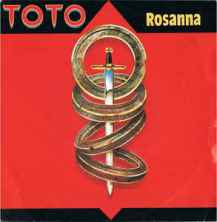 This Grammy-winning single from 1982 was written by David Paich, who has said that the song is a composite based on numerous girls he had known. During recording sessions, Toto band members initially played along with the common assumption that the song was based on Rosanna Arquette, who was dating keyboard player Steve Porcaro at the time. Arquette herself played along with the joke, commenting in an interview that year, “That song was about my showing up at 4 a.m. at the studio to bring them juice and beer.”
 “Peggy Sue,” perhaps Buddy Holly’s best known song, was originally entitled “Cindy Lou,” named after Holly’s niece, the daughter of his sister, Pat Holley Kaiter. The title was later changed to “Peggy Sue” in reference to Peggy Sue Gerron (1940–2018), girlfriend and future wife of Jerry Allison, drummer for Holly’s band The Crickets, after the couple had temporarily broken up, and Allison asked Holly if maybe he could rename the song in an attempt to woo her back. “And it worked,” Allison recalled, although Holly’s premature death not long after the song’s release overshadowed that romantic angle.
 John’s longtime lyricist partner Bernie Taupin penned one of the most poignant character studies in his voluminous catalog on this deep track from the 1992 LP “The One.” Taupin recalled writing “Emily” after an afternoon walk through the streets and cemeteries of Paris, France, where he couldn’t help but notice a lone elderly woman paying respects at various gravesites as she walked haltingly among the headstones. “Elton wrote such a glorious melody to accompany this one,” Taupin said. “It’s one of my favorites”: “The old girl hobbles, nylons sagging, talks to her sisters in the ground…”
 Grace Slick had temporarily left the band in 1978 when the Jefferson Starship brought in Mickey Thomas as the new lead vocalist on the album “Freedom at Point Zero.” Bass player David Freiberg wrote most of the music and lyrics for what would become the album’s single, “Jane.” He said, “She’s no one in particular, just the kind of girl who is insincere and manipulative in the way she behaves in a relationship. I think we all have known women, and men, like that”: “You’re playing a game called ‘hard to get’ by its real name, you’re playing a game you can never win, girl…”
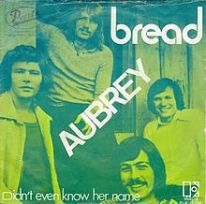 David Gates wrote almost all of soft-rock group Bread’s many hit singles, which were mostly sentimental, romantic ballads that resonated with Top 40 listeners in the early 1970s. There are two interpretations as to what the sad truth is behind “Aubrey,” the 1973 Bread hit from their “Guitar Man” LP. One said Gates wrote it about a woman he pined for from afar but never had the self-confidence to approach. The more likely story is that it’s about a baby girl Gates and his wife were anticipating who died in a tragic miscarriage. Either way, it’s certainly a tearjerker.
 Songwriters Donald Fagen and Walter Becker have been notoriously tight-lipped about the meading behind their often cryptic lyrics, but Fagen once allowed in an interview that “Peg,” a #11 hit song in 1978 from the platinum LP “Aja,” referred to Peg Entwistle, a star of Broadway theater in the 1920s and 1930s. Fagen and Becker found her suitable fodder for a place in the Steely Dan cast of offbeat characters because, in 1932, she jumped to her death off the famous Hollywood sign (when it was “Hollywoodland,” an advertisement for a new housing development) before her first film was ever released.
