Oh, please stay just a little bit more
There’s an important truth about the famous singer-songwriters whose names have appeared on the charts and theater marquises over the years: By and large, their music was made much more interesting and dynamic because of the contributions of incredibly talented session musicians and touring sidemen.
To the public at large, even to many music lovers, these superb instrumentalists are mostly anonymous. Their peers in the music business know who they are — these unsung heroes who play guitars, fiddles, saxes, keyboards and percussion to fill out the arrangements of songs written by the main recording artist — but the majority of the listening audience doesn’t have a clue and probably doesn’t much care.
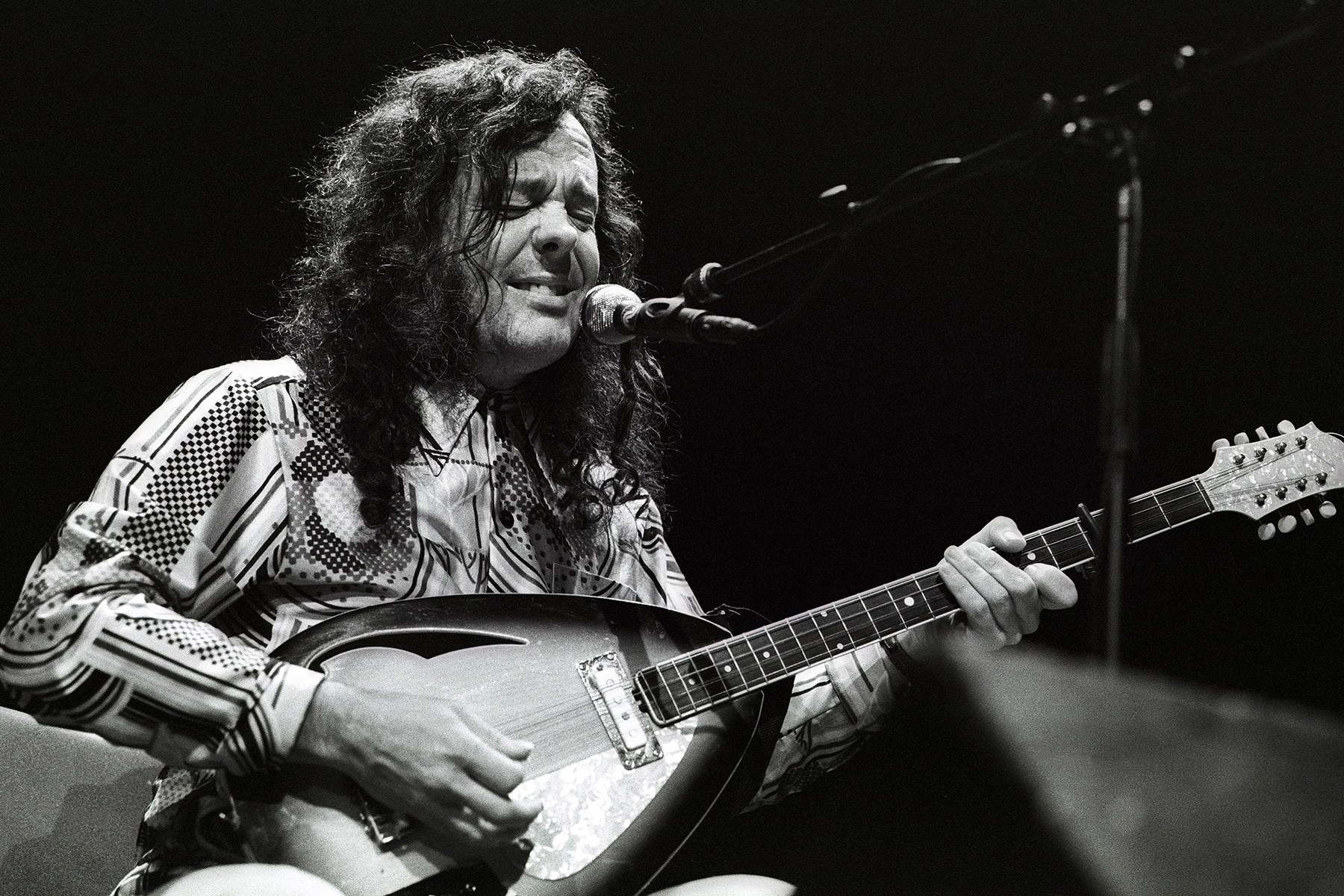
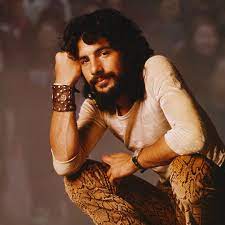
So the passing of the extraordinarily gifted David Lindley earlier this month most likely went unnoticed by casual music fans, even those who have enjoyed his playing without knowing who he was.
Take my word for it: If you loved the music of the acts coming out of Laurel Canyon and greater Los Angeles in the 1970s, you most definitely have heard Lindley’s work. Best known for his many appearances on records and on tour with Jackson Browne, Lindley was also an important collaborator with Graham Nash, David Crosby, James Taylor, Linda Ronstadt, Warren Zevon and a few dozen other major and minor artists in the 1970s, 1980s and beyond.
Because I’m an aficionado (read: music trivia nerd) who absorbs all sorts of information about the albums I’ve bought and the artists I’ve seen in concert, I’m one of the exceptions to the rule. I’ve been aware of Lindley’s name since at least 1972 when it appeared on the credits of Browne’s debut LP, and I’ve made note of his musical contributions ever since. He was a master of so many stringed instruments, most notably lap steel guitar, fiddle and mandolin, and the accompaniment he provided was essential to countless classic tracks.
Take a moment and peruse this list:
Ten Browne LPs: “Saturate Before Using” (1972), “For Everyman” (1973), “Late For the Sky” (1974), “The Pretender (1976), “Running on Empty” (1977), “Hold Out” (1980), “Lives in the Balance (1986), “World in Motion” (1989), “I’m Alive” (1993) and “Looking East” (1996)
Five Zevon albums: “Warren Zevon” (1976), “Sentimental Hygiene” (1987), “Transverse City” (1989), “Mutineer” (1994) and “The Wind” (2003)
Ronstadt’s “Heart Like A Wheel” (1974), “Prisoner in Disguise” (1975) and “Simple Dreams” (1977)
Three Nash solo LPs: “Songs For Beginners” (1971), “Wild Tales” (1973) and “Earth and Sky” (1980)
Ry Cooder’s “Jazz” (1978) and “Bop ‘Til You Drop” (1979)
Crosby & Nash’s “Wind On the Water” (1975) and “Whistling Down the Wire” (1976)
Shawn Colvin’s “Fat City” (1992)
James Taylor’s “In the Pocket” (1976)
Maria Muldaur’s 1973 debut
Karla Bonoff’s “Restless Nights” (1979)
Various LPs by America, Bob Dylan, Dolly Parton, John Prine, Marshall Crenshaw, Emmylou Harris, Joe Walsh and Leo Sayer
The guy seemed to be everywhere, largely in a subtle, understated way, providing sweet lap steel guitar passages, lovely fiddle phrasings and distinctive slide guitar solos. That’s the important characteristic of the very best session musicians: They play TO the song and the arrangement, bringing just the right amount of finesse that the track required, no more and no less.
One reason certain musicians are in such high demand for recording sessions is they have shown time and time again that they are reliably proficient at their instrument and how to provide just the right atmosphere and the combination of notes, sustains and rests. In L.A. in the ’70s, if you wanted fiddle in the mix, your first call was to Lindley. Mandolin? Lindley again. Slide guitar? Lap steel guitar? Plain ol’ acoustic guitar? You just never went wrong when Lindley was in your studio.
Perhaps his most recognizable bit was the slide guitar that was prominently featured on Browne’s 1977 Top Ten tune “Running on Empty” and made it such an enduring hit, capturing both the exhilaration and exhaustion of life on the road. Lindley also had his moment of comic relief on that album and tour when he sang the exaggerated falsetto in the middle of Browne’s cover of the 1962 chestnut “Stay.”
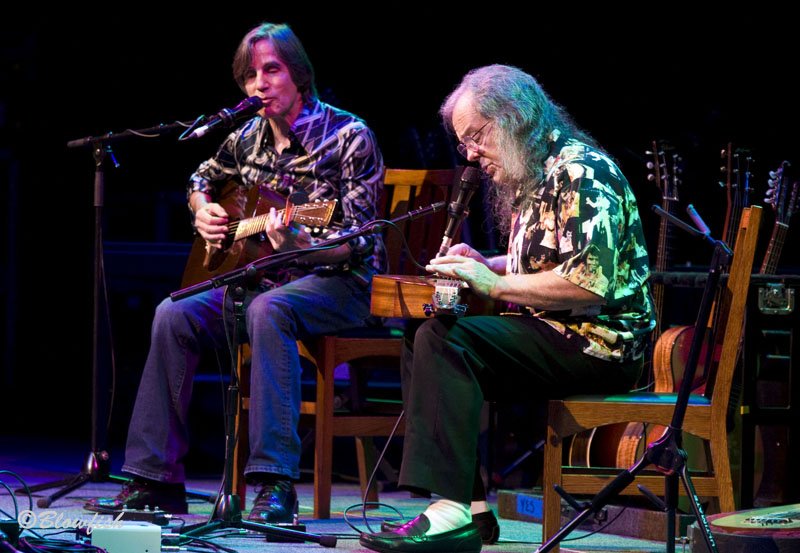
My favorite Lindley contribution came in “For a Dancer,” Browne’s heartbreaking 1974 tearjerker about a friend who had died. Lindley’s fiddle part throughout tugs at the listener’s heartstrings in such an integral way that it’s near impossible to imagine the song without it. Go back five years earlier to The Youngbloods’ intense “Darkness, Darkness” and you’ll hear a young Lindley’s fiddle adding just the right mystical touch to that song, later re-recorded by its composer, Jesse Colin Young.
Even Bruce Springsteen made use of Lindley’s talents, although it took a long time for us to hear it. That’s his fiddle gracing the alternate take of “Racing in the Streets,” found on the 2010 package “The Promise,” a track originally from Springsteen’s “Darkness on the Edge of Town” LP.
So where did this instrumental wunderkind come from? Lindley was born and raised in San Marino, an LA suburb near Pasadena, the son of a music enthusiast who exposed him to a broad range of musical genres and instruments through an extensive record collection. Korean folk music, Indian sitar albums, West Virginia bluegrass, Greek bouzouki, Bakersfield country music — all of it and more made an impact on Lindley from a young age. He was only four when he started playing violin, then ukulele by six, guitar at eight and banjo at 11.
He was a voracious student of the musical styles and techniques he was hearing and sought to emulate them on a wide array of stringed instruments. “I even opened up the upright piano in the playhouse out in back of my parents’ house to get at the strings and see how they worked,” he recalled in a 2008 interview. He said he had no idea how many different instruments he could play, but a photo taken for Acoustic Guitar magazine in 2000 (see below) gives a pretty good indication. From dulcimer to autoharp, from the Middle Eastern our to the Turkish saz, Lindley could coax amazing sounds from them all.

As a teen, he won the Topanga Canyon Banjo/Fiddle Contest five straight years, and often frequented the Ash Grove and Troubadour clubs to hear some of the more eclectic genres not necessarily in vogue on the radio. It was there that he formed a bond with Ry Cooder, who shared his love for folk and roots music.
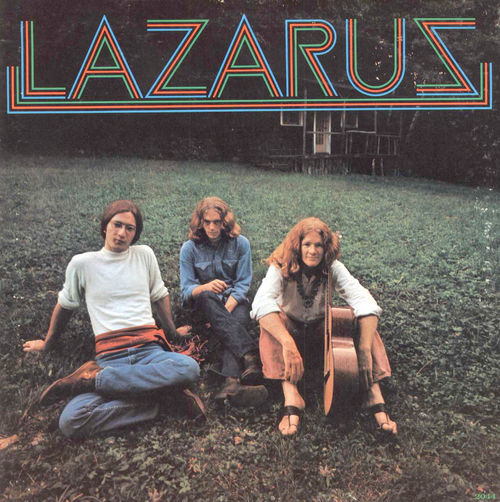
Lindley soon partnered with Chris Darrow and others to form a band called Kaleidoscope that offered “psychedelic folk,” and although their albums barely charted, they were favorites of such major influencers as Jimmy Page (who called them “my ideal band, absolutely brilliant”) and San Francisco DJ Tom Donahue. At the bottom of this piece, I’ve included a handful of Kaleidoscope tracks in a diverse Spotify playlist that chronicles Lindley’s recorded legacy.
Following that project, Lindley spent a couple of years in England playing with guitarist/singer Terry Reid before returning to L.A., where he became fast friends with Browne just as his star was beginning to rise. His work on Browne’s records (check out the slide guitar on “The Fuse” from 1976’s “The Pretender”) attracted the attention of Nash, Crosby, Ronstadt, Taylor and others.
Lindley left Browne’s band after the 1980 “Hold Out” tour, largely because Browne encouraged him to branch out. “I thought he should be appreciated in his own right,” said Browne in 2010, “but there were times when I thought it was the craziest and stupidest thing I’ve ever done.”
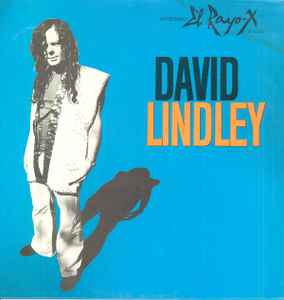
In 1981, Lindley’s one brush with commercial success came with his solo debut, “El Rayo-X,” one of the most eccentric and wildly disparate albums of its time. With the help of seasoned players like Bill Payne, Garth Hudson and Bob Glaub, and Browne adding some vocals, Lindley offered up funk, snarling blues, vintage rock & roll, Cajun, Zydeco, reggae and Middle Eastern rhythms, and it reached a modest #81 on the US album charts.
For a guy who found himself in the vortex of Southern California hedonistic excess, Lindley kept all of that at arm’s length. On tour, when most of the band and entourage were partying hard at after-show gatherings, Lindley tended to retreat to his hotel room with an instrument or two, always looking for new ways to inject life into a song. “There are all sorts of variations,” he once said. “Some fans don’t get it. They say, ‘What you do is so good — why don’t you guys just keep playing like that?’ But when I see that exotic cheesecake in the glass case, I think, ‘I want to try that. It looks really good.’ I’m always looking to experiment with new sounds, new ways of playing things.”
In the wake of Lindley’s passing March 3rd at age 78, a number of his compatriots emerged with words of praise. “One of the most talented musicians I’ve ever known,” Graham Nash wrote. “David could play pretty much any instrument you put in front of him with incredible versatility and expression. He was truly a musician’s musician.”
“Lindley’s unique sound and style,” said guitarist Peter Frampton, “gave him away in one note.”
Warren Haynes, who played guitar for The Allman Brothers Band from 1989 to 2014, had this to say: “His lap steel playing in particular was a big influence on me. Often times when I’m approaching a song or solo in a major key, Lindley’s influence will appear automatically. His style was so vocalesque, and his sense of melody was a deep well. His solos became part of the song to the point where even non-musicians could hum along.”

R.I.P., Mr. Lindley. Your contributions have not gone unnoticed by your peers (nor by me and those who read this blog)…
***********************