Criminally overlooked albums of the Seventies

Regular readers of this blog know I love to shine a light on “lost classics” — excellent songs from little-known or less-than-great albums, or neglected deep tracks from commercially and critically successful LPs.

It has always been a labor of love for me to scour the vaults looking for the tunes from the ’60s, ’70s and ’80s we heard a few times and forgot all about, or tracks we never heard in the first place. What a joy it is for a music lover like me to discover “new” music from the old days!

The Seventies in particular was an extraordinarily fertile period for great music. In my search for lost classic songs, it has been my pleasure to come across some “lost classic albums” — LPs that barely made the Billboard Top 200 album charts when they were released, but are, in my opinion, consistently strong musical collections that should have been widely praised and purchased. I have gathered 12 lost classic albums of the 1970s that almost certainly flew under your radar at the time but are very worthy of your attention today.

The Spotify playlist at the end offers five tracks from each of these dozen records, but I encourage you to dive deeper into these albums if you like what you hear.

******************************

“Off the Shelf,” Batdorf and Rodney, 1971

The singer-songwriter era of the early ’70s brought us some beautiful music and introspective lyrics from the likes of Joni Mitchell, James Taylor, Jackson Browne, Cat Stevens and others, but the most criminally overlooked artists of that period, in my opinion, were John Batdorf and Mark Rodney.  Their virtuoso acoustic guitars, great vocals, Batdorf’s superb songs and pristine production values were all in abundance on their amazing debut album, “Off the Shelf,” as well as the follow-up, “Batdorf and Rodney,” and, to a lesser degree, their final effort, “Life is You” (1975).  Tunes like “Oh My Surprise,” “You Are the One,” “Where Were You and I,” “Let Me Go,” “One Day” and especially the effervescent “Can You See Him” all deserve a place among the highest-regarded songs of the genre.  Batdorf continues to release quality new music (four albums since 2006) as a solo artist, but I keep returning to “Off the Shelf.” A phenomenal record.
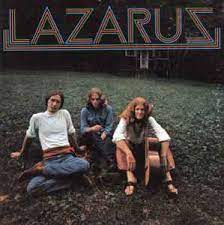
“Lazarus,” Lazarus, 1971

Peter Yarrow of Peter, Paul and Mary discovered this trio of musicians (Billie Hughes, Carl Keesee and Gary Dye) from Texas, got them a recording contract and hired them as his warm-up act in 1971.  Their self-titled debut album has some of the most stunning harmonies and melodies I’ve ever heard — “Blessed,” “Warmth Of Your Eyes,” “Listening House,” “Eastward,” “Rivers” and “Whatever Happened.”  They later toured behind label mate Todd Rundgren to promote their second album, “A Fool’s Paradise,” but sadly, they never caught on with the buying public.  In the ’80s, singer-songwriter Hughes developed a strong following in Japan and Europe, where he found success writing for film and TV.  His song “Welcome to the Edge” was nominated for an Emmy for its role as theme song for the soap opera “Santa Barbara” in 1991.  He died in 1998 at age 50.
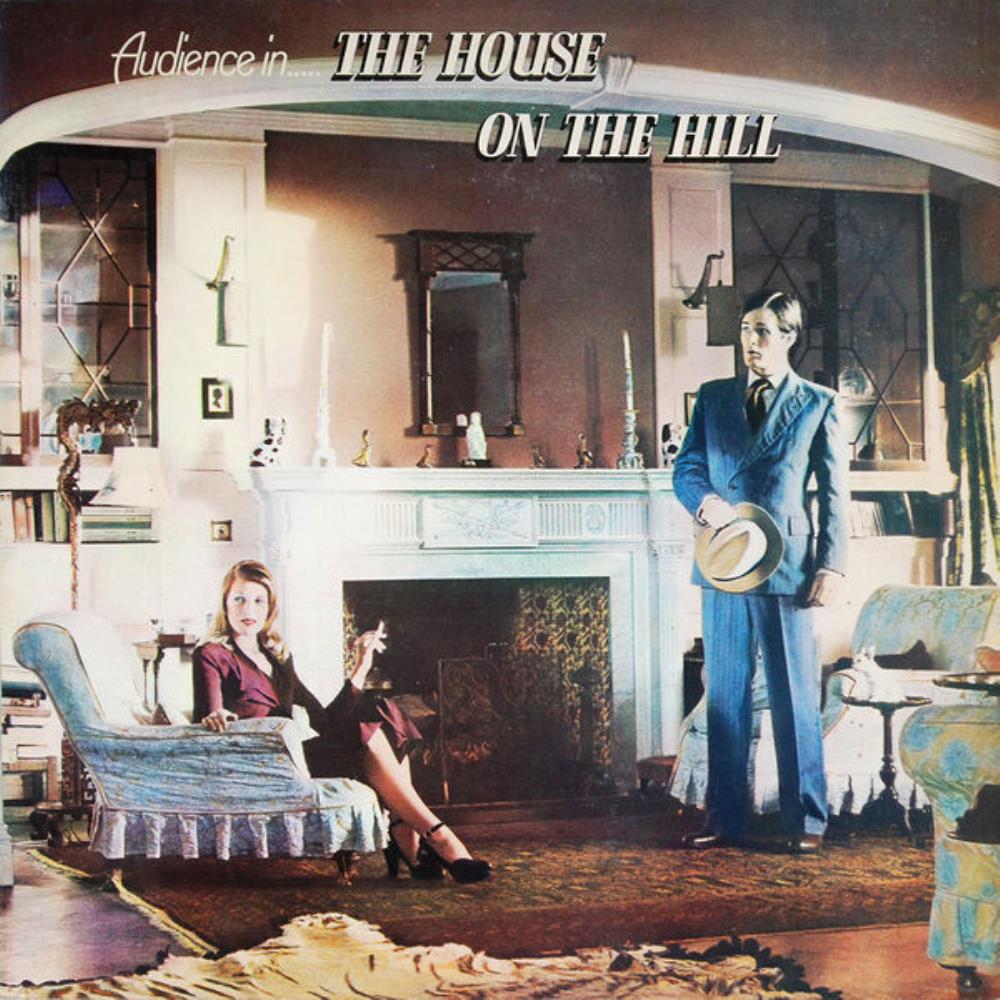
“The House on the Hill,” Audience, 1971

Howard Werth and Keith Gemmell were the chief musical talents behind Audience, a British art rock band that was well received by critics but never achieved chart success in the U.K. nor the U.S.  They played in support of Led Zeppelin in 1971, and were paired with Elton John’s first producer Gus Dudgeon in making what I consider to be their finest of four albums, “The House on the Hill.”  Werth’s voice is admittedly an acquired taste, but his electric classical guitar stylings and Gemmell’s impressive playing on electronically altered sax and flute resulted in several outstanding original recordings, including “Indian Summer,” “Raviole,” “Jackdaw,” “Nancy,” “You’re Not Smiling” and the 7-minute title track.  This is a superlative album well worth seeking out.

“Songs For a Tailor,” Jack Bruce, 1969

For three years (1966-1968), Jack Bruce was one of the hottest musicians in the world, playing bass and handling lead vocals for Cream, the British power trio that also featured a young Eric Clapton and drummer Ginger Baker.  Cream broke up in 1968, and Clapton went on to more success in Blind Faith, Derek and the Dominos and a lengthy solo career.  Baker moved to South Africa and was only marginally involved in music afterwards.  Bruce continued playing in various jazz bands and jazz-rock trios throughout the ’70s and ’80s that involved the likes of Leslie West and Robin Trower, and their output was average at best.  However, Bruce’s first solo album, 1969’s “Songs For a Tailor,” is a bonafide gem, with stellar playing and excellent songs like “The Clearout,” “Theme From an Imaginary Western,” “Ticket to Waterfalls,” “Weird of Hemirston” and “Never Tell Your Mother She’s Out of Tune.”

“Howlin’ Wind,” Graham Parker, 1976

Growing up in London in the Sixties, Parker was influenced by Beatles pop, pub rock and Motown soul, and all those influences showed up when Parker and his band, The Rumour, released their high-energy debut LP, “Howlin’ Wind,” in 1976. Although he’s mentioned in the same breath as fellow Brit New Wave pioneers Elvis Costello and Joe Jackson, Parker didn’t reach the chart heights of either of them. In fact, he never found much fame in the U.S., but if you give “Howlin’ Wind” a listen, you’ll hear shades of the R&B stylings of Van Morrison and the melodic, heartfelt rock of Bruce Springsteen in his songs, especially “Soul Shoes,” “White Honey” and “Between You and Me.” This LP and its strong follow-up the same year, “Heat Treatment,” are perfect party albums that you probably missed when they came out, but it’s never too late to become a convert. Check him out.

“Emitt Rhodes,” Emitt Rhodes, 1970

This multi-talented multi-instrumentalist is a classic example of a musician who got royally screwed by the industry.  Emitt Rhodes had been a member of two fledgling Sixties bands, The Palace Guard and Merry-Go-Round, and after they disbanded, Rhodes continued writing and recording songs to fulfill their contract with A&M Records, but they chose not to release his songs.  Instead, he invested in recording equipment and set up a home studio in his parents’ garage, playing all the instruments and singing and producing his own album.  He got a contract with ABC/Dunhill, and the album reached #29 on the charts in 1971, and was a big hit with critics as well.  “Fresh as a Daisy,” “Somebody Made for Me,” “Long Time No See,” “Lullabye” and “With My Face on the Floor” all have irresistible Beatlesque hooks and vocals that recall Paul McCartney.  A&M then released his earlier work, which confused buyers, and ABC demanded he release a new album every six months, a grueling pace that he found impossible to meet.  Discouraged, he soon quit the business but built a career as a producer/engineer.  The “Emitt Rhodes” LP is a hidden treasure.

“Ahead Rings Out,” Blodwyn Pig, 1969

Original Jethro Tull guitarist Mick Abrahams was a blues purist and didn’t enjoy life on the road, so he and Tull frontman Ian Anderson had a falling out over Anderson’s non-blues songs and a punishing tour schedule.  Abrahams left and formed Blodwyn Pig, who released two albums before folding.  Their first, “Aheads Rings Out,” released in the waning days of 1969, offers the explosive “See My Way” and several excellent blues tracks like “It’s Only Love,” “Dear Jill” and “Summer Day.”  Although the album got little attention in the U.S., it reached #9 in England, rivaling Tull’s concurrent “Stand Up” LP that year.

“No Other,” Gene Clark, 1974

With high-profile musicians like Roger McGuinn and David Crosby around, it’s not surprising that Gene Clark was sometimes the overlooked jewel of The Byrds’ lineup. Clark served as frontman and one of the lead singers, writing or co-writing some of their finest tracks (“I’ll Feel a Whole Lot Better,” “She Don’t Care About Time,” “Eight Miles High”), but his stage fright and fear of flying led to his premature departure. He signed with Geffen Records in 1973 as a solo artist, but his remarkable tour-de-force LP “No Other” got the cold shoulder from David Geffen, who refused to promote it, and it consequently tanked on the charts, which devastated Clark. The album has undergone a dramatic reappraisal in recent years; AllMusic’s Thom Jurek calls it “a sprawling, ambitious work that seamlessly melds country, folk, jazz-inflected-gospel, urban blues, and breezy L.A. rock in a song cycle that reflects the mid-’70s better than anything from the time.” I confess the album went under my radar at the time, but I’ve since become a huge fan. So much great music to absorb here!

“Blows Against the Empire,” Paul Kantner, 1970

Singer/guitarist Kantner has been the mainstay in every phase of the great San Francisco band — Jefferson Airplane, Jefferson Starship, and Starship.  He fancied himself something of a countercultural revolutionary, and was obsessed with science fiction, so he combined those two interests and came up with a song cycle about hijacking a starship and starting a new world on some distant planet, since Earth appeared doomed to him.  Kantner’s solo concept album “Blows Against the Empire” was a bit silly lyrically, perhaps, but the music was excellent, thanks to the participation of several key musicians:   Grace Slick, Jerry Garcia, David Crosby, Graham Nash, Jack Casady, David Freiberg and Harvey Brooks.  Songs like “Let’s Go Together,” “A Child is Coming,” “Have You Seen the Stars Tonite” and “Starship” are as good as anything on earlier Airplane albums and later Starship LPs.
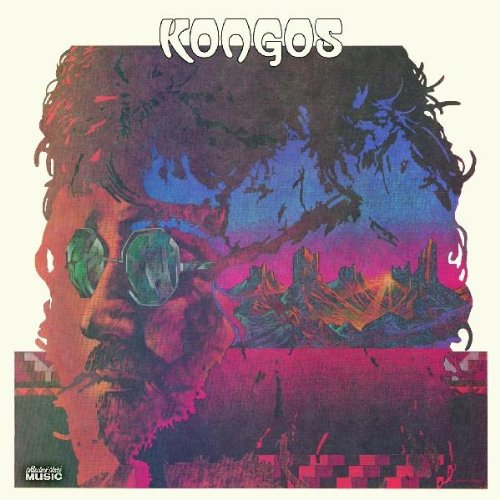
“Kongos,” John Kongos, 1972

Born in South Africa, John Kongos had some modest success there in the Sixties with a number of groups before moving to England in 1969.  He enjoyed two Top Five hits there in 1971 — “He’s Gonna Step on You Again” and “Tokoloshe Man” — but they never reached the Top 40 in the US, and the album they came from, “Kongos,” reached #30 in the UK but failed to crack the Top 200 album list here.  Too bad — the songs are engaging and beautifully produced, recalling early Elton John at times, particularly “I Would Have Had a Good Time,” “Gold,” “Tomorrow I’ll Go” and “He’s Gonna Step on You Again.”  This one might be tough to find but well worth the effort.

“Sunburst Finish,” Be-Bop Deluxe, 1976

One of Britain’s better progressive rock/art rock bands that never made much impact here in the U.S. was Be-Bop Deluxe.  Despite their name, they didn’t traffic in bebop music, preferring blues-based British rock not unlike David Bowie.  Three of their seven albums reached the Top 20 in the U.K., but none did better than #60 in the U.S.  Singer/songwriter Bill Nelson had a knack for great song riffs and quirky science-fiction lyrics, and it all came together nicely on their 1976 LP, “Sunburst Finish,” which includes great tracks like “Ships in the Night,” “Fair Exchange,” “Crying to the Sky,” “Sleep That Burns” and “Life in the Air Age.” If you’re a fan of Ziggy-era Bowie, you’ll enjoy this LP for sure.

“What If,” Dixie Dregs, 1978

Although their albums failed to chart, The Dixie Dregs have had an appreciative following from their founding in the early ’70s up to the present day. Led by guitar virtuoso Steve Morse, the group focuses almost exclusively on instrumental tracks that are so eclectic as to almost defy categorization. One critic tried, calling them “a cross between The Allman Brothers and Mahavishnu Orchestra,” which correctly pinpoints their leanings toward Southern rock and jazz fusion. And yet, there are elements of country and bluegrass here as well. You’ve got to hear it to believe it. The Allmans’ keyboardist Chuck Leavell brought the group to the attention of Capricorn Records, who released “Free Fall,” “What If” and “Night of the Living Dregs” in the late ’70s. “What If” is their most artistically proficient, and it’s an album I played often when the rest of the world had fallen for disco fever.

***************************

She’s a woman who understands

I’ve been thinking a lot this week about women.

Not my wife and daughters in particular, although I already think of them all the time. Not even female friends, necessarily. I’ve been thinking about women in terms of their position in society, their impact on life, the influence of their personalities.

I have been tardily immersing myself in the dystopian drama “The Handmaid’s Tale,” which is brilliantly written and acted but oh so very bleak and pretty frightening. The subtle and not-so-subtle parallels between the subjugation of women in that story and the impact of the right-wing Supreme Court’s outrageous gutting of Roe v. Wade are more than a little disturbing.

I rarely address political issues in this rock music blog (except for occasional overviews of protest songs as a sub-genre), but this week, I am moved to explore songs that celebrate women — strong women, smart women, kind women, independent women. I have selected a dozen songs with “woman” in the title that go beyond the superficial or pejorative generalizations all too common in pop songs of the classic rock era.

In addition to these 12 songs, the Spotify playlist at the end includes several “honorable mentions” that have lyrics less relevant to my intended message but still worthy of inclusion because the music warrants it.

This Independence Day weekend, I shall be deep in thought about how our country is in trouble when it summarily removes established rights from half its people. This cannot be the way forward…

***************************

“Woman in Chains,” Tears for Fears, 1989

For “Woman in Chains,” the leadoff track on the excellent “The Seeds of Love” LP, Tears For Fears singer/songwriter Roland Orzabal was inspired by two different lines of thought when he wrote it. “The song is about how men have traditionally played down the feminine side of their characters, and how both men and women suffer for it. I think men in a patriarchal society have been sold down the river. We’re told that we’re in control, but there are also a hell of a lot of things that we miss out on, which women are allowed to be.” He also revealed he was writing about his mother’s unhappy life as a nightclub stripper, and the abuse she took from her husband (Orzabal’s father): “Well, I feel deep in your heart there are wounds time can’t heal, /And I feel somebody somewhere is trying to breathe, /Well, you know what I mean, /It’s a world gone crazy keeps woman in chains…”

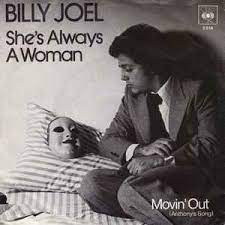
“She’s Always a Woman,” Billy Joel, 1977

I find this song to be one of Billy Joel’s most delightful, beautiful melodies, but the lyrics have always perplexed me. If she “steals like a thief” and “can ruin you faith with her casual lies,” why is she also the recipient of his love and affection? It’s actually autobiographical. In the ’70s, Joel was married to Elizabeth Weber, who managed his financial affairs and handled his contract negotiations with a toughness bordering on ruthlessness. Male business adversaries naturally labeled her as “unfeminine,” but Joel saw she was fighting for his interests, and he loved her for it: “Oh, she takes care of herself, she can wait if she wants, /She’s ahead of her time, /Oh, and she never gives out, and she never gives in, /She just changes her mind…” The marriage didn’t last, though, and he sees his part in the failure: “She’ll bring out the best and the worst you can be, /Blame it all on yourself ’cause she’s always a woman to me…”

“Kind Woman,” Buffalo Springfield, 1968

Buffalo Springfield didn’t last long because the two major talents in the lineup, Stephen Stills and Neil Young, were too competitive for their own good, both as songwriters and as performing guitarists and singers. Overshadowed in the mix was third singer-songwriter Richie Furay, a much gentler soul who later founded Poco and ultimately gave up the business for life in the clergy. One of his finest efforts in the Springfield was “Kind Woman,” a plaintive country-based tune in which the narrator sweetly asks the nice woman he has just met if she’ll keep him company: “Remember once before, you’re hearing the old folks say, ‘Love’s an ageless old rhyme,’ /But nowadays, you know the saying depends so much on the kind of woman that you find, /Kind woman, won’t you love me tonight? /The look in your eyes, kind woman, /Don’t leave me lonely tonight…”

“Just Like a Woman,” Bob Dylan, 1966

On the face of it, this classic tune from Dylan’s “Blonde on Blonde” double album appears to traffic in stereotypes, describing actions that are supposedly “just like a woman” would do. There is some of that in there, to be sure, but I interpret the lyrics to be more universal. We all ache, we all have pain, both men and women, especially the emotional variety from unsuccessful relationships, and we all break “just like a little girl” (or boy). He’s throwing in the towel: “Your long-time curse hurts, but what’s worse is this pain in here, /I can’t stay in here, ain’t it clear that I just can’t fit, /Yes, I believe it’s time for us to quit…” Some observers think the song is about former lover Joan Baez, who was once a bigger star than he was: “When we meet again, introduced as friends, /Please don’t let on that you knew me when I was hungry, and it was your world…”

“American Woman,” The Guess Who, 1970

This #1 single by the Canadian band that has had the most success on US pop charts was widely misinterpreted at the time of its release in the spring of 1970. With American involvement in the Vietnam War at its fullest, many listeners saw the song as an anti-American slap by a foreign group, but that’s simply not the case, according to singer Burton Cummings. “The lyrics were written on the spot during an onstage jam after we’d returned from a U.S. tour,” he said in 2013. “What was on my mind was that girls in the States seemed to get older quicker than our girls, and that made them seem dangerous. When I sang, ‘American woman, stay away from me,’ I really meant, ‘Canadian woman, I prefer you.’ We weren’t used to strong, outspoken women.”

“Man Smart, Woman Smarter,” Harry Belafonte, 1956

This provocative song’s authorship is somewhat unclear, but the prevailing opinion is that it was written by Norman Span, a popular calypso musician who first recorded it back in 1936. Belafonte made it popular as an album track on his #1 LP “Calypso” in 1956, and artists including Chubby Checker, Roseanne Cash, The Grateful Dead, Robert Palmer and The Carpenters all recorded it over the years. It was featured on an episode of “I Love Lucy” in which Lucy put a band together to outfox Ricky and show him he wasn’t the only one with talent. The lyrics advance a theory regarding superior intellect: “Ah, ever since the world began, woman was always teaching man, /And if you listen to my bid attentively, I goin’ tell you how she smarter than he, /And not me, but the people, they say that the men are leading the women astray, /But I say, that the women of today, smarter than the man in every way…”

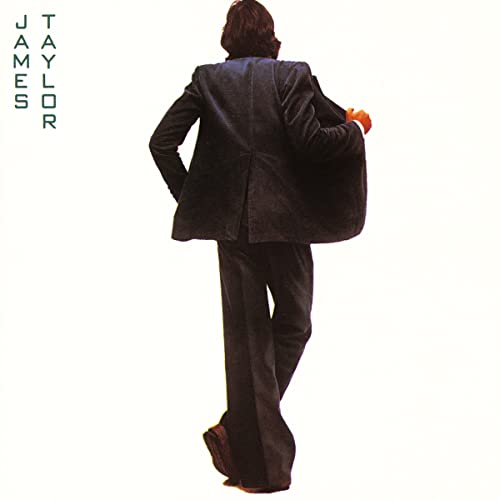
“Woman’s Gotta Have It,” James Taylor, 1976

Taylor wrote so many great songs but also loved recording cover versions of R&B-flavored numbers like Marvin Gaye’s “How Sweet It Is To Be Loved By You” and The Drifters’ “Up on the Roof.” On his underrated 1976 LP “In the Pocket,” Taylor did a spectacular job with Bobby Womack’s 1972 song “Woman’s Gotta Have It,” a funky soul tune written by Womack and his stepdaughter Linda Womack. The lyrics, which center on a woman they knew who was thinking of going elsewhere for intimacy because her husband had grown neglectful, serve as a warning to pay attention: “Do the things that keep a smile on her face, say the words that make her feel better every day… /Woman’s got to have it, I believe that I should know, she’s got to know that she’s needed around, /When you kiss her, you got to make her feel it everyday, boy, /She’s got to know that she’s not walking on shaky ground, /Think it over…”

“(You Make Me Feel Like a) Natural Woman,” Aretha Franklin, 1967

One day in 1967, Atlantic Records producer/mogul Jerry Wexler stopped Carole King on the street and said he needed her to write a song for his new artist Franklin, to be entitled “Natural Woman.” King and her then-husband Gerry Goffin collaborated that very evening, and you would think the lyrics would’ve been written by a woman, but in fact, King wrote the music while Goffin came up with the words. It became one of Franklin’s signature songs, a song of gratitude to a man who offers so much devotion and kindness, from a woman whose “soul was in the lost and found”: “Before the day I met you, life was so unkind, but your love was the key to my peace of mind, /’Cause you make me feel, you make me feel, /You make me feel like a natural woman…” King ended up recording the song herself four years later on her multi-platinum “Tapestry” LP.

“Woman,” John Lennon, 1980

The former Beatle, abandoned by his mother (and father) at a young age, developed an unhealthy defense that included berating and even physically abusing women who he felt had done him wrong. Therapy and Eastern philosophy helped quiet Lennon’s demons, such that, by 1980, he was able to acknowledge the huge importance of women in not only his life but in the universe. “Women make up half the sky, half the world, half of everything,” he noted. He wrote a mea culpa song like “Woman” to try to make amends for past behavior: “Woman, I can hardly express my mixed emotion at my thoughtlessness, /After all, I’m forever in your debt, /And woman, I will try to express my inner feelings and thankfulness for showing me the meaning of success… /Woman, I know you understand the little child inside the man, please remember my life is in your hands…”

“Woman,” Peter and Gordon, 1966

I couldn’t resist putting this song in the mix, which credits Bernard Webb as the songwriter, but that was a pseudonym for Paul McCartney, who wanted to see if a song he wrote could be successful if no one knew he wrote it. Peter Asher, as the brother of McCartney’s then-girlfriend Jane Asher, had benefited greatly from Lennon-McCartney songs the duo had given to Peter & Gordon — “A World Without Love,” “I Don’t Want To See You Again” — but “Woman” also did well for them (even though it wasn’t long before we learned who really wrote it). A line like “be my woman” may seem rather possessive these days, but it was well-intentioned for its day, and he’s hoping for mutual love, need and want: “Woman, do you love me? /Woman, if you need me, then believe me, I need you to be my woman…”

“No, Woman, No Cry,” Bob Marley and The Wailers, 1974

Following the success of “Burnin’,” The Wailers’ 1973 LP with future reggae classics such as “Get Up Stand Up” and “I Shot the Sheriff,” Peter Tosh and Bunny Wailer left to pursue solo careers, and Bob Marley assumed the mantle of frontman of the group. “Natty Dread,” the first album by Bob Marley and The Wailers, included “No Woman, No Cry,” which became a huge favorite in concert and was a featured track on the group’s 1975 “Live!” album. Although some misinterpreted the title to mean “If there’s no woman, there’s no reason to cry,” Marley said he meant it in Jamaican lingo as, “No, woman, nuh cry (don’t cry).” He was offering comfort in times of sadness: “Good friends we have, oh, good friends we have lost along the way, yeah, /In this great future, you can’t forget your past, so dry your tears, I say, /No, woman, no cry…”

“I Am Woman,” Helen Reddy, 1972

In 1972, Australian singer Helen Reddy had grown so tired of the demeaning treatment she and other female artists had to endure in the music business that she was motivated to write some defiant lyrics about it.  She handed them off to songwriter Ray Burton, and the result was the multi-million-selling “I Am Woman,” a somewhat cheesy but game-changing song that Helen Reddy played on every TV variety show she could. For better or worse, it gave many women the confidence to defy the odds, to chase their dreams, to press harder for more favorable contracts, to resist men’s unwanted advances, and to go where only men had gone before: “You can bend but never break me ’cause it only serves to make me more determined to achieve my final goal… /Oh yes, I am wise but it’s wisdom born of pain, /Yes, I’ve paid the price, but look how much I gained, /If I have to, I can do anything, /I am strong, I am invincible, I am woman…”

****************************

Honorable mentions:

More Than a Woman,” The Bee Gees, 1977; “Have You Ever Loved a Woman,” Derek and the Dominos, 1970; “Gold Dust Woman,” Fleetwood Mac, 1977; “When a Man Loves a Woman,” Percy Sledge, 1966; “Dark Eyed Cajun Woman,” The Doobie Brothers, 1973; “Witchy Woman,” The Eagles, 1972; “Black Magic Woman,” Santana, 1970; “Long Cool Woman,” The Hollies, 1972; “Oh, Pretty Woman,” Roy Orbison; “L.A. Woman,” The Doors, 1971; “Evil Woman,” Electric Light Orchestra, 1975; “Kentucky Woman,” Neil Diamond, 1967; “Parachute Woman,” The Rolling Stones, 1968; “She’s a Woman,” The Beatles, 1964.

*******************************