Takin’ care of business, and workin’ overtime
A few years ago, Hack’s Back Pages took a look back at some of the jobs various future rock stars held before they hit the big time. I wanted to show how even future musical celebrities did stints at thankless jobs, and that there’s absolutely nothing wrong with that.
Whether you earn a living at a high-paying profession in medicine, law or banking, or at a more modest-paying job in service work or manual labor, or somewhere in between, these are all honorable occupations that make up the fabric of our national economy.

It occurred to me that I had never gotten around to compiling a playlist of songs about occupations. I expected my research would turn up several dozen candidates among the classic rock archives, but I was surprised to find pickings were few. Still, I think the 14 songs I’ve chosen here are solid, and the honorable mention list isn’t too bad either. There is, as always, a Spotify playlist at the end for you to listen as you read.
If your profession isn’t represented here, perhaps you can find a song that fits the bill and pass it along to me. Off to work!
**********************

“Please Mister Postman,” The Marvelettes, 1961
Being a mail carrier can be a tough job. You’re threatened by dogs, you have to trudge through snow and rain, and you often are the bearer of bad tidings. But sometimes you get to make someone’s day with a long-awaited letter from a loved one. At least, you did back in the days when people still sent love letters! That’s what this golden oldie by The Marvelettes is all about. “Please, Mister Postman, look and see, /Is there a letter in your bag for me? /’Cause it’s been a mighty long time, since I heard from this boyfriend of mine…” It ended up as Motown Records’ first #1 single in late 1961, and The Marvelettes charted six more Top 20 tunes in their decade-long career (“Beechwood 4-5789,” “Playboy,” “Don’t Mess With Bill”). The Beatles covered “Please Mister Postman” in 1963, and The Carpenters’ rendition in 1975 also reached #1.

“Ice Cream Man,” Tom Waits, 1973
Waits is one of the most eclectic songwriters of the past half-century, with lyrics that swing between tender, morose, vicious and hilarious. On his marvelous 1973 debut LP “Closing Time,” one of the tracks he offered was this tribute to the fellow who sells ice cream from a truck that cruises through neighborhoods. This guy, though, seems to be interested in offering something more salacious than drumsticks and creamsicles: “Baby, missed me in the alley, baby, don’t you fret, /Come back around and don’t forget, /When you’re tired and you’re hungry and you want something cool, /Got something better than a swimming pool, /’Cause I’m the ice cream man, I’m a one-man band, /I’m the ice cream man, honey, I’ll be good to you…”

“Don’t Pay the Ferryman,” Chris de Burgh, 1982
This eerily dramatic tune, written and recorded by British rocker Chris de Burgh, seems to disparage the honesty of the man who skippers the ferry boat: “In the rolling mist, then he gets on board, now there’ll be no turning back, /Beware that hooded old man at the rudder, and then the lightning flashed and the thunder roared, /Don’t pay the ferryman, don’t even fix a price, /Don’t pay the ferryman until he gets you to the other side…” I’m sure most ferry boat captains are honorable, but not in this song. In the UK, de Burgh has had a long and mostly successful run, from 1974 to the present day, with nearly two dozen albums in the Top 40. “Ferryman” cracked the Top 40 in the US, the first of only two to make the charts here (1986’s “Lady in Red” was a huge #1 hit).
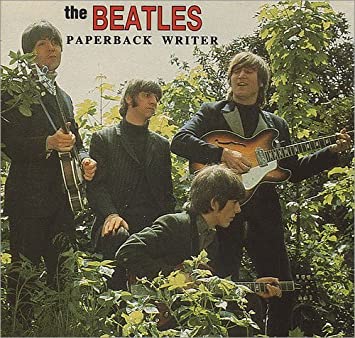
“Paperback Writer,” The Beatles, 1966
In their early years, Lennon and McCartney wrote relatively simple songs about love and boy-girl relationships, but soon enough, McCartney found he enjoyed writing lyrics about other subjects, and fictional characters. As The Beatles were working on their magnificent “Revolver” album, Paul came up with this catchy tune about a struggling writer who wanted more than anything to be a published author. He wrote it in such a way that listeners couldn’t help rooting for the guy to succeed: “If you really like it, you can have the rights, it could make a million for you overnight, /If you must return it, you can send it here, but I need a break, and I want to be a paperback writer…” It became yet another #1 hit single for The Beatles in the summer of 1966.
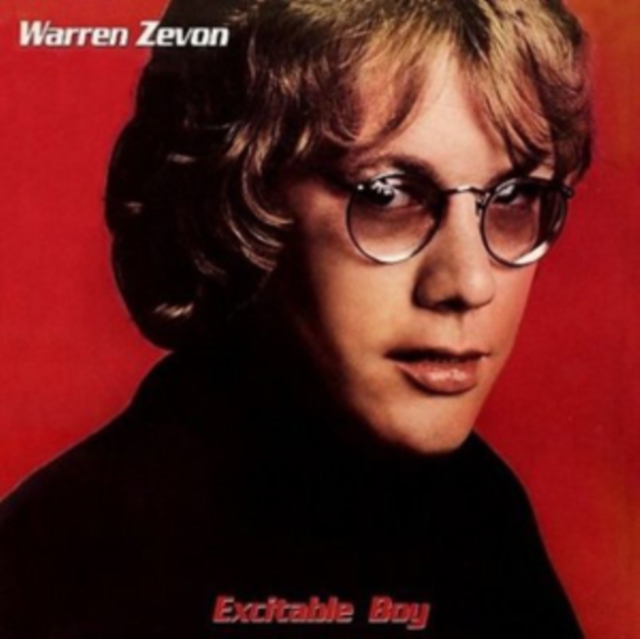
“Lawyers, Guns and Money,” Warren Zevon, 1978
The late great Zevon loved to write about sketchy characters — outliers, criminals, people living on the fringes. On his “Excitable Boy” LP, his commercial peak, he finished the album with a track he said was based on a true story. “My manager and I were partying in Mexico, and we took the party on the road into a creepy area of town,” he recalled. “My manager held an imaginary phone to his mouth and said, ‘Send lawyers.’ I immediately added, ‘And guns. And money!'” The song reinforces the importance of having a good lawyer when you run into trouble: “I was gambling in Havana, I took a little risk, /Send lawyers, guns and money, Dad, get me out of this… Now I’m hiding in Honduras, I’m a desperate man, /Send lawyers, guns and money, the shit has hit the fan…”

“Salesman,” The Monkees, 1967
Craig Smith was an L.A.-based singer/songwriter in the mid-’60s who recorded with Chris Ducey as Chris & Craig and later as Penny Arkade. He wrote songs that were recorded by Andy Williams, Glen Campbell and others. He befriended Michael Nesmith of The Monkees, who selected one of Smith’s songs for inclusion on the group’s 1967 LP, “Pisces, Aquarius, Capricorn & Jones Ltd.” Nesmith sang lead vocals on “Salesman,” Smith’s catchy tune that explored the world of the hard-working traveler peddling his wares: “Salesman, with your wooden cart that you push along while you walk, /Hey, salesman, got a little dog whose tail wags when you talk, /You always wear a smile, even though you’ve gotta walk ten miles, short lifespan, good-time salesman…”

“The Doctor,” The Doobie Brothers, 1989
Tom Johnston was founder, guitarist, singer and songwriter of The Doobies for the venerable band’s first five albums, but ulcers and exhaustion forced him to the sidelines in the late ’70s while singer/songwriter Michael McDonald took over for a while. When the band returned in 1989 with the LP “Cycles” after a decade-long hiatus, Johnston was back in charge, and the hit single was a song Johnston co-wrote called, appropriately enough, “The Doctor.” In this case, he was singing not about his previous medical woes but the metaphor that “music is the doctor” that heals us: “If you ever wonder how to shake your blues, /Just follow this prescription and get the cure for what’s ailin’ you, /Music is the doctor, makes you feel like you want to, /Listen to the doctor just like you ought to, /Music is the doctor of my soul…”

“If I Were a Carpenter,” Tim Hardin, 1967
Hardin was an acclaimed folk musician/composer who came up through the Greenwich Village scene in the early ’60s, and while his own recordings weren’t particularly successful, several of his songs did well in versions recorded by others. Bobby Darin reached #8 with a cover of Hardin’s “If I Were a Carpenter,” and Johnny Cash, The Four Tops and Robert Plant also did their own renditions. On Hardin’s “Tim Hardin 2” LP, his original take on the song considers carpentry (and other similar trades) to be humble, honest work: “If I were a carpenter, and you were a lady, would you marry me anyway? Would you have my baby? /If a tinker were my trade, would you still find me? Carrying the pots I made, following behind me? /Save my love through loneliness, save my love through sorrow, /I give you my ‘only-ness,’ give me your tomorrow…”

“Millworker,” James Taylor, 1979
Taylor wrote this fine tune for the Broadway musical “Working,” which was based on the Studs Terkel book “Working: People Talk About What They Do All Day and How They Feel About What They Do.” The track appears on Taylor’s enigmatic 1979 LP “Flag.” Biographer Mark Robowsky describes this powerful song as “a transfixing self-portrait through the tired eyes of a female laborer chained by life to her machine”: “Yes, but it’s my life that has been wasted, and I have been the fool to let this manufacturer use my body for a tool… /So may I work the mills just as long as I am able, and never meet the man whose name is on the label, /It be me and my machine for the rest of the morning, and the rest of the afternoon, and for the rest of my life…”

“Politician,” Cream, 1968
There are few professions that have worse reputations than those who pursue careers in politics. Indeed, originally, it was supposed to be a noble calling for a few years, not a lifelong career. These days, the graft and corruption seem so widespread, and people are hard-pressed to find any office holder worthy of their trust. In 1968, bassist/vocalist Jack Bruce and lyricist Pete Brown collaborated on the biting “Politician,” which appeared on Cream’s #1 album “Wheels of Fire” that year. The title character is not only untrustworthy but unsavory as well: “Hey now, baby, get into my big black car, /I wanna just show you what my politics are, /I’m a political man and I practice what I preach, /So don’t deny me, baby, not while you’re in my reach…”

“Waitress,” Emily Hackett, 2018
In her 20s, my daughter Emily spent time as a restaurant waitress, and after one particularly tough night full of demanding customers and bad tippers, she was moved to write this song about what it’s like to be a waitress. “For me,” she said, “I was not only waiting on people, I was just trying to make ends meet, waiting for my career as a songwriter to take off.” She ended up including the tune on her 2018 EP “By the Sun,” and she makes sure to tell audiences to be kind and generous to those who wait on them. “I’m at your service, I hope you enjoy it, /Come back and see me, you know where I’ll be, /Waitin’ on you, waitin’ on pay, waitin’ on tables, waiting all day, /Waitin’ on a savior to walk in this place and take me away, /Well, I’m just a waitress…”

“Teacher,” Jethro Tull, 1970
Educators are increasingly under attack these days by people who don’t seem to understand how demanding the job of a teacher can be. From kindergarten to college and beyond, teachers provide lessons, literature and learning tools to make us smarter and wiser in the ways of the world. In Jethro Tull’s classic “Teacher” from 1970’s “Benefit” album, songwriter Ian Anderson points out the importance of making time for fun: “Well, the dawn was coming, heard him ringing on my bell, /He said, ‘My name’s the teacher, or that is what I call myself, /And I have a lesson that I must impart to you, /It’s an old expression, but I must insist it’s true, /Jump up, look around, find yourself some fun, no sense in sitting there hating everyone, /No man’s an island and his castle isn’t home, /The nest is full of nothing when the bird has flown…”

“Wichita Lineman,” Glen Campbell, 1968
Songwriter Jimmy Webb recalled driving across Oklahoma one summer afternoon when he noticed a lone telephone line worker high atop a pole and thought, “What a lonely job that must be.” He was moved to write an ode to the dedicated man who does this important work, and the result was the achingly beautiful “Wichita Lineman,” which became a #3 hit in early 1969 for singer/guitarist Glen Campbell. Webb said he’d intended to write another verse “to flesh out the imagery a bit more” but he ran out of time before Campbell’s scheduled recording session: “I am a lineman for the county, and I drive the main road, /Searchin’ in the sun for another overload, /I hear you singin’ in the wire, I can hear you through the whine, /And the Wichita Lineman is still on the line…”

“Sweet Painted Lady,” Elton John, 1973
We mustn’t leave out what has been called “the world’s oldest profession.” Prostitutes, now often known as “sex workers,” have been selling their bodies for thousands of years, and while there will always be moral arguments about whether it’s an honorable occupation, millions worldwide choose this way to earn a living. Elton John did a fine job of describing the life in “Sweet Painted Lady,” which can be found on his excellent “Goodbye Yellow Brick Road” LP from 1973: “So she lays down beside me again, my sweet painted lady, the one with no name, /Many have used her and many still do, there’s a place in the world for a woman like you, /Oh, sweet painted lady, seems it’s always been the same, /Getting paid for being laid, guess that’s the name of the game…”
*********************************
Honorable mention:
“Blue Collar,” Bachman-Turner Overdrive, 1973; “Cracked Actor,” David Bowie, 1973; “Cook of the House,” Wings, 1976; “Happy Nurse,” The Sugarcubes, 1992; “Someday I’ll Be a Farmer,” Melanie, 1971; “For a Dancer,” Jackson Browne, 1974; “Taxi,” Harry Chapin, 1972; “Sky Pilot,” Eric Burdon, 1968; “Highway Patrolman,” Bruce Springsteen, 1982; “I’m Just a Singer (In a Rock and Roll Band),” The Moody Blues, 1972; “Son of a Preacher Man,” Dusty Springfield, 1968; “Banker Bets, Banker Wins,” Ian Anderson, 2012.







 Hack's Back Pages