Watch the jingle jangle start to shine

At age 12, I decided I wanted to learn to play guitar and be a rock musician someday. My parents bought me a shiny new electric guitar for Christmas that year, but I realized in less than year that I was not destined to be a lead guitarist. I was a strummer of chords rather than a picker of notes. I would set my sights on being Paul Simon instead of Eric Clapton.

When I visited my local music shop to trade in my electric for an acoustic, a funny thing happened. I perused the guitars hanging on the wall and noticed one that had twice as many strings as the others. Hmmm, I wondered, what have we here? I pulled down this 12-stringed instrument from its hook, tucked it under my arm and strummed it. What came out was the most wonderful sound, a full, melodious tone that stunned me. It was like two guitars being played at once. I knew instantly that this was for me.

Struggling to play barre chords on my bulky
Mayfair 12-string in 1969

Frankly, I should’ve reconsidered. Even though a 12-string guitar is played the same way as a 6-string, using the same chords and tuning, it requires more dexterity, a tighter grip, deeper callouses, and it has twice as many strings that break or go out of tune. As folk legend Pete Seeger put it, “When you play the 12-string guitar, you spend half your life tuning the instrument and the other half playing it out of tune.” It made the learning process more challenging than if I’d just stuck with a regular 6-string acoustic. But I persevered, and by the time I turned 16, my parents saw how dedicated I’d become to my craft, and gave the green light to turning in my $65 Mayfair starter guitar for a truly magnificent Martin 12-string that I still cherish today in 2022.

*********************

A guitarra séptima

Where did the idea of 12-string guitars come from? Various Mexican instruments in the late 1800s like the bandolón, guitar séptima and mandolin used doubled strings, as did the bouzouki in Greece, some of which had as many as 18 strings. The modern 12-string guitar didn’t find its way into the United States until the 1920s and 1930s, when blues artists like Lead Belly and Blind Willie McTell were attracted to the larger-than-life sound they provided, making them ideal for solo accompaniment. Folk musicians in the 1950s like Seeger occasionally used them to embellish more spirited songs in their repertoires.
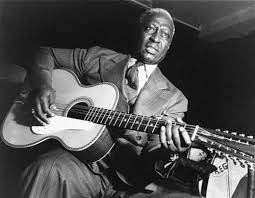
Blues legend Lead Belly

As electric guitars were developed and became crucial instruments in the rock and roll sound, manufacturers began experimenting with 12-string electrics. You could hear the distinctive chiming tone they make on such early ’60s tracks as Jackie DeShannon’s 1963 hit “When You Walk in the Room,” with Glen Campbell, then an L.A. session musician with The Wrecking Crew, playing the 12-string licks. The 1964 Peter and Gordon hit “A Would Without Love” features 12-string solos by Vic Flick as well.
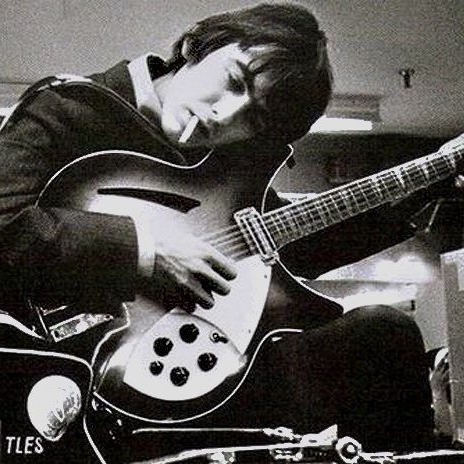
George Harrison

But it was George Harrison’s electric 12-string on The Beatles’ LP “A Hard Day’s Night” that broadened the appeal. Listen to “I Should’ve Known Better,” “You Can’t Do That,” “Anytime At All” and the title track, and you can hear the shimmering tone that would mesmerize aspiring musicians like Roger McGuinn of The Byrds. He would soon get his own Rickenbacker 12-string and make it the signature element of the group’s records, from hits like “Mr. Tambourine Man” and “Turn! Turn! Turn!” to “My Back Pages” and the frenetic picking on “Eight Miles High.” That unmistakable metallic tone was often described as “jingle-jangle.” Seeger had equated it to “the ringing of bells.” Similarly, Tony Hicks of The Hollies and Michael Nesmith of The Monkees loved the sound of the electric 12-strings made by Gretsch, Gibson, Fender and Guild, and employed them often on record and in live shows.

The Byrds’ Roger McGuinn

Harrison continued using a 12-string on subsequent Beatles albums, most notably on “Ticket to Ride” from “Help!” and on his own song, “If I Needed Someone,” from “Rubber Soul.” Keith Richards used one, although noticeably out of tune, on the Rolling Stones ballad “As Tears Go By.” David Bowie used a 12-string on the intro of his earliest hit, 1969’s “Space Oddity,” and in the studio, premier electric axeman Jimi Hendrix was not immune to picking up a 12-string acoustic now and then, such as on the very deep track “Hear My Train A-Comin’.”

The preponderance of 12 strings, both acoustic and electric, really flourished in the 1970s. Acoustic singer-songwriters like Gordon Lightfoot, Dave Mason and the three-man outfit America used acoustic 12-strings all the time to great effect. Check out Lightfoot’s 1975 top seller “Sundown” (with a 12-string pictured on the album cover), or the shimmering sound of the guitars on Mason’s 1977 hit “We Just Disagree.” Nearly every track on America’s debut album (especially “Three Roses” and “Rainy Day”) rings with 12-string guitars. David Crosby’s solo debut “If I Could Only Remember My Name” has 12-strings sprinkled throughout.

12-string virtuoso Leo Kottke

I remember the first time I heard acoustic 12-string virtuoso Leo Kottke on some of his incredible instrumental tracks, and marveled at his deft picking skills and his uncanny ability to play leads and chords simultaneously.

Meanwhile, the electric 12-string continued making its presence known in increasingly dramatic fashion. Perhaps the most famous use of the instrument came when Jimmy Page played one on Led Zeppelin’s anthemic tour-de-force, “Stairway to Heaven.” Because the piece required him to play both 6-string and 12-string guitar in different sections, he had a custom double-necked guitar built that made it much easier in concert to switch back and forth between the two in mid-song. Not to be outdone, Zeppelin bandmate John Paul Jones commissioned a special triple-necked acoustic guitar that included 6-string, 12-string and mandolin, which was perfect for the group’s acoustic sets on tour.

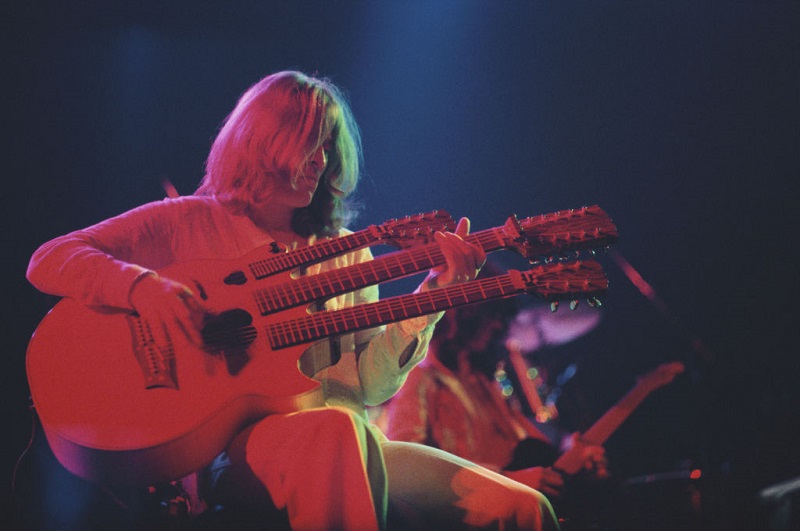
Jimmy Page and his double-necked Gibson
John Paul Jones playing his triple-necked instrument

“The double neck was not just a novelty,” noted Page in a 2014 interview. “It was there as a necessity. I thought the only way to replicate ‘Stairway’ properly, to do it any justice, was getting a guitar that will give you 12 strings on one neck, six strings on the other. It would have been very awkward without it.”

Indeed, while the 12-string was at first viewed by many as a novelty, it turned out to have plenty of staying power as more and more musicians gave it a whirl. Progressive rock bands like Rush and Yes were quick to join the party as guitarists Alex Lifeson and Steve Howe incorporated either electric or acoustic 12-strings into many of their arrangements. The introduction to Yes’s amazing “And You and I” from their “Close to the Edge” album clearly shows Howe’s innovative mastery of the 12-string. Genesis guitarists Anthony Phillips, Steve Hackett and Mike Rutherford were all quite fond of the resonant sound the 12-string produces. Guitarist Justin Hayward of The Moody Blues employed one for their minor hit “Question,” and Roger Hodgson of Supertramp featured an acoustic 12-string on their first Top 20 single “Give a Little Bit.” Classic rock tracks like Boston’s “More Than a Feeling,” Queen’s “’39” and Pink Floyd’s “Wish You Were Here” seem to almost compete as to which used a 12-string more effectively.
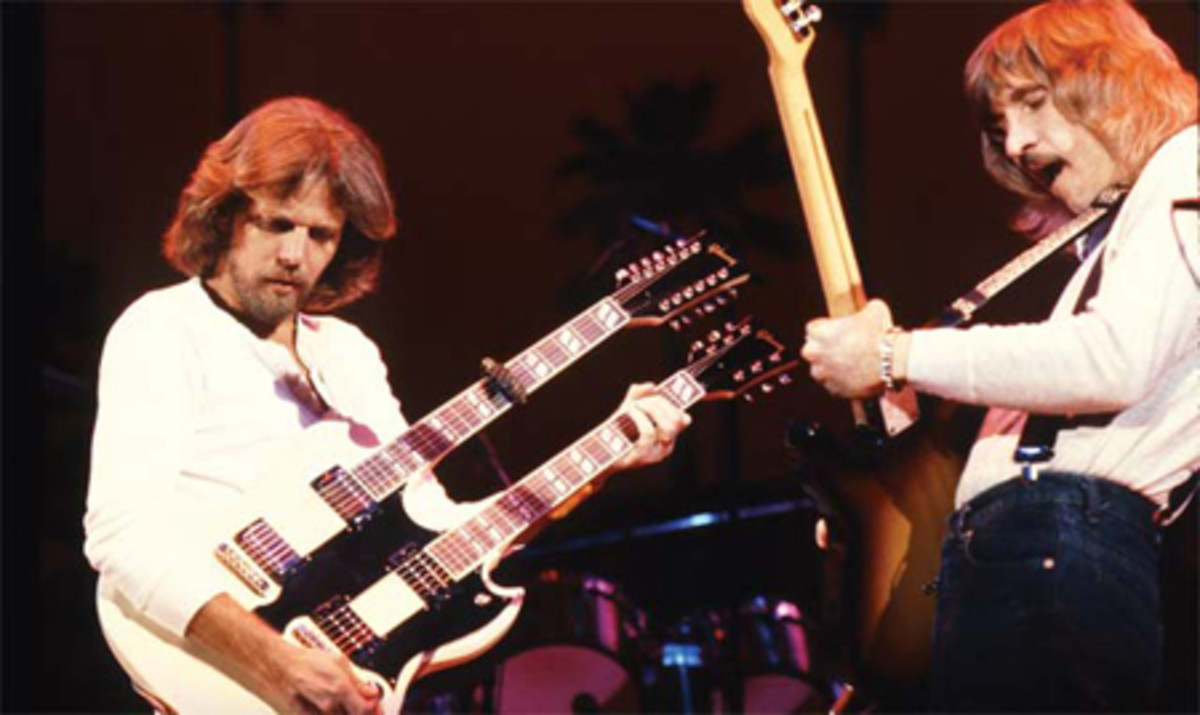
Don Felder trading licks with Joe Walsh

Vying for the most well-known song dominated by 12-string guitar is The Eagles’ “Hotel California,” on which guitarist Don Felder gently picks the intro on acoustic, and then he’d pull out his own double-necked electric in concert for his famous solo tradeoffs with Joe Walsh at the song’s conclusion.

In the jazz fusion arena, John McLaughlin of the Mahavishnu Orchestra was a huge fan of the 12-string, brandishing one on a regular basis in the studio and on stage. Jazz guitar wizards Pat Metheny and Larry Coryell were often seen with 12-strings in hand as they navigated their song catalogs.

In the 1980s, Peter Buck of R.E.M. became a proponent when he used a 12-string on jangly tracks like “Pretty Persuasion” and “So. Central Rain.” The late great Tom Petty and his Heartbreakers guitarist Mike Campbell both wielded 12-strings liberally on many great ’80s songs like “Somewhere Under Heaven” and particularly the mega-hit “Free Fallin’.” England’s The Smiths often brought 12-strings to bear on some of their tunes, notably “This Charming Man” and “Hand in Glove.”

Taylor Swift performing on a 12-string

You may not hear them used as much in recent years, but they haven’t disappeared. Taylor Swift, one of the premier songwriters/entertainers of her generation, says she loves playing some songs on a 12-string in concert to give them extra energy.

As for me, well, my Martin D-12-28 was the only guitar I had for more than 40 years, and it has served me well (even for a spell in 1976-77 when it became an 11-string guitar because I lost a couple pieces of one of the tuning pegs!). It wasn’t until 2018 that I finally broke down and bought myself a 6-string (another Martin, of course) just so I would have a choice when I was in the mood to play.

When I put new strings on the 12-string, though, nothing beats it. I could play for hours. In fact, I think I will!
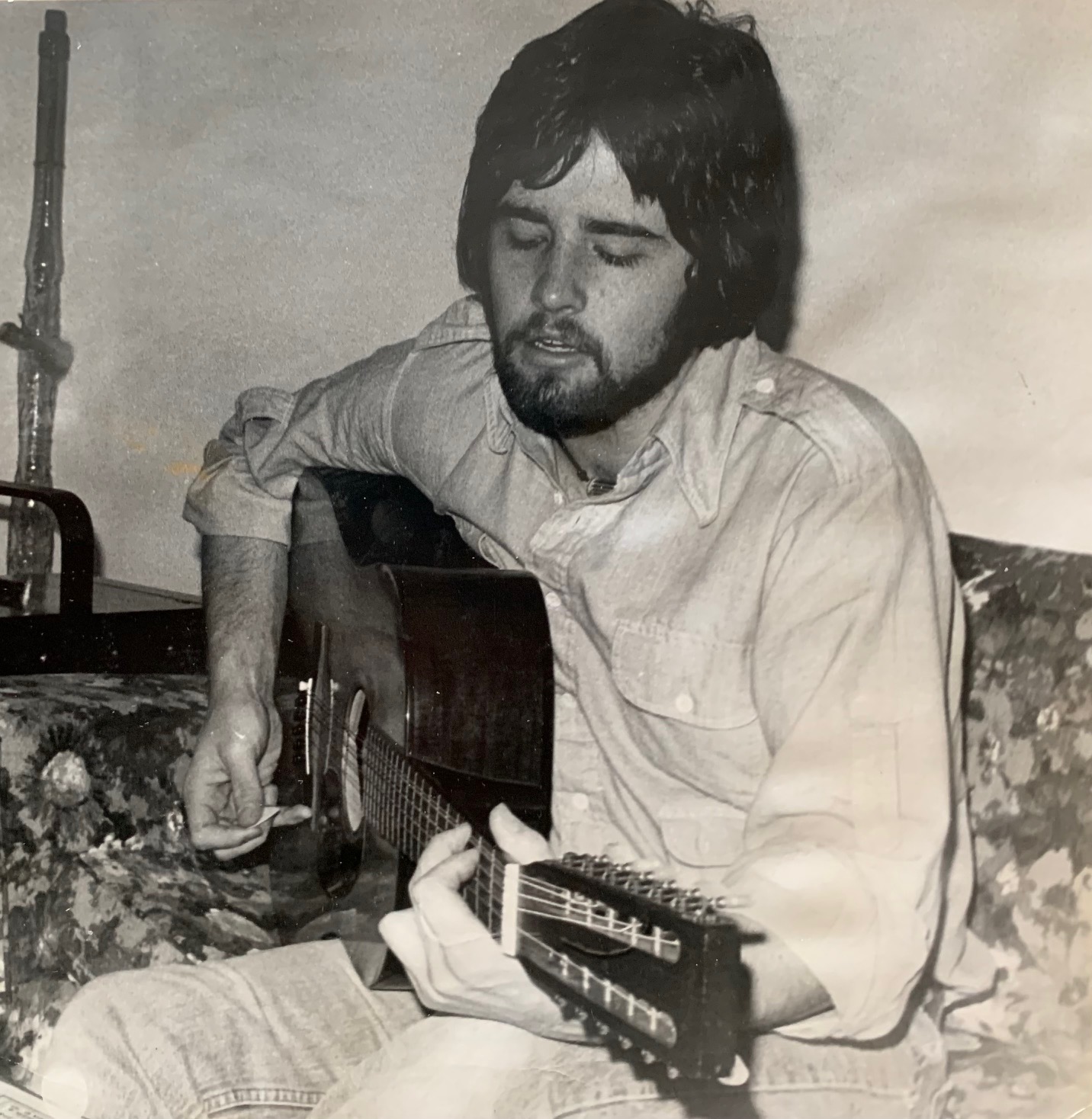
With my Martin 12-string in the late ’70s
At home in 2022 with my trusty 1971 Martin

****************************

This playlist takes the listener on a journey chronicling the use of the acoustic and electric 12-string in rock music, from early Lead Belly tracks through Beatles and Byrds tunes, from anthems of the ’70s through the jangly ’80s tracks of R.E.M. and Tom Petty.

The stories we could tell

The archives of rock music are full of unusual anecdotes, bizarre historical notes, strange coincidences and amusing back stories. Here at Hack’s Back Pages, I have shared some of them in longer essays about major artists, or in brief write-ups about specific songs on a themed playlist. For this post, I’ve compiled 10 fascinating tidbits from the classic rock era that I thought would pique your interest. At the end you’ll find two playlists of songs I’ve referred to in the text.

Rock on!

**********************

Steam’s B-side #1 hit

In 1969, a struggling young band known as Steam recorded a song called “It’s the Magic in You, Girl,” selected by their label as a potential hit.  They were then told, “Okay, now go ahead record something else, anything at all, to put on the B-side of the single.  It can be instrumental, it doesn’t matter.  Whatever you want.”  They started playing a light, accessible groove, jamming for 20 minutes while the singer added a bunch of “na na na”s and other off-the-cuff lyrics, and they were done.  The producer edited it down to the best three minutes, slapped it on the back of “It’s the Magic in You, Girl,” and shipped it out. As it turned out, DJs thought the A-side was lame and ignored it, but they were taken by the catchy ditty on the B-side.  Within a few weeks, “Na Na Hey Hey Kiss Him Goodbye” was the #1 song in the country.

*********

Richie Havens and band at Woodstock

Because the organizers of the Woodstock Music and Arts Fair had seriously underestimated the crowd turnout for the three-day event in August 1969, access to the site was hopelessly jammed, causing substantial delays for several of the musical acts who were scheduled to perform. Because of this, Richie Havens, a Greenwich Village folk act, valiantly stepped in to the opening slot and proved to be a welcome surprise.  Havens had intended to play a 45-minute set list of folk songs and covers, including his minor anti-war hit “Handsome Johnny,” but he was told to continue playing for nearly two hours because the bands scheduled after him still hadn’t arrived. Having run out of tunes, he ended up improvising on the old spiritual “Motherless Child” that ended up becoming one of the festival’s anthems, “Freedom.”  Said Havens later, “I’d already played every song I knew and I was stalling, asking for more guitar and mic, trying to think of something else to play – and then it just came to me.  My band and I riffed on a few chords and I just sang ‘Freedom!’ over and over. Hey, the establishment was foolish enough to give us all this freedom, and we used it in every way we could.”

*********

The Funk Brothers backing Stevie Wonder

From 1964 to 1969, Motown artists made an enormous presence on the US Top 40 airwaves. Artists like The Supremes, The Temptations, Smokey and The Miracles, The Four Tops, Marvin Gaye and Stevie Wonder had major chart success with multiple hit singles, and Mary Wells, Martha and The Vandellas, The Contours, Gladys Knight and The Pips, Kim Weston, Junior Walker and The All-Stars, and Brenda Holloway also took turns on the pop charts with records that are still enormously popular more than 50 years later.  The unsung heroes of all this dazzling music were the dozen top-flight session musicians who accompanied the singers on every one of their records. They were the Motown Records house band, and they referred to themselves as The Funk Brothers: Drummers Benny Benjamin and Uriel Jones, guitarists Robert White and Eddie Willis, keyboardists Joe Hunter and Earl Van Dyke, percussionist Eddie Brown and the incomparable James Jamerson on bass. Name any iconic Motown hit, and these guys played on it. Martha Reeves once refused to cut a track when key players were unavailable, declaring, “Ain’t no one recording nothing without The Funk Brothers!” You can now learn the whole story behind The Funk Brothers on the documentary “Standing in the Shadows of Motown.”

*********

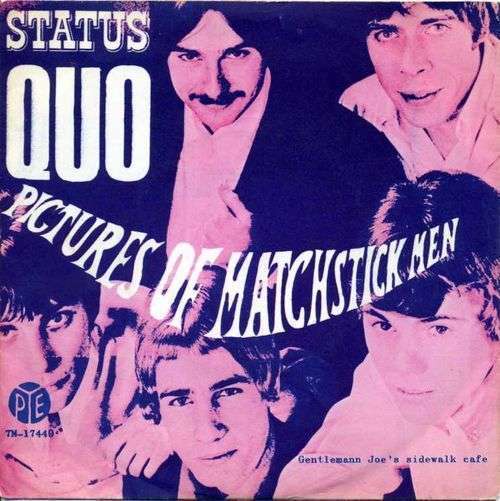
Status Quo 1968 hit single

Just as there have been many dozens of artists who made it big in the US but are unknown in England, the reverse also holds true. Bands like Slade, The Jam, Blur and Manic Street Preachers have had broad chart success in the UK but made barely a dent in America. One of the more remarkable examples of this is Status Quo, who debuted in both countries in early 1968 with the psychedelic rock hit, “Pictures of Matchstick Men,” which peaked at #12 in the US and #2 in England.  American listeners never heard from them again, but in Britain, they set chart records that still stand today.  Once Status Quo switched from psychedelia to a boogie band, they have charted more than 20 Top Ten LPs in England and Europe, including four #1s between 1972 and 2019, and they have more than 60 singles, with 40 of them reaching the Top 20.  In the US, you’d be hard pressed to find more than a handful of people who’ve ever heard of Status Quo, although “Pictures of Matchstick Men” might still turn up on ’60s “one-hit wonder” playlists from time to time.

*********

“The Graduate” soundtrack

In 1967, Mike Nichols was directing the rather controversial comedy film “The Graduate,” starring Anne Bancroft and Dustin Hoffman. When the time came to select music for the soundtrack, Nichols, a big fan of Simon and Garfunkel, approached Paul Simon to write some songs for it. Simon was hesitant, but agreed, coming up with plot-appropriate new material about divorce (“Overs”) and angst about the future (“Punky’s Dilemma”). Nichols wasn’t thrilled with either one, and opted to use S&G tracks like “The Sound of Silence” and “Scarborough Fair.” Simon mentioned he had another song he was working on called “Mrs. Roosevelt,” adding, “I guess I could change it to ‘Mrs. Robinson‘…” Nichols went nuts. “You have a song called ‘Mrs. Robinson’ and you weren’t even going to play it for me?!” Simon replied, “Well, I haven’t finished it. I only have the chorus.” Since Nichols was fast approaching a deadline so the film could be released before year’s end, he had S&G record just the chorus of “Mrs. Robinson,” which was used in a couple of different scenes when Hoffman’s character is driving. And that’s why you don’t hear the whole song in the movie. Simon completed it a month or two later, the duo recorded the full tune for their “Bookends” LP, and by June 1968, it was the nation’s #1 single.

*********

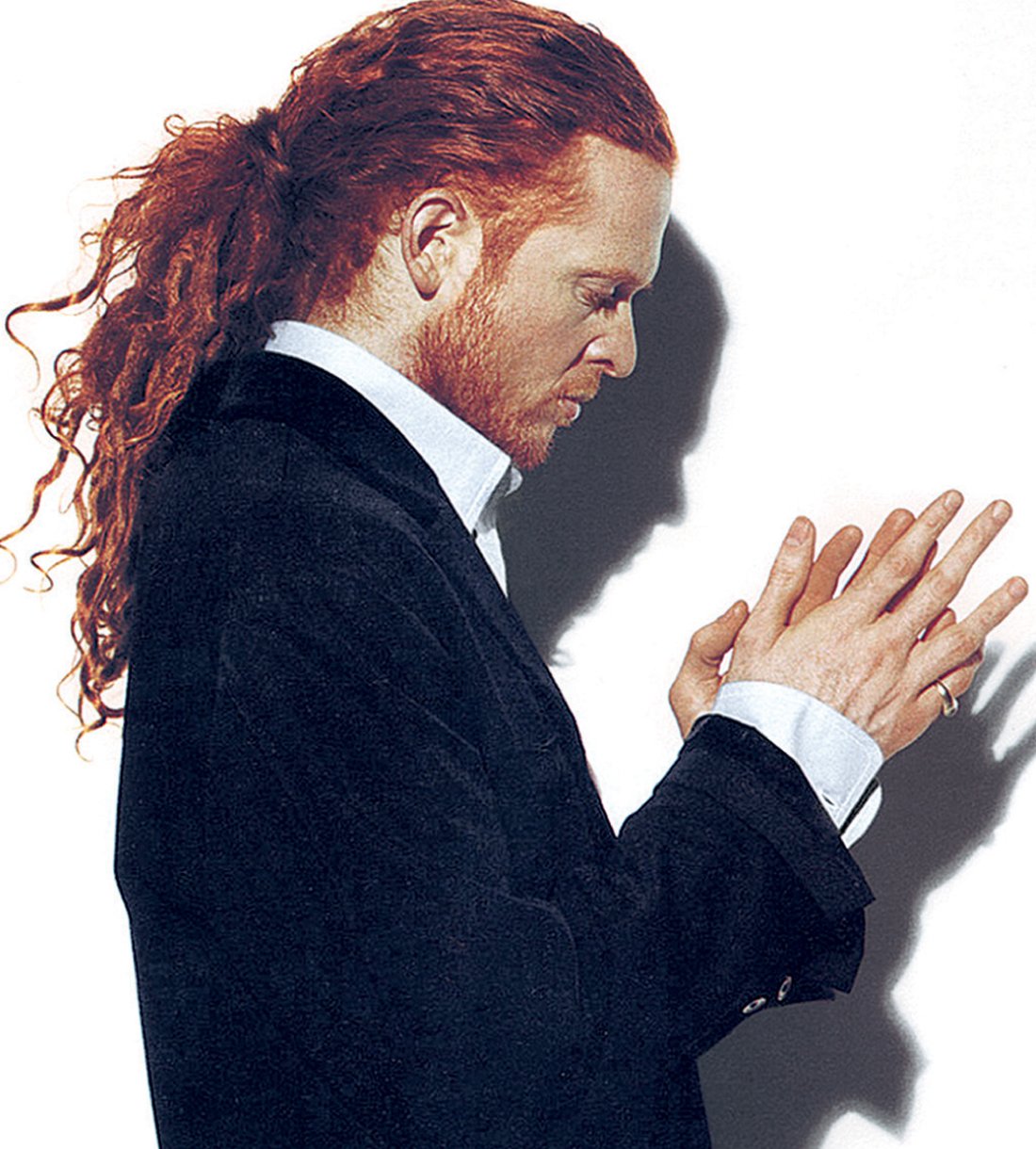
Mick Hucknall

Dynamic lead singer and front man Mick Hucknall sported a head of long, unkempt red hair, which made him the undisputed visual focal point of his group, a Manchester punk band known as The Frantic Elevators. Although they disbanded in 1984, Hucknall started anew with a fresh lineup, performing British soul music.  They chose to adopt the name Red (Hucknall’s nickname, of course), but one night, the promoter of a club where they were performing asked them their name, Hucknall responded, “Red.  Simply Red.”  Sure enough, when they went on stage an hour later, they were introduced as “Simply Red.”  They were amused by the misunderstanding and decided to keep the name, becoming enormously popular in the UK and, to a lesser extent, the US as well.

*********

Gregg Allman

In early 1969, electric guitar virtuoso Duane Allman had finally assembled the powerhouse group he had been looking for: a rock-solid bass player, not one but two drummers, and a second lead guitarist, with whom he could trade solos and build inventive harmonies on blues classics and originals alike. But he was missing a singer, and he knew exactly who he wanted.  “There’s only one guy who can sing in this band, and that’s my baby brother,” Duane said defiantly. Gregg Allman, keyboard player/singer/songwriter, was still under the thumb of a record company in L.A., where the brothers had been pushed into recording two unsatisfying albums as The Hour Glass.  Duane had bailed on the contract in favor of session work back in Georgia, leaving Gregg to appease the label. Duane implored his brother to return, so Gregg hitchhiked home and walked into a rehearsal, where the group dove in to a Muddy Waters song they’d been working on called “Trouble No More,” and Gregg was floored.  Duane told Gregg to sing, and he confided, “I don’t know if I can cut this. I don’t know if I’m good enough.”  The older brother retorted, “You little punk, I told these people all about you, and you’re not gonna come in here and let me down.”  They counted it off and Gregg gave it all he had.  “Afterward, there was a long silence,” Duane said, “and we all knew.”

*********

“Maybellene”

It was May of 1955, and the record business was about to undergo a sea change. In addition to the six major labels that dominated the industry, smaller independent companies were making their mark with lesser known niche artists who enjoyed some success on a regional basis with narrower audiences.  One of these was Chess Records in Chicago, which specialized in blues and R&B music with artists like Muddy Waters, Howlin’ Wolf and Etta James. Label honcho Leonard Chess was eager to find a “crossover” act — a black musician who could take the energy of R&B and make it acceptable to white radio stations and audiences. “What I need,” he mused, “is someone who can successfully merge country music with blues music.” Enter Chuck Berry, who shared the desire to merge the fire of blues with the story-telling of country. He took an old Nashville song called “Ida Red,” gave it a bluesier beat and wrote lyrics about two cars challenging each other. Chess was overjoyed, but changed the title and chorus to “Maybellene,” and within a couple months, it reached #6 on the Top 40 charts as the first mainstream rock ‘n roll song.

*********

“Sittin’ In”

Jim Messina had been the producer (and a musician) on Buffalo Springfield’s last album in 1968, and had then joined forces with Richie Furay to form Poco, producing that group’s first three albums as well. By 1971, he decided to sign a six-album deal with Columbia as an independent producer. The label assigned him to crooner Andy Williams (“it just wasn’t a good fit”), and then tried pairing him with Dan Fogelberg, who wanted to make an album “just like Poco,” but Messina wanted something different. He accepted an offer to groom newcomer Kenny Loggins, who had great songs and a voice but not much else. Messina set him up with a talented band of players, helped him hone his existing songs and co-wrote a few more with him, and ended up singing and playing on many of the tracks as well. By the time the LP was ready for release, Columbia thought Messina was so integral to the project that they chose to call it “Kenny Loggins With Jim Messina Sittin’ In.” He brought name recognition and was included in the cover photo as another card player around a poker table. The solo artist became Loggins & Messina, a duo that lasted for seven successful albums over six years.

*********

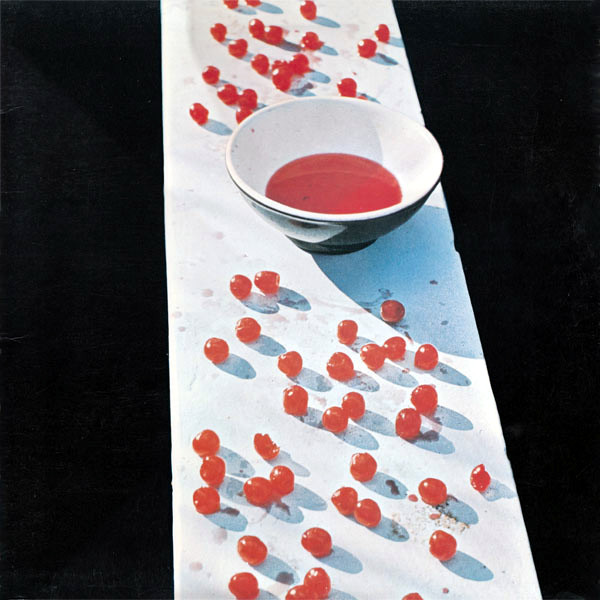
“McCartney”
“John Lennon/Plastic Ono Band”
“All Things Must Pass”
Ringo’s “Beaucoups of Blues”

The Beatles last recorded together in the summer of ’69 for the “Abbey Road” album, but their final album release came in the spring of ’70 with “Let It Be,” even though those tracks were recorded 18 months earlier. Soon enough, solo albums from each Beatle were released. So the public at large, especially those who didn’t come of age until decades later, can be forgiven for sometimes mistaking songs from solo albums as Beatles tracks. Many people think “Maybe I’m Amazed” is a group effort, but it comes from “McCartney,” Paul’s solo debut. Tunes like “What Is Life” and “Isn’t It a Pity” certainly have a Beatlesque flavor to them, but they both appear on George Harrison’s first solo LP, “All Things Must Pass.” John Lennon’s “Working Class Hero” sounds like a lost track from “The White Album” sessions. Even Ringo’s hit “It Don’t Come Easy” (co-written with Harrison) sounds like a Beatles tune. Just for fun, a couple of years ago I assembled two dozen songs from the four musicians’ 1970-1971 solo albums and labeled it “The Lost Beatles Album,” which envisions what might have resulted if they’d stayed together another year or so. I’ve included it as a separate Spotify playlist below.

****************************