So here we are again at another “50 years ago” milestone — August 15-18, 1969 — the weekend that 350,000 people went to the countryside near Bethel, NY, for “three days of  peace and music” at the Woodstock Music & Art Fair.
There have been hundreds of articles and essays written about the event’s epic status as “the apex of the counterculture” and so forth. There have been critical stories about the mud, the traffic tie-ups, the drug overdoses, the insufficient number of toilets, the mess left behind. There have also been positive stories about the enormous communal effort, the can-do spirit of the many volunteers, the great vibes, the absence of violence.
Here at Hack’s Back Pages, I’ve got another approach in mind. I’ve been intrigued that, as far as I can tell, there hasn’t been a truly comprehensive look at Woodstock’s raison d’être — the music!
My research over the past week or so has surprised me. There were SO many more (nearly 15 times more) songs performed during the event’s nearly 72 hours than most people realize, and at least a dozen bands appeared at the festival who were nowhere to be found in either the original “Woodstock” film or the triple-album “Woodstock” soundtrack.
The film was a box office smash, and the album soared to #1 on the charts in 1970. But they included performances of only 21 songs as performed by 17 different artists. 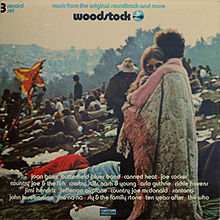 Among them are the tracks most often associated with the festival: Jimi Hendrix‘s astonishing reconfiguration of “The Star Spangled Banner,” Joe Cocker‘s cover of “With a Little Help From My Friends,” Santana‘s “Soul Sacrifice,” Crosby Stills and Nash‘s “Suite: Judy Blue Eyes,” The Who‘s “See Me, Feel Me,” Ten Years After‘s “I’m Going Home,” Sly and the Family Stone‘s “I Want to Take You Higher” and Richie Havens‘ “Freedom.”
(Subsequent albums — “Woodstock Two,” released in 1971, and the 4-CD “Woodstock 25th Anniversary Collection,” released in 1994 — included a few more of the festival’s performances, but they gained only a fraction of the attention that the original album received.)
I’d love to know the selection process used by film director Michael Wadleigh and the decision makers at Cotillion Records regarding which songs and artists made the cut, but I’ve been unable to find much information about that. It’s been said some artists (or their managers) asked for too much money. Others in the lineup were little known and  apparently not of much interest to the film director or album producer. Obviously, Wadleigh chose performances for their visual impact, and the record producer selected a healthy cross section of rock- and folk-oriented bands that more or less accurately reflected the festival lineup.
How strange that Creedence Clearwater Revival, who was hugely popular that year, stormed through an 11-song set but then refused to give permission to include their songs in the film or album. The Grateful Dead also declined to participate in the film and album, allegedly because of a ragged performance. Blood Sweat & Tears, another chart favorite that year, played 10 songs but are glaringly absent from the film and album. Same goes for The Band, who performed 11 tunes.
But I’m here to report that, if you were there from roughly 5:00 pm on Friday until 11:00 am Monday of that landmark weekend, you heard an incredible 310 songs performed by 32 different artists!
I thought my music-loving readers might share my interest in seeing a complete listing of every artist who performed at Woodstock, and the specific songs they played, in the order they were performed (along with some commentary, of course!).
So here we go:
**************
The Friday lineup included eight folk-based artists:
Richie Havens
Pushed into the opening slot because of Sweetwater’s late arrival, Havens valiantly 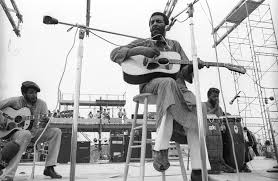 stepped in and proved to be a welcome surprise. Havens was told to continue playing for nearly two hours because many artists scheduled after him were delayed in reaching the festival venue. Having run out of tunes, he ended up improvising on the old spiritual “Motherless Child” that became one of the festival’s anthems, “Freedom.” Said Havens later, “I’d already played every song I knew and I was stalling, asking for more guitar and mic, trying to think of something else to play – and then it just came to me. The establishment was foolish enough to give us all this freedom and we used it in every way we could.”
Havens’ set list: “From the Prison,” “Get Together,” “I’m a Stranger Here,” “High Flying Bird,” “I Can’t Make It Anymore,” “With a Little Help From My Friends,” “Handsome Johnny,” “Strawberry Fields,” “Hey Jude,” “Freedom/Motherless Child”
Sweetwater
A little-known L.A.-based band in the psychedelic folk tradition, Sweetwater’s music was reminiscent of early Jefferson Airplane. I’d never heard of them, and their participation at Woodstock was news to me, as was their music, until I found it Spotify. You won’t find them in the film nor album. A couple samples of their music are included in the playlist below.
Sweetwater’s set list: “Motherless Child,” “Look Out,” “For Pete’s Sake,” “Day Song,” “What’s Wrong,” “My Crystal Spider,” “Two Worlds,” “Why Oh Why,” “Let the Sunshine In,” “Oh Happy Day”
Bert Sommer
Again, I’d never even heard of the guy nor his music. It turns out he’d been in The Left Banke (of “Walk Away Renee” fame) in 1966-67, and then released a few solo LPs, none of which charted. He doesn’t appear in the film nor any version of the album. On Spotify, there’s a 2010 album but nothing from the Woodstock period, so I didn’t include it on my playlist.
Sommers’ set list: “Jennifer,” “The Road to Travel,” “I Wondered Where You’d Be,” “She’s Gone,” “Things Are Going My Way,” “And When It’s Over,” “Jeanette,” “America,” “A Note That Read,” “Smile”
Tim Hardin
Something of a cult favorite in folk music circles, Hardin recorded several albums on different labels in the mid-’60s but had no chart success. Two of his songs, “If I Were a Carpenter” and “Reason to Believe,” were recorded by multiple artists like Bobby Darin, The Four Tops, Rod Stewart and The Carpenters. Hardin is seen in the director’s cut of the film wandering backstage chatting and strumming his guitar, but otherwise, he’s absent from the film and album.
Hardin’s set list: “How Can We Hang On to a Dream?” “Once Touched By a Flame,” “If I Were a Carpenter,” “Reason to Believe,” “You Upset the Grace of Living When You Lie,” “Speak Like a Child,” “Snow White Lady,” “Blues On My Ceiling,” “Simple Song of Freedom,” “Misty Roses”
Ravi Shankar
Shankar, the Indian music guru who had been introduced to American audiences at the 1967 Monterey Pop Festival and through his association with The Beatles, also performed at Woodstock, but I never knew that until recently. I find it puzzling that a short sampling of his 45-minute set couldn’t have been included.
Shankar’s set list: “Raga Puriya-Dhanashri,” “Gat in Sawarital,” “Tabla Solo in Jhaptal,” “Raga Manj Kmahaj”
Melanie
The Queens-based folk singer had a modest career playing Greenwich Village clubs and had released one album before her Woodstock appearance helped boost her visibility. She’s best known for two post-Woodstock hit singles, “Lay Down” (1970) and “Brand New Key” (1972). She is not included in the film or the original LP, but her performances of “Beautiful People” and “Birthday of the Sun” surfaced on “Woodstock Two.”
Melanie’s set list: “Close to It All,” “Momma Momma,” “Beautiful People,” “Animal Crackers,” “Mister Tambourine Man,” “Tuning My Guitar,” “Birthday of the Sun”
Arlo Guthrie
Folk legend Woody Guthrie’s son had achieved fame through his epic story-song “Alice’s Restaurant Massacree” in 1967. He made an appearance in the film, walking with the crowd as he arrived, and making a comment or two from the stage later on. The album and film include his whimsical drug-smuggling tune, “Comin’ Into Los Angeles.”
Guthrie’s set list: “Comin’ Into Los Angeles,” “Wheel of Fortune,” “Walkin’ Down the Line,” “The Story of Moses,” “Oh Mary Don’t You Weep,” “Every Hand in the Land,” “Amazing Grace”
Joan Baez
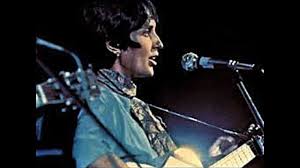 Baez was one of the two or three biggest names in the folk music scene beginning in the early ’60s, which earned her the spot as headliner on the first night. I’ve never been too fond of her warbly voice, but she is widely admired for her earnest performances of civil rights anthems and traditional folk songs, two of which are featured in the film and on the original album (and a third on the “Woodstock Two” album).
Baez’s set list: “Oh Happy Day,””The Last Thing On My Mind,” “I Shall Be Released,” “Joe Hill,” “Sweet Sir Galahad,” “Hickory Wind,” “Drug Store Truck-Drivin’ Man,” “One Day at a Time,” “Take Me Back to the Sweet Sunny South,” “Warm and Tender Love,” “Swing Low, Sweet Chariot,” “We Shall Overcome”
****************
The Saturday lineup (which spilled well over into Sunday morning!) featured 14 mostly rock-oriented acts:
Quill
This regional favorite of the Northeast U.S. secured a slot as opening act on Saturday. To their misfortune, there was a glitch with the video and audio recordings being out of sync for the duration of their brief set, rendering their footage unusable. They ended up disbanding after releasing just one LP after the festival, which is long out of print and unavailable on Spotify.
Quill’s set list: “They Live the Life,” “That’s How I Eat,” “Driftin’,” “Waiting For You”
Country Joe McDonald
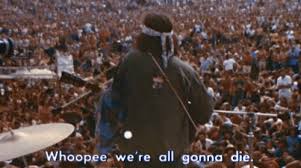 McDonald had been in the vanguard of the Berkeley Free Speech Movement since the mid-’60s and had formed a band to spread the message through psychedelic folk music. I can’t figure out how he managed to get not one but two slots in the festival lineup, first by himself and the next day with his group. His film appearance, performing the notorious “Gimme an F” shout leading into the dark humor of the anti-war protest classic “I-Feel-Like-I’m-Fixin’-to-Die Rag” (using a “follow the bouncing ball” gimmick), is memorable. I could find only the original studio version on Spotify for my playlist, which lacks the festival crowd’s participation and spells “F-I-S-H” instead…
McDonald’s set list: “Janis,” “Donovan’s Reef,” “Heartaches By the Number,” “Ring of Fire,” “Tennessee Stud,” “Rockin’ Around the World,” “Flyin’ High,” “I Seen a Rocket,” “The Fish Cheer/I-Feel-Like-I’m-Fixin’-to-Die Rag”
Santana
At the time, Santana was unknown outside the Bay Area and hadn’t even released an album yet, but promoter Bill Graham made sure they landed a slot at Woodstock. Their sound, incorporating Latin and African polyrhythms into blues-rock structures, ignited 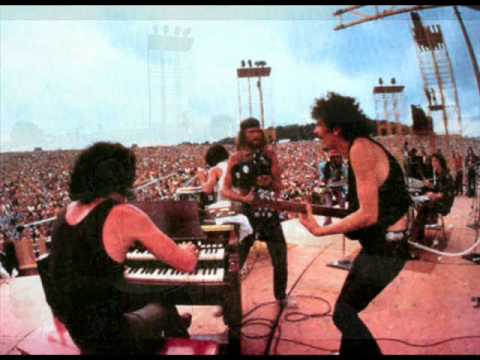 the throng and made them one of the biggest sensations of the festival. Carlos Santana confirmed he had taken mescaline only an hour beforehand, thinking he wasn’t due to perform for another 12 hours. Instead, the band was told to take the stage at 2:00 pm, and he said, “I clung to my guitar like you hold the hand bars of a roller coaster, and then said a prayer and just held on and enjoyed the ride!” Their performance of “Soul Sacrifice” is a high point of the film and the original album.
Santana’s set list: “Waiting,” “Evil Ways,” “You Just Don’t Care,” “Savor,” “Jingo,” “Persuasion,” “Soul Sacrifice,” “Fried Neck Bones and Some Home Fries”
John B. Sebastian
The man behind The Lovin’ Spoonful was there as a member of the audience, but he was pressed into service or a quick 30-minute set that included tunes from his soon-to-be-released solo debut. His tie-dyed clothes and bare feet made him a memorable sight in the film, which used “Younger Generation” over footage of children playing on the festival grounds and stage.
Sebastian’s set list: “How Have You Been,” “Rainbows All Over Your Blues,” “I Had a Dream,” “Darlin’ Be Home Soon,” “Younger Generation”
The Keef Hartley Band
This loose aggregation of British musicians adopted an old-timey music hall feel mixed with blues that alternately charmed and puzzled the festival crowd doing their five-song set. They did not appear in the film nor any version of the album.
KHB’s set list: “Spanish Fly,” “She’s Gone,” “Too Much Thinking,” “Believe in You,” “Halfbreed Medley”
The Incredible String Band
This eclectic West Coast band declined their original lineup slot on Friday night because of the light rain that would play havoc with stringed instruments. Their Saturday afternoon six-song set was received with a collective shrug, and was not included in the film nor album.
ISB’s set list: “Invocation,” “The Letter,” “Gather ‘Round,” “This Moment,” “Come With Me,” “When You Find Out Who You Are”
Canned Heat
Canned Heat emerged from Los Angeles in the mid-’60s, touring relentlessly with their unique brand of blues and boogie music. Their major debut at Monterey and the druggy single “On the Road Again” got them a slot at Woodstock. Their latest single “Going Up the Country” was used during the film’s opening sequence and on the original album, and a live performance of “A Change is Gonna Come/Leavin’ This Town” appears in the director’s cut of the film.
Canned Heat’s set list: “I’m Her Man,” “Going Up the Country,” “A Change is Gonna Come/Leaving This Town,” “Rollin’ Blues,” “Woodstock Boogie,” “On the Road Again”
Mountain
Guitarist Leslie West and former Cream producer/bassist Felix Pappalardi collaborated to form Mountain in June 1969, finding an enthusiastic response from the Woodstock audience, which was only their third gig. They are absent from the film, but two tracks made it onto the “Woodstock Two” LP.
Mountain’s set list: “Blood of the Sun,” “Stormy Monday,” “Theme for an Imaginary Western,” “Long Red,” “Who Am I But You and the Sun,” “Beside the Sea,” “Waiting to Take You Away,” “Dreams of Milk and Honey,” “Southbound Train”
Grateful Dead
You can see Jerry Garcia early in the film, chatting backstage about how the event is “some kind of biblical, mythical, unbelievable scene.” Later, he holds up a joint to the camera and says, memorably, “Marijuana: Exhibit A.” But The Dead does not perform in the film, nor appear on any version of the album. Their 90-minute, jam-oriented set included only five songs (“Turn On Your Love Light” was, by itself, 38 minutes long!).
The Dead’s set list: “St. Stephen,” “Mama Tried,” “Dark Star,” “High Time,” Turn On Your Love Light”
Creedence Clearwater Revival
John Fogerty and Creedence released three classic albums in 1969 (“Bayou Country,” “Green River” and “Willy and the Poor Boys”) and were riding high, but they felt their performance was subpar and subsequently chose not to participate in the film or original album. Years later, they reconsidered and their live recordings were made available, revealing strong, spirited renditions of 11 of their best tunes, four of which appeared on the 25th Anniversary Collection.
Creedence’s set list: “Born on the Bayou,” “Green River,” “Ninety-Nine and a Half Won’t Do,” “Bootleg,” “Commotion,” “Bad Moon Rising,” “Proud Mary,” “I Put a Spell on You,” “Night Time is the Right Time,” “Keep On Chooglin’,” “Susie-Q”
Janis Joplin
Joplin was one of the sensations of the Monterey Pop festival, and she was still a force to reckon with at Woodstock, but curiously, her performances were not included in the original film or album. Her version of “Work Me, Lord” appears in the director’s cut of the film, and three songs were included on the 25th Anniversary Collection.
Joplin’s set list: “Raise Your Hand,” “As Good As You’ve Been to This World,” “To Love Somebody,” “Summertime,” “Try (Just a Little Bit Harder),” “Kozmic Blues,” “I Can’t Turn You Loose,” “Work Me, Lord,” “Piece of My Heart,” “Ball and Chain”
Sly & the Family Stone
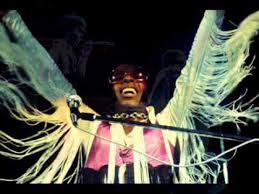 Widely regarded as one of the highlights of the festival was the energetic R&B set by Sly Stone and Company. The 15-minute medley of “Dance to the Music,” “Music Lover” and “I Want to Take You Higher” kept the audience on their feet despite the 3:30-4:30 a.m. time slot. The performance is pivotal to the film as well as the original album.
Sly’s set list: “M’Lady,” “Sing a Simple Song,” “You Can Make It If You Try,” “Everyday People,” “Dance to the Music,” “Music Lover,” “I Want to Take You Higher,” “Love City,” “Stand!”
The Who
 Largely unknown in America before their explosive debut at Monterey in 1967, The Who had greatly broadened their audience through the recent release of the “Tommy” LP and “Pinball Wizard” single only months before the festival. They performed at 5:00 am, doing most of “Tommy” in their 90-minute set. The “See Me, Feel Me” portion of “We’re Not Gonna Take It” was a prominent moment of the film and album, and “Summertime Blues” appeared in the director’s cut.
The Who’s set list: “Heaven and Hell,” “I Can’t Explain,” “It’s a Boy,” “1921,” “Amazing Journey,” “Sparks,” “Eyesight to the Blind,” “Christmas,” “The Acid Queen,” “Do You Think It’s Alright,” “Fiddle About,” “Pinball Wizard,” “There’s a Doctor I’ve Found,” “Go to the Mirror,” “Smash the Mirror,” “I’m Free,” “Tommy’s Holiday Camp,” “We’re Not Gonna Take It,” “Summertime Blues,” “Shakin’ All Over,” “My Generation”
Jefferson Airplane
Slated as the headliner on Saturday night, The Airplane didn’t go on until 7:00 a.m. Sunday and were consequently not exactly on their best game. They’re not in the original film and were limited to one performance (“Volunteers”) on the original album, but they appear in the director’s cut doing “Won’t You Try/Saturday Afternoon.” Five songs were later included on the 25th Anniversary Collection box set.
The Airplane’s set list: “The Other Side of This Life,” “Somebody to Love,” “3/5ths of a Mile in 10 Seconds,” “Won’t You Try/Saturday Afternoon,” “Eskimo Blue Day,” “Plastic Fantastic Lover,” “Wooden Ships,” “Uncle Sam Blues,” “Volunteers,” “The Ballad of You and Me and Pooneil,” “Come Back Baby,” “White Rabbit,” “The House at Pooneil Corners”
**************
The Sunday lineup (which lasted until nearly 12:00 noon Monday!) featured 10 artists from across the spectrum of rock-folk genres:
Joe Cocker
 Cocker opened the third day’s lineup with a 90-minute set, climaxed by the epic cover of The Beatles tune “With a Little Help From My Friends,” which is a highlight of both the film and the original album.
Cocker’s set list: “Rockhouse,” “Who Knows What Tomorrow May Bring,” “Dear Landlord,” “Something Coming On,” “Do I Still Figure In Your Life,” “Feelin’ Alright,” “Just Like a Woman,” “Let’s Go Get Stoned,” “I Don’t Need a Doctor,” “I Shall Be Released,” “Hitchcock Railway,” “Nothing to Say,” “With a Little Help From My Friends”
Country Joe and The Fish
Following the huge thunderstorm that soaked the crowd and delayed the show for more than an hour, McDonald returned with another set of different songs, one of which, a forgettable ditty called “Rock and Soul Music,” appeared in the film and on the album.
Joe and The Fish’s set list: “Rock and Soul Music,” “Love,” “Not So Sweet Martha Lorraine,” Sing, Sing, Sing,” “Summer Dresses,” “Friend, Lover Woman, Wife,” “Silver and Gold,” “Maria,” “The Love Machine,” “Ever Since You Told Me That You Love Me (I’m a Nut),” “Crystal Blues”
Ten Years After
 Alvin Lee had established himself as one of the fastest guitarists in the business, and his 60-minute set with his band Ten Years After didn’t disappoint. The 10-minute performance of “I’m Goin’ Home” is a key moment in both the film and the original album.
Ten Years After: “Spoonful,” “Good Morning Little School Girl,” “Hobbit,” “I Can’t Keep From Crying Sometimes,” “Help Me,” “I’m Goin’ Home”
The Band
Robbie Robertson, Levon Helm and the boys were residents of the burgeoning music scene in the actual community of Woodstock (60 miles from the eventual festival site in Bethel), and had been Bob Dylan’s backing band for a few years before going out on their own in 1968. Their one-hour set was strong, but they felt slighted when the director offered them only half their standard fee for the rights to use the concert footage. They didn’t appear on the album either, although three tracks did appear on the 25th Anniversary Collection.
The Band’s set list: “Chest Fever,” “Don’t Do It,” “Tears of Rage,” “We Can Talk,” “Long Black Veil,” “Don’t Ya Tell Henry,” “Ain’t No More Cane,” “This Wheel’s On Fire,” “I Shall Be Released,” “The Weight,” “Loving You is Sweeter Than Ever”
Johnny Winter
Blues guitarist Winter emerged from Texas in 1968 just in time to catch the attention of the folks at Woodstock. Winter performed a sizzling eight-song set with help from younger brother Edgar (who went on to greater fame in the early ’70s), but he was not featured in the film or the album. Winter’s manager had opted for a flat fee rather than be in the movie because, as Winter wrote in his autobiography, “He thought it was gonna be a drag, so he didn’t want us to be on it. Of course, it helped a lot of people’s careers. I wish I could have been in it. Later on he admitted he fucked up.”
Winter’s set list: “Mama, Talk To Your Daughter,” “Leland Mississippi Blues,” “Mean Town Blues,” “You Done Lost Your Good Thing Now/Mean Mistreater,” “I Can’t Stand It,” “Tobacco Road,” “Tell the Truth,” “Johnny B. Goode”
Blood, Sweat and Tears
The band was riding high on the singles and album charts at the time, yet the group’s manager decided not to allow the band to be filmed, partly because the horn section was having trouble staying in tune because of the humidity that night, so they’re not in the movie. Nor does BS&T appear on the original LP, but some of the songs from their one-hour set surfaced many years later on other releases.
BS&T’s set list: “More and More,” “Just One Smile,” “Something Comin’ On,” “I Love You More Than You’ll Ever Know,” “Spinning Wheel,” “Sometimes in Winter,” “Smiling Phases,” “God Bless the Child,” “And When I Die,” “You’ve Made Me So Very Happy”
Crosby, Stills, Nash & Young
The group, performing for only the second time (“We’re scared shitless”), won the hearts  of the crowd, even at 4:00 am Monday morning. They performed without Neil Young for a half-dozen songs, and “Judy Blue Eyes” (complete with out-of-tune acoustic guitar but on-the-money harmonies) became a film and album highlight. Young joined them for the electric numbers but refused to be filmed, so he’s absent from the movie. A few tracks with Young appeared on the original LP (“Sea of Madness” in its only version), and additional songs showed up on “Woodstock Two.” The studio version of “Long Time Gone” is used in the film’s opening sequence, and CSN&Y’s rocking rendition of Joni Mitchell’s haunting song “Woodstock,” released in March 1970 on their “Deja Vu” LP, was used over the closing credits.
CSN&Y’s set list: “Suite: Judy Blue Eyes,” “Blackbird,” “Helplessly Hoping,” “Guinnevere,” “Marrakesh Express,” “4+20,” “Mr Soul,” “I’m Wonderin’,” “You Don’t Have to Cry,” “Pre-Road Downs,” “Long Time Gone,” “Bluebird Revisited,” “Sea of Madness,” “Wooden Ships,” “Find the Cost of Freedom,” “49 Bye Byes”
Paul Butterfield Blues Band
The Chicago-based blues band played for an hour as the sun was coming up Monday. Their performance of “Love March” appears on the original album but they’re not in the film, although Butterfield is interviewed at one point about what makes a successful festival (“Organization”).
PBB’s set list: “Born Under a Bad Sign,” “No Amount of Loving,” “Driftin’,” “Morning Sunrise,” “All in a Day,” “Love March,” “Everything’s Gonna Be Alright”
Sha Na Na
Simultaneously reviving and parodying Fifties music was this NY-based band’s calling card from the get-go. Appearing as the second-to-last act of the festival, Sha Na Na’s silly but energetic rendition of “At the Hop” appeared in the movie and on the original LP.
She Na Na’s set list: “Get a Job,” “Come Go With Me,” “Silhouettes,” “Teen Angel,” “Marie’s the Name (His Latest Flame),” “Wipe Out,” “Book of Love,” “Teenager in Love,” “Little Darlin’,” “At the Hop,” “Duke of Earl”
Jimi Hendrix
The festival’s best paid and most revered performer went on so late — 9:00 am Monday  morning, when the exhausted crowd of 350,000 had dwindled to only 30,000 — that his set was almost anticlimactic. But his incendiary take on our National Anthem, in which he made his guitar mimic the screaming sounds of warfare, became perhaps Woodstock’s most memorable performance of all.
Hendrix’s set list: “Message to Love,” “Hear My Train A-Comin’,” “Spanish Castle Music,” “Red House,” “Lover Man,” “Foxy Lady,” “Jam Back at the House,” “Isabella,” “Gypsy Woman/Aware of Love,” “Fire,” Voodoo Child (Slight Return)/Steppin’ Stone,” “The Star-Spangled Banner,” “Purple Haze,” “Villanova Junction”
***************
The playlist below is not as comprehensive as I would like because some tracks I was looking for weren’t available on Spotify. For some reason the original “Woodstock” LP isn’t there in its entirety, although many tracks could be found elsewhere. Sometimes, I had to substitute another version of a crucial song. But I did the best I could!
 aerobics workout while leading his band of septugenarians through a kickass two-hour performance of classic rock and roll?
 monster guitar chords just when you thought he might doze off. But for much of the night, he seemed bored and uncaring, and more than happy to turn over most of the guitar duties to his younger teammate, the 71-year-old Ronnie Wood.
 don’t know who the art director is who was responsible for the spectacular graphics and visual content of these displays, but if you ask me, he should be paid as much as Jagger and Company. The audience (unless you were those fortunate few in the first 30-40 rows) spent the entire evening watching the concert via the screens, and believe it or not, this was not a bad thing. Unlike the simplistic, average-quality visuals I’ve been forced to watch at many other stadium shows, these were state-of-the-art, presenting the four featured players in as favorable a light as you could possibly imagine.
 than the silly cherry pickers and inflatable penises The Stones previously trotted out as concert spectacles. I had been a witness to both of these laughable visual props at the 1981 “Tattoo You” arena tour and the 1989 “Steel Wheels” stadium tour, respectively, and I can tell you I would have much preferred these quality screen shots of the band members doing their thing.
 The third era of Stones music I’ll describe as the erratic years, when the group’s records meandered between average ambivalence (“Goat’s Head Soup,” “Black and Blue”) and meaty masterpieces (“Some Girls,” “Tattoo You”), and this wild swing in quality was a frustrating time for Stones fans. From this period (1973-1986), last week’s show included only three selections: The not-to-be-denied disco stomp “Miss You,” Richards’ defiant “Before They Make Me Run” and their final #1 hit single, 1981’s “Start Me Up.”
 Understand, I’m not complaining. It was fun to hear Jagger make references to L.A. landmarks and neighborhoods like “Thursday night’s turtle races at Brennan’s” (in Marina Del Rey), or unsuccessfully searching for their star on Hollywood Boulevard (inexplicably, there isn’t one, guys), or being unable to get a reservation at Spago’s (it’s been closed since 2001). And we were all reminded of our mortality when he said it has been 55 years since The Stones’ first Los Angeles concert, and 25 years since they’d last played the Rose Bowl.
 Hack's Back Pages