What the hell does that even mean?

It’s a funny thing, how songs we’ve heard a thousand times, songs we’ve sung along to, songs we’ve heard performed in concert, have lyrics that include words we probably don’t understand, but we sing along with them anyway.
There are plenty of examples of songs with lyrics we “mis-hear” — we think they’re singing A when in fact they’re singing B — but I’m talking about lyrics that include words we simply don’t recognize.  They’re unusual, esoteric, rarely used.  But they’re right there in the chorus of a #1 song, so we just go along with them.

Artists didn’t start including lyrics on the album sleeve until the late ’60s/early ’70s, and many bands simply couldn’t be bothered, or wouldn’t pay the extra bucks required to reprint them.  So we simply weren’t sure what we were hearing.  And there was no Internet to check to find out exactly what the words were. Until now.

Today, readers, we’re going to solve some age-old questions.  We’re going to provide definitions for words you’ve been singing since you were young but never really wrapped your head around.

Just so you can hear these words again in the context of their songs, there’s a Spotify playlist at the end.

**************************

“You had one eye in the mirror as you watched yourself gavotte…“
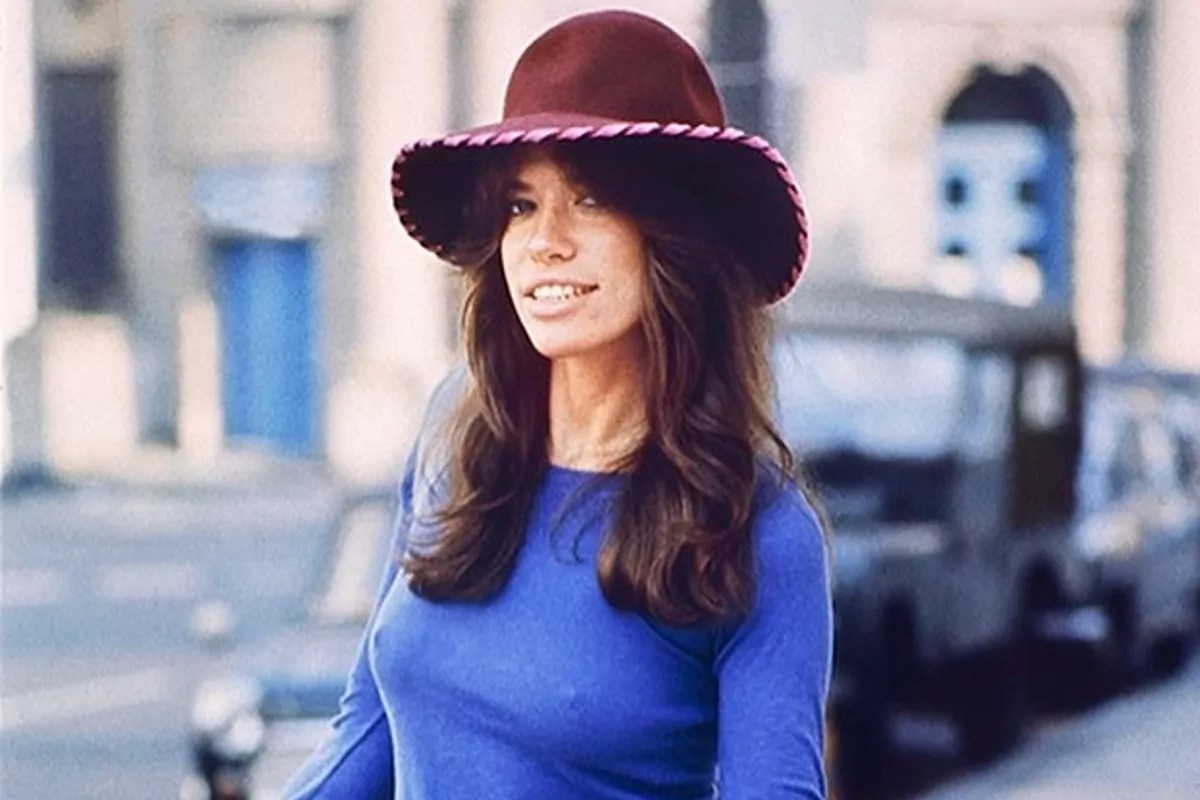
From Carly Simon’s huge hit “You’re So Vain” in 1972, this line perfectly describes the behavior of the vain egotist who is far more interested in how he looks than in anyone or anything around him.  But what of this term “gavotte”?  It’s a French word for a flamboyant folk dance, wherein the dancer holds one hand aloft with the other on the hip in a very showy display that aptly suits the “it’s all about me” attitude of the vainglorious person described in the song.  (And by the way, who is the song about?  For many years, Simon steadfastly refused to say, but recently admitted that the second verse is about her dalliance with actor Warren Beatty.  The rest, she says, is a composite of several other egotists she knew.)

***************************

“On a dark desert highway, cool wind in my hair, warm smell of colitas rising up through the air…“

When Don Henley was fashioning the lyrics to Don Felder’s melody that became The Eagles’ 1977 signature song “Hotel California,” he chose to employ “colitas,” a term he’d heard a couple of Latino road crew members using.  Not to be confused with the intestinal disorder colitis, the word was at first thought to be some sort of desert flower, and Henley liked the way the word sounded rolling off his tongue.  But he liked it even more when he realized it was a Mexican word meaning “little buds” — specifically, small buds from marijuana plants.  In a song that summarized the hedonistic sex-and-drugs lifestyle of Los Angeles in the late ’70s, it was a clever inside joke.

****************************

“Some people call me Maurice, ’cause I speak of the pompitous of love…”
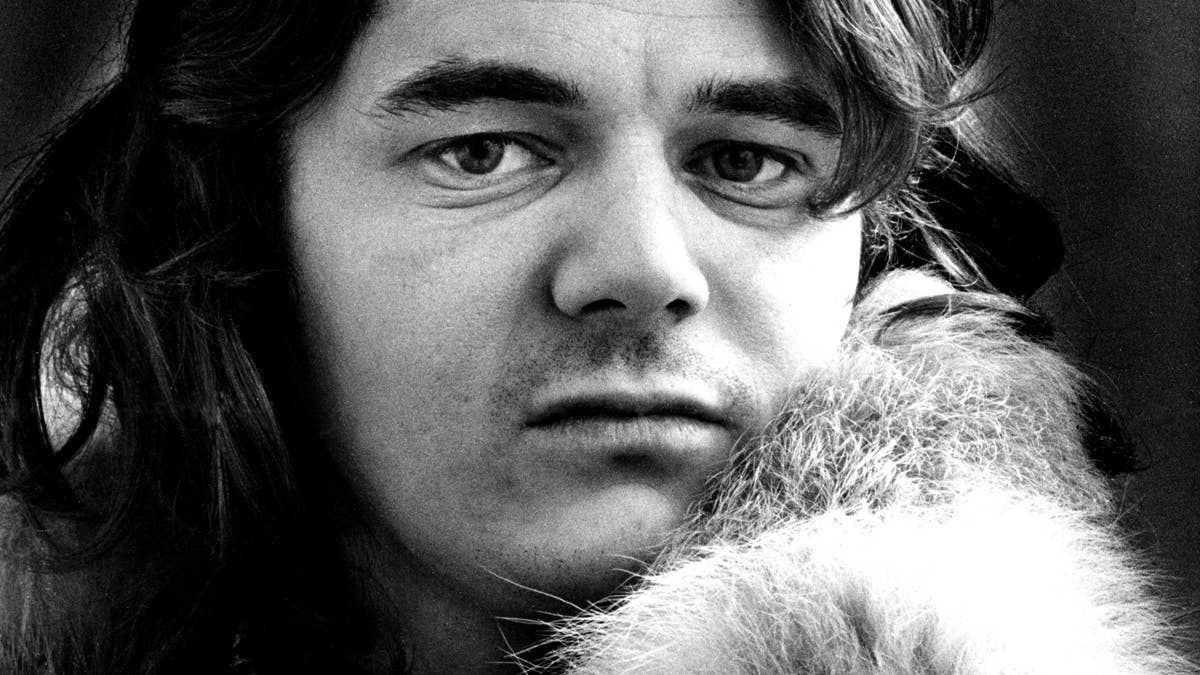
Steve Miller has made a career of lifting musical and lyrical passages from other songs, claiming “artistic license” to keep the copyright lawyers at bay.  For the #1 hit “The Joker” from 1973, Miller used “pompitous” from an old ’50s tune by Vernon Green called “The Letter” (no relation to the #1 Box Tops/Joe Cocker hit from 1967/1970), which includes this line:  “Oh my darling, let me whisper sweet words of pizmotality and discuss the puppetutes of love.”  Let’s ignore “pizmotality” for now, and focus on how Green has said he coined the term “puppetutes,” meaning “a secret paper-doll fantasy girl who would be my everything and bear my children.”  Apparently Miller mis-heard “puppetutes” as “pompitous,” and it has since become a minor pop culture reference — there’s even a 1996 Jon Cryer movie called “The Pompitous of Love.”

***************************

“It’s no use, he sees her, he starts to shake and cough, just like the old man in that book by Nabokov…”
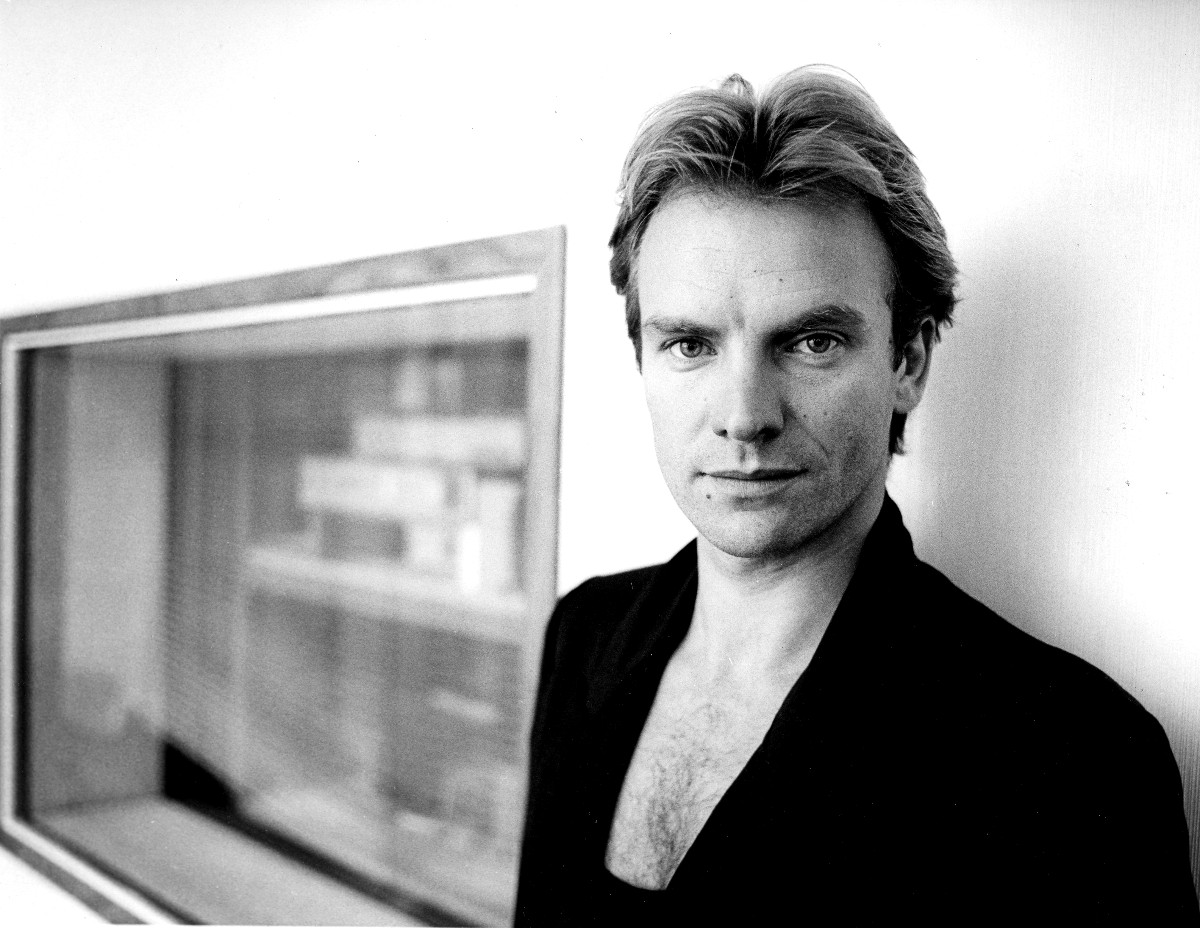
Before becoming a founding member of The Police, bassist/songwriter/singer Sting had been an English teacher, and he knew of professors who had unwisely pursued trysts with underage schoolgirls. He thought the topic might generate a provocative set of lyrics for a rock song, and “Don’t Stand So Close to Me” went on to become one of the group’s biggest hits (#1 in England, #10 in the US, in 1980). Sting was also well aware of the famous 1955 novel “Lolita,” written by Russian author Vladimir Nabokov, which covered this same taboo subject, so Sting managed to insert the author’s name into the lyrics.

****************************

“Back to back, sacroiliac, spineless movement and a wild attack…”

Blondie, led by singer Debbie Harry and guitarist Chris Stein, is considered one of the pioneers of New Wave coming out of New York in the mid-’70s, incorporating a mixture of punk, disco, pop, reggae and funk. In 1980, after they’d registered three #1 singles on US pop charts, Harry and Stein put together their first attempt at hip-hop with “Rapture,” using a disco beat with lyrics delivered mostly in a rap format. The words describe a crowded hip-hip dance floor in the Bronx (“face to face, dance cheek to cheek”), and in the first section, Harry sings the lyrics, mentioning “back to back” and “spineless movement.” Most pop music listeners are perhaps unfamiliar with the term “sacroiliac,” but it’s the name given to a pair of joints connecting the base of the spine to the hip bones, absorbing shock and transferring upper body weight to the legs. Pretty important on the dance floor!

******************************

“He just smiled and gave me a vegemite sandwich, and he said, I come from a land down under, where beer does flow and men chunder…”
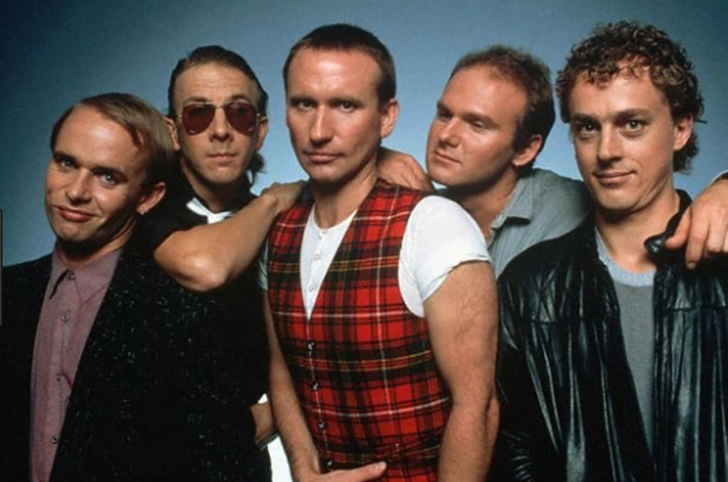
I always thought “vegemite” was just a word manufactured by Men At Work songwriter Colin Hay for a verse of his band’s 1983 #1 hit “Down Under.”  But no, vegemite is a real thing, at least in Australia.  It’s a sort of edible paste (think liver paté) made of brewers yeast, vegetables, wheat, and spices.  Aussies regularly slather it on toast, hide it in pastries, or make whole sandwiches out of it.  Sounds questionable to me, but it’s quite popular there.  It’s not a term you’re likely to hear in the States anytime soon… “Chunder,” on the other hand, is a fabulous verb you’d think the college fraternity crowd would have adopted by now.  It’s a synonym for throwing up.

*****************************

“I see a little silhouette of a man!  Scaramouche!  Scaramouche! Will you do the fandango?…“
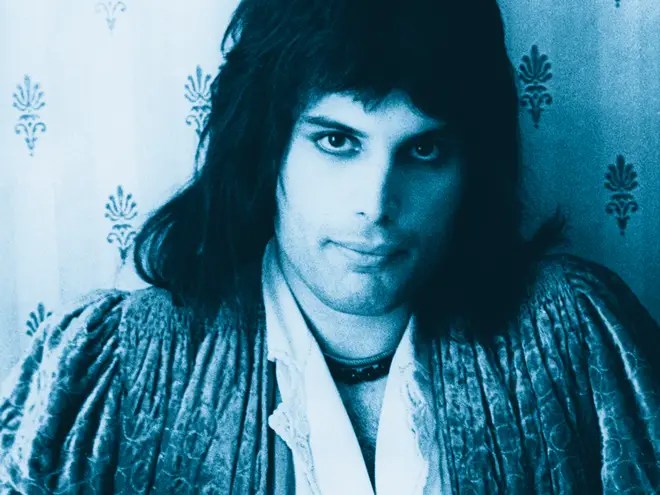
Who, or what, is Scaramouche?  No one seemed to know when Queen first released the epic “Bohemian Rhapsody” on its “A Night at the Opera” album in 1975.  Devotees of Italian opera and comedic theater knew very well, but your average rock ‘n roller didn’t have a clue.  Scaramouche, as it turns out, was a fictional clown character often seen in “Punch and Judy” puppet theater, a simple-minded fop who would be socked in the face or beheaded for his idiotic comments.  Songwriter Freddie Mercury said he chose to include the name in the song because he liked the way it sounded — memorable and bombastic.  (And “fandango,” by the way, is a lively Spanish dance involving castanets and tambourine.)

*****************************

“If there’s a bustle in your hedgerow, don’t be alarmed now…”
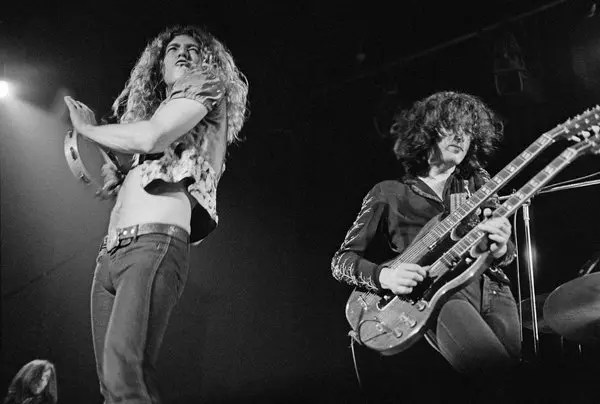
Americans were puzzled by this phrase in Led Zeppelin’s 1971 anthem “Stairway to Heaven,” but Brits caught on quickly enough.  Hedgerows are, literally, rows of hedges that were planted intentionally across the English countryside as property borders and, in times of war, as natural barricades to deter advancing armies.  A “bustle” (as in “the hustle-bustle of the crowd”) is simply a commotion. Therefore, if there’s a bustle in your hedgerow, well, you’d best be careful, for it might be an enemy soldier or some sort of angry animal.  On the other hand, perhaps it’s merely what lyricist Robert Plant said in the following line — a servant doing “just a spring clean for the May Queen.”

******************************

“Oleanders growing outside her door, soon they’re gonna be in bloom up in Annandale…”
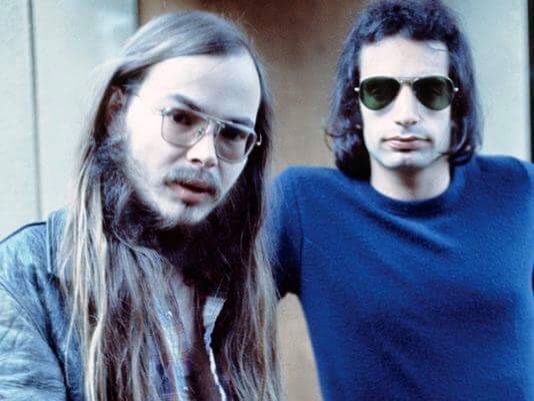
Steely Dan was notorious for obscure lyrical references, and “oleanders” from the 1973 classic “My Old School” is but one example.  It’s a pretty but toxic flowering plant often used in median strips of highways in the American Southwest because of its hardiness and vivid colors.  Annandale-on-Hudson is a community outside New York City where Donald Fagen and Walter Becker first met while attending Bard College there. Oleanders aren’t likely to grow or flourish in that area, so the songwriters decided to put them there as a sort of absurd contradiction.

******************************

“Colour sky rose carmethene, alazarin crimson, wear your love like heaven…”
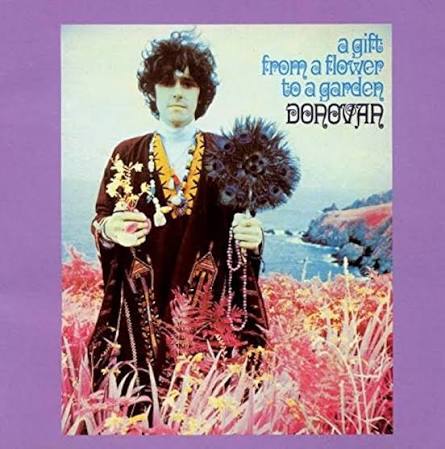
From 1965 to the early 1970s, Donovan Leitch enjoyed a very successful career in the US and his native UK as a poet and singer-songwriter, adopting a gently psychedelic flower-child persona. In addition to his skills as a musician and songwriter, Donovan also enjoyed the art of painting. In his trippy single from 1967, “Wear Your Love Like Heaven” (a #23 hit on US pop charts that year), he mentioned a number of dyes and pigments he had run across in his work, deciding “carmethene” and “alazarin” sounded intriguing when used to describe the colors of the sky as sunset approached.

******************************

“Draw me ’round your fruitcage, I will be your honeybee, open up your fruitcage, where the fruit is as sweet as can be…”
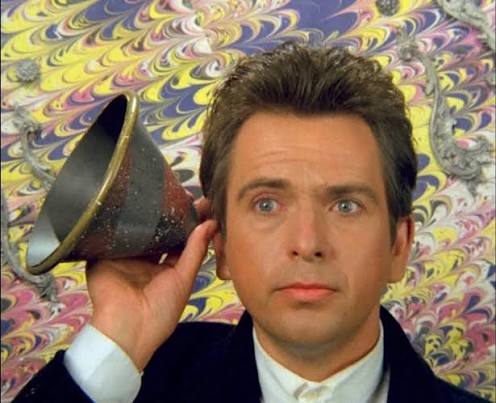
When art rocker Peter Gabriel hit his commercial peak in 1986 with his “So” album and worldwide #1 hit “Sledgehammer,” his lyrics were full of double entendres with subtle sexual references.  This lyric is clearly among his most blatant:  “Fruitcage” is, in fact, British slang for female private parts.  So now you know.  And you’ve probably figured out what he means by “sledgehammer” now as well…

*******************************

The Beatles — specifically John Lennon — loved to use arcane, vague vocabulary that added mystique and left his songs open to interpretation.  Here are four examples of several he used in his most inventive work.

“Semolina pilchard, climbing up the Eiffel Tower…”

“Semolina” are the hard grains left over after the milling of flour.  “Pilchard” is a small, oily herring fish.  In his mostly nonsensical “I Am the Walrus,” Lennon was deliberately writing lyrics that would baffle all the pundits who were trying to find hidden meanings in Beatles songs.  He paired “semolina” and “pilchard” together for no reason other than they sounded interesting to him — although he added years later that “pilchard” is close to “Pilcher,” or Det. Sgt. Normal Pilcher, the London drug cop who zealously slapped drug possession charges on rock stars (including Lennon) in the ’60s.

“Picture yourself on a train in a station with plasticine porters with looking-glass ties…”

“Plasticine,” invented in England in the 1890s, is a type of modeling clay made of calcium salts, petroleum jelly and acids, meant for use by artists who needed their material to stay malleable so they could reshape and reuse it when necessary.  It’s known best in the U.S. as the medium used in stop-motion animation (“claymation”) projects.  Lennon liked it for use in “Lucy in the Sky With Diamonds” as an adjective describing what some people might look like to someone tripping on LSD.

“Over men and horses, hoops and garters, lastly through a hogshead of real fire…”

A “hogshead” is not a hog’s head at all, but a unit of measure, typically for liquids like wine or distilled spirits but also for food commodities like sugar.  It’s about the size of a large pickle barrel and equals roughly 80 gallons.  In the 1967 “Sgt. Pepper” tune “Being For the Benefit of Mr. Kite,” it referred to the size of the barrel ring of fire someone might jump through in a feat of derring-do.

“The man in the crowd with the multi-coloured mirrors on his hobnail boots…”

“Hobnail” is a fastener that was used among cobblers in the design of workboots for the military and farm laborers.  It holds the sole firmly to the shoe and provides traction in uneven soil.  Why “the man in the crowd” in the 1968 song “Happiness is a Warm Gun” might attach multicolored mirrors to his hobnail boots is another matter.  Lennon said he and his schoolmates would sometimes put mirrors on their shoes so they could look up the skirts of unsuspecting females.

******************************

Do you recall any other strange terms used in hit songs that you’ve never quite understood?  Let me know about them, and I’ll see if I can ferret out the hidden meaning behind them.  Although some may have no meaning at all:  Anyone care to take a stab at “Sham-a-lam-a-ding-dong,” “Wop-bop-a-loo-bop, a-lop-bam-boom” or “Goo goo g’joob“?

******************************
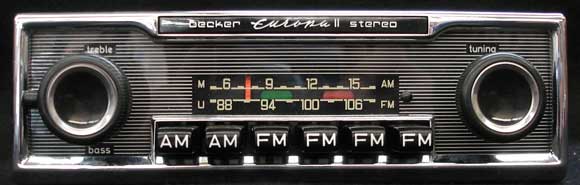
When I was young, I’d listen to the radio

I’ve been writing this blog for 11 years, writing about the great musicians of the classic rock era and the amazing music they made. I’ve compiled many dozens of themed playlists — songs about driving, food, summer, breaking up, protests, sex, and on and on — but I recently discovered a glaring, unintentional exclusion: I’ve neglected to write a piece on songs about radio!

Seeing as how important radio airplay is (or used to be) to the success of a song or album, this is a rather serious omission. But it’s never too late to remedy that. I did my research and found a broad array of songs that focus on radio listening habits, AM or FM, the state of radio programming, and the importance of radio in our lives.

Radio used to be absolutely crucial to every music lover. In the ’50s and ’60s, AM radio was the ONLY way to hear your favorite song unless you forked over your allowance to buy the single or, heaven forbid, an entire album. It was certainly the only way to hear music in your car, before tape players, CD players and streaming services came along to make radio seem almost obsolete.

In Nashville, where I live now, there’s an excellent independent FM radio station called “Lightning 100” that plays a marvelously eclectic mix of old and new music that cuts across multiple genres. It’s the kind of station that used to dominate airwaves in every major American city in the 1970s before corporate ownership arrived, and with it came homogenization, predictability and a dearth of boundary-stretching musical offerings.

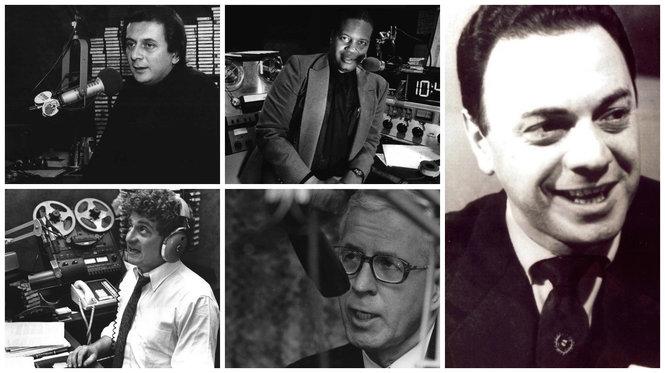
Cleveland’s radio personalities: Kid Leo, Billy Bass, John Lanigan, Bill Randle, Alan Freed

Radio also gave us disc jockeys, those quirky on-air personalities we loved (or loved to hate) who soothed us and provoked us, shamelessly promoted and coolly interviewed musicians about the tunes they were playing for us. Late night, drive time, morning zoo, all sorts of characters around the clock, 24 hours a day. Where I grew up in Cleveland, we had a rich history of influential DJs whose names have since become legendary well outside the region.

Rock musicians have done a fine job of writing tunes about the influence of radio and how its impact has changed (pretty much for the worse) in more recent times. Below I’ve selected 21 songs that explore the world of radio, with some interesting backstories about how and why they were written. The Spotify playlist at the end is, in my humble view, one of my better efforts.

Listen up!

***************************
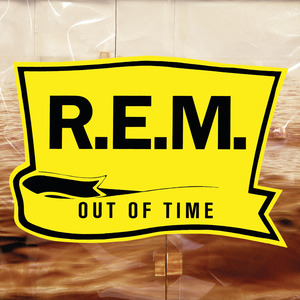
“Radio Song,” R.E.M., 1991

This has always been one of my favorite tracks by the Athens, Georgia-based band. It’s the opening tune on the group’s platinum LP “Out of Time,” their first US #1, which catapulted them from cult status to international stars. Although “Losing My Religion” and “Shiny Happy People” got most of the attention, “Radio Song” grabbed me immediately, with its “adventurous amalgam of jangly funk and sugary-sweet pop balladry,” as one critic described it. Michael Stipe’s commentary on the state of radio in the early ’90s hits hard: “Hey, I can’t find nothing on the radio, /Ah, yo, turn to that station, /The world is collapsing around our ears, I turned up the radio but I can’t hear it, /It’s that same sing-song, and the DJ sucks, /t makes me sad…”

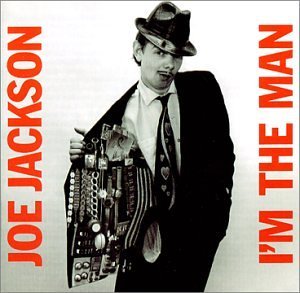
“On Your Radio,” Joe Jackson, 1979

Jackson confessed that he had been bullied and teased as a youngster growing up in England, and when he developed his musical talent enough to earn a record contract and begin a public career, one of the early songs he wrote was “On Your Radio,” a scathing put-down of his past enemies. Singer Suzanne Vega, who worked on a couple of projects with Jackson in the 1990s, said, “This is the ultimate revenge song of fame. Who hasn’t been there and had those fantasies of rising above all the people who oppress you? Many people hope for the chance to respond to those who wronged us, and songwriters get to do it on the radio.” “I got your names and your numbers filed away, /See me, hear me, don’t you know you can’t get near me, /You can only hope to hear me on your radio…”

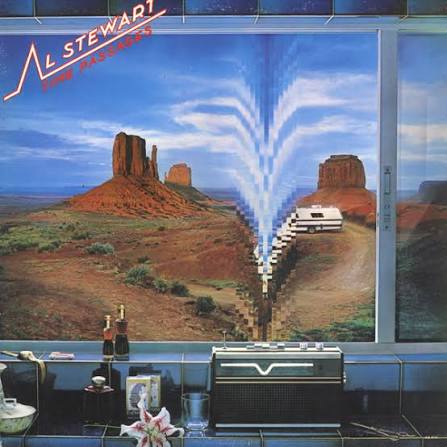
“Song on the Radio,” Al Stewart, 1978

Since 1969, Stewart had been releasing his unique brand of story-songs, often with historical references and romantic characters. His 1976 hit “Year of the Cat” captured our imaginations, reaching #7 on US pop charts. As he was writing songs for his 1978 follow-up album “Time Passages,” he said, “The folks at Arista Records were asking for a mid-tempo ballad with a saxophone that could be played on the radio so, very tongue-in-cheek, I wrote ‘Song on the Radio.’ I was actually joking, but they put it out as a single and it made the Top 30, so I guess the joke was on me!” The song seems to be about discovering a woman whose remarkable qualities are unnoticed by others, perhaps by her own design. Like many of Stewart’s songs, this one takes place while the narrator is traveling: “I was making my way through the wasteland the road into town passes through, /I was changing the radio stations with my mind on you… /We’ll go collecting the days, putting the moments away, /You’re on my mind like a song on the radio…”

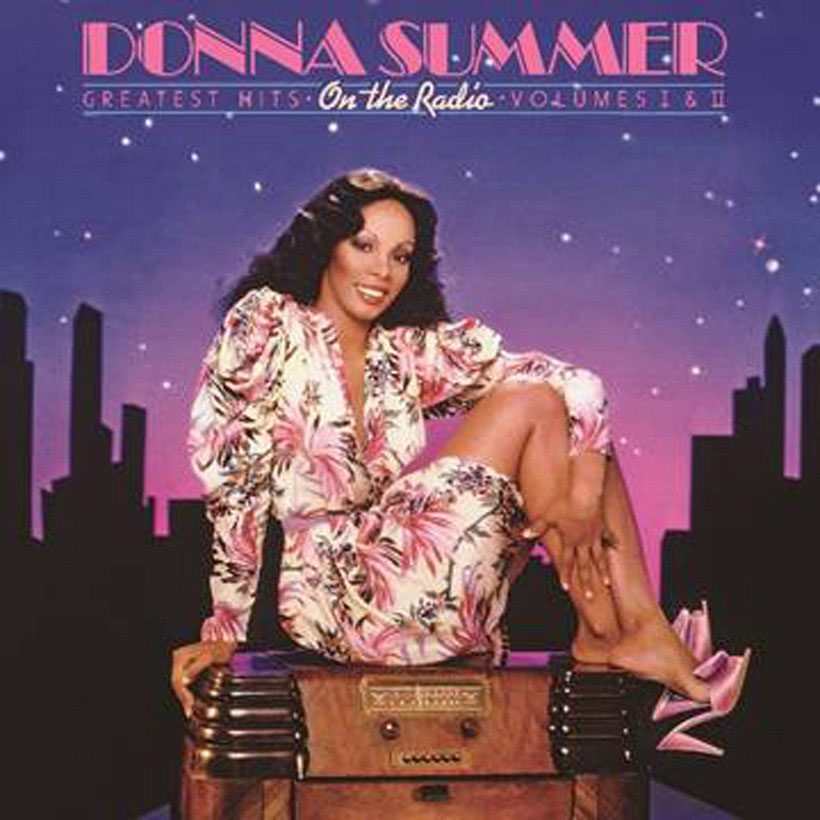
“On the Radio,” Donna Summer, 1979

Donna Summer wrote this disco hit with record producer Giorgio Moroder for the soundtrack of the 1980 teen girl coming-of-age film “Foxes” starring a young Jodie Foster, Scott Baio and Runaways singer Cherie Currie. In the song, Summer is pining for a lost love and hopes to reconnect by broadcasting her feelings on the radio. Bruce Sudano, who worked with Summer before marrying her and remaining her husband until her death in 2012, said, “Donna could be very simple in her lyrics or she could be esoteric. But basically, the story of ‘On The Radio’ is somebody hoping that the song on the radio will let the man know that she is in love with him.” In addition to the “Foxes” soundtrack, “On the Radio” was also the featured new track on Summer’s “Greatest Hits Volumes I and II” double LP, and a #5 hit single in early 1980. “I never told a soul just how I’ve been feeling over you, /But they said it really loud, they said it on the air, /On the radio, whoa-oh-oh-oh, on the radio…”

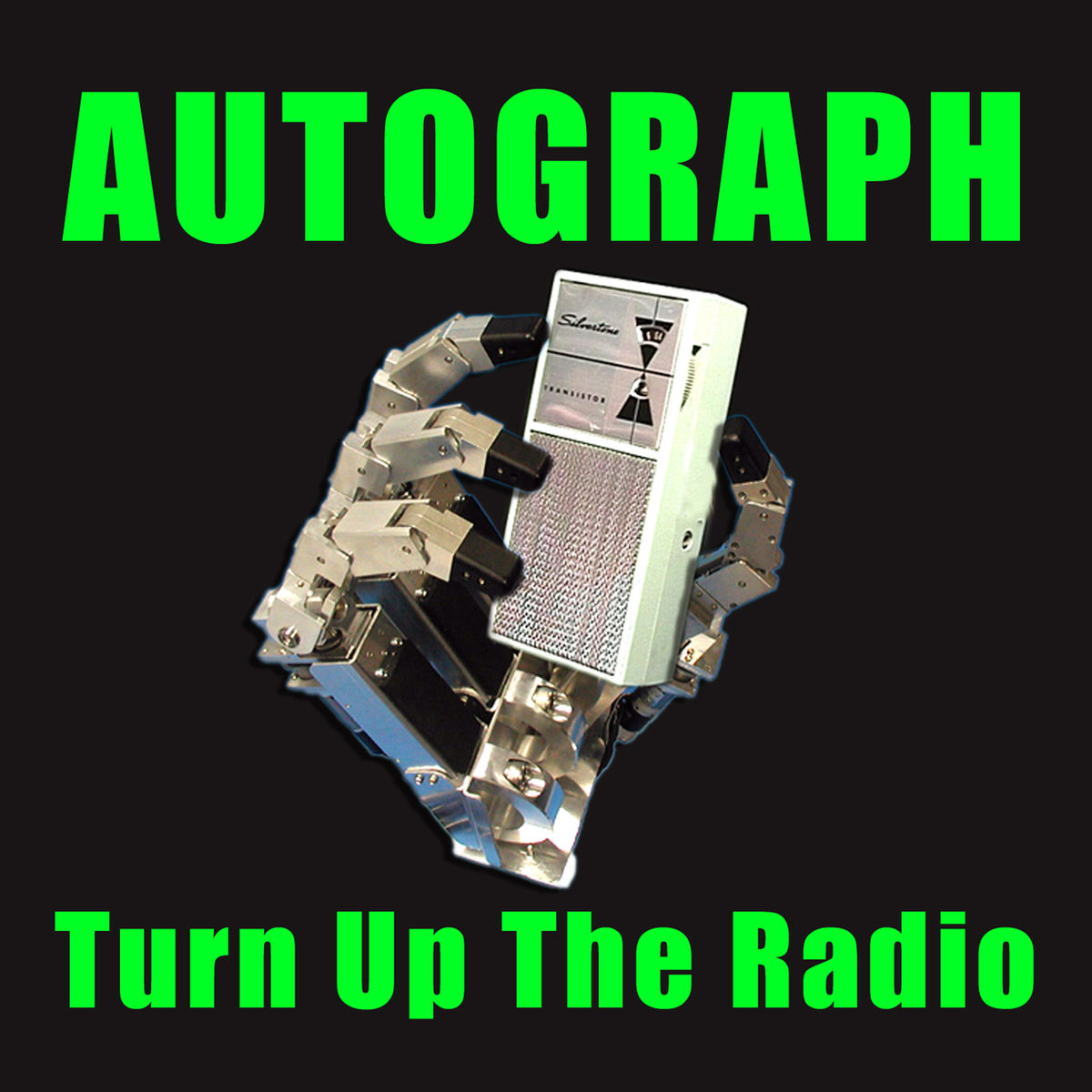
“Turn Up the Radio,” Autograph, 1984

In 1983, the fledgling LA-based band Autograph was lucky enough for their demos to catch the ear of producer Andy Johns, who had worked with Led Zeppelin and The Rolling Stones. He supervised their debut LP, which included what turned out to be their only Top 40 hit, “Turn Up the Radio,” qualifying them as “one-hit wonders.” The song’s futuristic music video was very popular on MTV in 1985, helping boost their sales and a #29 peak on US pop charts (#17 on mainstream rock charts). The recording featured guitarist Steve Lynch’s distinctive two-handed, fretboard-tapping technique, which won him the “Guitar Solo of the Year” award from Guitar Player magazine that year. Lynch said the track was never a personal favorite but he always appreciated its strong hook and commercial appeal “and lyrics that were right for the times.” “Daytime, nighttime, anytime, things go better with rock, /I’m going 24 hours a day, I can’t seem to stop, /Turn up the radio, I need the music, give me some more, /Turn up the radio, I wanna feel it, got to give me some more…”

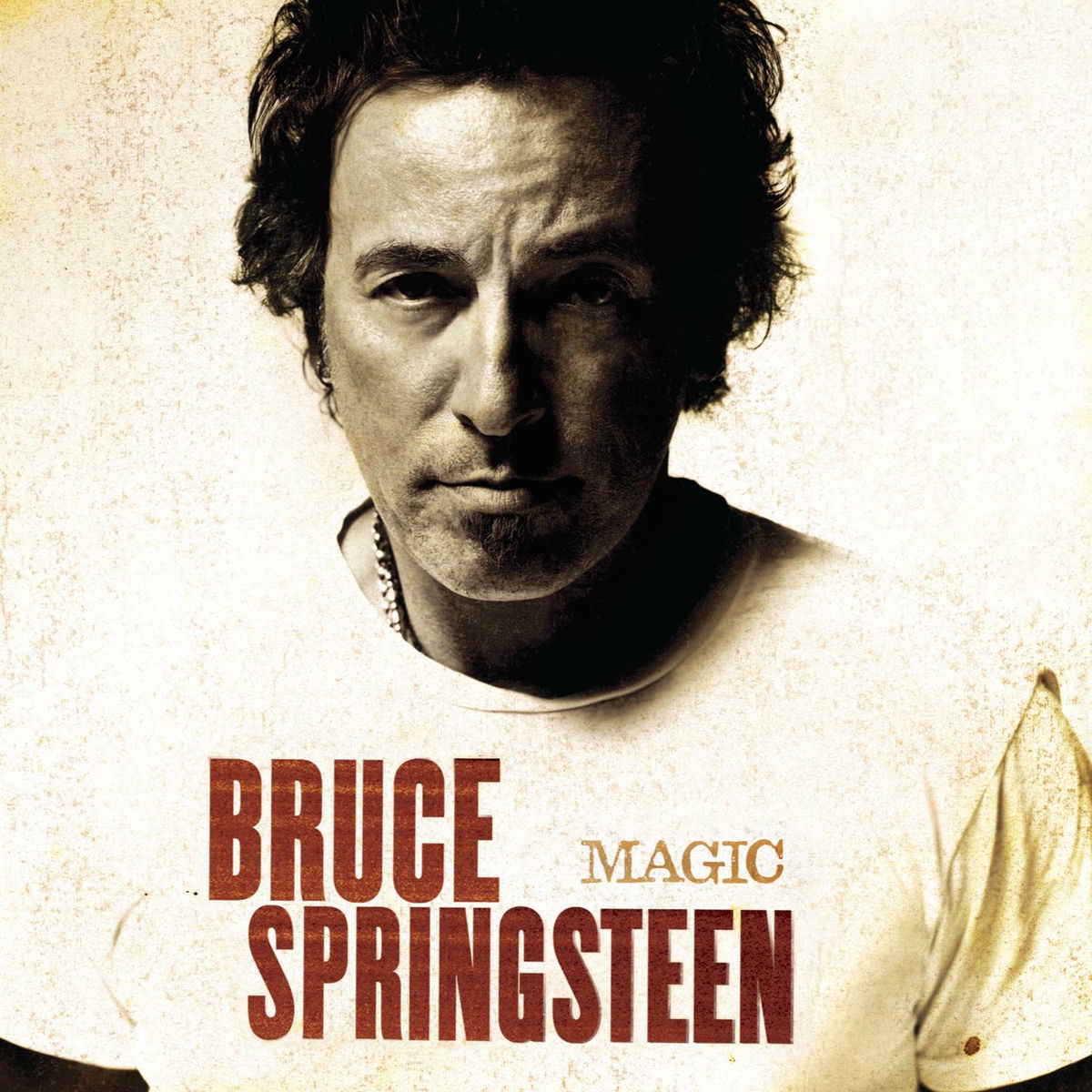
“Radio Nowhere,” Bruce Springsteen, 2007

“High-energy, E Street Band rock” was the order of the day on Springsteen’s well-received 2007 LP “Magic.” It debuted at #1 on US album charts despite an overriding lyrical theme reflecting The Boss’s disillusionment with the state of American society at the time. The intended single was “Radio Nowhere,” a meaty slab of guitar-heavy rock described as having “an end-of-the-world feel where humanity has become anonymous and communication channels have broken down.” The title metaphorically depicts a void where the narrator frantically searches for human connection over the airwaves, a despairing vibe that may have turned off the Top 40 radio audience, because it failed to chart at all. “I was spinning around a dead dial, just another lost number in a file, /Dancing down a dark hole, just searching for a world with some soul, /This is radio nowhere, is there anybody alive out there?…”

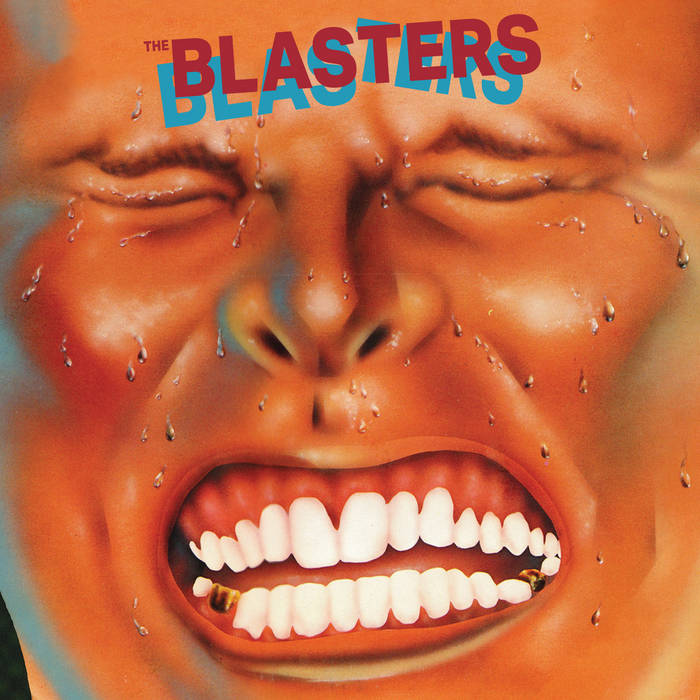
“Border Radio,” The Blasters, 1981

From the 1930s through the late 1980s, American companies set up powerful radio transmitters just over the Texas border in Mexico, offering as much as 500,000 watts of power, enough to reach great swaths of the US but out of reach of US regulations. Singer-guitarist Phil Alvin and his younger brother Dave (lead guitar) grew up on these stations’ heady stew of rockabilly, country, early R&B and blues. Between 1979-1985, they released four solid LPs as The Blasters, and on their self-titled second album — which reached #36 on US album charts and was several critics’ choice as one of 1982’s best — Dave Alvin wrote “Border Radio,” a song about the influence and appeal of hearing edgy music not available elsewhere: “This song comes from 1962, dedicated to a man who’s gone, /Fifty thousand watts out of Mexico, this is the border radio, /She calls toll free and requests an old song, something they used to know, /She prays to herself that wherever he is, he’s listening to the border radio…”

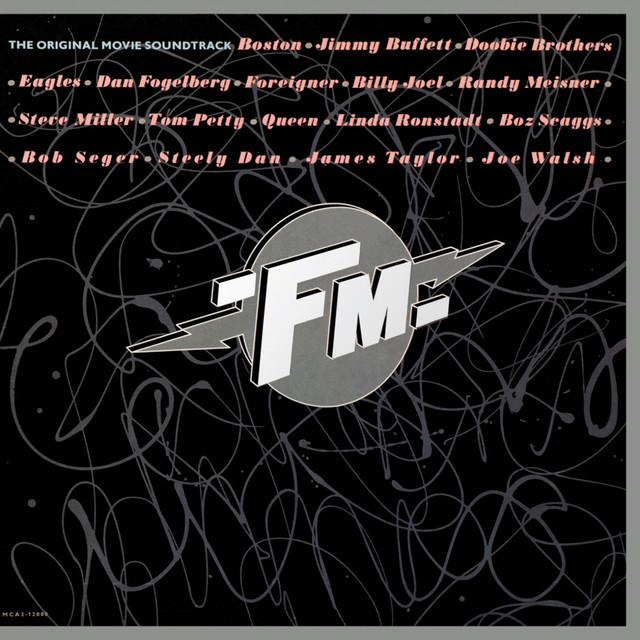
“FM,” Steely Dan, 1978

In 1978, a critically lambasted film called “FM” told the story of a group of DJs at a popular FM radio station who rebel against the station’s management. The DJs want to retain the free-form, DJ-driven music selection format that had been in place at FM rock stations since its early years in the late ’60s, but the more commercially oriented “album-oriented rock” format had already become dominant by the time the film was conceived and released. While the movie tanked, the “FM” soundtrack album was a big success, selling millions, led by Steely Dan’s title track, which reached #22 on US pop charts. Asked to write a song about FM radio, they came up with lyrics in which the narrator criticizes the predictable music selection. The overlapping harmonies of “no static at all” sound like a station ID tagline, but it seems less like a technical boast than an admission that nothing on the airwaves was likely to surprise anyone: “The girls don’t seem to care what’s on, as long as they play till dawn, /Nothin’ but blues and Elvis and somebody else’s favorite song… /The girls don’t seem to care tonight, as long as the mood is right, /No static at all, FM…”

“AM Radio,” Everclear, 2000

Emerging from Portland, Oregon, in 1992, Everclear was the brainchild of singer-songwriter-guitarist Art Alexakis, who steered them through post-grunge, alt-rock and power pop genres on several successful LP in the late 1990s. In 2000, on the Top Ten LP “Songs From an American Movie Vol. One: Learning How to Smile,” they came up with a jewel of a song called “AM Radio,” which nostalgically celebrated the early ’70s era when AM radio still ruled but was losing ground to hipper FM formats. Those without the bucks to afford cars with FM or tape players had to get their music exclusively from AM radio, with its cheesy jingles and repeated-to-death Top 40 playlist. “Flashback back in ’72, another summer in the neighborhood hanging out with nothing to do, /Sometimes, we’d go driving around in my sister’s Pinto, cruising with the windows rolled down, /We’d listen to the radio station, /We were too damn poor to buy the eight-track tape… /You’d have to wait ’til you could hear it on the AM radio…”

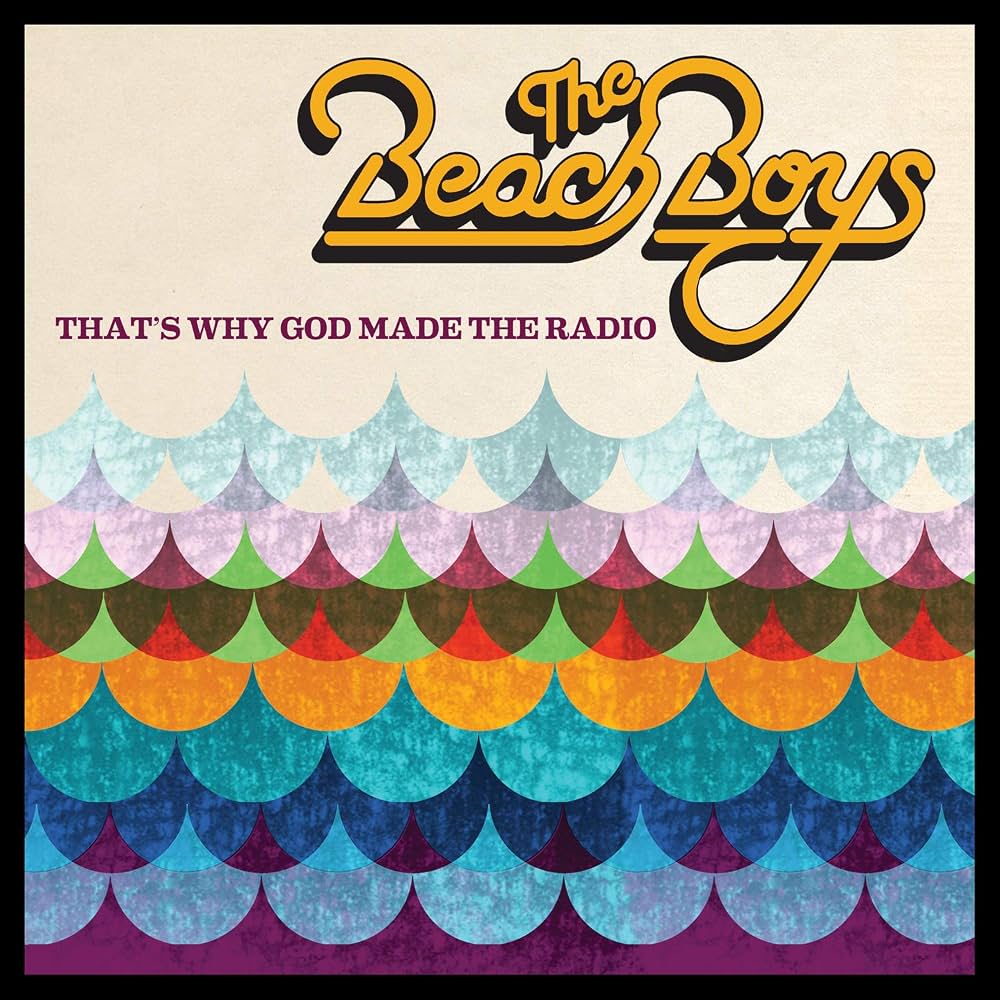
“That’s Why God Made the Radio,” The Beach Boys, 2012

After a long estrangement, Brian Wilson was ready to work with The Beach Boys again in 2012, just in time for the 50th anniversary of The Beach Boys 1962 debut LP. Wilson was collaborating with songwriter Jim Peterik at the time, who recalled an evening that proved fruitful. “We were at a restaurant,” he said, “and Brian was talking about radio, and how great songs used to sound through the AM radio coming through the oval speaker on his Plymouth Valiant. I said, ‘Man, that was the best sound of all,’ and Brian said, ‘Yeah, that’s why God made the radio.’ Of course, I wrote that line down, and it became not only a single but the title of the album.” The song’s lyrics are quintessential Beach Boys nostalgia: “Tuning in the latest star from the dashboard of my car, /Cruisin’ at 7, push-button heaven, /Capturing memories from afar in my car, /Feel the music in the air, find a song to take us there, /It’s paradise when I lift up my antenna, receiving your signal like a prayer, /That’s why God made the radio…”

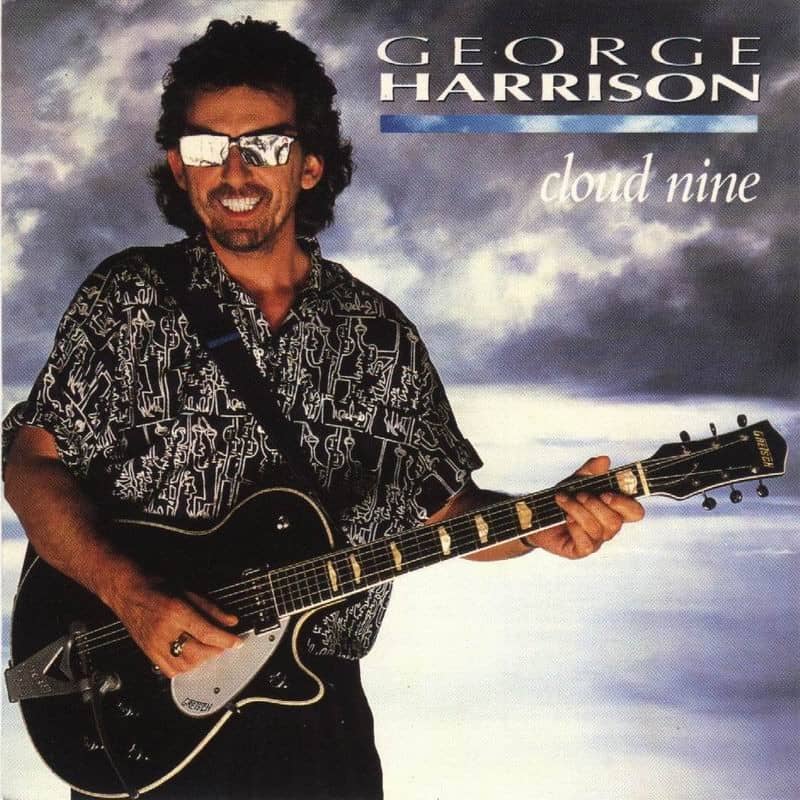
“Devil’s Radio,” George Harrison, 1987

Harrison spent the mid-1980s on hiatus from the music business after his last two albums had charted poorly. In 1987, working with producer friend Jeff Lynne and luminaries like Eric Clapton and Elton John, Harrison wrote a quality batch of tunes for a successful comeback LP, “Cloud Nine,” which reached #8 on US album charts that year (#10 in the UK). Probably the most aggressive track was “Devil’s Radio,” which was inspired by a church billboard Harrison had seen stating “Gossip is The Devil’s Radio…Don’t Be a Broadcaster.” The lyrics are an attack on gossip, trivia and cynical talk radio which spreads inaccuracies and falsehoods, a theme that hit close to home for Harrison, who had felt victimized by unfair media as an ex-Beatle, and unable to lead a normal life: “Oh yeah, gossip, gossip, oh yeah, /I hear it through the day, airwaves gettin’ filled with gossip broadcast to and fro on the devil’s radio, /It’s all across our lives, like a weed it’s spread ’til nothing else has space to grow, /The devil’s radio…”

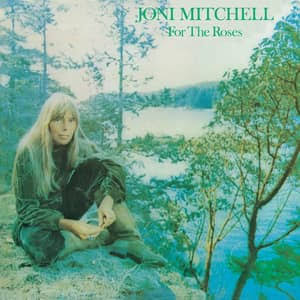
“You Turn Me On, I’m a Radio,” Joni Mitchell, 1972

As Mitchell was writing and recording a smart new batch of confessional songs for her fifth LP, “For the Roses,” her record label expressed a desire for her to write something that could gain Top 40 radio airplay. She responded with “You Turn Me On, I’m a Radio,” a lyrically brilliant tune equating romantic communication with radio airwaves. The metaphors she drew nailed the comparison perfectly — sending out signals she hopes he’ll pick up, and turning on a lover like turning on a radio. It wasn’t a huge hit, but it reached #25 in the US and #10 in her native Canada, and warmed up her mainstream audiences for the hits to come on her next LP “Court and Spark.” How poignant that former lover Graham Nash played the distinctive harmonica part on the recording: “Oh honey, you turn me on, I’m a radio, /I’m a country station, I’m a little bit corny, /I’m a wildwood flower waving for you, a broadcasting tower waving for you… /If your head says ‘forget it’ but your heart’s still smokin’, /Call me at the station, the lines are open…”

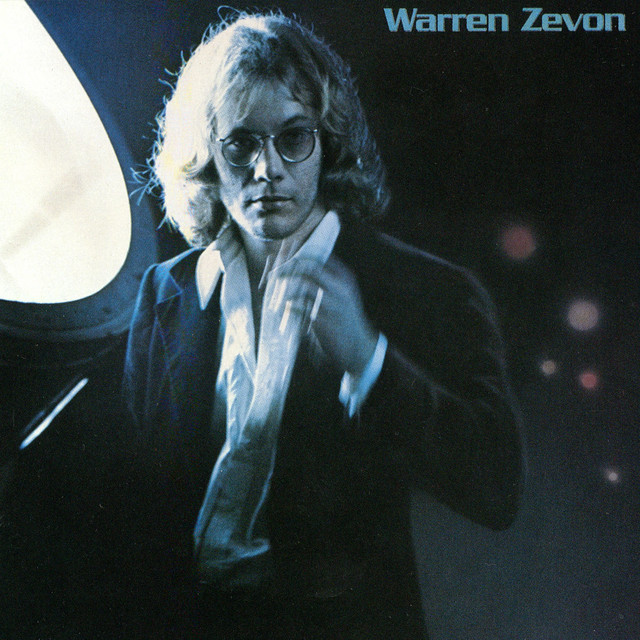
“Mohammed’s Radio,” Warren Zevon, 1976

From the beginning, Zevon was an enigmatic songwriter, with incisive, ironic lyrics that were often open to multiple interpretations. From his self-titled 1976 major label debut comes “Mohammed’s Radio,” which touches on themes like redemption, escapism, mysticism and negativity. Is Mohammed an Islamic DJ? A neighbor who played his radio too loud? Zevon never elaborated. Noted critic Dave Marsh ranked the tune “near the top of a list of best songs about radio.” Lindsey Buckingham, Stevie Nicks, Waddy Wachtel and Bobby Keys all participated in the session, and Linda Ronstadt made it one of several Zevon songs she covered on her own albums: “In walked the village idiot and his face was all aglow, /He’s been up all night listening to Mohammed’s radio, /Don’t it make you want to rock and roll all night long, Mohammed’s radio, /I heard somebody singing sweet and soulful on the radio, Mohammed’s radio…”

“Hey Mr. DJ,” Van Morrison, 2002

Since 1967, Morrison has been one of rock’s most prolific songwriters and recording artists, releasing more than 45 albums in that 60-year period. About halfway through that career arc in 2002, he came up with “Down the Road,” a warm mix of blues, R&B, country and folk that turned out to be his most commercially successful LP since 1972’s “Saint Dominic’s Preview.” Most of the music is rooted in 1950s and early 1960s popular music, and the lyrics reflect a certain nostalgia for that era. In particular, “Hey Mr. DJ” is, as one critic wrote, “a requiem for the one-on-one electricity of pre-Clear Channel radio, swinging with sweet brass and the iconic echo of Sam Cooke’s ‘Havin’ a Party.'” It was released as a single in the UK, and peaked at #19 on the specialized “adult alternative airplay” chart in the US. “Hey Mr. DJ, I’m in a sad mood tonight, /Play me something just for me and my baby, /Won’t you make everything all right? /I’m gonna turn it way down low, leave it on all night long ’til the morning comes, /Like my lover, my friend, until the end and that special someone…”

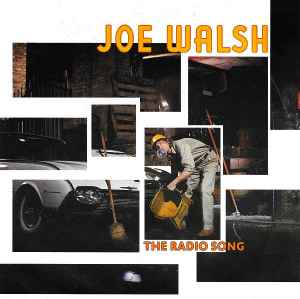
“The Radio Song,” Joe Walsh, 1987

Walsh had been a rising talent with The James Gang in the late ’60s and early ’70s, then a big solo act in the mid-’70s and eventually a full-fledged member of The Eagles. He continued to maintain a solo career, with anthemic rock songs featuring tongue-in-cheek lyrics (his Top Ten hit “Life’s Been Good” poked fun at his status as an egotistical rock star). He hit a dry patch in the mid/late ’80s when his 1987 LP “Got Any Gum?” tanked at #116, but the likable pop rock tune “The Radio Song” nevertheless reached #8 on the mainstream rock tracks chart. The music video for the song featured Wolfman Jack, and Walsh in a comical role: “I like to sit in a silent place, inside the silence is a melody, /Voices singing harmony, I close my eyes and listen carefully, /The silence starts to get loud, /It’s like your favorite station playing your favorite song, /Just like they do on the radio…”

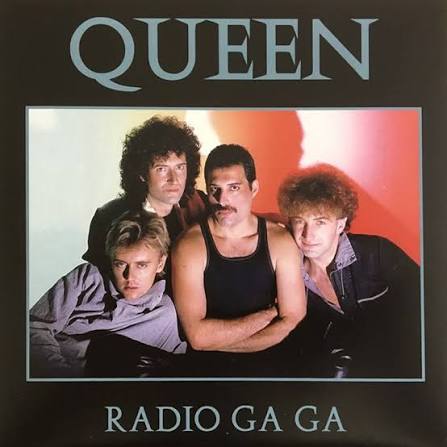
“Radio Ga Ga,” Queen, 1984

In 1984, when Queen drummer Roger Taylor was driving in Los Angeles with his 12-year-old son, the boy spoke disparagingly about the music he was hearing, calling it “radio ca-ca.” That incident inspired Taylor to write “Radio Ga Ga,” a nostalgic defense of radio, with lyrics that disapprove of television overtaking radio in mainstream popularity. “In the past, people turned to radio to hear comedy, drama or science fiction, and you had to use your imagination,” Taylor said. “That’s part of what the song’s about, really. That, and the fact that music videos seem to be taking over almost from the aural side. The visual side seems to be almost more important now, and that’s a shame.” The song was a huge #1 in the UK and all over Europe, and #16 in the US: “I’d sit alone and watch your light, my only friend through teenage nights, /And everything I had to know, I heard it on my radio, /So stick around ’cause we might miss you, when we grow tired of all this visual, /All we hear is radio ga ga, radio goo goo, radio ga ga, /All we hear is radio ga ga, radio blah blah…”

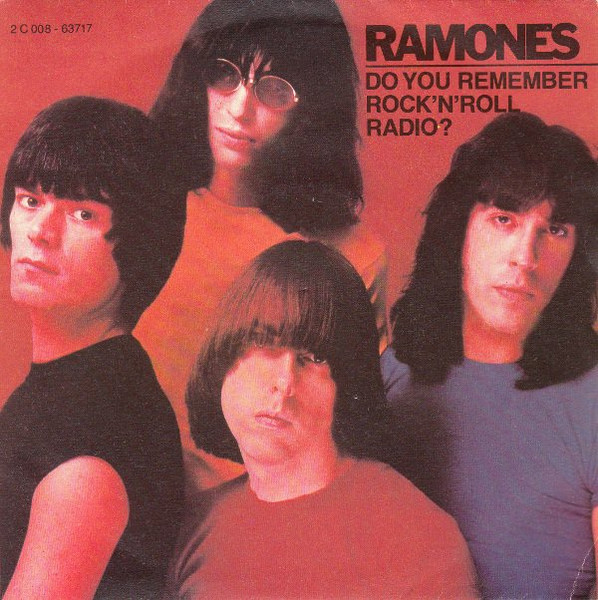
“Do You Remember Rock ‘n’ Roll Radio,” The Ramones, 1980

To many critics and fans, punk rock’s finest moments came from The Ramones, the New York band that exploded in the punk culture in 1976 even if, almost by design, they were never much of a commercial success and didn’t have a hit single. The Ramones sought to return rock music to its most basic roots, abandoning such offshoots as late 1960s psychedelic rock and early ’70s progressive rock. On their fourth LP, “End of the Century,” which was their highest charting at #44 (#14 in the UK), the featured song was “Do You Remember Rock ‘n’ Roll Radio?” described as “a thunderous paean to radio as it should be.” The track opens with a simulation of a radio dial being tuned across stations before a DJ introduces the song. It uses more complex instrumentation and production than typical of the band’s output (particularly sax and organ), with lyrics that, while calling out ’60s TV music programs, actually longed for the radio of their youth: “Rockin’, rock ‘n’ roll radio, let’s go, /Do you remember Hullabaloo, Upbeat, Shinding and Ed Sullivan too?, Do you remember rock ‘n’ roll radio?…”

“Radio, Radio,” Elvis Costello, 1977

In 1977, as the British music scene was in the grip of punk rock, Costello’s debut LPs had “the raw energy and sass of punk but with densely layered wordplay,” as Rolling Stone put it. In 1978, “Radio Radio” was released in the UK as a stand-alone single, a reworking of an early tune he’d written called “Radio Soul.” The new version was far more aggressive with sarcastic lyrics that criticized the creeping commercialism of British radio. Costello said, “When you get into the business, you realize it’s about some guy with a sack of money giving it to somebody so that they play your record enough times that people get batted to death with it, and that makes it a hit.” When he appeared on “Saturday Night Live,” he abruptly stopped performing his debut single “Less Than Zero” and played “Radio Radio” instead, alienating the producers: “Radio is a sound salvation, radio is cleaning up the nation, /They say you better listen to the voice of reason, but they don’t give you any choice ’cause they think that it’s treason, /So you had better do as you are told, you better listen to the radio, /I wanna bite the hand that feeds me…”

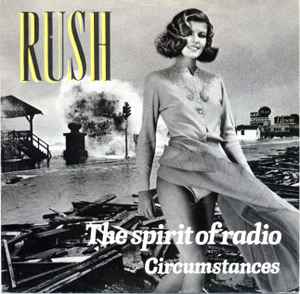
“The Spirit of Radio,” Rush, 1980

Regular readers of this blog know I am no fan of Rush because I can’t abide Geddy Lee’s shrill, affected vocal style, but occasionally one of their songs was interesting enough to force me to endure the singing in order to enjoy the rest of the music. “The Spirit of Radio,” a single from their 1980 LP “Permanent Waves,” is one example of that. Inspired by the slogan of the Ontario, Canada-based radio station CFNY-FM, the song became Rush’s first Top 30 hit in Canada, although it reached only #51 in the US. Lyrically, the song is yet another lament on the change of FM radio from free-form to commercial formats during the late 1970s (although CFNY was one of those stations that had not yet abandoned free-form programming): “Invisible airwaves crackle with life, bright antennae bristle with the energy, /Emotional feedback on timeless wavelength bearing a gift beyond price, almost free, /It’s really just a question of your honesty, /One likes to believe in the freedom of music, /But glittering prizes and endless compromises shatter the illusion of integrity…”

“The Last DJ,” Tom Petty & The Heartbreakers, 2002

Petty had sparred with record business folks more than once in his career, and he did it again with his 2002 LP “The Last DJ,” which included several tracks that took direct shots at the greed that prevails in the music industry. In particular, the song “The Last DJ” is about a disc jockey in Florida who became so frustrated with his inability to play what he wants that he moves to Mexico and gets his playlist freedom back. Several radio stations, especially those owned by the conservative Clear Channel Communications, banned it for being “anti-radio.” Said Petty, “I was elated when it was banned. I remember when radio meant something. We enjoyed the people who were on it. They had personalities. They were people of taste who we trusted. And I see that vanishing.” It managed a #22 spot on mainstream rock charts but the ban kept it from pop charts: “Well, the top brass don’t like him talking so much, and he won’t play what they say to play , /And he don’t want to change what don’t need to change, /There goes the last DJ who plays what he wants to play…”

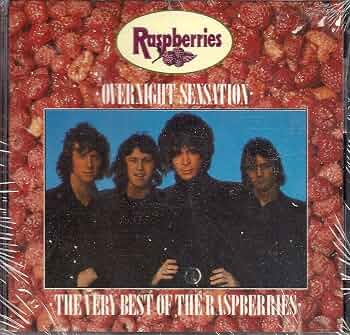
“Overnight Sensation (Hit Record),” The Raspberries, 1973

Cleveland’s favorite sons The Raspberries were pioneers of power pop, exploding out of the gate with an irresistible hit, “Go All the Way,” in 1972. Although most critics loved them, some observers saw them as inferior Beatles imitators, which really rankled their lead singer and songwriter Eric Carmen. By 1974, the band was in its final months before dissolving, and Carmen came up with “Overnight Sensation (Hit Record),” which critic Mark Deming said “may be Carmen’s most impressive creation, an epic-scale piece about the thrill of hearing your song on the radio.” Ironically, he’d already had his hit record two years earlier, but he longed to be taken more seriously and wrote “Overnight Sensation” as a theatrical number, beginning with just a piano and voice and building to a grand Spectorian production, with lyrics that bluntly stated his obsession with radio play. It reached #18 on pop charts, but the band broke up, and Carmen began a solo career. “I just want a hit record, yeah, wanna hear it on the radio, /Want a big hit record, yeah, one that everybody’s got to know, /Well, if the program director don’t pull it, it’s time to get back the bullet, /So bring the group down to the station, you’re gonna be an overnight sensation…”

**************************
Honorable mentions:

“I Bet You They Won’t Play This Song on the Radio,” Monty Python, 1980

“Shit on the Radio,” Nelly Furtado, 2000

“Mr. Radio,” ELO, 1971

“The Nightfly,” Donald Fagen, 1982

“Radio Free Europe,” R.E.M., 1981

“Radio Waves,” Roger Waters, 1987

“Video Killed the Radio Star,” The Buggles, 1981

“Turn Up the Radio,” Madonna, 2012

***************************