The monster’s gone, your daddy’s here
Dear Old Dad. He just never seems to get the same respect that Mom does.
While Mother’s Day was established as a national holiday by Woodrow Wilson back in 1914, attempts to establish an official Father’s Day were repeatedly rebuked by Congress  and others for many decades. Why isn’t exactly clear. It took until 1966 when Lyndon Johnson finally issued a proclamation designating the third Sunday in June as Father’s Day, “honoring fathers and celebrating fatherhood, paternal bonds, and the influence of fathers in society.” Well, better late than never, I guess…
In the popular music arena, songwriters seemed to give mothers and fathers equal attention. From folk to blues, from R&B to Christian, from funk to ballads, from country to swing, every genre is represented with songs about fathers. I was chagrined to find, though, that a preponderance of Daddy tunes were about what a deadbeat he was, leaving home, fooling around, drinking too much. Still, there are plenty of songs that praise Pops… if you look hard enough…
Today, I have assembled 15 titles that I think will make a nice mix of songs for you to play if you’re hanging out with Dad (or you are Dad) this Sunday. I’m betting there are plenty of fathers who can sing along to most of these tunes from his era.
Happy Father’s Day to all you Dads!
********************
“Father and Son,” Cat Stevens, 1970
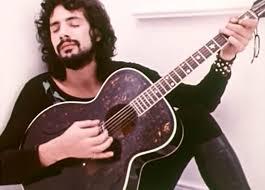 In “Father and Son,” the lovely yet powerful call-and-response piece from 1970’s “Tea for the Tillerman,” Stevens creates a somewhat tense dialog between a man and his son, who hold different opinions about life and love. The father admonishes the boy — “you’re still young, that’s your fault, there’s so much you have to know” — and the son retorts, “How can I try to explain, when I do he turns away again, it’s always been the same old story…” In the end, they agree the boy must leave home and find his own way: “Away, away, away, I know I have to make this decision alone…”
“Father and Daughter,” Paul Simon, 2006
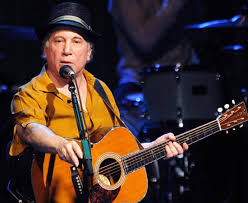 One of the most perceptive songwriters of his time, Simon has written lyrics exploring everything from loneliness to jubilation, from troubled water to little towns, from Graceland to Kodachrome. In the best song from his mostly ignored 2006 album “Surprise,” he serves up the kind of reassurance and affection only a parent can offer to a child: “I’m gonna watch you shine, gonna watch you grow, gonna paint a sign so you’ll always know, as long as one and one is two, there could never be a father who loved his daughter more than I love you…”
“Papa’s Got a Brand New Bag,” James Brown, 1965
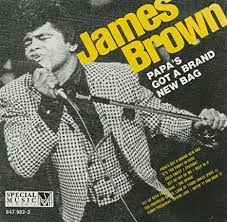 America had already shown its appreciation in the early ’60s for the Rhythm & Blues genre coming from the Motown groups (The Miracles, The Supremes), but with this infectious track, James Brown’s first Top Ten hit, the Godfather of Soul offered up a whole different, more passionate breed of soul music. Brown wrote the song –perhaps the first funk tune on US charts — about an older man who isn’t shy about strutting his stuff on the dance floor amongst much younger folks: “Come here sister, Papa’s in the swing, he ain’t too hip now, but I can dig that new breed, baby, he ain’t no drag, Papa’s got a brand new bag…”
“Daddy,” Nicolette Larson, 1980
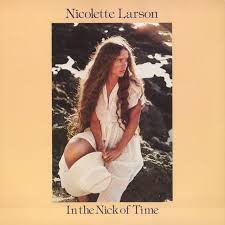 Larson’s fine vocal harmonies were first introduced by Neil Young on his “Comes a Time” LP, and her rendition of Young’s song “Lotta Love” was her breakout single, hitting #5 in the spring of ’79. On her excellent follow-up LP, “In the Nick of Time,” Larson chose to include the 1940s-era Bobby Troup song “Daddy,” made famous by The Andrews Sisters and various orchestras of the time. Troup, who also wrote “Get Your Kicks on Route 66,” wrote this one about a girl who loves to be pampered: “Hey Daddy, I want a diamond ring, and bracelets, and everything, hey Daddy, you ought to get the best for me…”
“My Father’s Eyes,” Eric Clapton, 1998
 Patricia Clapp was only 16 when she gave birth to her son Eric. His father, a 25-year-old soldier from Montreal, shipped out before Eric was born, and the two never met. This song’s lyrics, written by Clapton in 1992 but not released until his 1998 “Pilgrim” LP, speak of his longing for a chance to gaze into his father’s eyes, and also refer to the brief life of Clapton’s own son Conor, who died at age 4. In his 2007 autobiography, he wrote, “I tried to describe the parallel between looking in the eyes of my son, and the eyes of the father I never met, through the chain of our blood.” A sample: “Where do I find the words to say, how do I teach him, what do we play, bit by bit, I’ve realized, that’s when I need them, that’s when I need my father’s eyes…”
“Papa was a Rollin’ Stone,” The Temptations, 1972
 This tragic song by Norman Whitfield and Barrett Strong tells the tale of a young man talking about the deadbeat father he never knew, who neglected those who loved him most: “I never got the chance to see him, never heard nothin’ but bad things about him, ‘Mama, I’m depending on you to tell me the truth, Mama just hung her head and said, ‘Papa was a rollin’ stone, wherever he laid his hat was his home, and when he died, all he left us was alone’…” Originally written for The Undisputed Truth as its follow-up to “Smiling Faces Sometimes,” it was instead recorded by The Temptations in a magnificent 12-minute version full of instrumental passages. It was pared down to 6:45 for the single, which turned out to be the group’s final #1 hit.
“Oh Daddy,” Fleetwood Mac, 1977
 When Fleetwood Mac was recording the multiplatinum “Rumours” album, Lindsey Buckingham and Stevie Nicks were at each other’s throats, and John and Christine McVie were in the process of divorcing. Mick Fleetwood was having his own problems with his wife back home, but he appeared to Christine to be the “steady rock” holding the band together. With this song, Christine McVie was letting Fleetwood know, in her own way, that he was the father figure of the group at the time they needed one the most: “Why are you right when I’m so wrong, I’m so weak but you’re so strong… Oh Daddy, if I could make you see, if there’s been a fool around, it’s got to be me…”
“My Dad,” Paul Petersen, 1962
 The Donna Reed Show, an early ’60s sitcom starring the Oscar-winning actress as the pleasant, level-headed mom, featured two different episodes in which her fictional children, Mary and Jeff, sang songs at a school dance. Their real-life counterparts, Shelly Fabares and Paul Petersen, took those songs to Top Five success on the US singles chart. Fabares’ rendition of “Johnny Angel” went all the way to #1 in early ’62. Petersen,
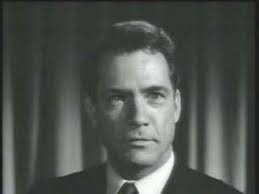
Carl Betz as Petersen’s Dad
only 17 at the time, followed with the #6 hit “My Dad,” a saccharine ballad written by Brill Building stalwarts Barry Mann and Cynthia Weill expressly for the show episode. Both the song and lyrics are admittedly pretty shmaltzy (“My Dad, now here is the man, to me he is everything strong, no, he can’t do wrong, my Dad, now he understands, when I bring him trouble to share, oh, he’s always there, my Dad…”) but hey, why not? It’s for Father’s Day…
“My Father’s Gun,” Elton John, 1970
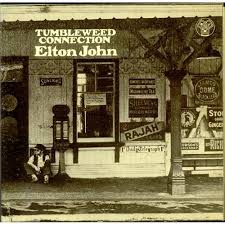 Elton John’s lyricist partner, Bernie Taupin, was fascinated by the old American West and its stories of the frontier, as evidenced by the almost country-western feel to the music and words of most of the tracks on their third album, “Tumbleweed Connection.” Taupin reaches back to the Civil War in “My Father’s Gun,” a slow-building, dramatic tale in which the son buries his soldier father and then vows to keep fighting in his father’s place: “I’ll not rest until I know the cause is fought and won, from this day on, until I die, I’ll wear my father’s gun…”
“Daddy’s Working Boots,” Dolly Parton, 1973
 For her 11th studio album, “My Tennessee Mountain Home,” Parton recorded a batch of songs she wrote about growing up in rural Tennessee before heading to Nashville for fame and fortune. The title track was a Top 20 hit on the country charts, but equally poignant was this song that paid tribute to her father and how hard he had to work to support her family during tough times: “As long as I remember, I remember Daddy workin’, workin’ on the job or either on the farm, trying to provide for the family that he loves, and Daddy’s working boots have taken many steps for us…”
 “Papa Don’t Preach,” Madonna, 1986
Never one to shy away from provocative topics, Madonna tackled teenage pregnancy and abortion in this #1 hit written by Brian Elliot. The narrator, who is pregnant and weighing her options, cautiously approaches her father in her hour of need, pleading for loving support and advice rather than lectures and scolding: “You always taught me right from wrong, I need your help, Daddy, please be strong, I may be young at heart, but I know what I’m saying… We’re in an awful mess, and I don’t mean maybe, please, Papa don’t preach, I’m in trouble deep, Papa don’t preach, I’ve been losing sleep, but I made up my mind, I’m keeping my baby…”
“Daddy’s All Gone,” James Taylor, 1976
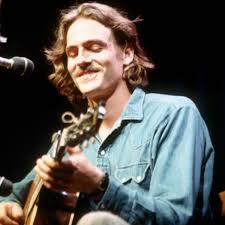 The homesickness for hearth and family that strikes touring musicians is the subject of this autobiographical song from Taylor’s seventh LP, “In the Pocket,” one of his best. The lyrics speak of him calling home from yet another night on the road, lamenting the fact that he has many more concerts ahead of him before he can return home where he wants to be: “Oh, I miss you, baby, I sure am on the road, I don’t need to say much more, just the same old well-known stranger that I was before, it seems like yesterday now, Daddy’s all gone, he’s only halfway home, he’s holding on to the telephone singing, please, don’t let the show go on…”
“My Father,” Judy Collins, 1968
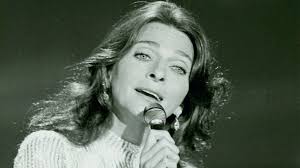 One of Collins’s first attempts at composing was this gorgeous piano ballad, written in October 1967 for her blind father, who died only three weeks after she recorded it. They both had suffered from depression and alcoholism, and had forged an uneasy bond over their afflictions. She wrote how he had dreamed of greater things for himself and his family, most of which never came to pass: “My father always promised us that we would live in France, we’d go boating on the Seine and I would learn to dance, I sail my memories of home like boats across the Seine, and watch the Paris sun set in my father’s eyes again…”
“Daddy Don’t Live in New York City No More,” Steely Dan, 1975
 Here’s a funky little blues-based track from Steely Dan’s underrated “Katy Lied” LP. Creative duo Donald Fagen and Walter Becker chose to use a different guitarist on each of the album’s 10 tracks; this one features the smooth stylings of jazz great Larry Carlton. The lyrics paint a picture of a typically dark Fagen-Becker character, this time an unreliable father figure who’s either drunk or absent most of the time: “Driving like a fool out to Hackensack, drinking his dinner from a paper sack… He can’t get tight every night, pass out on the barroom floor…”
“Forefathers,” Dan Fogelberg, 1990
 The sensitive singer-songwriter from Illinois was well past his commercial peak when he released the criminally overlooked LP “The Wild Places” in 1990. The album contains some of the best music and most perceptive lyrics of his career, including this bittersweet paean to his Scandinavian and Scottish ancestors and the sacrifices they made for the generations that followed: “And the sons become the fathers, and their daughters will be wives, as the torch is passed from hand to hand and we struggle through our lives, the generations wander but the lineage survives, and all of us, from dust to dust, we all become forefathers by and by…”
“Come to Poppa,” Bob Seger, 1976
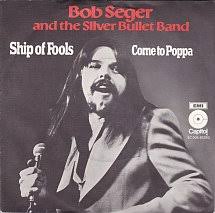 Seger had been a musical force in Detroit and the Midwest ever since his early band, The Bob Seger System, had a taste of success in 1968 with their #17 hit “Ramblin’ Gamblin’ Man.” It wouldn’t be until 1976 when Seger truly broke through nationally with the Silver Bullet Band on their excellent “Night Moves,” LP, the first of six consecutive Top Ten albums. The title song was a huge hit, peaking at #4, and two other tracks, “Mainstreet” and “Rock and Roll Never Forgets,” charted as well. Other notable songs include “The Fire Down Below,” “Ship of Fools” and the old Willie Mitchell tune, “Come to Poppa,” with lyrics that suggest whom you can turn to when things aren’t going your way: “If life gets hard to understand, and the whole thing is getting out of hand, come to Poppa…”
***********************
Honorable mentions:
“My Father’s House,” Bruce Springsteen, 1982; “Father of Night,” Bob Dylan, 1970; “The Ding Dong Daddy of the D-Car Line,” Cherry Poppin’ Daddies, 1992; “Daddy’s Tune,” Jackson Browne, 1976; “Dear Father,” Yes, 1970; “Father’s Eyes,” Amy Grant, 1979; “Father Figure,” George Michael, 1988; “Father of Day, Father of Night,” Manfred Mann’s Earth Band, 1973; “Son of Your Father,” Elton John, 1970; “Father to Son,” Queen, 1974; “Sugar Daddy,” Fleetwood Mac, 1975; “My Father’s House,” Kenny Loggins, 1991: “Hey Papa,” Terence Boylan, 1977; “Daddy, Don’t You Walk So Fast,” Wayne Newton, 1972; “Cat’s in the Cradle,” Harry Chapin, 1974.


The author and his daughters
 He spent his whole life as a deeply conflicted man.
 joined Doctor Nubillo’s Traveling Show, and took to wearing capes, turbans and makeup. He was married once for five years, but also came out as gay. He would denounce homosexuality, then turn around and embrace it, and eventually considered himself “omnisexual.”
 The version everyone knows was recorded and released in late 1955, and sure enough, it became a big hit, reaching #21 on the Top 40 charts (and #2 on the R&B charts). It was popular with both white and black record buyers, which established its reputation as one of the landmark songs that launched rock and roll as a new musical phenomenon.
 homes…but it didn’t really work. The white kids would have Pat Boone on the dresser and me in the drawer. They liked my version better but kept it hidden from their parents.”
 Paul McCartney, who belted out a superb cover of “Long Tally Sally” in 1964 for The Beatles’ second U.S. album, said, “
 his burgeoning career. After a harrowing plane ride and a couple of other incidents he took as omens, he claimed spiritual rebirth and went to college to study theology. He met and married Ernestine Harvin, began preaching, and recorded gospel music which found a small audience but made little impression on the charts.
 “I appreciated being picked one of the top fifty performers in rock,” he said, “but who is number one and who is number two? It doesn’t really matter anymore because it won’t be who I think it should be. It’s never going to be any of the entertainers from the beginning. The Rolling Stones learned from me, but they’re always going to be in front of me. The Beatles started with me — at the Star Club in Hamburg, Germany, before they ever made a record — but they’re always going to be in front of me. James Brown was in my band. So was Jimi Hendrix. These people started with me. I encouraged them, I talked to them, and off they went. Good for them. They’re going to always be in front of me.”
 Hack's Back Pages