Haven’t seen you in a while, how’ve you been?
Periodically, I use this space to pay homage to artists I believe are worthy of focused attention — artists with an extraordinary, influential, consistently excellent body of work and/or a compelling story to tell. Last week, I examined the career of the amazing Steve Winwood, a co-founder of the British band Traffic who also had a successful solo career. This week, we’ll explore the altogether different career path taken by another co-founder of Traffic, the great Dave Mason.
*********************
If it’s true that a song may become popular because its lyrics hit a nerve with the music-listening public, then Dave Mason’s hit single “We Just Disagree” is certainly an example of striking a familiar chord. Whether you’re married or just dating, when you feel you’re no longer compatible, you throw in the towel, hopefully amicably. Consider these lyrics: “So let’s leave it alone, ’cause we can’t see eye to eye, /There ain’t no good guy, there ain’t no bad guy, /There’s only you and me, and we just disagree…”

It was Mason’s highest peak on the pop charts, reaching #12.
He’s a talented songwriter, guitarist and singer, but his commercial successes have been few and far between. He has (or at least had) a loyal fan base, and for a while he was a huge draw on the concert circuit. I count myself among his biggest fans, having seen him in concert nine times between 1975 and 2014, and owning most of his recorded output. I can’t help but feel that Mason would have been a bigger star if not for a few mistakes he made along his musical path.
Born in 1946, Mason was one of those British kids who, in an attempt to find something to relieve the boredom and hardship of post-war life in England, discovered music. Like John Lennon, Keith Richards, Pete Townshend and others in the same time and environment, Mason found Elvis, Buddy Holly and early rock and roll, and the blues, all American-born genres that excited him, energized him.
He was only 15 when, after learning to play guitar, he joined his first band The Jaguars, and then The Hellions, playing clubs in his native Worcester as well as Birmingham and eventually the rock club mecca of Hamburg, Germany, just as The Beatles had done. Drummer/singer Jim Capaldi was also in The Hellions, and among the bands they performed with was The Spencer Davis Group, which featured the astounding vocals and organ of Steve Winwood.

Sometimes Mason and Capaldi would jam with Winwood after shows, bringing in sax and flute player Chris Wood from another band. The foursome found that they enjoyed the music they were making, giving Winwood the reason he needed to leave Spencer Davis and form his own group, which they named Traffic (after waiting to cross a busy street one day, as the story goes).
The music that resulted from the group’s retreat to a quiet cottage in the Berkshires was a fascinating amalgam of folk, jazz, rock and psychedelic pop, using everything from Mellotron and sitar to flute and fuzz guitar. Winwood teamed up with lyricist Capaldi to write half the tracks while Mason contributed his own songs, and although that diversity was key to the band’s appeal, it also caused an internal tension that was never really resolved.
The infectious Winwood-Capaldi tune “Paper Sun” was a Top Five hit in the UK, and Mason’s quirky “Hole in My Shoe” just missed #1 there. Winwood, who preferred the give and take of jamming to produce a song, made no bones about not liking Mason’s songs much. “‘Hole in My Shoe’ was a trite little song that didn’t mean anything,” said Winwood years later. Mason said he felt like the odd man out, and shortly after Traffic’s debut album, “Mr. Fantasy,” was released (a Top Ten success in England), Mason left the group and headed to Los Angeles to explore musical possibilities there.
“I was young, and the early fame freaked me out a bit,” said Mason. “The other guys had a chemistry and a lifestyle I wasn’t really a part of, so I impulsively decided to try going solo. I hung around London for a while, then moved out to L.A.”

During that period, he befriended Jimi Hendrix and ended up contributing to his “Electric Ladyland” LP, playing acoustic 12-string on “All Along the Watchtower,” a song that would become a staple in Mason’s repertoire. He also was invited to add sitar to The Rolling Stones’ “Street Fighting Man.”
Now a three-piece, Traffic toured the U.S. in 1968, ending up in New York where they recorded their follow-up album, entitled simply “Traffic.” Mason came to the conclusion that he may have been rash in leaving, and reunited with the band for those recording sessions. Most important, he brought with him a song that would end up a bonafide rock classic over the years. Some say “Feelin’ Alright?” expresses Mason’s ambivalence about his time with Traffic (“Seems I’ve got to have a change in scene…”), but he denies this. “It’s just a song about a girl. It’s just another relationship gone bad.”
Still, the uneasy vibes between Mason and the others remained. Winwood felt Traffic was his band and bristled when Mason’s songs upstaged his. Mason got the message and left again, although it turns out it didn’t much matter. Winwood also moved on, choosing to collaborate with guitarist Eric Clapton in the short-lived supergroup Blind Faith in 1969.
Mason returned to L.A., where he’d been making friends with many in the red-hot music climate there. He found himself hanging out with the likes of Stephen Stills, Leon Russell, Gram Parsons, Mama Cass Elliot, Delaney and Bonnie and others, and often performed on their albums (credited and uncredited). He and Cass Elliot recorded a fairly decent album together in 1969, with Mason writing the majority of material and Elliot offering up her fine harmonies, but it would be another two years before it was released to a lukewarm reception. (You’d be well advised to listen to “Walk to the Point,” “Too Much Truth, Too Much Love” and “Pleasing You” to hear the best moments.)

By early 1970, Mason had compiled a group of eight or ten strong songs, and Mason pitched demos to a few companies. Bob Krasnow and Tommy LiPuma, who would become industry moguls running Warners and Elektra years later, were just starting out their label, Blue Thumb Records, and when they heard the demos, they were eager to sign Mason. “The songs were so strong, you had to be deaf not to hear it. He was such a great player and songwriter.”

They offered the budget to bring in a stellar cast of players for the sessions: Jim Gordon and Carl Radle from Delaney and Bonnie’s band, Leon Russell on keyboards, singers Bonnie Bramlett and Rita Coolidge, and LiPuma himself co-producing with Mason. The result was the superbly titled “Alone Together” (solo but with plenty of help), easily Mason’s best and most consistent LP. Critics loved it, and it peaked at an impressive #22 on the US charts.
Mason’s songs were deeply melodic, and his distinctive 12-string guitar and husky, soulful vocals shone especially brightly on “World in Changes,” “Sad and Deep as You” and the infectious leadoff track, “Only You and I Know.” It had a disappointing showing as the single, stalling at #42 in the U.S., but when Delaney and Bonnie covered it the next year, it reached #22 and turned a lot of heads.
Although he was a minstrel at heart, Mason also played a mean electric guitar, demonstrated most clearly on “Shouldn’t Have Took More Than You Gave” and especially “Look at You, Look at Me,” where his solo in the final minutes will have you picking your jaw up off the floor.
It was at this point that Mason made a fateful decision to play hardball with his record company. He insisted on making a double album, half studio and half live. He wanted a better contract too, and even went so far as to abscond with master tapes of the sessions in progress. Blue Thumb didn’t take it well.
“Mason wanted out because Columbia was offering him a deal,” said LiPuma. “The album sold well, and he was becoming an arena-rock draw on the road. But instead of negotiating, he took our tapes, which we saw as blackmail.” What Mason didn’t know is LiPuma had a back-up set of masters, and with them, he cobbled together “Headkeeper,” an album made without Mason’s approval that included four new but demo-like studio tracks and five live songs performed at L.A.’s Troubadour in 1972.
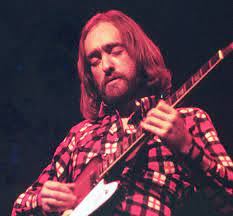
Because Mason was unhappy with the unfinished tracks, and he hadn’t approved the album’s song selection, mixing or cover art, he declared it “little more than a bootleg” and urged fans to avoid it. It wasn’t bad, but it could’ve been much better (it could only muster #50 on U.S. charts). It was an ill-advised turn of events that hurt his career momentum.
He couldn’t record elsewhere until the business mess could be resolved, so he went out on the road — a lot. Almost non-stop. It made him a lot of money and became a way of life for him. Columbia did sign him a year later and bought out the Blue Thumb contract, and their mostly amicable relationship lasted throughout the 1970s.

The Columbia debut, 1973’s “It’s Like You Never Left,” sold reasonably well and was a favorite with Mason fans. It has a reworked, superior version of “Headkeeper,” an irresistible instrumental jam called “Sidetracked” and a lovely ballad called “The Lonely One” that features Stevie Wonder’s incomparable harmonica.
Mason’s solid covers of “Watchtower” and Sam Cooke’s “Bring It On Home to Me” highlight his 1974 album, simply titled “Dave Mason,” temporarily hiding the fact that there seemed to be a growing sameness about his own songs, which carried over onto his substandard 1975 release, “Split Coconut.” Still, there were always a few tracks that showed Mason hadn’t lost his touch (“Give Me a Reason Why” and “You Can Lose It”), and both of these albums went gold. As Peter Frampton’s juggernaut “Frampton Comes Alive!” soared up the charts in 1976, Columbia rushed out a lookalike package for Mason’s “Certified Live” double album, which was pretty damn good, but sales were flat.

Mason needed the one thing he’d never had yet — a hit single. That came with his guitar compatriot Jim Krueger’s great song “We Just Disagree.” The recording was crisp and polished, as was the excellent “Let It Flow” album it came from. FM radio was good to Mason in 1977, putting “So High,” “Mystic Traveler” and “Let It Go, Let It Flow” in heavy rotation, as “We Just Disagree” reached #12 on the Top 40. One more gold album came in 1978, “Mariposa de Oro,” which sounds like a lesser sequel to “Let It Flow” — gorgeous production but only a few strong songs (“So Good to Be Home,” “Warm Desire” and a cover of “Will You Still Love Me Tomorrow”).
There are those who say Mason should have cut back on his touring to focus more on honing his songwriting chops, and they may have a case. By 1980’s dud “Old Crest on a New Wave,” the jig was up. His songs had become uninspired and repetitive, and his attempt at disco funk on “Save Me” (with Michael Jackson on harmonies) was, at best, a failed experiment. Columbia dropped him, and he spent the Eighties and Nineties in relative obscurity.
I almost don’t want to mention his short stint in Fleetwood Mac in 1995 for the miserable “Time” album, mentioned on a few “Worst Albums of the 1990s” lists. Lindsay Buckingham and Stevie Nicks were gone, and Christine McVie, who had quit touring, was on the sessions only as a favor to the label, so it was a radically different lineup with Mason, rockabilly guitarist Billy Burnette and Southern soul singer Bekka Bramlett, daughter of Delaney and Bonnie. A good time was not had by all.

It wouldn’t be until 2008 when Mason released “26 Letters, 12 Notes” on a Sony subsidiary label. No one noticed (I admit it went under my radar too), but when I first heard it during my research this past week, I was thrilled by the quality of songs and production. The blues groove of “Good 2 U,” the inventive melodic lines of “How Do I Get to Heaven” and “Passing Thru the Flame,” the pretty acoustic/electric instrumental “El Toro” — these rank up there with Mason’s best work, I’m delighted to say.
Mason was inducted into the Rock and Roll Hall of Fame in 2004 as part of Traffic. Chris Wood had died in 1983, but Mason, Winwood and Capaldi all attended and seemed to get along well, participating in the end-of-evening jam of “Feelin’ Alright” with Keith Richards, Jackson Browne, Tom Petty, Jeff Lynne, The Temptations and ZZ Top.
Over the past 15-20 years, Mason has remained active, performing periodically, and had a tour planned for this year until COVID wiped that off the books. Just for fun this year, he convened a virtual band online called Dave Mason and The Quarantines that included Sammy Hagar, Michael McDonald, Mick Fleetwood, and Patrick Simmons, Tom Johnston and John McFee of The Doobie Brothers to cut a new version of “Feelin’ Alright” that’s well worth a listen.
Mason is most active in philanthropies, including Little Kids Rock, a non-profit that promotes music education for disadvantaged children; YogaBlue, which promotes yoga as a therapy for those in substance abuse recovery; and Rock Our Vets, which provides food and clothing and access to computers for homeless veterans.

I saw Mason in 2014 at a members-only private show at the Grammy Museum in L.A., and while he played only 40 minutes, he didn’t disappoint. His voice and guitar skills were still mighty impressive.
No one can say whether things might have turned out better if he hadn’t temporarily lost his momentum and, seemingly, his songwriting muse. Regardless, I believe his artistry surely deserves more attention than it has received. With profile pieces like this one, and the Spotify playlist below, I hope I can contribute to a Dave Mason revival of sorts.
************************
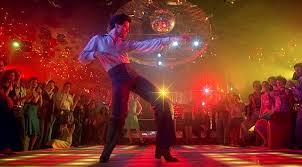
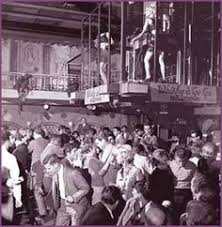 Disco is actually an abbreviation for discotheque, a French term meaning “phonograph library.” In 1950s Paris, nightclubs began eliminating live bands and instead laid down dance floors, suspended colored lights, and replaced the jukebox with two turntables on which a deejay would continuously play pre-selected dance music with no breaks, keeping the clientele dancing all night long. During the ’60s in major US cities, this concept morphed into New York clubs like The Peppermint Lounge, where go-go dancing was the hot new thing, and Arthur’s, generally regarded as the first and foremost discotheque in town.
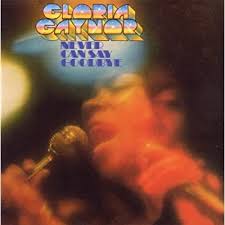 Most observers agree disco music entered the mainstream in 1973 or 1974, with songs like George MacRae’s “Rock Your Baby,” Barry White’s “Can’t Get Enough of Your Love Babe,” The Hues Corporation’s “Rock the Boat,” Gloria Gaynor’s version of the Jackson 5 hit “Never Can Say Goodbye” and especially Donna Summer’s “Love to Love You Baby,” a 16-minute, multi-part extravaganza that took dancers on an emotional groove ride. Also key were two instrumental tracks that reached #1 in 1974: “Love’s Theme” by Love Unlimited Orchestra and “TSOP (The Sound of Philadelphia)” by MFSB, which served as the theme song for the hugely popular TV dance show “Soul Train.”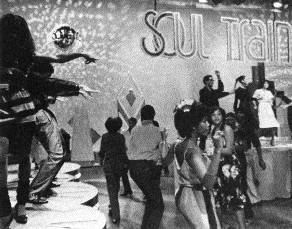
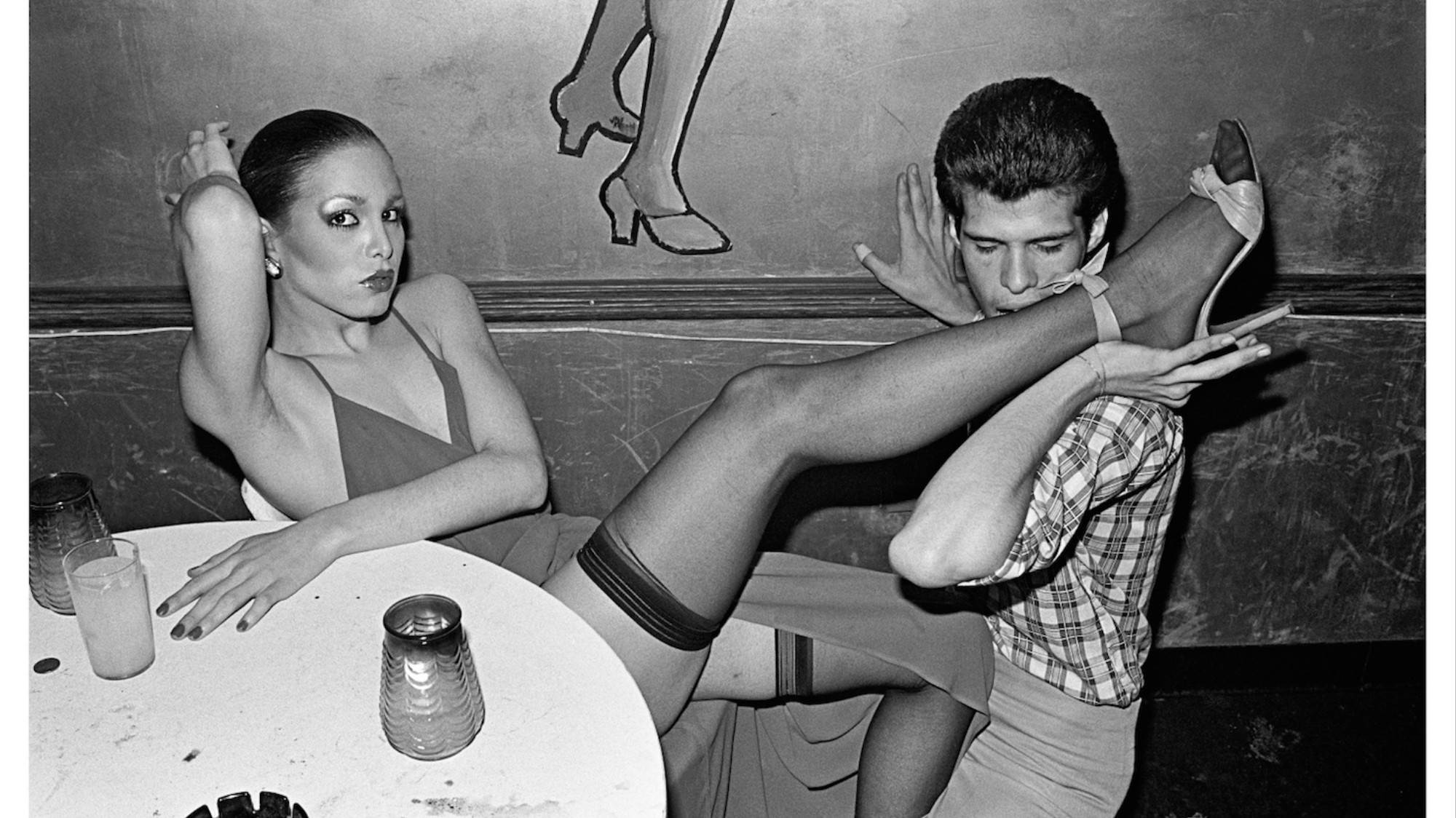 The promise of sex went hand in hand with disco. It always was either implied or blatantly stated, from KC and the Sunshine Band’s relentless chorus “Do a little dance, make a little love, get down tonight” to the sensual grooves reinforcing the message in Johnnie Taylor’s “Disco Lady”: “Move it in, move it out, shove it in, round about, disco lady…”
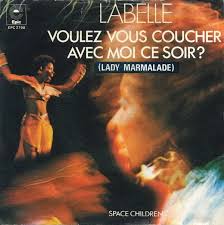 Momentum continued to build in 1975 and 1976: Van McCoy’s “The Hustle,” Silver Convention’s “Fly Robin Fly,” Labelle’s “Lady Marmalade,” and Kool and the Gang’s “Hollywood Swinging,” and KC’s string of #1 hits (“Get Down Tonight,” “That’s the Way I Like It,” “Shake Your Booty”). It wasn’t long before half of the Top Ten songs in
  the nation each week were disco, written expressly for DJs to spin in the discos, which began sprouting up in more and more cities, giving city dwellers and suburbanites alike a compelling reason to dress up and go out on the town for an evening of nightlife.
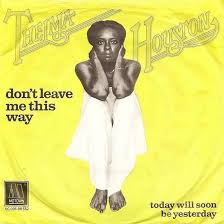 Me This Way,” A Taste of Honey’s “Boogie Oogie Oogie,” Glory Gaynor’s “I Will Survive” and Chic’s cringeworthy “Dance, Dance, Dance (Yowsa, Yowsa, Yowsa).” Even soul music divas like Diana Ross were successfully crossing over with tracks like “Love Hangover” and “Upside Down.”
 the world could I keep my seat…Everybody’s doing the disco duck…”
 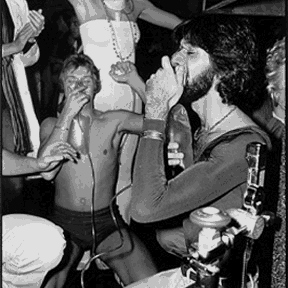 themselves in sexy flowing Halston dresses and high heels, and men donned wide-lapel leisure suits with open shirts revealing hairy chests and gold medallions…and coke spoons. In addition to the casual sex that went on in and around the clubs, recreational drug use was rampant there as well, particularly cocaine, amyl nitrite and other designer drugs intending to provide the blasts of energy needed to keep on dancing.
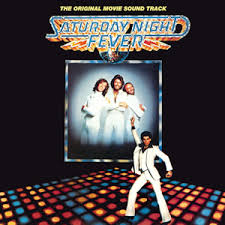 producers had read an article in New York Magazine about the disco scene occurring not only in Manhattan but Brooklyn and outlying areas as well. The ultimately tragic tale of a kid who hated his job but fancied himself the king of the dance floor each Saturday night was little more than a vehicle for the hugely successful soundtrack album, which sold 25 million copies and included the Bee Gees hits that have defined the disco era ever since (“Stayin’ Alive,” “Night Fever,” “More Than a Woman,” “You Should Be Dancing”). It’s interesting to note that the producers rush-released the movie because they had already spied “Disco Sucks” bumper stickers in LA and feared that disco’s peak had come and gone.
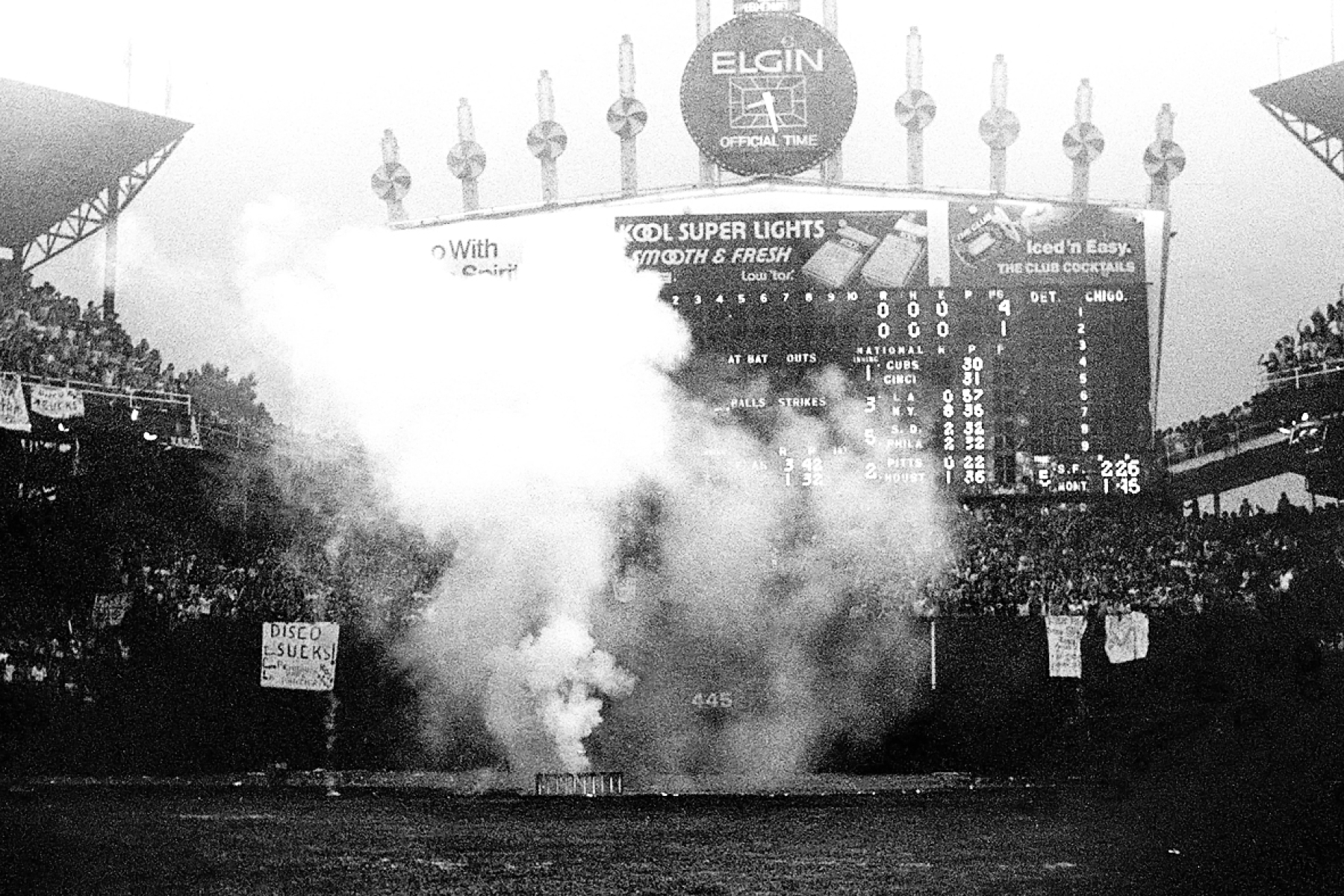 rockers grew desperate. Finally, in July 1979, when a Chicago rock radio DJ lost his job when his station switched to an all-disco format, he organized a “Disco Demolition” promotion at Comiskey Park, ostensibly to boost tickets sales to a White Sox doubleheader. Anyone with 98 cents and a disco record could gain admittance, and between games, the DJ detonated a huge pile of discarded disco LPs, sparking a near riot as 10,000 rock fans poured onto the field in celebration, resulting in a forfeit.
 dressed like Rambo, using machine guns to mow down the guy in the white suit on the colored dance floor.”
 Many folks who were pre-teens, teens, or in college during the disco years have said they look back very fondly on that time. “It was fun, it was exciting, we dressed up,” said my friend Kathy. “It was kind of like a fantasy life for a few hours. For most people I knew, we weren’t doing much drugs or having sex in the clubs. We were drinking and dancing to the music all night long.”
