Hot shoe, burnin’ down the avenue
Alex and Edward, two young brothers whose family relocated from The Netherlands to Pasadena, California, in 1962, found that the best way to keep from getting picked on by their classmates was to make music.
Both had taken classical piano lessons but preferred rock and roll. Alex started playing guitar while Ed picked up a drum kit. “I had a paper route to help pay for the drums,” Ed said, “and while I was out, Al would pick up the drumsticks and give it a go. When I heard him play ‘Wipeout’ way better than I could, I was pissed off. So I grabbed his guitar and started playing. All the time, every day.”
The brothers started a band called The Broken Combs, and eventually changed their name to The Trojan Rubber Company (!). By 1972, they became Genesis until they became aware of the British progressive rock band with the same name, so they changed yet again to Mammoth. They played parties, school functions and the occasional street fair. By this point, Ed had become a truly formidable talent on guitar. Before he was 25, he was on the cover of Guitar Player magazine.
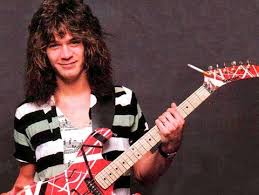
That young boy from Holland was Eddie Van Halen. He died Tuesday of cancer at age 65.
The band that had adopted the brothers’ namesake was, in fact, one of the most popular hard rock bands in the world from 1978 to 2012, selling upwards of 70 million albums and charting a dozen Top Five LPs in the US, including four #1s.
Van Halen‘s first LP, “Van Halen,” in 1978 was one of the most commercially successful debuts ever, eventually selling 12 million copies. It was highly regarded by fans of heavy metal as well as hard rock. Album-oriented rock radio ate it up, playing several tracks in heavy rotation, including “Runnin’ With the Devil,” “Jamie’s Cryin’,” “Ain’t Talkin’ ‘Bout Love” and a blazing cover of The Kinks’ “You Really Got Me.”
What distinguished Van Halen from the dozens of other hard rock bands of the day was Eddie’s astonishing abilities and exuberant stage presence, and the sounds he was able to coax from his custom-made guitar. Joe Satriani, highly respected musician and guitar teacher, said in 2015, “Eddie put the smile back in rock guitar at a time when it was all getting a bit broody. He also scared the hell out of a million guitarists because he was so damn good.”
He became every bit the guitar god to up-and-coming guitarists of the late ’70s and early ’80s as Eric Clapton and Jimmy Page had to the previous generation. He was a bit shy about the accolades at first: “It’s nice,” he said in 1980, “but sometimes I’m like, ‘Come on, I’m just a punk kid who plays guitar.’ Sometimes I’d play a killer solo and say, ‘Wow, that was magical, how did I do that?’ I’d try to do it again but I couldn’t!”
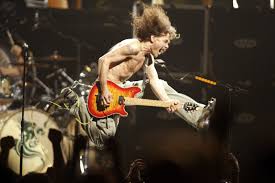
Van Halen toured relentlessly every year, promoting the latest album and gaining converts who were mesmerized by Eddie’s razzle-dazzle. His innovative two-hand tapping technique and quicksilver fingerings on the fretboard caused jaws to drop everywhere he went. “I’ve always said Clapton was my main influence — I memorized all of his lengthy solos with Cream — but I think I play more like Page, in a reckless-abandon kind of way.”
He used a broad range of guitars over the years but is most closely associated with his “Frankenstrat,” a Fender Stratocaster painted red, black and white, modified with a Gibson ES-335 pickup. He actually held a few patents on various tools he devised in order to get the unusual sounds you could thrill to on record and on stage.
In an obituary in the Washington Post this week, writer Geoff Edgers wrote, “For (Eddie) Van Halen, the point was musical. He was always searching and exploring with the tools he had available; just like John Coltrane or Stravinsky. The difference is that Van Halen made those sonic explorations fit within the framework of the most consumer-friendly rock band in America.”
Of course, guitar pyrotechnics only go so far with a mainstream audience. To make them among the most commercially accessible bands of their time, Van Halen found a way to write material that, though it leaned toward heavy metal, employed catchy melodies and pop hooks. Songwriting credits were split among the four members, but it was Eddie who wrote the central riffs.
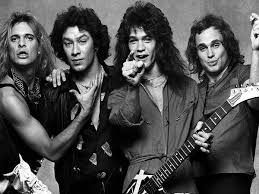
In concert, Eddie shared the spotlight with David Lee Roth, the showy, somewhat goofy lead vocalist who had joined the lineup back in 1973 when Eddie grew tired of pretending to be a singer. “Roth had great pipes, and we both had a lot of fun out there,” he said. “With Alex kicking ass on drums, and Mike Anthony on bass, we were a really tight band.”
Time for my full confession: I really wasn’t much of a fan of Van Halen’s music at the time, and I’m still not. In a blog I wrote in 2018 about successful rock bands I never liked, I called Van Halen “mind-numbingly average” and described their repertoire as “boring, plodding, nondescript.” Listening to their catalog the past few days, I’ve found a few tracks that stand out above the others, but in general, I stand by my evaluation. To assemble a Spotify “Essential Van Halen” playlist for this piece, I relied on publications like Rolling Stone and the LA Times to identify the favorites of fans and critics alike.

I thought it was a great move for both Eddie Van Halen and Michael Jackson when the two teamed up on “Beat It,” Jackson’s rock song on his mostly R&B masterpiece “Thriller” album. Eddie’s solo during the break became the hottest 30 seconds on the radio in 1983 and broadened his appeal among black musicians.
There’s no question that Van Halen was Eddie’s band, and that fact seemed to rub Roth the wrong way. The singer felt he was the front man, the guy that the audience was focusing on. Roth wanted the band to focus on a more pop approach with more tunes about drinking and sex, but the guitarist wanted to write longer, more complex songs, and he developed a home studio where he could compose material on his own.
By 1983, when Van Halen released its hugely successful LP “1984” with the #1 single “Jump,” Roth’s ego got the better of him. He recorded an EP, “Crazy From the Heat,” and enjoyed two hits singles as a solo artist, both covers of classic songs (“California Girls” and “Just a Gigolo/I Ain’t Got Nobody”). This internal tension came to a head in 1985, and “Diamond Dave” was given his walking papers. He went on to have three platinum LPs and a couple of singles over the next 10 years.

Meanwhile, Van Halen looked elsewhere for a new vocalist. They asked Patti Smyth of Scandal (not Patti Smith of “Because the Night” fame) but she turned them down. They invited Daryl Hall of Hall and Oates, but he declined as well. They finally settled on Sammy Hagar, former lead singer of the mid-’70s hard rock band Montrose and more recently a solo artist with the hard-driving hit single “I Can’t Drive 55.” Fans and critics didn’t react well at first, but soon enough, they embraced the new lineup, some now calling them “Van Hagar.” The first album with Hagar, “5150” (named after the address of Eddie’s studio), was their first #1 and, in fact, the first of four consecutive #1 LPs, including “OU812” (1988), “For Unlawful Carnal Knowledge” (1991) and “Balance” (1995).
Even with the major lineup change, Van Halen retained its position as a premier rock act and record seller. The fact that they did well with either singer made it clear that it was Eddie and his guitar playing, composing, arranging and innovating that was the irreplaceable cog in Van Halen’s wheel.
On stage, Eddie was absolutely in his element, he said. “We’d tour for 10 months, and then come home, but within a week, I was like, ‘Hey guys, we gotta play! That’s all I know how to do!'” New York Times critic Jon Farber wrote that Eddie’s shows were “hyperactive and athletic, joyous and wry,” and my friend Jake concurred with that description. “I saw them in the Roth era, but regardless of if you saw Roth or Hagar, it was always Eddie we were there to see. And he didn’t disappoint.”
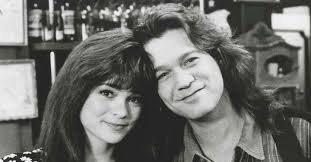
Eddie Van Halen found himself at a whole new level of stardom once he married TV star Valerie Bertinelli in 1981. He was on the receiving end of Hollywood’s paparazzi ambushes, but it broadened his fame among non-rock fans. They had a great marriage for the first 20 years, and had a son, Wolfgang, in 1991, who ended up playing bass in his dad’s band in the 2010s.
In 1996, internal tensions between Eddie and Hagar came to a head, again over creative control and direction. The band tried to reunite with Roth, which yielded a couple of new studio recordings for their Greatest Hits collection, but the old personality conflicts reappeared, and Eddie said no.
From this point on, you should excuse Van Halen fans if they suffered from whiplash for all the back-and-forth changes over the next couple decades. Gary Cherone, former lead singer of Extreme, took over the mic and did a decent job on the album and tour in 1998-99, but record and ticket sales were disappointing, and Cherone was let go. Around 2000, things got dark for Eddie, and he let his fondness for cocaine and alcohol get the better of him. Bertinelli didn’t last long in that environment and the couple separated in 2001, finally divorcing in 2007, but they remained on good terms.
Van Halen was officially inactive between 1999-2003, partly because Eddie was in rehab and working on recovery. In 2004, Hagar was asked to rejoin, which he did for a couple new tunes and a lengthy tour. At tour’s end, there was bad blood about the gigs where Eddie was clearly drunk and playing poorly. Hagar headed back to his solo career in 2006, saying “I’m done with Van Halen” on his way out the door.
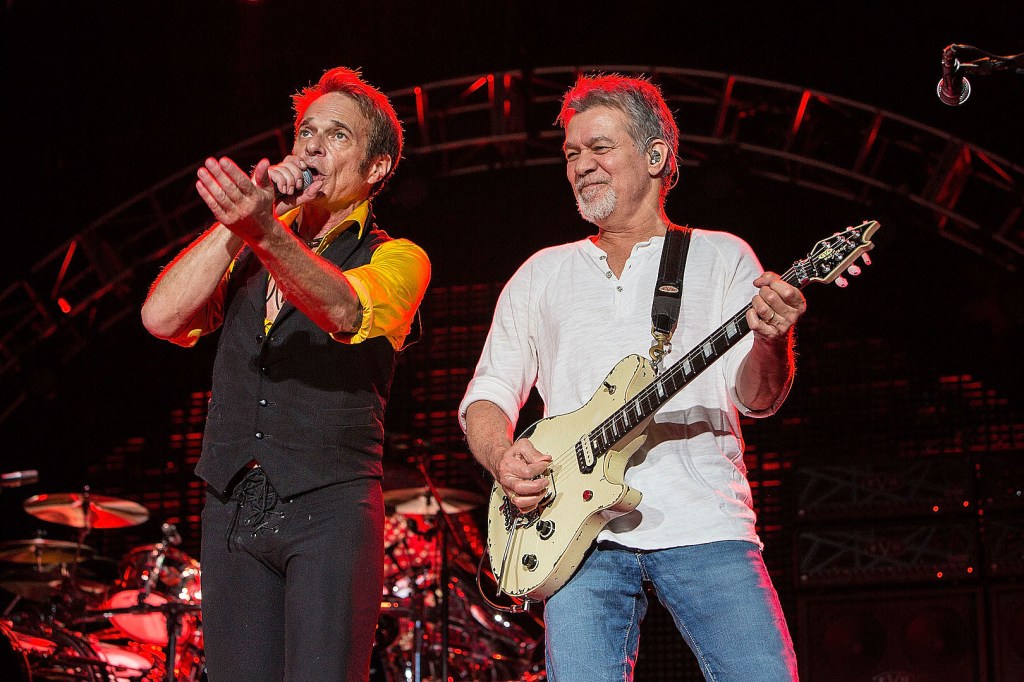
Maybe not so surprisingly, the Van Halen pendulum once again swung back to Roth, but it took until 2008 before the oft-announced reunion tour would happen. After a long layoff from the studio, the band recorded a new album in 2012 with Roth, “A Different Kind of Truth,” and another tour.
In the wake of Eddie’s passing, a number of well-regarded musician peers were lavish in their praise for him. “Eddie Van Halen was a guitar superhero,” said guitarist extraordinaire John Mayer. “A virtuoso. A stunningly good musician and composer. I was so blown away watching him exert such control and expression. I never stopped watching in adolescent awe and wonder.”
Said guitar great Joe Walsh, “Eddie was a one-of-a-kind guitarist and human being. He was a master at his craft, and he was a friend I loved. The world will be dimmer and quieter without him around.”

*******************
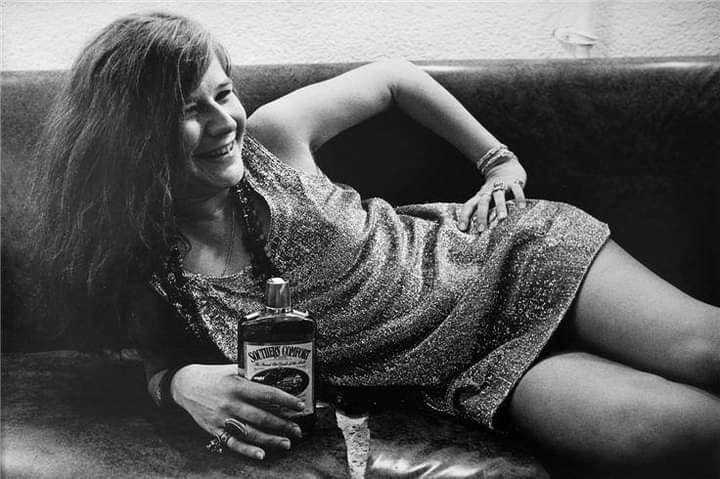
 Joplin’s influence was enormous and far reaching. Hundreds of female vocalists and blues musicians in the five decades since her death have lavishly praised her electrifying live performances and her surprisingly polished studio recordings. Critics sometimes took exception to the way she overworked her material to the extreme, but most adored her “devastatingly original voice,” her “overpowering and deeply vulnerable artistry” and her “Elvis Presley-like ability to captivate an audience.”
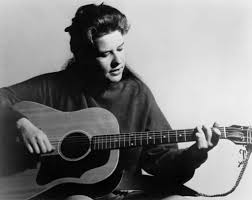 Despite her small-town upbringing, Janis was a free spirit from an early age, rejecting Port Arthur’s narrow thinking regarding sex, segregation and a woman’s place in the world. She attended college in Beaumont and in Austin, playing coffee house gigs as a solo acoustic act, honing her chops on folk and blues tunes. At the first opportunity she left Texas for California, hitchhiking there with her friend Chet Helms, who later became manager of the San Francisco band Big Brother and The Holding Company.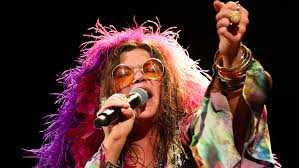
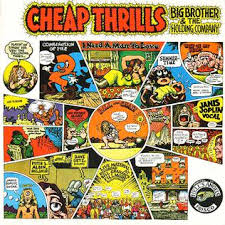 Ah, but she most certainly was. Joplin and Big Brother recorded a stellar set of blues and rock songs which comprised the compelling LP “Cheap Thrills,” the #1 album in the country for eight weeks in late 1968. Joplin and producers chose to add manufactured audience sounds to make it appear to be live, but in fact only the final track, the explosive “Ball and Chain,” was recorded in concert. The Top 20 single “Piece of My Heart,” “Combination of the Two,” a cover of the Gershwin classic “Summertime” and the Joplin original “Turtle Blues” combined to make a well-rounded blues album for the ages.
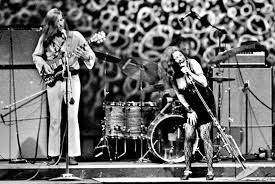 Big Brother wasn’t the most precise band around, and Joplin grew weary of their sloppiness. At the same time, the band grew resentful of her “star trip” eclipsing the band, and by year’s end, they went their separate ways. Janis had become enamored with soul and R&B and rounded up musicians who shared that bent. They became The Kosmic Blues Band, with prominent horns and a much funkier beat than Big Brother’s psychedelic blues.
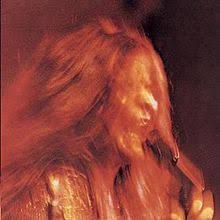 I was first in line at the record store when she and her new group released “I Got Dem Ol’ Kozmic Blues Again, Mama!” in September 1969. I was pleasantly surprised by the R&B punch of “Try,” “To Love Somebody” and “Maybe” with their dominant horns and keyboards, but she was still true to her blues on “One Good Man” and the riveting title track. What a fine album!
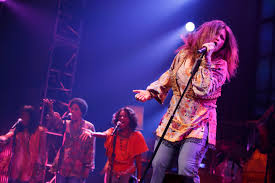 She took time off in 1970 to travel with a new paramour to Brazil, taking time to give herself a little distance from the drugs and the craziness of her rock star life. When she returned a month later, though, her heroin use resumed. She assembled a third group, The Full-Tilt Boogie Band, which featured organ but no horns. They did a train tour of Canada and added some U.S. dates at the end, which met with mixed reviews. Some praised the band’s tightness while others felt Joplin appeared exhausted and uninspired.
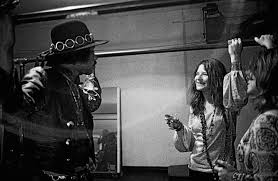 The band laid down the instrumental tracks for “Buried Alive in the Blues,” and Joplin planned to record her vocals the following day, but it was not to be. In tribute to Janis, the track was left as is, leaving listeners to imagine her vocal part on their own.
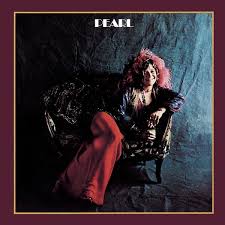 The final songs were compiled onto her final LP, the posthumously released “Pearl,” which rocketed to #1 in early 1971, as did the single of “Bobby McGee.”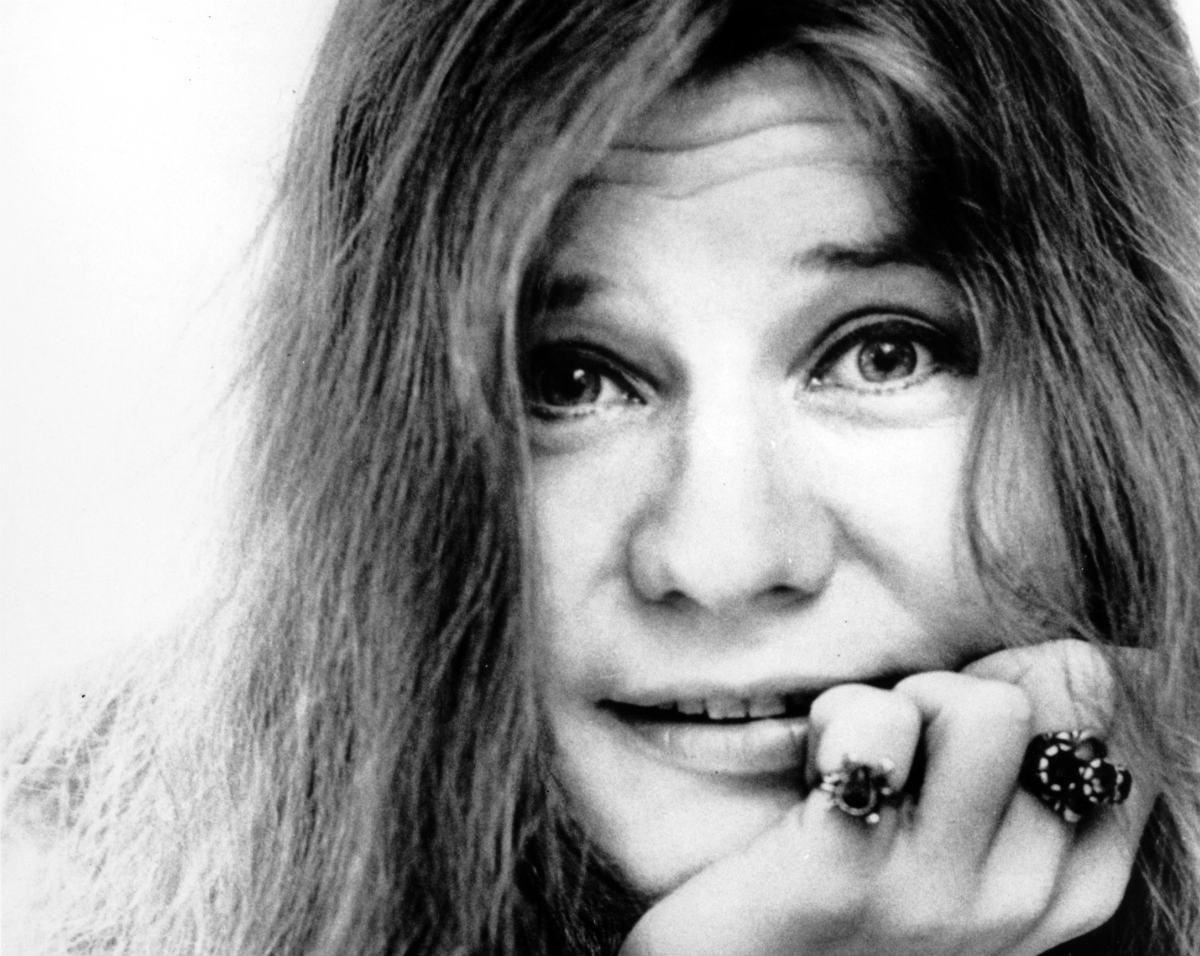
 Hack's Back Pages