What the hell does that even mean?
It’s a funny thing, how songs we’ve heard a thousand times, songs we’ve sung along to, songs we’ve heard performed in concert, have lyrics that include words we probably don’t understand, but we sing along with them anyway.
There are plenty of examples of songs with lyrics we “mis-hear” — we think they’re singing A when in fact they’re singing B — but I’m talking about lyrics that include words we simply don’t recognize. They’re unusual, esoteric, rarely used. But they’re right there in the chorus of a #1 song, so we just go along with them.
Artists didn’t start including lyrics on the album sleeve until the late ’60s/early ’70s, and many bands simply couldn’t be bothered, or wouldn’t pay the extra bucks required to reprint them. So we simply weren’t sure what we were hearing. And there was no Internet to check to find out exactly what the words were. Until now.
Today, readers, we’re going to solve some age-old questions. We’re going to provide definitions for words you’ve been singing since you were young but never really wrapped your head around.
Just so you can hear these words again in the context of their songs, there’s a Spotify playlist at the end.
**************************
“You had one eye in the mirror as you watched yourself gavotte…“

From Carly Simon’s huge hit “You’re So Vain” in 1972, this line perfectly describes the behavior of the vain egotist who is far more interested in how he looks than in anyone or anything around him. But what of this term “gavotte”? It’s a French word for a flamboyant folk dance, wherein the dancer holds one hand aloft with the other on the hip in a very showy display that aptly suits the “it’s all about me” attitude of the vainglorious person described in the song. (And by the way, who is the song about? For many years, Simon steadfastly refused to say, but recently admitted that the second verse is about her dalliance with actor Warren Beatty. The rest, she says, is a composite of several other egotists she knew.)
***************************
“On a dark desert highway, cool wind in my hair, warm smell of colitas rising up through the air…“

When Don Henley was fashioning the lyrics to Don Felder’s melody that became The Eagles’ 1977 signature song “Hotel California,” he chose to employ “colitas,” a term he’d heard a couple of Latino road crew members using. Not to be confused with the intestinal disorder colitis, the word was at first thought to be some sort of desert flower, and Henley liked the way the word sounded rolling off his tongue. But he liked it even more when he realized it was a Mexican word meaning “little buds” — specifically, small buds from marijuana plants. In a song that summarized the hedonistic sex-and-drugs lifestyle of Los Angeles in the late ’70s, it was a clever inside joke.
****************************
“Some people call me Maurice, ’cause I speak of the pompitous of love…”

Steve Miller has made a career of lifting musical and lyrical passages from other songs, claiming “artistic license” to keep the copyright lawyers at bay. For the #1 hit “The Joker” from 1973, Miller used “pompitous” from an old ’50s tune by Vernon Green called “The Letter” (no relation to the #1 Box Tops/Joe Cocker hit from 1967/1970), which includes this line: “Oh my darling, let me whisper sweet words of pizmotality and discuss the puppetutes of love.” Let’s ignore “pizmotality” for now, and focus on how Green has said he coined the term “puppetutes,” meaning “a secret paper-doll fantasy girl who would be my everything and bear my children.” Apparently Miller mis-heard “puppetutes” as “pompitous,” and it has since become a minor pop culture reference — there’s even a 1996 Jon Cryer movie called “The Pompitous of Love.”
***************************
“It’s no use, he sees her, he starts to shake and cough, just like the old man in that book by Nabokov…”

Before becoming a founding member of The Police, bassist/songwriter/singer Sting had been an English teacher, and he knew of professors who had unwisely pursued trysts with underage schoolgirls. He thought the topic might generate a provocative set of lyrics for a rock song, and “Don’t Stand So Close to Me” went on to become one of the group’s biggest hits (#1 in England, #10 in the US, in 1980). Sting was also well aware of the famous 1955 novel “Lolita,” written by Russian author Vladimir Nabokov, which covered this same taboo subject, so Sting managed to insert the author’s name into the lyrics.
****************************
“Back to back, sacroiliac, spineless movement and a wild attack…”

Blondie, led by singer Debbie Harry and guitarist Chris Stein, is considered one of the pioneers of New Wave coming out of New York in the mid-’70s, incorporating a mixture of punk, disco, pop, reggae and funk. In 1980, after they’d registered three #1 singles on US pop charts, Harry and Stein put together their first attempt at hip-hop with “Rapture,” using a disco beat with lyrics delivered mostly in a rap format. The words describe a crowded hip-hip dance floor in the Bronx (“face to face, dance cheek to cheek”), and in the first section, Harry sings the lyrics, mentioning “back to back” and “spineless movement.” Most pop music listeners are perhaps unfamiliar with the term “sacroiliac,” but it’s the name given to a pair of joints connecting the base of the spine to the hip bones, absorbing shock and transferring upper body weight to the legs. Pretty important on the dance floor!
******************************
“He just smiled and gave me a vegemite sandwich, and he said, I come from a land down under, where beer does flow and men chunder…”
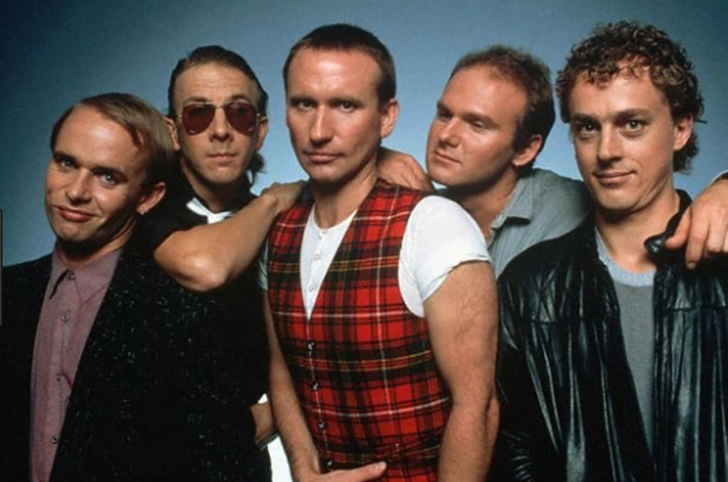
I always thought “vegemite” was just a word manufactured by Men At Work songwriter Colin Hay for a verse of his band’s 1983 #1 hit “Down Under.” But no, vegemite is a real thing, at least in Australia. It’s a sort of edible paste (think liver paté) made of brewers yeast, vegetables, wheat, and spices. Aussies regularly slather it on toast, hide it in pastries, or make whole sandwiches out of it. Sounds questionable to me, but it’s quite popular there. It’s not a term you’re likely to hear in the States anytime soon… “Chunder,” on the other hand, is a fabulous verb you’d think the college fraternity crowd would have adopted by now. It’s a synonym for throwing up.
*****************************
“I see a little silhouette of a man! Scaramouche! Scaramouche! Will you do the fandango?…“

Who, or what, is Scaramouche? No one seemed to know when Queen first released the epic “Bohemian Rhapsody” on its “A Night at the Opera” album in 1975. Devotees of Italian opera and comedic theater knew very well, but your average rock ‘n roller didn’t have a clue. Scaramouche, as it turns out, was a fictional clown character often seen in “Punch and Judy” puppet theater, a simple-minded fop who would be socked in the face or beheaded for his idiotic comments. Songwriter Freddie Mercury said he chose to include the name in the song because he liked the way it sounded — memorable and bombastic. (And “fandango,” by the way, is a lively Spanish dance involving castanets and tambourine.)
*****************************
“If there’s a bustle in your hedgerow, don’t be alarmed now…”
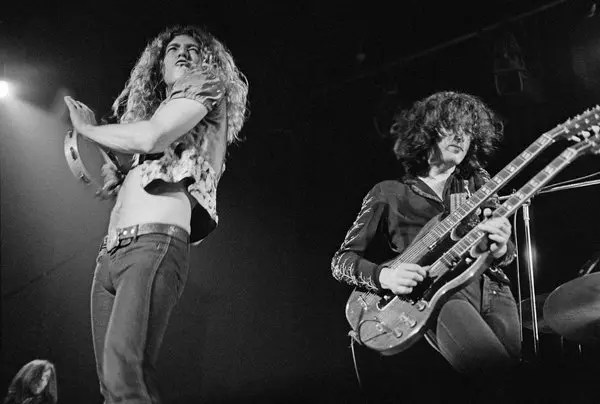
Americans were puzzled by this phrase in Led Zeppelin’s 1971 anthem “Stairway to Heaven,” but Brits caught on quickly enough. Hedgerows are, literally, rows of hedges that were planted intentionally across the English countryside as property borders and, in times of war, as natural barricades to deter advancing armies. A “bustle” (as in “the hustle-bustle of the crowd”) is simply a commotion. Therefore, if there’s a bustle in your hedgerow, well, you’d best be careful, for it might be an enemy soldier or some sort of angry animal. On the other hand, perhaps it’s merely what lyricist Robert Plant said in the following line — a servant doing “just a spring clean for the May Queen.”
******************************
“Oleanders growing outside her door, soon they’re gonna be in bloom up in Annandale…”
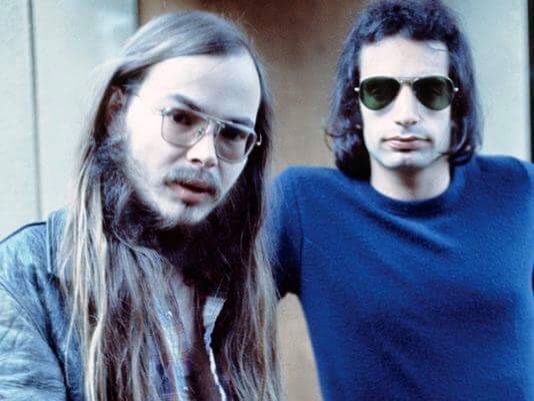
Steely Dan was notorious for obscure lyrical references, and “oleanders” from the 1973 classic “My Old School” is but one example. It’s a pretty but toxic flowering plant often used in median strips of highways in the American Southwest because of its hardiness and vivid colors. Annandale-on-Hudson is a community outside New York City where Donald Fagen and Walter Becker first met while attending Bard College there. Oleanders aren’t likely to grow or flourish in that area, so the songwriters decided to put them there as a sort of absurd contradiction.
******************************
“Colour sky rose carmethene, alazarin crimson, wear your love like heaven…”
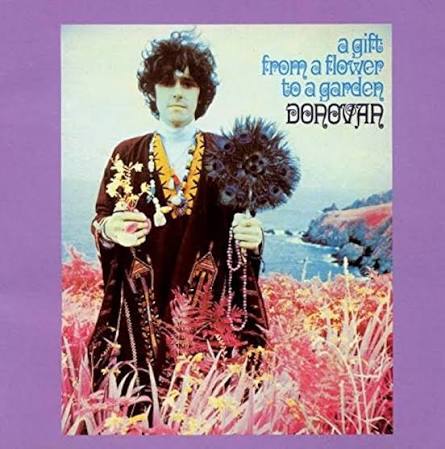
From 1965 to the early 1970s, Donovan Leitch enjoyed a very successful career in the US and his native UK as a poet and singer-songwriter, adopting a gently psychedelic flower-child persona. In addition to his skills as a musician and songwriter, Donovan also enjoyed the art of painting. In his trippy single from 1967, “Wear Your Love Like Heaven” (a #23 hit on US pop charts that year), he mentioned a number of dyes and pigments he had run across in his work, deciding “carmethene” and “alazarin” sounded intriguing when used to describe the colors of the sky as sunset approached.
******************************
“Draw me ’round your fruitcage, I will be your honeybee, open up your fruitcage, where the fruit is as sweet as can be…”

When art rocker Peter Gabriel hit his commercial peak in 1986 with his “So” album and worldwide #1 hit “Sledgehammer,” his lyrics were full of double entendres with subtle sexual references. This lyric is clearly among his most blatant: “Fruitcage” is, in fact, British slang for female private parts. So now you know. And you’ve probably figured out what he means by “sledgehammer” now as well…
*******************************

The Beatles — specifically John Lennon — loved to use arcane, vague vocabulary that added mystique and left his songs open to interpretation. Here are four examples of several he used in his most inventive work.
“Semolina pilchard, climbing up the Eiffel Tower…”
“Semolina” are the hard grains left over after the milling of flour. “Pilchard” is a small, oily herring fish. In his mostly nonsensical “I Am the Walrus,” Lennon was deliberately writing lyrics that would baffle all the pundits who were trying to find hidden meanings in Beatles songs. He paired “semolina” and “pilchard” together for no reason other than they sounded interesting to him — although he added years later that “pilchard” is close to “Pilcher,” or Det. Sgt. Normal Pilcher, the London drug cop who zealously slapped drug possession charges on rock stars (including Lennon) in the ’60s.
“Picture yourself on a train in a station with plasticine porters with looking-glass ties…”
“Plasticine,” invented in England in the 1890s, is a type of modeling clay made of calcium salts, petroleum jelly and acids, meant for use by artists who needed their material to stay malleable so they could reshape and reuse it when necessary. It’s known best in the U.S. as the medium used in stop-motion animation (“claymation”) projects. Lennon liked it for use in “Lucy in the Sky With Diamonds” as an adjective describing what some people might look like to someone tripping on LSD.
“Over men and horses, hoops and garters, lastly through a hogshead of real fire…”
A “hogshead” is not a hog’s head at all, but a unit of measure, typically for liquids like wine or distilled spirits but also for food commodities like sugar. It’s about the size of a large pickle barrel and equals roughly 80 gallons. In the 1967 “Sgt. Pepper” tune “Being For the Benefit of Mr. Kite,” it referred to the size of the barrel ring of fire someone might jump through in a feat of derring-do.
“The man in the crowd with the multi-coloured mirrors on his hobnail boots…”
“Hobnail” is a fastener that was used among cobblers in the design of workboots for the military and farm laborers. It holds the sole firmly to the shoe and provides traction in uneven soil. Why “the man in the crowd” in the 1968 song “Happiness is a Warm Gun” might attach multicolored mirrors to his hobnail boots is another matter. Lennon said he and his schoolmates would sometimes put mirrors on their shoes so they could look up the skirts of unsuspecting females.
******************************
Do you recall any other strange terms used in hit songs that you’ve never quite understood? Let me know about them, and I’ll see if I can ferret out the hidden meaning behind them. Although some may have no meaning at all: Anyone care to take a stab at “Sham-a-lam-a-ding-dong,” “Wop-bop-a-loo-bop, a-lop-bam-boom” or “Goo goo g’joob“?
******************************

